Enclosed vs Open Transport Gainesville — Which Is Right
Two ways to trailer a bike, one honest recommendation, and pickup that means you never make the drive.
Even so, you’re a few miles up US-129 north, past Gainesville, chasing that roller-coaster stretch of turns and elevation changes that riders love. Then the sound changes. What’s more, a tick that wasn’t there this morning, a little wobble in the front end, and your gut tells you to pull over. After that, you’re an hour from home with a bike that won’t make the trip back. Also that’s the moment a lot of riders start looking up enclosed vs open transport Gainesville, because the question isn’t whether you need a trailer anymore. It’s which kind you need.
So take a breath. This part is easier than it feels right now. Instead you don’t have to solve it on the shoulder of the road, and you don’t have to ride a hurting bike another mile. We come get it. Besides that’s the whole pitch, and it’s a good one when you’re stuck by the side of a mountain road. Actually a quick call, a trailer, and your bike is on its way to a shop that’ll treat it right. If you want what that service actually involves, we lay the whole thing out step by step.
Once your bike is safe, the next choice is the trailer itself. Open or enclosed. Both are solid options. That’s why both get your bike to us in one piece. But they’re built for different bikes and different trips, so let’s walk through each one the way a buddy would, not a salesman trying to talk you into the pricey one.
The two kinds of trailer, plain and simple
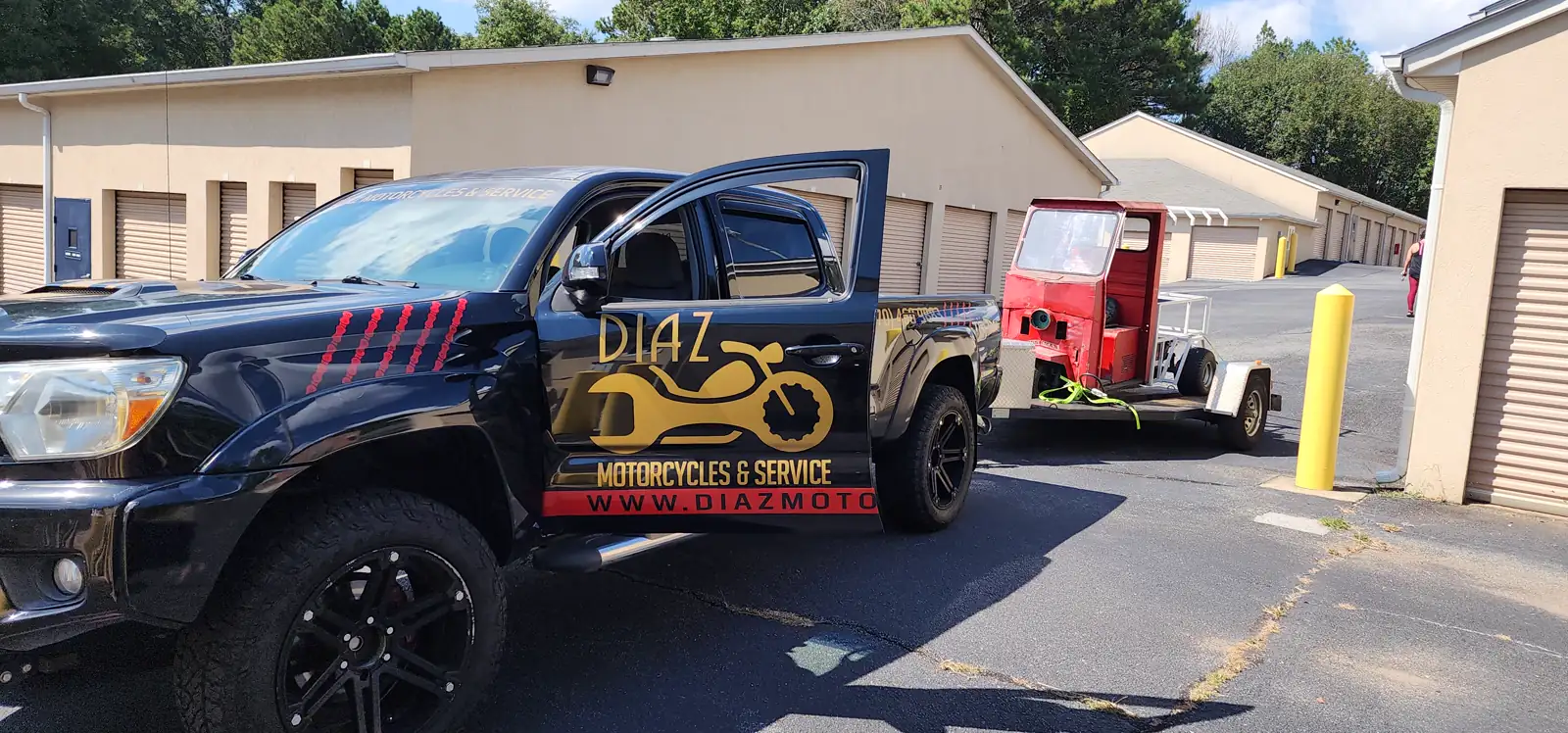
Either way an open trailer is the one you already picture. In short your bike rides on a flat deck, strapped down tight, out in the open air. At the same time it’s the workhorse of the towing world. Most bikes that move across Georgia on any given day move exactly this way. It loads fast, you can see it the whole trip, and the price is friendly. The trade-off is simple too: your bike meets the weather and the road spray, the same as it would if you were riding it.
An enclosed trailer is basically a box on wheels. Your bike rides inside, tucked away from wind, rain, sun, and rock chips off the highway. Nobody at a gas station can even lay eyes on it. Think of it as a private garage that follows the truck around. It costs more and it’s a touch slower to load, sure. But for the right bike, it’s worth every extra minute.
Why does the choice even exist? Because bikes aren’t all the same, and neither are trips. A ten-year-old commuter and a hand-built show bike have completely different needs. The trailer world hands you two tools so you can match the ride to the risk. Pick the wrong one and you either overpay or expose a bike you shouldn’t have. Pick the right one and you barely think about it again. That’s the goal here — get you to the right answer without the guesswork.
How open transport works
Let’s talk about the part that keeps most folks up at night: is my bike going to tip over back there? Short answer, no. Here’s how we lock it down. The front wheel rolls into a chock that grips it like a boot and holds it upright on its own. Then we run soft straps to the frame or the triple tree, never around anything that bends or scratches. We compress the front suspension just a touch so the bike settles into the straps and can’t bounce loose over a bump. Two points up front, two in the back, checked twice before the truck ever rolls. A properly strapped bike on an open deck is going nowhere.
If you like reading up on this stuff, RevZilla’s Common Tread has good pieces on trailering a bike the right way, and Michelin’s motorcycle tire resources help you keep tires road-ready between trips.
Open works great for most bikes and most trips. Your daily rider, a used bike you bought two counties over, a cruiser headed in for a tune-up — all perfectly fine on an open deck. If your bike already lives outside or sees rain on the regular, a few hours in the open air on a trailer won’t hurt it one bit. It’s already seen worse on a Saturday ride.
How enclosed transport works
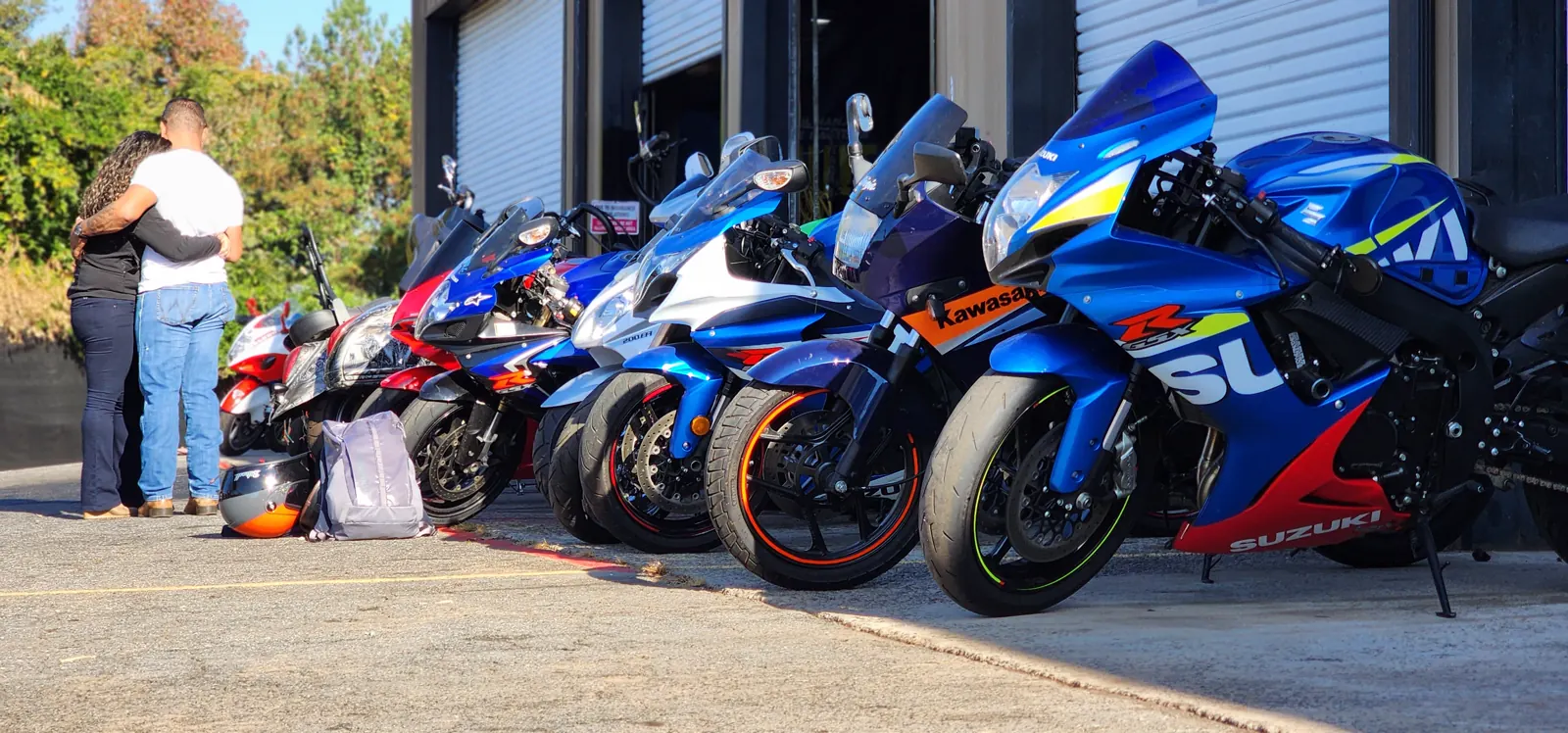
Inside an enclosed trailer, the same chock-and-strap system holds your bike steady. The difference is the walls and roof wrapped around it. No road grime, no bugs, no surprise storm halfway down the interstate. For a long haul or a bike that truly means something, that peace of mind is very real. It also hides the bike from view, which matters more than people expect when a trailer has to sit at a rest stop overnight on a cross-country trip.
Enclosed earns its keep with the special bikes. A fresh restoration you just finished. Of course, a show bike with paint you refuse to chip. A rare or hard-to-replace machine. In fact, a move that keeps the bike on the road for days at a stretch. If losing a single fleck of clear coat would ruin your whole week, you want walls between your bike and the world. Simple as that.
But here’s what most riders get wrong about this. They assume enclosed is always the better choice, and open is the cheap corner you shouldn’t cut. That’s just not true. Open transport isn’t a downgrade. For the big majority of bikes on the road, it’s the right answer, full stop. A well-strapped bike on an open trailer is exactly as safe from tipping as one inside a box. The walls protect against weather and prying eyes — not against a sloppy tie-down. Get the strapping right and open is genuinely great. Pay for enclosed on a beater and you spent extra you never needed to.
The walls protect against weather and eyes — not against a lazy tie-down. Good strapping is what keeps your bike safe.
Our honest recommendation
So here’s our real advice, no fence-sitting. For most Gainesville riders, most of the time, open transport is the right call. It’s proven, it’s quick, and your bike shows up safe and sound. Save enclosed for the bikes that truly earn it. If you’re moving a running daily, a project you’re hauling in for a fix, or a used bike you just bought, book open and don’t think twice about it. That’s the same choice riders over in Acworth land on when they run the numbers.
So when does enclosed win? When the bike is irreplaceable or freshly finished. A numbers-matching restoration heading to a show. For example, a custom with wet-look paint you’d cry over. A bike crossing the country over several days on the highway. In those cases, the box isn’t a luxury at all — it’s cheap insurance for something you honestly can’t just re-buy. That’s the one situation where we’ll steer you toward the walls without hesitating.
THE SHORT VERSION
Open transport is right for most bikes and most trips. Enclosed is for the special ones — restorations, show bikes, rare machines, and long cross-country hauls. When in doubt, go open.
A quick way to decide in thirty seconds
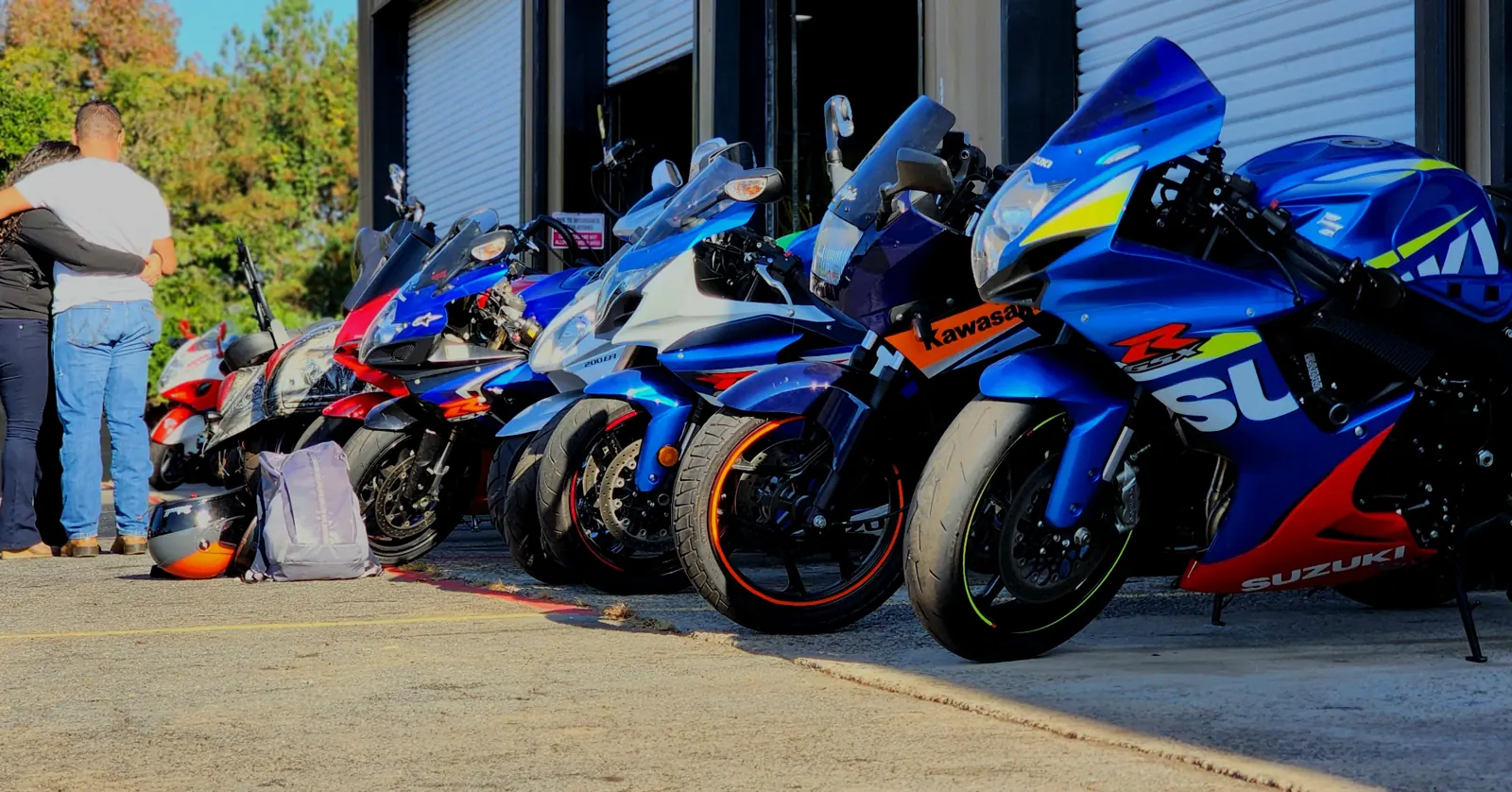
Still on the fence? Run your bike through these four questions and the answer usually jumps right out at you.
- Is the bike rare, restored, or freshly painted? If yes, lean enclosed.
- Is it a normal running bike that already sees weather? Open is plenty.
- Is it traveling for days across the country? Enclosed, for the peace of mind.
- Is it a short haul across a few counties? Open, every single time.
Three opens and one enclosed? You’ve got yourself an open-trailer bike. It really is that simple most of the time. And if you’re genuinely torn between the two, just ask us. We’ll tell you straight, because we’d rather you keep your money than spend it on protection your bike doesn’t need.
| Open trailer | Enclosed trailer |
|---|---|
| Out in the open air | Sealed inside a box |
| Fastest to load | A little slower to load |
| Friendlier price | Costs a bit more |
| Great for most bikes | Best for special bikes |
| Meets road spray and sun | Shielded from weather and eyes |
The paperwork that quietly protects you
Here’s a step almost nobody warns you about, and it matters a lot. Before your bike ever touches the trailer, we write down its condition. Every scratch, every ding, photographed and noted right there on the spot. You get a copy. That way, if anyone ever wonders whether a mark was there before the trip, the answer is already in writing. Good shops do this every single time, without being asked.
- A written condition report with photos, taken before we load
- Your name on both the pickup and the drop-off
- Proof the bike is strapped at four points, not two
- A clear handoff so you know exactly when it arrives
Why go to all that trouble? Because a stressful handoff turns into a clean one when everything’s documented. You’re not trusting a stranger’s memory — you’re both looking at the same photos. None of this is guesswork for us either. It’s the same routine every bike gets, and it’s exactly what happens in our bays before the wheels ever turn.
Let us tell you about a rider near Green Street District. He lives on one of those grand old streets lined with antebellum, Victorian, and early-1900s homes near downtown — the prestige address in town. He’d spent two years restoring a cruiser in his garage, and he wanted it moved to us for final tuning without adding a single mile to the odometer. Easy call: enclosed. We brought the box trailer, wrote up the condition report right there in his driveway, and loaded it soft. He watched us strap all four points and finally relaxed for the first time all week.
Compare that to his buddy over in the Chestatee area, out near the river arm of the lake, who bought a used sportbike and needed it hauled in for a check-up. His bike was already a rider, already weathered a few storms. Open trailer, done by lunch. Both riders got exactly the right service for their bike, and neither one overpaid for the other guy’s needs. That, right there, is the whole point of asking the question instead of just guessing.
We pick up all over town, honestly. From the 1970s ranch and split-level streets of Nottingham Forest, Windsor Forest, and Windsor Woods, down Jesse Jewell Parkway through midtown, and out past Lake Lanier Olympic Park on Clarks Bridge Road where the Olympic rowing venue still runs. We’ve met riders in the parking lot by Downtown Gainesville Square during the April Art Walk. And yes, if you ride a Harley, Frazier’s Harley-Davidson down in Buford owns that side of the market — but when it’s time to move the bike, or handle work they don’t do, that’s our lane.
Yes, we know Marietta isn't around the corner
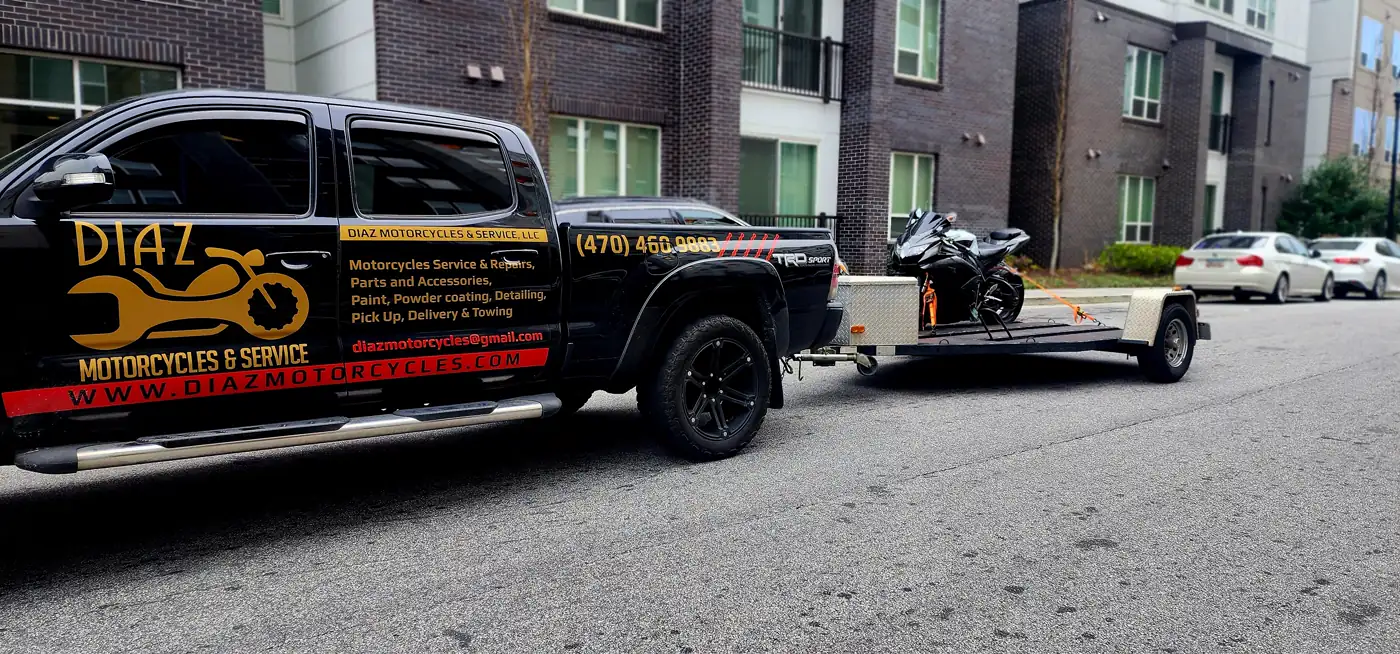
Let’s be straight about the drive. Our shop in Marietta sits a good ways from you — roughly 55 to 62 miles, and figure somewhere around 65 to 85 minutes depending on whether you take the lake route through Cumming or the interstate down through the perimeter. That’s a real trip, and we’re not going to pretend otherwise. But that’s exactly why pickup and delivery isn’t a nice little extra up here. It’s the entire deal. That’s what makes the whole enclosed vs open transport Gainesville question so easy to answer: you pick the trailer, and we handle the miles. You never make that drive. We do.
For a lot of Hall County riders, that’s a fair trade. Nobody’s making a 70-minute run for an oil change, and we’d never ask you to. But for the work that’s worth doing right, letting us take both ends of the trip turns a long haul into a quick phone call. One more thing worth knowing: riding season up here runs roughly March through December, a touch shorter on both ends because Gainesville sits high enough to catch real freezing nights. Plenty of bikes get moved right at those edges — hauled in for winter work, or picked up in spring after months in the garage. Open or enclosed, both handle it fine.
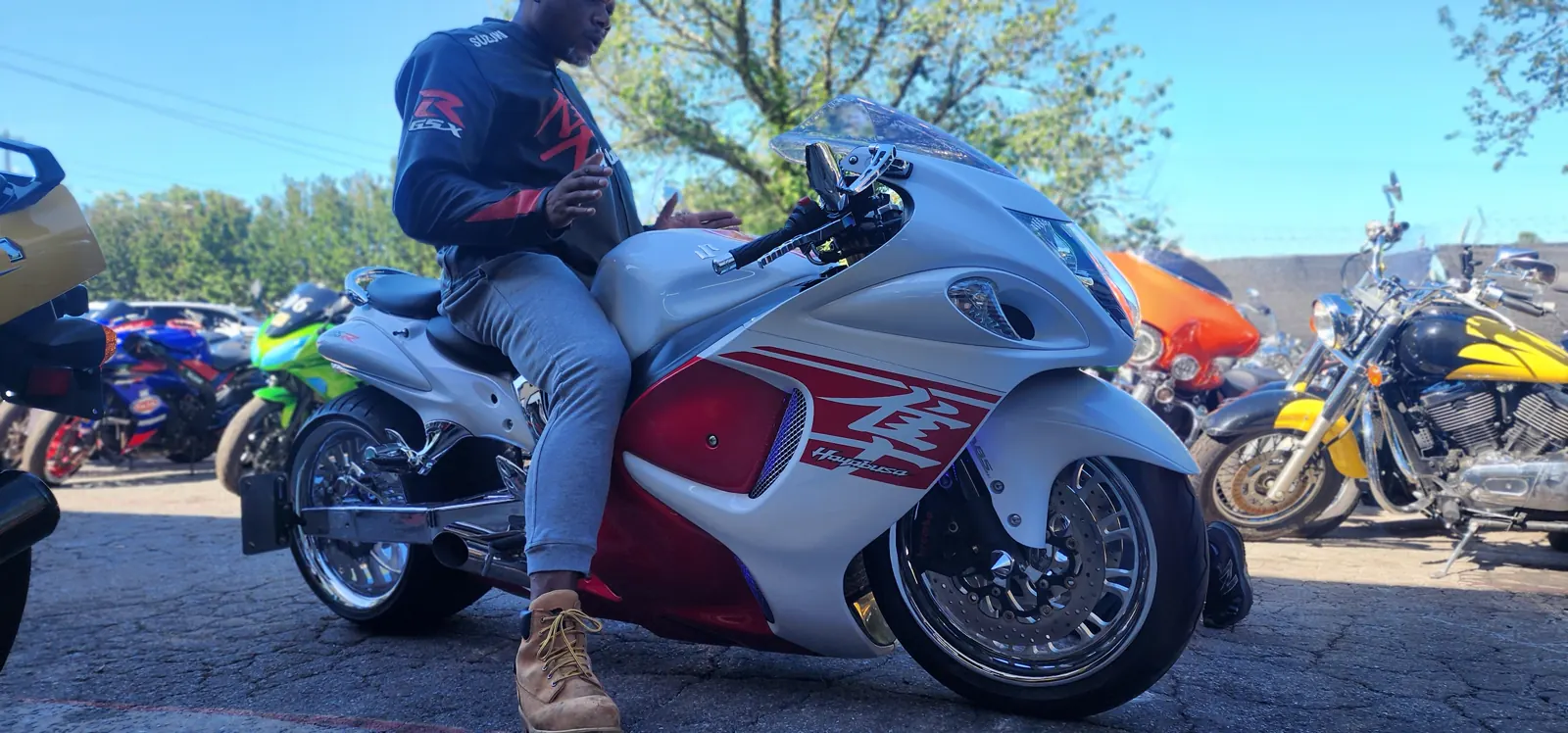
The feeling when it's finally handled
Remember the shoulder of US-129, the tick and the wobble and that sinking feeling in your stomach? Here’s how that story really ends. One call, one condition report, one trailer — open or enclosed, whichever your bike actually needs — and the whole thing is off your plate. Your bike gets to a shop that’ll treat it right, and you get your Saturday back. That’s the relief we’re after every time. And if you’re dealing with a bike that flat-out won’t run, here’s the full rundown on it and how we get a stuck bike home safe.
Questions Gainesville riders ask us
Which one should I actually pick?
For most bikes, open transport is the right call — it’s fast, proven, and your bike shows up safe. Go enclosed only when the bike is rare, freshly restored, freshly painted, or traveling for days across the country. If you’re torn, tell us about your bike and we’ll give you a straight answer.
What's the real difference between open and enclosed?
Open means your bike rides on a flat deck out in the open air. Enclosed means it rides inside a sealed box, hidden from weather and view. Both use the same chock-and-strap system to hold the bike upright, so both are equally safe from tipping. The walls only add protection from rain, sun, road spray, and prying eyes.
Which one protects my bike longer-term?
For a normal rider, it makes no difference — a few hours on an open trailer won’t age your bike at all, since it already sees weather when you ride. For a show bike or fresh restoration, enclosed keeps the finish flawless over long trips. The bike’s value and how far it’s going decide this, not the trailer type by itself.
Which is right for my kind of riding?
If you ride a daily, a cruiser, a used buy, or a project bike, open transport fits your riding perfectly. If you baby a restored or custom machine and losing a chip of paint would ruin your week, enclosed matches you better. Match the trailer to the bike, not to a rule.
Can I switch from one to the other later?
Absolutely. Nothing about your first pickup locks you in. Move an everyday bike on an open trailer today, and if you finish a restoration next year, book enclosed for that one. Just tell us what’s rolling and we’ll bring the right trailer for that specific bike.
Do you really come all the way to Gainesville?
Yes, every time. The shop is 55 to 62 miles from town, so pickup and delivery is the whole point of working with us — you never make the drive. We roll up to your driveway or curb, load the bike, and bring it back the same way when the work’s done.
We run pickup and delivery across Hall County and Northeast Georgia, so wherever your bike sits, we can get to it. That means riders in Oakwood, Flowery Branch, and Braselton, folks down toward Buford and Sugar Hill, and everyone up around Clermont, Lula, and Murrayville. We also reach out to Chestnut Mountain and Talmo, over to Cumming, and north into the mountains around Dahlonega. If you’re on the outer edge of that map, just ask — odds are good we already cover your road.
LET US COME GET IT
Whether your bike needs an open trailer or the enclosed box, the choice is easy once you know your bike — and the drive from Gainesville to Marietta is never yours to make. Text us with your bike and where it’s parked, and we’ll bring the right trailer, write up the condition report on the spot, and handle both ends of the trip. One call is all it takes to get it off your plate.
470-460-9883Diaz Motorcycles and Service, LLC · 847 Barnes Mill Road, Marietta, GA 30062