Faded Motorcycle Paint Atlanta — How to Fix It
That chalky, tired look on your tank has a cause and a fix. Here's the plain-English version.
You had the whole Saturday planned. Meet a couple of friends, take the long way home, and let the bike do the talking. Then you rolled it out into the morning light and the tank should have glowed. Instead it looked flat and chalky, like a thin layer of dust that would not wipe off. That dull, tired look is what faded motorcycle paint Atlanta riders spot every summer, and it can take the shine right out of a good ride. Here is the good news up front: it is fixable, and it is fixable well.
First, let’s take a breath. Faded paint feels like a big deal because your bike is personal. But it’s a surface problem, not a sign your bike is falling apart. Once you know why it happened, you get to make a smart choice instead of a worried one. So let’s walk through it together, plain and simple.
What faded paint really looks like
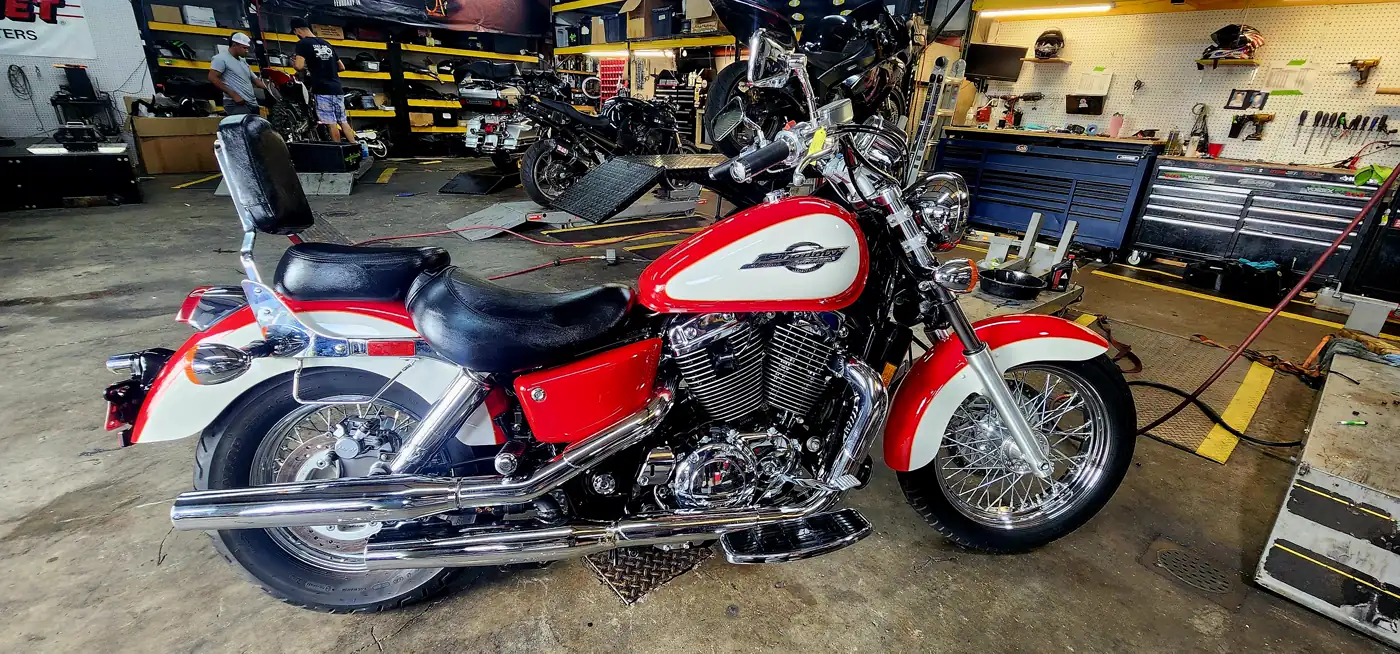
You might not see it head-on. Fade loves to hide until the light hits just right. Roll the bike into full sun and look straight down the length of the tank. Healthy paint throws back a deep, wet-looking gloss, almost like glass. Faded paint looks cloudy instead. The color goes pale, black turns a little grey, and the reflection gets fuzzy at the edges. Reds fade first, because red pigment gives up under the sun before other colors do. Run your hand across it and a chalky film can even come off on your fingers. That film is the clear coat breaking down.
It usually starts on the parts that face the sky. The top of the tank, the tops of the fenders, the upper fairing. Sides stay glossy longer because they catch less direct light. When the top looks tired but the sides still pop, that’s fade, not dirt. Knowing the difference already puts you ahead of most people who just assume the whole bike is shot.
Why your paint faded in the first place
Alright, here’s the useful part: understanding the cause. Most fade comes down to a few usual suspects, and we’ll go most-common first.
Sun is the number one reason. Atlanta gets a lot of it, and a lot of riders have nowhere shady to park. Homeownership in the city sits at just 46.4 percent, so many folks live in apartments and condos and park on an open deck or at the curb. No garage means the bike bakes all day. Those UV rays slowly cook the clear coat until it can’t protect the color underneath anymore. This one cause explains most of the tired tanks we see.
Oxidation comes next. Even in the shade, clear coat ages. Over the years it hardens, thins, and starts to chalk. Think of it like skin after a long summer with no lotion. The paint dries out and loses its shine from the top down, a little more each season.
Then there’s our famous pollen. Atlanta pollen season runs from late February into May and peaks in the last two weeks of March. On March 29, 2025, the city set an all-time record count of 14,801. That yellow dust is gritty. When it settles on your tank and you wipe it off dry, it drags tiny scratches across the finish. Do that enough times and the gloss goes dull. Acid from rain and bird droppings can etch little marks into the surface too.
Bad washing habits pile on. Dish soap strips the wax right off. A dirty rag grinds grit into the paint. Those swirl marks you catch in the sun usually come from wiping a dusty bike with a dry towel. None of that is your fault, by the way — nobody hands you a paint-care manual with a new bike.
Last, age and old shortcuts. If your bike had a cheap respray before you owned it, the shop may have sprayed thin clear coat to save time, and thin clear fades fast. Factory paint on a bike that’s been around a couple of decades will naturally give out as well. Faded motorcycle paint Atlanta riders bring us usually traces back to one or two of these, not some mystery.
Most people stop reading here. That's the expensive mistake.
Here’s why that matters. A lot of riders spot fade, shrug, and decide to live with it. The trouble is that fade doesn’t stop on its own. Once the clear coat gives up, the color coat underneath is next in line. Catch it while it’s only the clear coat, and often a careful polish or a fresh clear can save the day. Wait until the color burns away, and now you’re into a full repaint. Same bike, bigger job. Acting early is almost always the easier road. If you’re weighing finishes for a redo, we broke down the tradeoffs between them in a separate guide.
When it's safe to ride, and when to slow down
Let’s clear this up, because it matters. Faded paint by itself is a looks problem, not a safety problem. Your bike runs exactly the same. You can ride to work, hit the highway, and enjoy your weekend with a dull tank and be perfectly fine. So no, fade won’t leave you stranded on the shoulder.
There’s one thing to watch, though. If the fade has gone all the way through the paint and you can see bare metal, rust can start, especially on a steel tank. Rust is the moment a cosmetic issue turns into a real one. The same goes for a chip that reaches metal, or paint that’s bubbling from underneath. Spot any of that and it’s your cue to get it looked at sooner rather than later. Everything short of bare metal, though? Ride it and enjoy it.
How we figure out what your paint needs
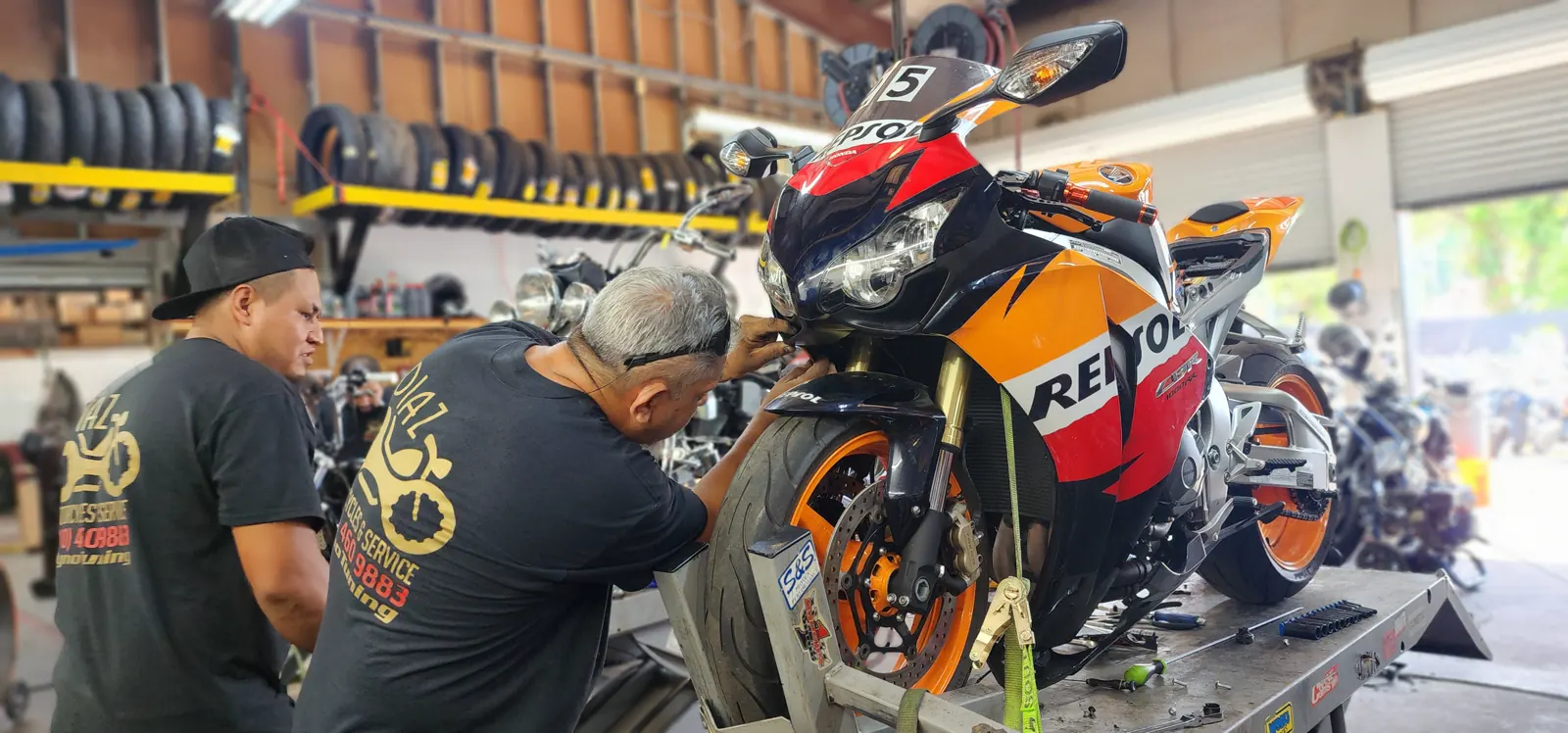
When a friend brings a tired-looking bike to our shop in Marietta, we don’t guess. We read the paint first. Here’s the simple version of what we’re checking.
- How deep it goes. Is it just the clear coat, or has the color faded too? A clear-coat-only problem is the easy fix.
- Whether it’s single-stage or base-and-clear paint. Older and factory bikes are often a base color plus a clear top coat, and knowing which you have changes the plan.
- If a machine polish can bring it back. Sometimes the gloss is hiding right under a thin haze of oxidation, and a careful polish wakes it up.
- Whether there’s bodywork hiding under there. Dents, filler, or rust change everything, because the metal has to be right before any paint goes on.
After that, we’ll do a small test spot in good light so you can see the difference with your own eyes. No mystery, no pressure, just a straight answer about polish versus repaint.
What a real fix involves
Now for the part people underestimate the most: prep. When folks picture painting a bike, they picture the color going on. But the color is the quick part. Prep and bodywork are where a paint job is won or lost. Skip them, and even the prettiest color will peel, chip, or fade early.
So here’s the honest order of a proper job. We strip the old finish down to a clean, sound surface. We fix any dents, sand out rust, and smooth the bodywork until it’s dead straight. Then comes primer, which gives the color something to grip. After that, the base coat, which is your actual color. Then two or more clear coats on top to lock it in and give that deep, wet gloss. Finally we wet-sand and buff until it shines like glass.
Every one of those layers has to cure before the next one goes on. That’s the real reason a good job can’t be rushed. How long the whole thing takes depends on the work in front of us — a simple tank moves fast, a full custom with graphics takes longer. When someone promises you a same-day custom paint job, be a little careful, because curing time doesn’t care about anyone’s schedule.
Where custom comes in
This is the fun part, and it’s why we built our own paint booth in-house under the name Diaz Custom Works. Most shops around town farm their paint out or don’t offer it at all. We do it under our own roof, which means we control every step and you talk to the person actually spraying your bike.
Once we’re repainting anyway, the door swings wide open. Want a candy finish that shifts from deep cherry to near-black as you walk around it? We can do that. Metallic and flake that throws sparks in the sun, airbrushed graphics, a full mural running down the tank and fenders, hand-laid pinstriping, a total color change so your bike stops looking like every other one on the lot — all of it lives here. And if you only need to fix a scratch, we can match the repair to your existing paint so you can’t tell where old ends and new begins, which is its own kind of art.
A custom paint job is the most personal thing a rider does to a bike. It’s the line between a machine and yours. You can see everything we cover on our painting page, and we also walk through what that service actually involves from start to finish.
The last piece is the one people underestimate: getting the bike to the shop in the first place.
For a lot of in-town riders, that’s the real hurdle. Plenty of Atlanta folks park on an apartment deck with no room to load a bike and no easy way to trailer one. So we make it simple. We can pick your bike up, and if you’d rather keep riding while we work, you can often just drop off the tank and panels and hang on to the rest. Painting the parts instead of the whole bike keeps you on two wheels the whole time.
We’re an easy hop from most of the city, too. From Buckhead, where the estate blocks of Tuxedo Park sit near the Georgia Governor’s Mansion, it’s about 13 miles and 20 to 30 minutes. From the cafe-racer crowd out by the Marietta Street Artery — that old warehouse row now full of lofts, galleries, and restaurants — it runs around 14 miles. Midtown is about 16 miles, and Old Fourth Ward plus the historic blocks of Poncey-Highland between Ponce and Freedom Parkway sit closer to 18. Add 20 to 40 minutes if you hit rush hour on the Downtown Connector, that merged I-75/I-85 spine that stacks up a dozen lanes wide and crawls in stop-and-go.
We know the local riding, too. If you run the east-side grid and Moreland Avenue on a small-displacement bike or a supermoto, your paint takes a beating from short trips and city grit. Students parking scooters around the Georgia Institute of Technology, where the campus straddles North Avenue and Tech Parkway, cook their finishes in the same sun. And if you like to park and walk, Atlantic Station off 17th Street even offers free motorcycle and scooter parking over on District Avenue. Wherever you keep your bike, the sun always finds it. You’ll spot independents scattered around the metro, like L&S Motorcycles up in Cumming, but real in-house custom paint is rare, and driving way out of town for it kind of defeats the point.
The same sun-and-no-garage story shows up just west of the city, and we cover how this plays out in Mableton in its own post.
You've got this
So where does that leave you? In a good spot, honestly. You now know what fade is, why it showed up, and that it’s almost always a fixable surface issue. You know a bare-metal spot is your one real cue to move quickly, and that everything short of that means you can keep riding while you plan. That’s real power over your bike, not worry about it.
When you’re ready, we’ll read your paint, show you a test spot, and give you a straight answer about a polish versus a full repaint. Faded motorcycle paint Atlanta weather causes every year, and it’s the kind of thing we fix all the time. If you decide to make the bike truly yours with a custom finish, even better — that’s the part we love most. And whenever you get back on the road, a quick refresher through MSF rider courses never hurts.
Questions Atlanta riders ask us
Can I fix faded paint myself?
Sometimes, yes. If it’s only light oxidation on the clear coat, a careful hand polish and fresh wax can bring a lot of the gloss back. Just use clean pads and a proper polish, not household stuff. If the color itself has faded or you see bare metal, that’s past a DIY fix and needs a repaint.
Will faded paint keep getting worse?
It will if nothing changes. Fade works from the top layer down, so once the clear coat goes, the color is next. The earlier you catch it, the smaller the fix. Parking in shade, washing gently, and keeping wax on it all slow it way down.
How urgent is it, really?
For plain fade, not urgent at all — it’s a looks issue and your bike rides fine. It only gets time-sensitive if the paint has worn through to bare metal, because that’s where rust can start. Everything short of bare metal, you can plan around your own schedule.
What happens if I just ignore it?
For a while, nothing but a duller-looking bike. Over time, though, the finish keeps breaking down until the color is gone and the metal is exposed. At that point a simple refresh turns into full bodywork and repaint. Catching it early keeps the job small.
How do you find the real cause?
We read the paint in good light and check how deep the fade goes, whether it’s single-stage or base-and-clear, and if there’s any dent or rust underneath. Then we do a small test spot so you can see for yourself whether a polish will do it or a repaint is the smarter call.
Do I have to bring the whole bike in?
No. We can pick the bike up, or you can drop off just the tank and panels and keep riding while we paint. For a lot of in-town riders with tight apartment parking, painting the parts instead of the whole bike is the easiest way to go.
We paint for riders all over the metro, not just here in Marietta. That includes the cruiser and premium-European crowd up in Buckhead, the cafe-racer builders around Midtown and Smyrna, and friends over in Decatur, Vinings, and Sandy Springs who want their tanks looking new again. We also help riders in Brookhaven, Chamblee, Tucker, East Point, and Mableton, whether they trailer the bike in or hand us just the tank and panels for a fresh finish.
LET'S BRING THE GLOSS BACK
If your tank’s gone chalky, don’t live with it — send us a photo and we’ll tell you straight whether it’s a polish or a repaint. We paint in-house at Diaz Custom Works and can pick your bike up anywhere in Atlanta, or take just the tank and panels so you keep riding. Text us today and let’s plan your fix.
470-460-9883Diaz Motorcycles and Service, LLC · 847 Barnes Mill Road, Marietta, GA 30062