Faded Motorcycle Paint Cartersville — Why It Happens
A dull tank isn't the end of your paint. Here's what's really going on, and how Diaz brings the color back.
As a result ask around and most riders will tell you the same thing about a dull tank: give it a hard buff, throw some wax on it, and the shine comes right back. Sometimes that’s true. But faded motorcycle paint Cartersville riders bring us has usually gone past the point where wax can save it, and knowing why changes everything about how you fix it.
On the other hand here’s the thing nobody tells you at the wash bay. So a shiny tank and a healthy tank aren’t the same thing. Still, Wax can hide a lot for a weekend. Plus, Real color, the kind that has depth and throws light back at you, comes from paint that’s still alive underneath. Once you understand that difference, the dull spot on your fender stops being a mystery and turns into a fixable problem.
The reality: fade is the clear coat dying, not the color wearing off
Your paint is built in layers. Meanwhile, Down low is primer, which grips the metal. Of course, On top of that sits the base coat, the actual color. In fact, Over everything goes the clear coat, a hard glossy shield with no pigment in it at all. That clear layer is the part that takes the beating from the sun. So when people say their paint faded, nine times out of ten the color is fine. It’s the clear coat above it that’s gone chalky and cloudy.
That matters because it changes the fix. You can’t wax your way back to life if the shield itself has broken down. Think of it like a windshield that’s sandblasted dull. The glass is still there, but it’s scratched to milk. A quick polish might clear a light haze. Deep, chalky fade is a different animal, and it’s the same story as what Kennesaw riders run into with their bikes under the same Georgia sun.
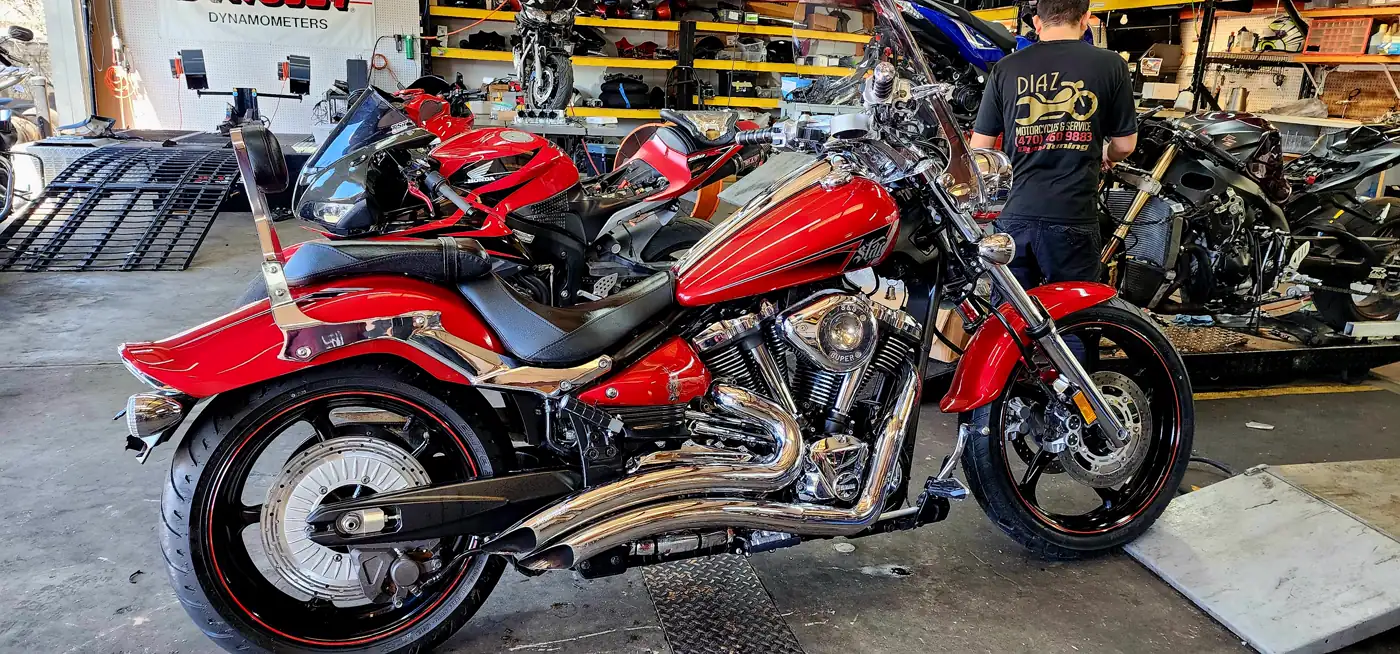
So what actually makes paint fade?
Most fade comes down to one enemy above all the others, and it’s the same one that fades your dashboard and your patio chairs. Sunlight. Ultraviolet light breaks down the resins in the clear coat over time, and Georgia hands out plenty of it. Still, the sun rarely works alone. A few other things speed it up, and knowing the order helps you spot what’s really going on with your bike.
- UV from the sun is the number one cause. Bikes parked outside or under a bright window take the worst of it.
- Age and heat cycles matter too. Years of hot days and cool nights leave the clear coat brittle and cloudy.
- Rough or infrequent washing hurts. Grit, bug guts left to bake, and harsh soaps scratch and strip the top layer.
- Storage that swings with the weather is sneaky. A detached, unheated garage traps humidity that dulls finish and feeds rust underneath.
- A cheap past repaint fails early. Thin clear or skipped prep from a rushed job gives out years before factory paint would.
That last one surprises people. A bike that was resprayed on the cheap somewhere down the road often fades faster than one that was never touched. Around here a lot of bikes live in older detached garages, the kind you’ll find behind the pre-1940 houses over in West End, and that unheated, humid air is tough on paint and chrome alike. Great for storing a project. Rough on a finish.
None of this means you did anything wrong. Paint fades. It’s simply what paint does, given enough sun and enough miles. The good news is that a faded finish is one of the most satisfying things to bring back, because the change is night and day.
Now, the part nobody mentions until you’re already paying for it. Not all fade is equal, and the depth of it decides the whole job. Light haze on good factory clear can sometimes be cut and polished back. But once the clear coat has chalked all the way through, polishing just burns through what’s left. At that point the only honest fix is refinishing, new clear at least, and often new base too. That’s the fork in the road, and a good shop tells you which side you’re on before touching a buffer.
The actual process: how a faded tank gets its color back
Here’s where most people are surprised. The spraying is the short part. At the same time the prep is the long part, and it’s where a good job is won or lost. Nobody sees the sanding and the masking in the finished bike, yet that invisible work is exactly what makes the color sit flat and deep instead of orange-peeled and cheap. Rushing prep is the single fastest way to ruin a paint job.
- Teardown. Tank, fairings and panels come off the bike so every edge gets reached. Cutting in around bolted-on parts is how you spot a lazy job later.
- Bodywork and prep. Dents, chips and old bad repairs get sorted, then everything is sanded to a clean, even surface. This is the slow, quiet part that decides the finish.
- Base coat. The color goes on in thin, even passes. Candy and metallic finishes get built up in layers so the flake and depth read right in the light.
- Clear coat. Several coats of clear go over the color to lock it in and give that wet, glassy gloss. This is the shield that protects the work for years.
- Cure, sand and buff. The clear cures hard, then gets color-sanded and polished until the reflection is dead sharp.
Every one of those steps takes real time, and the layers have to flash and cure on their own schedule. That’s why a proper refinish can’t be rushed, and why the honest answer to how long it takes is always the same: it depends on the work. A single scuffed panel is quick. A full color change with airbrushed graphics is a build. For a good rundown of what the work covers, our Canton write-up breaks it down bike by bike.
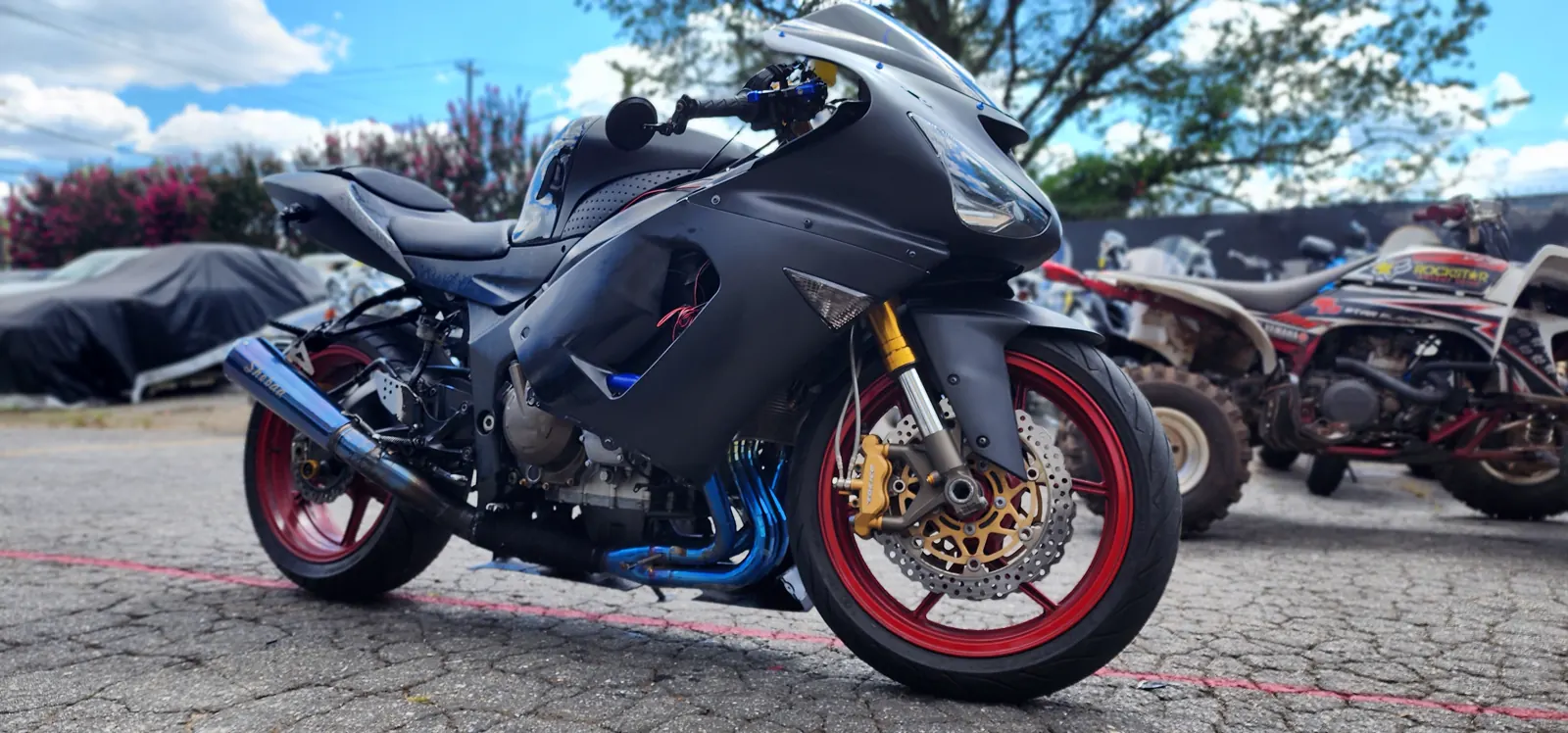
Matching a repair to your existing paint is its own skill, too. If a panel got scraped, blending fresh color into a decade of faded factory paint takes an eye that most volume shops don’t bother to train. Metallics and candies are the hardest to match, because the flake has to line up in size and lay. Get it wrong and the repair sticks out worse than the damage did. This is the kind of work we take care of here, in our own booth, start to finish.
And if you’ve ever wanted to change the color entirely, this is the moment. A repaint is the natural time to go from that tired factory red to a deep candy apple, or to lay in airbrushed graphics, a clean mural, or thin pinstriping along the tank seams. You’re already down to bare panels, so the extra step is small. The result is a bike that’s yours in a way no dealer floor model will ever be.
Is it safe to ride with faded paint?
Let’s clear this up, because it’s the question that actually keeps people up at night. Faded motorcycle paint Cartersville riders worry about is almost always cosmetic. A dull tank won’t stop you, steer you, or slow you down, and you can ride it as long as you like. So on the safety question, breathe easy. Fade is a looks problem, not a brakes problem.
There’s one catch worth knowing. Once the clear coat fails, the layers under it lose their shield. Left long enough, moisture can reach the base and even the bare metal, and that’s when you get bubbling, peeling and rust creeping in from the edges. It’s slow, so there’s no need to panic. But a faded finish is your early warning that the clear is wearing thin, and catching it now is far easier than chasing rust later.
The bigger safety point has nothing to do with paint at all. If your bike’s been parked long enough to fade in the sun, give the tires, brakes and fluids a good look before a real ride. And if it’s been a while since you rode hard, a refresher never hurts. The MSF rider courses are a solid way to knock the rust off your own skills.
How to tell a good paint shop from a rushed one
Bartow County is a show-me place. Folks here size up a shop the way they’d size up a machine, and paint is no different. You don’t need to be a painter to spot the difference. You just need to know what to look at. A few tells separate a booth that cares from one that sprays and prays.
- They ask to see the fade in person before quoting. Depth decides the job, and nobody honest quotes it blind.
- They talk about prep more than spraying. That’s the shop that knows where quality actually lives.
- They paint in-house, in their own booth. Work that gets farmed out loses accountability at every handoff.
- They can match and blend, not just repaint whole panels. Ask to see a candy or metallic match up close.
- They give you a straight answer on timing that depends on the work, instead of a rushed promise to win the job.
Custom paint done right isn’t cheap, and it shouldn’t be. Even so, you should always understand exactly what changes the total before you commit, so there are no surprises when you come to pick the bike up.
This is where a lot of Cartersville riders get stuck. The county is well covered for the big brands. You’ve got Bartow Powersports out off I-75 handling Suzuki and ATVs. But real in-house custom paint is thin on the ground up here. So the faded motorcycle paint Cartersville riders own usually gets handed to a shop that ships it off to someone you’ll never meet. Every handoff is a chance for something to go wrong, and a chance for nobody to own it if it does.
The fix is simple. Keep the whole job under one roof, with one crew, in one booth. When the same hands do the prep, the color and the clear, the finish comes out consistent and somebody’s name is on it.
And then there’s the part that’s just about riding again. A fresh finish isn’t only about looks in a parking lot. It’s about that first morning you roll the bike out and the sun catches the tank and it stops you for a second, the way it did the day you bought it.
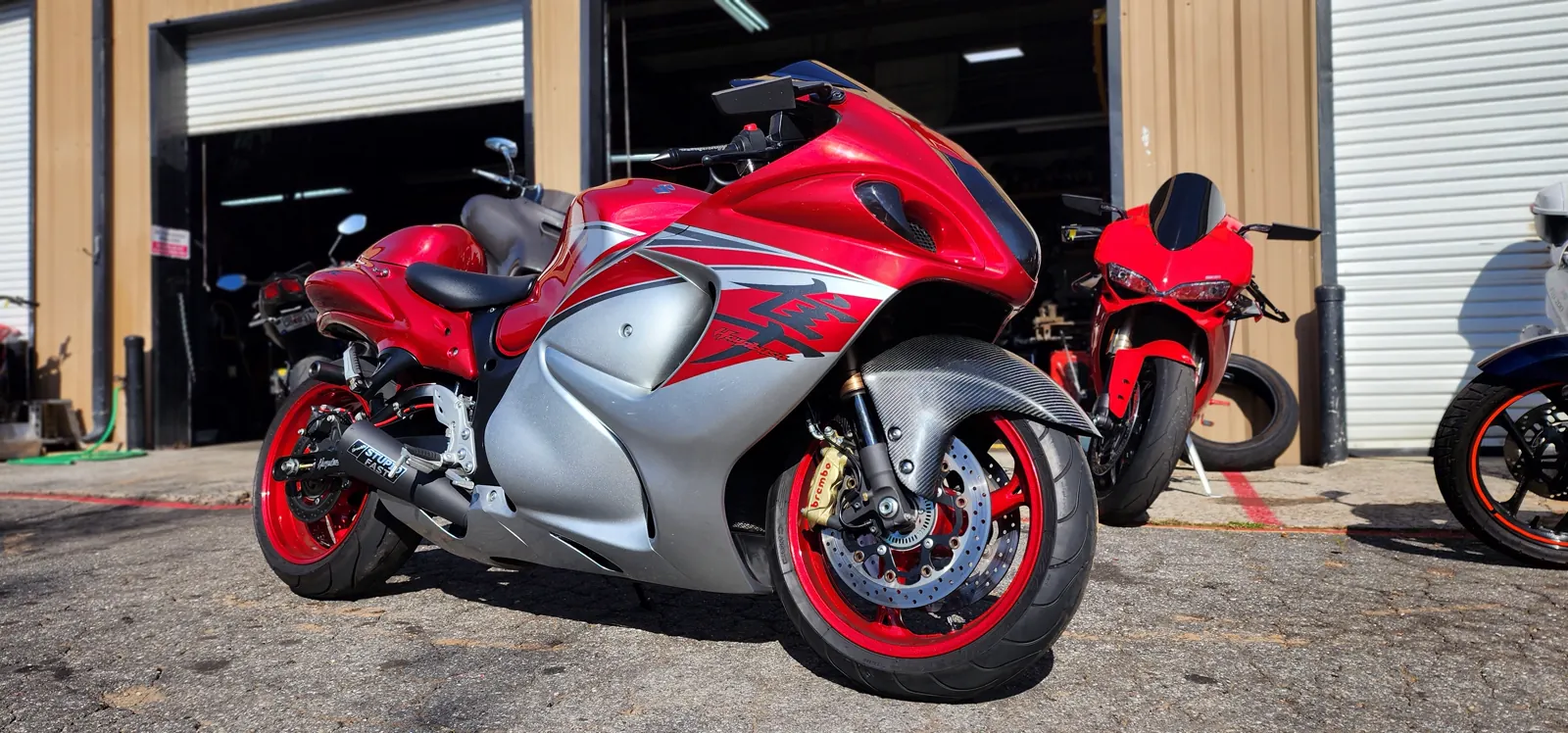
What a fresh finish means around here
Cartersville earns its color. This is a genuine riding town, a staging point for the best roads in northwest Georgia, and a bike that looks the part matters when you’re rolling out with people who notice. The classic run leaves on 411 north toward Fairmount, cuts east on GA-53 to Jasper, the twisty stretch partly carved into a cliff, drops south on I-575 through Canton, then loops back west on GA-20. Pull in for a plate at Bigguns BBQ near Jasper and your tank is on display in the gravel lot whether you meant it to be or not.
You’ll see the same pride downtown. Riders roll through the Cartersville Downtown Historic District around the old square on a clear evening, and a deep, glossy tank turns heads there just as much as it does on the mountain. Whether your bike lives in a tidy garage over in Cedarcrest or a pole barn out in the county, a finish that’s alive again is the most personal thing you can do to a machine. More personal than pipes. More personal than wheels.
There’s plenty here worth polishing up for. Folks come from all over to see the Booth, the Booth Western Art Museum, the biggest space of its kind for Western art anywhere, and the Tellus Science Museum just off I-75 pulls its own crowds. The point is, this is a town that values things made well and made to last. A paint job done in-house, layer by layer, fits that to a T.
Here’s the clear-headed version, because that’s really all you need. Faded paint is almost always a dead clear coat, not lost color. It’s safe to ride, but it’s your signal to act before rust joins the party. A quick haze might polish out; deep chalk needs refinishing. And prep, not spraying, is where the whole job is truly made.
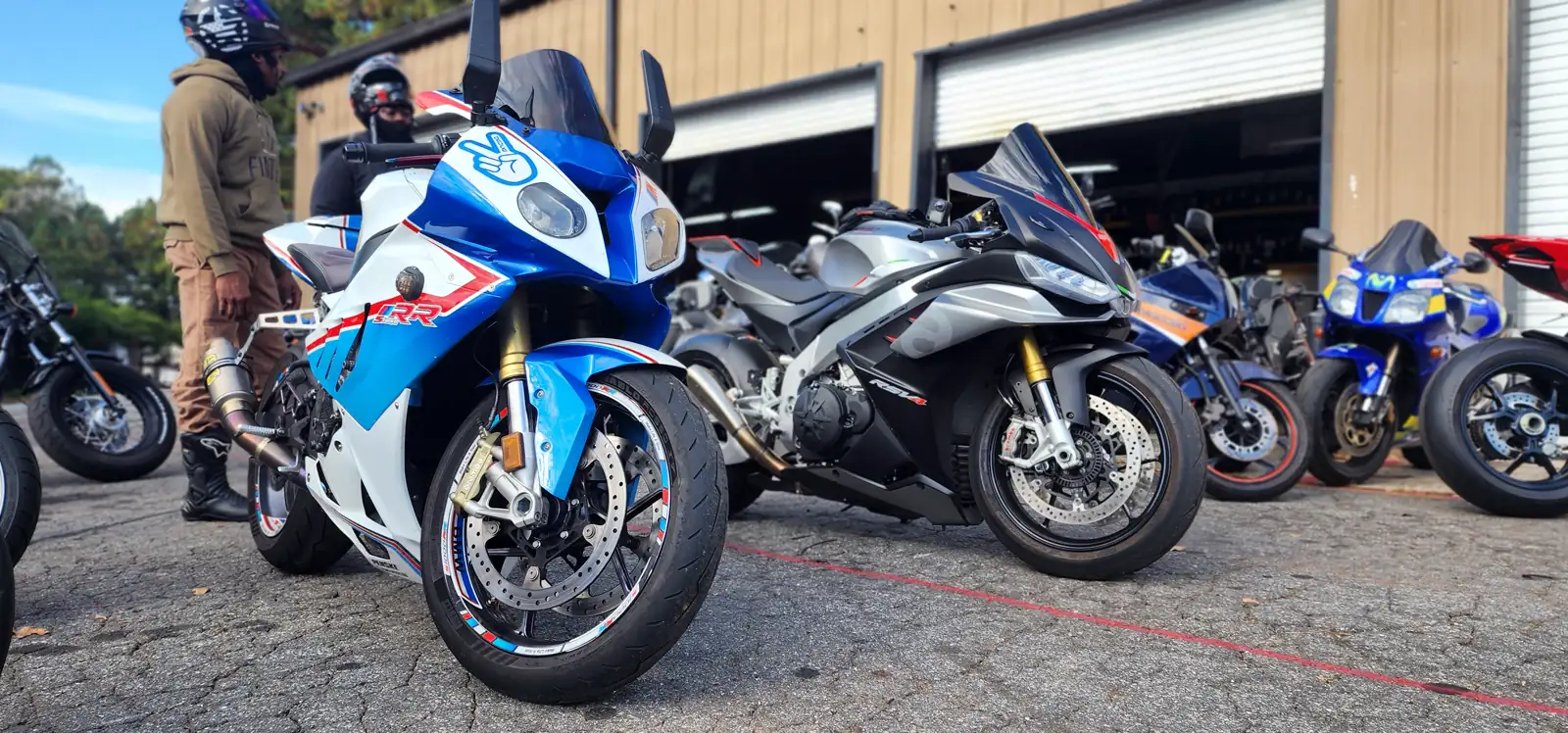
A tank that stops you in the driveway again — that's the whole point.
Best part? We’re an easy run from Bartow. Drop the whole bike, or just pull the tank and panels and bring those down. Plenty of friends we’ve helped up your way do exactly that. Either way, you get real custom paint done under one roof, and you get your color back.
Questions Cartersville riders ask us
My paint looks dull — could it be something other than fade?
It can be. A dull look sometimes comes from dried wax haze, hard-water spotting, or a baked-on film of road grime. A good wash and a clay bar clears that up fast. If the tank still looks chalky and grey after a proper wash, though, that’s real fade in the clear coat.
Is it safe to ride with faded paint?
Yes. Faded paint is cosmetic, so it won’t affect how the bike stops, steers or runs. Ride it as much as you like. The only thing to watch is peeling or rust at the edges, which is a sign the clear coat has failed and the finish is ready for attention.
What actually causes motorcycle paint to fade?
Sun is the biggest cause by far, since UV light breaks down the clear coat over time. After that comes age and heat cycles, rough or infrequent washing, humid unheated storage, and thin clear from a cheap past repaint. Usually it’s a mix of a few working together.
Can I fix faded paint myself?
Sometimes. A light haze on healthy factory clear can respond to careful polishing by hand. But once the clear has chalked all the way through, polishing just burns through what’s left and makes it worse. Deep fade is refinishing work, and it comes out best done in a clean booth.
Will faded paint get worse if I leave it?
Slowly, yes. The clear coat keeps breaking down once it starts, and eventually moisture reaches the layers underneath, which leads to peeling and rust. There’s no need to rush in a panic. Catching it early is simply a lot easier and cleaner than dealing with rust later.
Do I have to bring the whole bike down?
Not at all. You can pull the tank and panels and bring just those, or drop the whole bike if that’s easier for you. We’re a short run from Bartow either way, so plenty of Cartersville riders hand off the parts and keep it simple.
We paint for riders all across Bartow County and the surrounding northwest metro. That means friends in Acworth, Emerson and Kennesaw, out to White, Adairsville and Kingston, and over through Euharlee, Taylorsville and Rydal. We also see plenty of bikes come down from Canton, Woodstock and Dallas. Wherever you keep it, if you can get the tank and panels to us, we can bring the color back.
GET YOUR COLOR BACK
If your bike’s paint has gone dull and chalky, Cartersville, you don’t have to live with it. Bring the whole bike, or just pull the tank and panels and run them down to us. We do real custom paint in our own booth, start to finish, and we’ll tell you straight whether yours needs a polish or a full refinish. Send us a photo of the fade and let’s talk about getting that shine back.
470-460-9883Diaz Motorcycles and Service, LLC · 847 Barnes Mill Road, Marietta, GA 30062