How to Restore a Motorcycle That’s Been Sitting for Years — A Step-by-Step Guide for Cobb County and Atlanta Riders
There’s a specific kind of guilt that builds every time you walk past a motorcycle that used to be your everything and is now covered in a tarp in the corner of the garage. Maybe life changed. Maybe the bike needed work you kept putting off. Whatever the reason, a motorcycle that’s been sitting for years in Georgia’s climate isn’t just dirty — it has developed a long list of interconnected problems that need to be addressed in the right order, or you’ll create new damage while trying to fix the old.
Motorcycle restoration for a bike that’s been sitting isn’t a single service — it’s a structured process. At Diaz Motorcycles in Marietta, we handle motorcycle restoration in Cobb County and across Metro Atlanta, and the first thing we tell every owner is this: the goal isn’t just to get it running. The goal is to get it right. Here’s what that process actually looks like, from first inspection through the moment the bike rolls back out the door.
Phase One — Assessment Before Anything Is Touched
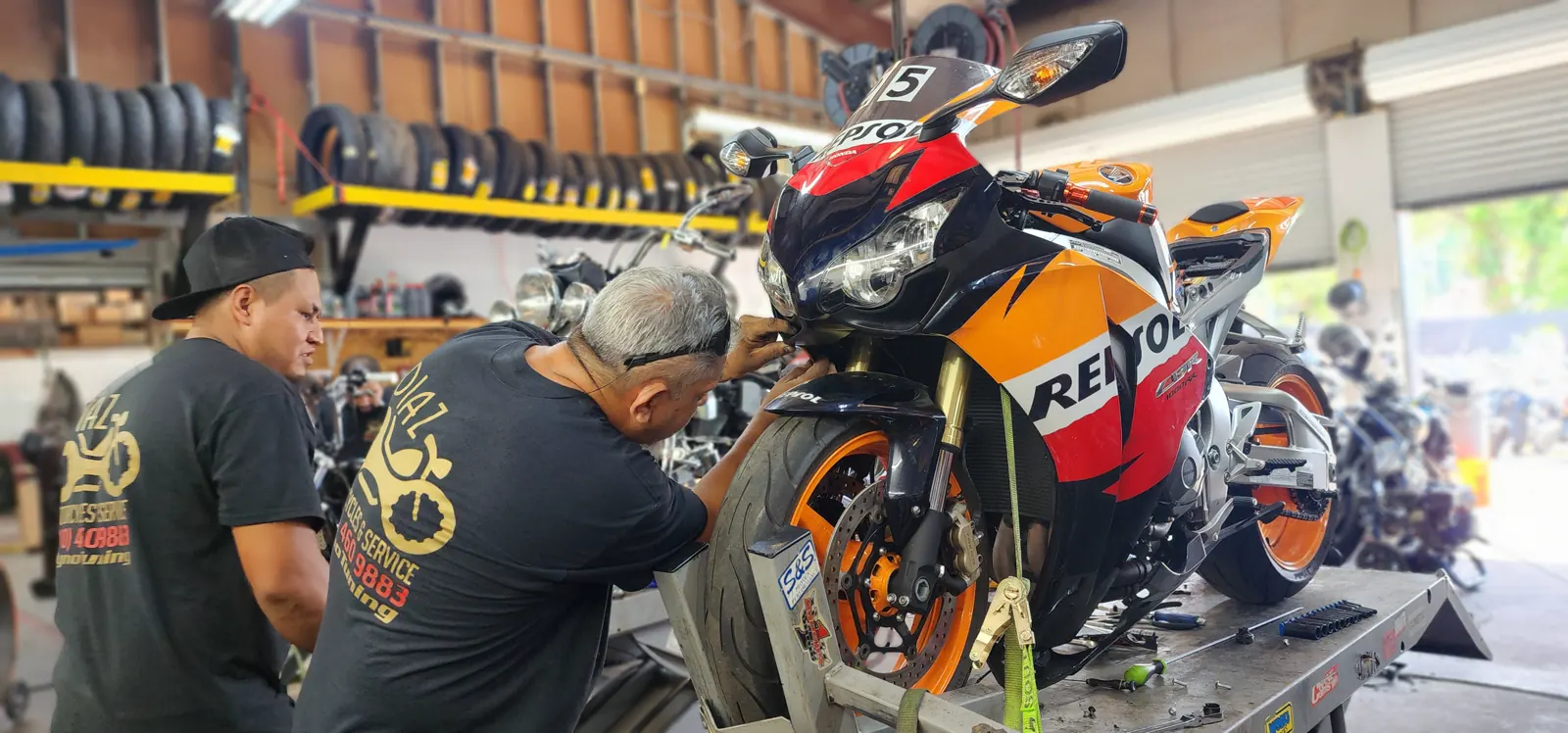
The first step in any sitting-bike restoration is a comprehensive assessment. Before a single bolt is turned, we need to understand what we’re working with. How long has it been sitting? Was it stored with fuel in the tank or drained? Was it under cover or exposed? Did it run clean when it was last parked, or were there existing mechanical issues? These questions shape the entire restoration strategy.
Common damage patterns from extended storage in Georgia’s climate include varnished carburetors from ethanol-blend fuel breaking down, corroded brake lines and caliper pistons from humidity exposure, seized or sticking clutch plates, degraded fuel lines, flat-spotted tires, dead or sulfated batteries, and rust forming in the tank’s interior. Some of these problems are visible on inspection. Others only reveal themselves during disassembly or a compression and leak-down test.
- Full visual inspection of frame, suspension, and major mechanical components
- Compression and leak-down test to assess engine internal condition
- Fuel system assessment — tank, lines, petcock, carbs or injectors
- Brake system inspection including calipers, master cylinder, and lines
- Electrical system check — battery, charging, switches, and lighting
- Tire condition and age assessment — rubber hardens and becomes unsafe over time
- Chain, sprocket, and drivetrain evaluation
- Cosmetic condition review — paint, chrome, seat, and plastics
Assessment comes before disassembly — understanding what a bike needs prevents creating new problems while fixing old ones.
Phase Two — Mechanical Systems First, Cosmetics Second
One of the most common mistakes in DIY restorations is spending money on cosmetics before the mechanical systems are sorted. It’s tempting — cleaning up the paint feels like progress. But if the bike still has varnished fuel passages or a leaking brake master cylinder, those cosmetic improvements will be undone the moment the bike actually runs. The correct sequence is mechanical first, cosmetics last.
For carbureted bikes that have been sitting, the carburetor rebuild is almost always necessary. Ethanol-blended fuel — the standard at Georgia gas stations — begins to degrade in as few as 30 days when left in a system. Over months or years it varnishes into a sticky resin that clogs jets, coats float valves, and prevents the fuel system from metering correctly. A proper carburetor rebuild means disassembly, ultrasonic cleaning, inspection of soft parts, and reassembly with fresh jets and gaskets. It’s not optional on a long-sitting bike — it’s step one.
“Get the bike running right first. Everything cosmetic you fix before that point risks being undone the moment the engine starts.”
Brake systems on sitting bikes deserve equal attention. Caliper pistons corrode in their bores and develop uneven seal wear. Master cylinder internals can swell or deteriorate. Brake fluid is hygroscopic — it absorbs moisture from the air, lowering its boiling point and accelerating internal corrosion over time. Brake lines, particularly rubber sections, crack internally with age and can fail suddenly under pressure. A full brake system refresh is a safety necessity on any bike that’s sat more than two years.
Phase Three — Bringing the Cosmetics Back
Once the mechanical systems are sorted and the bike runs and stops as it should, cosmetic restoration begins. This phase covers paint correction or respray, chrome restoration, seat repair or replacement, and a full professional detail to bring every surface back to its best condition. For classic and vintage bikes, we work closely with owners to decide between keeping a patina that’s part of the machine’s history versus a full cosmetic return to original specification. There’s no universal right answer — it depends on what the owner wants the bike to be.
For riders in Marietta, Kennesaw, and across Cobb County looking to revive a bike they thought was gone for good, the full restoration process takes time and honest conversations about budget. But the end result — a bike that looks right, sounds right, and is actually safe to ride — is worth every hour. See our restoration services page for a full breakdown of what we offer.
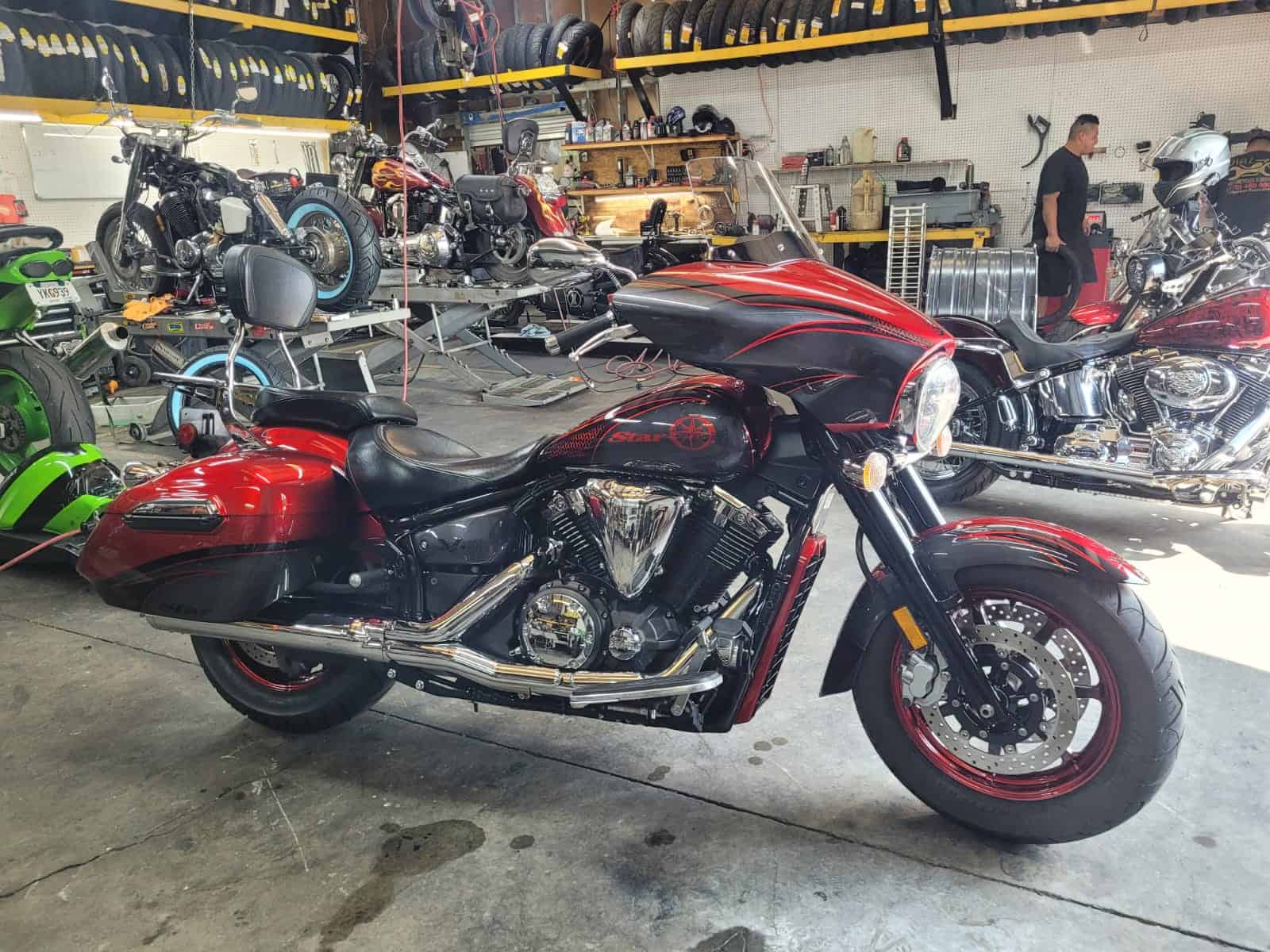
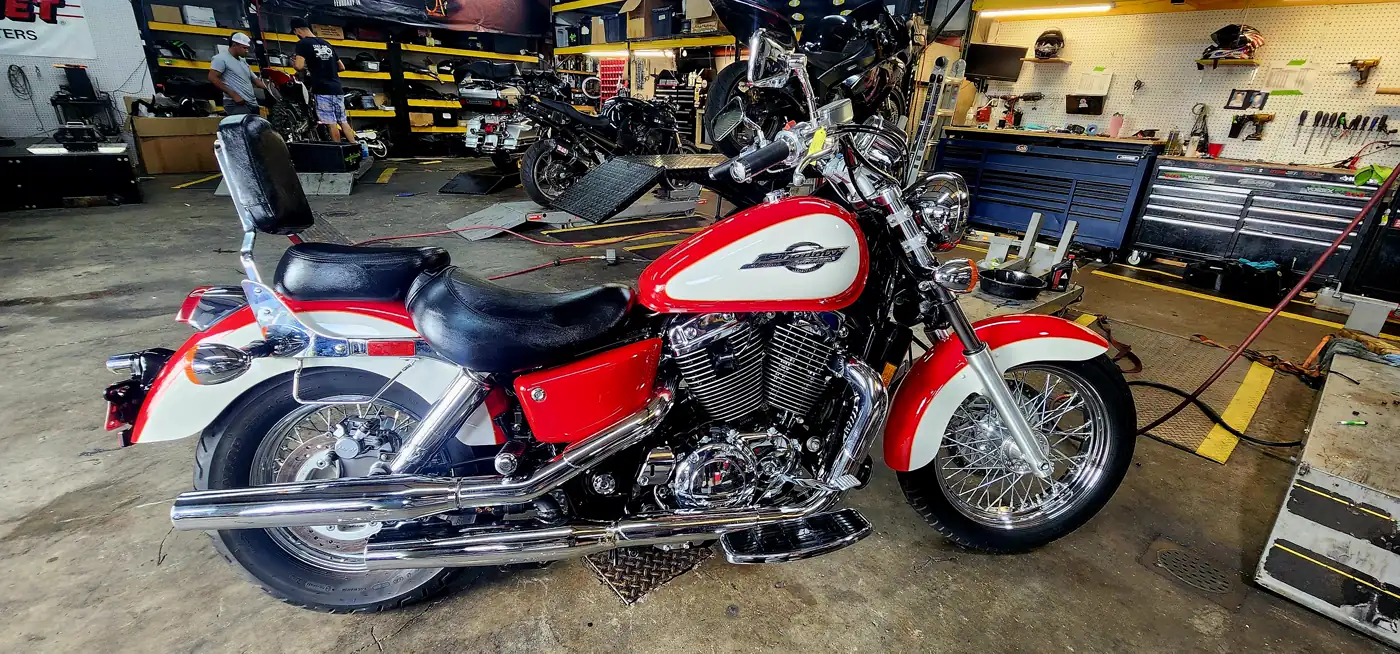
A properly restored bike runs as well as it looks — mechanical integrity and cosmetic quality go hand in hand at Diaz.
The bikes we see come in as projects and leave as road-worthy machines represent some of the most satisfying work we do. If you’ve got a bike in storage across Metro Atlanta or anywhere in Cobb County that you’ve been meaning to address, the best time to start is now — before another Georgia summer adds more corrosion to the list.
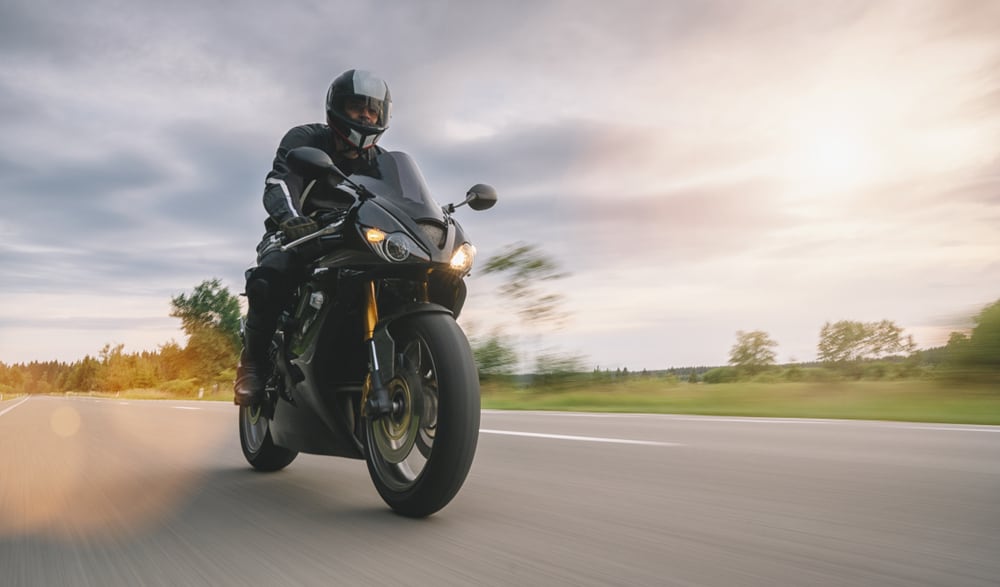
That first ride after a full restoration — out on a Georgia back road with a bike that finally works the way it was meant to — is worth every step of the process.
Got a Bike That’s Been Sitting Too Long?
Bring it to Diaz Motorcycles in Marietta. We restore sitting bikes back to road-ready condition for riders across Cobb County and Metro Atlanta.
470-460-9883 Schedule Service Today847 Barnes Mill Road, Marietta, GA 30062
Serving Cobb County · Marietta · Kennesaw · Atlanta · and surrounding Georgia communities