Independent Motorcycle Shop Gainesville — Which Is Right
Dealer service counter or independent shop? Here's an honest side-by-side, plus the call we'd actually make for a Hall County rider.
Then again, the kid behind the service counter looked at your bike, then looked at you, and started explaining what a chain is. You’ve been riding since before he had a learner’s permit. Even so, nobody enjoys feeling small in a building they’re about to hand money to. Meanwhile, that one moment is why plenty of riders go looking for an independent motorcycle shop Gainesville neighbors actually vouch for, instead of going back to the counter that talked down to them.
In fact, that said, Here’s the good news up front: that feeling isn’t a sign you picked wrong forever. For example, It’s a sign you’ve got two real options and nobody has laid them out for you honestly. So let’s do that. After that, Dealer service department on one side, independent shop on the other. Both are legitimate. Both are right for somebody. What’s more, We’ll tell you who each one fits, we’ll give you a straight recommendation, and we’ll name the exact situation where the option we don’t run is the better call.
The problem: two doors, and nobody explains the difference
So and Better yet, most riders in Hall County pick a shop the way they pick a barber. Still, Somebody at work mentions a place, or the bike’s still under warranty and the dealer is the obvious default, and that’s that. It works fine until the day it doesn’t. Then you’re standing at a counter trying to describe a noise, and the person writing it down has never heard your engine run.
Plus, the frustration almost never comes from bad wrenching. It comes from a mismatch. Of course, you brought a question that needed a conversation to a place built for volume, or you brought a warranty claim to a shop that can’t file one. Match the job to the door and both options look great. Mismatch it and you leave annoyed, out a Saturday, and no closer to an answer.
THE SHORT VERSION
Dealers are built for warranty work, recalls, and factory-specific procedures on newer bikes. Independents are built for older bikes, mixed fleets, deep diagnostics, and anything the factory never offered. Pick based on the job, not on loyalty.
Why it happens — the business model behind the counter
A dealer service department lives inside a store that sells new bikes. That shapes everything. Techs are trained on one or two brands, deeply. The parts room stocks those brands. Software, special tools, and recall bulletins all flow straight from the manufacturer. When your two-year-old bike throws a code the factory already knows about, that setup is fantastic. They’ve seen it eleven times this month and the fix is documented.
But the same setup gets clumsy fast when the bike is old, modified, or wearing another badge. A twenty-year-old carbureted cruiser with a previous owner’s wiring creativity doesn’t map to a bulletin. It maps to time, and time is the one thing a volume service lane guards hardest.
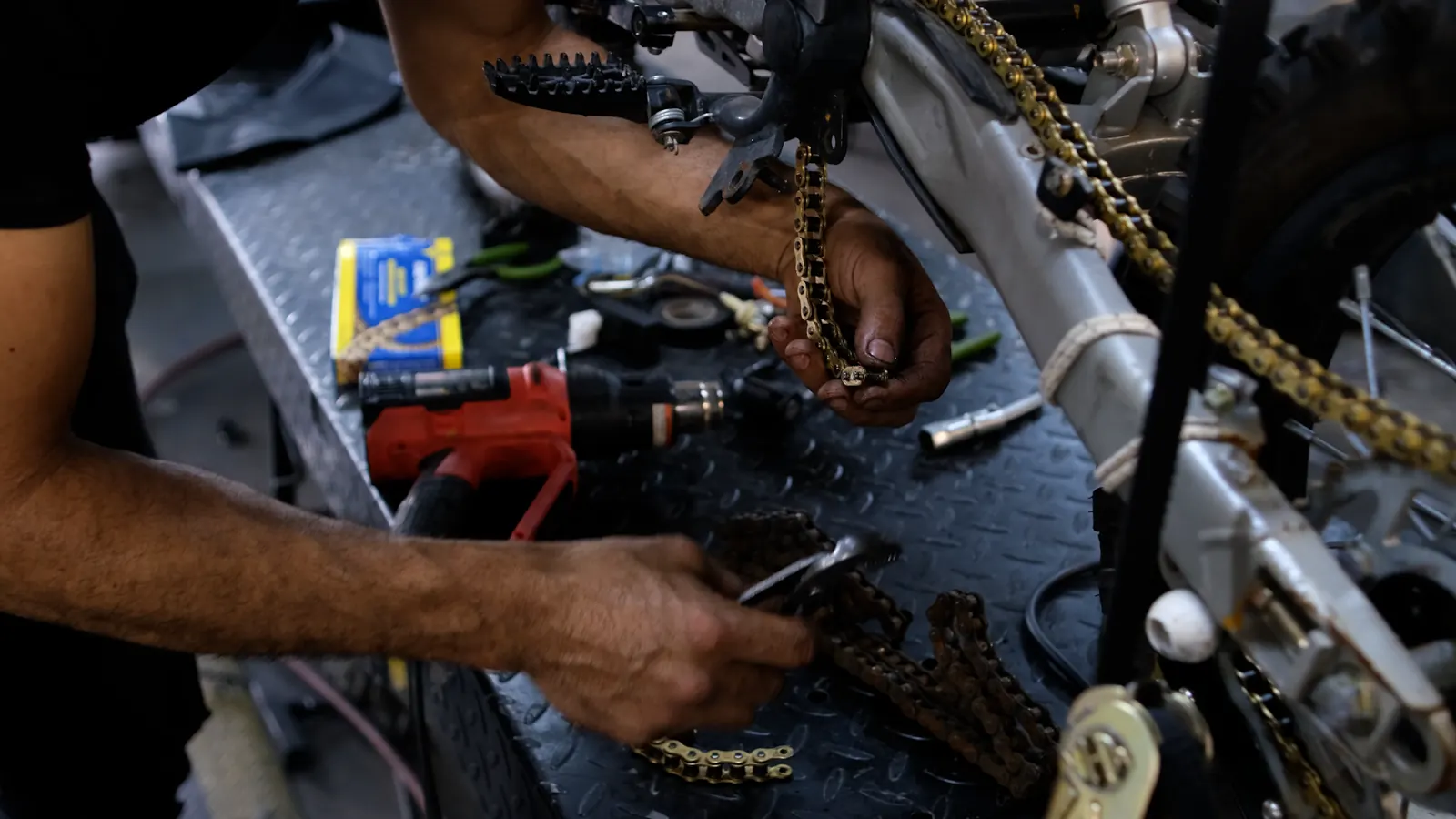
An independent runs on the opposite math. We don’t sell new bikes, so nothing pushes us toward telling you it’s time for a new one. Now, we see every brand that rolls in the door, which means we get pattern recognition across machines instead of depth in one badge. And we can spend an hour chasing a weird noise because that hour is the product, not an interruption to the product. If you want the long version of how that chase actually goes, we wrote the full rundown on it.
Neither model is the villain here. They’re just tuned for different jobs, the same way a torque wrench and a breaker bar are both correct tools and you’d hate swapping them.
Before we go further, one thing worth clearing up
Taking your bike to an independent shop does not void your factory warranty. That’s the myth we hear most, and it stops good riders from ever comparing their options. Federal law protects your right to have routine service done where you like, as long as the work is done properly and you keep your records. Save the invoices, note the mileage, use the right fluids and parts, and you’re covered.
What an independent genuinely can’t do is perform warranty repairs or safety recalls on your behalf. Those get authorized and paid by the manufacturer through its own network. So if your bike is new and something covered breaks, the dealer isn’t just the better option, it’s the only one. We’ll say that to your face and point you down the road, because sending you somewhere we can’t help is a waste of your Saturday and our bench.
Routine service, your choice. Warranty repair, their network. Both things are true at the same time.
How we diagnose — what a good comparison looks like on the floor
Ask any shop to walk you through their diagnostic process before you commit. The answer tells you more than any review page. A strong process sounds boring and specific, and it goes roughly like this.
- We listen to you first, in your own words, including the part you think sounds silly. The rider usually knows more than they think.
- We ride or run the bike ourselves and try to reproduce the symptom instead of guessing at it from the counter.
- Of course, we separate what we measured from what we suspect, and we tell you which is which.
- We show you the part. On the bench, in your hands, with the wear pointed out.
- We give you the order of operations — what has to happen now, what can wait, and what’s optional forever.
That last step is where a lot of counter conversations fall apart. When everything on the list sounds equally urgent, riders shut down and approve nothing, or approve everything and feel taken. Sorting the list is the actual service.
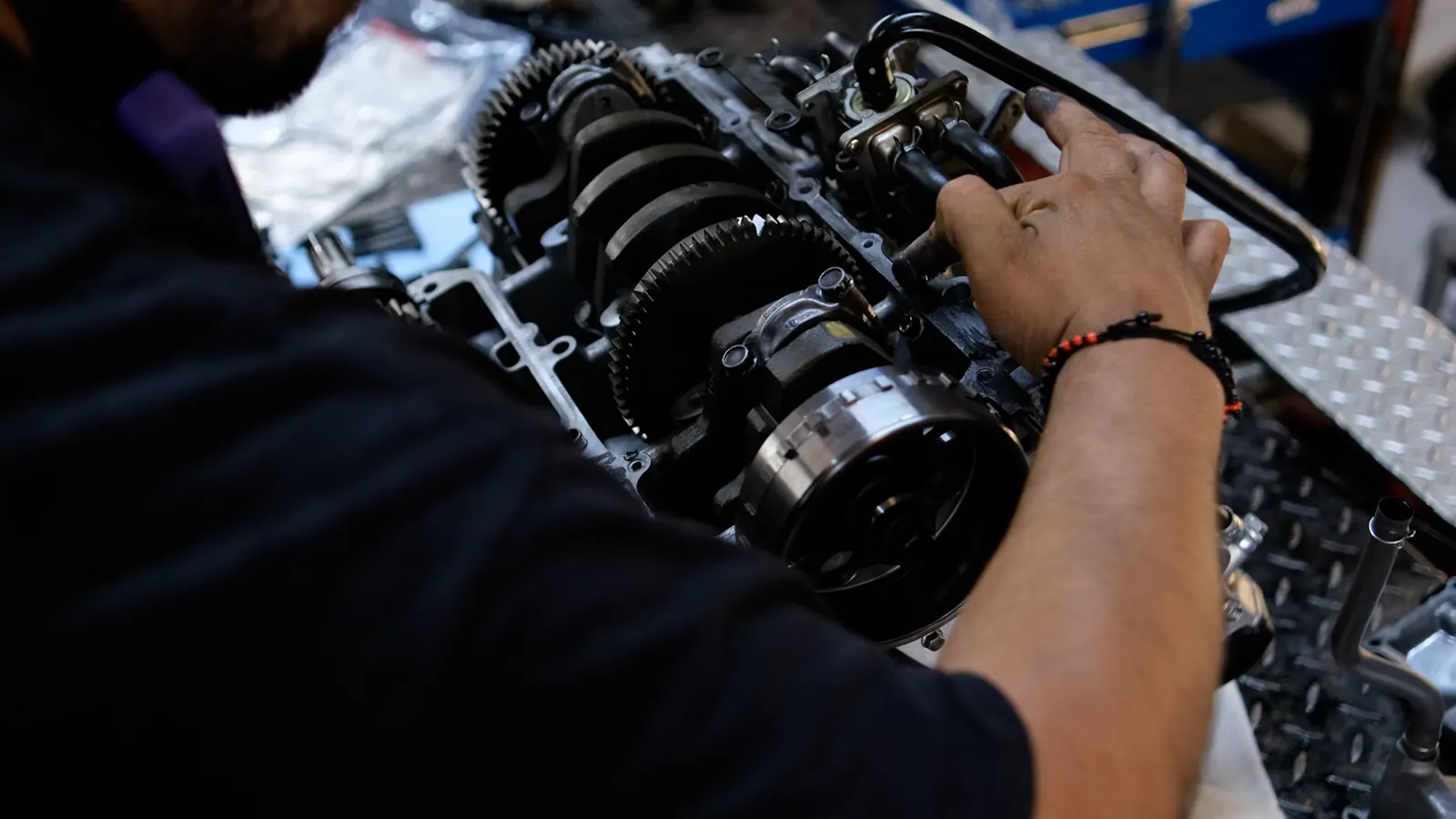
If you want a preview of how we handle intake, estimates, and updates on a bike that’s traveling to us, here’s what that service actually involves. And if you’d rather see the full menu before you decide, everything we cover is laid out in one place.
What the fix involves, depending on which door you picked
| Job | Dealer service | Independent shop |
|---|---|---|
| Warranty repair or recall | The only real option | Can't file it, will tell you so |
| Scheduled service on a newer bike | Solid, brand-specific | Solid, and your records still count |
| Bike over about ten years old | Parts and interest can thin out | Home turf |
| Carb rebuild, fuel system, long-sit no-start | Sometimes declined | Bread and butter |
| Dyno tuning and ECU flashing | Rare outside factory maps | What we built the bench for |
| Custom paint and full restoration | Usually subbed out | In house, start to finish |
| Mixed garage, three brands | Three separate appointments | One shop, one phone call |
That table is the whole decision in miniature. Newer bike, covered problem, factory procedure — the dealer wins and it isn’t close. Older bike, weird problem, or anything the factory never sold in the first place — that’s where an independent earns its keep.
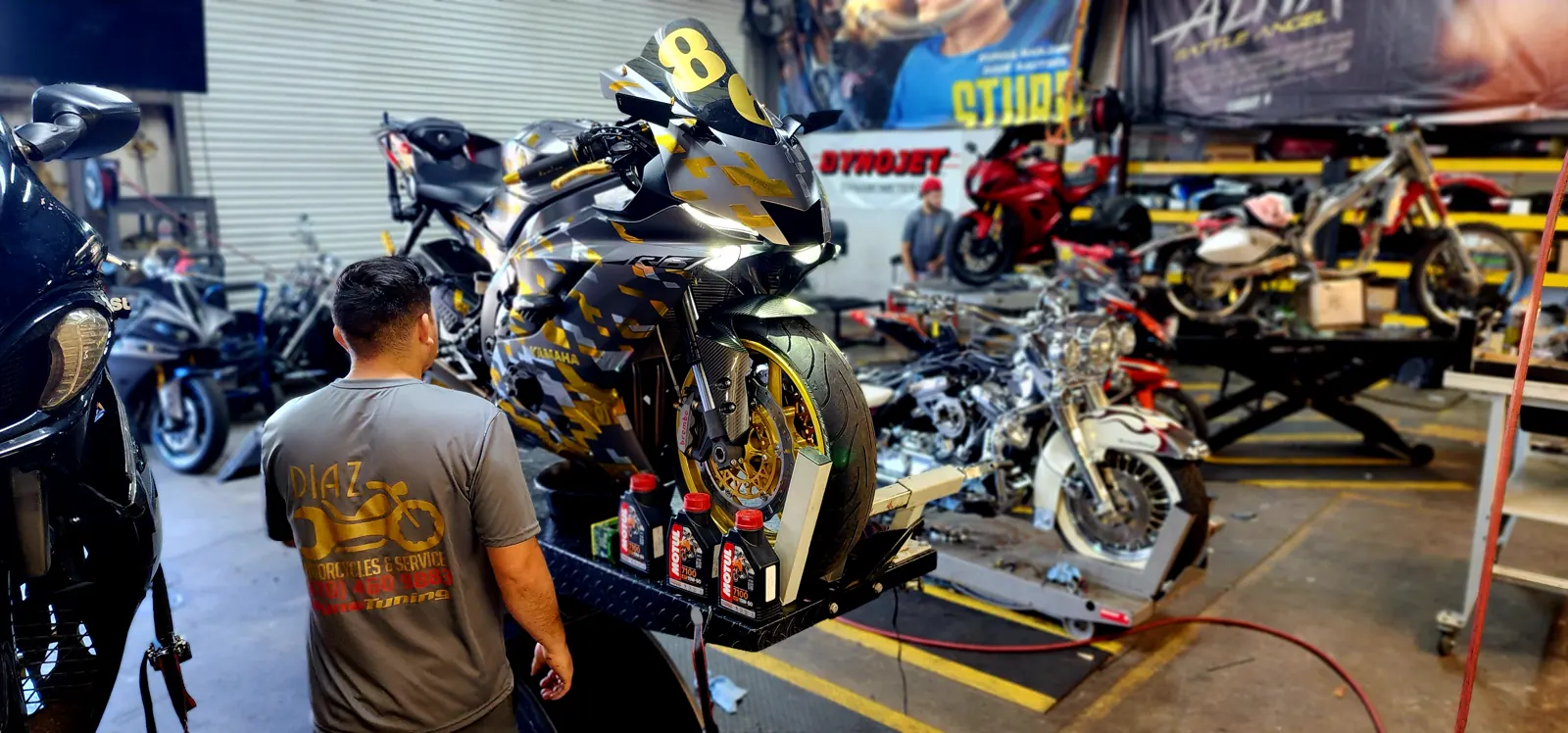
Performance work deserves its own line. Dyno tuning and ECU flashing aren’t repairs, they’re measurement. We strap the bike down, watch what the engine actually does under load, and adjust fueling to match the intake, exhaust, and air the bike lives in. Guessing from a chart on the internet gets you close. Measuring gets you right. Riders who’ve spent time reading RevZilla’s Common Tread already know that difference by heart.
Local context: what this looks like from Hall County
Gainesville isn’t an Atlanta suburb and riders here don’t need reminding. You’ve got your own hospital system, your own downtown, and your own campuses in the University of North Georgia Gainesville campus and Lanier Technical College. You also sit at the mouth of the North Georgia mountains, which is the part Atlanta riders are jealous of. US-129 north runs from town up toward Cleveland and Blairsville, and the stretch beyond Blairsville toward Dahlonega gets described by riders as a roller coaster of turns and elevation. Folks drive an hour just to start where you start.
That geography shapes the bikes. Mountain touring rigs and cruisers dominate. Dual-sports show up because Chattahoochee National Forest gravel is right there. And sportbikes here skew track-oriented, since Michelin Raceway Road Atlanta over in Braselton runs motorcycle track days about twenty-five to thirty minutes away. A track-day bike wants different things than a commuter — measured fueling, fresh fluids, and rubber chosen on purpose, which is worth an evening with Michelin’s motorcycle tire resources.
Roads around town do their part too. GA-365 and I-985 carry heavy freight and poultry traffic, and blown retreads on the shoulder are a genuine two-wheel hazard. Head north after a rain and corners collect gravel; come fall, they collect wet leaves instead. Down in the older streets around New Holland Village, the historic mill village that’s still walkable to downtown, pavement is narrow, patched, and settled. Sitting at over twelve hundred feet, Gainesville gets more real freezing nights than Atlanta, and freeze-thaw chews pavement edges faster than most riders expect.
There's a reason we bring this up on nearly every intake
Garages are everywhere in Hall County. Almost every subdivision home and lake house has one, plus a shed out back for overflow. That’s lovely for the bike’s paint and rough on its fuel system, because a covered bike is an easy bike to not ride for eight months. We see the result constantly: stale fuel, gummed carbs, a battery that gave up quietly, and an owner who swears it ran perfect when they parked it. It probably did. Fuel just doesn’t wait around.
Storage is also why restoration work travels so well. Bikes sleeping in garages over by Sidney on Lanier and Stratford on Lanier, or behind the grand old homes of the Green Street District, come out needing months of attention rather than an afternoon. A restoration is a drop-off, not a visit. Nobody waits in a lobby for a job measured in months, so the miles between us stop mattering the second the bike is on the trailer.
Speaking of miles: we’re in Marietta, and the ride over is roughly fifty-five to sixty-two miles depending on your route, call it sixty-five to eighty-five minutes. That’s an estimate off the map, not a stopwatch. You can take the lake route through Cumming or run the interstates. Either way, no rider on earth should make that trip for an oil change, and we’d never ask you to. Pickup and delivery exists for exactly this reason. Meanwhile, riders over in Canton face the same math and land in the same place.
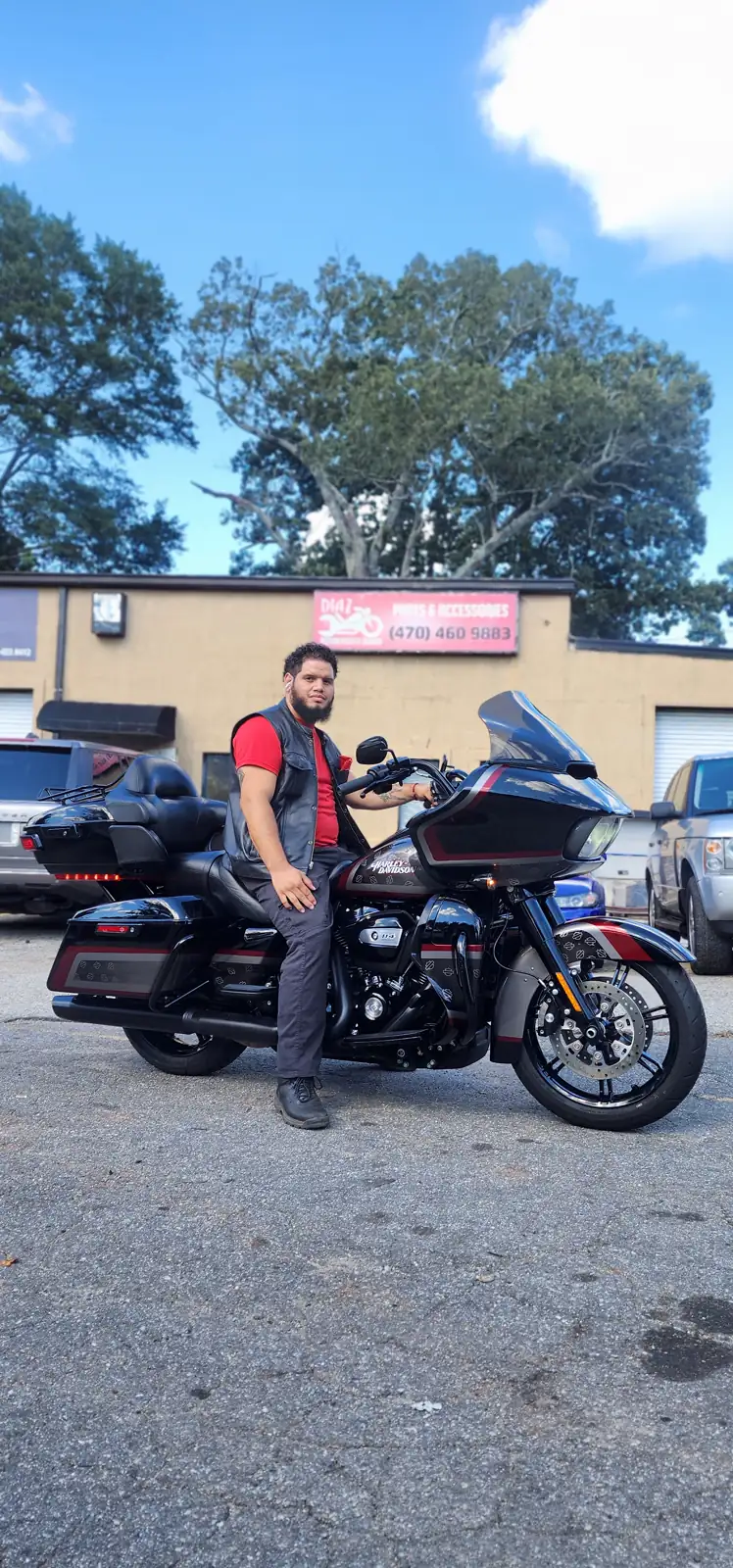
The outcome: here's our actual recommendation
For routine service on a newer bike, stay local. Hall County is well covered for oil, tires, and scheduled maintenance, and a shop ten minutes from Lake Lanier Olympic Park on Clarks Bridge Road beats a shop over an hour away every single time for that work. Same answer for anything under warranty or under recall — go to the dealer, keep the paperwork, and don’t overthink it.
For the other bucket, we’d send the bike to an independent motorcycle shop Gainesville riders may have to drive a little for, and we’d do it without hesitating. That bucket is dyno tuning, ECU flashing, custom paint, full restoration, deep engine work, and any stubborn problem that two shops have already shrugged at. Those jobs reward equipment and patience, not proximity. They’re also drop-offs, so the drive happens once.
- Newer bike, covered failure, or an open recall? Dealer. Every time.
- Oil change, tire swap, or a quick brake job? Whoever’s closest and does clean work.
- Long-sit no-start, carb or fuel-system rebuild? Independent.
- Dyno tuning, ECU flash, or a build with a plan behind it? Independent, and ask to see the dyno.
- Paint, chrome, or a frame-up restoration? Independent, and expect to be patient.
Word of mouth still rules around here, and it should. Ask the neighbor with the boat slip and the cruiser in the garage. Ask the guy at work who’s been riding US-129 north every fall for twenty years. Then ask whichever shop you’re considering to walk you through their diagnostic process out loud. The right shop will enjoy the question. That’s the whole test, and it’s free.
However you decide, decide on purpose. You shouldn’t have to feel talked down to at a counter, and you shouldn’t have to guess which door fits the job. Now you don’t.
Questions Gainesville riders ask us
Can I switch shops later, or am I locked in?
You can switch any time you want, and plenty of riders use both. Just keep your service records with mileage and dates so nothing gets murky later. A good shop will hand you a clear invoice without being asked. Bring that folder along and any shop can pick up the story mid-chapter.
Which one do you actually recommend?
Keep routine service close to home in Hall County and let the dealer handle anything under warranty or recall. Send the deeper work — tuning, restoration, paint, stubborn diagnostics — to an independent with the right equipment. That’s the split we’d use on our own bikes. It isn’t a dodge, it’s just two different jobs.
Does the bike I ride change the answer?
It does, quite a bit. A bike still inside its factory coverage leans dealer for anything covered. A bike over about ten years old, or one wearing parts the factory never sold, leans independent because that’s where the interest and the tooling live. Mixed garages lean independent too, since one shop beats three appointments.
Is performance work like a dyno tune or ECU flash really worth it?
If your bike is stock and you ride it to breakfast, probably not yet. If you’ve changed intake, exhaust, or gearing, or you’re doing track days at Road Atlanta, then yes — measured fueling is a real difference you can feel in throttle response and heat. The dyno takes the guessing out. Ask any shop to show you the before and after pulls.
My bike sat in the garage for two years. Where should that one go?
Independent, almost always. Long sits bring stale fuel, gummed passages, tired batteries and sticky brakes, and that combination needs hours rather than a bulletin. The good news is it’s extremely common and extremely fixable. Most of these bikes wake up grumpy and then run beautifully.
How do we handle the distance from Gainesville to Marietta?
With pickup and delivery, so you never make the trip twice. Most of the work riders travel to us for is drop-off work anyway — restorations and builds are measured in weeks or months, not afternoons. We send photos and updates as the job moves. You get your Saturday back and the bike still gets the bench time.
We work with riders all across Hall County and Northeast Georgia, from Oakwood and Flowery Branch down toward Buford and Sugar Hill, and out east through Braselton where the track-day crowd tends to gather. Riders come to us from Clermont, Lula and Chestnut Mountain, from Murrayville and Talmo up in the quieter corners, and from Dahlonega and Cumming when a mountain weekend turns into a project. If your town isn’t on that list but you’re within reach of the lake or the foothills, call anyway — pickup and delivery covers more ground than most folks expect.
TEXT US ABOUT YOUR BIKE
If you’re weighing your options in Gainesville and you’d rather talk it through than guess, send us a text. Tell us the bike, the year, and what it’s doing — or what you want it to do. We’ll tell you straight whether the job belongs at a dealer, at a shop near the lake, or on our bench, and if it’s ours we’ll set up pickup so you never make the drive.
470-460-9883Diaz Motorcycles and Service, LLC · 847 Barnes Mill Road, Marietta, GA 30062