Motorcycle Chrome Pitting in Newnan: Why Georgia Humidity Does It, and How to Fix It
Those little rust freckles on your pipes aren't your fault — they're the climate. Here's what's happening and what actually stops it.
You washed the bike, dried it, and it looked great. Then a few weeks later you spot them: tiny rust freckles creeping across the exhaust and the chrome trim, like someone sprinkled the pipes with pepper. That’s chrome pitting, and if you ride in Coweta County you are not alone. Motorcycle chrome pitting Newnan riders fight every summer is a humidity problem first, a cleaning problem second — and the good news is both are fixable.
First, breathe. Pitting is not a sign you neglected your bike. Plenty of clean, garage-kept bikes get it, because our climate is just brutal on chrome. Understanding why it happens is the first step to stopping it, so let’s break it down without the science-fair lecture.
What chrome pitting actually is
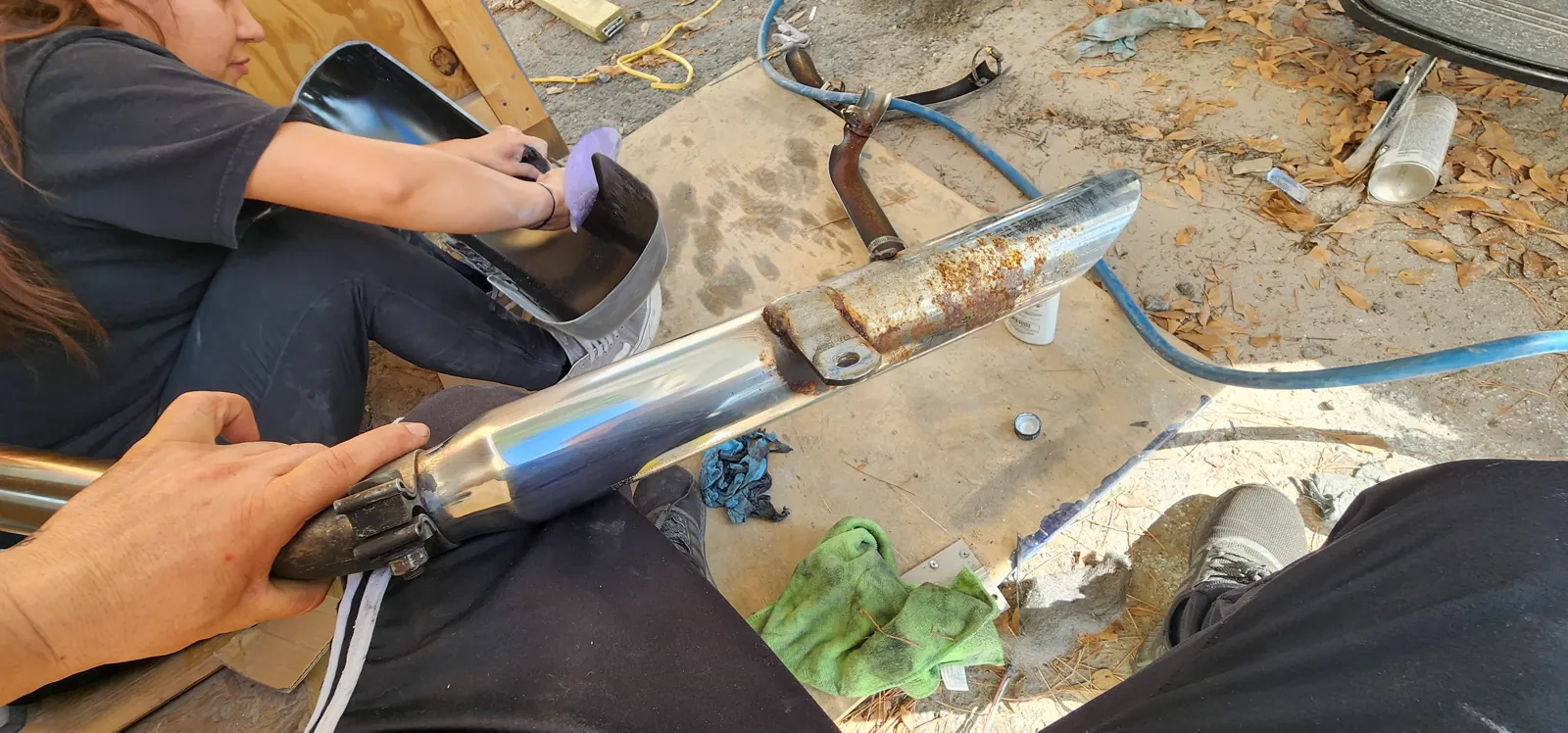
Chrome isn’t solid metal all the way through. It’s a thin, shiny layer plated over steel underneath. That layer looks bulletproof, but it has microscopic pores you’ll never see with your eye. When moisture and salt sneak into those pores and reach the steel below, the steel starts to rust from the inside. That rust pushes up through the chrome and leaves those little pitted freckles.
So the pit you see on the surface is really rust breaking out from underneath. That’s a big deal, because it means you can’t just wipe it away like dirt. Catch it early and it polishes out. Let it sit and the pit gets deeper, until the chrome flakes and the only real fix is re-plating. Time is the whole game here.
Why Georgia humidity is the villain
Here’s the local truth. Newnan gets nearly 52 inches of rain a year and summer air thick enough to chew. That humidity means moisture is basically always sitting on your chrome, even on days it doesn’t rain. Park the bike after a warm ride, the metal cools, and moisture condenses right onto those pipes like a cold glass of sweet tea in July.
Now add the extras. Spring pollen coats everything in a mildly acidic film that holds moisture against the metal. Our hard water leaves mineral deposits every time a bike air-dries in the sun. And the I-85 freight corridor throws up road grime that clings to warm chrome. Stack all that on top of the humidity and you’ve got a finish under attack pretty much year-round.
THE SNEAKY PART
Chrome pits fastest where you can’t see it — behind heat shields, under fender edges, and on the back of exhaust headers. Out of sight, still rusting.
That’s what catches good owners off guard. You keep the visible chrome shining, but the pitting starts on the hidden back side of the pipes and the tucked-away trim. By the time it shows on the front, it’s already been working a while. It’s a little like a leak in the roof: you don’t notice until the ceiling stains.
How to tell surface haze from real pitting
Not every dull spot is pitting, and that’s good news. A lot of what looks like rust is really just baked-on grime, hard-water film, or a light haze that wipes off with the right polish. Run a fingernail lightly across it: if it’s smooth, it’s probably surface gunk. If you feel tiny rough craters, that’s real pitting biting into the metal.
Knowing the difference saves you worry and money. Surface haze cleans up in a maintenance detail. True pitting needs the deeper treatment we’ll get to next. When you can’t tell, a couple close-up photos in good light usually settle it, and we’re happy to look before you spend anything.
How we fix chrome that's already pitting
Now the hopeful part, because most pitting we see is very fixable. If the pits are still shallow, the answer is careful hand work: a proper chrome polish and fine metal treatment worked into the surface to lift the surface rust and level the little craters. It takes patience and the right products, not a wire wheel that’ll scratch the chrome worse than the rust did.
Deeper pitting takes more. We clean the rust out of each pit, treat the steel so it stops spreading, and polish the chrome back to as close to mirror as the plating will allow. When the chrome is truly gone — flaking, rough, rusted through — polishing won’t save it, and honest is honest: that piece needs re-plating or replacing. We’ll tell you which camp your bike is in instead of selling you a polish that can’t win.
The order matters: fix it, then protect it
Here’s a mistake we see all the time. A rider polishes the chrome, feels great, and rides off without sealing it. Two weeks later the pitting is right back, because bare, freshly polished chrome is wide open to moisture again. Polishing without protecting is like mopping the floor while the roof still leaks.
So the real fix is two steps, always in this order. First, correct and polish the chrome. Second, seal it with a proper chrome sealant or a ceramic coating made for metal. That sealed layer keeps humidity out of the pores, which is exactly where the trouble starts. Do it in that order and the shine holds through a Georgia summer. Do it backwards and you’re just buying yourself a redo.
DO THIS TODAY
After every ride, wipe the chrome down with a clean dry microfiber before you park it. Sixty seconds now beats hours of polishing later.
That one habit is your cheapest defense. The enemy is moisture sitting on warm metal, so if you dry the pipes before the bike cools and sweats, you starve the rust of what it needs. Keep a microfiber towel in the garage right where you park. It’s the least glamorous tip in this whole post and probably the most useful.
Why cruisers and baggers get hit hardest
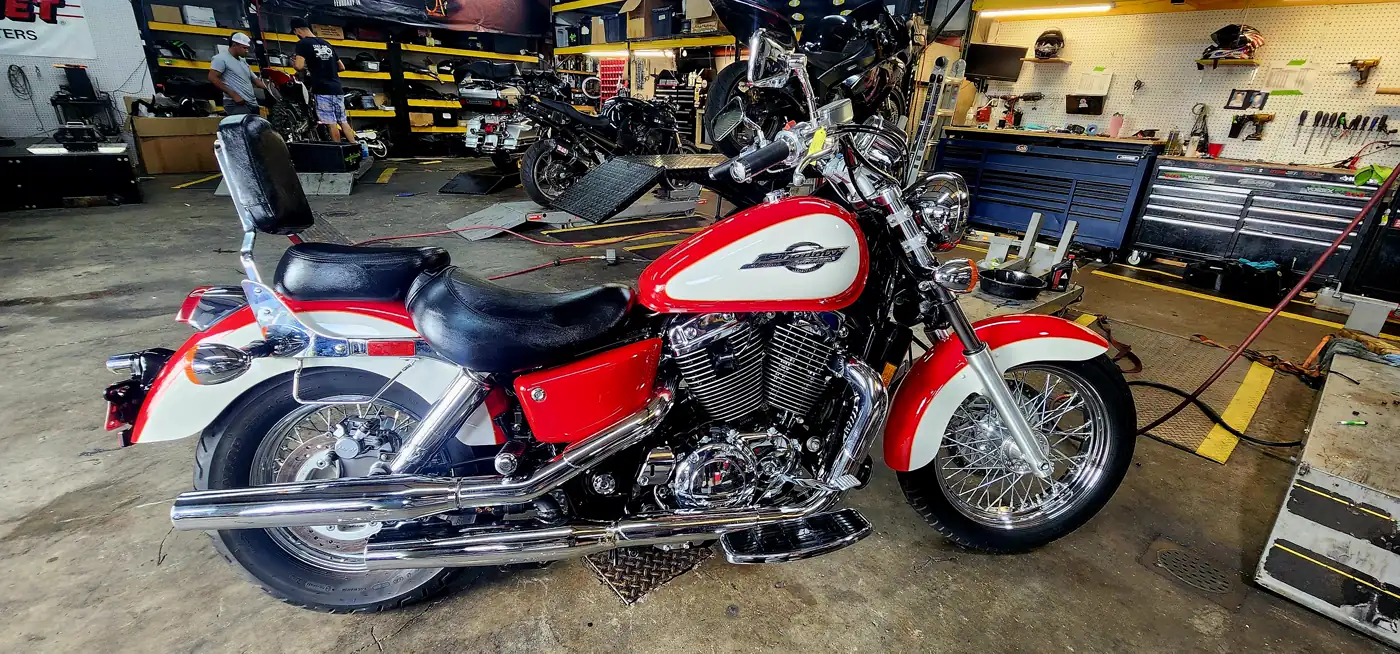
If you ride a chrome-heavy cruiser, you’ve got more skin in this game. A stripped-down sportbike hides most of its metal behind plastic fairings, but a Road King or a Softail wears chrome everywhere: pipes, engine covers, spokes, bars, and trim. More exposed chrome means more surface for humidity to attack, so pitting shows up faster and costs more to fix.
That’s just the reality of south-metro bagger country, where the chrome is half the point of the bike. The upside is that the same protection that stops pitting also keeps all that chrome throwing a clean mirror. Seal it once and stay on top of it, and your cruiser keeps looking like the reason you bought it.
How to keep pitting from coming back
Prevention in Newnan comes down to keeping moisture off the chrome and out of those pores. None of this is hard, and together it makes a real difference through our long humid stretch.
- Dry the chrome by hand after every ride and every wash — don’t let it air-dry in the sun.
- Seal the chrome with a proper sealant or metal-rated ceramic coating, not just wax.
- Wash off pollen and road grime quickly in spring instead of letting it sit and hold moisture.
- Use a breathable cover if the bike lives outside, never plastic that traps humidity against the metal.
- Re-polish and re-seal at the first sign of new freckles, before the pits get deep.
Where you store the bike changes the math too. Newnan is a big-garage town, and a garage-kept bike in Olmsted or White Oak has a real edge over one parked outside at an apartment near Bullsboro. But even a garage in July is humid, so drying and sealing still matter. Storage helps; it doesn’t excuse you from the towel.
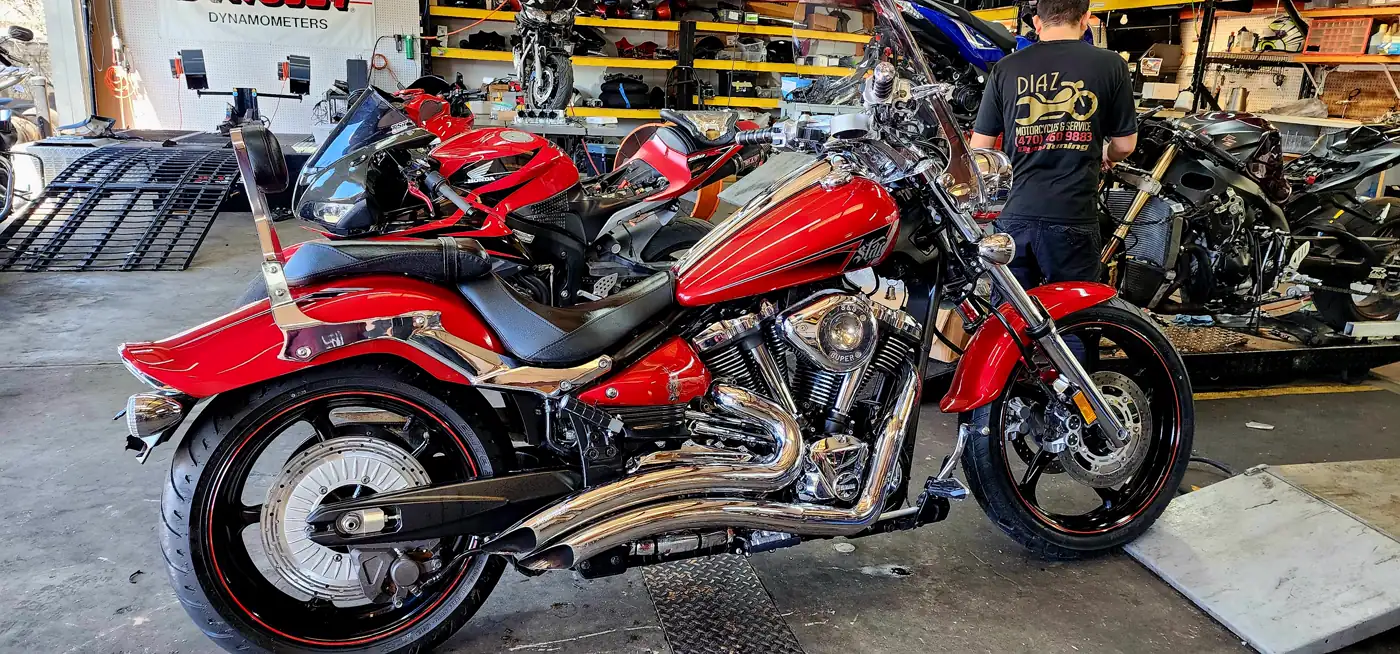
Pitting starts as a freckle and ends as re-plating. The difference is how fast you catch it.
This matters extra for the south-metro crowd, because Coweta is cruiser and bagger country and those bikes wear chrome like jewelry. A Road Glide or a Softail is half chrome, so pitting doesn’t just look bad, it eats real money. The riders at the Yamaha plant know this better than anybody — they build machines for a living and they can spot neglected metal from across the lot.
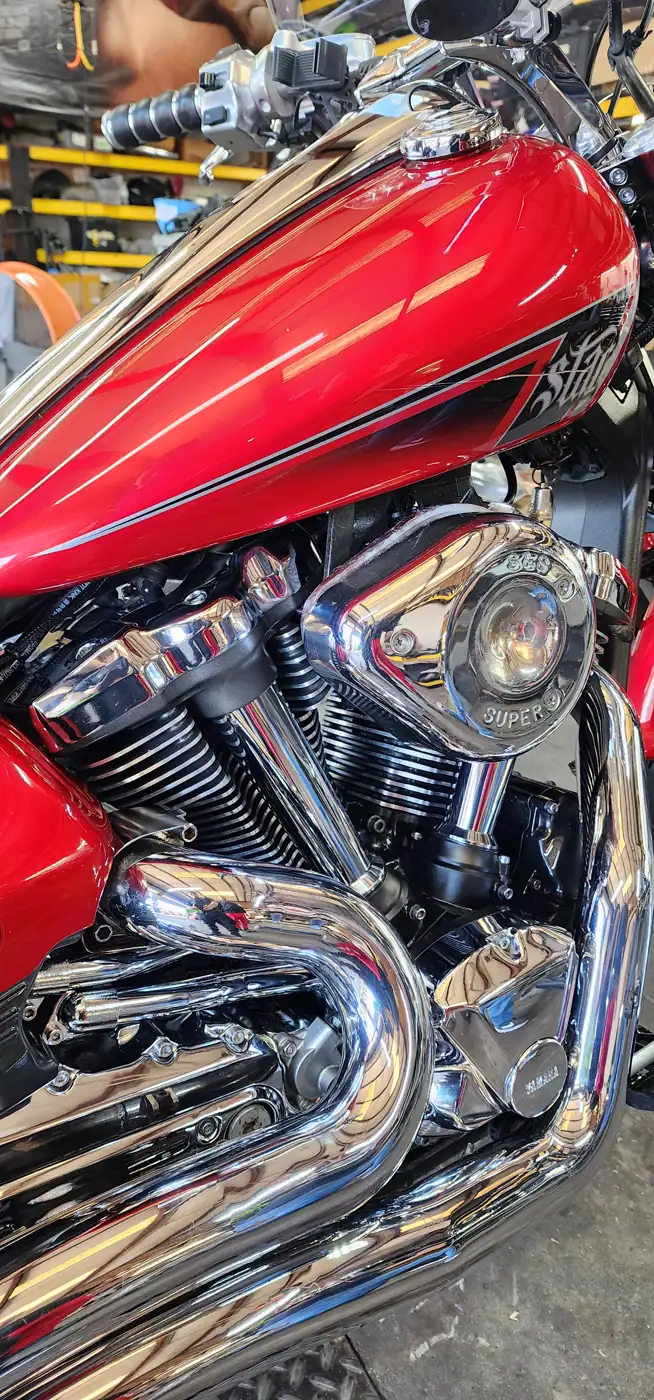
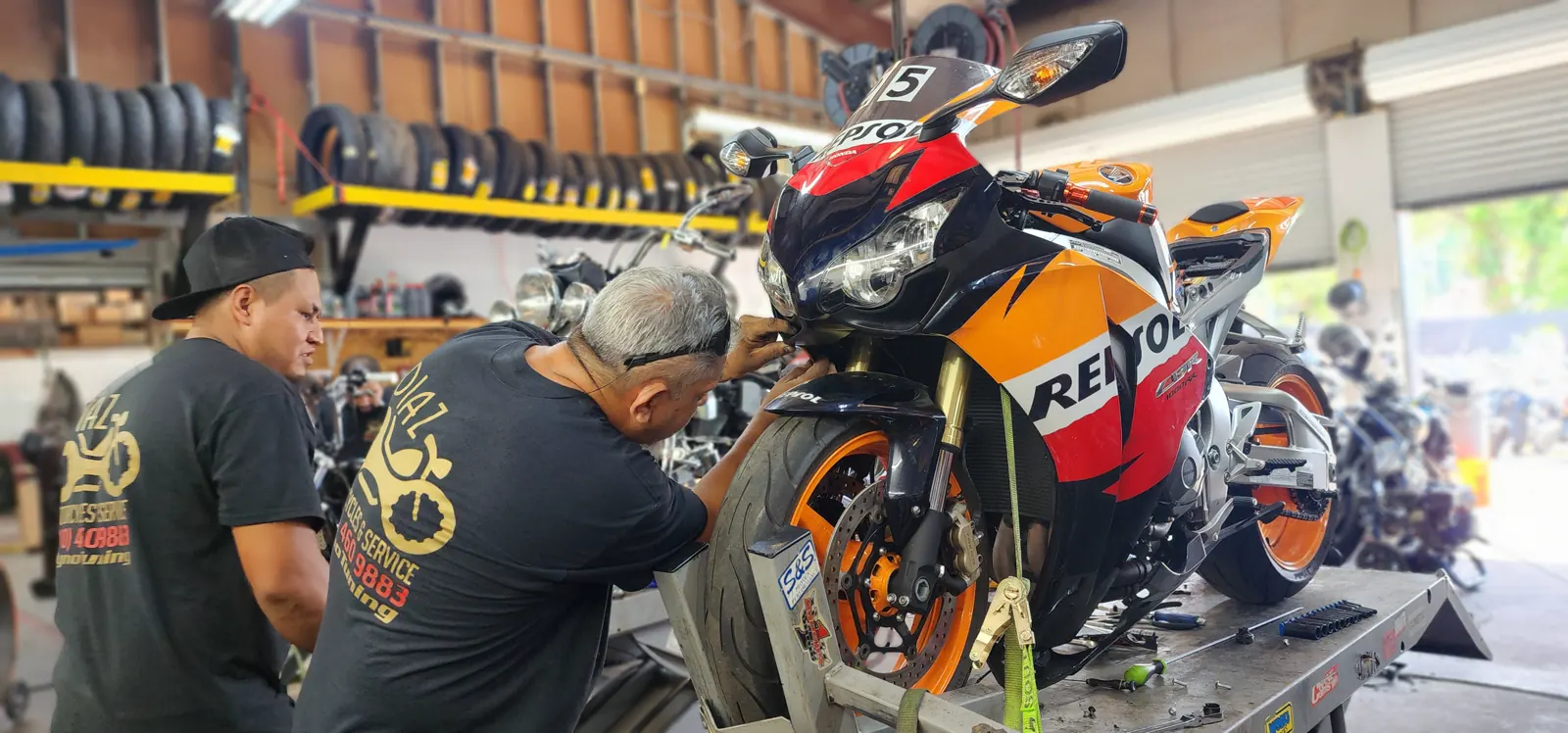
Here’s the Newnan-friendly part: you don’t have to haul the bike up I-85 and cross 285 to get this handled. We bring a truck to your driveway, pick the bike up, do the chrome work and sealing at the shop, and bring it back. For a proper job that takes time anyway, the drive is our problem, not yours. Text us a couple close-up photos of the pitting and we’ll tell you straight whether it polishes out or needs more.
Questions Newnan riders ask us
Can pitted chrome be saved, or is it ruined?
It depends how deep it’s gone. Shallow pitting usually polishes out with the right products and patient hand work. Deeper pits need the rust cleaned out and the steel treated first. Only truly rotted, flaking chrome needs re-plating. Send us close-up photos and we’ll tell you honestly which one you’ve got.
Why does my chrome pit even though I keep the bike clean?
Because it’s a moisture problem, not a dirt problem. Georgia’s humidity condenses on cool metal and seeps into the tiny pores in the chrome plating, rusting the steel underneath. Clean bikes pit too. The fix is drying the chrome after every ride and sealing it so moisture can’t get in.
Will waxing my chrome stop the pitting?
Wax helps a little but doesn’t last in our humidity — it washes and bakes off fast. A proper chrome sealant or a metal-rated ceramic coating lasts far longer and actually blocks moisture from the pores. That’s the real prevention, especially through a Newnan summer.
How fast does chrome pitting spread?
Faster than you’d like in our climate. A freckle you ignore in spring can be a rough patch by fall, because the rust keeps working underneath the plating. That’s why catching it early is everything — shallow pits polish out, deep ones don’t.
Do I have to bring the bike to Marietta?
No. Newnan is 45 to 52 miles from us and crosses 285, so we bring a truck to your driveway. We pick the bike up, do the chrome polishing and sealing at the shop, and deliver it back. The drive is on us.
Does storing the bike in a garage prevent pitting?
It helps a lot, but it’s not a free pass. A garage keeps rain and direct sun off the chrome, which matters. But Georgia garages still get humid in summer, so you still want to dry the chrome after rides and keep it sealed. Storage plus habits beats storage alone.
Chrome pitting hits riders all over Coweta County, and we handle it by truck. We help owners in SummerGrove, Northgate Crossing, Arbor Springs, and Olmsted. Whether your pipes rust up parked near Court Square and the Coweta County Courthouse, out by Chattahoochee Bend State Park, or after a humid run to Sprayberry’s along Lower Fayetteville Road, we bring the truck to your driveway off I-85 so the pitting gets fixed without you crossing 285.
TEXT US A PHOTO OF THE PITTING
Caught some rust freckles on your chrome? Text us a couple close-up photos and we’ll tell you straight whether it polishes out or needs more serious work. We bring a truck to your Newnan driveway, handle the chrome and sealing at the shop, and bring the bike back. No crossing 285, no guesswork.
470-460-9883Diaz Motorcycles and Service, LLC · 847 Barnes Mill Road, Marietta, GA 30062