Motorcycle Detailing Woodstock — What It Costs
A real detail goes way past a bucket and a hose. Here's what we actually do, and how we figure out the price before you ever commit.
As a result it’s a Saturday morning in your garage, and the bike just won’t come clean. You’ve wiped the tank three times. The pollen film keeps smearing instead of lifting. On the other hand there are little brown spots freckled across your chrome, and when the light hits the paint just right, you can see swirls circling the whole tank like fingerprints. So a wash isn’t touching any of it. Still, that gap between a garden-hose rinse and a finish that actually shines is exactly the space professional motorcycle detailing Woodstock riders lean on us for. So let’s walk through what’s really going on with your bike, and how we sort it out.
First, the honest truth about washing. A wash removes loose dirt. That’s it. Plus, it’s a good habit, and you should keep doing it. But a detail is a different animal. Meanwhile, a detail goes down into the paint, the chrome, the plastic and the leather, and it fixes what a hose can’t reach. Of course, Think of a wash as brushing your teeth and a detail as a trip to the dentist. Both matter. In fact, Only one of them gets the deep stuff.
The symptoms you can see
Before we talk about fixing anything, look your bike over in good light. Roll it into the sun or under a bright shop light and really study it. Most riders can spot the trouble once they know what they’re looking at. Here’s the list we hear about most:
- Swirl marks and light scratches that show up as fine circles in direct light
- Chrome that’s gone dull, cloudy, or freckled with tiny brown or orange spots
- Water spots that stayed behind after the bike air-dried, little rings you can’t rub off
- Bug guts and tar baked onto the front fairing, forks, and leading edges
- A tank and fenders that feel rough or gritty even after a wash
- Faded, chalky plastic and trim that used to look black and rich
- Dry, stiff, or cracking leather on the seat and bags
- A wheel and engine bay caked with old brake dust, chain fling, and road grime
What each one is actually telling you
Now the fun part, because every symptom has a cause and a fix. Those swirls in your paint? They’re not damage from the road. They come from washing, believe it or not. Wiping a dry or dusty tank drags fine grit across the clear coat and carves thousands of tiny scratches. In shade they hide. In sunlight they scream. The fix is paint correction, and we’ll get to what that means in a minute.
Those brown freckles on your chrome are the start of pitting. Moisture, road salt, and time work under the surface and eat little craters into the shine. Caught early, we can polish it back. Left alone, it spreads. If you want the deeper explanation of why that problem shows up in the first place, we broke it all down separately. The short version: humidity is the enemy, and Georgia has plenty of it.
Water spots are minerals left behind when hard water dries on hot metal. The water evaporates and the calcium stays, etched right into the surface. Bug guts and tar are acidic, and once they bake in the sun they bond to your clear coat and slowly eat it. None of this is a disaster. All of it is fixable. It just needs the right products and a little patience, not a stronger arm and a rougher rag.
The internet will tell you one thing. The bikes tell us another.
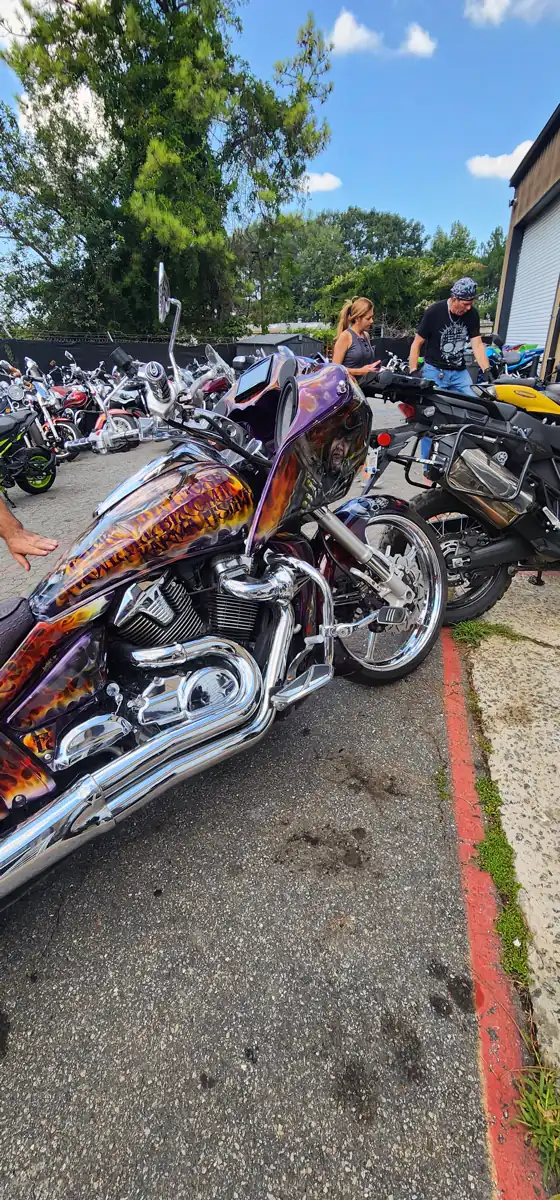
You’ll read online that a spray wax and a microfiber towel handle everything. Sometimes they do. More often, we get a bike whose owner did everything the forums said and still can’t figure out why the shine never came back. The bikes on our bench teach us more than any thread ever could. A finish tells its whole history if you know how to read it, and reading it is step one of every job we take.
What happens when your bike's on our bench
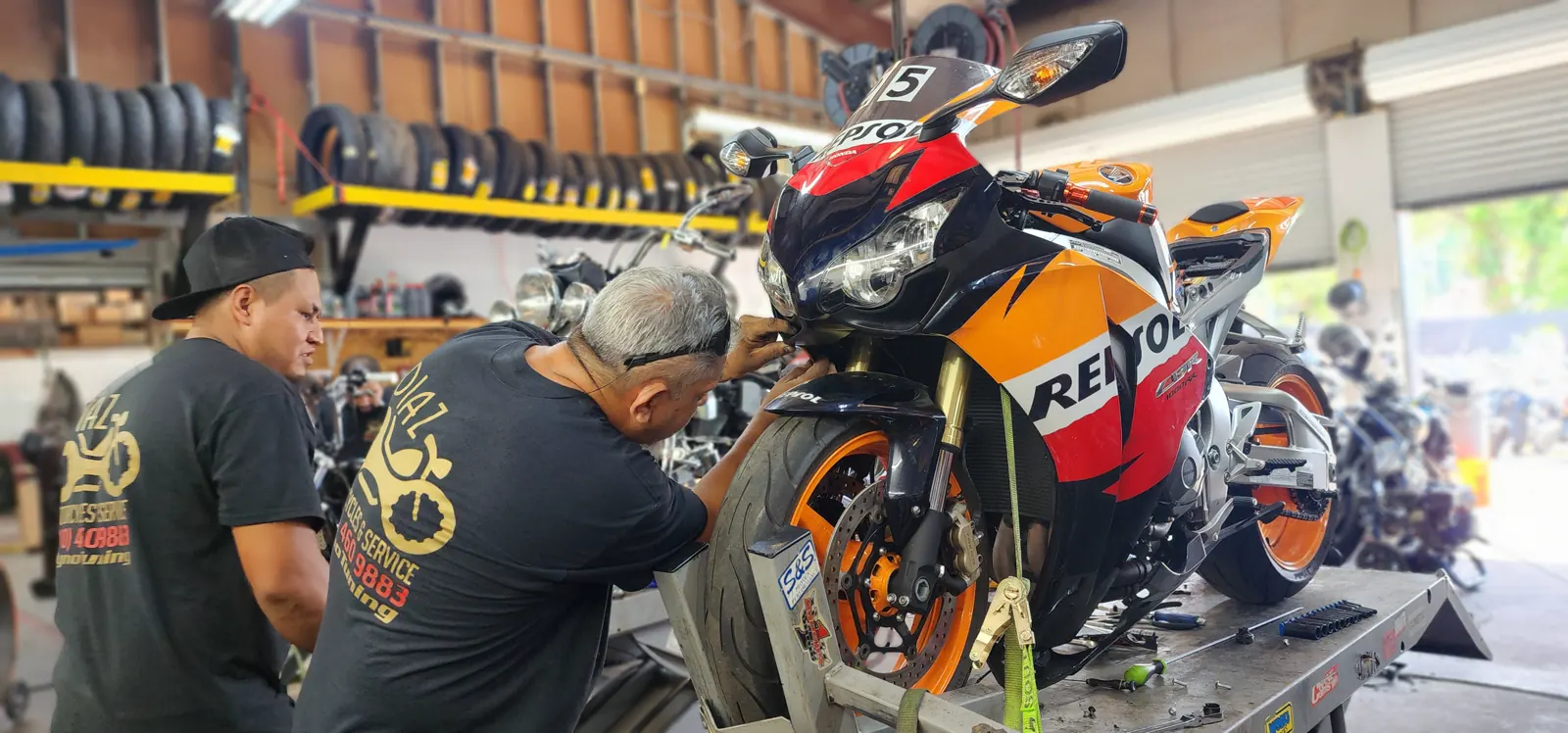
Here’s the thing that matters most if you’re ready to hire someone. We diagnose before we quote. You bring the bike by, we look it over in real light, and we tell you what it actually needs, not what pads out a package. Two bikes that look the same in the parking lot can need completely different work once we get close. So the price follows the diagnosis, never the other way around. No guessing, no surprise add-ons halfway through.
Once we know the plan, a full detail generally moves through these stages:
- A proper deep wash and decontamination, which lifts out the bonded grime a hose leaves behind
- Bug, tar, and water-spot removal on every painted and chrome surface
- Paint correction to cut out swirls and light scratches and bring back real depth
- Machine polishing to level the finish and wake up the gloss
- Chrome polishing until you can read the room in your own pipes
- Wheel and engine-bay cleaning, the grimy stuff most people skip
- Leather and vinyl care to feed the seat and bags so they stay soft
- Plastic and trim restoration to bring faded pieces back to black
- A protective ceramic coating or sealant to lock the whole thing in
Let’s clear up paint correction, because it sounds scarier than it is. We’re not repainting anything. We’re using a machine polisher and graded compounds to remove a microscopically thin layer of clear coat, just enough to erase the swirls sitting in it. What’s left is smooth, level, and clear, so light bounces straight back at you instead of scattering. That’s where the depth comes from. Do it right and the tank looks like glass over paint.
Ceramic coating is the piece people ask about most, and it’s the one folks get wrong most too. Here’s the straight talk. A ceramic coating is a liquid that bonds to your clear coat and cures into a hard, slick layer. It makes water bead and roll off. In short it makes bugs and pollen far easier to wipe away. It adds serious gloss and a tank so slick your hand almost skates across it. What it is not is a force field. It won’t stop a rock chip, it won’t shrug off a curb, and it isn’t scratch-proof, no matter what a slick ad says. It protects and it makes cleaning easy, and it lasts years, depending on how you care for it. For the deep dive we put together the full rundown on it. Groups like the Motorcycle Industry Council track how many riders are protecting their bikes this way, and the number keeps climbing for a reason.
How long it takes, and why we won't guess blind
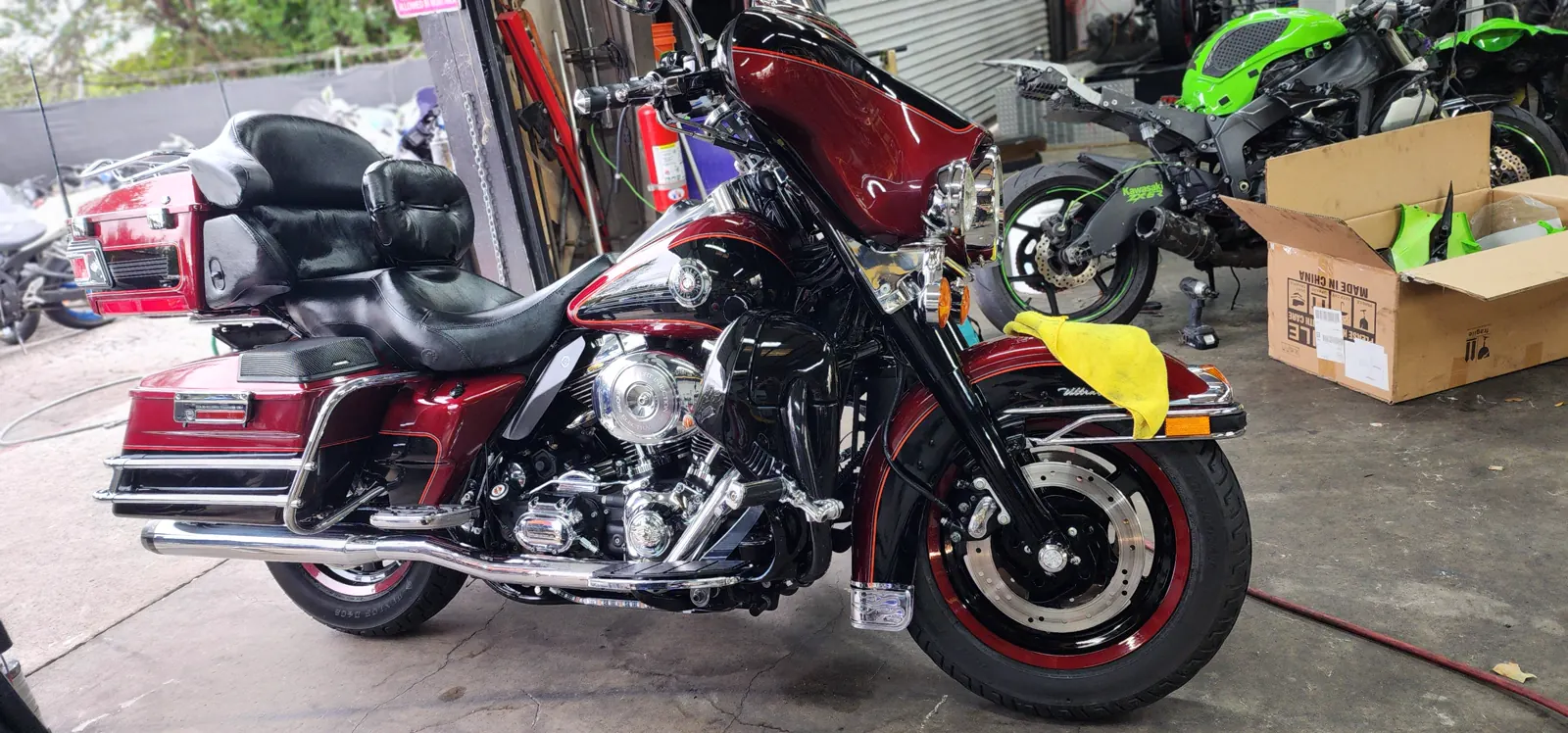
You want a number, and we get it. But an honest timeframe depends on the bike in front of us. A clean bagger that needs a refresh moves fast. A neglected project with pitted chrome and heavy swirls takes real hours, and paint correction alone can’t be rushed without cutting corners. So we give you a firm window once we’ve actually seen it, not a made-up promise over the phone. Rushing a coating cure or a correction pass is how bikes leave a shop worse than they came in, and that’s not us.
WE COME TO YOU
Woodstock’s a bit of a haul from our shop, so we’ll pick the bike up and drop it back when it’s done. You keep your Saturday. We do the scrubbing.
Why Woodstock riders end up calling us
Woodstock sits in Cherokee County, and if you’ve ridden here any length of time, you already know it’s the most bike-serious town in our corner of the map. I-575 is your on-ramp to the north Georgia mountains, so a rider parked in Towne Lake Hills can be carving real curves within the hour. That premium neighborhood west of I-575, with its 875 homes and its golf, swim, and tennis, is exactly the kind of place where a two-car garage holds a well-kept sport-tourer and an owner who cares how it looks. Same story over in Wyngate, and out by the water in the Allatoona Downs, Shores, and Woods communities.
The riding here is what beats up a finish, though. Bells Ferry, Wiley Bridge, Trickum, and Arnold Mill are gorgeous, wooded, low-traffic backroads, and they’ll throw grit, pine straw, and a summer’s worth of bugs at your bike the whole way. Bells Ferry Road doubles as your straight shot south into north Cobb when you’d rather skip the interstate. This town also knows its stuff, because Traxxion Dynamics builds suspension right here at 261 Rope Mill Pkwy, and having a nationally known name in the backyard raises the bar for everybody. Riders here ask sharp questions and expect straight answers, which suits us fine.
Then spring arrives. From mid-March through late April, Woodstock pollen turns everything a cheerful shade of yellow, and it’s the fastest way to dull a fresh clear coat. It’s also the unofficial start of riding season, so the timing is cruel. Roll up to a show at the Northside Hospital-Cherokee Amphitheater and you’ll see the whole local range, baggers next to GS bikes next to the odd Multistrada, and the sharp ones are always the clean ones. It’s the same pride we hear from riders over in Acworth.
Here’s the part worth knowing before you hunt around town. Woodstock actually has more motorcycle businesses than any city in our radius, but every one of them is narrow. The in-city dealer, Atlanta Motorcycle Works over on Mauldin Drive, only services Japanese bikes fifteen years old or newer, and they’re closed on weekends. If your ride is older than that, or it’s a Harley, or it’s one of the European brands that do so well up here, that door’s shut. We take all brands, all ages, no matter how loved or how neglected.
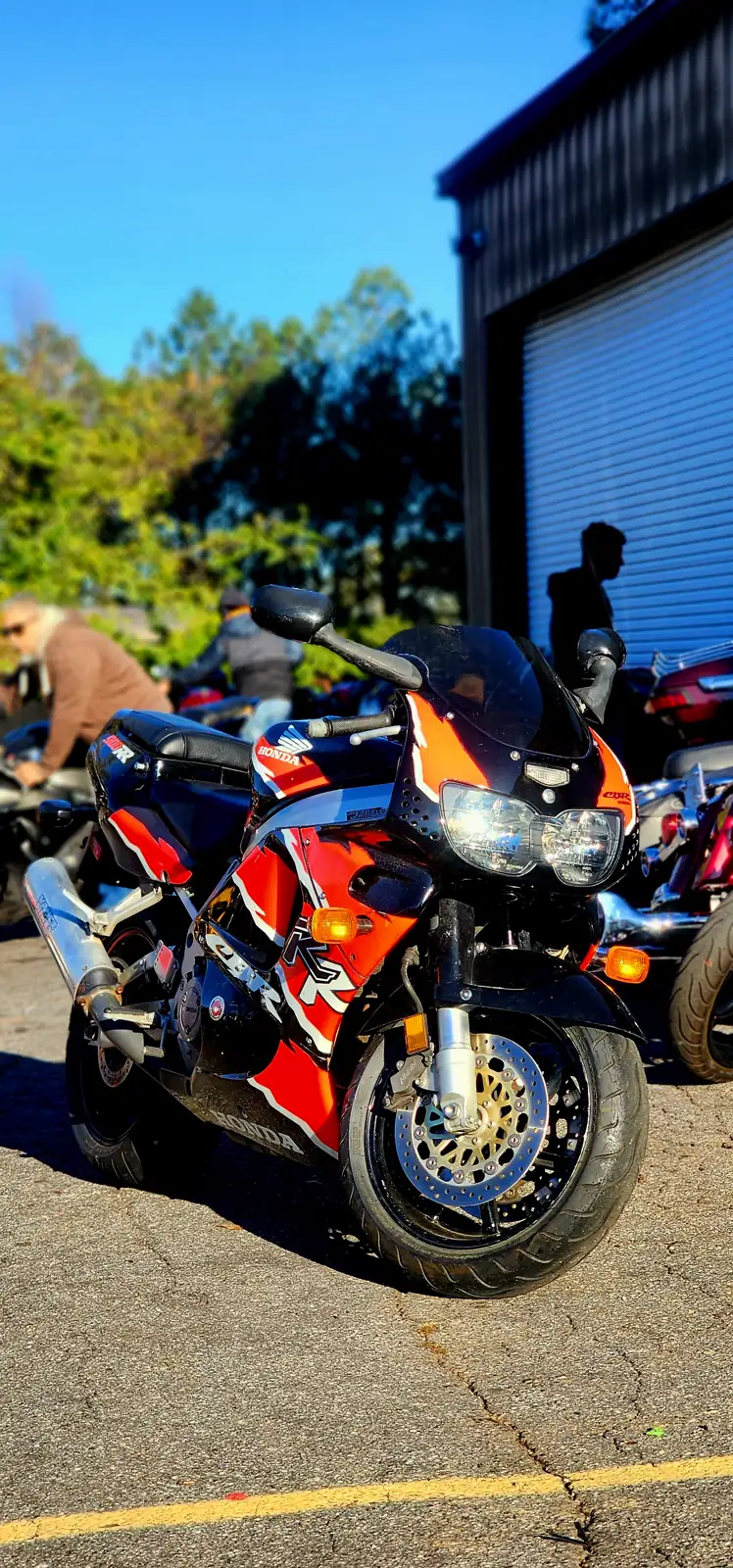
Getting to us is easy, and getting your bike to us is easier still. We’re about 15 to 19 miles south of Woodstock, call it 25 to 35 minutes down I-575 to I-75, then east on Roswell Road to Barnes Mill Road. If you’d rather avoid the highway, Bells Ferry Road runs you south into north Cobb the whole way. Better yet, don’t drive at all. Text us and we’ll come get the bike, do the work, and bring it home shining. That’s the whole idea behind our motorcycle detailing Woodstock service: make the great result the easy part.
A quick story, because it makes this concrete.
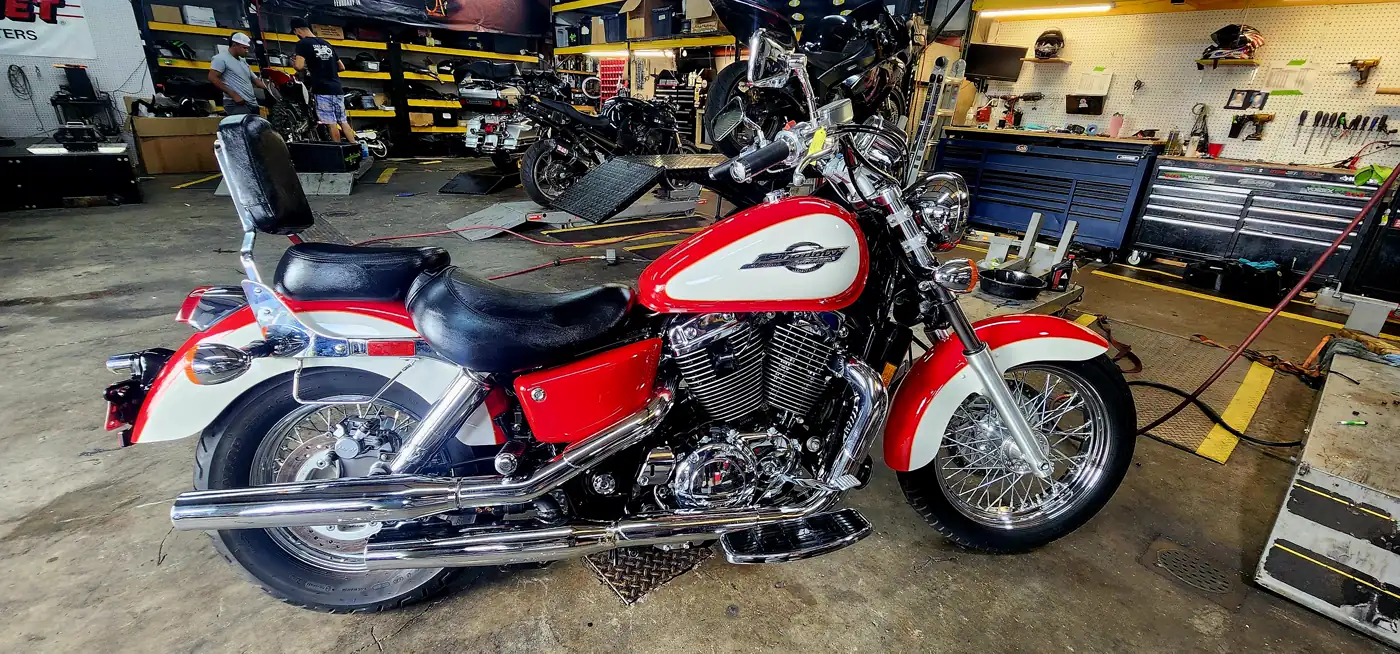
A friend we helped last season rolled in on a maroon Road Glide he was ready to give up on. The chrome was freckled, the paint was a mess of swirls, and he’d half convinced himself he’d need a repaint. We looked it over, told him what it actually needed, and quoted him from there. No repaint. We corrected the paint, polished the chrome back to a mirror, coated the whole thing, and fed the leather. When he came to pick it up, he just stood there and grinned. He said it looked better than the day he bought it. That’s the reaction we’re chasing every time, and it’s usually one text away.
Better than the day it left the showroom
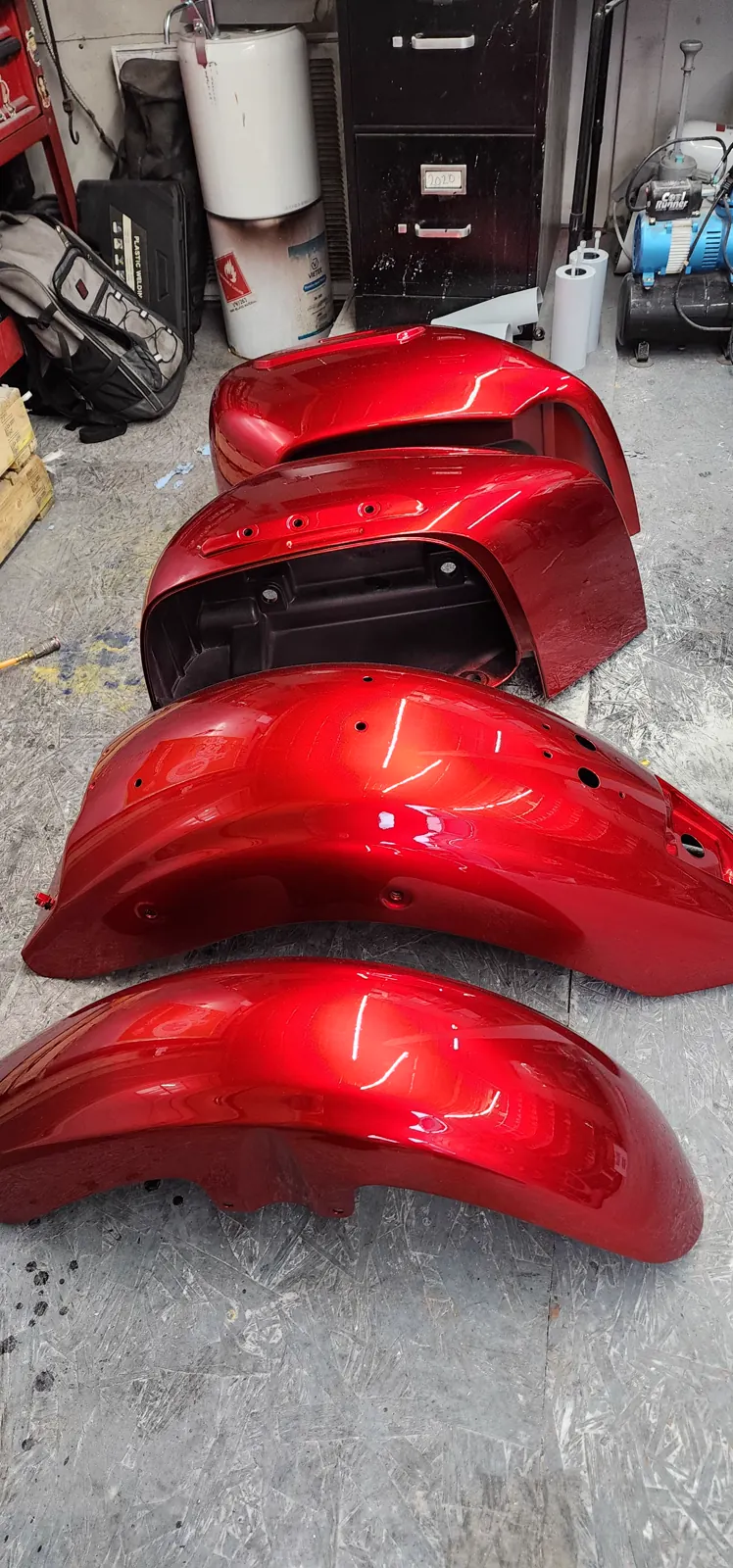
Here’s the payoff, and it’s a real one. A properly detailed bike doesn’t just look clean. It looks better than it did new, because the factory never went as deep as a full correction and coating does. The gloss has depth you can fall into. At the same time the chrome throws your reflection back at you. The tank feels slick and cool under your palm. Beyond the pride of it, that finish holds real value, because a bike that’s been cared for sells for more when the day comes, and buyers can always tell. Publications like RevZilla’s Common Tread have covered this for years, and it lines up with everything we see.
So if you’re standing in your garage tired of scrubbing, stop fighting it. Send us a text with a couple photos and a note about what’s bugging you. We’ll tell you what it needs and what it’ll run, all before you commit to a thing. If you want to see the full list of what we do, it’s all laid out on our detailing page. Either way, you’re closer to a bike you’re proud to park than you think.
Questions Woodstock riders ask us
What does a full detail actually include?
A deep wash and decontamination, bug and tar and water-spot removal, paint correction for swirls and light scratches, machine polishing, chrome polishing, wheel and engine-bay cleaning, leather and vinyl care, plastic and trim restoration, and a protective ceramic coating or sealant. We tailor the exact mix to what your bike needs after we look it over.
How long does detailing take?
It depends on the bike. A clean bagger that needs a refresh moves quickly, while a neglected bike with pitted chrome and heavy swirls needs real hours because paint correction can’t be rushed. We give you a firm window once we’ve seen it in person, not a blind guess over the phone.
Do you work on my brand of motorcycle?
Yes. We handle all brands and all ages, from Harley baggers to BMW GS bikes, Ducati, Triumph, KTM, Japanese sportbikes, and everything in between. Unlike the narrowly scoped shops in Woodstock, we don’t turn a bike away for being too old or the wrong badge.
Do I need an appointment?
An appointment helps us plan and hold your spot, especially in spring when pollen season floods us with work. Text or call us first and we’ll set a time that works. Walk-ins are welcome too, though a heads-up means less waiting for you.
Can you pick up my bike in Woodstock?
Absolutely. Woodstock is a bit of a drive from our shop, so we offer pickup and delivery to make it easy. We come get the bike, do the work, and bring it back shining. You don’t have to load it or lose a Saturday.
How do you decide the price?
We diagnose before we quote. You bring the bike by or send photos, we look it over in good light, and the price follows what it actually needs. No padded packages, and no surprise add-ons partway through the job.
We take care of riders all across the north metro, and Woodstock sits right in our wheelhouse. Beyond it, we regularly help friends in Canton, Acworth, Kennesaw, and out toward Marietta, along with Roswell, East Cobb, and Holly Springs. We also cover the Towne Lake corridor, Ball Ground, Alpharetta, Cartersville, and Milton. If you’re within a reasonable ride of any of those, we can get your bike looking its best.
READY WHEN YOU ARE, WOODSTOCK
Tired of scrubbing a bike that still won’t shine? Text us a couple photos from your garage in Woodstock and tell us what’s bugging you. We’ll tell you what it needs and what it costs before you commit, and we’ll even come pick the bike up. The easiest way to a finish you’re proud of is one message away.
470-460-9883Diaz Motorcycles and Service, LLC · 847 Barnes Mill Road, Marietta, GA 30062