Motorcycle Diagnostics Sandy Springs — Why It Happens
Your bike is trying to tell you something. Here's how we translate it, and how you'll know when it's safe to ride.
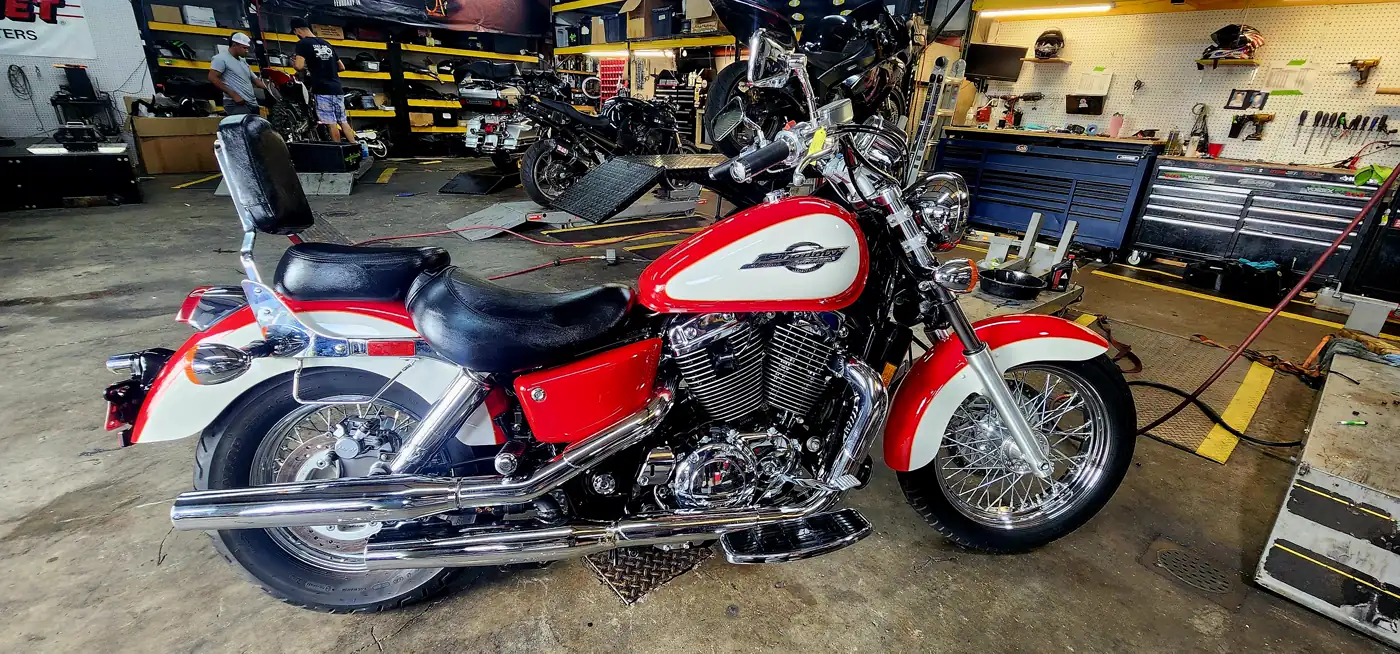
Meanwhile, the first real warm Saturday always sneaks up on you. In fact, that said, Sun on the driveway, dry pavement, and a whole afternoon with nothing in it. For example, you pull the cover off, thumb the starter, and the bike answers with a click, a stumble, or a sad little whirring noise that goes nowhere. After that, that exact moment is where most motorcycle diagnostics Sandy Springs work starts for us. What’s more, not a breakdown on the shoulder somewhere. So and Better yet, Just a good day that got delayed five minutes, then delayed forever.
Here’s the good news up front. A symptom is not a diagnosis, and almost nothing that happens on that first warm day is as bad as it feels standing in the driveway. Your bike is talking. It just isn’t using words. Our whole job is translating.
The Myth: One Symptom Means One Broken Part
Most riders show up believing a hard truth that isn’t true. Still, they think the bike has one bad part, and that a good mechanic can name it from across the room. So they arrive already sure. It’s the battery. It’s the stator. Plus, My buddy said it’s the fuel pump.
We love that energy, honestly. Of course, riders who pay attention to their bikes are our favorite people to work with. But a symptom is a shared exit for a lot of different problems, and picking one from the parking lot is guessing with extra confidence. Guessing gets expensive in time, and time is the thing you actually came here to protect.
Think about a bike that cranks slow. That can be a tired battery, sure. It can also be a corroded ground strap, a starter drawing too much current, thick old oil in a cold engine, or a charging system that hasn’t been putting anything back in for months. Same sound. Five different repairs. One of them is a five-minute fix and one of them isn’t.
The myth costs riders more than any part on the shelf. It’s why so many people replace a battery twice in one spring and still end up stranded on the third try.
The Reality: Your Bike Has A Story, Not A Single Fault
Machines fail in chains. Something small goes unnoticed, then something bigger leans on it, and eventually you get the symptom you can hear. The noise you finally noticed is usually step three or four in a story that started a while back.
Storage is the biggest chapter in that story around here. A huge share of riders in Sandy Springs park under a carport, in a condo deck, in a surface lot, or on the street. There’s no outlet within reach for a battery tender, so the battery slowly drains all winter and the fuel sits and turns to varnish. Cover a bike that’s still damp and you trap moisture against metal for weeks. None of that is a mistake anybody made. It’s just where the bike lives.
So the first warm day arrives, and every one of those quiet months shows up at once. Weak crank, rough idle, gummy throttle response, brakes that feel wooden for the first block. The bike isn’t broken. It’s stiff, like the rest of us after a winter off.
Riding surface writes the other half of the story. Hammond Drive carries heavy traffic on older pavement with utility-cut patches, seams and raised manhole lips, and that’s rough duty for a stiff sportbike suspension. Add the long construction footprint where GA-400 meets the Perimeter, with lane shifts, tar snakes and steel plates, and you get bent rims, tire cupping, and alignment that quietly drifts. Riders often report that as a vibration or a wobble. It reads like an engine problem and isn’t one.
Two bikes with the same symptom can need completely different work.
We see it constantly. Two riders call in the same week, both describing a stall at low speed. One bike is a garage-kept touring rig from the Dunwoody Panhandle side, ridden a few hundred miles a year, and its problem is stale fuel and a clogged filter after pollen season. The other is a commuter’s mid-size naked bike from an apartment corridor building, ridden every single day, and its problem is a failing sensor with real hours on it. Same complaint. Completely different repairs, and completely different urgency.
That’s why we don’t quote a fix over the phone from a symptom. We’d rather tell you what we’re going to check, in order, and then tell you what we found. If you want the plain-English version of what changes the total, we wrote that out separately, because the answer really is about which chapter of the story your bike is in.
The Actual Process: How We Find The Cause
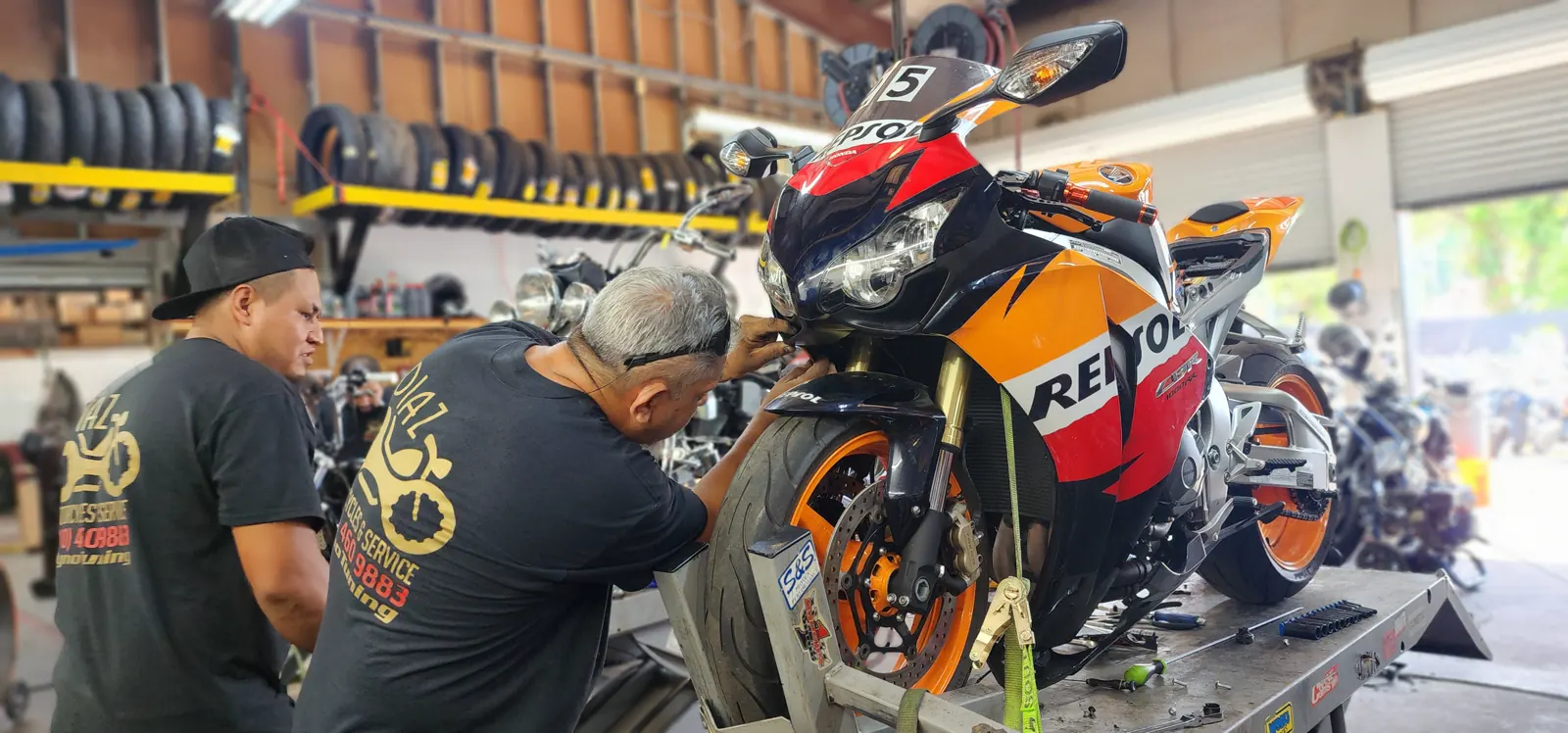
Good motorcycle diagnostics Sandy Springs riders can trust isn’t magic, and it isn’t a lucky guess. It’s a sequence, and the sequence matters more than any single tool on the bench.
- We listen to you first. When did it start, what changed that week, how the bike is stored, and what it does cold versus warm. Riders give us better clues than any scan tool does.
- We verify the symptom ourselves. If we can’t make the bike do the thing you described, we haven’t earned the right to fix anything yet.
- We check the cheap and common causes before the rare and expensive ones. Battery health under load, grounds, connectors, fuses, fluid condition, filters, chain and sprocket wear.
- We pull codes and live data where the bike supports it, then read the numbers against what the engine is actually doing, not just the codes it stored last month.
- We isolate. One variable at a time, so the fix is proven rather than assumed.
- We tell you what we found, what it needs now, what can wait a season, and what it’s safe to ride on in the meantime.
That last step is the one riders remember. Safe to ride, ride it gently, or don’t ride it at all. Those are three very different answers and you deserve a clear one.
WHEN TO STOP RIDING
Park the bike and call us if you have brake fade or a spongy lever, a wobble that grows with speed, a fluid leak you can see on the ground, an overheating light, a wheel that won’t spin freely, or a chain with a tight spot. Rough idle, a slow crank, or a small oil weep will usually get you home safely, but they’re telling you something and shouldn’t be ignored.
How To Tell A Good Shop From A Busy One
There’s a big powersports store about ten miles out at Mountain Motorsports Roswell, and stores like that move a lot of machines. The floor is great. The service side of a high-volume, multi-line operation gets spread thin, though, and a diagnostic job that needs an unhurried afternoon competes with a full board of scheduled work.
Sandy Springs riders are usually credential-driven and short on time, and they read reviews closely enough to spot fluff. So here’s what to look for, without the adjectives.
- They ask you questions before they name a part. A shop that diagnoses over the phone is selling, not diagnosing.
- They tell you what they checked, not just what they replaced. You should be able to repeat the reasoning back to a friend.
- They separate now from later. Safety items, wear items, and nice-to-haves shouldn’t arrive as one undifferentiated stack.
- They handle older and unusual bikes. If a shop only touches current models, the 1970s Honda or Triumph in your garage has nowhere to go.
- They can pick the bike up. When the machine won’t start, transport is the whole ballgame.
- They show you the old part. Every time, without being asked.
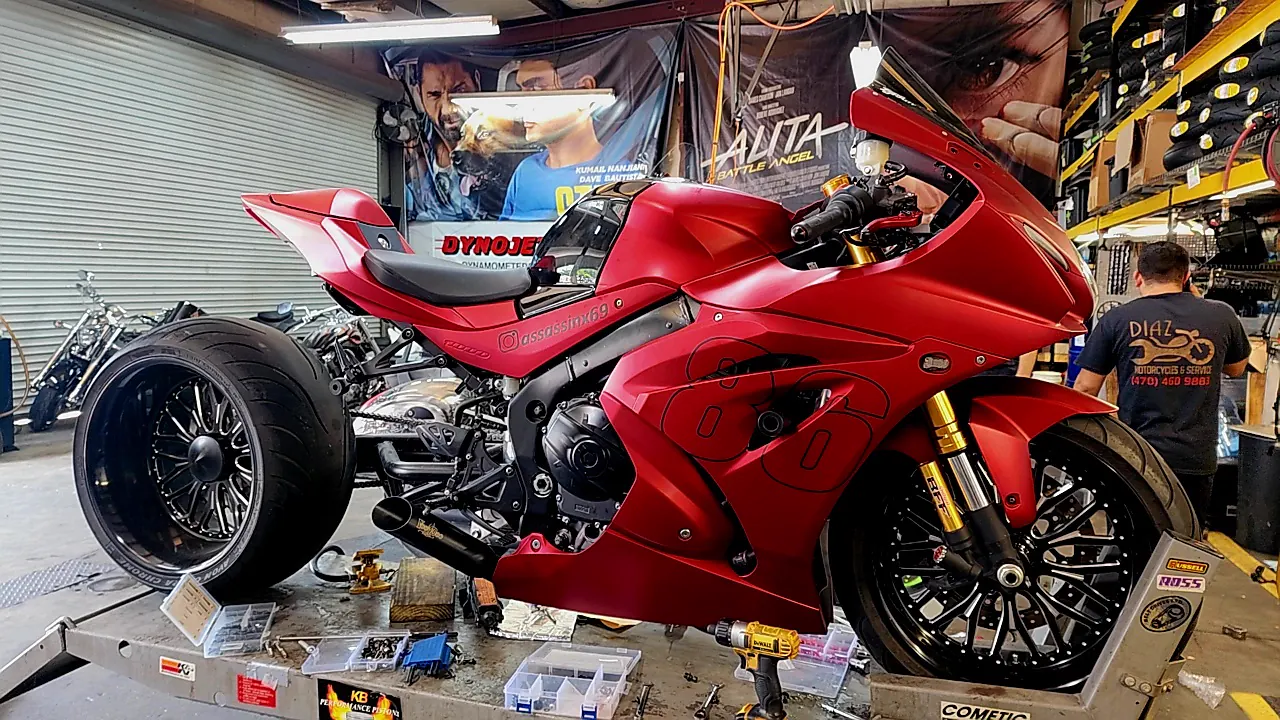
Performance work is the fastest tell of all. Tuning is measured, not felt, and a shop that talks about real dyno numbers the way Dynojet’s dyno center describes them is a shop that keeps records. That same habit is what makes a diagnosis trustworthy on a bad-running commuter bike.
Local Context: What Sandy Springs Does To Bikes
There’s no motorcycle dealership or established dedicated repair shop inside the city limits, which means riders here own genuinely good machines with nowhere close to take them. Baggers and Gold Wings sit in garages up in River Shore Estates. Premium cruisers and BMW touring bikes live near the river. Commuters on mid-size bikes fill the apartment corridor, and liter-class sportbikes and European twins come out on weekends looking for a road worth the trouble.
The riding here is better than people expect for a city this dense. GA-400 north out of the Perimeter is the mountain launch ramp, and you can be in the foothills inside an hour. Anyone who’s hiked East Palisades knows the Chattahoochee corridor is right there in the middle of everything. Bikes get parked at the City Green lawn at City Springs on a nice evening as easily as they get parked at an office deck on a Tuesday.
Georgia doesn’t allow lane splitting or filtering, so nobody here rides to beat traffic at the interchange. People ride because parking is easy, fuel goes further, and the machine makes an ordinary Wednesday better. That’s exactly why an off-running bike stings the way it does.
Then pollen season lands from mid-March through late April and coats everything. It packs air filters, gets into radiators and oil coolers, and is genuinely hard on paint. Plenty of the springtime running complaints we hear from families over in Riverside trace back to a filter that’s simply had enough of Georgia. That’s a happy diagnosis to deliver, because the fix is quick.
One more thing, and it’s the part riders thank us for later. We check the stuff you didn’t ask about. Not to add work, but to hand back a complete picture of the bike.
That means chain tension and sprocket teeth, tire dates and wear pattern, brake pad thickness, fluid color, fork seals, wheel bearings, and every connector that lives where road spray hits it. Half the time it all checks out and we say so. The other half we catch something months before it would have become a story. A tire with a date code older than your last two jobs is the classic example, and it never announces itself.
Riders on the north side who mostly ride weekends are the ones this helps the most, because low mileage hides age beautifully. A bike with barely any miles can still have a decade-old rubber brake line. It rides fine right up until it’s a problem you’d rather have heard about in the shop. The same logic covers the daily riders too, just faster, and the pattern shows up in what Marietta riders run into every single spring.
The Outcome: A Bike You Trust Again
Getting to us is easier than most Sandy Springs riders assume. It’s roughly 8 to 11 miles and usually 18 to 28 minutes, straight across the Chattahoochee on Johnson Ferry Road into East Cobb, with no I-285 involved at any point. From the Riverside and Powers Ferry side it’s often under 15 minutes. From Perimeter Center, figure 25 to 30. If the bike won’t start, don’t sweat it. We’ll come get it, which matters a lot when HOA rules make driveway work impossible anyway.
What you get back is not just a repaired part. It’s the answer to the question that was bugging you, in words you can actually repeat. You’ll know what happened, why it happened, and what to watch for next season. Our full list of everything we cover runs from diagnostics through tuning, bodywork and restoration, and it’s worth a look if your project bike has been waiting on a shop that’ll take the job.
That’s the feeling we’re after. Not relief, exactly. Something closer to pride. You knew something was off, you didn’t ignore it, and now the bike is sorted before the good weather really gets going. If you want to sharpen the rider along with the machine, MSF rider courses are a solid use of a Saturday. And if you’re still comparing shops, here’s a breakdown of what the work covers so nothing on an estimate is a surprise.
Next warm Saturday, the plan is simple. Pull the cover, hit the starter, go ride.
Questions Sandy Springs riders ask us
Will it get worse if I keep riding?
Usually yes, and usually slowly. Most running symptoms come from a part that’s wearing or a system that’s drifting out of spec, so riding on it just moves the needle further. The exception is anything involving brakes, tires, steering or a wobble, which can change quickly. Tell us the symptom and we’ll tell you honestly which bucket you’re in.
How urgent is this, really?
It depends on whether the symptom touches your ability to stop or steer. A rough idle or a slow crank is annoying but not dangerous, so you’ve got time to schedule it. Brake fade, a growing vibration, a fluid leak or a chain with a tight spot means park it now. When in doubt, text us a short video with the sound and we’ll give you a straight answer.
What happens if I just ignore it?
Small problems recruit bigger ones. A weak battery makes the charging system work harder, a dry chain chews a sprocket, and a clogged filter makes the engine run hot and rich. None of that is a disaster on day one, but each one turns a quick visit into a longer one. Catching it early is genuinely the cheap version.
How do you actually find the cause?
We start with your description, then verify the symptom ourselves so we know we’re chasing the right thing. From there we check common and inexpensive causes first, pull codes and live data where the bike supports it, and isolate one variable at a time. You get told what we checked, not just what we changed.
Could it be something totally different than I think?
Very often, yes, and that’s a good thing. Plenty of riders arrive certain the engine is failing when the real culprit is a bent rim from a rough patch of pavement or a battery that never fully recovered from winter storage. We go in without a favorite theory. The bike gets to make its own case.
Can you pick the bike up if it won't start?
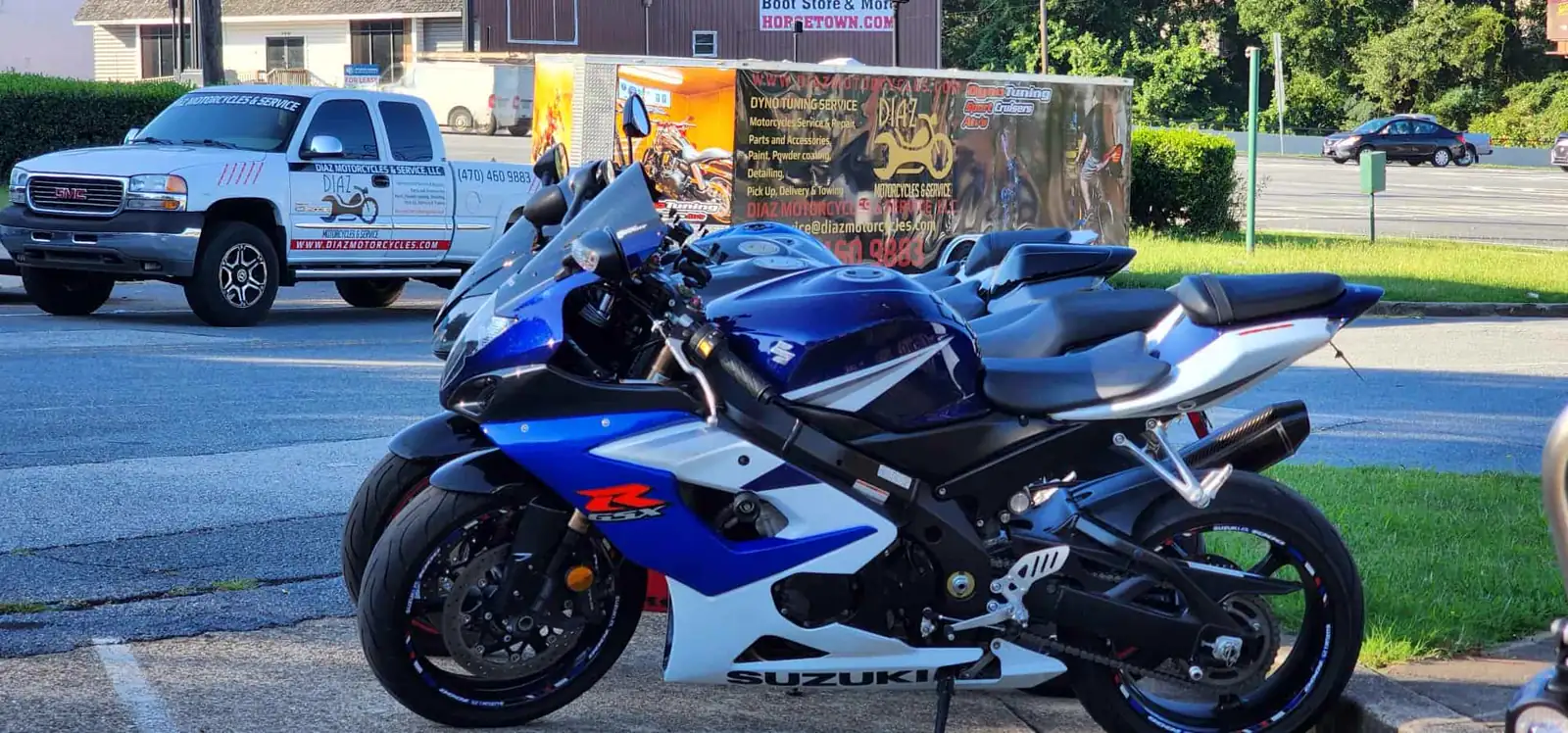
Absolutely, and that’s the normal way this goes for Sandy Springs riders. Most people here park in a deck, a carport, a surface lot or on the street, so rolling a dead bike into a truck isn’t happening. We handle transport both directions. You never have to solve the towing puzzle yourself.
We take care of riders all across the north side of the metro, and Sandy Springs is one of our busiest zip codes. The run over from Roswell, Dunwoody, Brookhaven and Chamblee is short, and folks in Buckhead and Atlanta reach us without ever touching the Perimeter. East Cobb, Vinings and Marietta are basically home turf, while riders in Alpharetta come down for tuning and restoration work. Smyrna and Doraville round it out, and pickup and delivery covers every one of them.
TELL US WHAT IT'S DOING
If your bike is acting up, text us a quick note or a short video with the sound and we’ll tell you what it likely is and whether it’s safe to ride. Sandy Springs riders are 18 to 28 minutes away across the river, and we’ll come get the bike if it won’t start. No guessing, no pressure, just a real answer and a plan to get you back out on the next good Saturday.
470-460-9883Diaz Motorcycles and Service, LLC · 847 Barnes Mill Road, Marietta, GA 30062