Motorcycle Dyno Tuning in Atlanta, Straight From the Shop Floor
A dyno, an ECU flash, and a Power Commander — real custom mapping under one roof, not a parts-counter guess.
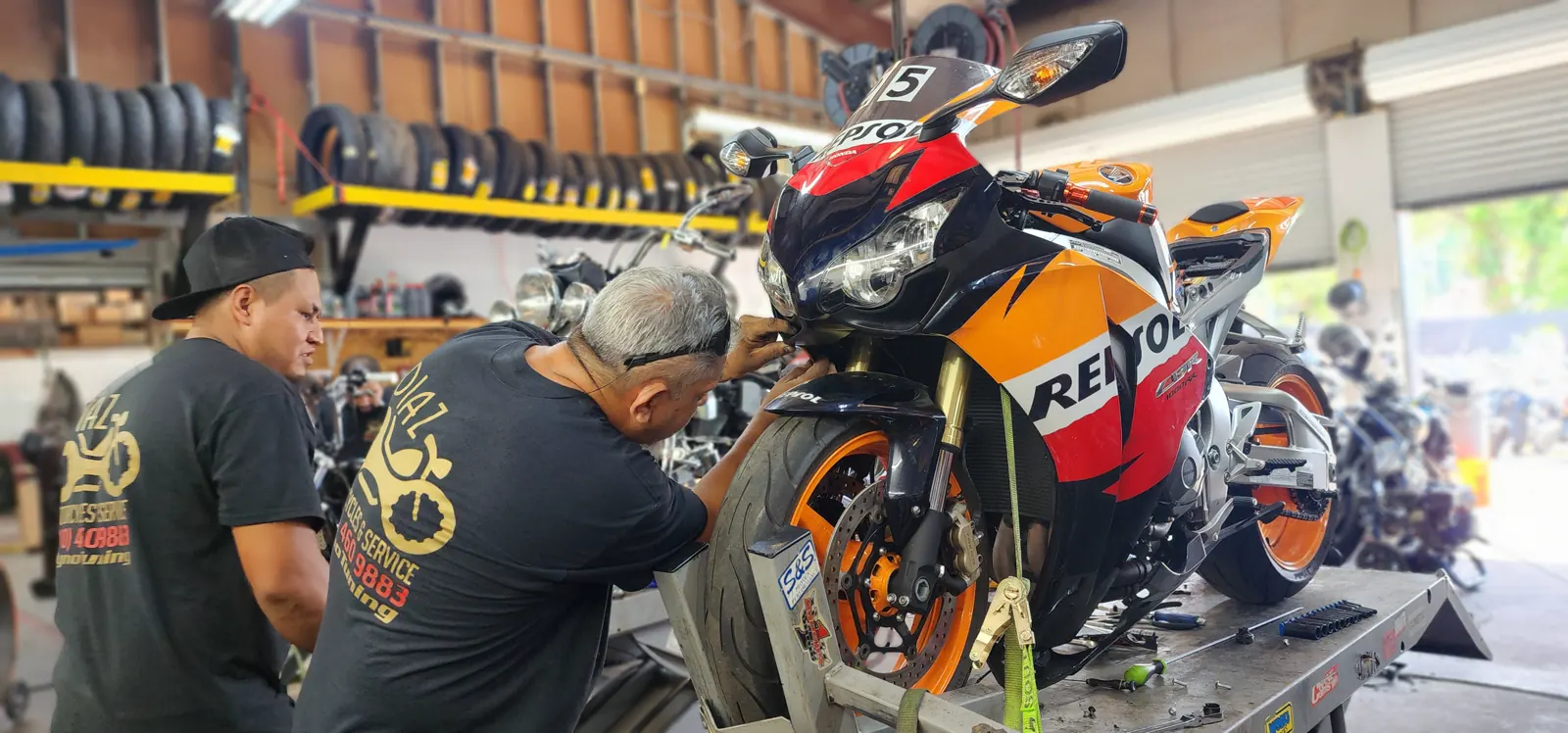
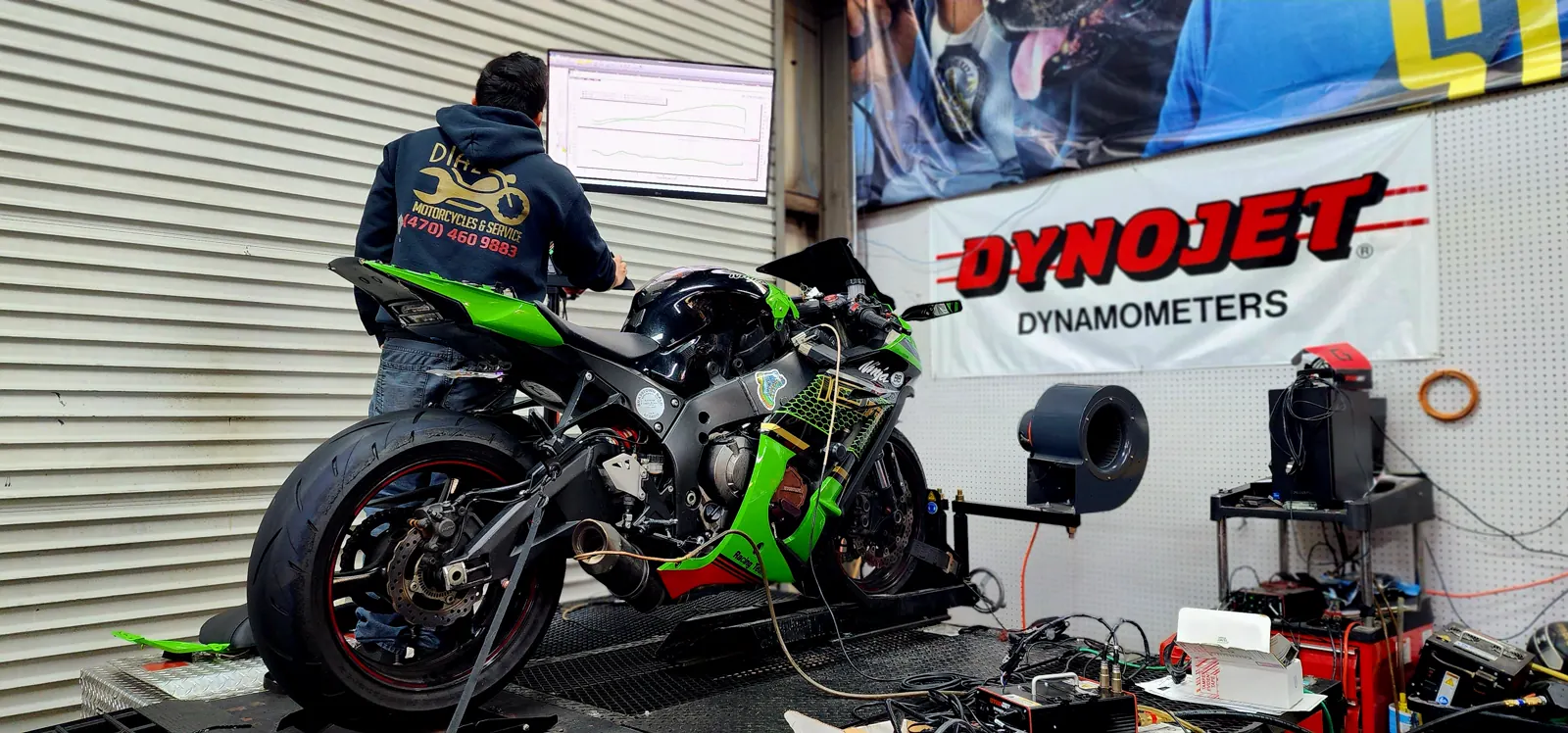
Of course, a bike rolls into the back of our shop and goes up on the lift. In fact, we strap the rear wheel down onto a big steel drum, clip a small sensor into the tailpipe, and point a fan the size of a truck grille at the front of the engine. Then the motor spins up, holds a steady pull, and a line paints itself across the screen. For example, that room is where motorcycle dyno tuning Atlanta riders keep asking about really lives — not in a brochure, but on a machine that tells the honest truth about your engine.
The short answer: what a dyno is for
Even so, a dyno is a machine that measures what your engine actually makes. Not what the ad said. What’s more, not what the guy at the bar swore his bike put down. After that, the real story, from your bike, on that day. Still, the rear wheel spins the drum, the drum pushes back, and the software does the math to draw power and torque across the whole rev range.
But raw power is only half of it. That little sensor in your exhaust is reading the mix of air and fuel coming out the back. That reading is the whole game. Get it right and the bike feels alive. Get it wrong and you feel it every single time you twist the throttle.
Lean, rich, and why your bike feels ‘off’
Every engine wants a certain balance of air and fuel. Too much air and not enough fuel, and we call that lean. A lean bike runs hot, pops on the way down from a stoplight, and can feel jumpy or flat right off idle. Too much fuel and not enough air, and that’s rich. A rich bike feels lazy, fouls its plugs, and can smell like a campfire in traffic. Neither one is a moral failing. It’s just a map that doesn’t match the parts on the bike.
Here’s where it gets real for a lot of folks. The second you add a slip-on, a full exhaust, an air filter, or open up the intake, you changed how much air the engine breathes. Meanwhile, the factory fuel map has no idea any of that happened. So the bike guesses, and it usually guesses lean. That’s the itch behind most of the “it ran weird after I added pipes” stories we hear.
Why we do the tuning in-house
Plenty of shops around town will happily sell you parts. Far fewer can actually tune the bike to match them. Real custom mapping means a dyno on the floor, a tech who reads the runs, and the tools to rewrite how the bike delivers fuel and spark. We keep every bit of that under one roof.
Two tools do most of the heavy lifting. One is an ECU flash, where we rewrite the bike’s own computer — its factory brain — so the built-in map fits your setup. The other is a Power Commander, a small piggyback box that trims fuel and timing on top of the stock computer. Some bikes love a flash. Others ride better with a Power Commander. A few want both. The right call depends on your model, your parts, and what you actually want out of the bike.
That’s what honest motorcycle dyno tuning Atlanta shops should offer, and none of it is guesswork. When you see what you get when you bring it in, it’s a baseline run first, changes second, and a final run to prove the work. The dyno keeps us honest, and it keeps you from paying for a promise instead of a result.
We diagnose before we quote
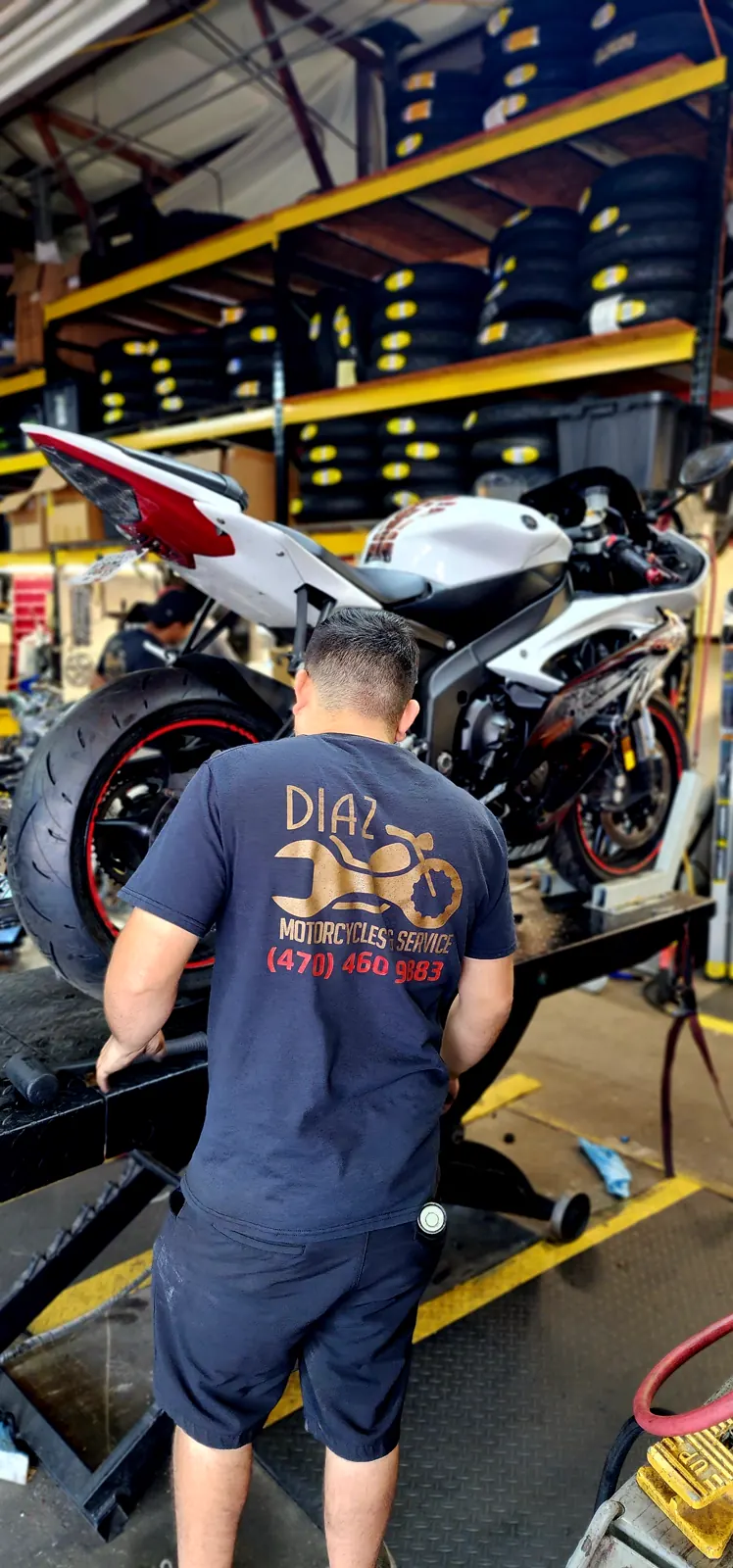
A good tune starts with looking, not charging. Before we talk about any plan, we get the bike on the dyno and do a baseline pull to see where it stands. We read the air-fuel numbers. We hunt for a lean spot here, a rich dip there, a flat patch in the midrange. That map tells us what the bike needs — and just as often, what it doesn’t.
There’s a second failure that hides behind the first one. A bike can run lean because of a bad tune, sure. But it can also run lean because of a vacuum leak, a tired fuel pump, a clogged injector, or an exhaust leak upstream of that sensor. If we just threw fuel at the map without finding the real cause, you’d walk out with a tune that covers the symptom and buries a problem that keeps growing. So we look for the root first. A dyno makes that mechanical detective work a whole lot faster.
What we actually check on a baseline run
- Air-fuel ratio across the whole rev range, not just at wide-open throttle
- Spark plugs and their color, which tell on a lean or rich engine fast
- The intake and exhaust for leaks that fool the sensor
- Throttle bodies and injectors for clogs or a lazy response
- The parts you’ve already added and how they changed the airflow
- Heat and how the bike behaves at a long, steady hold
We also just listen. A tune isn’t only numbers on a graph. It’s how the bike pulls, where it hesitates, and whether it surges at the exact rpm you cruise at all day long. The dyno gives us the data, and the ride gives us the feel. Both of those matter, and a shop that skips one of them is only doing half the job. A graph can look clean and still hide a spot that drives you nuts on the road, which is why we ride the bike before we call it finished.
Mistakes that cost riders a good tune
Most tuning regret starts before the bike ever hits the dyno. The most common one is adding parts in the wrong order, or bolting on a loud pipe and expecting free power with no tune to back it up. A slip-on with no tune can actually leave you worse off — leaner, hotter, and grumpier down low than you were stock.
Another one is shopping on price alone. We get it, and if you want to know what changes the total, we wrote a whole piece on it. But the cheapest tune is rarely the one that reads your air-fuel numbers, checks for leaks, and proves the result with a final run. A number on a screen with no diagnosis behind it isn’t a tune. It’s a guess with a receipt.
The third mistake is chasing someone else’s map. A flash file that made your buddy’s bike scream might run yours lean, because your parts, your altitude, and your fuel aren’t identical to his. If you’re curious how location changes things, here’s what Roswell riders run into with the same service a little north of the city. And for a nearby take, this covers what the work covers out in Acworth. The theme is the same everywhere: your bike gets its own map, never a hand-me-down.
You don’t have to take only our word for how any of this works, either. Groups like the Motorcycle Industry Council track the sport across the country, and RevZilla’s Common Tread runs plenty of plain-English writing on tuning and mods if you like to read up before you book. We’re happy when riders come in already knowing the basics. It just makes the whole thing faster.
Why Atlanta riders come to us
In-town riders are a small, tight crowd, and they don’t find shops by driving past one. They find them by search and by referral, and they judge a place by whether it texts back. So the map of who rides what tells us a lot before your bike ever shows up on the lift.
Out east, around Moreland Avenue and the east-side grid, the short trips and dense streets make small-displacement bikes and supermotos the smart pick, and those riders want snappy low-end and clean throttle. Over in Buckhead, near the estate streets of Tuxedo Park by the Governor’s Mansion, the bikes skew toward cruisers and premium European machines, and the tuning goal is smooth, strong, and drama-free. The tree-lined lanes and landscaped traffic islands of Garden Hills sit in that same world. Down in Grant Park, where Victorian mansions and craftsman bungalows back up to the Eastside BeltLine Trail and Zoo Atlanta, you’ll see a little of everything.
There’s a real-world reason tuning matters more here than the spec sheet suggests. Sit on the Downtown Connector, that merged I-75/I-85 spine through the middle of the city, and you’re stuck in stop-and-go over expansion joints and lane-line ridges with the clutch pulled in. Georgia law keeps you fully inside your lane, so you can’t legally filter out of that heat. A lean, poorly mapped bike runs hotter and hates that crawl. A proper tune won’t clear the traffic, but it’ll make your engine a much better sport about sitting in it. Cooler running and a happier clutch on that slow crawl are worth more than any bragging number, especially in July heat.
You’ll spot the same clustering by neighborhood everywhere, from the luxury shops of Phipps Plaza across Peachtree from Lenox to the cafe-racer and vintage-build crowd around the Westside Provisions District on Howell Mill Road. Different bikes, same need underneath: a map that matches the machine. That’s the real draw of motorcycle dyno tuning Atlanta locals can actually reach without hauling the bike two counties away.
One heads-up on names, because it trips people up. East Atlanta Indian Motorcycle sounds like it’s right in the neighborhood, but the store is actually out in Covington. If you’re an in-town rider who wants a real dyno and a shop that answers you, it helps to know where you’re truly driving before you load the bike on a trailer.
What it feels like when it’s done right
Picture the version of this where you caught it early. You added the exhaust, felt the bike get a little hot and a little jumpy, and brought it straight in for a baseline run. We found the lean spot, cleaned up the map, checked for leaks, and handed it back. No fouled plugs down the road. No limping through the summer with a bike that runs angry at every light. Just an engine that does exactly what your wrist asks. That’s the whole point of the work.
A good tune is something you feel in the first mile. The throttle stops acting like a light switch and turns into a dimmer. Plus, the flat spot in the midrange fills in. The bike idles clean, pulls smooth, and quits popping and spitting on the way down from a stoplight. It even runs cooler, because it’s finally burning the right mix instead of guessing.
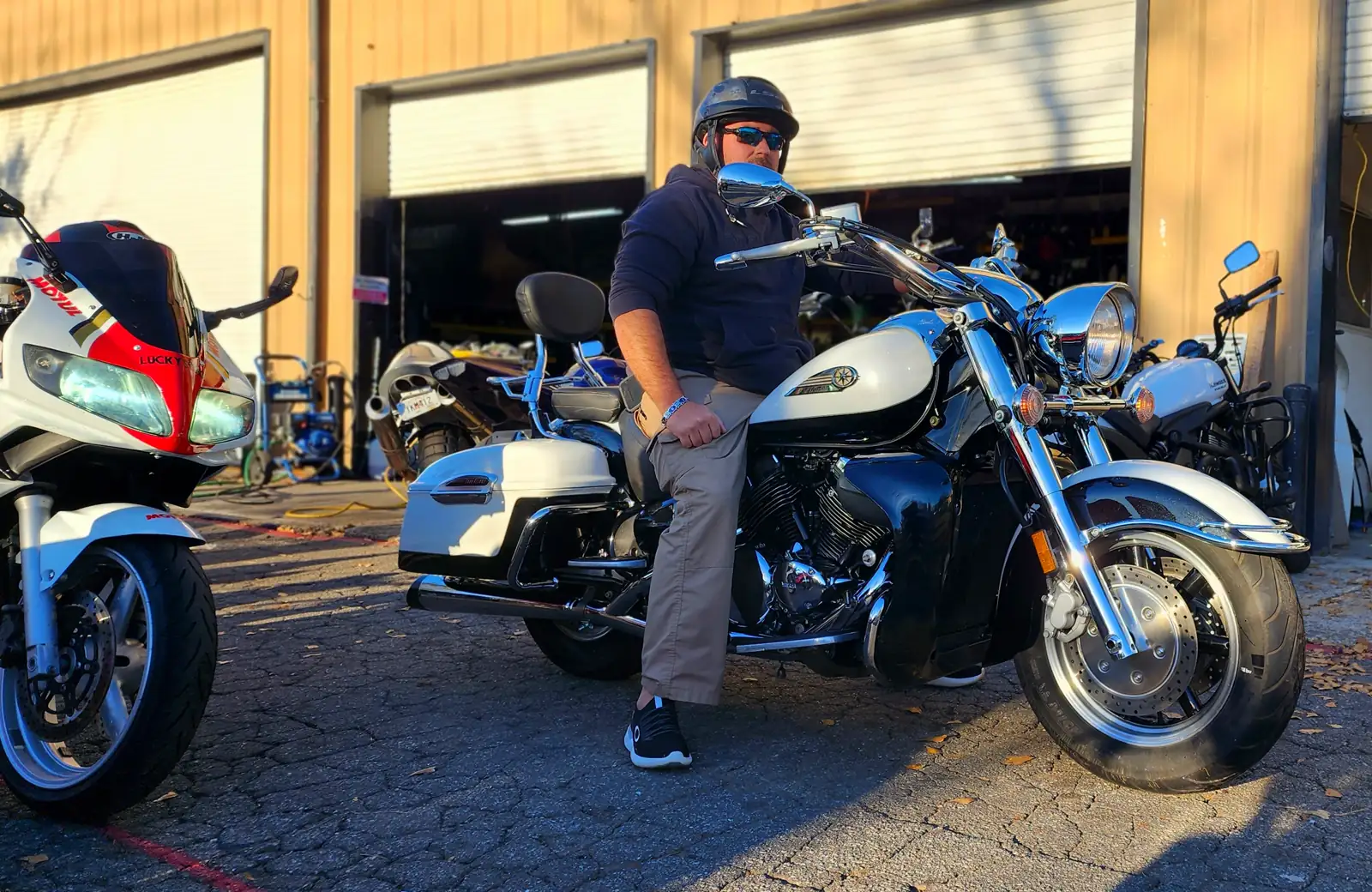
And there’s a quieter reward under all of that. You stop babying the bike. Meanwhile, you quit wondering if that little hesitation is about to strand you on an overpass. You trust it. When your machine finally matches the parts you paid for and the picture you had in your head, you get to ride it proud — and honestly, that feeling is the reason we keep the dyno running in the first place.
A dyno doesn’t sell you power. It shows you the truth, then helps your bike live up to it.
Getting started is easy. Send us a text with your bike, the year and model, and the parts you’ve added. We’ll tell you straight whether it wants a flash, a Power Commander, or just a baseline look first. No pressure and no runaround — just a real answer from people who tune bikes for a living.
Questions Atlanta riders ask us
Do I need an appointment?
Yes, a quick heads-up helps. The dyno gets booked in blocks, so a text or call ahead lets us reserve real time for your bike instead of squeezing it in. Tell us your model and what you’ve added, and we’ll set a window that works.
Can you pick up my bike?
We sure can. A lot of our in-town friends live in apartments and condos with tight deck parking and no room to load a trailer, so pickup takes that whole headache off your plate. Just text us your address and we’ll sort out the rest.
How do I get a quote?
It starts with a baseline run, not a number pulled from thin air. Once we see your air-fuel readings and confirm the parts on the bike, we can tell you exactly what the tune needs. Text us the bike and mods and we’ll walk you through it before anything gets touched.
Do you work on older bikes?
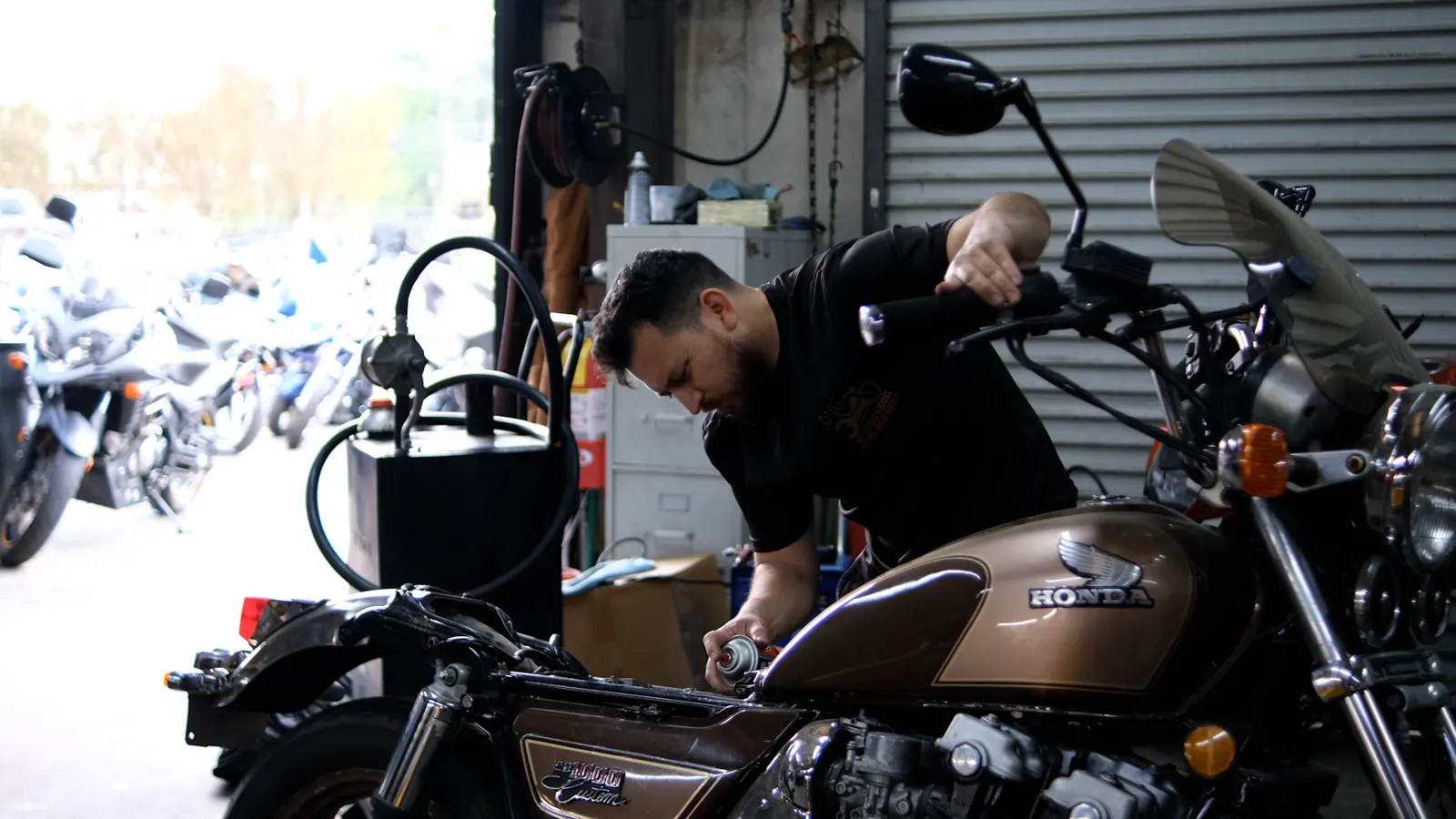
Absolutely, and we love them. Whether it’s an older fuel-injected bike or a carbureted classic, the goal is the same: find the lean and rich spots and dial in the mix. Age isn’t the problem, a bad map is.
What if it needs more than expected?
We call you first, every time. If the baseline turns up a vacuum leak, a tired pump, or a clogged injector, we stop and explain what we found before doing a lick of extra work. You always get to decide with the full picture in front of you.
Flash or Power Commander — which one is right for me?
It depends on your bike and your setup. Some models take beautifully to an ECU flash, some ride better with a Power Commander trimming fuel on top, and a few want both. We’ll recommend the one that actually fits your machine, not the one that’s easiest for us.
We tune and wrench for riders all over the metro, so getting a real dyno session is easy whether you park in Buckhead or Midtown. Friends roll in from Decatur, Sandy Springs, and Brookhaven, and plenty come over from Smyrna, Vinings, and Mableton on the west side. We also see regulars from Chamblee, Tucker, and East Point, and of course our neighbors right here in Marietta. If you ride in-town, the dyno is closer than you think.
TEXT US YOUR BIKE
Ready for a straight answer on motorcycle dyno tuning in Atlanta? Send us a text with your year, model, and the parts you’ve bolted on, and we’ll tell you whether it needs a flash, a Power Commander, or just a baseline run first. No pressure, no runaround — just honest tuning from people who ride too.
470-460-9883Diaz Motorcycles and Service, LLC · 847 Barnes Mill Road, Marietta, GA 30062