Motorcycle Dyno Tuning Smyrna — What It Costs, and Why We Won't Guess
A plain-English look at what a dyno measures, what a tune changes, and how we price the work honestly.
Ask around and somebody will give you a number for a tune before they’ve ever heard your bike idle. That number is a guess wearing a nice shirt. We’d rather be straight with you, because honest pricing for motorcycle dyno tuning Smyrna riders can actually plan around starts with the bike strapped to the rollers, not with a two-minute phone call. Until we watch what your engine is really doing under load, anything we quote is fiction with a decimal point.
Here’s the good news up front: the not-knowing part is short. A dyno is basically a treadmill for your bike. The rear wheel spins a heavy drum, the drum fights back, and sensors measure how hard your engine can push against that resistance while a sniffer in the exhaust reads what’s coming out the back. In about the time it takes to eat lunch, we go from guessing to knowing. Then we can tell you what the job is and what it takes to do it right.
Signs your bike is asking for a tune
Most riders don’t wake up wanting a dyno session. They come in because something feels off and they’re tired of shrugging about it. See how many of these sound like your morning ride.
- A flat spot in the middle of the rev range, like the bike takes a breath before it pulls
- Popping and crackling on decel that used to be charming and now just feels loud
- Snatchy throttle at low speed, where a small wrist input gives you a big lurch
- Running hot in traffic, with the fan screaming long after everyone else’s has stopped
- Hard starting when the engine is warm, or a cold start that needs a lot of coaxing
- Fuel mileage that quietly got worse and never came back
- New exhaust, new air filter, or a new intake, and the bike somehow feels slower than stock
What each of those signs actually means
Your engine wants a specific recipe of air and fuel. Too little fuel for the air it’s gulping and we call it lean. A lean engine runs hot, because fuel does more than burn — it also cools the inside of the combustion chamber as it evaporates. Take some away and you get the popping on decel, the surging at steady speed, and that fan that never shuts up while you sit at a light. Riders often notice it worst in July, which is exactly when Georgia stops being subtle about heat. If you want the deeper version, we wrote a whole piece on why that problem shows up.
Rich is the opposite. Now there’s more fuel than the air can burn, so some of it goes out the pipe unburned or washes down the cylinder walls. That’s the sooty plug, the smell that follows you into the garage, the fouled exhaust, and the mileage that keeps slipping. Rich also feels lazy. The bike pulls, but it feels like it’s pulling through a blanket, and the throttle response goes soft right where you want it sharp.
Then there’s the bolt-on trap. A slip-on exhaust and a freer-flowing filter let more air through, but the factory fuel map has no idea that happened. So the bike leans out in the exact spots you added airflow, and it can genuinely feel slower than it did stock. That isn’t a bad part. It’s a recipe that changed while the cook wasn’t looking.
Before we go further, one thing worth clearing up. A tune is not a magic horsepower vending machine, and any shop promising you a specific gain before they’ve seen the bike is telling you a bedtime story. What a tune really does is make the fueling correct everywhere — idle, cruise, part throttle, hard pulls, and the messy transitions in between. Correct fueling usually shows up as more usable power, cooler running, smoother throttle, and a bike that stops surprising you. Some bikes gain a lot on the chart. Some gain a little on the chart and a whole lot in how they feel at the speeds you actually ride. Both count.
What actually happens when you bring it in
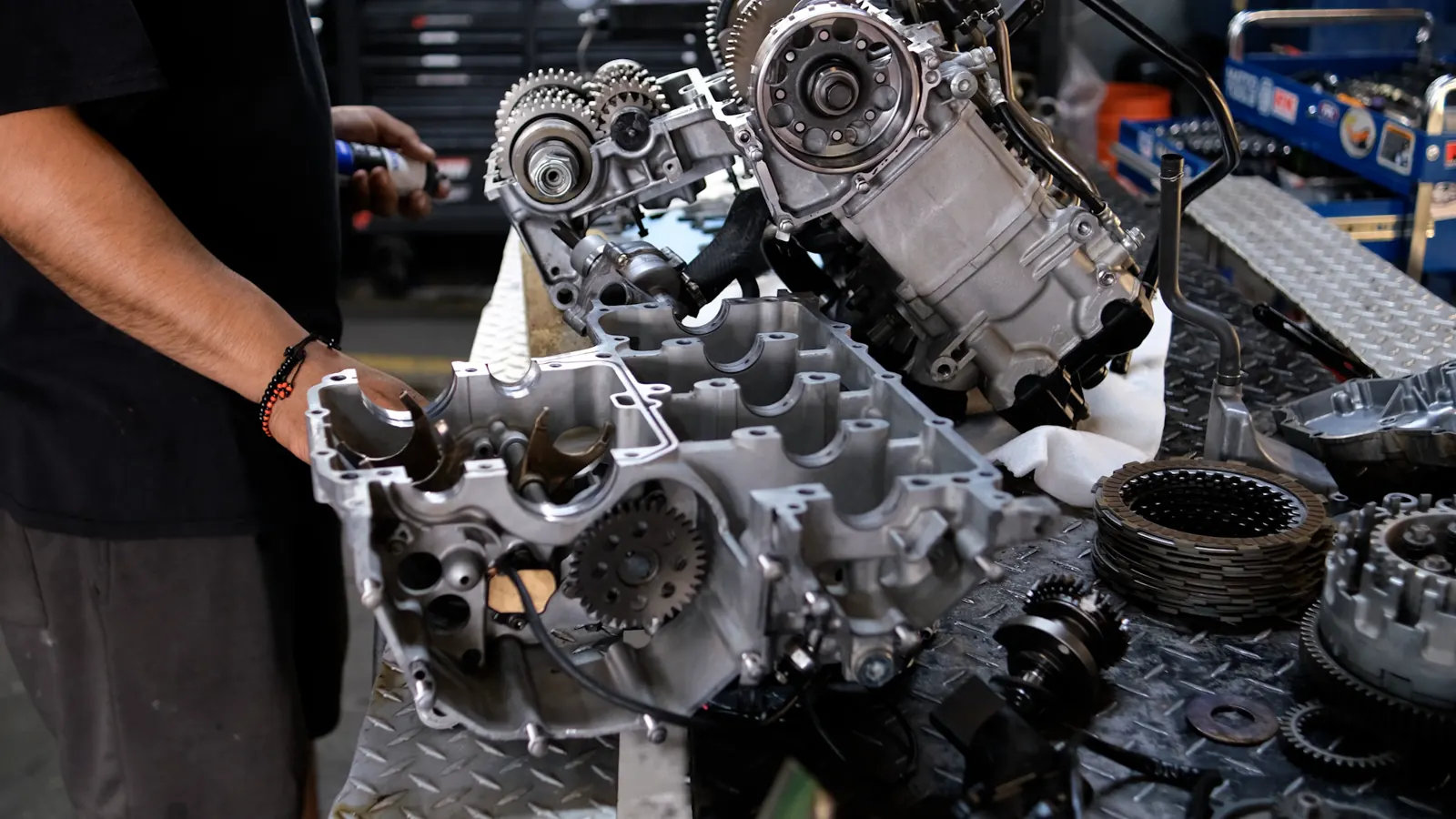
We diagnose before we quote. Always. That order matters, because a fuel map can’t fix a mechanical problem, and we’re not going to charge you for tuning around a leak. Here’s the sequence, start to finish.
- We talk first. You tell us what the bike does, where in the rev range it does it, and whether anything has been changed on it. That conversation saves real time.
- We do a health check. Plugs, air filter, throttle bodies or carbs, valve clearance history, cooling system, chain and sprockets, and any leak or code the bike is hiding.
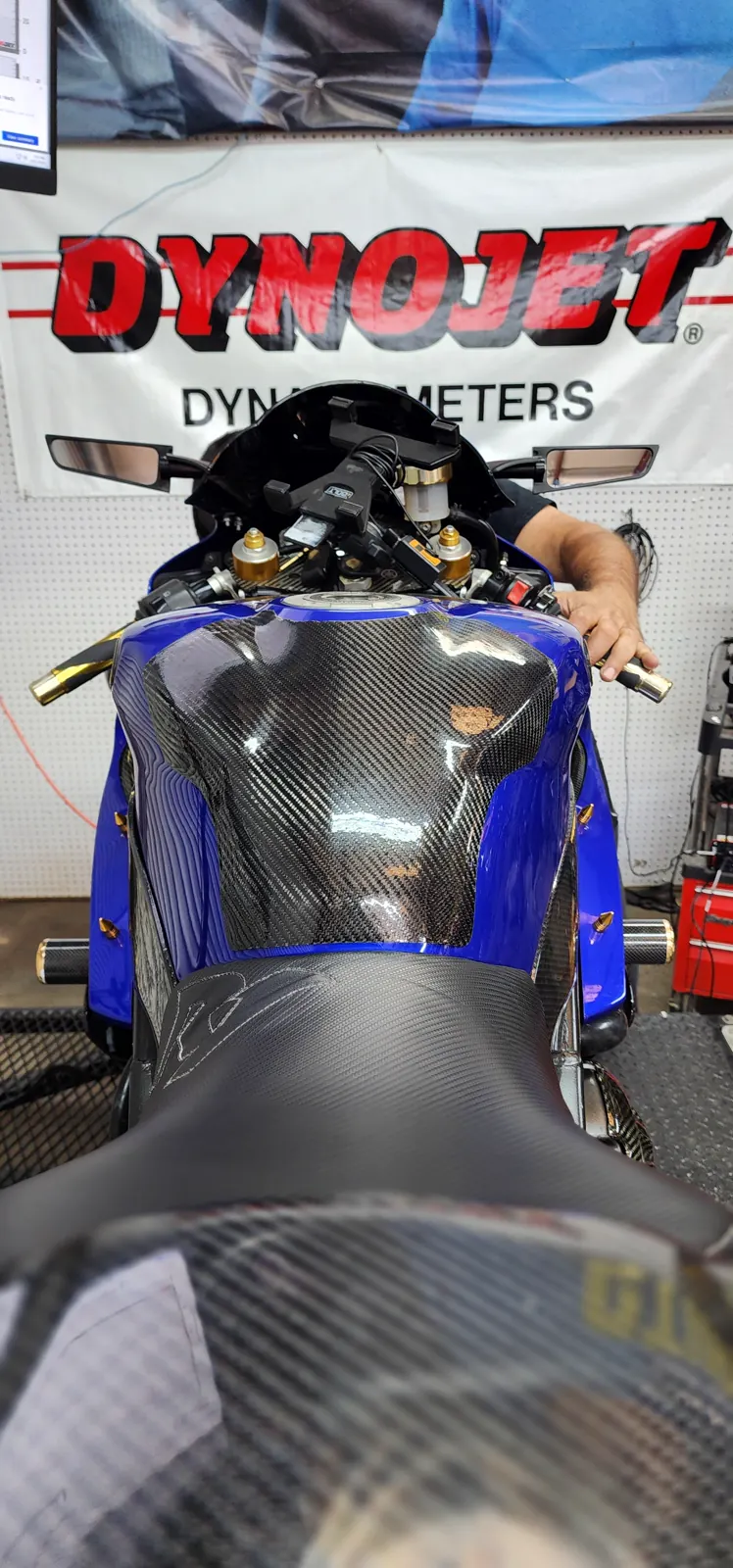
- We strap it to the dyno and run a baseline. This is the before picture, with the wideband sensor reading the air-fuel ratio all the way through the range.
- We show you the baseline and tell you what we found. If the bike needs mechanical work first, you hear that now, not after the bill.
- You approve the work. Nothing gets touched until you say yes.
- We tune. That means an ECU flash on most modern bikes, or a Power Commander and matching map where flashing isn’t the right route, adjusted point by point across the range.
- We run it again and compare. Then we hand you the sheet, walk you through it, and send you out to ride it.
That sequence is the whole of motorcycle dyno tuning Smyrna riders should expect from any shop, and it’s the honest reason we won’t quote blind. A newer sportbike with a slip-on and a stock airbox is a different afternoon than a carbureted bike that’s been sitting since the last presidential election. Both are welcome. They just aren’t the same job. If you’d like it laid out service by service, here’s what you get when you bring it in.
How long it takes
Most tunes are a same-day or next-day affair once the bike is on the schedule. The dyno work itself is a matter of hours, not days. What stretches a timeline is what we find during the health check: a valve adjustment that’s overdue, a fuel pump that’s tired, an air leak at an intake boot. We’d rather find those on a Tuesday in the shop than have you find them on the Perimeter at rush hour.
NO SURPRISES
If the job turns out to be bigger than the plan, we stop, call or text you with what we found, and wait. You approve every change before it happens. That’s not a policy we invented for the website — it’s just how we’d want to be treated.
Fall is our busiest tuning stretch, and for good reason. September and October are the best riding weather Georgia hands out all year, and everybody wants their bike right before leaf season up north. If that’s your plan, book earlier than you think you need to.
Smyrna riders, and why tuning matters here
Smyrna is the most urban rider market we serve. I-285 runs along the southern and eastern edge, which puts the city closer to in-town Atlanta than anywhere else on our map, and that changes how bikes get used. Riders here commute. A bike parked downtown beats a car parked downtown, and a fifteen-minute hop to the office is a normal Tuesday, not a weekend event. Georgia doesn’t allow lane splitting, so that bike sits in stop-and-go heat exactly like a car does, cooking away in July while the fan does overtime. A bike that runs lean feels every bit of that.
We see the whole spread from Smyrna. Folks come up from Market Village on a naked bike they ride five days a week. We get riders from The Highlands, over by Williams Park along the Highlands Parkway corridor, and from the Sherwood Road area, usually on something European and sport-touring shaped. Somebody rides in after a loop through the Historic Vinings District, where the cobblestone streets and boutiques make for a slow, pretty warm-up, and somebody else shows up after a lap around Taylor-Brawner Park, the ten acres built back in 2005 on the old Brawner hospital campus, where the amphitheater and trails make a nice excuse to take the long way. Different bikes, same complaint: it doesn’t feel right, and nobody has explained why.
Then there’s the fun side. Head west toward Paulding and Polk counties on Dallas Highway and the roads along the Silver Comet corridor, and you get real turns, real elevation, and a bike that has to answer quickly when you roll on mid-corner. That’s where a snatchy throttle stops being an annoyance and starts being tiring. It’s also where a proper tune is the most obvious. Publications like RevZilla’s Common Tread have been saying the same thing for years: smooth fueling makes an average rider feel like a better one. We see it every week, and so do riders over in Kennesaw.
There’s a reason we bring this up on nearly every intake: short commutes are their own kind of hard on an engine. A fifteen-minute ride never fully heats things up, so moisture stays in the oil and the crankcase, the exhaust corrodes from the inside, and the battery never quite catches back up. Add a townhome lot near Market Village with no garage, and you get a bike that lives outside, starts cold, runs short, and repeats. That’s not a reason to worry. It’s just a reason to tell us your real riding pattern, because the way you ride changes what we look at and, honestly, changes the map we build.
Getting to us is easier than it looks
There’s no full-service motorcycle shop inside Smyrna city limits, so riders end up driving the Cobb Parkway strip or calling somebody mobile. From Market Village it’s about 11 miles to us, roughly 22 to 28 minutes, usually South Cobb Drive or Atlanta Road north into Marietta and then Roswell Road east. The closest independent with a dyno is CayloR-Made Motorsports on Rosewood Circle, about 18 minutes out. We’re happy telling you that, because we’d rather you pick a shop for the right reasons than because you didn’t know your options.
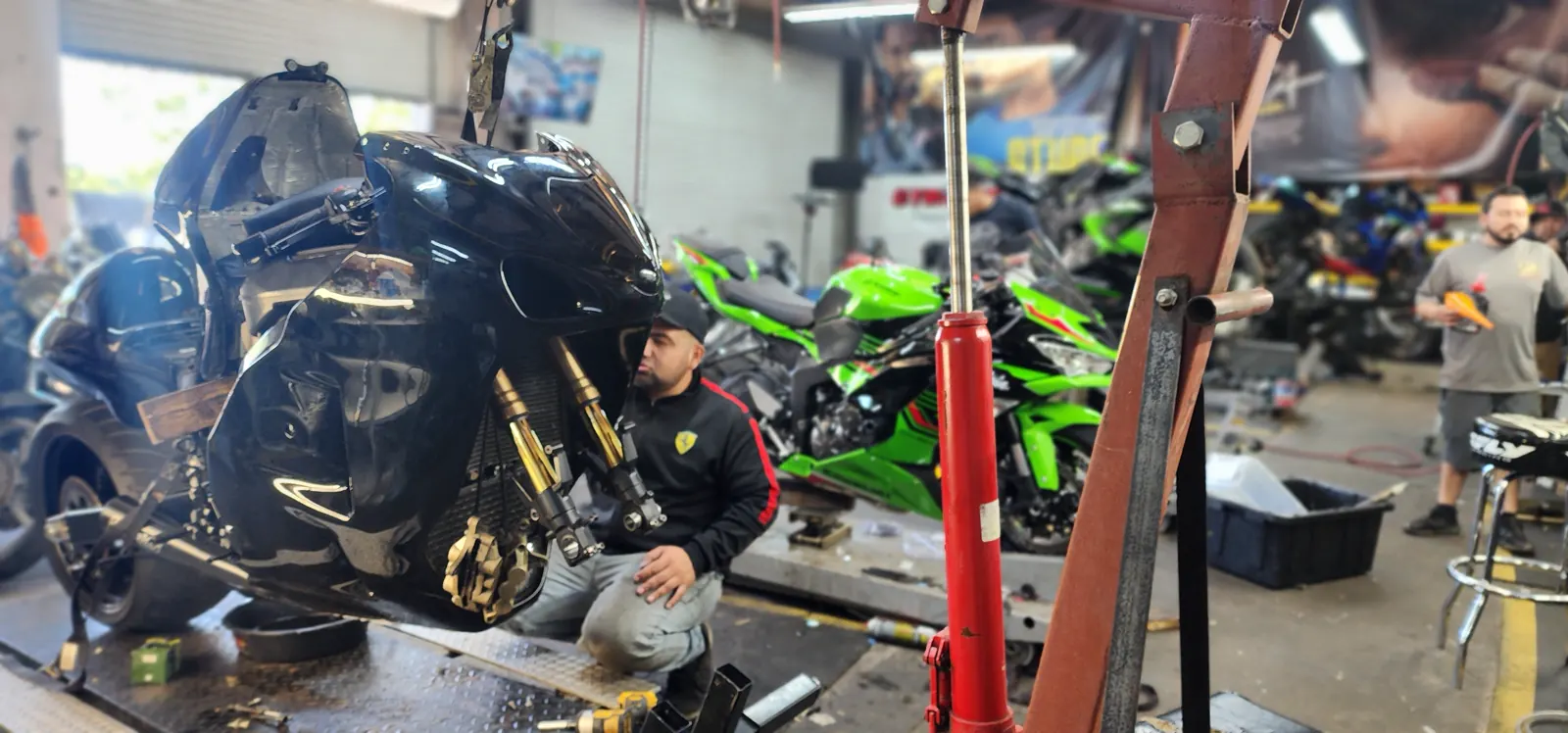
And if the bike isn’t rideable, or your week has no daylight left in it, we can come get it. Pickup is a normal request here, not a favor. Text us the address and we’ll sort the rest.
What you actually walk away with
A finished tune should feel boring in the best way. The throttle does what your wrist asked. Now, the flat spot is gone. The bike settles into traffic without cooking your legs, then wakes up cleanly when you want it to. You get the before-and-after sheets, and we walk you through them in plain words so you know what changed and why. If you’re curious what riders usually notice first, we put together the full rundown on it.
A good tune doesn't make your bike louder about what it can do. It makes it agree with you.
One last thing about older bikes, since it comes up constantly. We work on them gladly. Carbureted machines can’t be flashed, but they can absolutely be dialed in on the dyno with jetting and needle changes, and watching a thirty-year-old engine finally run clean is one of the better parts of this job. Groups like the Motorcycle Industry Council keep reminding the industry that riders hang onto bikes far longer than the marketing assumes. We agree, and we’re set up for it.
So no, we can’t tell you a number over the phone with a straight face. What we can tell you is what we’ll check, what order we’ll check it in, and that you’ll hear from us before anything gets touched. Send us a text with your bike, your mods, and what it’s doing wrong. We’ll tell you honestly whether a tune is the fix or whether you’d be wasting a Saturday. That answer is free either way.
Questions Smyrna riders ask us
Can you pick up my bike in Smyrna?
Yes, and it’s a normal request, not a special favor. Whether you’re near Market Village, over by The Highlands, or in a townhome lot with no garage, we can come get it and bring it back. Just text us the address and a window that works for you. If the bike won’t start or won’t run, tell us that up front so we bring the right gear.
How do I get a quote for a tune?
Text us your bike, the year, and every modification on it, plus what it’s doing that bothers you. That gets you a realistic range of what the job looks like. The firm number comes after the baseline dyno run and the health check, because that’s the first moment anyone can be honest with you. Nothing gets worked on until you approve it.
Do you work on older or carbureted bikes?
Absolutely. Older bikes can’t take an ECU flash, but they tune beautifully on the dyno with jetting and needle work, and the air-fuel readings guide every change instead of us guessing. We’ve dialed in plenty of bikes older than the riders on them. Bring it in and we’ll tell you honestly what’s worth doing.
What if my bike needs more than expected?
We stop and contact you before we touch anything extra. You’ll hear exactly what we found, why it matters, and what happens if you wait on it. Then you decide. We’d rather have that conversation early than hand you a surprise at pickup.
What's included in a dyno tuning session?
A pre-tune health check, a baseline run with wideband air-fuel readings, the actual tuning work by ECU flash or Power Commander depending on your bike, and a final run to confirm the change. You leave with the before-and-after sheets and a plain-English explanation of them. If we find something mechanical that has to be fixed first, you hear about it before we start.
Will a tune help if my bike is stock?
Often, yes. Factory maps are built to satisfy emissions rules and a worldwide range of fuel quality, which usually means lean cruise areas and abrupt throttle response. Smoothing that out makes a stock bike much nicer to ride in traffic. We’ll be straight with you if we think your particular model has little to gain.
We take care of riders all over the west side of metro Atlanta. The shop sits in Marietta, and from there we regularly see bikes from Smyrna, Vinings, Mableton and Austell, along with East Cobb, Fair Oaks and Kennesaw to the north. Riders come out from Atlanta, Buckhead and Sandy Springs when they want real dyno time instead of a parts-counter guess, and we get plenty from Powder Springs and Douglasville heading in after a run out west. If you’re somewhere in that circle and your bike doesn’t feel right, we can either meet you here or come get it.
TEXT US ABOUT YOUR BIKE
If your bike has a flat spot, runs hot in traffic, or just hasn’t felt right since you added a pipe, send us a text. Tell us the year, the model, the mods and the symptom. We’ll tell you what we’d check and how the day would go, and if you’re coming from Smyrna we can pick the bike up so you don’t lose an evening to it. Straight answers, no guessing, and nothing touched until you say go.
470-460-9883Diaz Motorcycles and Service, LLC · 847 Barnes Mill Road, Marietta, GA 30062