Motorcycle Maintenance Lawrenceville Riders Can Actually Trust
You don't have to know what's wrong with your bike. Describing it is enough — the diagnosis is our part of the deal.
After that, you do not have to know what’s wrong with your bike. Seriously. Also a lot of riders sit on a problem for months because they’re afraid they’ll call a shop, mumble something about a noise, and get quietly judged for it. Nobody here is keeping score. Instead Tell us it makes a clicking sound around forty and gets weird when it’s cold, and we’ve already got somewhere to start. Besides that’s the whole idea behind motorcycle maintenance Lawrenceville riders can actually trust: you bring the symptom, we bring the answer.
Bikes rarely quit all at once. They leave little notes first. The chain needs adjusting sooner than it used to. Even so, the front brake lever pulls a hair farther before it bites. Riders almost always notice these things. Actually what they don’t have is a name for them, and somewhere along the way we all got the idea that you need the name before you’re allowed to ask. You don’t.
The bike in the Collins Hill Heights garage
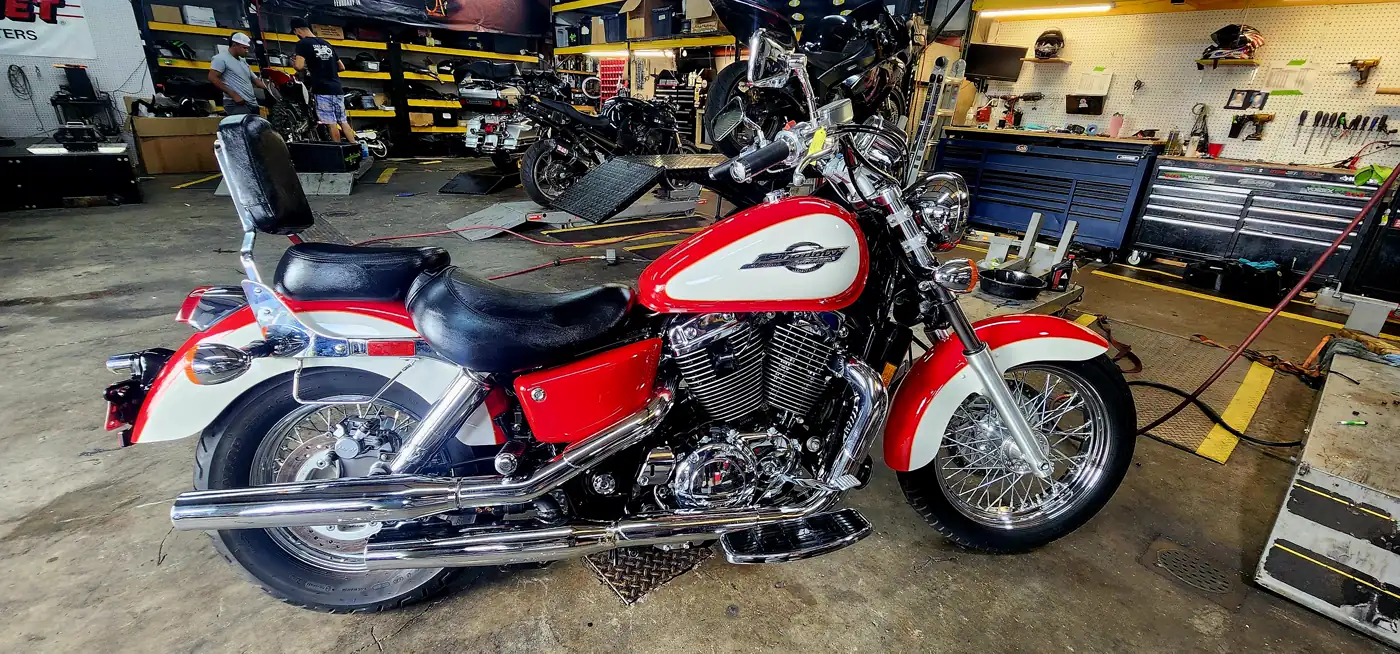
That’s why one of the friends we’ve helped kept a bike parked in an attached garage in Collins Hill Heights for a little over three years. Not on purpose. A new job showed up, then a kid, then a winter that turned into two more. Either way every few months he’d walk past it on the way to the recycling bin, think about it for four seconds, and shut the door behind him.
In short that exact story lives on half the streets in Gwinnett. At the same time Attached two-car garages are the default here, not a luxury, so bikes around Lawrenceville don’t sit out and rot in the rain. They just sit. As a result Dry storage is genuinely kind to a motorcycle, and it’s why so many older bikes we pull out of this county are in far better shape than their owners assume. Tank’s straight. Paint’s clean. On the other hand what went sideways is all the stuff you can’t see from the doorway.
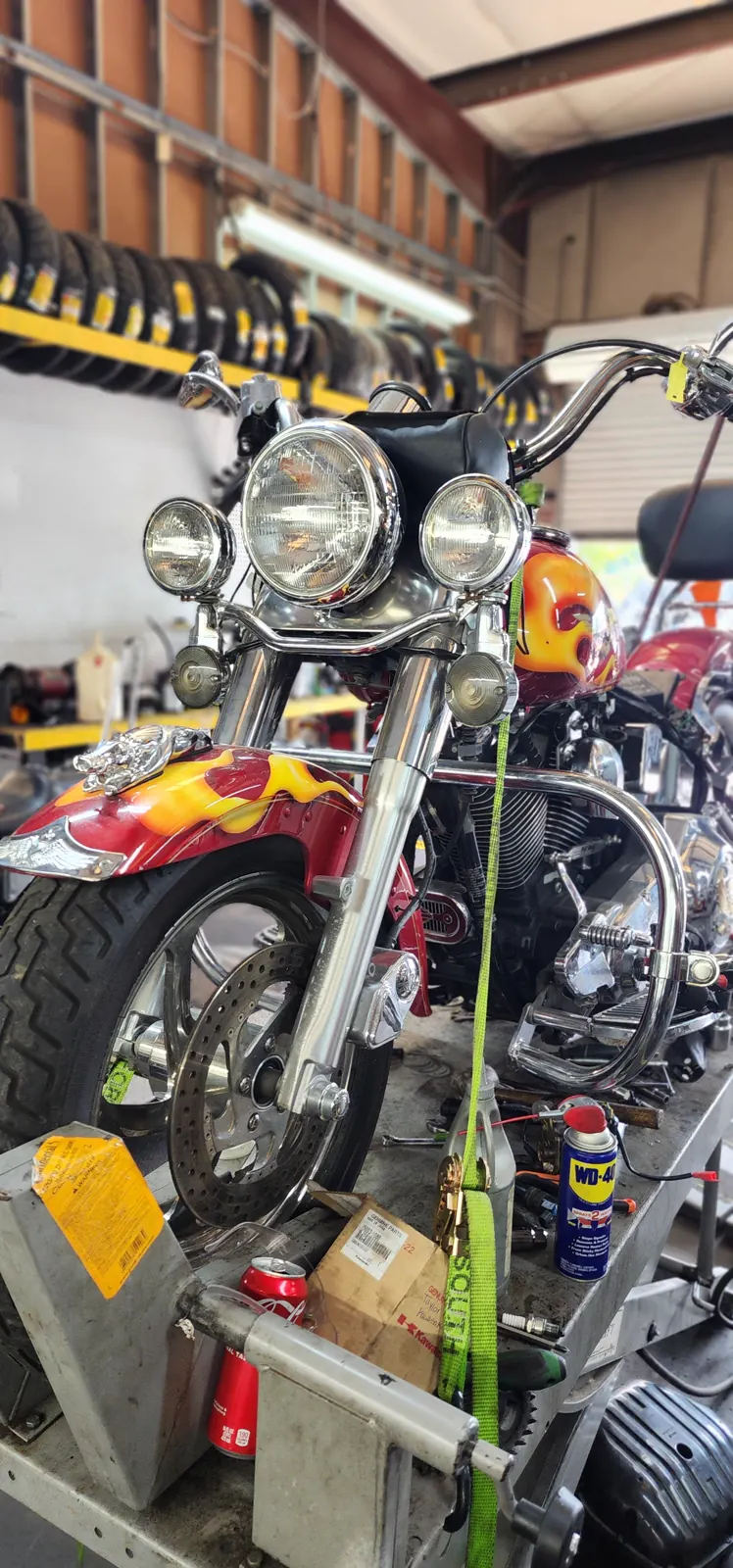
When he finally texted us, his first line was, “I don’t really know what’s wrong with it.” Perfect. Honestly, that is the correct amount of knowing. He knew where the bike was, roughly how long it had been there, and that the last thing it did before parking was run fine. That’s plenty to build a plan on.
The real cause is almost always boring
Here’s the part that surprises people. The thing that actually stopped the bike is hardly ever dramatic. Fuel goes stale and gums up the small passages it has to squeeze through. Batteries drain flat and then won’t hold a charge. Brake fluid quietly pulls in moisture over time, which is why it’s a scheduled replacement and not a lifetime fill. Tires harden even when the tread looks deep, because rubber ages by the calendar and not only by the mile. Chains stretch. Fork seals weep. None of it is a mystery, and all of it is fixable.
In Georgia the villain in a closed garage isn’t cold, either. It’s humidity. Damp air is what puts the fuzz on contacts and the light orange bloom inside a tank, and it does that work all winter while the bike looks perfectly fine under its cover. Good news is that humidity damage is slow and shallow. Catch it in the first season or two and you’re mostly buying fluids and a battery, not a rebuild.
Riding here writes its own maintenance list, too. Old Norcross Road and Five Forks Trickum Road are the kind of older county connectors that collect potholes and pavement seams from freeze-thaw cycles and years of heavy truck traffic. Every one of those hits travels straight up through the tire into the suspension and the wheel bearings. It also knocks tire pressure and chain slack out of spec faster than a smooth highway ever would. So a bike ridden daily around Heritage Station and the Heritage Commons and Heritage Park streets near the historic core lives a harder life than the odometer suggests.
Most people stop reading here. That’s the expensive mistake. The whole economics of owning a motorcycle sit in this one gap: a chain adjusted on time is a chain, and a chain ignored long enough becomes a chain, two sprockets, and sometimes a chewed case cover. A brake pad caught with material still on it is a pad. A brake pad caught after the backing plate has been kissing the rotor is a pad and a rotor. Same bike, same rider, same road. The only variable was how early somebody looked.
Small things are cheap and easy. Big things are just small things that waited.
What a service actually includes, in plain words
“Full service” is one of those phrases shops say and customers nod at. Let’s take the mystery out of it. Real motorcycle maintenance Lawrenceville riders pay for should touch the parts that wear out on a schedule, rather than the parts that break on a bad day. Here’s the honest list.
- Engine oil and filter, plus every other fluid the bike carries — coolant, brake fluid, clutch fluid, final drive oil.
- Chain, belt or shaft drive: clean it, set the slack, and measure how much life is left in the sprockets.
- Brakes front and rear — pad thickness, rotor condition, fluid color, and whether the levers feel right.
- Tires: pressure, tread depth, uneven wear patterns, sidewall condition, and the age of the rubber.
- Air filter and spark plugs, because a bike that breathes and sparks well is a bike that starts easily.
- Cables and controls — throttle, clutch, and every pivot that should move freely and quietly.
- Electrical basics: battery health, charging output, lights, horn, switches.
- Chassis fasteners, steering head, suspension, wheel bearings, and a road test to confirm it all feels right.
Now, how often? We’re not going to invent a number for you, and you should be a little suspicious of anyone who does. Your owner’s manual sets the interval for your specific machine, and it varies by brand, by model and even by how you ride. Manufacturers publish that information for a reason. Harley owners, for instance, can pull maintenance details straight from Harley-Davidson service information. If you’ve lost your manual, bring us the year and model and we’ll help you track down the right schedule instead of guessing at one.
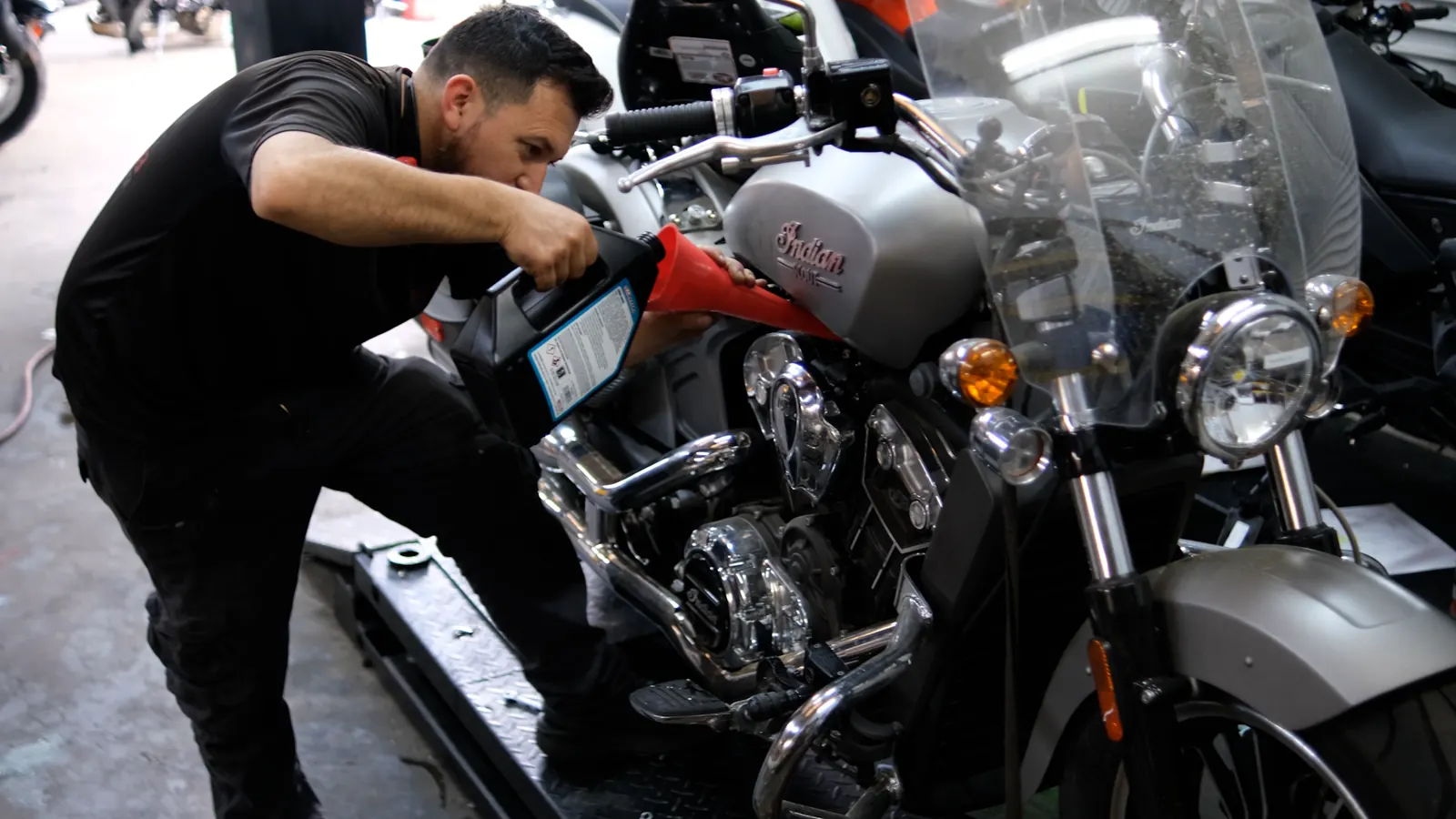
Riders also ask what separates a service from a repair. A service is planned. A repair is a response. If you’ve been putting off both because you weren’t sure which one you needed, here’s what that service actually involves in more detail, written for Lawrenceville riders who want the real breakdown before they commit to anything.
Your real options from Lawrenceville
Time to be straight with you about geography, because we’d rather lose the job than fake this part. Our shop sits at 847 Barnes Mill Road in Marietta. From most of Lawrenceville that’s somewhere around 33 to 38 miles — and that’s our estimate off the road map, not a number we stopwatched. Figure roughly 45 to 70 minutes depending on traffic and route, either GA-120 west with no interstate at all, or I-85 south to I-285 west to I-75 north. You’re emphatically OTP, and so are we, but that’s still a cross-metro haul.
So no, you should not drive an hour each way for an oil change. We’d tell our own family the same thing. Gwinnett is thick with capable shops, and plenty of good technicians in this county trained right down the road at Gwinnett Technical College. If you ride a Harley and want a dealer service counter, Killer Creek Harley-Davidson over in Roswell is roughly 35 to 45 minutes from most of Lawrenceville. Dealers and independents each have their strong suits, and we’ve written honestly about the tradeoffs between them rather than pretending one always wins.
Where the drive stops mattering is the work Gwinnett can’t easily get locally. This county is the densest sportbike market we serve, and it’s a modified-bike culture — slip-ons, full systems, air filters, gearing changes. Then the bike runs lean or maps badly and there’s nowhere close by to make those parts actually work together. Same story with restoration. A bike that’s been sleeping in a Ballantrae garage since the last owner is a project measured in weeks, not hours, and when the job takes weeks the miles quit being the issue. If that bike needs a title or registration sorted out before it’s road legal again, the Georgia Department of Revenue is where that paperwork starts.
So there are three ways a shop across the metro makes practical sense for you.
- Pickup and delivery. We come get the bike and we bring it back. You never make the drive, which matters most when the bike doesn’t run.
- Batching. Save it up — service, tires, a fluid flush, that rattle you’ve been ignoring — and let one visit clear the whole list.
- The big stuff. Tuning, performance work, restoration and paint are trip-worthy jobs. Routine oil changes are not, and we won’t pretend otherwise.
How we decide what your bike needs
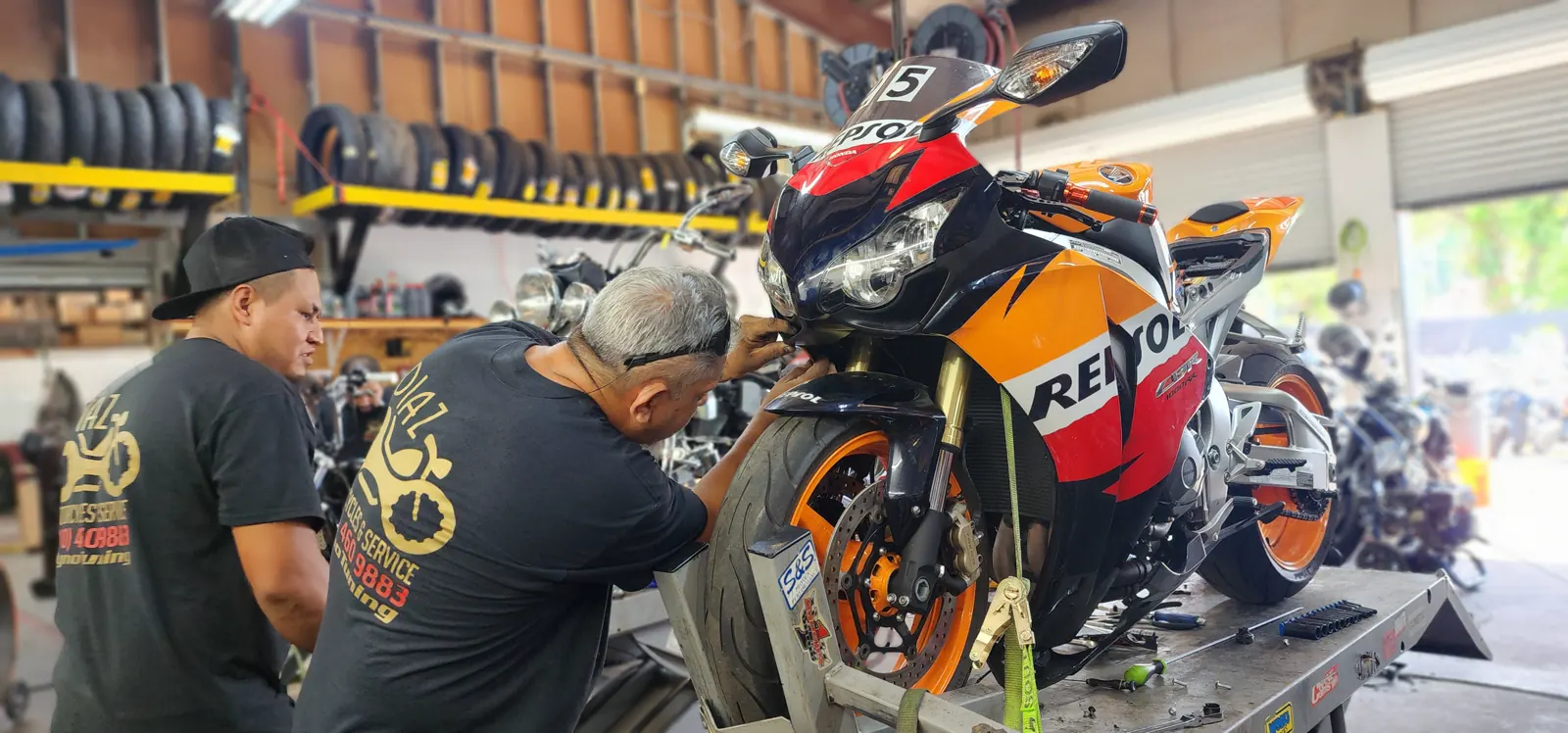
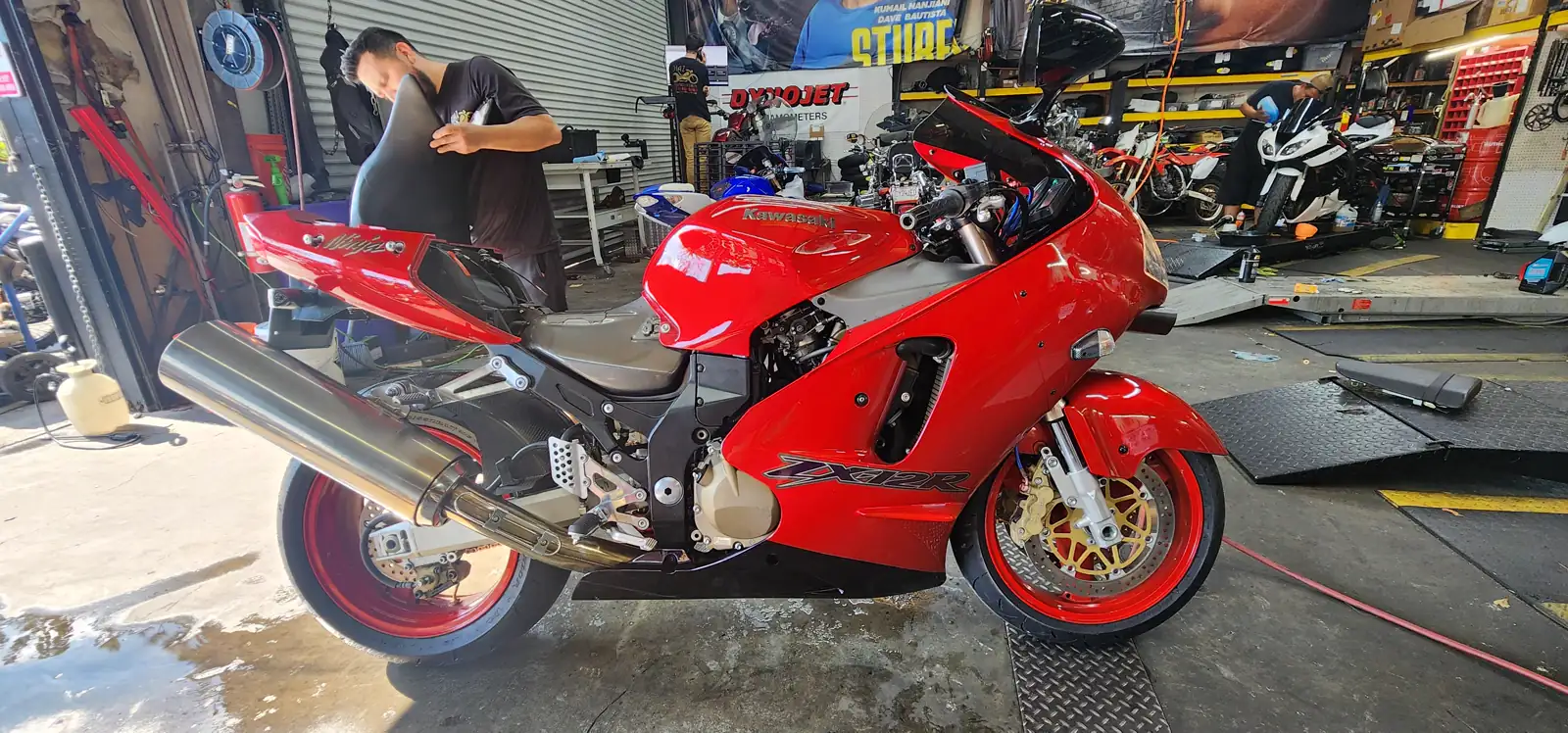
The last piece is the one people underestimate. It isn’t the wrenching — it’s the looking. We diagnose before we quote, every single time, because a quote built on a guess is just a wish with a number attached. That means the bike gets inspected and, if it’s rideable, ridden, before anybody tells you what it’ll take. It costs you nothing to find out, and it’s the step that keeps you from paying for parts your bike didn’t need.
- You text us. A sentence about the symptom, the year and model, and a photo or a short video of the noise if you can catch it.
- We talk through it and give you a rough sense of what’s likely, plus what we can’t know yet without hands on it.
- For example, we pick the bike up in Lawrenceville, or you drop it off if you’re already headed our way.
- We inspect it, road test it when it’s safe to, and write out everything we find.
- You get that list sorted into three buckets: fix now, fix soon, and keep an eye on it.
- You choose what happens. Nothing else gets touched without a call first.
That three-bucket list is the part riders tell us they keep. It turns a vague worry into a plan with an order to it, and it means you can spread work across months on purpose instead of by accident. If you want a closer look at the philosophy underneath it, here’s how our crew approaches it from the first phone call to the handoff.
NO SURPRISE WORK
If we open something up and find more than we expected, the wrenches stop and the phone rings. You approve it or you don’t. We’ve never met a rider who enjoys a surprise on the invoice, and we’re not going to be the first shop to try it.
There’s a rider-side habit worth building, too. Before a ride, take two minutes: squeeze the front brake, glance at both tires, check the chain slack, look for a drip under the bike, and make sure the lights work. That’s it. Riders who do that catch nearly everything early, and early is where all the savings live.
What it feels like after
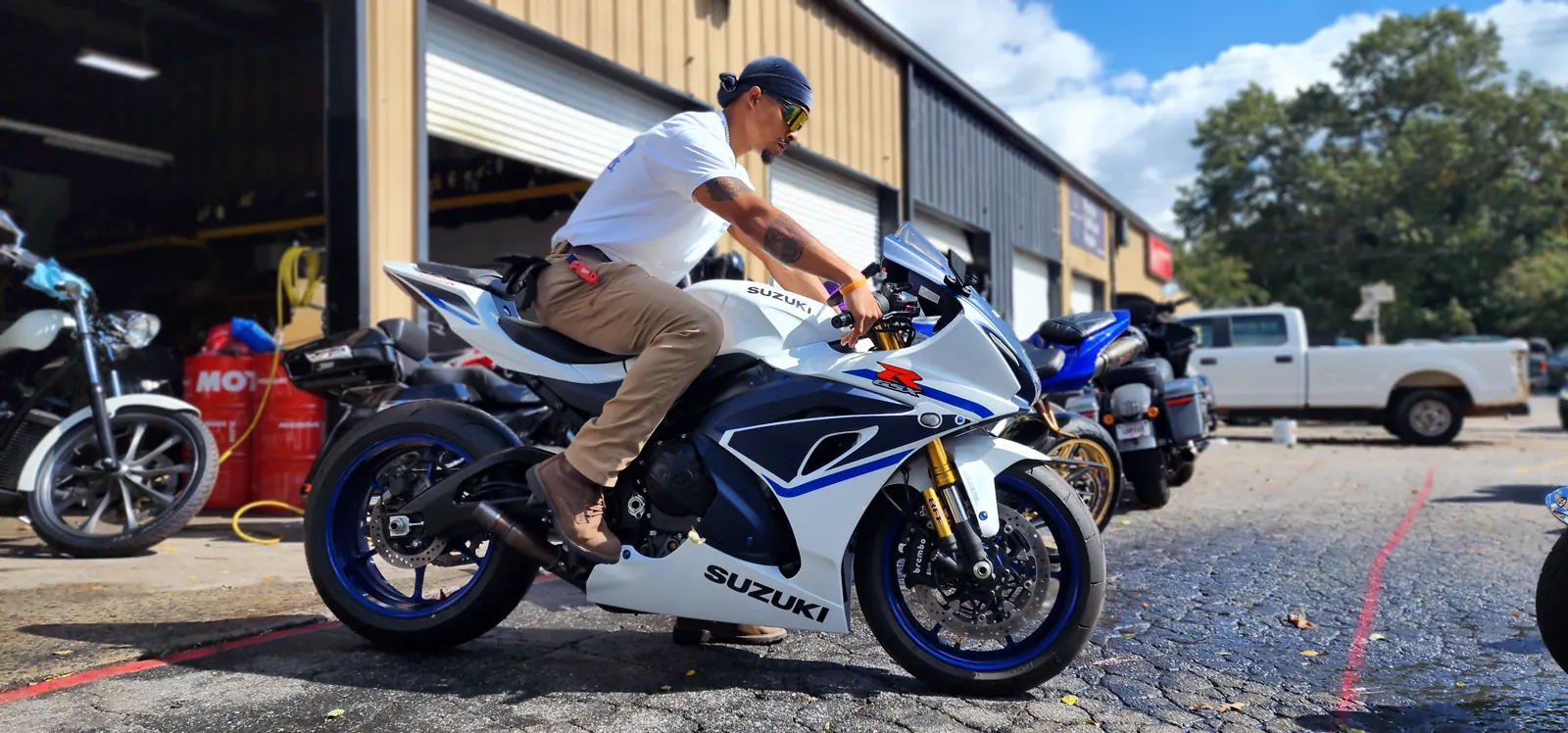
A properly sorted bike feels tight in a way that’s hard to describe until you get it back. The throttle responds the instant you ask. What’s more, the clutch bites in the same spot every time. The chain stops making that dry whir, and nothing rattles at idle. You stop listening to the engine instead of the road, and you just ride.
Point the bike up GA-20 north toward Buford, out past Lake Lanier and on toward Cumming, and you’ll know within ten minutes whether the work landed. That’s the standard local escape route for a reason. It’s also the honest test — steady speed, some elevation, real corners, and enough time in the saddle that anything wrong will speak up. Riders in other suburbs run the same play; here’s how this plays out in East Cobb if you’re curious how the pattern travels.
The outcome we're actually after
We want you in charge of your bike again. Not managed. Not upsold. In charge. The commuter riding to a job near Georgia Gwinnett College, the student on a first used sportbike, the rider whose old project has waited under a cover since before the kids could walk — all of you deserve to understand your own machine, and none of you should need a vocabulary test to get help with it.
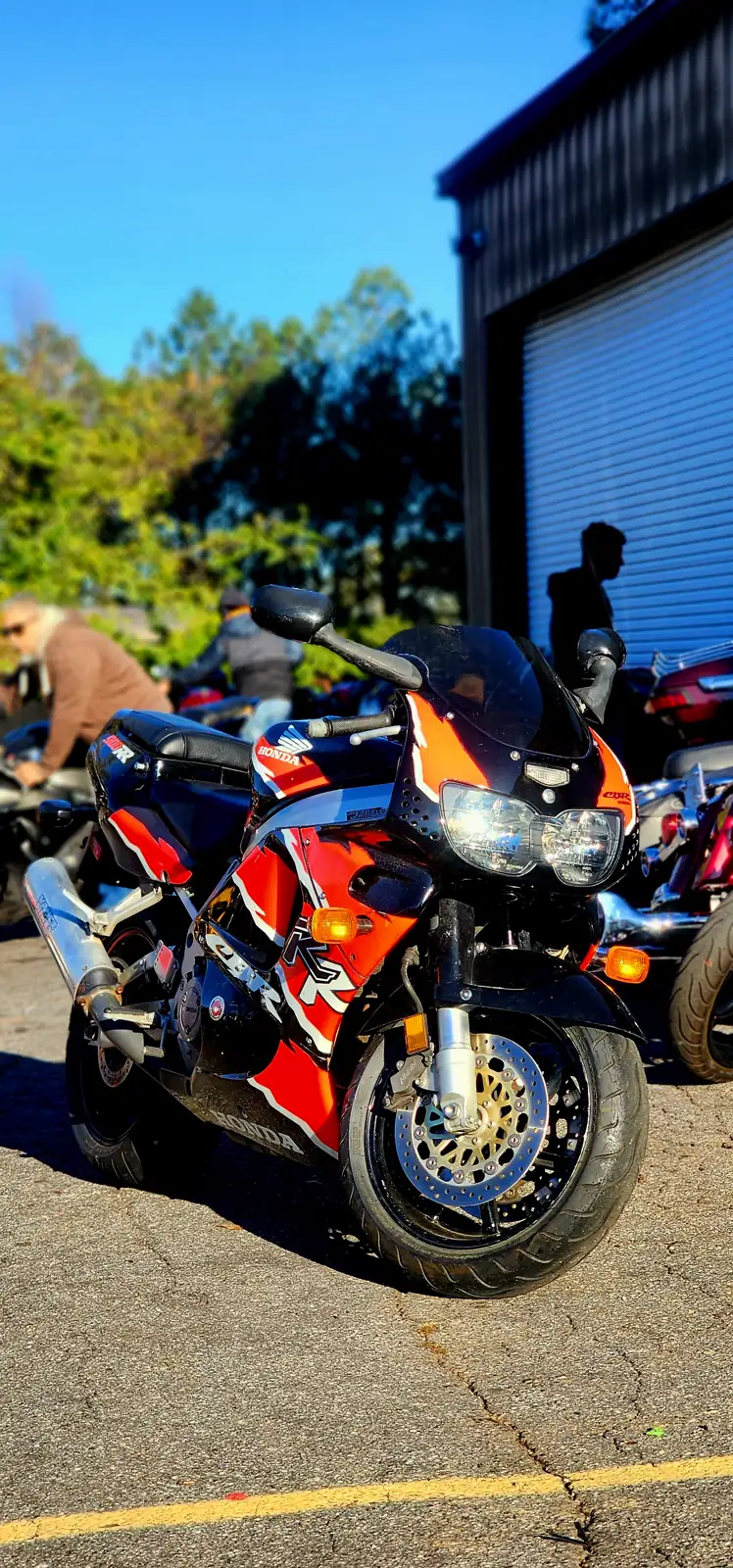
So start where the friend from Collins Hill Heights started. Tell us what you noticed. We’ll tell you what it probably means, come get the bike if it makes sense, look at it properly, and give you a plan you can actually read. That’s the deal, and it’s a pretty good one.
Questions Lawrenceville riders ask us
Do you work on my brand of bike?
Almost certainly, yes. We work on Japanese sportbikes and nakeds, Harleys and other cruisers, touring bikes, European brands like Ducati and Aprilia, and dirt bikes. Gwinnett’s fleet leans heavily toward supersports, so those come through our bays constantly. Send us the year and model and we’ll confirm before you commit to anything.
Do I need an appointment?
It helps a lot, especially since you’re coming from across the metro. Text us first and we’ll tell you honestly what our schedule looks like that week. If your bike needs to stay a few days, knowing that up front beats finding out after you’ve made the drive.
Can you pick up my bike in Lawrenceville?
Yes, and for that distance it’s usually the smart move. We’ll come to you, load the bike, and bring it back when the work is done. That matters most when the bike won’t start or isn’t safe to ride, but plenty of riders use it just to skip the drive entirely.
How do I get a quote?
Text us the symptom, the year and model, and a photo or short video if you can capture the problem. We’ll give you a rough idea right away, then confirm it after we’ve actually inspected the bike. We diagnose before we quote, so the final number reflects what your bike needs rather than what we assumed.
Do you work on older bikes?
That’s some of our favorite work. Older bikes that have been sitting in a dry Gwinnett garage are often in better condition than their owners expect. Restoration is a project measured in weeks, so the distance between Lawrenceville and our shop stops being a factor once the work begins.
How often should I service my motorcycle?
Your owner’s manual sets that schedule, and it differs by brand, model and riding style. We won’t invent an interval for your bike. Bring us the year and model and we’ll help you find the manufacturer’s real recommendation, then build a plan around how you actually ride.
We ride out to riders all across Gwinnett and the eastern suburbs, so Lawrenceville is far from alone on our pickup route. We regularly help riders in Duluth and Suwanee, run north to Buford and Sugar Hill, and swing east through Dacula before looping back down. Snellville, Grayson and Loganville riders call us constantly, especially for project bikes that have been parked a while. We also cover Lilburn and Norcross along the busier corridors, plus Tucker and Stone Mountain closer in toward the perimeter. If you’re somewhere between those dots on the map, ask anyway — the answer is usually yes.
TEXT US THE NOISE
You don’t need the right words for it. Text us what your bike is doing, tell us it’s in Lawrenceville, and we’ll take it from there — a straight answer about what it likely means, free pickup if that’s easier than the drive, and a written plan before anyone picks up a wrench. No lecture, no pressure, no surprise work.
470-460-9883Diaz Motorcycles and Service, LLC · 847 Barnes Mill Road, Marietta, GA 30062