Motorcycle Not Starting Canton — How to Fix It
The click, the silence, the lazy crank — here's what each one is really telling you, and how we track it down.
A rider out in BridgeMill called us on a Tuesday morning. He’d taken his bagger somewhere else, gotten a quote for a whole new charging system, and something about that piece of paper just didn’t sit right with him. So he did what you’re probably doing right now — he typed motorcycle not starting Canton into his phone and started reading. Good news? His bike never needed a charging system. It needed one clean ground and a battery that could still hold a charge overnight.
We tell that story a lot, and not because anybody did anything shady. Honestly, a no-start is one of the easiest problems on earth to guess wrong on. All the symptoms look alike from the seat. A tired battery, a lazy starter, a crusty ground and a tank of old gas can each make the same sad noise on a cool morning. That’s why guessing goes sideways and testing doesn’t. So let’s walk through what’s actually happening, in plain words, starting with the exact sound coming out of your own garage.
First, what is your bike actually doing?
Riders say “it won’t start,” and we know exactly what that means in your gut. Mechanically, though, there are about six different problems hiding inside that one short sentence. The sound your bike makes is the best clue anybody has, and you already own it. So read these and pick the one that matches your morning.
- Dead silence. You hit the button and get nothing — no click, no dash, or dash lights that fade the second you press it.
- One loud click, then nothing. The gauges stay lit, but the engine never turns.
- Slow, lazy cranking. It turns over, yet it sounds like it’s dragging itself through mud.
- Strong, healthy cranking with no fire. The starter sounds great, though the engine never catches.
- It fires, runs rough for a second or two, then quits right back down.
- It starts fine cold but refuses when hot — or the other way around.
Write down which one you’ve got, because that single detail cuts the search in half before anyone picks up a tool. And if the answer changes day to day, that’s useful too. Intermittent trouble almost always points at a connection rather than a part.
Why it happens, most common first
The battery, by a mile
Most no-starts we see are battery-related, and that’s genuinely good news, because it’s the simplest thing on the list. Here’s the thing: batteries rarely die on a calendar. They die from sitting. A bike parked in an unheated garage from November to March drains itself slowly, and a battery that sits flat for months loses the punch it needs to spin a starter. It might still light your dash beautifully. Lighting a bulb and turning an engine are two very different jobs, though, and only one of them takes muscle.
Grounds, cables and crusty connections
Next up, and the one that fools people most, is a bad connection. Electricity needs a clean path back to the battery, so a green, chalky ground strap or a loose main cable can mimic a dead battery perfectly. You’ll get the click. You’ll get the slow crank. Meanwhile the battery itself tests fine on the bench, which is exactly how good parts get replaced for no reason. Don’t worry — this one’s usually an easy fix, and cleaning it up costs a lot less drama than it sounds like.
Here’s where it gets interesting — and where most advice online falls apart. Nearly every video tells you to charge the battery, then buy a battery, then buy a starter. But a no-start isn’t one system; it’s three systems shaking hands. You need power, you need spark, and you need fuel and air in the right ratio at the right moment. Any one of the three can break the handshake, so the real skill isn’t knowing the parts. It’s knowing the order to test them in, because the order is what keeps you from paying for parts your bike already had.
Fuel that sat too long
Gas with ethanol in it doesn’t age gracefully. After a long winter it turns to varnish, and that varnish glues up carburetor jets and gums injectors and pumps. This is our most predictable Canton story every March, right on schedule with the first warm Saturday. The bike cranks strong, so the rider assumes electrical, yet nothing is reaching the cylinder in usable form. Since the symptom is “cranks but won’t fire,” fuel jumps way up the suspect list. Fresh gas, a cleaned fuel system and a working pump usually bring it right back.
Starter, relay or the button itself
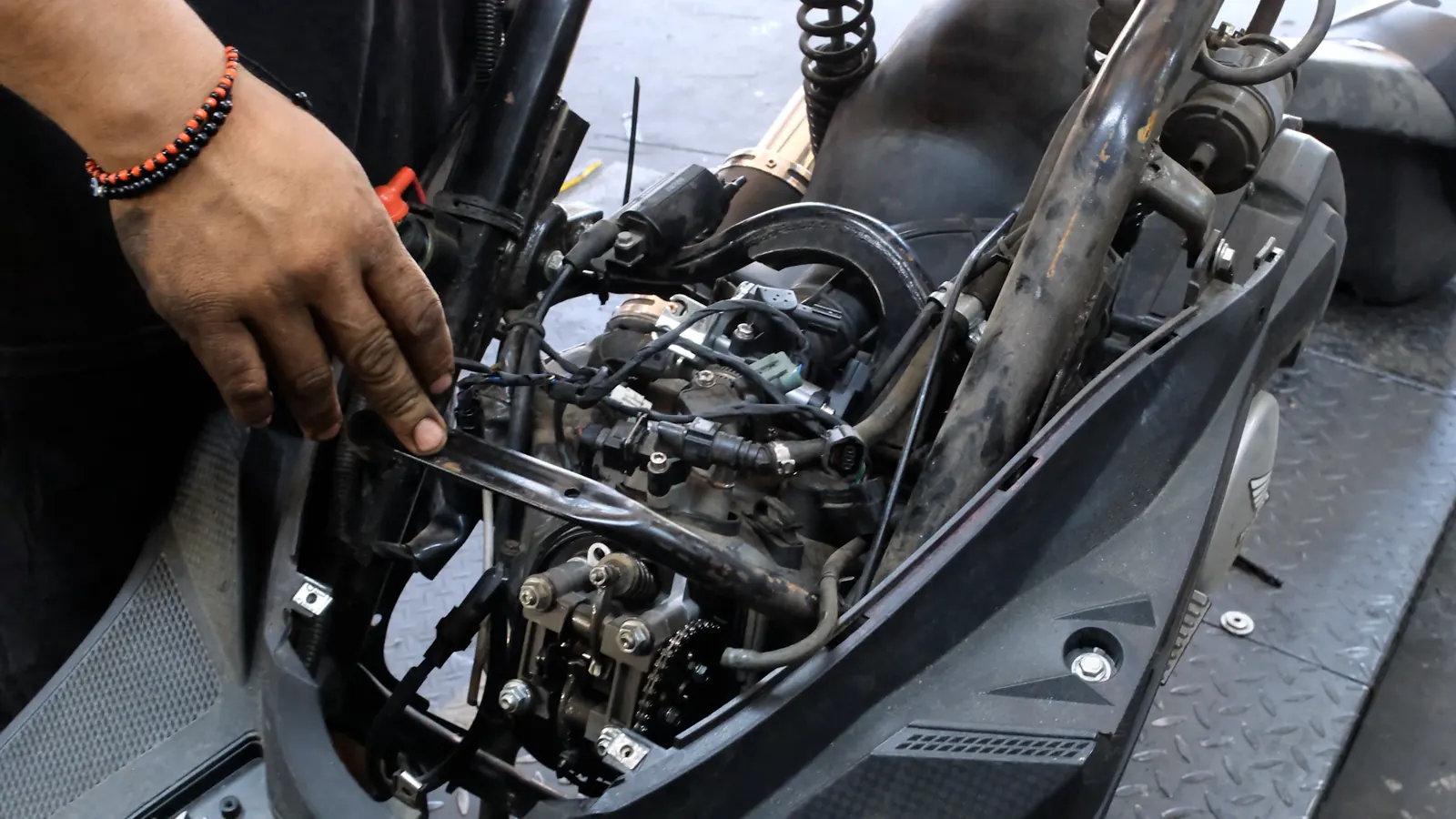
Sometimes the parts that move are the problem. A starter relay can stick, a solenoid can wear out, and a starter motor can develop a dead spot that only shows up in one position. That’s the classic “it clicked yesterday and cranked today” bike. Also, plain old handlebar switches get dirty. In fact, a start button that’s been rained on for ten years can absolutely leave you sitting there pressing nothing.
Sensors and safety switches
Modern bikes are polite about safety, though sometimes a little too polite. A kickstand switch, clutch switch, tip-over sensor or neutral switch can each stop the show on its own, and they do it silently. So if your bike cranks happily but won’t fire, and it did the same thing last week when you left the stand down, it’s worth checking the cheap stuff first. We’ve had friends we’ve helped drive in convinced the engine was toast, and the fix was a sensor the size of a thumbnail.
Is it safe to ride like this?
Real talk: this matters more than the repair. A bike that struggles to start is telling you it might also struggle to restart, and that’s the part that bites. Because if it fires in your driveway but dies at a light, you’re suddenly stopped somewhere you didn’t plan to stop. So here’s the plain rule set we give people.
- Safe enough to ride in, short and local: it starts on the first press every time and the headlight stays bright at idle.
- Ride it straight to a shop, nowhere else: it needs a jump, a push, or three tries before it catches.
- Don’t ride it — trailer it or call us: it dies at idle, the lights dim while running, or you smell hot wiring or fuel.
- Never ride it: the brakes feel soft, the tires are flat-spotted from storage, or anything is leaking onto them.
Also, if the bike has been parked since fall, treat the whole machine as “just woke up,” not just the engine. Brakes, tires and fluids all age while a bike sleeps. And if you’re getting back on after a long layoff, a refresher through the MSF rider courses is a genuinely fun way to knock the rust off your own hands.
How we find the real cause
Diagnosis isn’t magic, but it is stubborn. We follow the same order every single time, because that order is what keeps a motorcycle not starting Canton call from turning into a parts shopping spree.
- Ask what the bike does, when it does it, and how long it’s been sitting. Your answer usually narrows things fast.
- Load-test the battery instead of just reading its voltage, since a bad battery can look fine at rest.
- Check grounds, main cables and fuse connections for corrosion, heat marks or looseness.
- Watch voltage drop while the starter is engaged, because that’s where a weak connection finally shows itself.
- Confirm spark at the plug, then confirm fuel pressure and injector or carb function.
- Scan for codes and test the safety switches, since a single sensor can block everything downstream.
- Fix the one thing we proved, then run the bike hot and cold to make sure it stays fixed.
That last step is the one people skip, and it’s the reason a “fixed” bike sometimes strands you again two weeks later. We’d rather keep it overnight and start it cold in the morning than hand you a maybe. If you’re curious about what happens in our bays, that’s basically it — a lot of testing, a little wrenching, and no theater. It’s the same process no matter what you ride, and it’s very close to how this plays out in Acworth.
What the fix usually involves
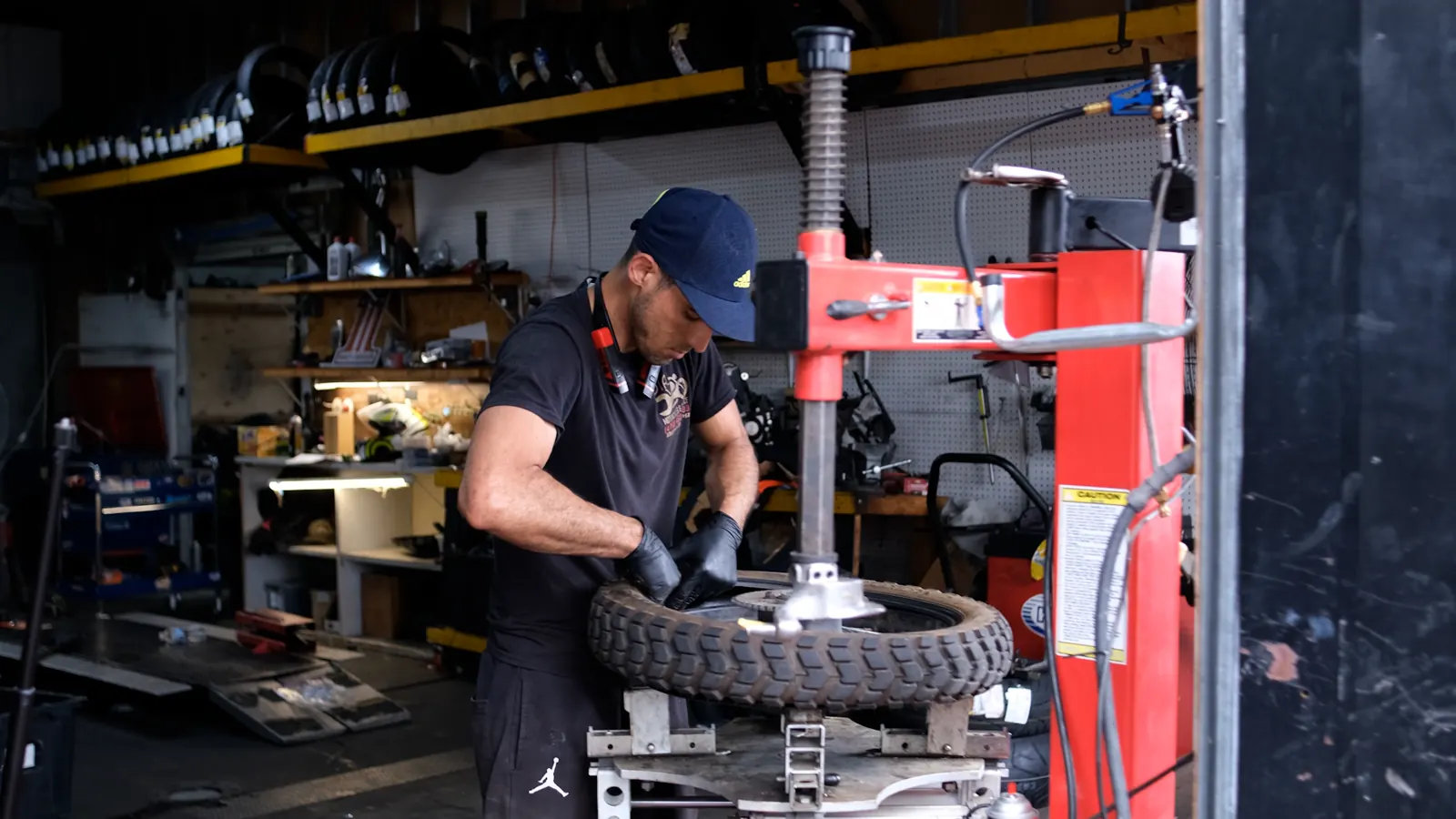
Here’s what changes once it’s actually sorted. The repair itself is normally smaller than the fear that came before it. A battery and a cleaned ground can turn a dead bike into a one-touch starter in an afternoon. A gummed-up fuel system takes longer, because carbs come apart and injectors get cleaned properly rather than sprayed and hoped over. Still, none of it is exotic work. And when a sensor or relay is the culprit, the part is small and the bike acts brand new the moment it’s swapped.
THE SHORT VERSION
Test before you buy. A load test, a voltage-drop check and five minutes on the grounds answer most no-starts before a single part gets ordered.
The Canton part of this story
Canton bikes live a very specific life, and that life shapes what breaks. Storage here is mostly garage storage, which is great for paint and rough on batteries and fuel. Out in River Green, along the Etowah with its pools and trails, and over in Ashton Farms, we see the same pattern: a clean, dry, garage-kept bike that simply sat for five months. So the no-start isn’t neglect. It’s just chemistry doing its thing while you were busy.
Then there’s where you ride. This is the last real services town before the mountains, so a lot of bikes head north on GA-5 the second the weather turns. Riders here also run GA-108 — everybody calls it Fincher Road — north past Lake Arrowhead toward Waleska, which is beautiful and also full of chip-seal, gravel wash from the shoulders and freeze-thaw edge break-up that peaks in late winter. Meanwhile I-575 southbound gives you grooved pavement, expansion joints and tar snakes. All of that shakes connectors loose over time, which is exactly why a rough-road bike gets a hard look at its wiring, not just its battery.
Timing matters too. Late March into April is pollen season, and yellow pine pollen packs air filters while it’s busy ruining your fresh wash. That’s also peak season for the Cartersville-Fairmount-Jasper-Canton loop — US-411 north to Fairmount, GA-53 east to Jasper, then GA-5 and I-575 back south. Nobody wants to discover a no-start on the morning of that ride. Plus, if you’re heading that way, Southern Devil Harley-Davidson sits right on US-411 north in Cartersville with an events calendar worth checking. Before any big day out, tires deserve a look — here’s what that service actually involves.
What it feels like when it's right
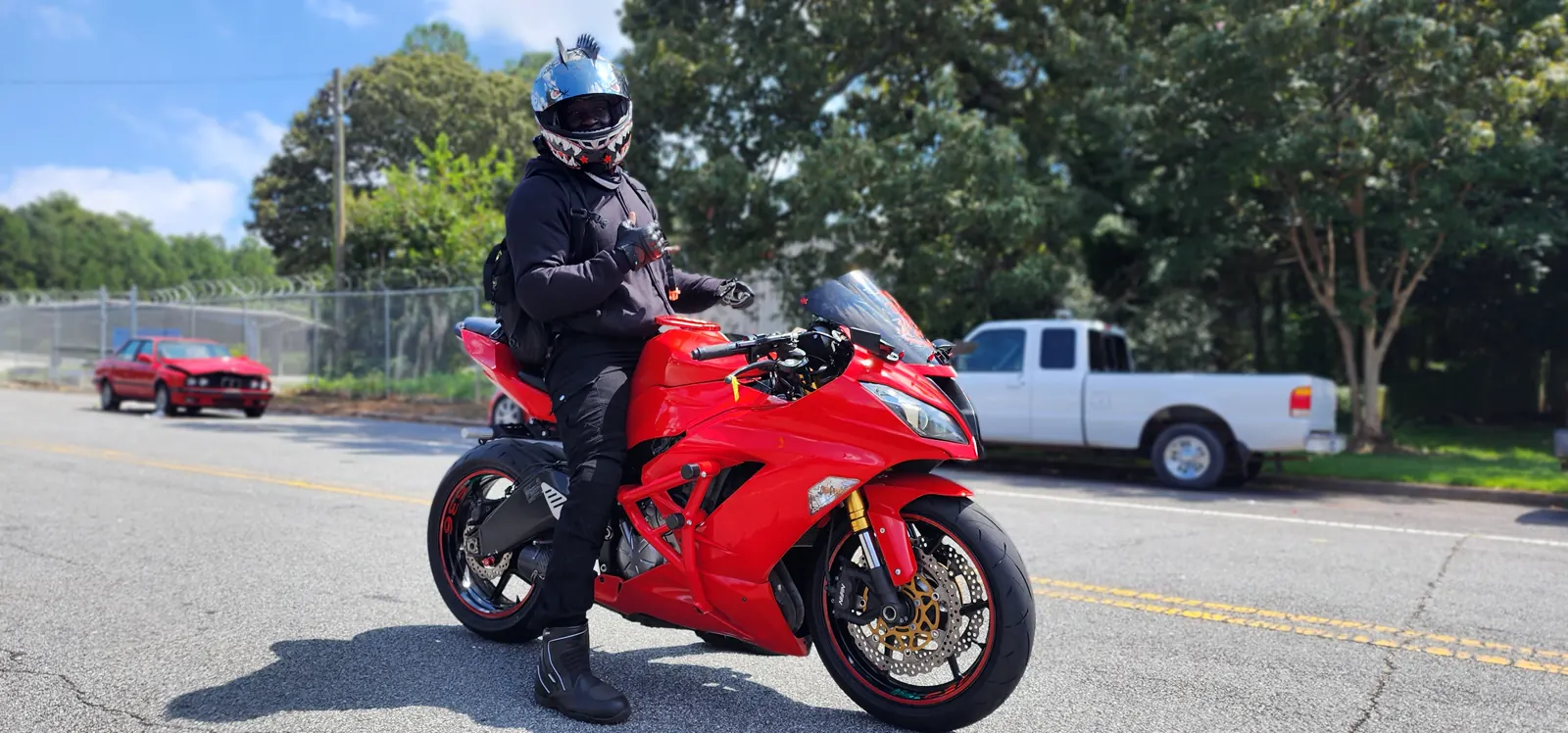
A bike that starts on the first press changes your whole relationship with riding. You stop planning around it. You quit parking on hills out of habit, and you stop doing that little prayer with your thumb on the button. Instead you grab your helmet after work, roll down for a burger at The Mill on Etowah, and never once think about the electrical system. Riders coming off a shift at Northside Hospital Cherokee over on Bluffs Parkway tell us the same thing — the ride home only works as a decompression if the bike is boring and reliable.
A reliable bike is a quiet bike in your head. That's the whole goal.
So if the last quote you got felt bigger than the problem, get a second set of eyes on it. We’ll tell you what we tested and what we found, in normal words. Since folks around here already drive everywhere, a run down 575 to us is an easy one, and there are real the tradeoffs between them worth knowing before you pick a shop. For performance folks, we also work with tuning gear you can read about at Dynojet’s dyno center, though a no-start comes first.
Questions Canton riders ask us
How do you find the cause instead of guessing?
We test in a fixed order: battery under load, grounds and cables, voltage drop while cranking, then spark, then fuel, then sensors and codes. Each test either clears a system or convicts it. So by the time we call you, we can say what we proved and how we proved it.
Could it be something other than the battery?
Absolutely, and often it is. Corroded grounds, a sticking starter relay, stale ethanol fuel, a kickstand or clutch switch, or a worn start button all mimic a dead battery. That’s why a battery that tests fine on the bench doesn’t end the conversation.
Is it safe to ride a bike that barely starts?
Short and local, only if it fires on the first press every time and the lights stay bright at idle. If it needs a jump or several tries, ride it straight to a shop and nowhere else. And if it dies at idle, dims while running, or smells hot, don’t ride it at all — trailer it.
What actually causes most no-starts around here?
Sitting. Canton bikes are mostly garage-kept and mostly parked from late fall through early spring, so batteries drain and ethanol fuel turns to varnish. Rough pavement on 575 and the rural two-lanes then loosens connections over time. Together those two things explain the bulk of what rolls in each March.
Can I fix this myself at home?
Plenty of it, yes. Cleaning grounds, charging or replacing a battery, and draining old fuel are all reasonable driveway jobs with basic tools. But once you’re chasing intermittent spark, fuel pressure or sensor faults, the testing gear matters more than the wrenching, and that’s usually when it makes sense to hand it off.
How long does the repair normally take?
A battery and connection cleanup is often same-day. Fuel system work takes longer, because carbs get disassembled and injectors get cleaned properly rather than rushed. We also like to run the bike overnight and start it cold the next morning, since that’s the honest test of whether it’s really fixed.
We take care of riders from Canton and all around Cherokee County, so if you’re closer to Woodstock, Holly Springs or Ball Ground, you’re already in our world. Plenty of the bikes in our bays come down from Jasper, Waleska, Nelson and Free Home, while others run over from Cartersville, Acworth and Kennesaw. We also see a steady stream from Marietta and Alpharetta, because good riders will drive for a shop they trust. And if you’re somewhere in between, just ask — odds are we already know the roads you take to get here.
LET'S GET IT STARTING AGAIN
If your bike is dead in the garage in Canton, text us what it’s doing — silence, one click, slow crank, or cranks-but-won’t-fire. That one detail tells us a lot before you ever load it up. We’ll walk you through what to check at home, and if it needs the shop, we’ll tell you straight and keep you posted the whole way through.
470-460-9883Diaz Motorcycles and Service, LLC · 847 Barnes Mill Road, Marietta, GA 30062