Motorcycle Not Starting Dallas — What to Check
A plain-English walk through why a bike cranks, clicks, or does nothing at all — and how to tell if it's safe to ride.
Two bikes sit in the garage. Of course, one gets ridden almost every decent Saturday. Then again, the other one waits its turn and mostly loses. Then a cool morning shows up, you thumb the starter on the one that’s been waiting, and you get a click, a soft groan, and nothing after that. Even so, that’s usually the exact moment a rider starts typing motorcycle not starting Dallas into a phone, helmet still in one hand. Meanwhile, Here’s the good news up front: this is one of the most solvable problems on a bike, and the cause is almost never the scary one.
In fact, that said, Riders in Dallas, GA tend to have more than one machine. Big garages do that to people. For example, There’s a bagger for the Saturday run, maybe a standard for the commute, and often a dirt bike shoved against the back wall. So the work gets spread across three shops and three different opinions. Then one bike goes quiet, and you’re not sure who to even call.
We’d rather you understand the problem before anybody touches it. After that, this post walks through what a no-start actually means, what causes it, and how to sort a five-minute fix from a real repair. No mystery, no scare talk. Just the order of things.
What you're really asking when the bike won't start
When a rider says the bike won’t start, they usually mean one of four very different things. What’s more, Sorting out which one you have does about half the diagnostic work, and you can do it standing in your own garage in under a minute.
- Nothing at all. Dash dark, no lights, no click. Total silence.
- Click, but no crank. Lights come on, you hear one sharp click or a rapid chatter, and the engine doesn’t turn.
- Cranks but won’t fire. The starter spins the engine happily, it just never catches and runs.
- Fires, then dies. It lights off for two seconds, stumbles, and quits.
So and Better yet, those four are not the same problem wearing different hats. Still, the first two point at electrical, almost always the battery or a connection. Plus, the third points at fuel or spark. The fourth usually points at fuel that’s gone stale or a passage that’s clogged. If you tell us which of the four you’ve got, we can often narrow it down before the bike ever reaches the lift.
The honest answer: it's the battery far more often than anything else
We’ll skip the suspense. On the bikes that come to us with a no-start, the battery is the cause more often than every other cause combined. Not close. A motorcycle battery is small, it lives a hard life, and it doesn’t get the mercy a car battery gets from a big alternator and daily driving.
Here’s the part that surprises people. A bike battery can read fine on a cheap meter and still be dead where it counts. Voltage tells you the tank has fuel in it, not that the tank can push. A battery showing a healthy number at rest can collapse the instant the starter asks for real current, which is why you get dash lights and a click instead of a crank.
After the battery, the list goes like this, most common first: loose or corroded battery terminals, a bad ground, stale fuel, a clogged pilot circuit or injector, a weak starter relay, a failing stator or regulator that never charged the battery in the first place, then finally the starter motor itself. Notice how far down the expensive stuff sits. That order matters, and it’s part of what separates a good shop from a shop that just starts replacing parts.
QUICK CHECK
Turn the key and hit the horn, then the high beam. If the horn goes flat and the headlight dims way down, your battery can’t push current. That’s your answer most of the time.
The timing on this matters more than the fix does
That’s not a throwaway line. The repair itself is usually simple. What decides whether this stays simple is how long the bike sat before you noticed, and what you do in the first week after.
A lead-acid battery that sits deeply discharged starts building sulfate on its plates. Leave it a few weeks and that hardens into permanent lost capacity. So the same battery that could have been saved with an overnight charge in October becomes scrap by December. Meanwhile the fuel is doing its own quiet thing. Ethanol-blend gas starts dropping its lighter fractions in a matter of weeks, and what’s left turns into a sticky varnish inside jets and injectors. A tank that would have been fine with fresh fuel and a ride now needs the fuel system opened up.
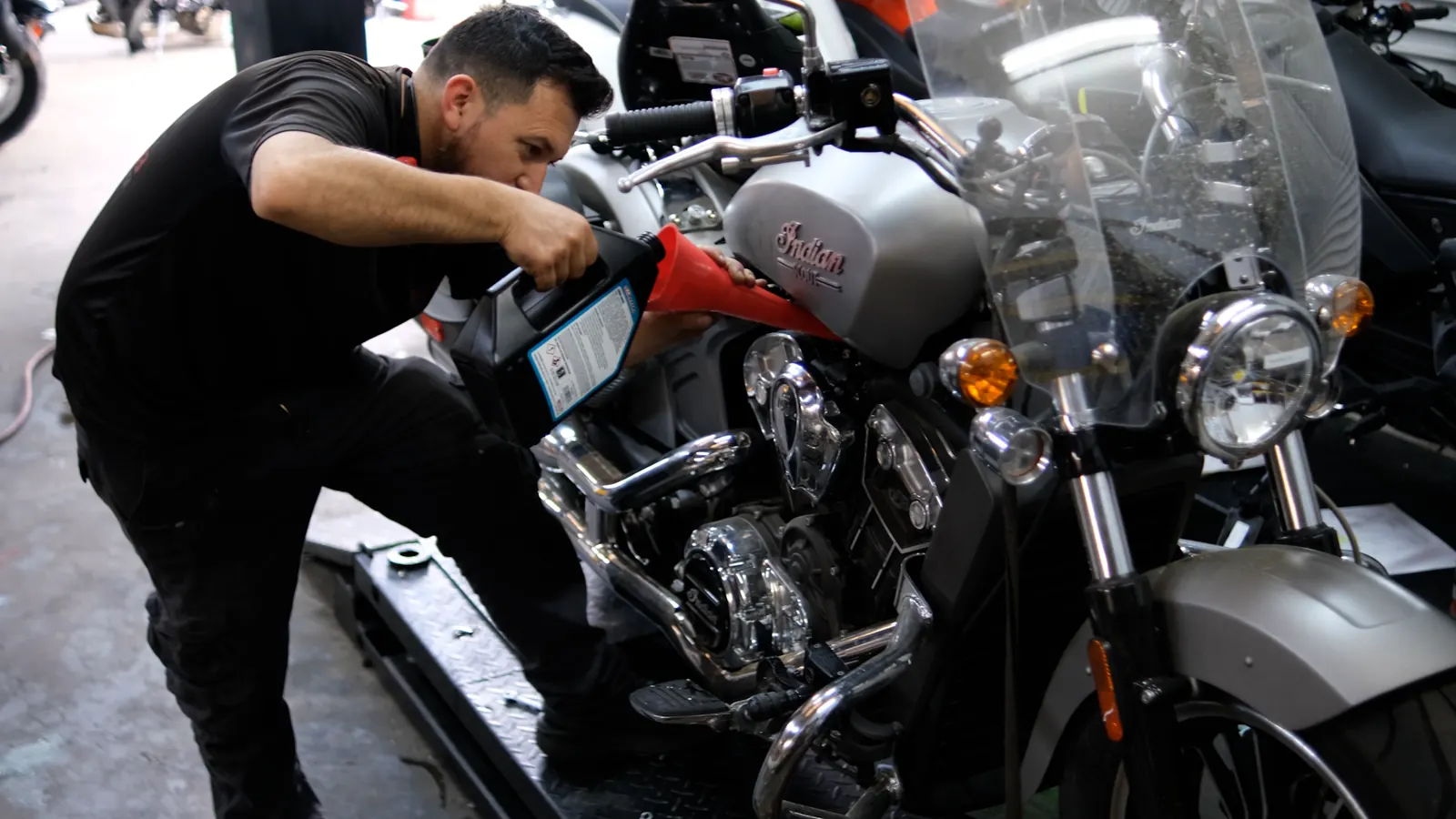
This is the local trap in Paulding County, and it’s worth saying plainly. Bikes here are garage-kept, clean, and ridden very little. A bike that covers a thousand or so miles a year lives most of its life parked on a concrete floor, and parking is harder on a motorcycle than riding is. Rubber dries. Fluids pull in water. Batteries drift down. The bike looks showroom-perfect and is quietly falling asleep.
What changes the answer for your bike
Not every no-start reads the same, because not every bike lives the same life. A handful of things shift the odds enough to be worth knowing.
How long it sat
Under two weeks, suspect the battery or a connection. Two months or more, add fuel to your suspect list. Past one full season, assume both, plus tires and brake fluid that need a real look even though they seem fine.
Whether it was on a tender
A smart maintainer changes everything. If the bike was on one and still won’t start, we start looking at the charging system, because something may have been draining it faster than the tender could keep up.
What kind of bike it is
Cruisers and baggers carry big electrical loads and heavy starters, so a marginal battery shows up on them first. Sportbikes run compact batteries that hate sitting. Carbureted bikes and older dirt bikes are the ones where old fuel bites hardest, because the passages inside a carburetor are genuinely tiny.
What the last ride was like
A bike that ran rough before it quit is telling you something different than one that was perfect and simply didn’t wake up. Rough first, then dead, points toward charging or fuel delivery. Perfect, then dead, points at the battery or a connection.
When it's safe to ride and when it isn't
This is the part riders most want a straight answer on, so here it is without hedging.
| What happened | Safe to ride? |
|---|---|
| Jump-started, and it charges and idles normally | Yes, but ride it a solid half hour and get the battery load-tested this week |
| Jump-started, but the headlight dims at idle | No. Charging system is suspect and it will strand you |
| Cranks slow every single morning | Short local trips only, and get it looked at soon |
| Fires, then dies, or surges at steady throttle | No. A stall in traffic is the risk, not the engine |
| Won't crank at all, dash dark | Not going anywhere anyway. Check the fuses and the battery terminals |
| Sat a full season, started on a jump | No highway. Tires, brakes and fluids need eyes on them first |
The reason we’re firm on the stalling one has nothing to do with the engine. Georgia doesn’t allow lane splitting, so a bike gets no escape route in traffic. Out on 278 and on Dallas Highway you’re dealing with multiple lanes, constant signals, and drivers making left turns across your path. That’s the worst place in the county to lose power. A bike that stalls at a light is a bike we want on a lift, not in that lane.
A no-start in your garage is an inconvenience. The same fault at a busy light is a much bigger deal.
How we approach a no-start
Every motorcycle not starting Dallas call we take runs the same boring order, on purpose. Boring is cheap and boring is fast. We load-test the battery under real current, not just read voltage. Now, we check terminals and grounds, because a green fuzzy terminal fakes a dead battery beautifully. We verify the charging system is actually charging at RPM. Then we look at fuel, spark, and the starter circuit, in that order.
We also tell you which parts of that you could have handled yourself. Paulding is full of people who work with their hands for a living, and plenty of them have a better-equipped garage than some shops do. So we’re not going to charge you for a job you’d rather do on a Sunday. We’d rather have the work you actually want help with. That’s the same thinking behind how we handle that job across the board, and you can see what our team handles if you want the full list.
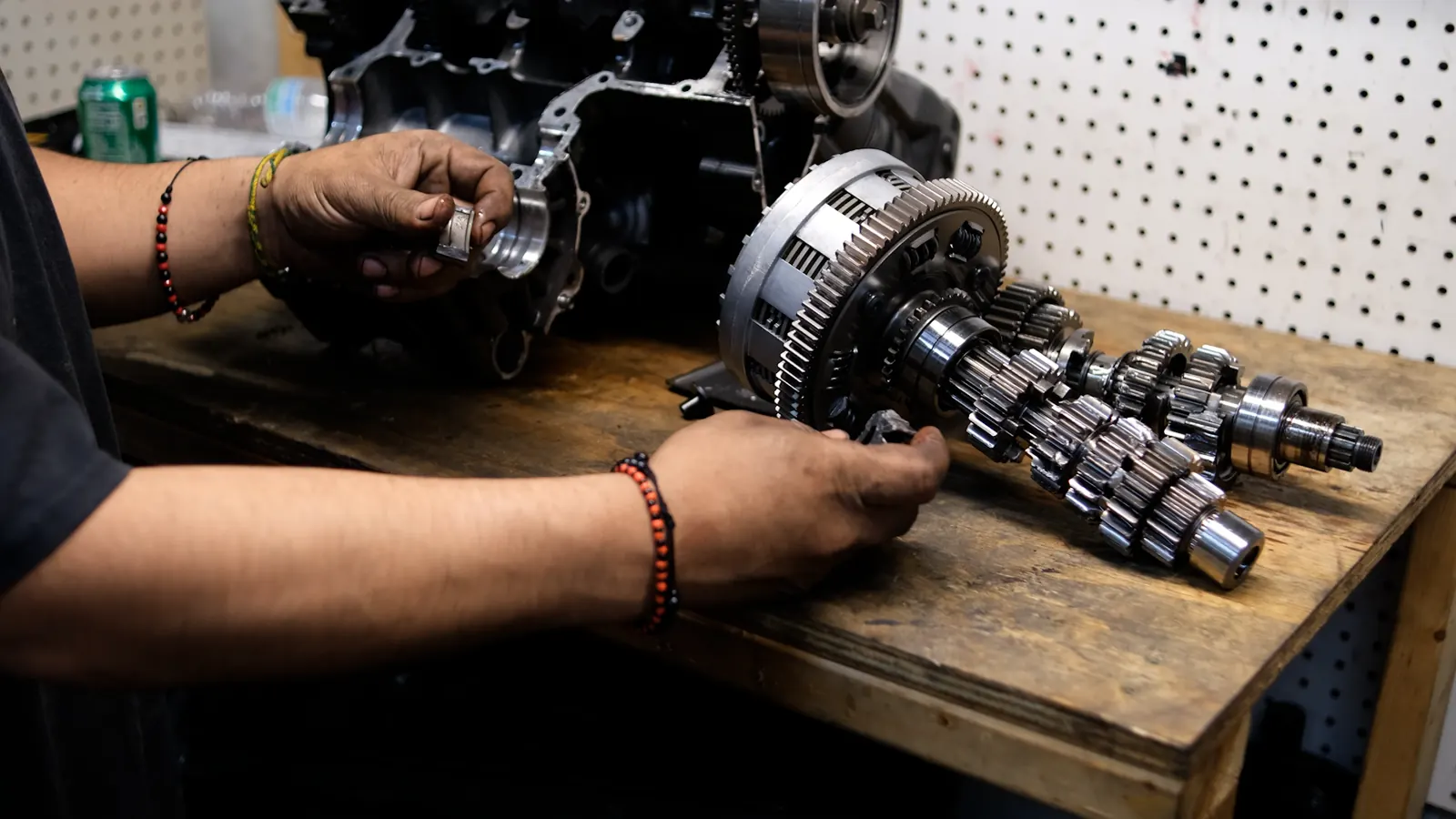
We also ask questions on the phone first, which saves people trips. Which of the four symptoms you have, how long it sat, whether it was on a tender. Half the time that call ends with us telling you to go clean a terminal and try again. Riders here say a forty-minute drive is fine but a wasted one is not, and we take that seriously.
A bike came in from Seven Hills with exactly this
A friend we’ve helped over in Seven Hills had a bagger that clicked and quit. He’d already bought a battery, because that’s the obvious move, and it worked for about ten days before the same click came back. Two batteries, same result, and by then he was convinced something expensive had gone wrong deep in the bike.
It hadn’t. The regulator was cooking the battery instead of charging it properly, so every new battery got killed within a couple of weeks. One test at RPM found it. The lesson isn’t about that specific part, either — it’s that a battery dying twice is never a battery problem. It’s the bike telling you something else is wrong upstream, and that’s worth catching before you buy a third one.
Local context: why bikes here go quiet
Dallas in Paulding County is a garage county. The Retreat at Naturewalk at Seven Hills and the newer streets going up around it are all attached two- and three-car garages, and Bentwater’s golf-course lots follow the same pattern. There’s room for a second bike, so people keep one. Which is wonderful, right up until one of them hasn’t turned a wheel since spring.
The riding is genuinely good, which makes the quiet bike sting more. The west Paulding rural two-lanes out toward Yorkville, Braswell and the Polk line are the real reward — rolling terrain, actual curves, and almost nobody out there early on a Saturday. Burnt Hickory Park sits on the Quad County Figure Eight route, so there’s a natural stop built right in. Even a slow loop through Historic Downtown Dallas past the square and the Dallas Theater beats sitting home waiting on a starter.
Local roads earn some of the blame too. Cedarcrest Road runs through the middle of the north Paulding building boom, and construction traffic tracks mud, spills gravel, and leaves steel plates and fresh utility cuts behind it. All that grit works into connectors and finds its way onto brake and chain components. Out on the chip-sealed two-lanes, loose gravel gathers at driveways and shoulders drop off. Georgia DOT keeps current road and construction updates posted at Georgia DOT, which is worth a look before a spring ride. And late March into April, pollen coats everything, slicks the pavement, and packs air filters solid.
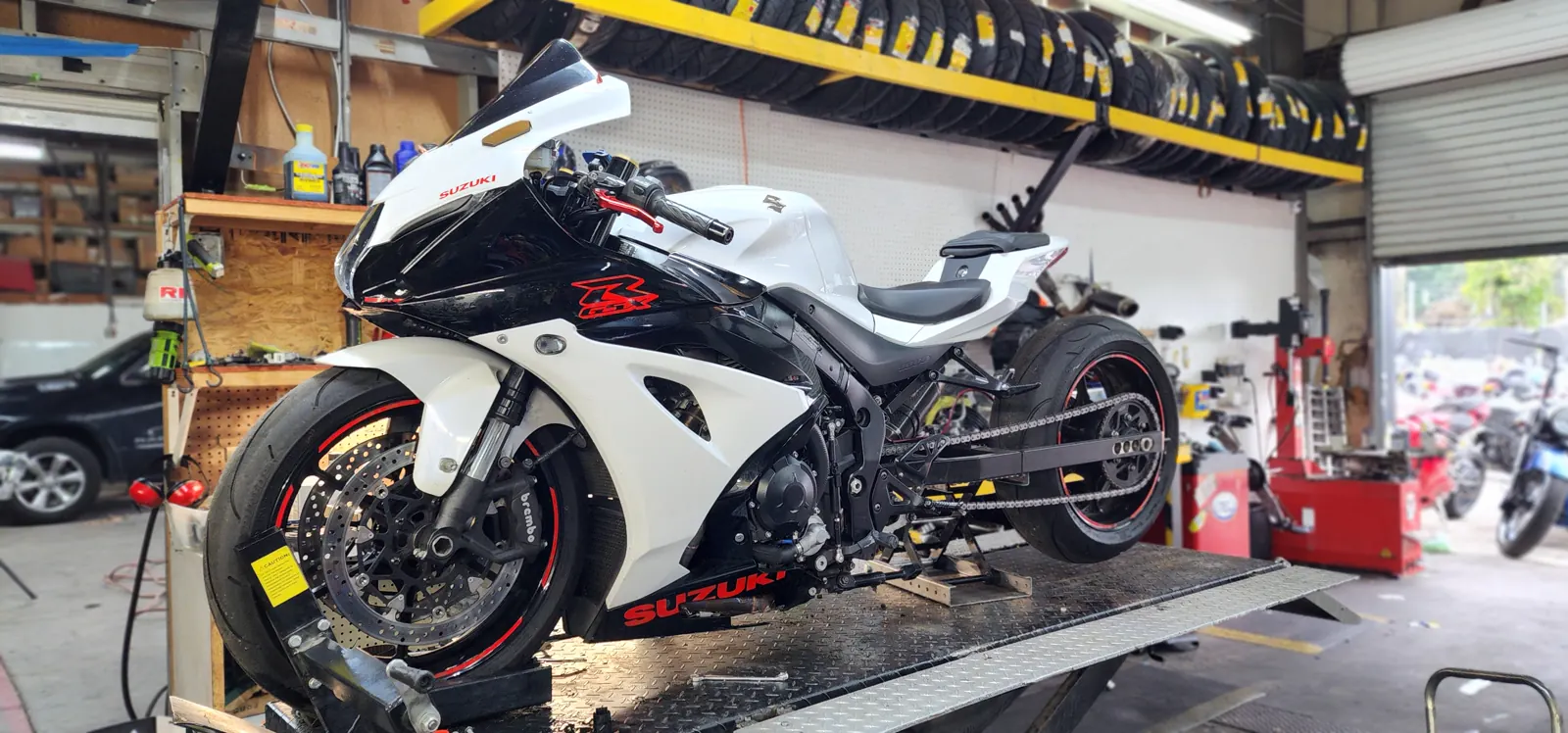
There’s a shop gap here worth naming. Paulding has no full-line dealership, no dyno, and no ECU flash service. Xtreme Cycles of Dallas on East Memorial Drive handles Harley-Davidson service Tuesday through Saturday, and plenty of riders start there. Past that, most people head east anyway. Roughly three out of four working Paulding residents already commute out of the county on Dallas Highway, so dropping a bike with us in Marietta adds a few minutes to a drive you were already making. Figure 24 to 28 miles and 40 to 50 minutes, estimated from road geography rather than a stopwatch.
While a bike is on the lift, we also check what sitting did to the rest of it. Tires are the big one, because rubber that looks brand new can be five years old and hard as a hockey puck. Michelin’s motorcycle tire resources show how to read the date code on your sidewall, and checking takes ten seconds. Brake fluid pulls in moisture over the years too.
What good looks like after
Here’s the outcome we want for you. The bike lights off on the first press, every time, without drama. It idles steady at a light on Dallas Highway. It holds voltage on a long ride. And you stop treating the starter button like a coin flip, because you know exactly what the bike is doing and why.
That’s a very reachable place to be. Almost every motorcycle not starting Dallas riders bring us turns out to be a battery, a terminal, or a tank of fuel that overstayed its welcome. The fix is quick, the parts are common, and the bike goes back to being the fun thing it was supposed to be. We covered the Alpharetta side of things too, if you want the same problem in different traffic.
So before you buy a part, run the four-symptom check and the horn-and-headlight trick. Then call us and tell us what you found. Either you’ll fix it in your own garage in ten minutes, or you’ll show up here already knowing what we’re looking for. Both of those beat guessing.
Questions Dallas riders ask us
What actually causes a motorcycle not to start?
The battery, most of the time, either worn out or drained from sitting. After that it’s corroded terminals or a bad ground, then stale fuel clogging jets or injectors. A weak relay, a failing charging system, or the starter motor itself are further down the list. We work that order from the top because it’s fastest and cheapest.
Can I fix this myself in my garage?
Often, yes. Cleaning battery terminals, checking fuses, and putting the battery on a smart charger overnight are all easy home jobs, and plenty of Paulding riders already have the tools. Where it gets harder is testing the charging system at RPM or opening a fuel system. Try the simple stuff first and call us if it comes back.
Will it get worse if I keep jump-starting it?
Usually yes. A jump gets you moving, but it doesn’t fix why the battery went flat, so you’re rebuilding the same problem every ride. If the charging system is the real cause, jumping just cooks the next battery too. One jump to get home is fine. A jump every morning means something needs a look.
How urgent is it, really?
Depends on the symptom. A bike that won’t crank in your garage is annoying but harmless, so take your time. A bike that starts and then stalls at idle is the urgent one, because a stall in traffic on 278 or Dallas Highway is the actual risk. Rough running or dimming lights should get checked within the week.
What happens if I just leave it parked for a few more months?
A discharged battery sulfates and loses capacity permanently, so a fixable battery becomes a replacement one. Fuel goes to varnish and turns a simple job into a fuel-system cleaning. Tires keep aging even parked. Leaving it isn’t dangerous, it’s just the most expensive way to wait.
Should I test the battery or replace it?
Test it first, and make sure it’s a load test rather than a voltage reading. Voltage only tells you the charge is there, not that the battery can deliver current under a starter’s demand. We load-test as step one on every no-start. If a new battery has already died twice, the battery isn’t your problem.
We take care of riders across Dallas and the rest of Paulding County, including neighbors in Hiram just down the road and folks over in Yorkville, Braswell and Taylorsville out on the rural west side. Plenty of our regulars ride in from Powder Springs, Acworth and Kennesaw on their way through Cobb, and we see steady traffic from Douglasville and Villa Rica to the south. Riders from Cartersville and Rockmart make the trip as well, and of course we’re right here in Marietta if you’re already headed east on Dallas Highway.
TELL US WHAT IT'S DOING
If your bike in Dallas, GA is clicking, cranking without firing, or just sitting there silent, text or call us and describe the sound. We’ll tell you what to check in your own garage first, and if it needs a lift, we’ll have a plan ready before you roll up. No guessing, no parts-cannon, no wasted trip east.
470-460-9883Diaz Motorcycles and Service, LLC · 847 Barnes Mill Road, Marietta, GA 30062