Motorcycle Repair Cost Atlanta — What You Pay
What actually rolls through our door, what makes one job bigger than another, and why a good shop wants to see the bike first.
So most weeks around here look a lot alike. A chain stretched past its life. Still, a battery that quit in a parking deck and took the rider’s morning with it. Plus, Fork seals weeping a thin gray line down the lowers after a season of patched pavement. Of course, brake fluid that has gone the color of sweet tea. Then again, those five things make up the bulk of what we see, and they are the honest starting point for any talk about motorcycle repair cost Atlanta riders bring us. The work is not mysterious. It is just misunderstood.
The myth: there's a price list taped to the wall somewhere
Even so, plenty of riders picture a laminated chart behind the counter. Chain and sprockets, one number. Valve check, another number. Meanwhile, call the shop, read the chart, done. In fact, that said, it is a comforting idea, and we get why people want it. But bikes do not work that way, and any shop that pretends otherwise is either guessing or padding the guess so heavily that you lose either way. A chart cannot see your bike. For example, it cannot see the bolt that has been sitting in Georgia humidity since the last owner touched it.
Here is the friendlier truth. The same job on two bikes can be two completely different afternoons. Same part. Same torque spec. Wildly different amount of hands on it. Once that clicks, the whole subject stops feeling slippery and starts feeling like something you can actually plan around. That is the goal of this whole post, and we promise it does not require a wrench in your hand.
The reality: access is most of the job
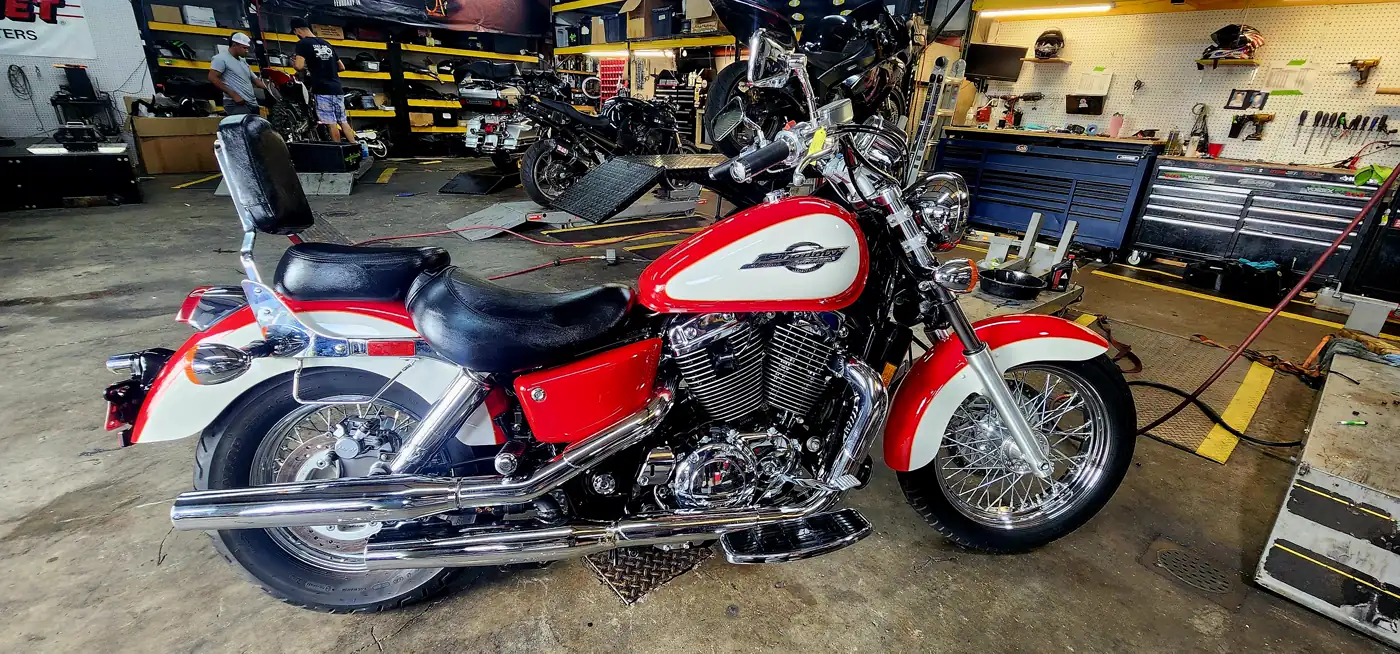
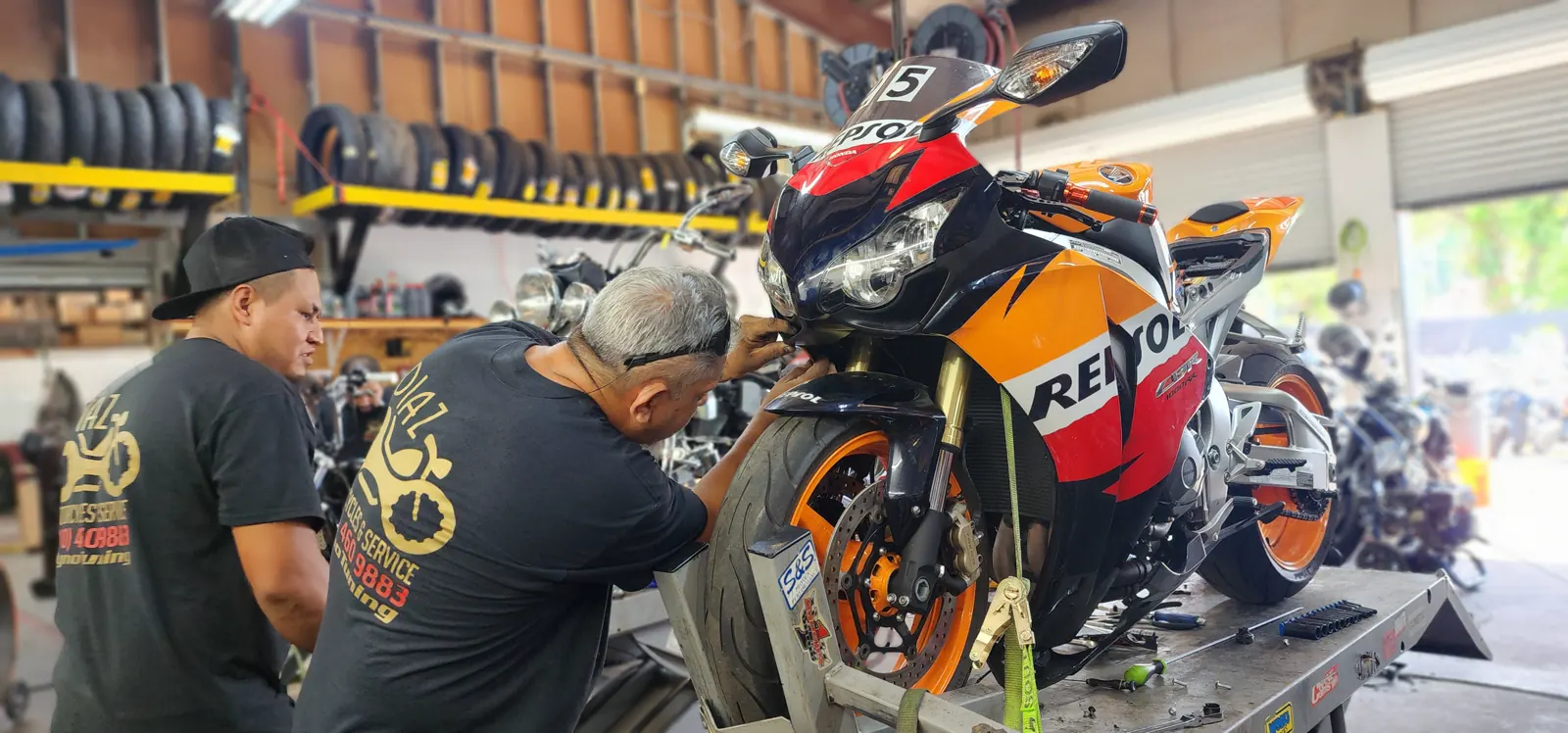
Parts have a price. That part is easy, and it is the part riders already understand. The variable is access, which is a mechanic’s word for how much of your motorcycle has to come off before a technician can even touch the thing that needs attention. A naked standard with an open frame gives up its secrets fast. And a full-fairing sportbike wants half its bodywork on a blanket first. A big touring bike may want bags, a backrest and a trim panel out of the way before anyone gets near a spark plug.
Think of it like changing a light bulb. The bulb is the bulb. But one is in a lamp, and one is at the top of a stairwell that needs a ladder, a helper and a very calm attitude. Neither one is a scam. They are just different amounts of work. So when two friends compare notes and the numbers do not line up, access is usually the reason, not funny business.
Labor is the second variable, and it is really a story about time and about seized hardware. Fasteners that have lived through a decade of humid summers do not always come out politely. A pinch bolt that turns easily is a two-minute job. A pinch bolt that has fused itself to an aluminum lower is a heat, penetrant and patience job. Good news: a shop that has done it a thousand times gets through that far quicker than you would in a driveway, and nobody has to sacrifice a knuckle to the cause.
The actual process, start to finish
None of this should feel like a black box. Here is what a real job looks like from the moment you reach out, in the order it actually happens.
- You text or call and describe what the bike is doing. Sounds, smells, when it started, what changed.
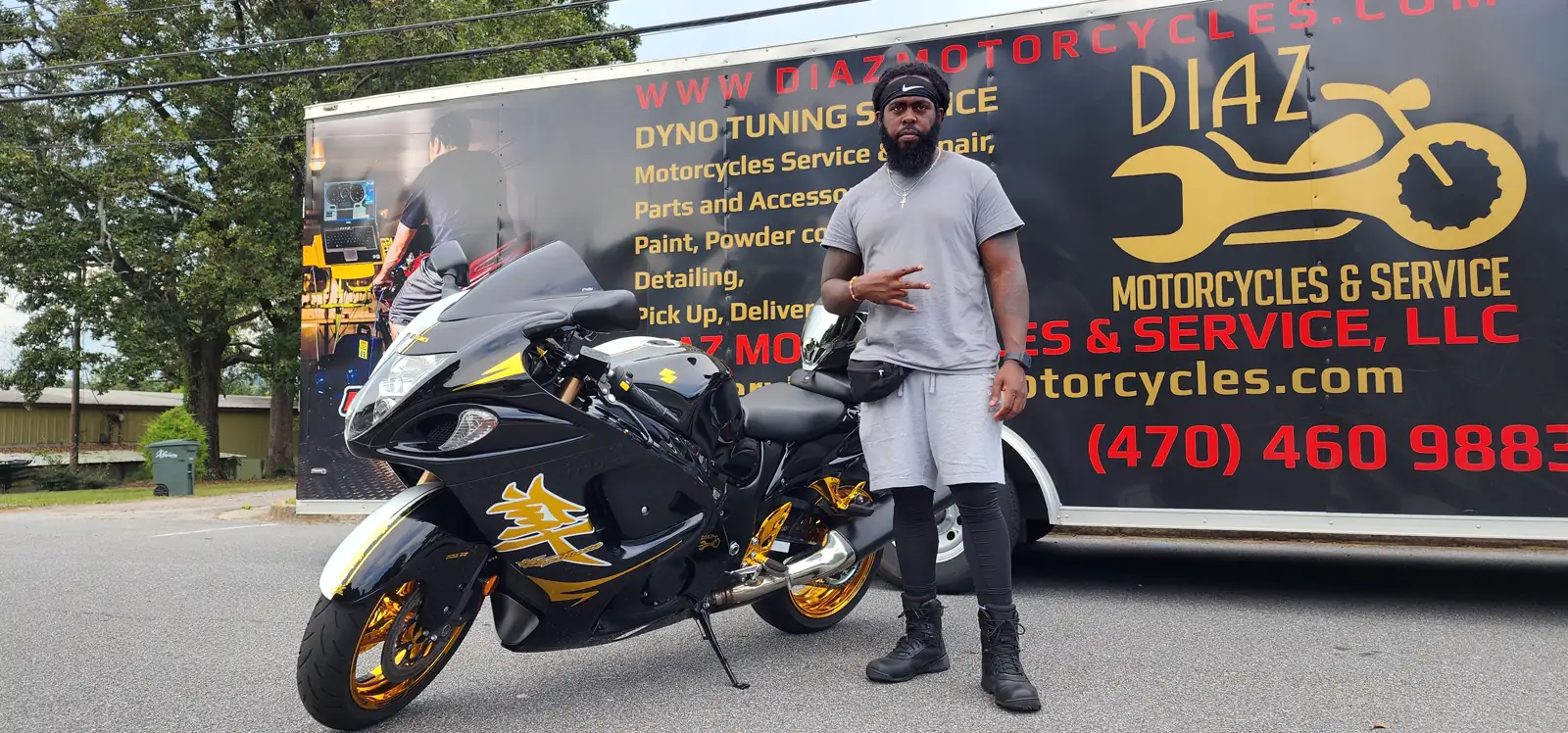
- We get the bike here. If it will not run or you have no way to haul it, we come pick it up in the trailer.
- A technician puts eyes and hands on it, checks the obvious things first, then works toward the less obvious ones.
- We confirm the actual cause instead of the first plausible cause, because those two are not always the same bike part.
- You get a clear written breakdown: what it needs, what it can wait on, and what we would do if it were ours.
- You approve the work. Nothing gets touched beyond diagnosis until you say go.
- We do the job, road test it, clean it up and get it back to you with notes on what we saw.
Something changes once you know what to look for. That list above is not a formality, it is the whole product. A shop that skips step four is going to sell you a coil pack when your problem was a corroded ground. A shop that skips step five is going to hand you a surprise. The wrenching is the easy part for us. The order of operations is what keeps you in control of your own motorcycle, and you should expect it every single time.
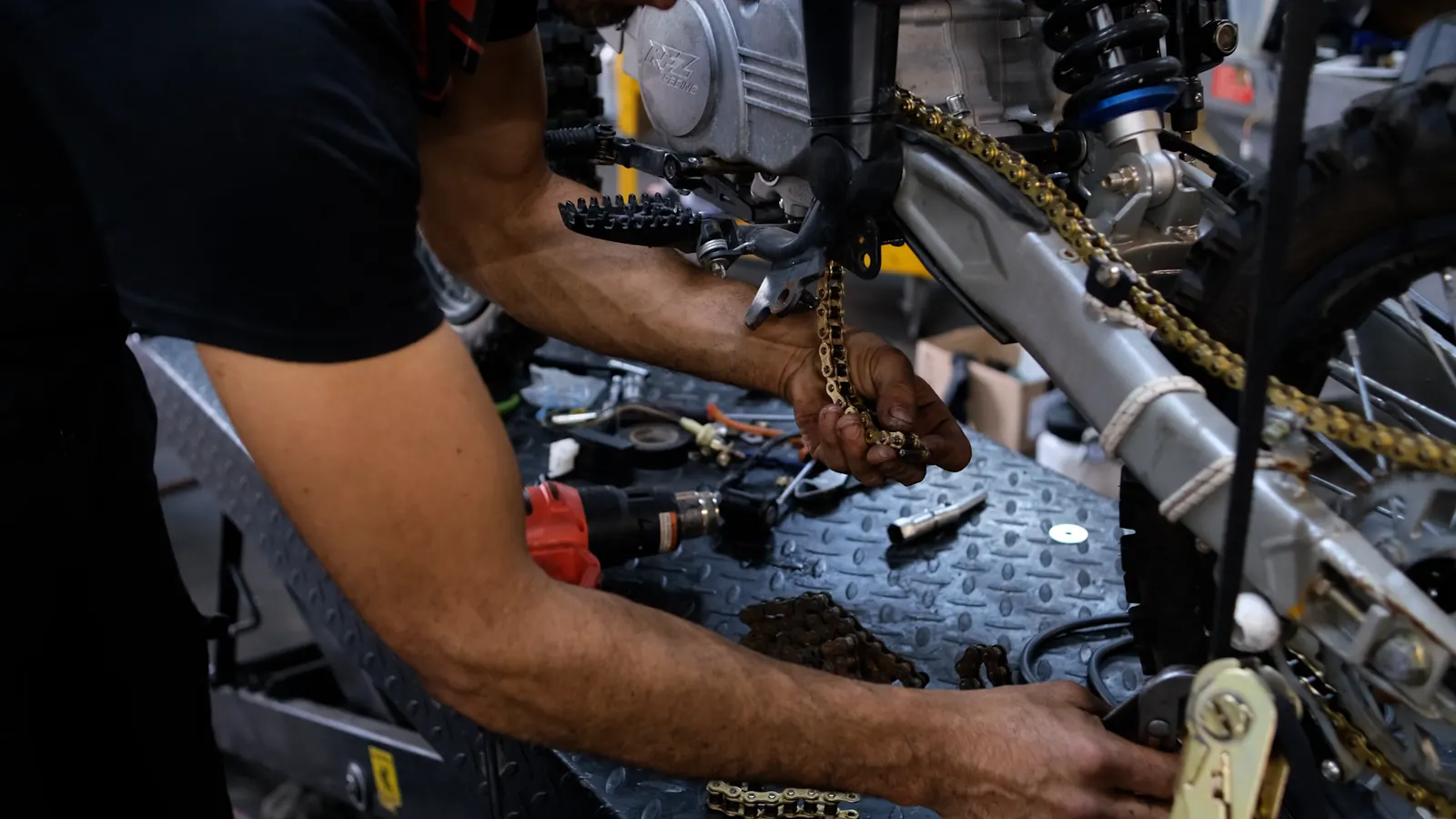
Notice what step four does for your wallet. Chasing symptoms is expensive because it is a series of small right answers to the wrong question. Finding the cause once is cheap by comparison. That is also why we would rather spend an extra half hour with the bike on the lift than take a wild swing at it from a phone call. Guessing has a cost too, it just shows up later, and you can see it in how we handle that job.
How to tell a good shop from a fast talker
You do not need to know a torque wrench from a tire iron to judge a shop. You only need to watch how they communicate. Riders in town figure this out quickly, because most of them found their shop through a search bar and a neighbor’s recommendation rather than by driving past a sign. A shop earns that referral with paperwork and phone manners, not with a big lobby.
- They ask questions before they give answers. Symptoms first, opinions second.
- They write it down. If it is not in writing, it is not a quote, it is a mood.
- They separate needs from nice-to-haves and tell you which is which.
- They call before doing anything you did not approve. Every time, no exceptions.
- They text back. Sounds small. It is the single clearest signal in this whole business.
Those habits are exactly what separates a good shop from one you will only visit once. And they are not unique to us. The nearest premium-European specialist to our door, BMW, Ducati & Husqvarna Motorcycles of Atlanta, also known as Wooly’s Cycles of Atlanta, sits a few minutes away on Cobb Parkway in Marietta, and riders who go there should hold them to the same standard. Groups like the American Motorcyclist Association have been pushing that same message to riders for a very long time.
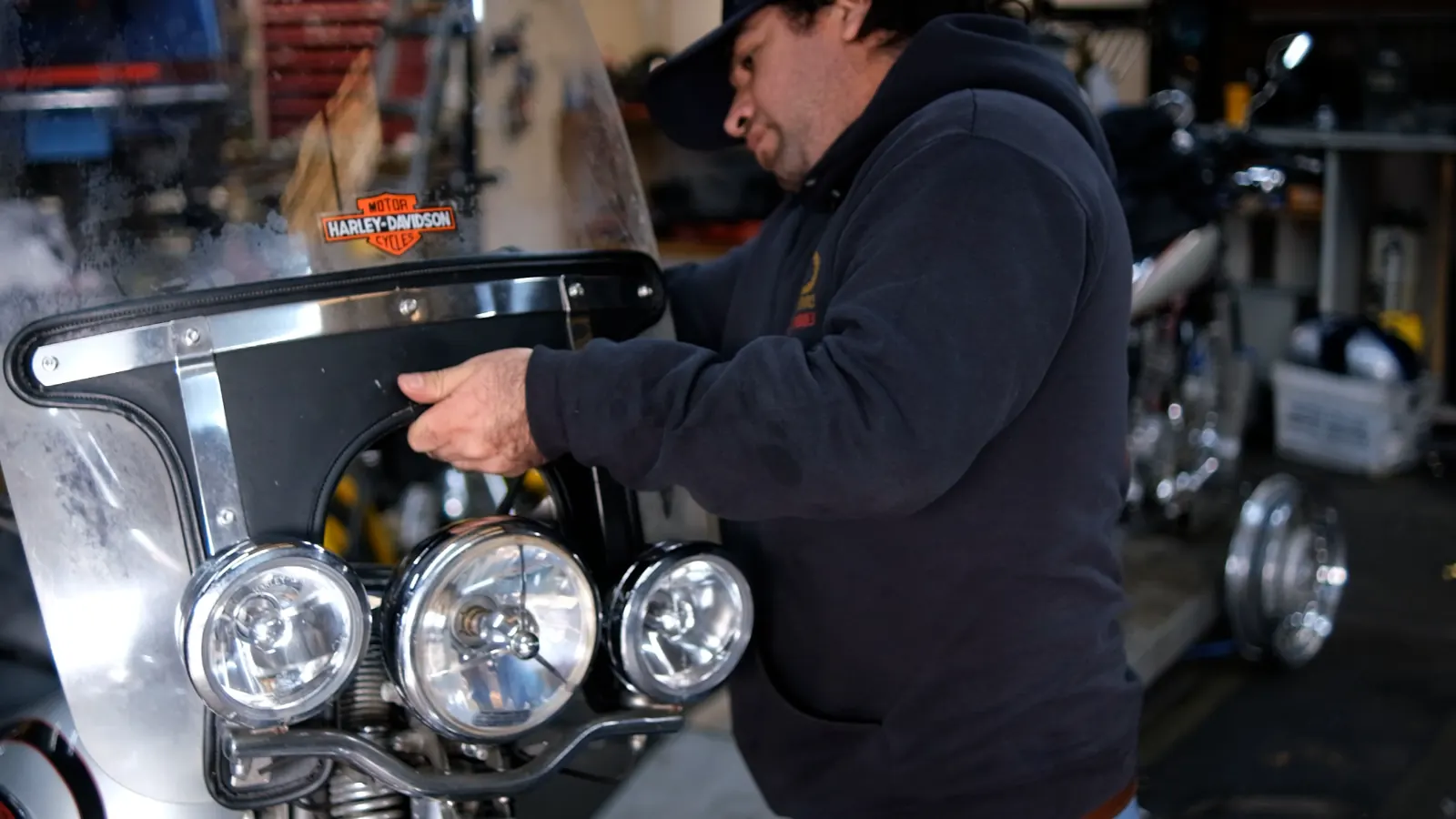
One more tell: a good shop will happily explain why it will not quote your bike sight-unseen. Not because it is hiding something, but because a number given over the phone is a promise made without evidence. We would rather give you a real answer an hour after we see it than a fake one in thirty seconds. Riders are usually relieved by that, right after they are mildly annoyed by it.
Now for the part that has nothing to do with parts at all
Where you ride and where you park change the repair list more than the badge on your tank does. In-town Atlanta is its own environment. The streetcar loop puts embedded rails through Edgewood, Auburn, Peachtree, Luckie, Jackson and the rest of that 2.7-mile route, and those flangeways are a documented hazard for two wheels. Midtown’s Peachtree Street keeps a rotating cast of utility trenches under steel plates. The city runs a Pothole Posse and a road resurfacing dashboard, which tells you plenty about the diet your suspension is on.
That surface diet eats fork seals, wheel bearings, rims and steering-head bearings faster than a suburban commute ever will. It also explains the pattern we see by district. Riders from Reynoldstown, a neighborhood settled after the Civil War by freed people who worked the railroad and still only two miles from Downtown, tend to bring us small-displacement bikes and sportbikes with hard-used suspension. The crowd looping Historic Fourth Ward Park, about seventeen acres built around a retention pond in the BeltLine era, rides the same short dense trips and wears things out in the same short dense way.
Head north and the bikes change. Around Lenox Square, where Peachtree and Lenox Roads meet, and up through the estate blocks of Tuxedo Park near the Governor’s Mansion, we see cruisers, big touring bikes and the city’s heaviest concentration of expensive European machines. Chastain Park riders, out by the 268 acres of Atlanta’s largest city park, ride similar bikes with similar needs. West Midtown, threaded together by Howell Mill Road, Marietta Street and 14th Street, is cafe racer and vintage-build country, which means carb work, wiring and one-off fabrication more than scheduled service.
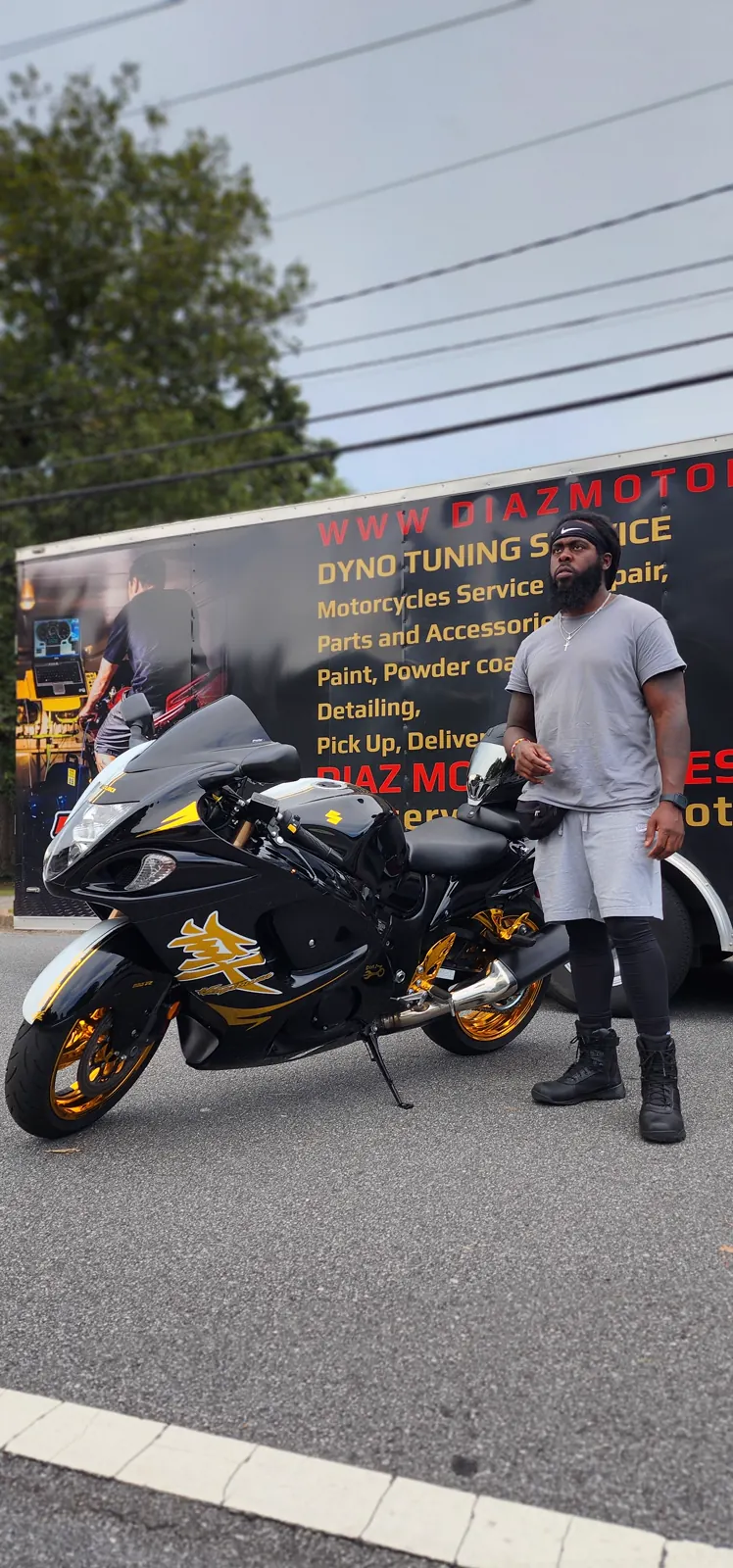
Storage is the quiet factor almost nobody plans for. Atlanta’s homeownership rate sits at 46.4 percent against 65.2 percent nationally, which means most in-town riders have no garage at all. Deck parking in Midtown, West Midtown, Buckhead Village and Old Fourth Ward means no outlet for a battery tender, no room to work, tight ramp turns and shared access. Batteries die young in those decks, especially after June through September when the urban heat island cooks Downtown and the Connector hotter than anywhere else in the metro.
Heat matters for another reason. Georgia law, O.C.G.A. 40-6-312, requires a motorcycle to stay fully within its lane and bans riding between lanes or rows of vehicles, so filtering out of a jam is not an option here. Sitting still in traffic with the clutch in is a cooling system, clutch and battery story. The riders who dodge the worst of it are the ones doing the reverse commute up I-75 toward East Cobb mid-morning, running against the inbound wave, which is also the easiest way to reach us. You can register and title all of it through the Georgia Department of Revenue.
So what do you actually walk away with?
A clear head, mostly. Once you know that access drives labor, that labor drives the size of the job, and that diagnosis has to come before any real number, the whole subject stops being a shell game. You can look at your own bike and make a decent guess about whether it is a small afternoon or a big one. You can ask a shop two or three sharp questions and learn everything you need to know about them. And the next time somebody at a gas pump has a strong opinion about motorcycle repair cost Atlanta shops charge, you will know which questions actually matter. Riders who understand access and diagnosis almost never feel blindsided, because they already know where the hours go before the bike ever hits the lift. That is a good feeling to ride around with.
You are not paying for parts. You are paying for the hour it takes to reach them, and for knowing which one is actually broken.
That is the whole thing. Bring us the bike, or let us come get it, and we will show you what we find before we touch a bolt. If you want to see the range of work first, here is what we take care of here, and here is the Mableton side of things if you are closer to that end of the map.
NO GARAGE? NO PROBLEM.
Dead battery in a Midtown deck or a project bike in an East Atlanta shed, we bring the trailer. Text us photos and a rough location and we’ll tell you what’s likely going on before the bike ever moves.
Questions Atlanta riders ask us
Does the type of bike change the work?
It changes the access far more than it changes the repair itself. A naked standard gives up its engine bay easily, while a full-fairing sportbike or a loaded touring bike needs bodywork and brackets removed first. The actual task, say a plug change or a fluid flush, is nearly identical once someone can reach it. So the bike mostly decides how long the door takes to open.
What happens if you find something else while you're in there?
We stop and call you. Nothing beyond the agreed work gets touched without your yes, and that includes the tempting little stuff. Often the extra item is something we can reach cheaply while we are already in there, and we will say so plainly. If it can wait a season, we will tell you that too.
How do I avoid surprises?
Ask for it in writing, and ask what is a need versus a nice-to-have. A written breakdown after the bike is inspected gives you a real picture instead of a phone guess. Then tell us your ceiling and your timeline up front. We will build the plan around it and prioritize safety items first.
What makes one job bigger than another?
Three things, usually. How much has to come apart to reach the problem, whether the hardware cooperates after years in Georgia humidity, and whether the cause is obvious or has to be chased. A job that scores easy on all three is a short one. A job that fights back on all three is a longer one, and that is normal, not a red flag.
Why won't you quote it over the phone?
Because a number without evidence is just a guess in a nicer outfit. Two bikes with identical symptoms can have completely different causes, and we would be misleading you to pretend otherwise. What we will do on the phone is tell you the likely suspects and what the inspection will cover. Then you get a real answer once the bike is on the lift.
Do you pick up bikes from inside the perimeter?
We do, and it is the reason a lot of ITP riders use us instead of a closer shop. The trailer handles dead batteries in parking decks, project bikes that have not run in years and anything you would rather not ride across town. Just send a photo and a location. We will handle the rest.
We take care of riders all over the metro, starting with Buckhead and Midtown, then out through Decatur, Brookhaven and Chamblee on the east side. Sandy Springs and Tucker riders reach us easily on a mid-morning run, and Smyrna, Vinings and Mableton are practically neighbors. East Point riders come north to us regularly, and of course Marietta is home. Wherever you are on that map, the trailer can come to you if riding in is not an option.
TEXT US A PHOTO OF THE BIKE
You do not have to guess what your motorcycle needs, and you definitely do not have to guess what it will take to fix it. Send us a photo, tell us what the bike is doing and where in Atlanta it is sitting, and we will tell you what we suspect and what the inspection will cover. If it cannot roll, we will bring the trailer and come get it. You will get everything in writing before anyone picks up a wrench.
470-460-9883Diaz Motorcycles and Service, LLC · 847 Barnes Mill Road, Marietta, GA 30062