Motorcycle Repair Cost Canton — What You Pay
A plain-English look at what makes one repair job bigger than another, and why an honest shop wants eyes on the bike first.
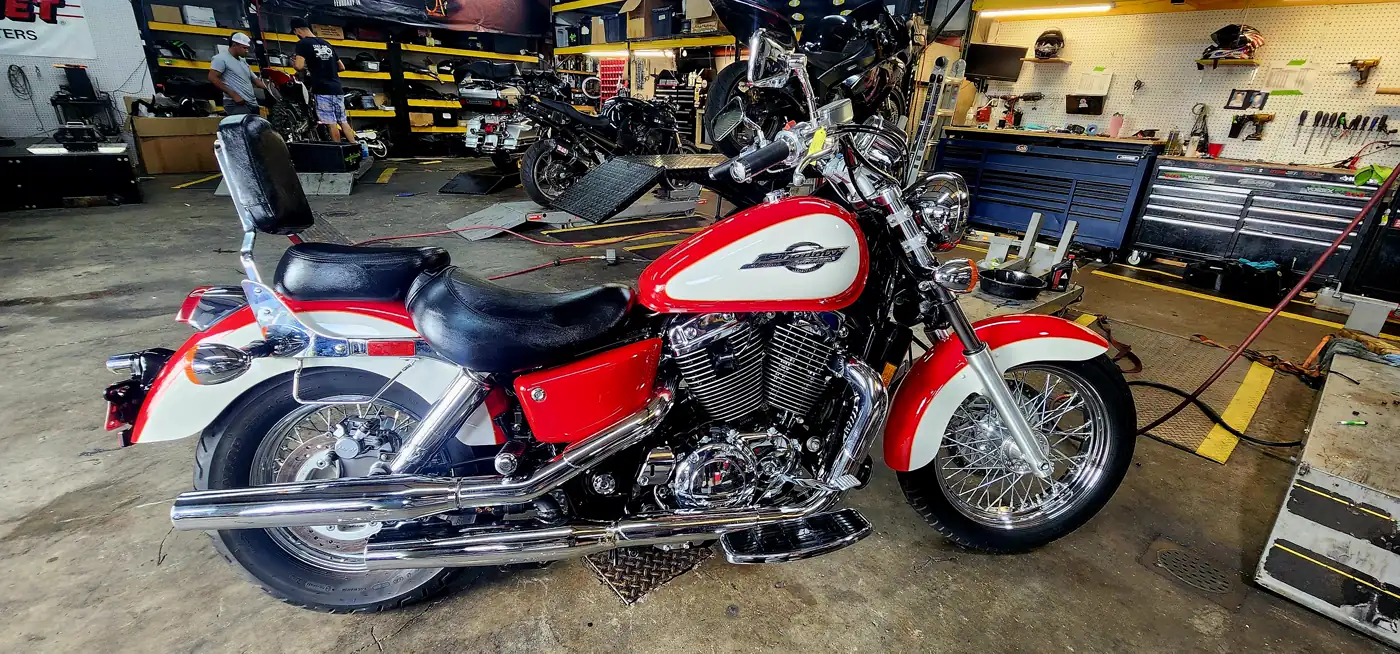
Some folks own one bike. You own three. In fact, There’s a bagger for Sunday runs, a project bike hiding under a cover, and a sportbike you keep swearing you’ll sell. So when you start looking into motorcycle repair cost Canton riders talk about, you’re not really asking about one bill. You’re asking about a whole garage. For example, and juggling a different shop for every bike gets old fast. Good news? The answer is simpler than it looks once you know what actually drives the work.
After that, Here’s the thing about a mixed garage. Every bike ages in its own way, so every bike asks for something different. The bagger piles on highway miles up 575 and down 575, while the project bike just sits. Sitting is its own kind of wear, though. So the cruiser wants tires and brakes, and the covered one wants fuel system attention and a fresh battery. Same garage, same owner, two totally different jobs.
What you're really asking
When a rider asks what a repair runs, they almost never mean the sticker alone. They mean: is this fair, and is it worth doing? That’s a great question, and it deserves a straight answer. Because a solid job on a bike you love is a bargain, while a cheap job that doesn’t hold is not. We think about it the same way you do, since we ride the same roads you ride.
Real talk: every motorcycle bill has two halves. There’s the part you can hold in your hand, and there’s the time it takes to reach that part. Parts are the easy half to picture. Labor is the half that surprises people, because labor is really a story about access.
The honest answer: access is most of the story
Picture two jobs that sound identical on paper. Both are “replace a small part.” On one bike that part sits right there in the open, so a wrench, a few minutes, and it’s done. On another bike the same part hides behind bodywork, a fuel tank, an exhaust and a coolant hose. Nothing about the part changed. But the path to it did, and that path is what you’re paying for.
That’s why two friends can bring in the same complaint and hear two different plans. One bike gives up its secrets in ten minutes. The other one guards them like a bank vault. Neither shop is being sneaky, and neither owner did anything wrong. It’s just geometry, and geometry doesn’t negotiate.
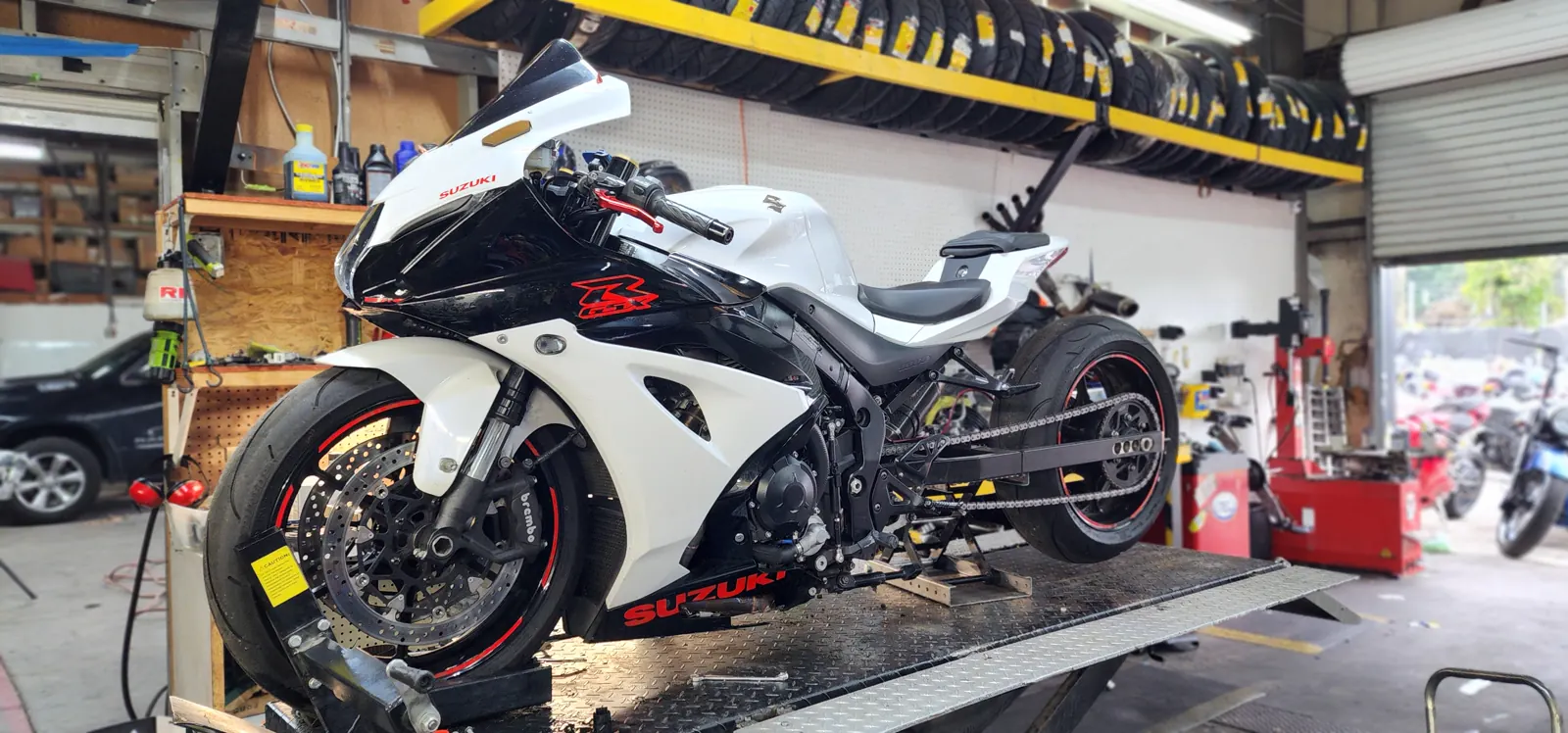
Chain and sprocket work is the friendly example. It’s right out in the open on most bikes, so the labor stays short and predictable. Now compare that to something living behind the primary cover on a big twin. Same shop, same tech, same clock, but a very different amount of time before a wrench even touches the failed piece.
THE ACCESS RULE
Small part, easy reach, small job. Small part, buried reach, bigger job. It’s not about how fancy your bike is. It’s about how far the tech has to travel to get to the thing that needs help.
Of course, access cuts the other way too, and that part is fun. Once a tech is already in there for one job, the nearby jobs get cheap. If the tank is off anyway, the item under the tank is nearly free labor. That’s why we always ask what else you’ve been putting off. Bundling smart beats paying twice for the same teardown.
Here's the question we'd ask if you were standing in the shop
We wouldn’t start with the bike. We’d start with you. What do you want out of this machine over the next couple of years? Because a bike you plan to keep forever gets a different plan than a bike you’re fixing to sell in spring. Both plans are honest. They’re just aimed at different finish lines, and knowing the finish line saves you money.
Then we’d ask how it’s been sitting, how it’s been ridden, and what noise or feel made you pick up the phone. Riders describe symptoms better than they think they do. “It falls on its face right off idle” tells us plenty. “The front end shudders when I slow down for the light” tells us even more. So don’t worry about using the right words. Just tell us what you feel, and we’ll translate.
From there we look at the bike itself, because a real answer needs real eyes. If you want the longer version of that idea, we wrote about what separates a good shop from a shop that just moves units. The short version: a good shop tells you what it doesn’t know yet, then goes and finds out.
What actually changes the size of the job
A handful of things move the needle more than anything else. None of them are mysterious, and all of them are things you can see coming once you know to look.
- Access. How much has to come off before the work can start.
- Parts choice. Factory parts, quality aftermarket, or something specialty for an older machine.
- Availability. A common part is a phone call, while a rare one is a treasure hunt.
- Condition. Rust, stripped threads and past repairs all add time.
- Time off the road. A bike that sat two winters usually needs fuel system and brake fluid attention on top of the original complaint.
- Scope creep you actually want. Sometimes we open it up and find the smarter move, and we’d rather show you than surprise you.
Notice that only one of those is the part itself. That’s the whole point. Riders sometimes look up a component online, see a modest number, and expect the job to match. But the component was never the job. The job is diagnosis, teardown, the fix, reassembly, fluids, and a test ride that proves it. Because a bike that isn’t ridden after service hasn’t really been serviced.
Parts and labor are two different animals
Parts are a market. We can shop them, compare them, and tell you which ones are worth it on your specific machine. On some bikes the factory part is clearly the right call, so we say so. On others a quality aftermarket piece is just as good and easier to get, and we’ll say that too. You get the choice either way, since it’s your bike and your plan.
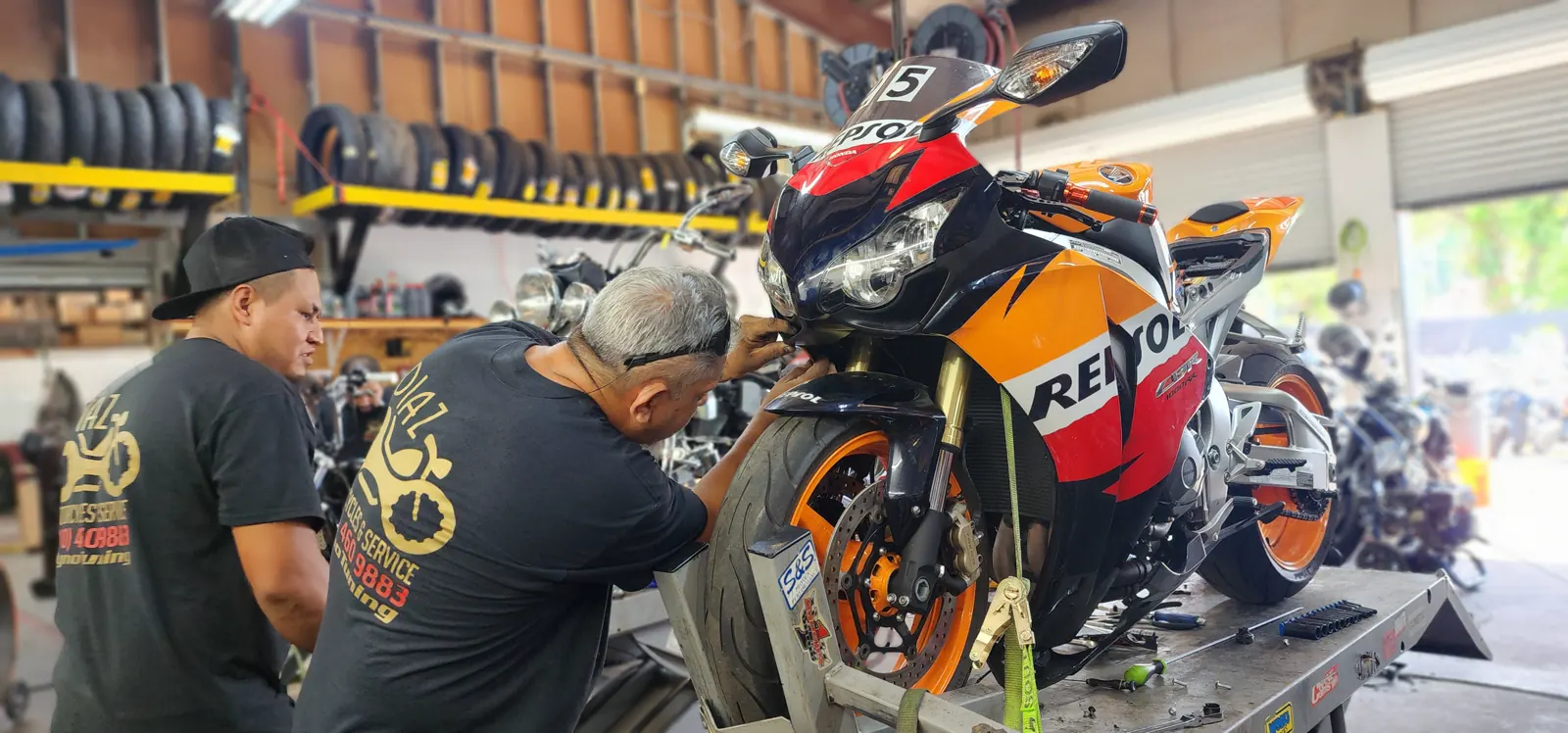
Labor isn’t a market. Labor is time, and time is the one thing nobody can discount into thin air. What we can do is spend it well. That means diagnosing before disassembling, ordering parts before teardown when we can, and doing the neighboring jobs while we’re already in there. Efficiency is the honest way to lower a bill, and it’s the only way we know that doesn’t leave you back here in a month.
Parts you can shop. Time you can only spend wisely.
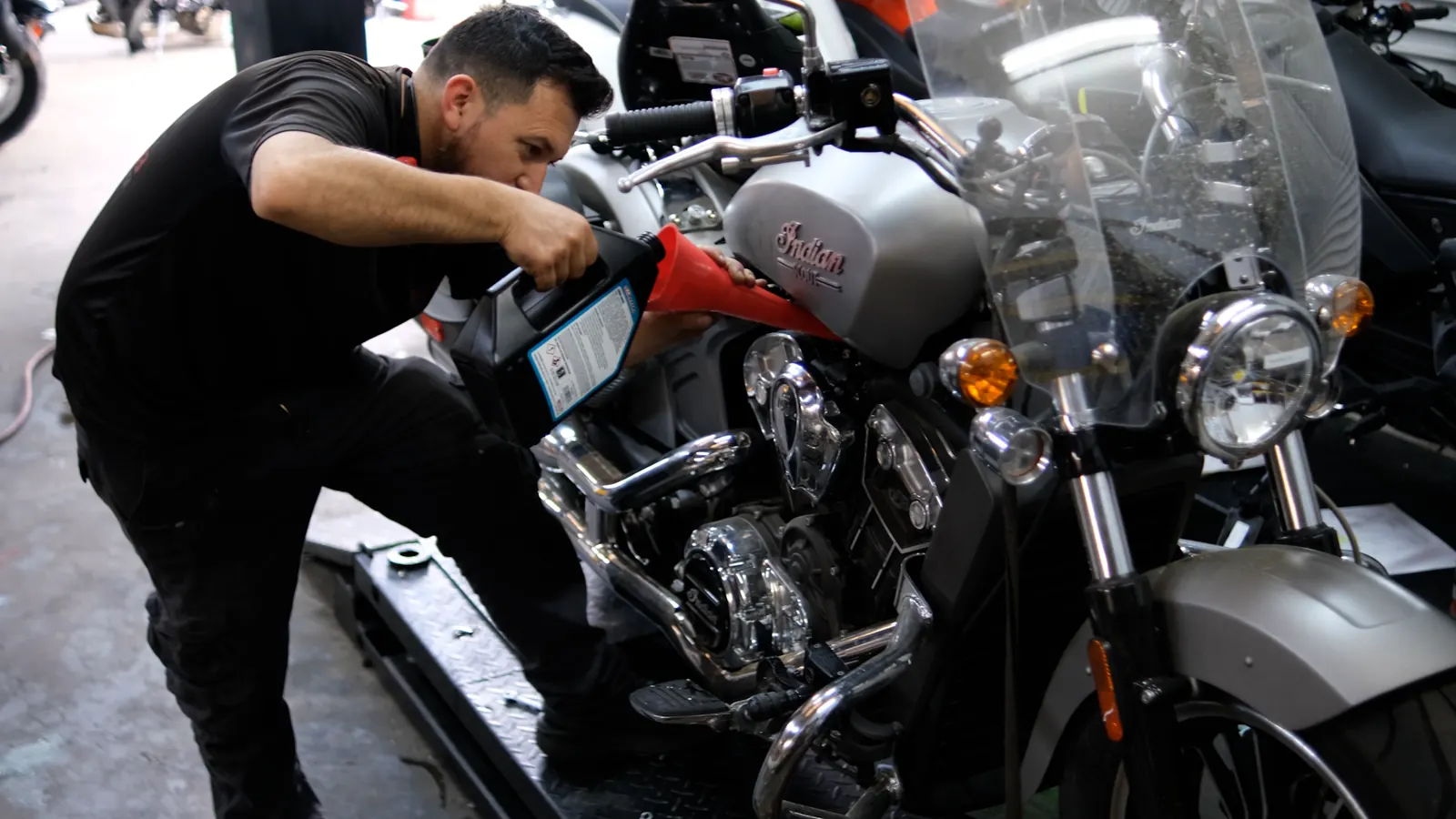
The process, start to finish
Here’s how a job actually moves through the shop. No mystery, no curtain.
- You tell us what the bike is doing, plus how you ride and how long it’s been parked.
- We look it over in person and confirm the symptom, because a described noise and a heard noise aren’t always the same noise.
- We diagnose. That means testing, measuring and ruling things out until we find the cause instead of the symptom.
- We call you with what we found, what it takes to fix it, and what we’d do if it were ours.
- You decide. Nothing gets ordered or opened up beyond diagnosis until you say go.
- We source parts and schedule the work so the bike isn’t sitting on a lift waiting on a box.
- We do the repair, then handle the neighbor jobs that are cheap while we’re already in there.
- Fluids, torque checks, and a real test ride. Then we tell you what to watch for next season.
That call in step four is the important one. It’s where you stop guessing, and it’s where most of the stress leaves the room. You’ll hear the cause in plain words, and you’ll hear the options in plain words too. If you want a look at how our crew approaches it day to day, that’s the same rhythm every time.
So why won’t an honest shop quote a repair sight-unseen? Because a phone quote is a guess wearing a suit. The same symptom can come from a cheap cause or a serious one, and nobody can tell which from a parking lot description. A shop that fires off a confident number over the phone is either padding it to be safe, or lowballing it and planning to “find more” later. Neither one is fun for you.
This is where Canton is genuinely different from other towns
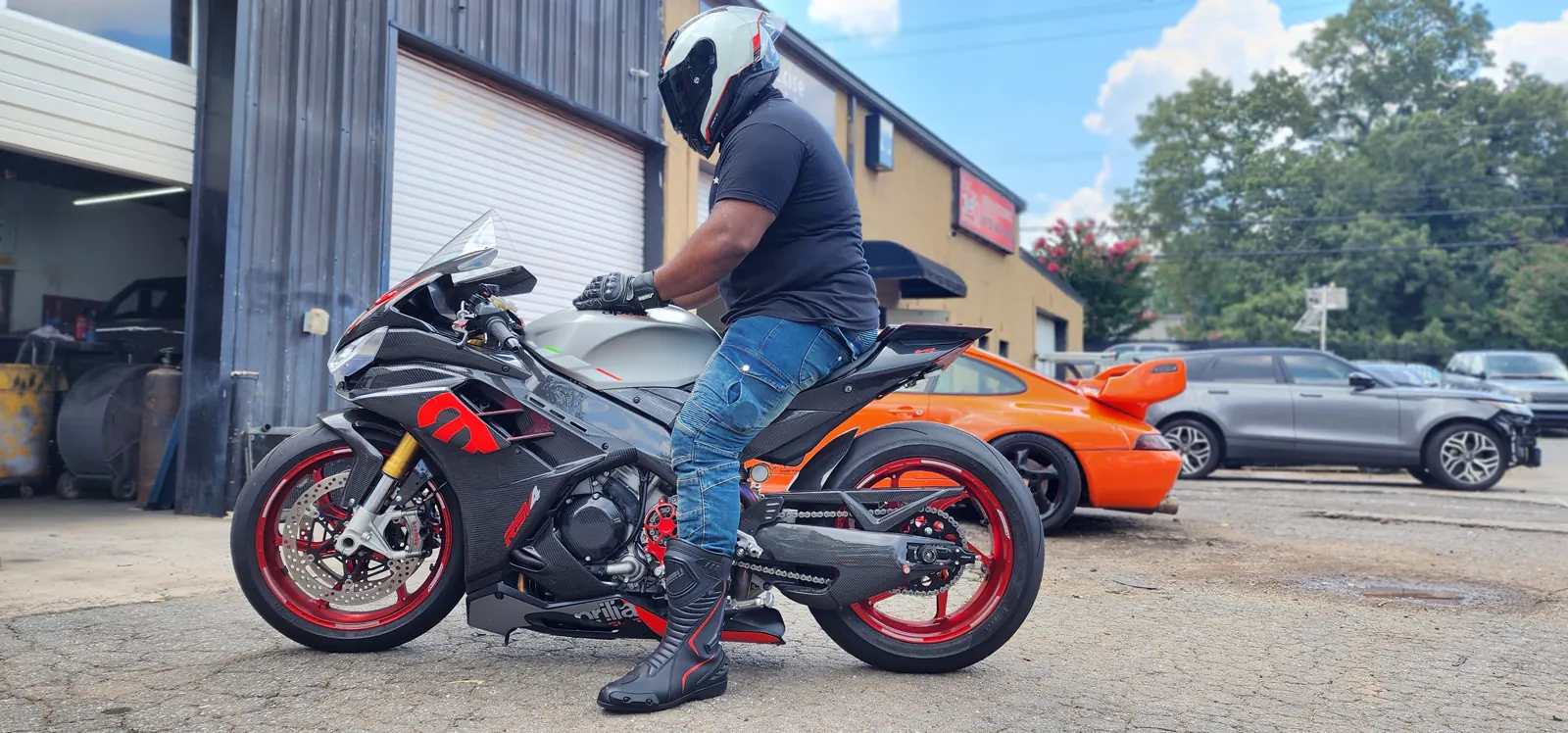
Canton sits at the gateway to the North Georgia mountains, and that shapes riding here more than anything else. It’s the last real services town before 5 turns into GA-515 toward Jasper, Ellijay and Blue Ridge. On a good Saturday in April or October, GA-5 north is a parade of bikes. So bikes here get used the way bikes are supposed to be used, and hard use shows up as tire and brake wear, especially in May and June after mountain runs.
Road surface matters too. I-575 runs north-south as the spine of the county and feeds into I-75 south of Marietta, and it carries heavy truck and construction traffic with grooved pavement, expansion joints and tar-snake patches. Meanwhile GA-20 west and the rural two-lanes like Univeter, East Cherokee, Sam Nelson and Little Refuge see chip-seal and gravel wash off the shoulders. New subdivisions add site mud, gravel spill and steel plates on collector roads. Then winter freeze-thaw on the north-county approaches breaks up edges and opens potholes from February through April. All of that lands on suspension, wheels, tires and brakes.
Storage tells the other half of the story. Around here bikes live in garages, and plenty of homes in BridgeMill, with its golf course, aquatic center and tennis, or over in River Green along the Etowah River with its pools, clubhouses and trails, have room for a second or third machine. Hickory Flat in southeast Canton is the same picture with its own identity. That’s great for a project bike. But bikes that sit get ethanol-varnished carbs and injectors, dead batteries, flat-spotted tires and tired brake fluid, and every March we hear that same story. Don’t worry, though — that one’s a well-worn path for us, and we wrote up how we handle that job so it doesn’t repeat next year.
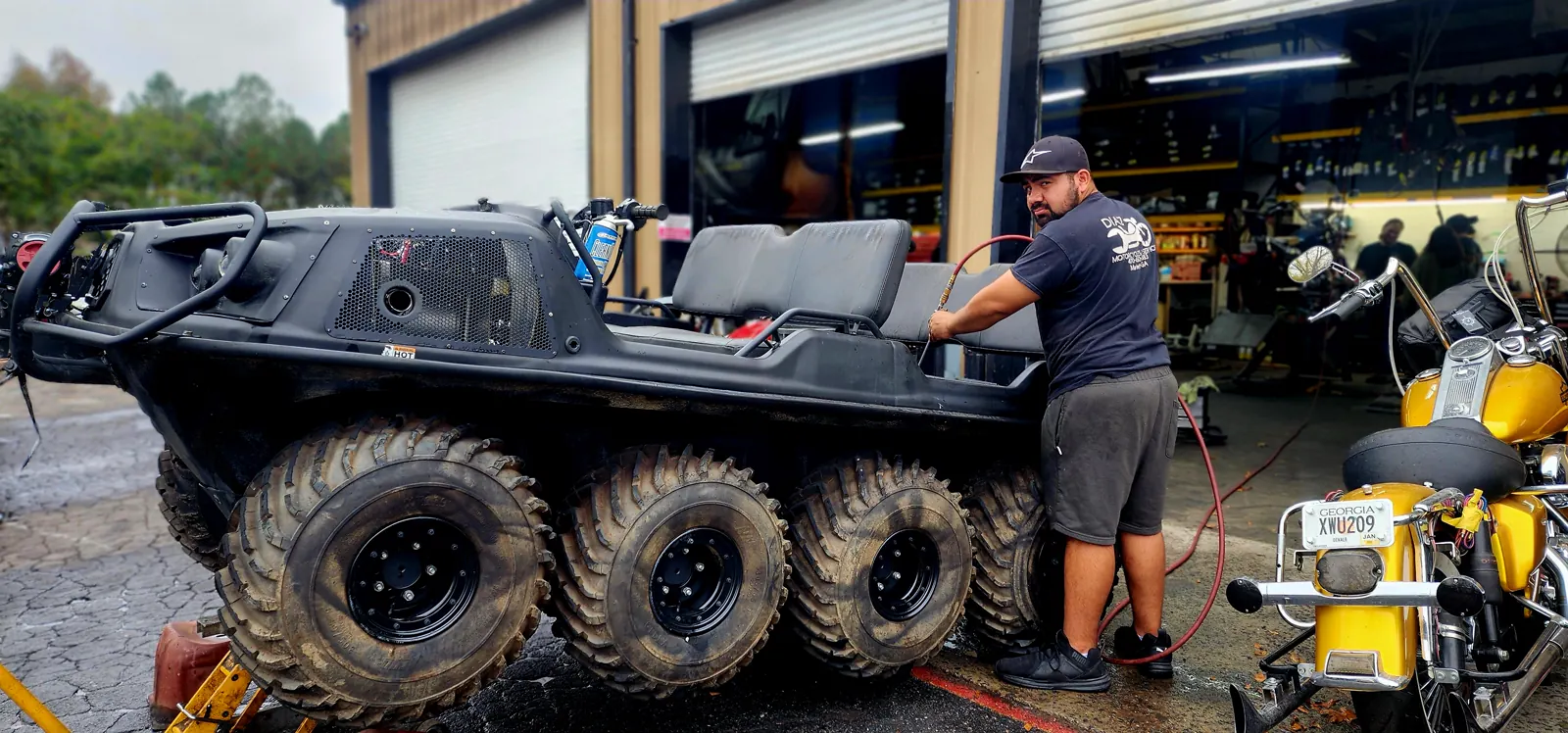
The riding itself is why any of this matters. Grab a coffee at The Mill on Etowah, the old cotton mill on the river that now holds restaurants, a brewery, the Cotton Mill Exchange makers’ market and an events green. Then head west on GA-20 Knox Bridge Highway for the causeway run across Lake Allatoona. Or point it north and give yourself a real day on GA-52 over Fort Mountain, the Ellijay-to-Chatsworth run that sits an hour and a half up the road. Fueling and throttle response are things you feel on roads like that, which is why dyno tuning, ECU flash and Power Commander work are a big part of what we do.
Cherokee County is honestly under-served by independent shops for the number of riders in it. There’s a large chain dealership, a handful of small operators, and not much in between for performance work, paint or restoration. Bartow Powersports, also known as Suzuki of Bartow County over at 1 Powersports Circle in Cartersville, sits about thirty to thirty-five minutes west. Our shop is roughly 22 to 26 miles from Canton, usually 30 to 40 minutes down I-575 to Barrett Parkway or GA-92 and then east through East Cobb. Canton folks already drive to Woodstock, Kennesaw and Alpharetta for everything else, so that ride isn’t the hurdle people expect.
What you walk away with
You should leave a shop knowing three things: what was wrong, what got done, and what’s coming next. That’s it. Ride safety data from NHTSA crash data and rider trends from the Motorcycle Industry Council both point the same direction as our own bays do. Well-maintained bikes stay predictable, and predictable is what you want under you on a mountain descent.
One more thing about the mixed garage we started with. You don’t need three shops. One crew that knows all three machines will spot patterns across them, stagger the work so you’re never fully grounded, and keep records that make next year easier. If you’re curious how this plays out in other towns we serve, here’s the Powder Springs side of things for comparison. Same thinking, different roads.
So the real answer on motorcycle repair cost Canton riders should expect is this: it depends on access, condition and choice, and we’ll show you all three before you commit to anything. That’s not dodging the question. That’s how you end up confident instead of guessing, with a bike that’s ready when the weather turns good.
Questions Canton riders ask us
Why can't you quote my repair over the phone?
Because the same symptom can come from several very different causes, and we can’t see which one it is from a description. A phone number would either be padded to protect us or lowballed to win the job. Neither is honest. So we look, diagnose, and then tell you exactly what we found before anything gets ordered.
What's actually included in the work?
Diagnosis, the repair itself, reassembly, fluids and torque checks, plus a real test ride before it comes back to you. We also handle any nearby jobs that are easy while we’re already in there, if you want them. And you get a plain-English rundown of what to watch for next season.
How long will my bike be in the shop?
Simple jobs often move quickly, while anything needing teardown or a hard-to-find part takes longer. Parts availability is usually the deciding factor, not wrench time. We try to source parts before the bike goes on a lift, so it isn’t sitting there waiting on a box. You’ll get a realistic window after diagnosis, not before.
Is more of the work parts or labor?
It depends entirely on access. If the failed piece is out in the open, parts are the bigger share. But if a tech has to remove bodywork, a tank or an exhaust to reach it, labor takes over. That’s why we always talk you through what has to come off first.
Does the type of bike change the job?
Yes, quite a bit. Cruisers, baggers, sportbikes, ADV bikes and vintage machines are all built differently, so the same repair takes a different path on each one. Older bikes also bring rust and past repairs into the picture. We see all of these regularly, so none of it throws us.
My bike sat all winter in the garage. Is that a problem?
It’s common around here, and it’s very fixable. Long storage usually means varnished fuel, a tired battery, flat-spotted tires and old brake fluid. We sort those together rather than one at a time, since they tend to show up as a group. Then we set the bike up so next winter goes easier.
We take care of riders from Canton and all across Cherokee County and the surrounding area. That includes Woodstock, Holly Springs and Ball Ground, plus Waleska, Free Home and Nelson out toward the county line. Heading west we see plenty of folks from Acworth, Cartersville and Kennesaw, while Marietta and Alpharetta riders come through regularly too. Jasper riders stop in on their way down from the mountains. So wherever you park it, the run to our bay is an easy one.
LET'S LOOK AT IT TOGETHER
If you’re in Canton and something on your bike doesn’t feel right, tell us what it’s doing and we’ll tell you straight what it’ll take. No guessing over the phone, no surprise add-ons, and no pressure to fix things that can wait. Bring one bike or bring the whole garage. Either way, you’ll leave knowing exactly where you stand.
470-460-9883Diaz Motorcycles and Service, LLC · 847 Barnes Mill Road, Marietta, GA 30062