Motorcycle Repair Cost Cartersville — Price Guide
What actually drives the size of a repair bill, explained by the people who do the work.
You had Saturday mapped out. Coffee first, then east on GA-20 Knox Bridge Highway, out over the causeway where Lake Allatoona opens up flat and bright on both sides of you. Instead you’re standing in the garage in full gear, listening to your bike crank and quit, crank and quit. The ride is gone. So and and the very next thought, for almost everybody, is a search for motorcycle repair cost Cartersville, because you want a number before you want anything else.
That’s a fair thing to want. Still, Here’s the honest part: the number isn’t the useful thing. Plus, What’s useful is understanding what makes one repair small and another repair big. Once you know that, you can hear a shop’s plan and tell right away whether it makes sense. So let’s walk the whole thing, start to finish, the way it really happens on a lift.
Two bikes, same symptom, very different jobs
Of course, two riders can roll in with the exact same complaint. Bike won’t start. Same words, same frustration. Then again, one of them leaves the same afternoon. Even so, the other one is with us for a few days. Nothing shady happened. Meanwhile, the bikes are just built differently, and the part that failed sits in a different place on each one.
In fact, that said, That’s the single biggest thing people miss. For example, a repair is made of three things: the part, the labor, and the access. Parts are what they are. Labor is time. Access is how much of the bike has to come apart before a tech can even touch the thing that’s broken. Access is the sneaky one, and it’s usually what separates a quick job from a long one.
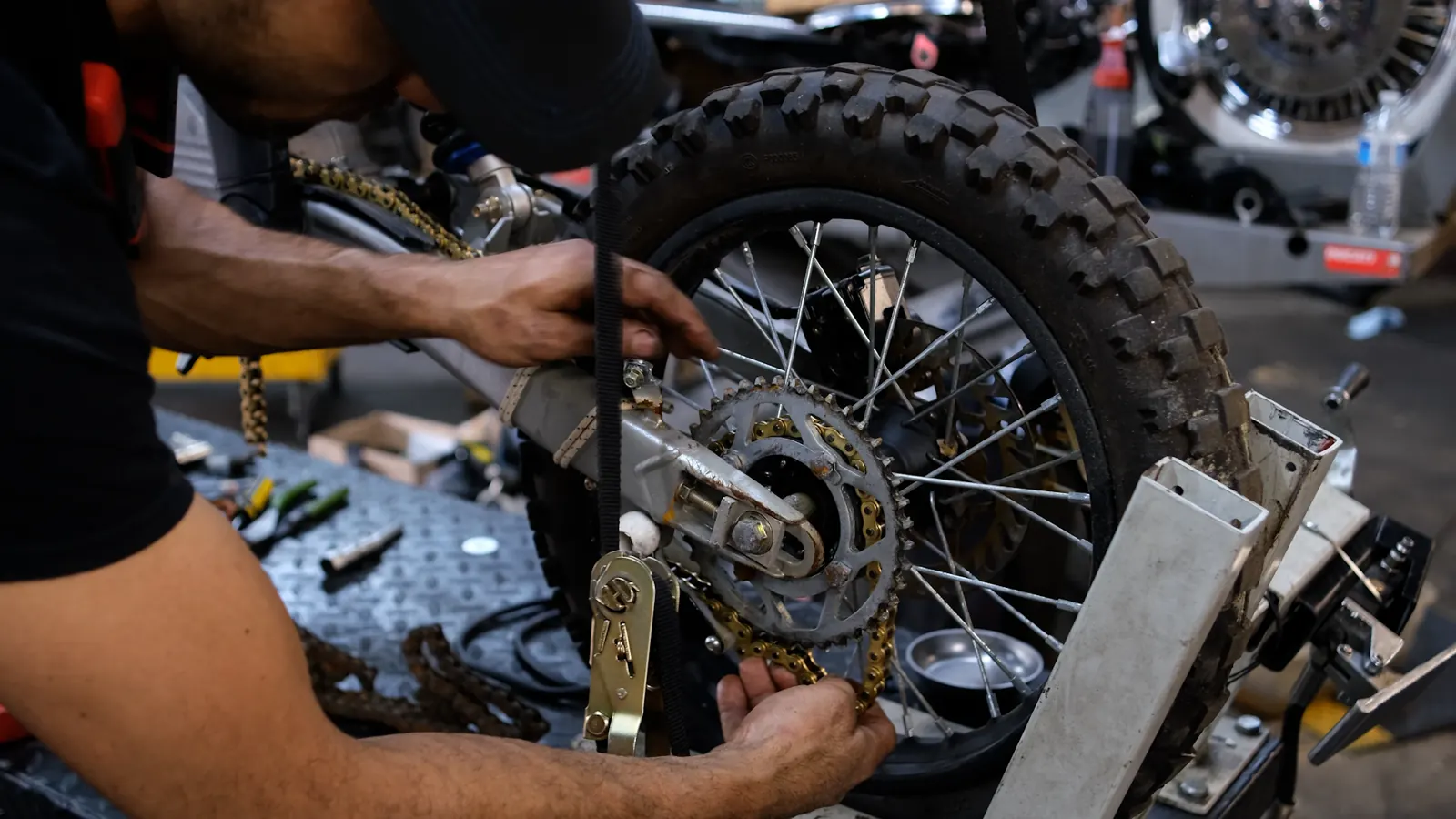
Picture a bare little dirt bike. The chain, sprockets, and rear wheel are right out in the open. Now picture a full dresser bagger with a fairing, a stereo, saddlebags, and a wiring harness routed behind all of it. Same repair, wildly different amount of removing and reinstalling. Nobody charges extra for the fairing. The fairing just exists, and it has to come off, and going back on takes as long as coming off did.
Why it happens here more than you'd think
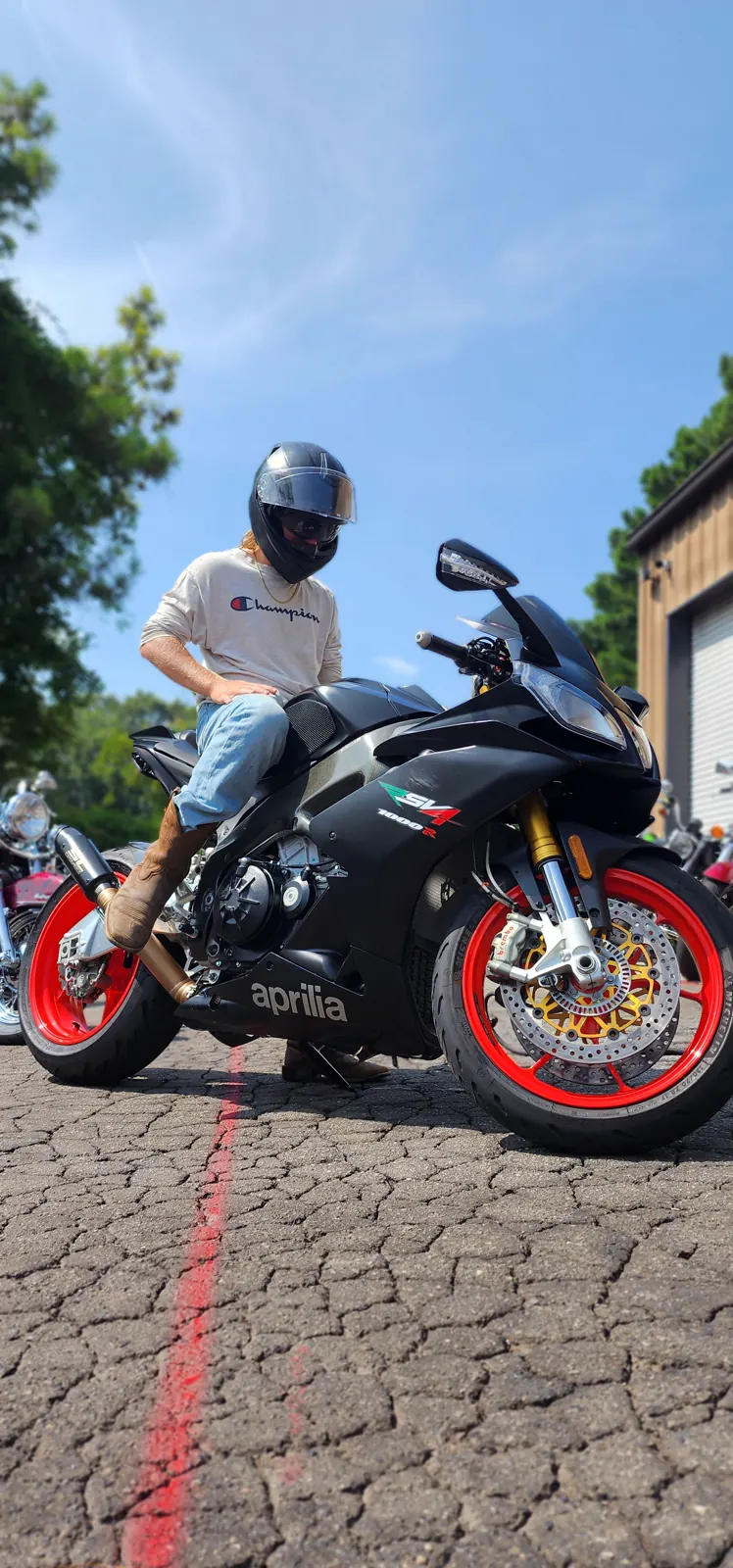
Bartow throws a few things at bikes that other counties don’t, and they show up in our bays over and over. Riders around here already know the roads. What they don’t always connect is how directly the road maps to the repair.
Start with the US-411 battery-campus corridor west of town. All that Hyundai and SK construction traffic means mud tracking off the site and road work that moves week to week. Mud gets on the pavement, then on your bike, then packed into places you don’t wash. Grit is patient. It works into chains, brake pads, and wheel bearings, and it never gets tired.
Then there’s storage. Most bikes in Bartow live in a garage, an outbuilding, or a pole barn, and the older housing stock around Olde Town means a lot of that storage is detached and unheated. That’s paradise for a project bike and rough on everything with fluid in it. Humidity finds chrome. Ethanol turns into varnish in a carb or an injector rail while the bike sits quietly all winter, minding its own business, plotting.
Add I-75’s truck-beaten concrete, the gravel that quarry traffic drops on 411, and freeze-thaw potholes from February into April, and you get a very specific repair list. Fuel systems. Batteries. Wheels and bearings. Suspension. Nothing exotic. Just the honest result of real riding on real roads, and every single one of those has a fix.
How we actually diagnose it
Here’s the part that decides everything else, and it happens before a single wrench touches your bike. Diagnosis is not guessing with confidence. It’s a sequence, and we run it the same way every time.
- We listen to you first. When did it start, what were you riding on, what changed right before. Riders give us better clues than instruments do.
- We confirm the symptom ourselves. If it won’t start, we try to start it. If it only does it hot, we get it hot.
- We check the cheap stuff before the expensive stuff. Battery, connections, grounds, fuel, filters, fuses. A shocking number of scary problems live here.
- We pull codes and read live data when the bike supports it, so we’re watching sensors instead of assuming them.
- We isolate the failed part, not the failed system. Big difference. One is a repair, the other is a shopping list.
- We call or text you with what we found and what it takes to fix it, before we do it.
That order matters. Skipping straight to the expensive theory is how a bike gets a new part it never needed. We’d rather spend a little more time looking and a lot less money buying.
MOST PEOPLE STOP READING HERE
That’s the expensive mistake. The next section is where the actual money lives, and it’s the part that lets you tell a good plan from a bad one.
Parts versus labor, in plain English
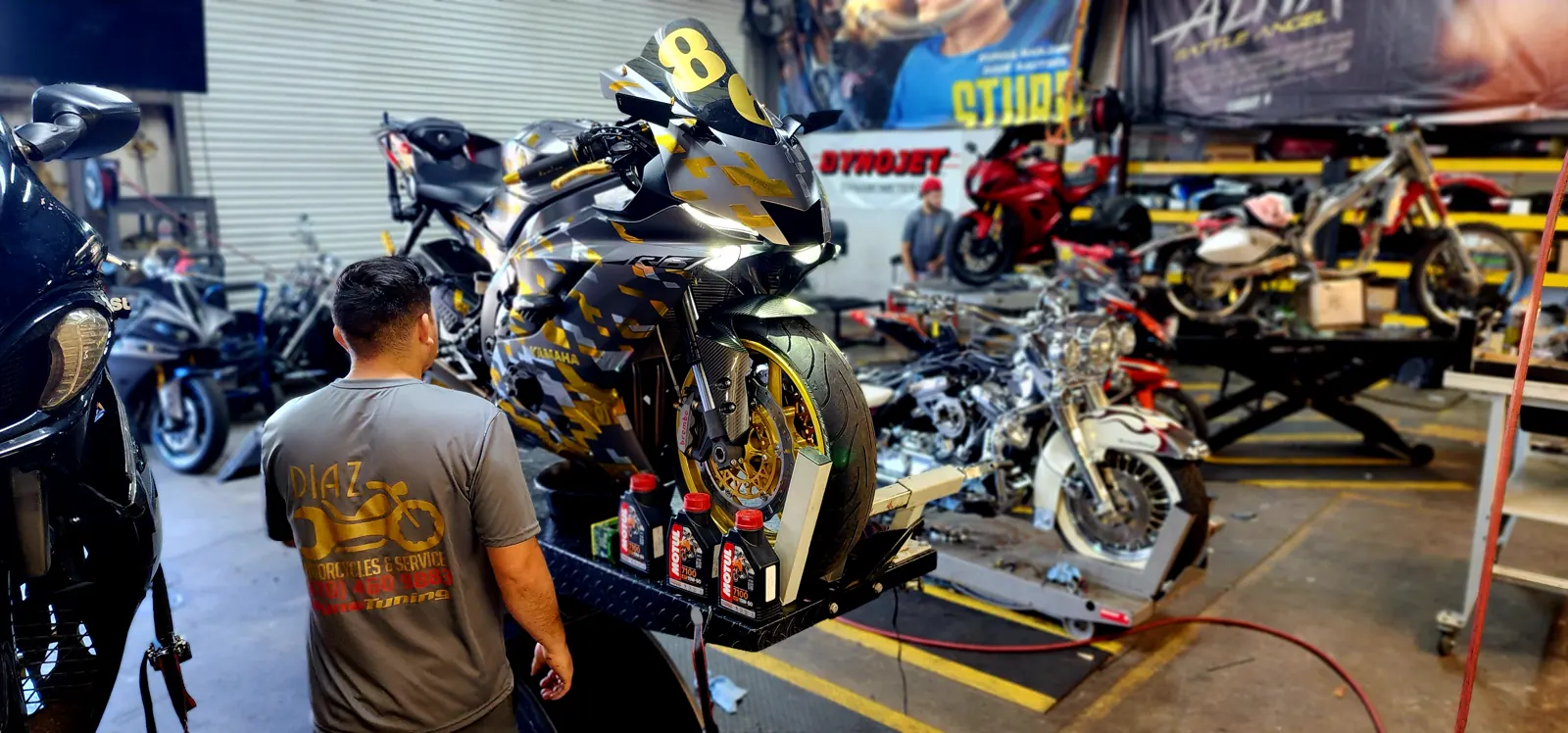
Every repair bill splits into two buckets. Parts are the pieces. Labor is the time it takes a trained person to put those pieces where they belong. People tend to focus on parts, because parts are objects you can hold. But on most real repairs, labor is the bigger half, and access is what inflates it.
Think about it like working on a house. Swapping an outlet on an open wall is quick. Swapping the same outlet behind finished drywall means cutting, patching, sanding, and painting. Identical outlet. Very different afternoon. Bikes are the same, except the drywall is a fairing, a fuel tank, an exhaust, or a swingarm.
A few things that push labor up, every time:
- Bodywork that has to come off and go back on straight, aligned, and rattle-free
- Fasteners that are seized, rounded, or rusted from years in an unheated barn
- Parts buried under other parts, so one repair triggers three removals
- Fluids that must come out and go back in, then get bled or set to spec
- Anything requiring a torque spec and a check after a heat cycle
And a few things that keep labor down: a bike that’s been maintained, a rider who noticed the problem early, and clean access. That’s it. Those three things are worth more than any coupon.
Why an honest shop won't quote it sight-unseen
You call, you describe the noise, you ask for a number. We could give you one. It’d be a guess wearing a nice suit. Any real conversation about motorcycle repair cost Cartersville starts with a look, because two things go wrong when a shop skips that.
First, a low phone number is a promise nobody can keep. The bike shows up, the real cause is somewhere else, and now the whole conversation is about the quote instead of the bike. Second, a high phone number scares off a rider who might’ve had a small, easy fix. Neither one helps you. So we look first, we tell you what we found, and you decide with real information in your hand.
Bartow is a show-me county. Plenty of our friends here work at Shaw, at Toyo Tire, at the brewery, and they evaluate a shop the way they’d evaluate a machine on their own floor. Show the part number. What’s more, Show the spec. Show the before and after. That suits us fine, because that’s how we like to work anyway, and it’s a big part of what happens in our bays.
A quote without a look isn't a price. It's a hope.
What the fix actually involves
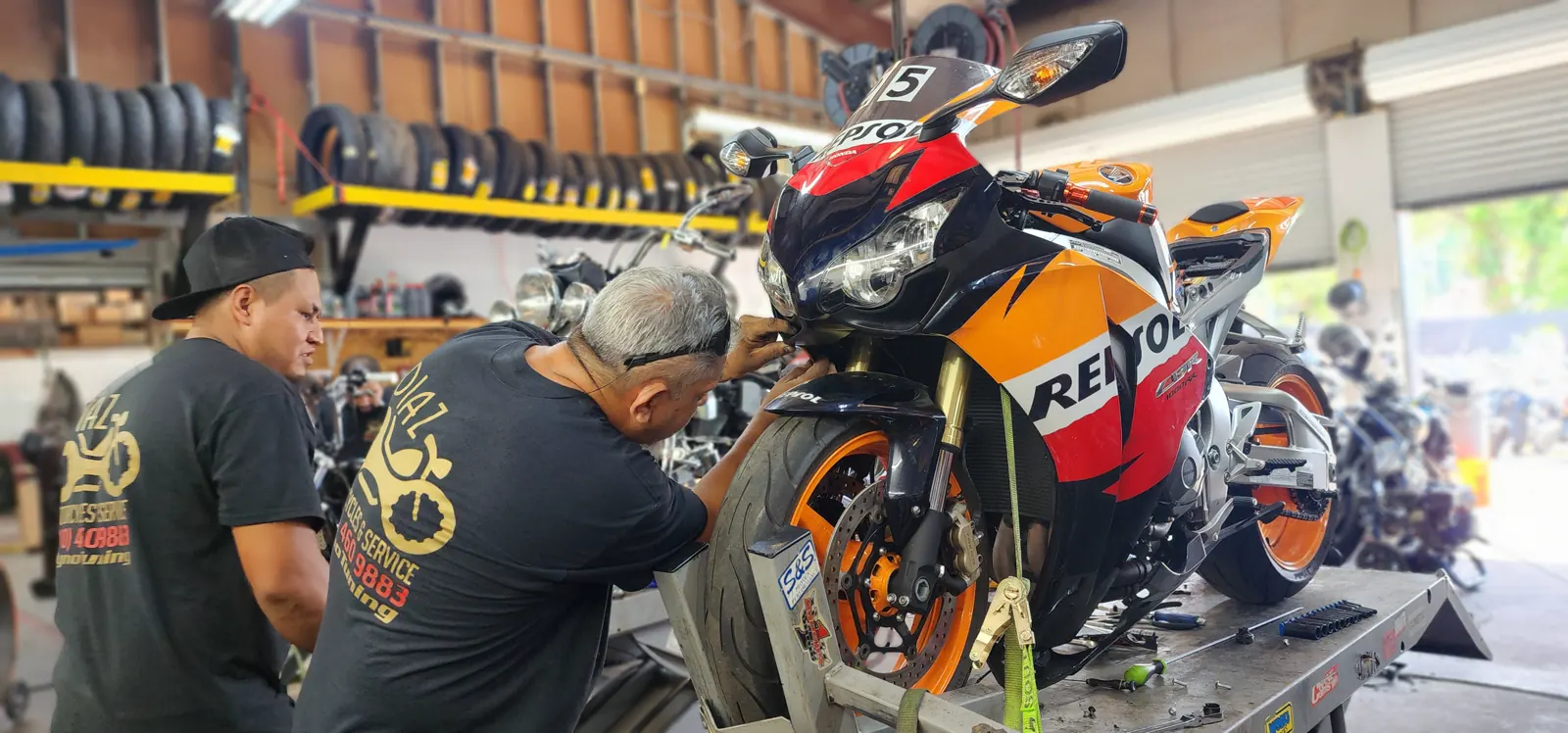
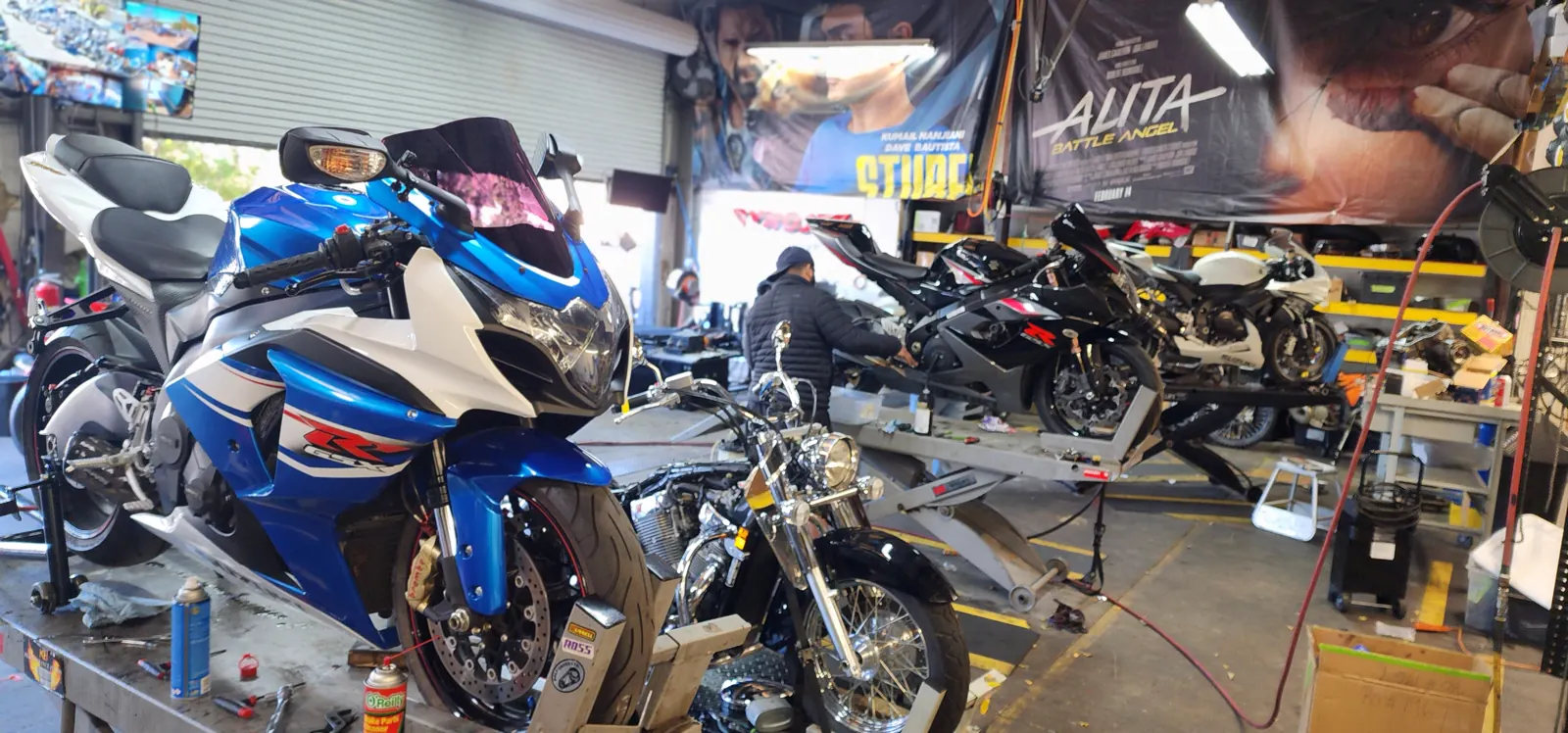
Once you approve the work, the shape of the job is pretty consistent. We stage the parts so the bike isn’t sitting apart waiting on a box. We tear down only as far as we need to, and we bag and label fasteners, because a bolt in the wrong hole later is a much worse problem than five minutes of labeling now.
Then the repair itself, to spec, with a torque wrench instead of a feeling. Better yet, Then reassembly, which honestly takes about as long as teardown did. Then fluids, bleeding, and adjustment. Then a test ride, because a bike that’s fine on a lift and wrong on the road is still wrong. And then we hand it back with a straight explanation of what we did and what to watch.
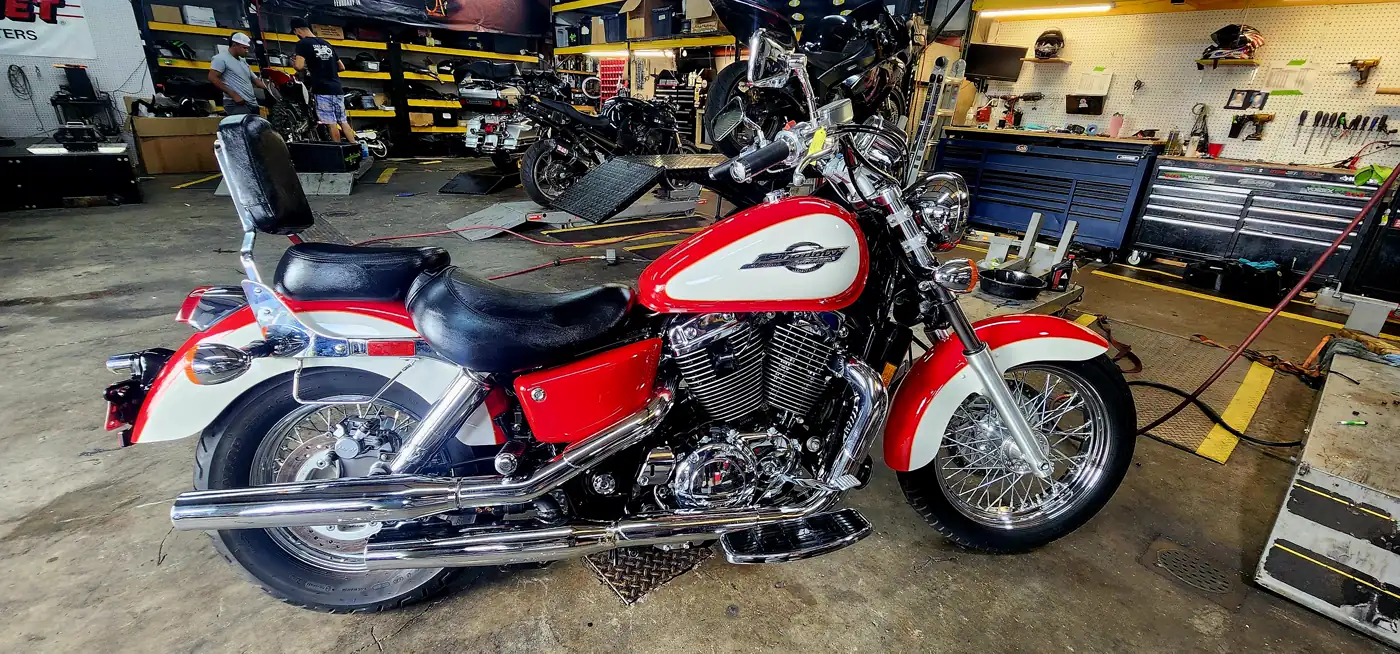
Bike type changes all of it. Cruisers and baggers dominate around here, and they’re friendly to work on until you reach something behind a fairing or under a bag. Touring bikes carry more accessories and more wiring. Vintage and project bikes bring seized hardware and parts that take longer to source. Sportbikes hide almost everything under bodywork. If you’re weighing a dealer against an independent, we broke down the tradeoffs between them in plain terms.
The local piece riders forget
Cartersville has real motorcycle culture, not a hobby version of it. There’s an active H.O.G. chapter, a calendar with poker runs and toy runs and charity rides on it, and enough project bikes in Bartow garages to keep a shop busy on their own. Riders from Cobb, Paulding, and Cherokee roll through on their way to the mountains, which makes this town a staging city more than a stopping point.
You feel it downtown. Bikes park along the historic commercial core of the Downtown Business District, one of the city’s five locally designated historic districts, while folks walk over to the Booth Western Art Museum, which everybody just calls the Booth. It’s a Smithsonian Affiliate with a hundred and twenty thousand square feet and the largest permanent Western art exhibition space anywhere, and it’s a fine excuse to stand around and talk about bikes in the shade.
Ride a few minutes south and LakePoint Sporting Community sprawls across a thousand-plus acres in Emerson, with its venues, hotels, retail, and water park pulling weekend traffic through. Out in Cherokee-Cassville, the fifth of those historic districts, the roads get quiet again. Between all that, a Bartow bike racks up a mix of miles that a garage-queen never sees.
THE LAST PIECE
The last piece is the one people underestimate. It isn’t the part, and it isn’t the labor rate. It’s timing.
Timing beats every other lever
A chain that’s just past adjustment is a chain. A chain that’s been ignored takes the sprockets with it, and sometimes the rear wheel bearings too. One small job quietly turned into three. Brakes work the same way. Fuel systems work the same way. Almost everything on a bike gets cheaper the earlier you catch it, and that lever is entirely in your hands.
April through June is prime season here, with 411 running north toward Fort Mountain and the Quad County Figure Eight waiting on the other side of a good tank of gas. That’s exactly when you don’t want to be down. Which is why the smartest thing a rider can do is bring the bike in during the boring months, when nothing’s wrong and everything’s easy to look at.
Distance matters less than people assume. Plenty of riders drive past closer options because they want the shop that explains things. RideNow Powersports Canton sits about thirty to thirty-five minutes east on 645 Riverstone Pkwy, and our shop is a run down I-75 and east into East Cobb. Riders make that call all the time when the work is worth it, and it’s the same calculation as how this plays out in Kennesaw.
What you should walk away with
You don’t need to become a mechanic. You just need to know the three levers: the part, the labor, and the access. Ask any shop which one is driving your job and listen to the answer. A good shop will explain it without flinching. Groups like the American Motorcyclist Association have been pushing riders toward that kind of informed conversation for a long time, and it works.
Keep your paperwork straight too, since your registration and title records live with the Georgia Department of Revenue, and a clean file makes everything downstream simpler. Then ride. That’s the whole point of all of this. If you want a deeper look at how a shop earns trust before it earns your work, here’s what that service actually involves.
A cancelled Saturday stings. But it’s one Saturday, and the fix exists, and the bike doesn’t hold a grudge. Get it looked at, get a real answer, and get back on the causeway before the light goes gold.
Questions Cartersville riders ask us
What's actually included when you repair my bike?
Diagnosis, the repair itself, reassembly, fluids and adjustment, and a test ride before it comes back to you. We also tell you what we found and what we did in plain language. Nothing gets replaced without you approving it first.
How long does a repair usually take?
It depends on access and parts. A simple job with everything out in the open can wrap the same day, while a repair buried behind bodywork or waiting on a part takes longer. We give you a realistic timeline once we’ve seen the bike, not before.
Is it mostly parts or mostly labor?
On most real repairs, labor is the bigger half. The part is often small, but reaching it can mean removing bodywork, tanks, or exhaust and putting all of it back straight. That’s why two bikes with the same failed part can be very different jobs.
Does the type of bike change the work?
Yes, quite a bit. Cruisers and baggers hide things behind fairings and bags, touring bikes add wiring and accessories, sportbikes tuck almost everything under bodywork, and vintage project bikes bring seized hardware. Same repair, different amount of getting to it.
What happens if you find something else while you're in there?
We stop and call or text you. You hear what we found, why it matters, and whether it can wait. Then you decide. We never add work to a bike without a conversation first.
Why won't you quote me over the phone?
Because a number given without looking is a guess, and guesses tend to be wrong in whichever direction hurts. A low one becomes a bad surprise and a high one scares off riders with an easy fix. We’d rather look, then talk.
We take care of riders all across Bartow County and the corner of the northwest metro around it. That means Cartersville and neighbors like Emerson, White, Adairsville, Kingston, Euharlee, Rydal, and Taylorsville, plus the run south through Acworth, Kennesaw, and Dallas. Riders from Canton and Woodstock come our way too, usually the same folks who take GA-20 east across the lake on a good morning. If you’re anywhere in that spread, the drive is worth it.
BRING IT IN, GET A REAL ANSWER
If your bike quit on you in Cartersville, don’t guess and don’t let it sit. Text us what it’s doing, when it started, and what you were riding on. We’ll tell you what we think it is, look at it properly, and give you an honest plan before anybody picks up a wrench. Then you get your Saturdays back.
470-460-9883Diaz Motorcycles and Service, LLC · 847 Barnes Mill Road, Marietta, GA 30062