Motorcycle Repair Cost Douglasville — Full Breakdown
What a repair really involves, what makes one job bigger than another, and why an honest shop looks first.
Every year the same thing happens. In fact, the yellow film settles over Douglas County, the first real warm Saturday lands, and half the county wheels a bike out of the garage that has been sitting since Thanksgiving. It cranks slow. Meanwhile, it coughs. For example, it idles like it’s mad at you. After that, That’s the week our phone starts ringing, and it’s the week the question motorcycle repair cost Douglasville riders type into their phones gets asked more than any other. What’s more, Good news up front: this is a knowable thing, and by the end of this you’ll understand exactly what drives it.
What you're really asking
When somebody asks what a repair runs, they almost never want a number for its own sake. They want to know if this is a Saturday-afternoon fix or a two-week project. They want to know whether the bike is worth keeping. Mostly, they want to know that nobody is going to make something up at their expense. So and Better yet, That’s a fair thing to want, and it’s the right question to ask.
So here’s the better version of the question people mean when they search motorcycle repair cost Douglasville: what actually makes one job bigger than another? Still, Answer that, and you can look at your own bike, in your own garage, and make a smart guess before anybody touches it. You’ll also be able to tell in about thirty seconds whether the shop you’re talking to is being straight with you.
The honest answer
Plus, a repair is made of three things: the part, the labor to install the part, and the access it takes to reach the part. Riders think about the first one. Shops think about the third one. Of course, that gap is where almost all the confusion lives.
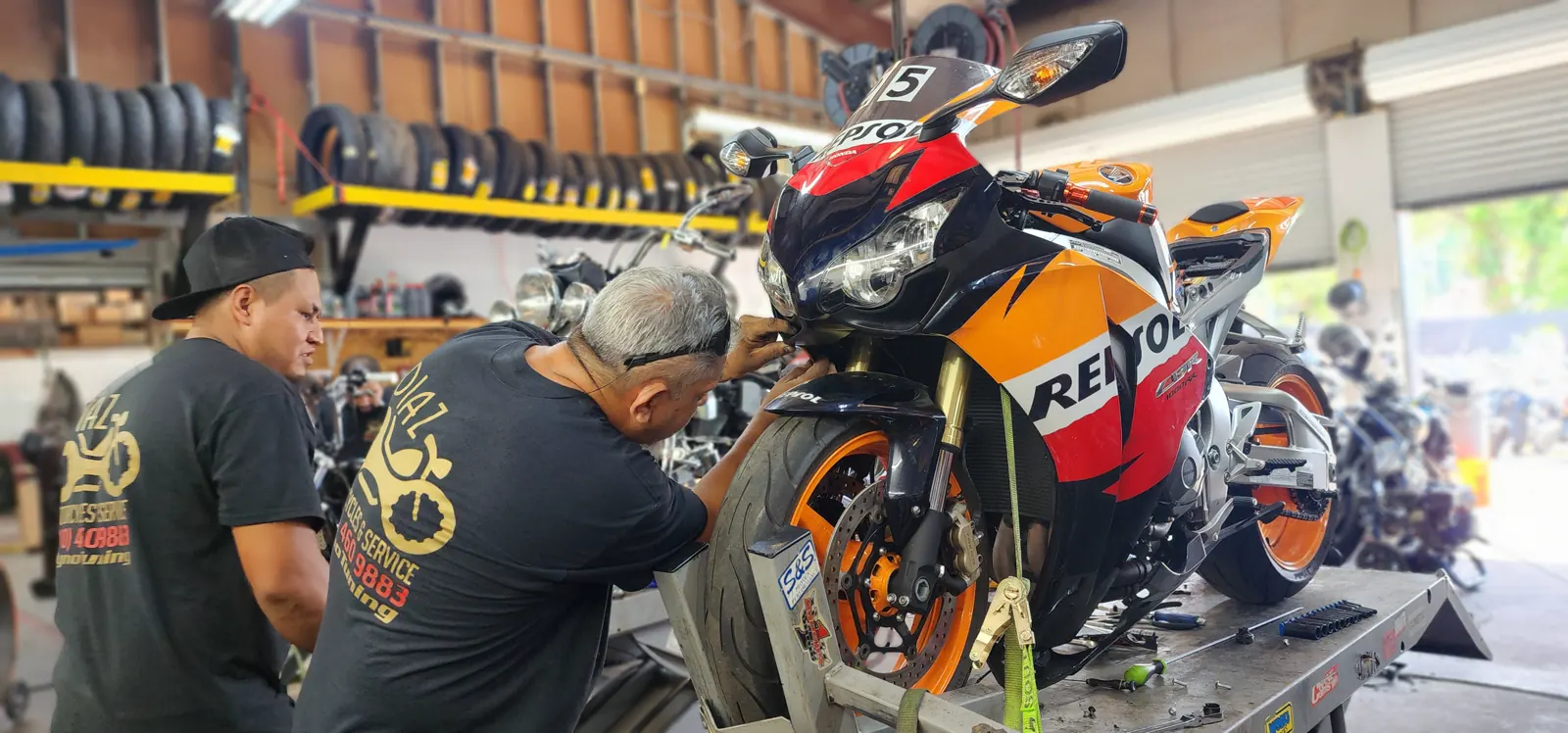
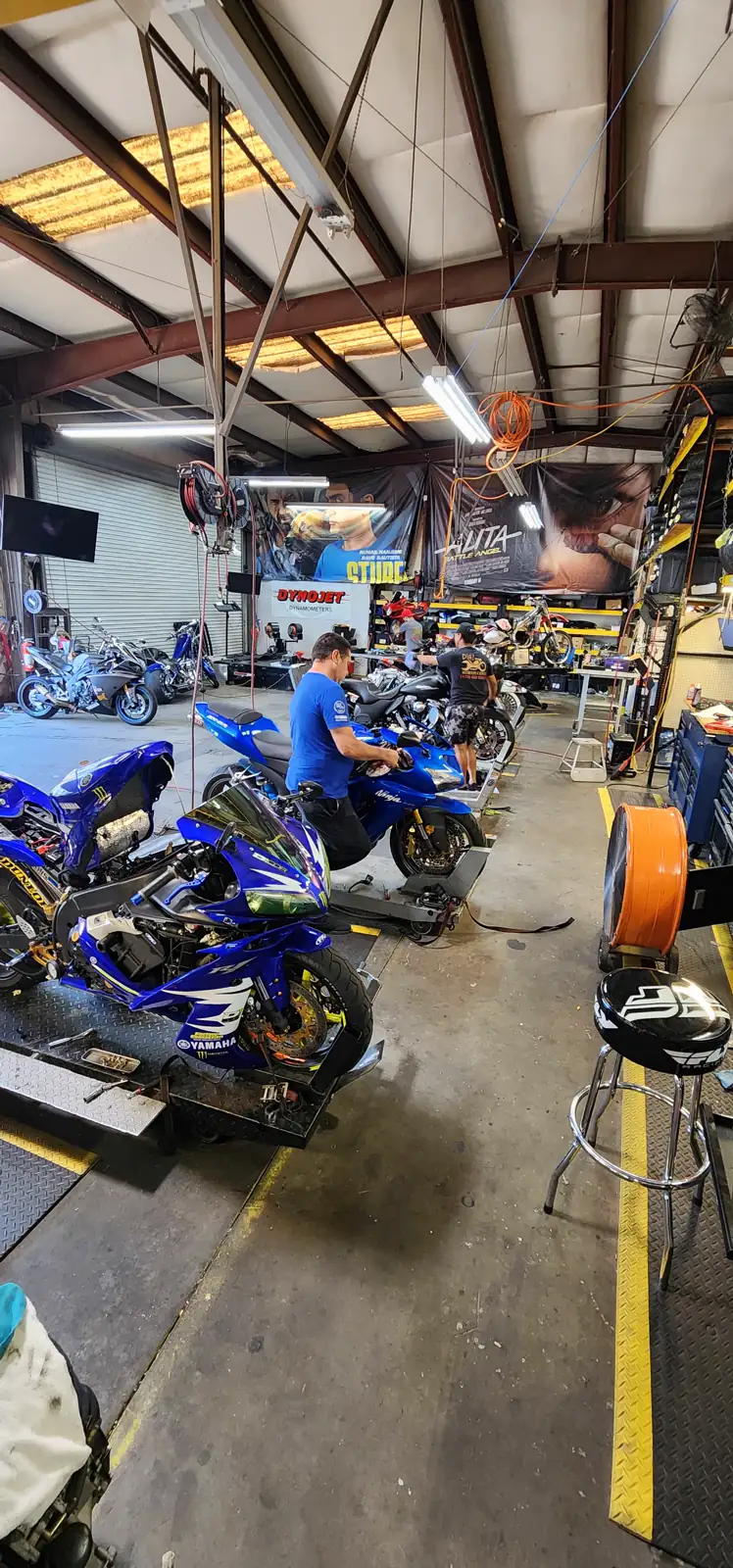
Think about a spark plug. Then again, On a big twin cruiser, the plugs sit right out in the open where a breeze could reach them. Even so, on a modern inline-four sportbike, the same plugs live under the tank, under the airbox, under a nest of hoses and connectors. Same part. Same job on paper. Meanwhile, one takes minutes and one eats an afternoon. Nobody is being sneaky when the second one takes longer — the engineers just packed a lot of bike into a small space.
Riders shop the part. Shops shop the access. Access is the part that moves.
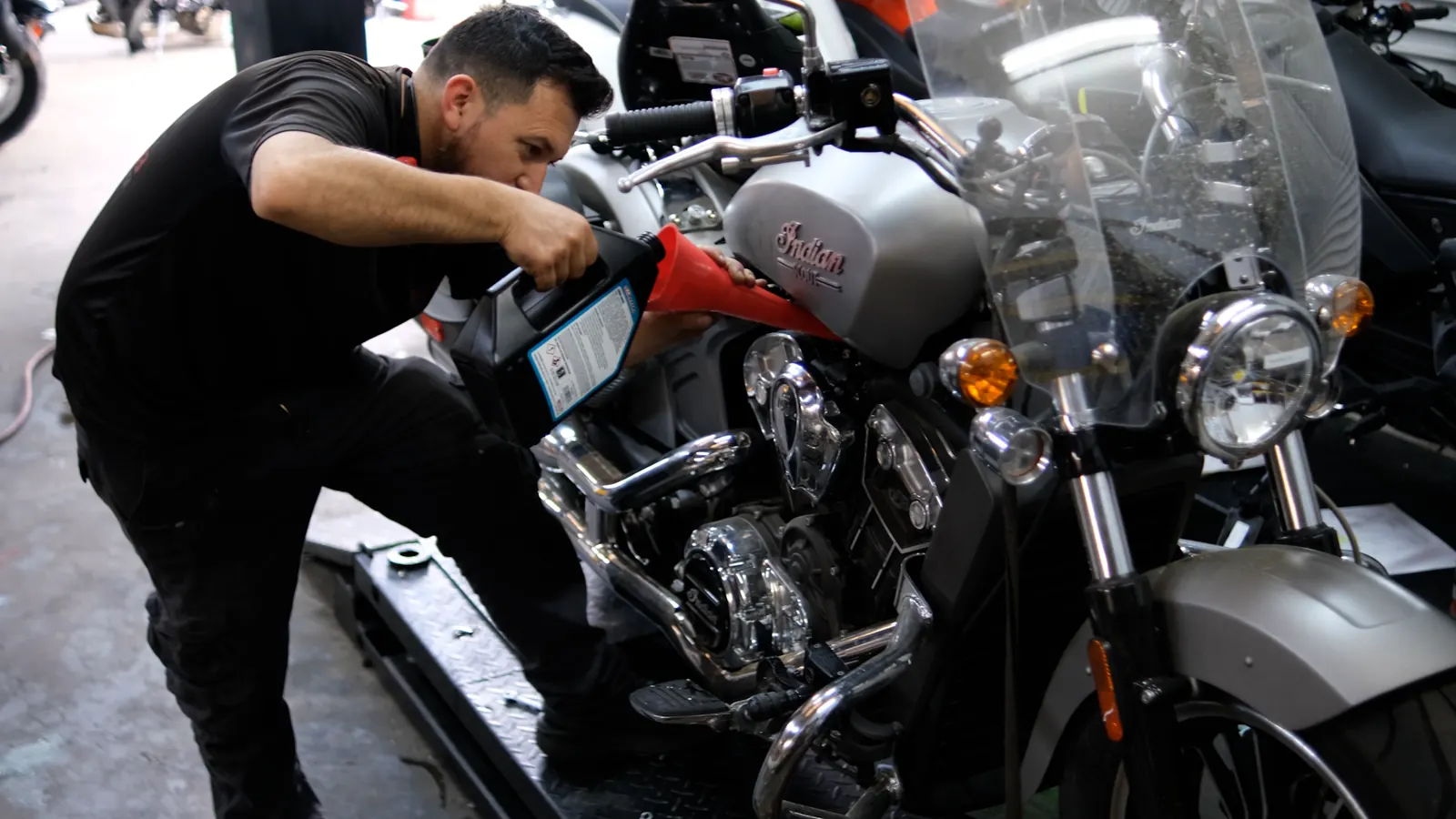
Labor is simply time. In fact, that said, Time to remove the bodywork, time to get the bike level and secure, time to test the fix before it goes back to you, and time to put every fastener back where it belongs with the right torque. For example, Parts are the easy part of the conversation because a part is a part. After that, Labor is where the bike itself has an opinion, and every bike has one.
What changes the job
What’s more, two bikes can roll in on the same trailer with the exact same complaint and leave after completely different work. Meanwhile, a rough idle on a bike with a carburetor means one path. In fact, that said, that same rough idle on a fuel-injected bike with a throttle body and a stack of sensors means a different path entirely, and the tools that answer it are diagnostic, not mechanical. That’s not a dodge. It’s just two different machines wearing the same symptom.
Here’s the short list of what really moves a job from small to large:
- Access. Bodywork, tanks, airboxes and exhaust that have to come off before the real work starts.
- Diagnosis. A clear symptom is quick. An intermittent one that only shows up warm, in traffic, on a hot afternoon takes real time to catch.
- Part availability. A common wear item is on the shelf. A model-specific part for an older or rarer bike may take a hunt.
- What we find underneath. A chain replacement sometimes uncovers worn sprockets. A brake job sometimes uncovers a seized caliper piston.
- How long it sat. Fuel that has sat since fall behaves very differently than fuel from last week.
- Prior work. Stripped threads, wrong fasteners and mystery wiring from a previous fix all add time.
That last one is worth saying kindly. Plenty of friends we’ve helped tried the job themselves first, and honestly, respect — that’s how people learn. We just have to undo the detour before we can start the trip. If your bike won’t fire at all before any of this matters, we wrote a separate piece on what usually causes it, and it’s usually simpler than people fear.
How the job actually runs, start to finish
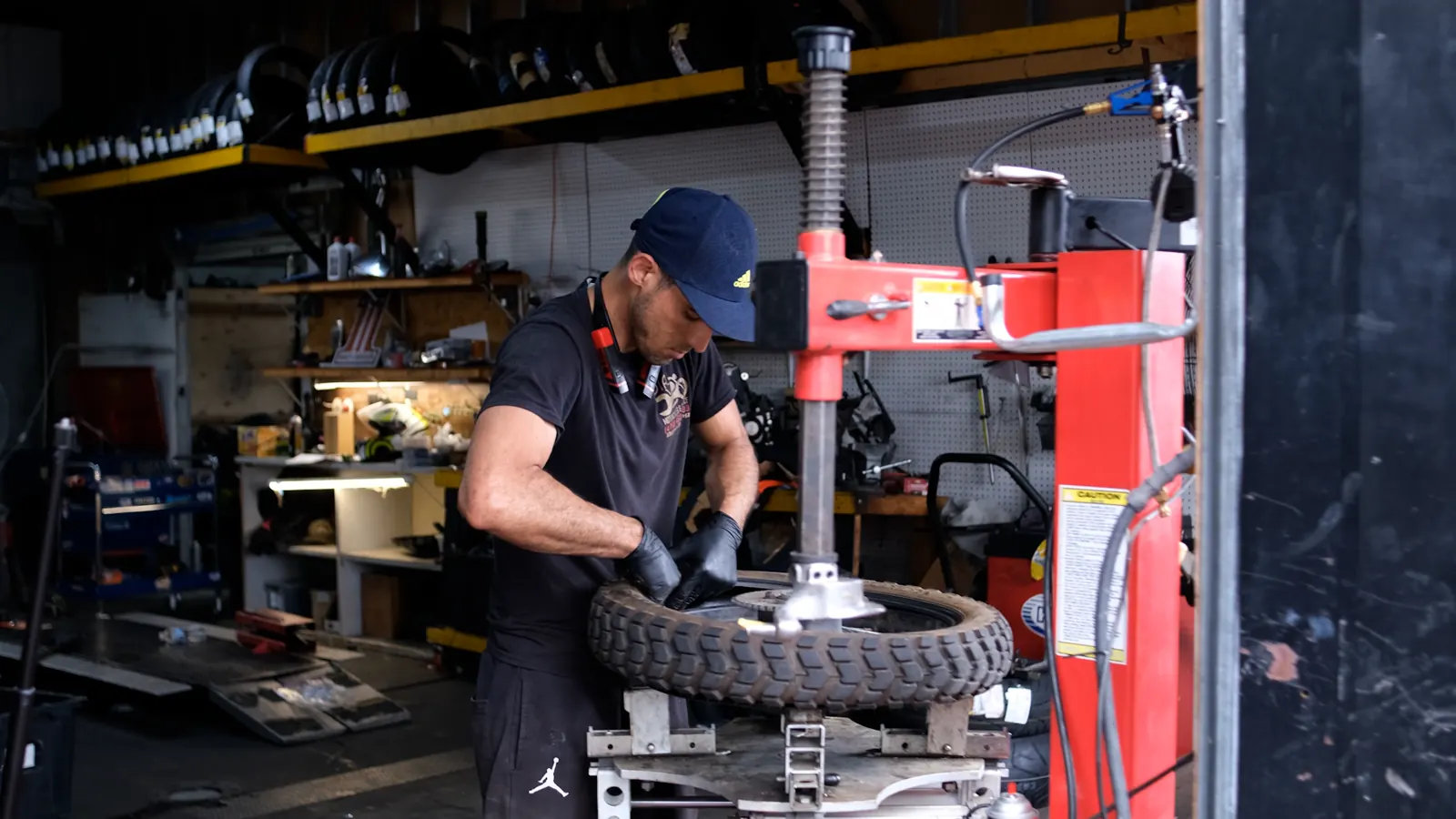
There’s no mystery to it. Here’s the whole process, in order, the same way it happens on every bike that comes through the door.
- You tell us the story. When it started, what it sounds like, what makes it worse. Riders are better witnesses than they think they are.
- We check the basics before anything else. Fuel, spark, air, battery health, fluid condition, tire condition, chain and sprocket wear.
- We reproduce the symptom if we can. A problem we’ve felt ourselves is a problem we can confirm we fixed.
- We open up the access. Bodywork off, tank up or off, whatever it takes to see the actual hardware.
- We diagnose to the root, not to the symptom. A fouled plug is a clue, not a cause.
- We call you with what we found, what it needs, and what it does not need. Then you decide.
- We do the work, torque everything to spec, and reassemble carefully.
- We test. Idle, throttle response, brakes, and a real ride when the repair calls for it.
- We hand it back and tell you plainly what to watch for next.
Step six is the one that matters most to us. You should never learn what happened to your bike at pickup. You should learn it on the phone, while you still have every option open, including telling us to stop.
THE SHORT VERSION
Parts are predictable. Labor depends on access. Access depends on your specific bike. That’s the entire breakdown, and any shop worth trusting will explain it the same way.
Why we won't quote it sight-unseen
We could throw out a number over the phone. Some places do. The trouble is that a phone number is a guess dressed up as a promise, and one of two things always follows. Either the guess was high and you overpaid for a small job, or the guess was low and somebody has to come back to you later with bad news. Neither one is a good day.
So we look first. We can absolutely tell you the likely paths on the phone — here’s the cheap outcome, here’s the involved outcome, here’s how we’ll know which one you have. That’s an honest conversation, and it costs you nothing but a text. You can see the full range of what we take care of here before you ever load the bike up.
One more reason to be careful about numbers: bikes are not cars. According to NHTSA crash data, riders don’t have crumple zones and airbags between them and a mistake. Brake work, tire work and steering-head work are not places to guess. We’d rather look twice and quote once.
What this looks like out in Douglas County
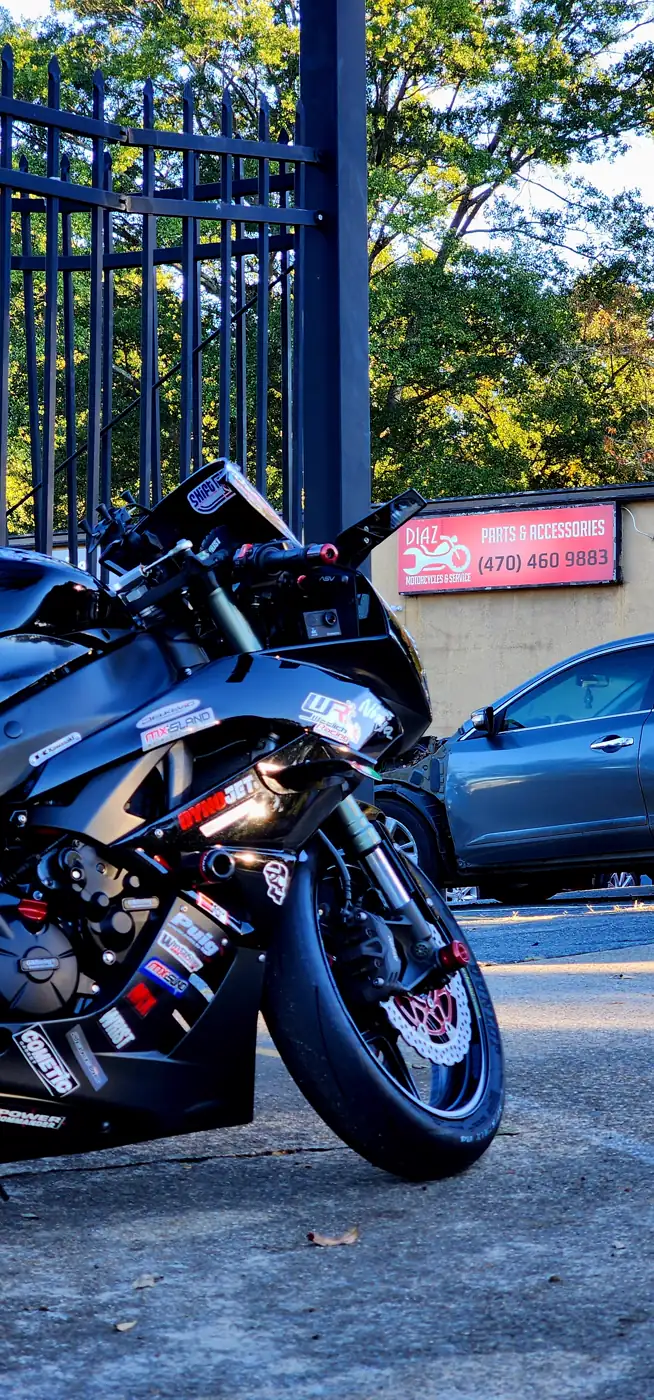
Douglas riders put real miles on. April through June is peak season around here, with group rides forming up, Sweetwater loops running all weekend, and the classic westbound push out US-78 and GA-5 toward Villa Rica, Carrollton and the Alabama line. Sweetwater Creek State Park pulls people in from everywhere with its mill ruins, its lake and its nine miles of trails, and half the bikes in that lot rode there the long way on purpose.
The roads shape the repairs. Out on Bill Arp and along the signalized retail corridors near Arbor Place and Fairburn Road, the pavement is polished slick and painted heavy, which gets genuinely greasy in rain or heavy pollen. That kind of surface is hard on tires and harder on brake feel. Riders out in Winston, among the pines near Clinton Nature Preserve, deal with a different diet: chip seal, gravel wash and shoulder drop-offs that beat up suspension and wheels over a season.
The garages differ too. A rider in Chapel Hills, with a proper garage overlooking the golf course, tends to bring us a bike that sat clean and dry. That said, a rider in Anneewakee Trails between the clubhouse and the pools is usually in the same shape. A rider parked outside an apartment along the I-20 corridor, under a cover, gets more moisture, more sun and more corrosion — and that shows up as electrical gremlins and stuck fasteners, which is time on the clock.
You’ve also got options nearby, and we’ll say that plainly. Southeast Motorcycle over on Spring Street is a genuine regional destination for Aprilia, Moto Guzzi, CFMOTO and Vespa. Xtreme Cycles of Dallas sits about thirty to forty minutes north on E Memorial Drive. What we hear most often from Douglas riders is that a Japanese sportbike doesn’t have an obvious home in the west metro, and that’s exactly the bike we live with every day.
One more thing, and it's the part riders thank us for later
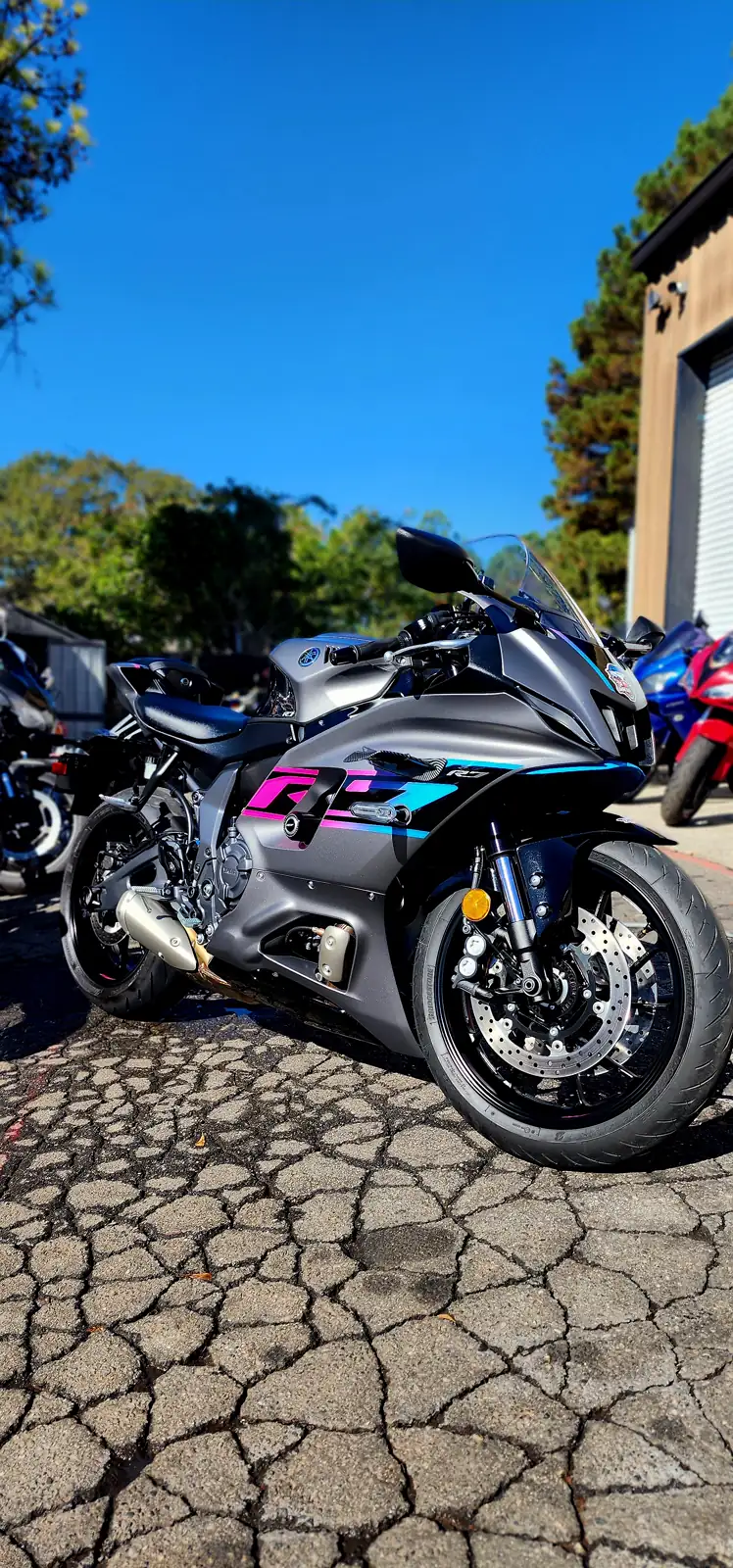
When your bike is already apart and on the lift, that’s the cheapest moment in its life to fix the next thing. Not to upsell you — the opposite. If the tank is off for fuel work and we can see a chafed wiring harness right there, telling you now saves you from paying for that same access twice. Riders don’t always love hearing it in the moment. Six months later, they get it.
So we’ll always split what we find into two lists: what the bike needs today to be safe and right, and what the bike will want later. You pick. There’s no pressure and no sad face if you only want list one. It’s your bike and your call, and we’d rather you come back happy than come back broke.
The pattern isn’t unique to Douglas, either. It’s the same story across the metro — you can see what Lawrenceville riders run into on the other side of town, and the way we scope what the work covers up in Kennesaw. Different roads, same honest math, and the same three ingredients behind any motorcycle repair cost Douglasville riders ask us about.
Getting here, and what you leave with
We’re at 847 Barnes Mill Road in Marietta, roughly twenty-eight to thirty-two miles out, and usually forty minutes to an hour depending on the day. Take Thornton Road and GA-6 north to the East-West Connector instead of running I-20 east to I-285 north. The interchange there is one of the worst congestion points in the state, and skipping it makes the trip feel half as long. Trailering a bike? Even more reason to take the calmer route.
What you leave with is the real point of all this. Not just a bike that runs, but a bike you understand. You’ll know what wore out, why it wore out, and roughly when the next thing is due. According to the Motorcycle Industry Council, riders keep bikes a long time, and the ones who keep them best are the ones who know what’s under the plastic.
That’s the feeling we’re after. You should be able to stand next to your bike at a bike night, or in a gas station lot on the way to Villa Rica, and explain exactly what got fixed and why. That’s not a customer. That’s an owner. And an owner who knows their machine rides a little taller than everybody else in the lot.
Questions Douglasville riders ask us
How long does a typical repair take?
Routine service and common wear items usually turn around fast, often the same day or next day once we have the bike and the parts. Bigger jobs depend on access and on part availability. We tell you a realistic window when we call you with the diagnosis, and we tell you right away if that window changes.
Is most of a repair parts or labor?
It depends entirely on the job. Wear items like tires, chains and brake pads lean toward parts. Diagnostic work, electrical chasing and anything buried under bodywork leans toward labor, because time is the real ingredient there. We break both out for you so you can see which one you’re actually paying for.
Does the type of bike change the work?
A lot. A cruiser with an open engine bay and a fully faired sportbike can need the same part and very different amounts of work to reach it. Older carbureted bikes and modern fuel-injected bikes also take different diagnostic paths. That’s why identical symptoms on two bikes can end up as two different jobs.
What if you find something else while you're in there?
We stop and call you before we touch it. You get told what we found, whether it’s a today problem or a later problem, and what happens if you wait. Then you decide. We never add work to a bike without your okay, and we never make you find out at pickup.
How do I avoid surprises altogether?
Bring the bike in early instead of waiting for it to get worse, and tell us the whole story, including anything you already tried. Small problems stay small when they’re caught early. Regular service also gives us a baseline, so the next time something feels off we already know what normal looks like on your bike.
Can you tell me anything before I bring it in?
Absolutely. Text us what the bike is doing and we’ll walk you through the likely causes, the quick outcome, the involved outcome, and how we’ll know which one you’ve got. That conversation is free and it usually saves everybody a trip.
We ride with and wrench for folks all over the west metro, so the trip in from Douglas County is a well-worn one. Riders come to us from Douglasville, Lithia Springs, Villa Rica, Austell, Hiram, Powder Springs, Mableton, Dallas, Winston, Smyrna, Temple, Fairplay and right here in Marietta. Some trailer the bike in, plenty just ride it in and make a morning of it, and a few pair the drop-off with a run out toward Sweetwater Creek. However you get here, the process is the same and the honesty is the same.
TEXT US ABOUT YOUR BIKE
If your bike is sitting in a Douglasville garage acting strange, send us a text and tell us what it’s doing. We’ll tell you what it likely is, what it likely isn’t, and whether it’s worth the ride up to Marietta before you load a single strap. No pressure, no runaround, and a straight answer either way.
470-460-9883Diaz Motorcycles and Service, LLC · 847 Barnes Mill Road, Marietta, GA 30062