Motorcycle Restoration Cost in Kennesaw: A Real Price Breakdown
A plain-English guide to what you're actually paying for — every line item, every price driver, and where the money really goes.
Plus, the reason motorcycle restoration cost in Kennesaw feels like a mystery is that nobody breaks it down for you. Meanwhile, you get one big number and you’re left wondering what half of it even pays for. In fact, a restoration bill isn’t one lump — it’s a stack of separate jobs, and once you can see the pieces, the whole thing stops feeling scary. So let’s open the hood on the pricing itself and go line by line, in plain words, so you know exactly what you’re buying before you spend a dollar.
One thing up front, so we’re honest with each other. We’re not going to slap fake dollar figures on this page, because a real number depends on your actual bike, and anyone who quotes you sight unseen is guessing. What we can do is show you every line item, tell you what makes each one cost more or less, and explain where the money is well spent. That way you walk in informed instead of hoping. Kennesaw riders reward transparency, and this is us being transparent.
The two halves of every restoration bill: parts and labor
Every restoration cost splits into two buckets: parts and labor. Parts are the physical stuff — gaskets, seals, tires, a battery, filters, cables, maybe a piston kit or a fender. Labor is the time it takes a skilled person to take things apart, fix them, and put them back together right. On an older bike, labor is usually the bigger half, because vintage machines fight you every step and nothing comes apart as easily as it did when it was new.
Here’s the part that surprises people. A cheap part can still cost a lot to install if it’s buried deep in the bike, and an expensive part can be quick to bolt on. So the price of a repair isn’t just the price tag on the box. It’s the box plus the hours. When we quote, we tell you both, so you’re never wondering why a small-looking part came with real labor behind it.
Line item one: the mechanical revival
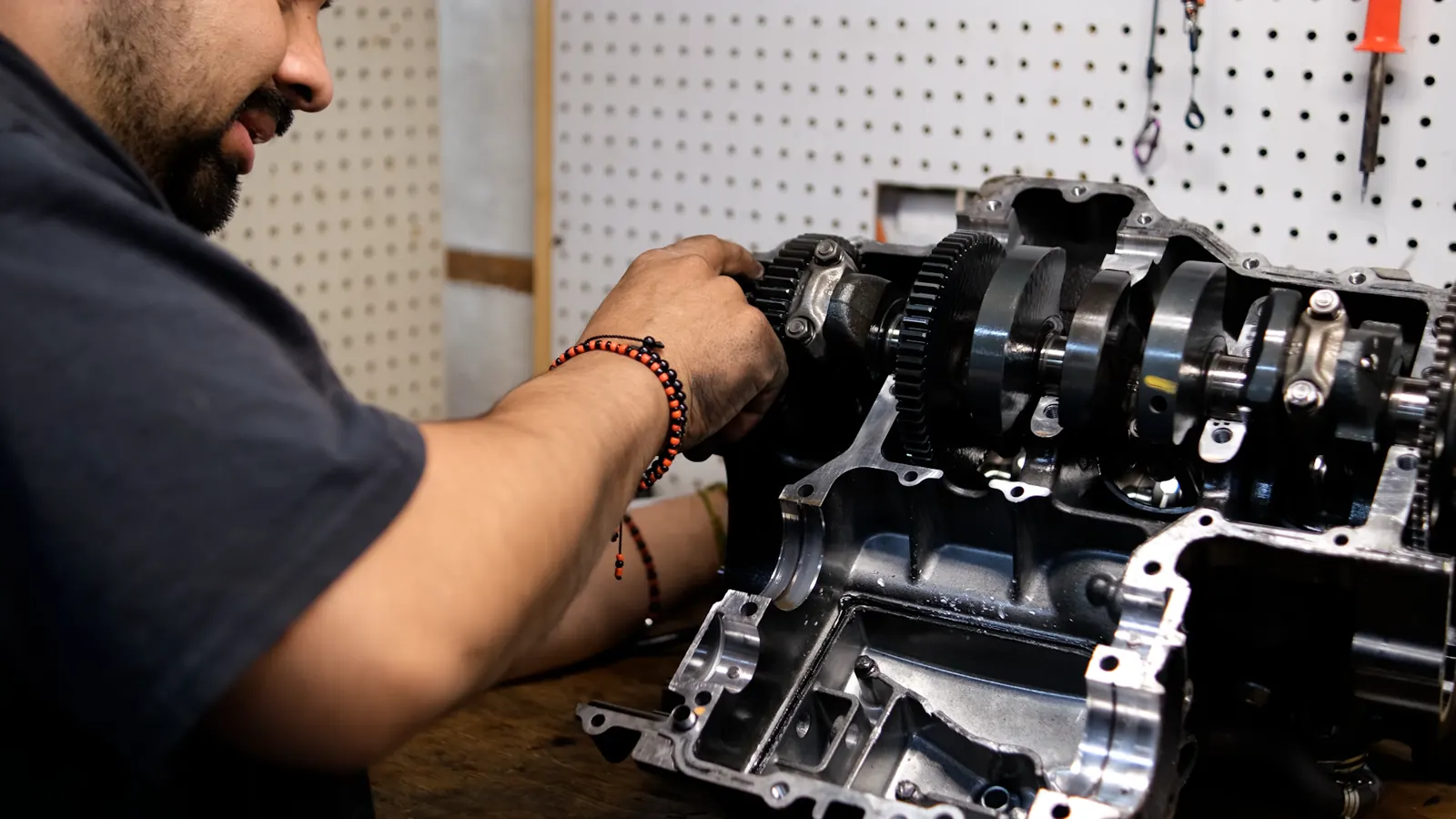
This is the foundation of any restoration, and it’s the part you should never skip. It covers the fuel system — draining old varnish, cleaning or rebuilding carbs or injectors, checking the tank for rust — plus a fresh battery, all new fluids, and a full brake and tire service. This is what makes the bike safe and reliable. On a bike that sat for years in a Kennesaw garage, this line does the heavy lifting, and it’s worth every penny because it’s the difference between a bike you can trust and a bike you just hope about.
What moves this line up or down? Mostly how the bike was stored and how long it sat. A garage-kept bike from Legacy Park needs less than one that lived outside near KSU under a cover. Carbureted bikes with multiple carbs take more time to clean than a single-carb machine. And if the tank rusted inside, that adds a cleaning or lining step. We spell all of this out after we look, so there are no surprises.
Line item two: the engine, if it needs it
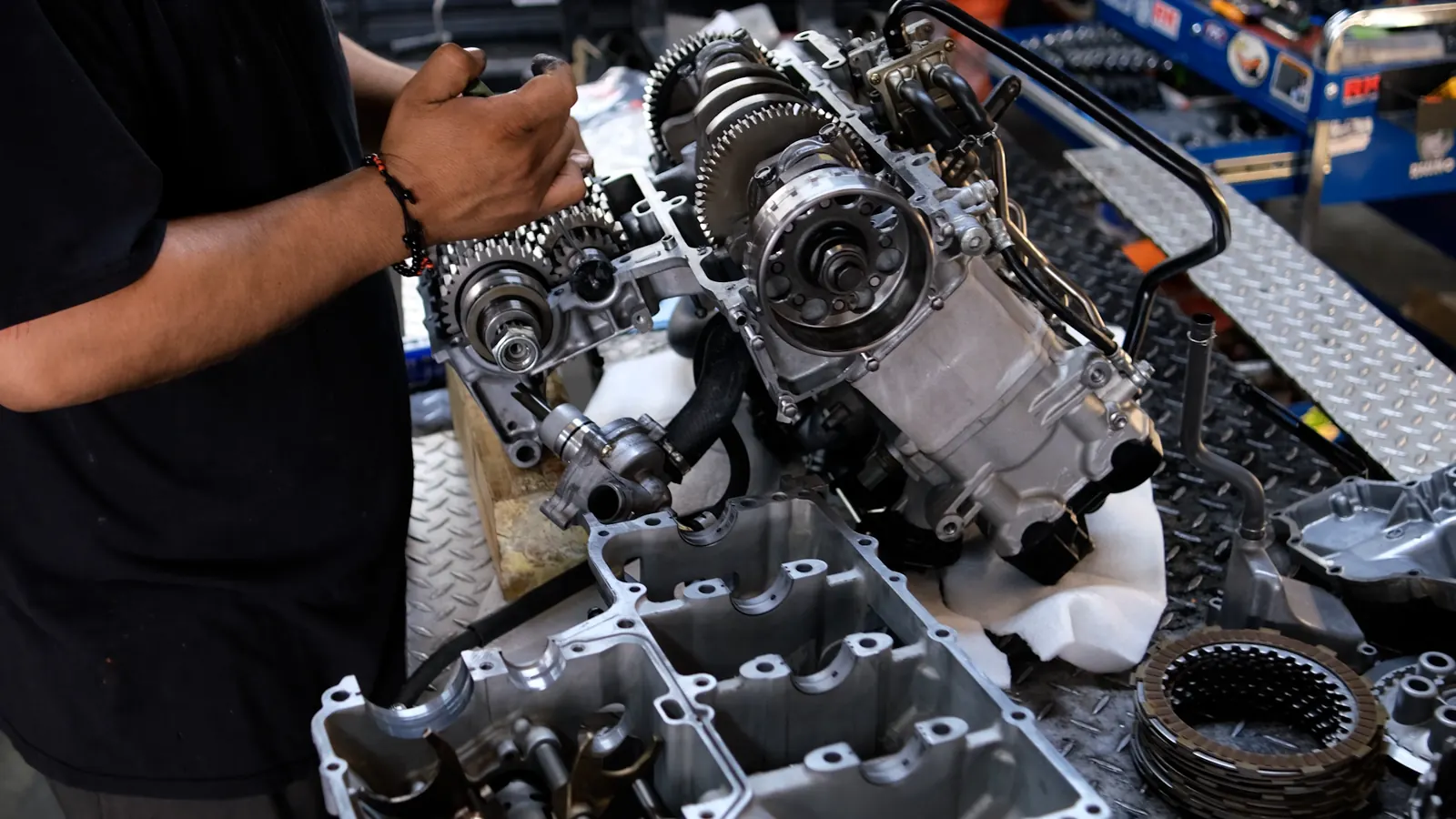
Not every restoration needs engine work, and we’ll tell you honestly if yours doesn’t. But when an engine is tired, worn, or was run low on oil, this becomes the biggest single line on the bill. A rebuild can mean new rings, seals, bearings, a valve job, or a full tear-down and reassembly. It’s precise, time-consuming work where every measurement matters, which is exactly why it costs what it does. Done right, it buys you thousands of trouble-free miles.
WISH YOU KNEW
A leak-down or compression test up front tells us whether you even need engine work — before you pay for a teardown.
That callout can save you real money. Before we assume your engine needs a rebuild, we test it, because plenty of engines that sat are actually fine inside once the fuel and fluids are sorted. There’s no reason to pay for a teardown on a healthy motor. We diagnose first, then decide together whether the engine line belongs on your bill at all. That’s the kind of thing a sales-floor dealer isn’t set up to do for a vintage project.
Line item three: paint, chrome, and cosmetics
This is where a bike goes from running to proud, and it’s the most flexible line on the whole bill. It can be as small as a touch-up and a good detail, or as big as a full repaint with new decals and rechromed parts. Our in-house paint booth means we can do a single blended panel or the whole bike, and we can match original colors or take you a custom direction. Chrome is its own animal — some pieces polish back to life, and badly pitted ones need to be re-plated, which costs more.
The reason this line swings so much is that it’s driven entirely by how far you want to go and what shape the finish is in. A tank with light swirls just needs paint correction. A tank with a deep chip needs a blend or a repaint. Faded plastics can be restored; cracked ones get replaced. We help you spend here on what you’ll actually notice and enjoy, and skip what you’ll never look at.
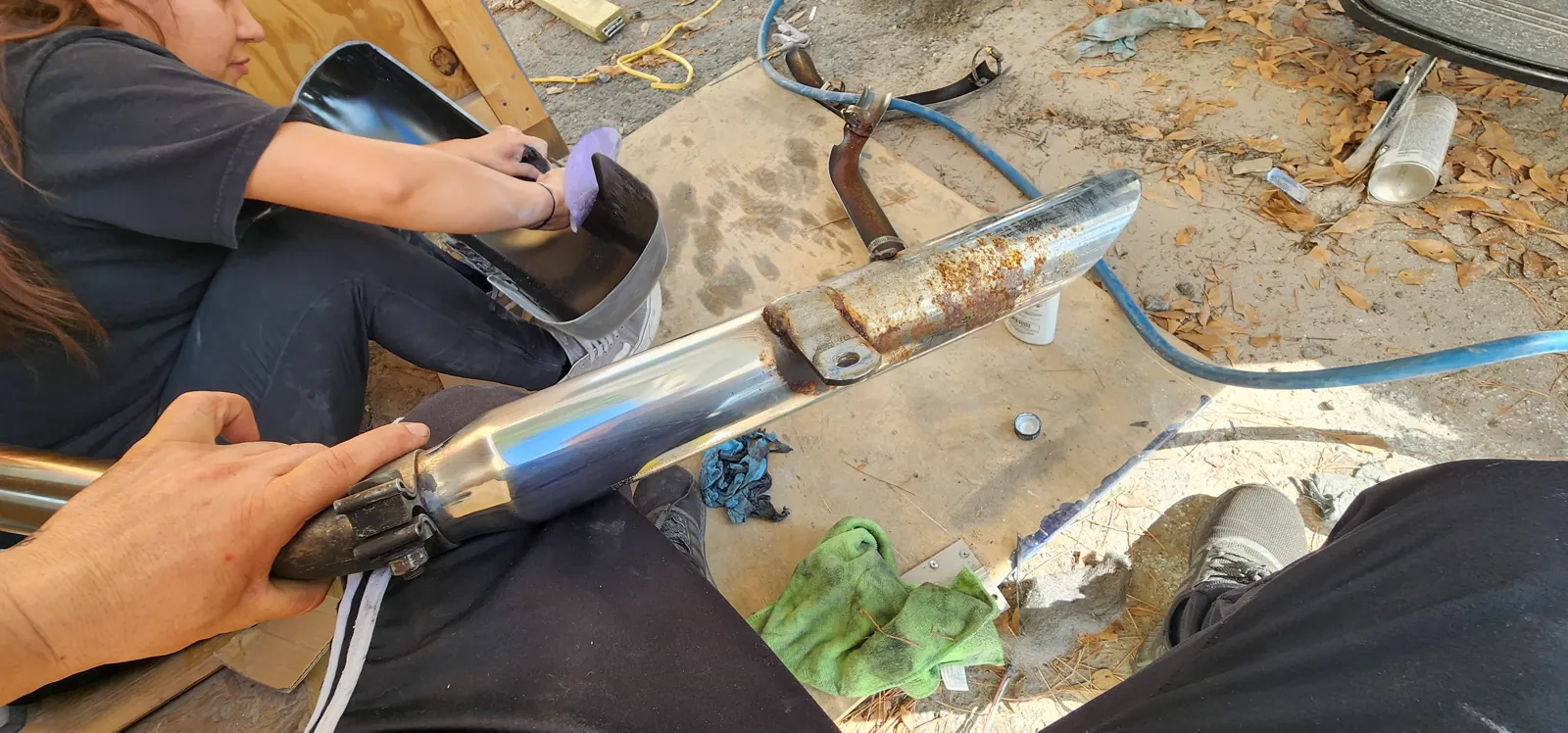
One more thing about the cosmetic line: it’s the one most riders overspend on out of excitement, and the one we most often talk people down from. You do not need every bracket refinished to a mirror if you’ll never see the underside of the bike. We help you put the paint and polish where your eyes actually land — the tank, the fenders, the pipes — and skip the money you’d never notice. That’s how a refresh stays a refresh instead of quietly becoming a frame-off.
Line item four: parts sourcing and availability
Here’s a cost driver most people never think about until it bites them: how easy your parts are to find. A common Honda, Yamaha, Suzuki, or Kawasaki from a popular year has parts everywhere, and they’re cheap. A rare model, an oddball trim, or a bike where the maker no longer supports it can mean weeks of hunting and premium prices for a single piece. That’s not a shop markup — that’s just what a scarce part costs when only a few exist.
This is also where factory-correct restorations get pricey. If every part has to match the original spec for a collector-grade result, sourcing turns into a treasure hunt. If you’re open to a quality aftermarket or a tasteful custom part, you often save real money and the bike still looks fantastic. We’ll lay out both roads before you commit, so the choice — and the cost — is yours.
It’s worth knowing that a rare part can stall the whole project, not just add to the bill. If your bike is waiting weeks on a single piece, that timeline is part of the real cost too — your bike sits in our bay instead of your garage. That’s why we sort out parts availability early, before we’re deep into the teardown. Nobody likes a restoration that’s 90% done and parked waiting on one back-ordered fender.
So what actually drives your total?
Pull it all together and a handful of factors set your final number. None of them are a mystery once they’re named, and every one of them is something we can see and explain when we look your bike over. Here’s the honest list of what pushes a restoration cost up or down in Kennesaw.
- Scope — a light revival, a full refresh, or a frame-off rebuild.
- Condition — rust, seized parts, and rot all add labor hours.
- Storage history — garage-kept versus years outdoors under a cover.
- Engine — leave it sealed, freshen it, or fully rebuild it.
- Parts availability — common and cheap, or rare and slow to source.
- Paint and chrome — a touch-up, one panel, or the whole bike.
- Originality — factory-correct sourcing versus a clean custom build.
HEADS UP
The single biggest price driver is condition — and the only way to price condition honestly is to see the bike.
That’s why we never give a real restoration number over the phone. Two bikes that look identical in photos can quote hundreds or thousands apart once we see the rust, the seized bolts, and the tank inside. Guessing high protects the shop and stings you; guessing low turns into an ugly surprise later. We’d rather look, tell you the truth, and give you a number that holds up.
A restoration quote isn't a mystery. It's a stack of line items — and you deserve to see every one.
Once you can see the pieces, you can make smart calls. Not sure how deep to go? Our guide to restoration tiers and what each one includes pairs perfectly with this breakdown. And if the bike’s been parked a long time, knowing what deteriorates while it sits tells you which line items to expect before you even call.
Getting a real number for your Kennesaw bike
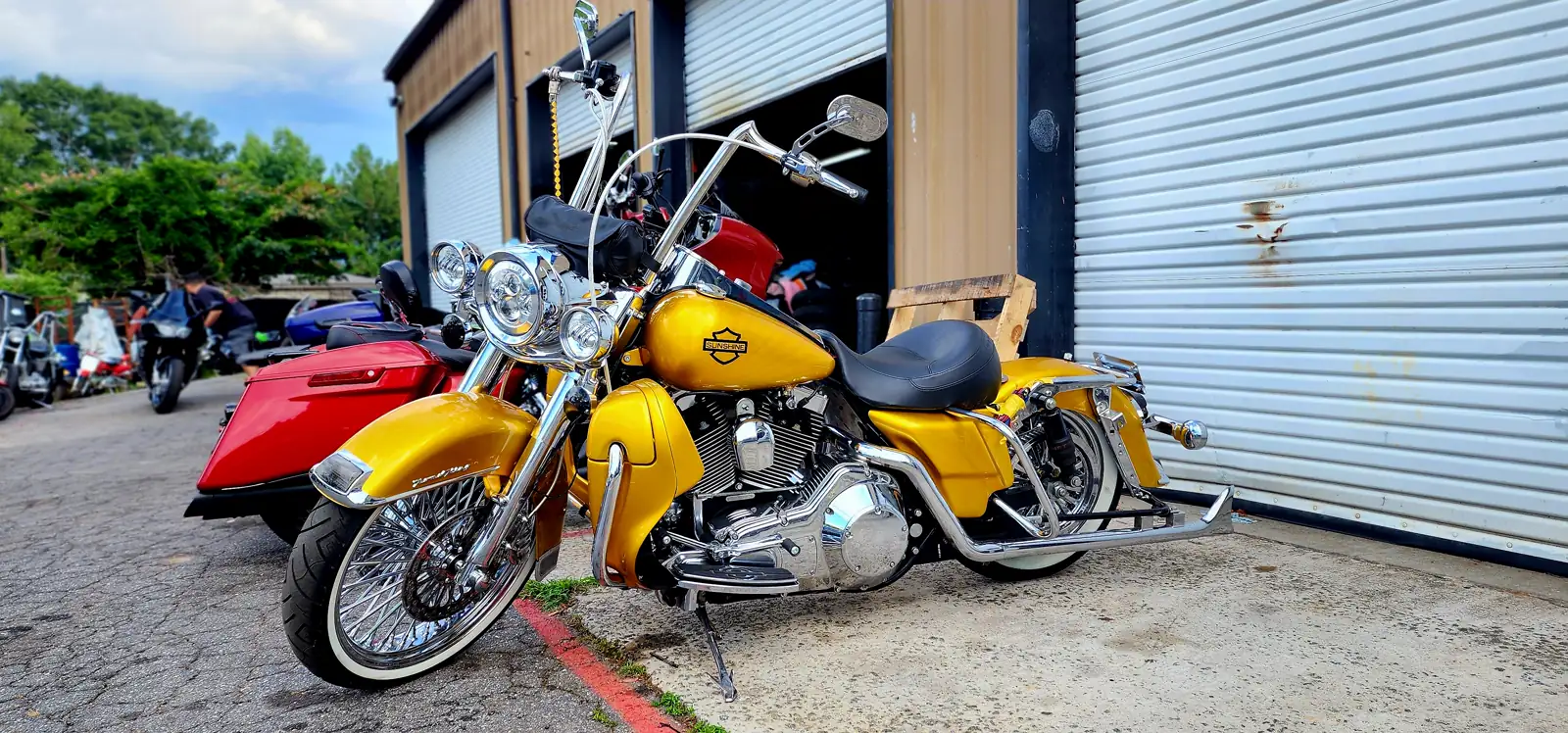
The whole point of a breakdown is so you can plan, and the fastest way to turn this into your number is to let us see the bike. We handle all makes under one roof — your Brookstone bagger, your KSU-era sportbike, and that vintage project all in one place — and we have the paint booth and engine bench to do every line item ourselves. That’s rare in this town, and it means one quote instead of three from three different shops.
Text us a few photos, tell us how long the bike sat and where, and we’ll walk you through which line items your project actually needs and roughly what they take. If you’re still deciding whether it’s worth it at all, our take on restore versus sell helps. And we offer pickup and delivery to Kennesaw, so getting a real quote never even costs you a drive.
Questions Kennesaw riders ask us
Why won't you just tell me a price over the phone?
Because a real restoration number depends on condition, and condition is invisible in a phone call. Two bikes that look identical can quote thousands apart once we see the rust, seized parts, and the tank inside. We’d rather look, tell you the truth, and give you a number that holds up than guess high and sting you.
What's the biggest cost in a restoration?
It’s usually labor, especially on older bikes where nothing comes apart easily. If the engine needs a rebuild, that becomes the single biggest line. If it doesn’t, cosmetics like paint and chrome are the most flexible cost. We break out parts and labor separately so you can see exactly where the money goes.
Can I lower the cost by skipping some line items?
Yes, and we’ll help you prioritize. The mechanical revival that makes the bike safe should never be skipped, but cosmetic work like a full repaint or rechroming is optional and can wait. Many riders do the safety and mechanical lines first, then add cosmetics later. You control the scope.
Why do rare-bike restorations cost more?
Parts availability. A common Honda or Yamaha has cheap parts everywhere. A rare model can mean weeks of hunting and premium prices for a single piece, especially for a factory-correct result. If you’re open to quality aftermarket or custom parts, you often save real money. We’ll show you both roads before you commit.
Does my engine automatically need a rebuild?
No. We test the engine first with a compression or leak-down check, because plenty of engines that sat are fine inside once the fuel and fluids are sorted. There’s no reason to pay for a teardown on a healthy motor. We diagnose before we assume, so you don’t pay for work you don’t need.
Do you handle everything, or do I need multiple shops?
Everything. We’re all-makes with an in-house paint booth and engine bench, so mechanical, paint, chrome, and assembly all happen under one roof. That means one quote and one point of contact instead of coordinating three shops. We offer pickup and delivery to Kennesaw too, so it never costs you a drive.
We price and restore bikes for riders all over Kennesaw. Projects come from Legacy Park, Ridenour, and Pinetree Country Club, from Brookstone and Summerbrooke, and from the apartment corridor near KSU off Chastain Road. Whether your bike is stored near Town Center at Cobb, out by Kennesaw Mountain, or along Old 41 and Stilesboro Road, you’re an easy run — or a free pickup — from our shop on Barnes Mill Road in East Cobb.
TEXT US FOR A REAL, HONEST QUOTE
Want your restoration cost broken down into real line items instead of one scary number? Text us a few photos, tell us how long the bike sat and where it lived, and we’ll walk you through exactly what your project needs and roughly what it takes. We’re all-makes with an in-house paint booth, and we offer pickup and delivery to Kennesaw. No sales script, just transparent pricing.
470-460-9883Diaz Motorcycles and Service, LLC · 847 Barnes Mill Road, Marietta, GA 30062