Motorcycle Running Lean Dallas — What to Check
Spitting on light throttle, running hot, popping on the way down through the gears? Here is what is really going on, and how a good shop finds it.
The morning ride out of Paulding starts the same way for most folks. Even so, you back the bike out of the garage, thumb the starter, and point it toward Dallas Highway before the sun is fully up. Some mornings it just goes. Lately, though, something feels off. What’s more, the engine spits on light throttle, it runs hotter than you remember, and it pops on the way down through the gears. If you have tapped out motorcycle running lean Dallas into your phone at a red light, you already know that itch. After that, Something changed on your bike, and you want the why before you start chasing it.
The short answer first
Also here is the direct answer, no runaround. A lean motorcycle is one that is pulling in too much air and not enough fuel for a clean burn. The mix inside the cylinder is off. Instead of a full, even flame, you get a thin, hot one. That thin burn is where the spitting, the extra heat, and the popping all come from. The good news is simple. Lean is a symptom, not a death sentence for your engine. Almost every cause behind it is something a good shop can find and fix in a day.
You feel a lean bike more than you see it. On a steady cruise down GA-92 it might surge or hunt, speeding up and slowing a hair on its own like it cannot make up its mind. Roll on the throttle and it hesitates for a beat before it pulls. At a stop it may idle high, hang the revs after you blip it, or stall for no clear reason at all. The engine and the pipes run hotter, so your right leg feels it in slow traffic. And on a closed throttle, coming down a hill or easing off for a light, you hear that snap-crackle-pop out the exhaust. None of that is in your head, and none of it means you did anything wrong.
What actually makes a bike go lean
So what drives the work? A handful of causes account for most lean bikes, and it helps to know them from most common to least. Once you can name the likely culprit, the whole thing stops feeling like a mystery and starts feeling like a checklist.
- An air leak. This is the number one cause by a mile. A cracked intake boot, a loose clamp, a torn vacuum line, or a tired gasket lets extra air sneak in past the throttle. The bike never planned for that air, so the mix goes thin.
- A restriction on the fuel side. Dirty injectors, a weak fuel pump, or a clogged filter all choke the fuel down. On older carbureted bikes, gummed-up jets from stale fuel do the same thing.
- A pipe or filter swap with no tune. Bolt on a slip-on, a full exhaust, or a high-flow air filter and you move a lot more air. Trouble is, nobody told the fuel map. More air, same fuel, hello lean.
- A bad sensor reading. A tired oxygen sensor or a flaky intake-air sensor feeds the computer wrong numbers, and the computer trims fuel the wrong way.
- Old, varnished fuel. A bike that sits all winter grows sticky, thin gas that will not burn right until the system gets flushed and fed fresh.
Notice that most of those are cheap parts and simple fixes once you know which one it is. That is the whole game. Finding the cause is the hard part, not curing it.
That’s the common version. The real story is a little different. On a lot of modern fuel-injected bikes, the factory ships them running a touch lean on purpose. It helps them pass emissions rules with room to spare. So your bike may have rolled off the line already a little hungry for fuel, sitting right on the edge. Then you add a free-flowing filter, or the weather turns cool and dense, or a clamp works loose over a few thousand miles of Cedarcrest Road washboard, and that small nudge tips a borderline bike into a clearly lean one. It was not one big failure. It was a bike that was born close to the line and finally crossed it.
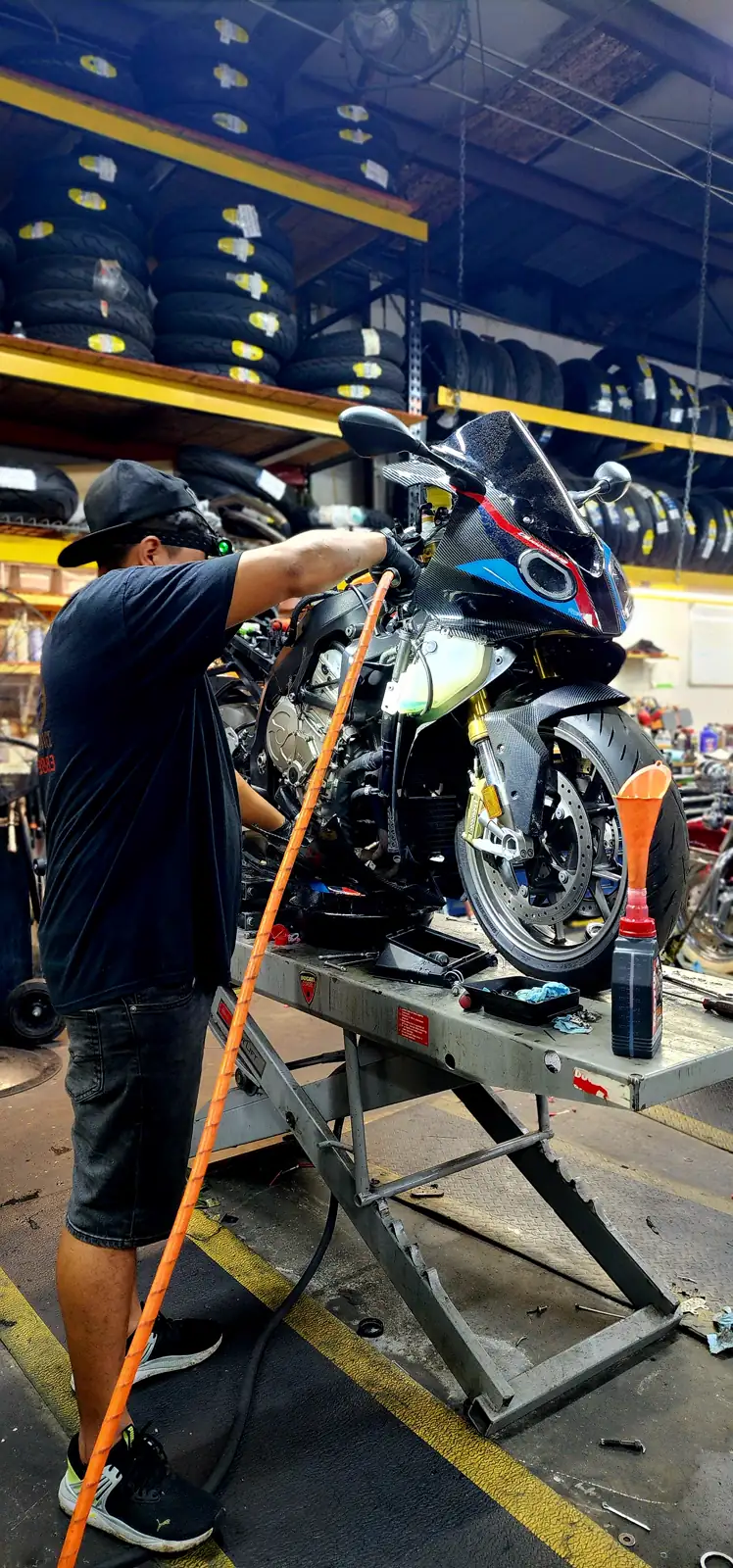
What we check, and why the dyno matters
Here is where a real shop earns its keep. Most places will read the trouble code, clear it, and hand the bike back with a shrug. We would rather show you the problem on a screen. Diaz runs an in-house dyno, and that changes everything about how we chase a lean condition. A dyno is a big steel drum that your rear wheel spins against while the bike is strapped down safe and still. As the engine pulls, the dyno reads exactly how the bike behaves across the whole rev range, and a sniffer probe in the exhaust reads the air-fuel mix in real time. We do not guess that the bike is lean. We watch it go lean, right there on the monitor, at the exact throttle and rpm where it happens. Every motorcycle running lean Dallas sends our way gets that same honest read: strapped down, sniffer in the pipe, cause on the screen.
That is the difference between a parts-swap guess and a fix. Once we can see where the map is thin, we correct it. Depending on your bike, that means an ECU flash that rewrites the factory fuel table, or a Power Commander that adds fuel piggyback-style where the engine wants it. Either way, we tune to your actual bike, with your actual pipe and filter, in the air we actually ride in here. That is what separates a canned download from a custom map. Most of the multi-line shops around Cobb Parkway send this work out or skip it. We do it under our own roof, and you can read what separates a good shop if you want the longer version.
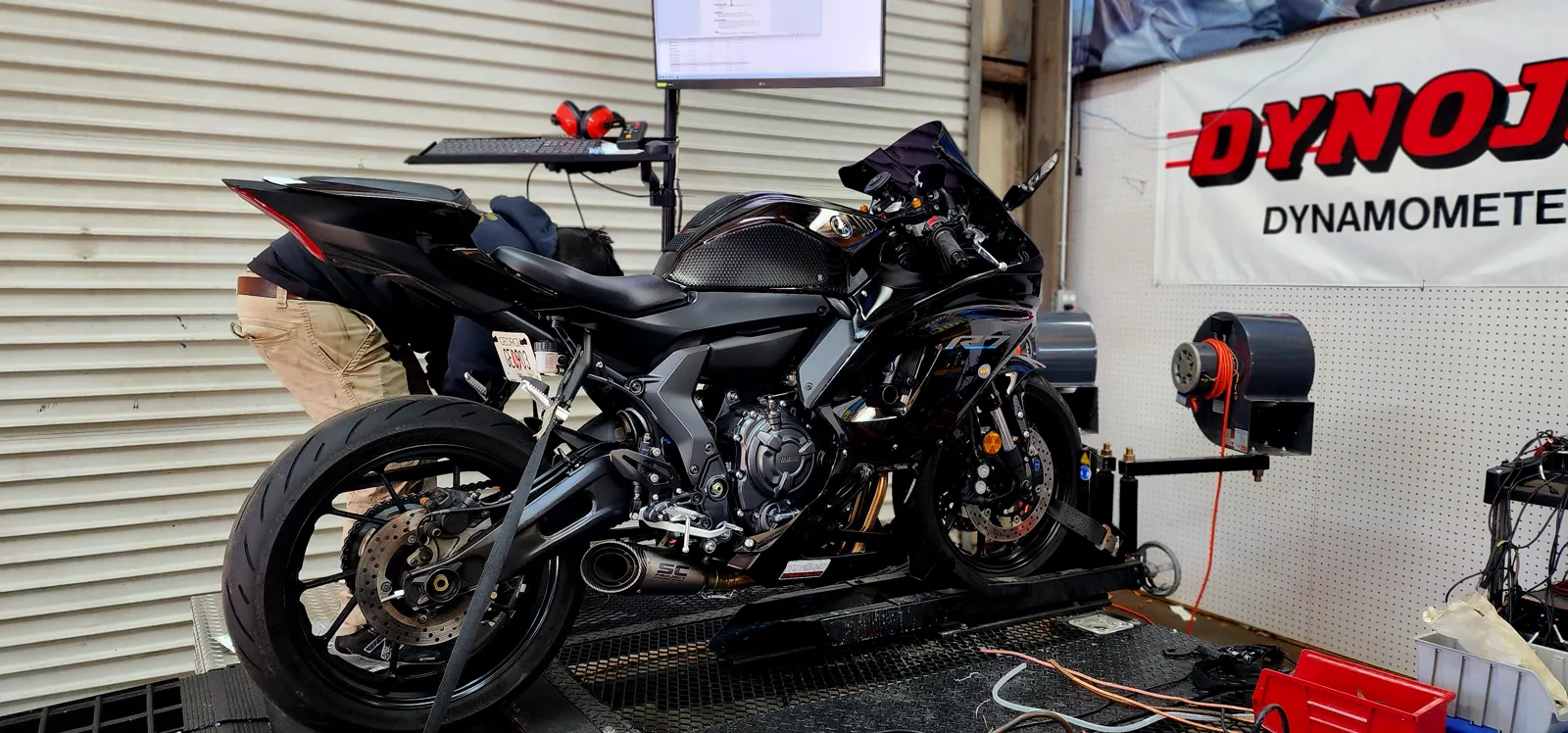
None of that means a lean bike always needs a full tune, either. Sometimes we sniff it out on the dyno and the answer is a cracked boot you replace for the cost of a nice lunch. We tell you the smallest fix that solves it, not the biggest bill we can write. If the cause turns out to be a bolt-on that begs for real mapping, that is how we handle that job. And if you want to nerd out on the whole menu, here is the full list of what we do.
Mistakes that make it worse
Before you turn a wrench in the garage, know the traps. We have met a lot of sharp DIY riders in Paulding, folks with a three-car garage and a real toolbox, and even they fall into these. A lean condition is easy to mask and hard to cure, so people paper over it and the bike keeps cooking.
- Do not just crank the idle up to hide the stall. That treats the gauge, not the engine.
- Do not dump fuel on top of an air leak. Fix the leak first, or you are chasing your own tail forever.
- Do not add a loud pipe and skip the tune. That is the single most common way a healthy bike goes lean.
- Do not ride it hard and hot for a whole season. A lean engine under load can ping, and long-term pinging can hurt a piston.
- Do not grab a random internet map that says it fits your model. Your bike, your pipe, and our air are not the same as some stranger’s, and a wrong map can push you further from the mark.
Is it safe to ride like this?
Straight talk, because this matters. A mild lean condition is usually fine for short hops to get it looked at. If the bike just pops on decel now and then, idles a little high, and pulls without a big stumble, you can ride it gently to the shop. Keep it cool, skip the long wide-open pulls, and do not let it sit and bake in traffic.
When is it not safe? If the bike hesitates hard enough to stall on a roll-on, that is a problem in the wrong spot. Picture a left turn across US-278 or a gap on Dallas Highway, both congestion-heavy suburban arterials with constant left-turn conflicts, and a bike that coughs and dies mid-move. That is the highest-risk moment on two wheels, and lane splitting is illegal in Georgia, so there is no wiggle room to escape. If you feel real hesitation, heavy overheating, or any pinging or knocking under load, do not ride it. Trailer it in. A DOT helmet is the law for everyone on the bike anyway, and a fresh rider course like the MSF Basic RiderCourse never hurts. When in doubt, let us come to it.
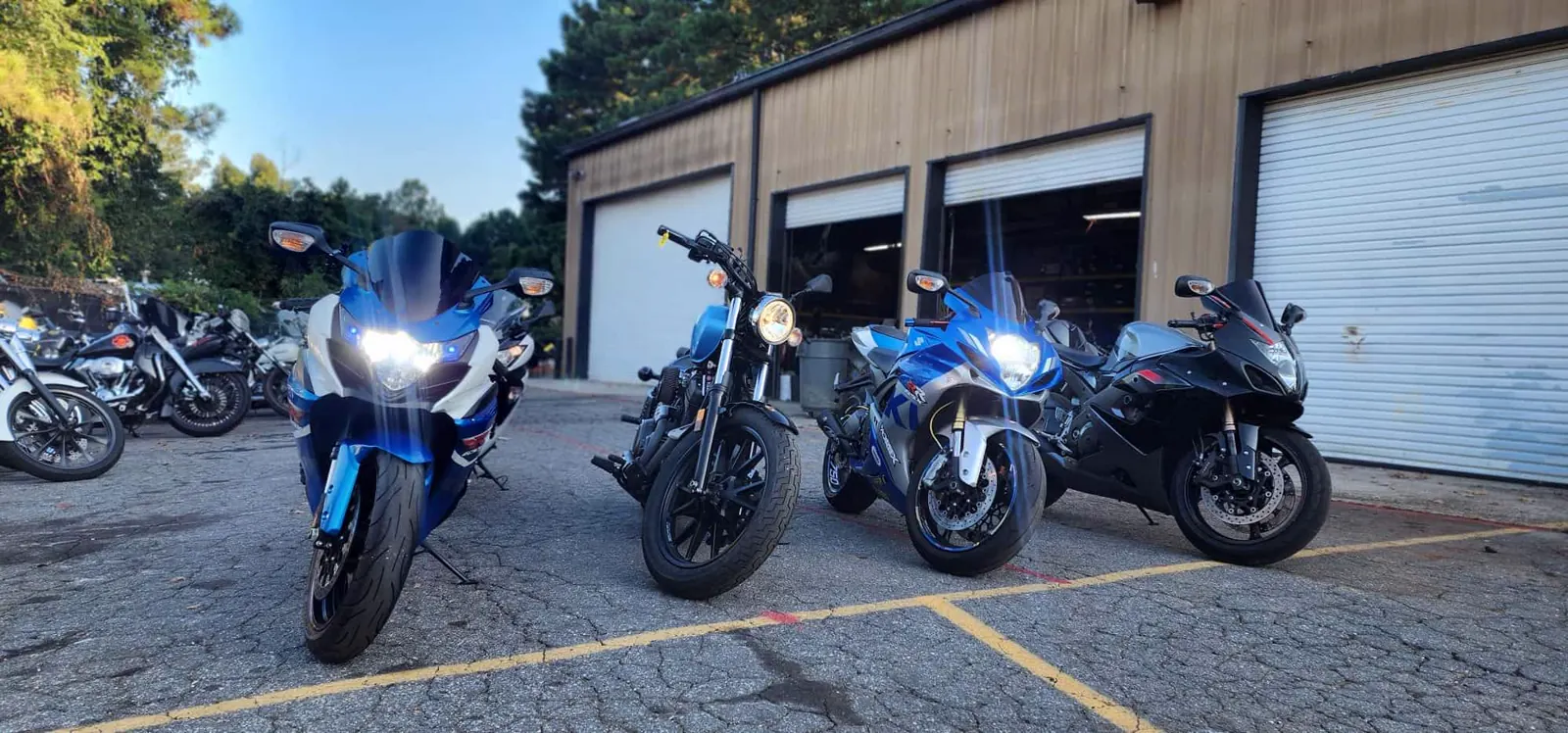
Why this hits Paulding bikes especially
Paulding is a garage county, and that cuts both ways. Almost every bike here lives inside, tucked in a two- or three-car garage in a neighborhood like Seven Hills, the big master-planned community up north with its thirteen-acre amenity park, clubhouse, ten tennis courts, and that water slide the kids love. Others park in Cedar Mill under those mature trees, or in an established Paulding County subdivision like Hickory Creek. Garaged sounds great, and it is, for paint and chrome. But the bigger local enemy is not theft. It is neglect. A bike ridden only fifteen hundred miles a year grows varnished fuel, a lazy battery, and a system full of sticky gum. That gum starves the fuel side and, you guessed it, leans the bike right out.
Then there is the road surface. Paulding is a construction county in fast growth, so mud tracking, gravel spill, and constant washboard on the collectors will shake a clamp loose over time and open the air leak that starts the whole story. The core rider here is a weekend backroad rider who works east in Cobb all week and lives for Saturday morning. Maybe you run the Quad County Figure Eight, that great loop that kicks off at US-41 and Black Acre Trail in Acworth, drops down Dabb Bridge Road to GA-61 past Burnt Hickory Park, the Sheffield WMA, and High Shoals Falls. A lean stumble that you shrug off in stop-and-go traffic becomes a real annoyance out there, right when you finally have open pavement and a clear head. Cruise past Pickett’s Mill Battlefield State Historic Site or roll near the old Shiloh Trail Covered Bridge and you want the bike breathing clean, not hunting and popping the whole way.
One rider off GA-92 put it better than we could. He came to us after a friend of ours helped him, and he said his bagger had felt “nervous” for a year, like it was always about to stumble, and he had just learned to ride around it. We strapped it down, found a hairline crack in an intake boot, sealed it, and re-checked the mix on the dyno. He texted later that the bike finally felt “honest” again. That is the word that stuck with us. A lean bike lies to you a little, and a tuned one tells the truth.
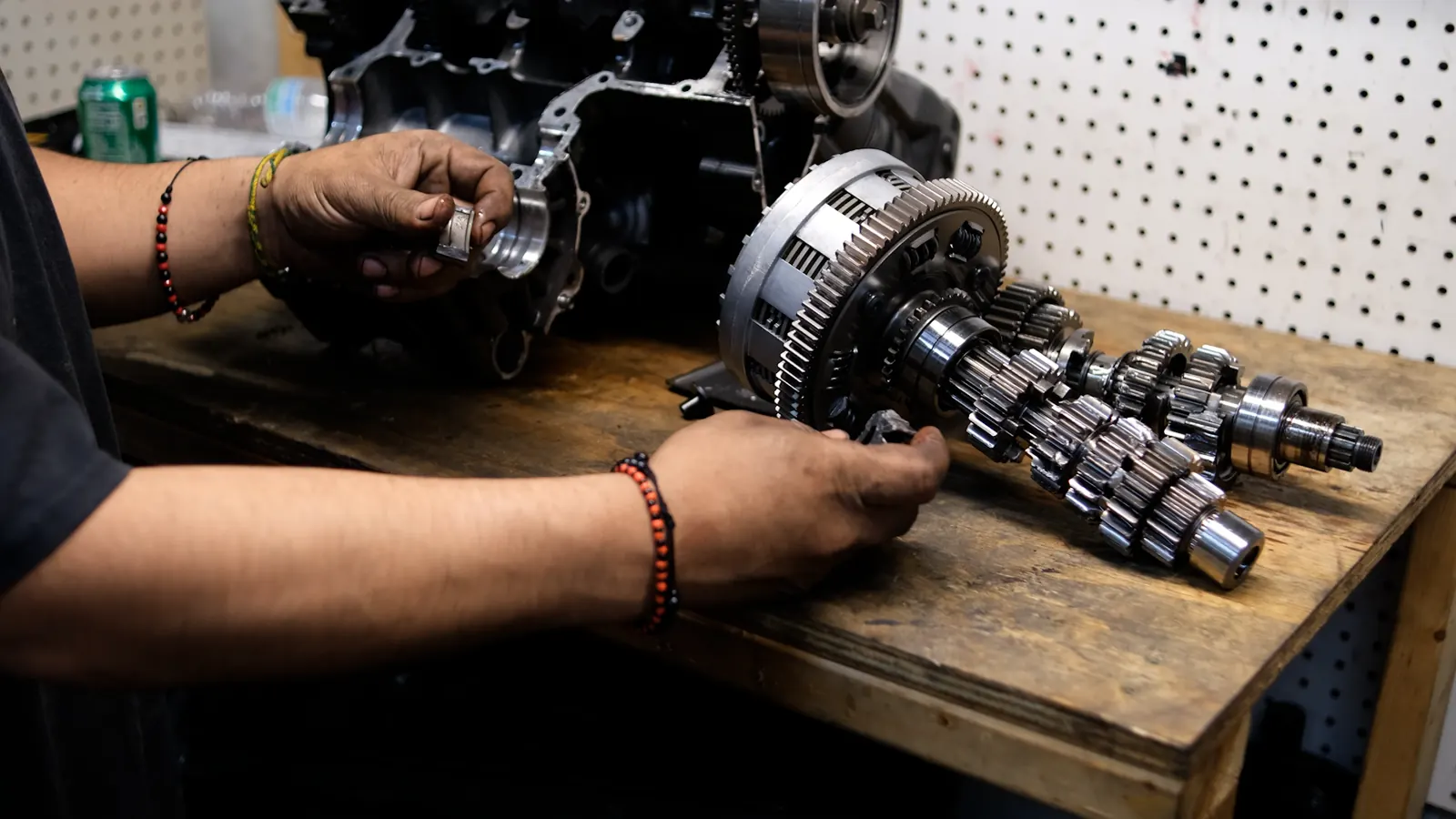
You do have local options, and we will always be square about that. Xtreme Cycles of Dallas over at 229 East Memorial Dr is a full-service shop that handles Harley work, open Tuesday through Saturday, and for basic service staying close to home makes sense. But there is no full-line dealership, no dyno, and no in-house ECU flash anywhere in Paulding County, which is why riders already drive out for the deeper work. We sit a straight shot east, roughly twenty-four to twenty-eight miles, running GA-120 and Charles Hardy Parkway to Dallas Highway through West Cobb into Marietta. In a county where most folks commute out anyway, forty minutes is not the objection. A wasted trip is. So we make sure the trip is worth it. If you happen to be north of us, here is the Gainesville side of things too.
What it feels like once it is fixed
Here is the payoff, and it is a good one. A properly sorted bike pulls clean from the bottom with no dead spot, idles steady at the light instead of hanging or stalling, and runs cooler on your leg in traffic. The decel pop settles down. The surge on the highway goes flat and smooth. You stop riding around the bike and start just riding it. That steady, honest feel is the whole point of chasing a lean condition down instead of living with it.
And while it is on the lift, it is a smart time to check the stuff garaged bikes ignore, like a battery on its last legs and tires that look brand new but have quietly dry-rotted from sitting. Dunlop’s technical resources spell out how age, not just tread, decides when a tire is done. Fix the mix, freshen the basics, and your bike is ready for the next clear Saturday. That is the feeling we want you to leave with, fully in control of a machine you understand again.
A lean bike lies to you a little. A tuned one tells the truth.
Questions Dallas riders ask us
What causes a motorcycle to run lean?
Most of the time it is an air leak, like a cracked intake boot or a loose clamp letting in extra air. After that comes a fuel restriction such as dirty injectors or old gummed fuel, a pipe or filter swap that never got a matching tune, or a bad sensor feeding the computer wrong info. We sort out which one on the dyno.
What happens if I just ignore it?
A lean engine runs hot, and heat is what does the damage over time. Mild cases mostly cost you smoothness and comfort. But a bike that pings under load for a whole season can eventually hurt a piston, and that is a much bigger job than the cheap fix you started with. Sooner is always easier.
How do you find the actual cause?
We strap the bike to our in-house dyno and read the real air-fuel mix while the engine pulls across the whole rev range. That shows us exactly where and when it goes lean, so we chase the true cause instead of throwing parts at it. Then we fix the source, whether that is a boot, a sensor, or a fuel map.
Could it be something other than lean?
Yes, and we always rule that out. A rough idle, popping, or hesitation can also come from ignition trouble, a weak coil, a clutch or fueling glitch, or even a dragging brake making the engine work harder. The dyno and a proper inspection tell the difference. We do not assume it is lean just because it feels like it.
Is it safe to ride my bike while it is running lean?
A mild case is usually fine for a short, gentle ride to the shop. Keep it cool and skip the hard pulls. But if it hesitates enough to stall on a roll-on, overheats badly, or pings under load, do not ride it. A stall in the middle of a turn across a busy road is the risk we want you to avoid. When in doubt, trailer it and we will handle the rest.
Do I need a full tune to fix it?
Not always. Sometimes the whole fix is a cracked boot or a fresh fuel flush, and we tell you that. A full custom map only makes sense when you have bolt-ons like a new exhaust or filter that changed how the bike breathes. We recommend the smallest fix that truly solves it, never more.
We take care of riders all across Paulding County and the western arc of metro Atlanta, from Dallas and nearby Hiram over to Powder Springs, Acworth, and Kennesaw. We also see plenty of friends riding in from Douglasville and Villa Rica to the south, Cartersville and Rockmart to the northwest, and the smaller west-side towns like Taylorsville, Braswell, and Yorkville. Our shop sits just east in Marietta, a straight run down Dallas Highway, so wherever you park the bike, we are an easy trip.
LET'S FIX THAT LEAN BIKE
If your bike has been spitting, running hot, or popping on the way down through the gears, do not learn to ride around it. Text us what it is doing and we will tell you what to check next. We are a straight shot east of Dallas, we run the dyno in-house, and we will find the real cause instead of guessing. Send a message today and let’s get your bike breathing honest again.
470-460-9883Diaz Motorcycles and Service, LLC · 847 Barnes Mill Road, Marietta, GA 30062