Motorcycle Service Cost Douglasville — What Actually Drives the Number
What a real service includes, why the work changes bike to bike, and how to plan it from Douglas County without wasting a Saturday.
In short the first truly warm Saturday does something to a rider. At the same time the light changes, the air goes soft, and your brain is already out on GA-166 heading southeast toward the Chattahoochee before your boots are even laced. Then you thumb the starter and get a sad little click. As a result Or it fires, you roll to the end of the driveway, and the front brake squeezes back to the grip like a wet sponge. That is usually the exact moment somebody first types motorcycle service cost Douglasville into a phone, helmet still in hand, garage door still open.
Good news first. On the other hand Nothing about that morning is strange, and most of what causes it is small, cheap and fixable when it’s caught in the right order. The frustrating part isn’t the wrenching. So it’s that nobody ever sits down and explains what a service actually is, so it feels like a mystery box you hand over with your keys.
So let’s open the box. Still, here is what the work really involves, what makes one bike’s service bigger than the next bike’s, and why an honest shop won’t hand you a firm number over the phone.
The myth: a service is one number on a board
Plus, most people picture a bike service the way they picture a car oil change. Meanwhile, Pull in, read the number off the sign, drive out twenty minutes later. Cars can do that because a shop stocks four filters and every sedan on the lot is built around the same idea of easy access. Bikes are the opposite. Of course, a bike is a rolling exercise in packing as much machine as possible into as little space as possible, and the parts that need routine attention are often behind the parts that don’t.
That’s why two riders can leave the same shop on the same afternoon after the “same” service and have had two very different jobs done. In fact, one bike had a filter you can reach with two fingers. For example, the other had a filter tucked behind a fairing, a radiator hose and an exhaust header. Same task on paper. Even so, Nowhere near the same amount of time.
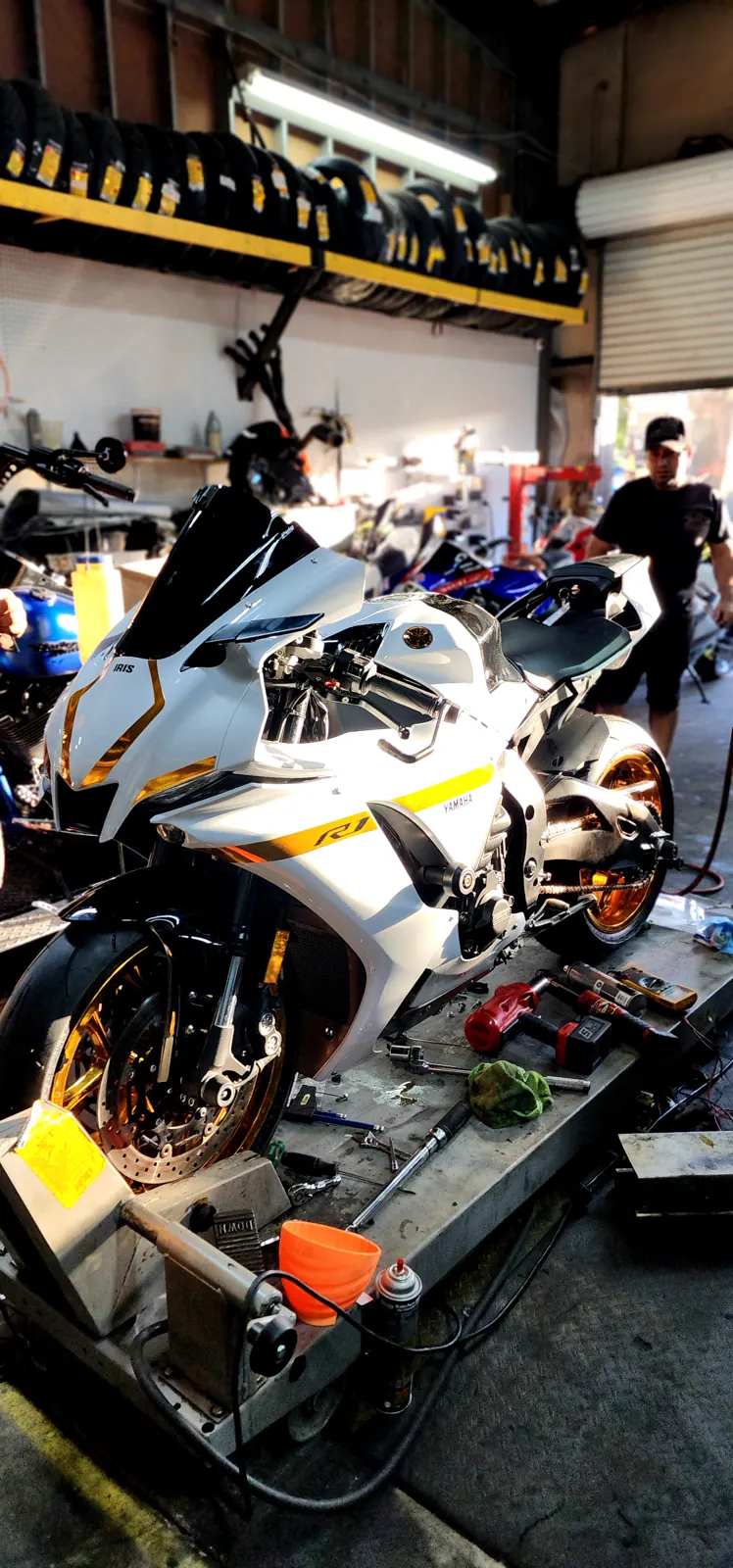
The reality: you're paying for access before you pay for parts
Here’s the single idea behind most motorcycle service cost Douglasville questions. On a bike, parts are usually the small half of the job. Access is the big half. Oil, filters, plugs, brake fluid and chain lube are ordinary items. The hours are what move, and hours move based on how buried the part is.
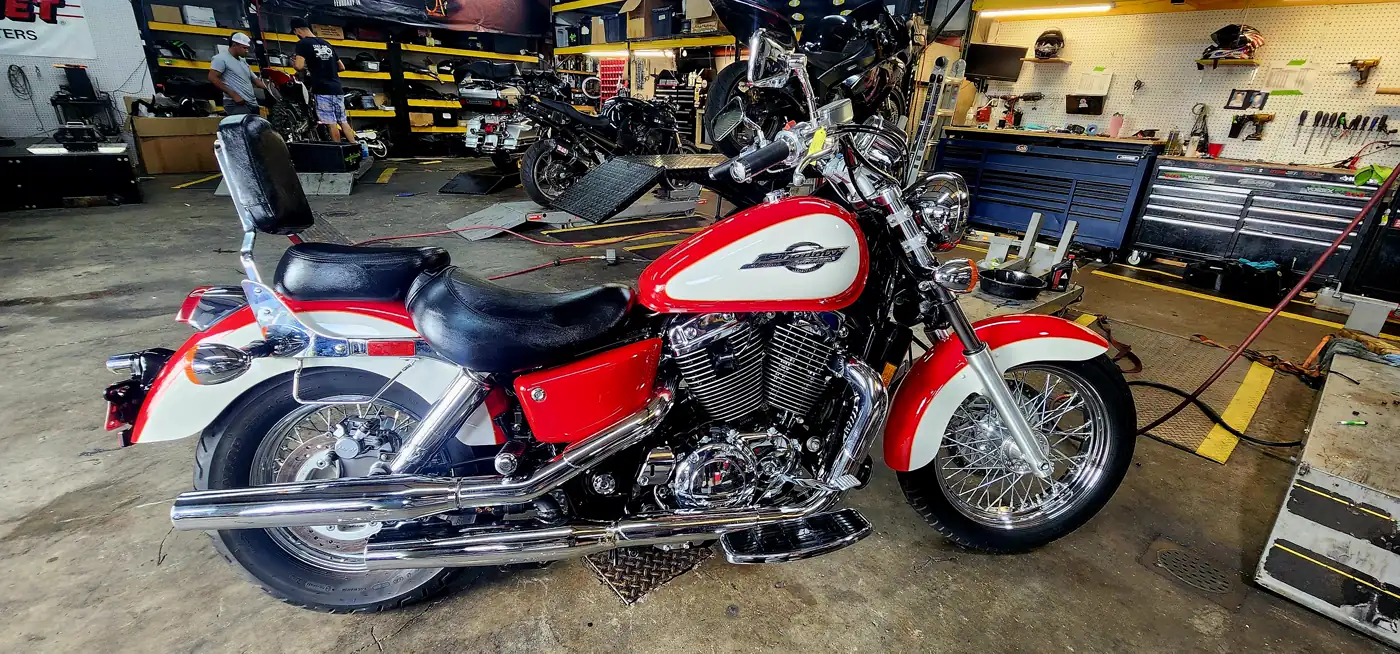
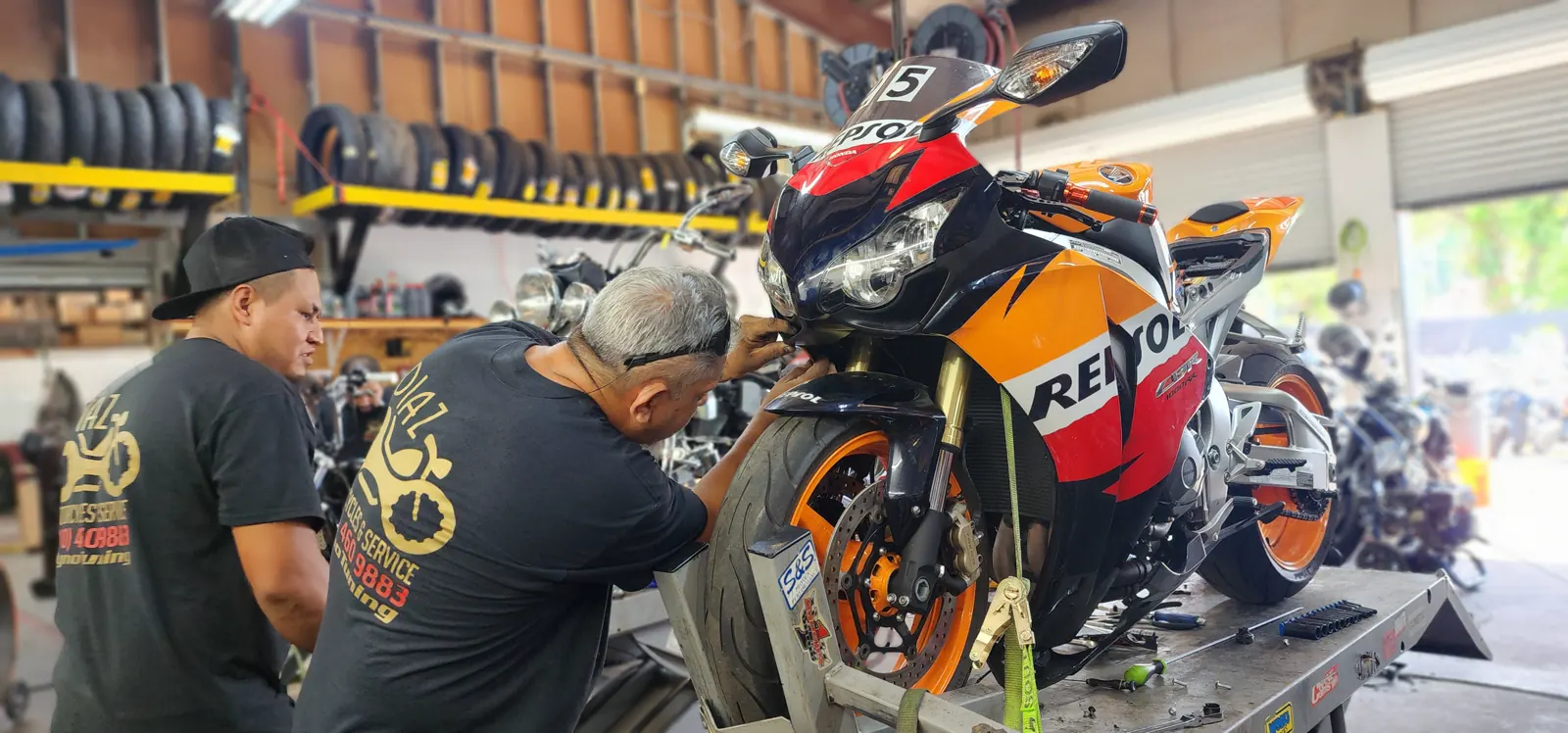
A naked cruiser with everything hanging out in the breeze is a friendly patient. A supersport with full bodywork is a puzzle box with a paint job. Neither one is better or worse. They’re just built for different jobs, and the build shows up on the clock. If you’d like the plain-language version of everything we cover on a routine visit, that page walks through it item by item.
These are the things that actually change the size of a service:
- How much bodywork has to come off before anyone touches a bolt, and whether the fasteners behind it have been rounded by a previous owner
- Whether the plugs sit on top of the engine or under the tank, the airbox and the throttle bodies
- Whether the valves are due, since that’s a measurement job that lives on its own schedule
- How the bike was stored, because a bike parked outside under a cover collects moisture that a garaged bike never sees
- How long it’s been, because dry chains, crusty brake fluid and old coolant all take longer to correct than to maintain
ABOUT INTERVALS
We won’t hand you a mileage number for your bike, because we’d be making it up. Every manufacturer sets its own schedule and prints it in your owner’s manual. That book is the real authority. Bring it with you and we’ll read it together.
There’s a second failure that hides behind the first one. The dead battery on that warm Saturday is rarely the whole story. A battery that gave up early usually gave up because it sat all winter without a tender, and the same winter that killed it also dried the chain, let condensation settle in the brake fluid, and left the fuel sitting long enough to go stale. So the click in the driveway isn’t one problem. It’s four small ones sending a single messenger. Fix only the messenger and the other three keep working on you quietly, which is what usually causes it to feel like the bike broke twice in one month.
The actual process, start to finish
Here’s what a real service looks like when a bike rolls through the door. No mystery, no magic, just an order of operations.
- We talk first. What you ride, how you ride it, what it’s doing that it didn’t do last year, and when it was last touched. Two minutes here saves an hour later.
- The bike goes on the lift and gets a walkaround before any tool comes out. Tire date codes, tread depth, chain slack, sprocket teeth, pad thickness, rotor lip, fluid color, leaks, loose fasteners, chafed wiring.
- We check your manual’s schedule against what the bike has actually lived through, because a bike ridden in traffic all summer has aged differently than one ridden on weekends.
- Then we call you. You hear what’s due now, what’s fine, and what can safely wait until next time. Actually you decide. Nothing gets touched that you didn’t approve.
- The wrenching happens. Bodywork off, oil and filter, plugs if they’re due, air filter, brake and clutch fluid, coolant, chain cleaned, adjusted and lubed, tires set to spec, everything torqued rather than guessed.
- The bike comes back together and gets a road test, because a lift can’t tell you how a brake feels at speed or whether a chain sings at cruising rpm.
- You get the old parts back if you want them. Holding a black, gritty filter next to a clean one explains more than any invoice ever could.
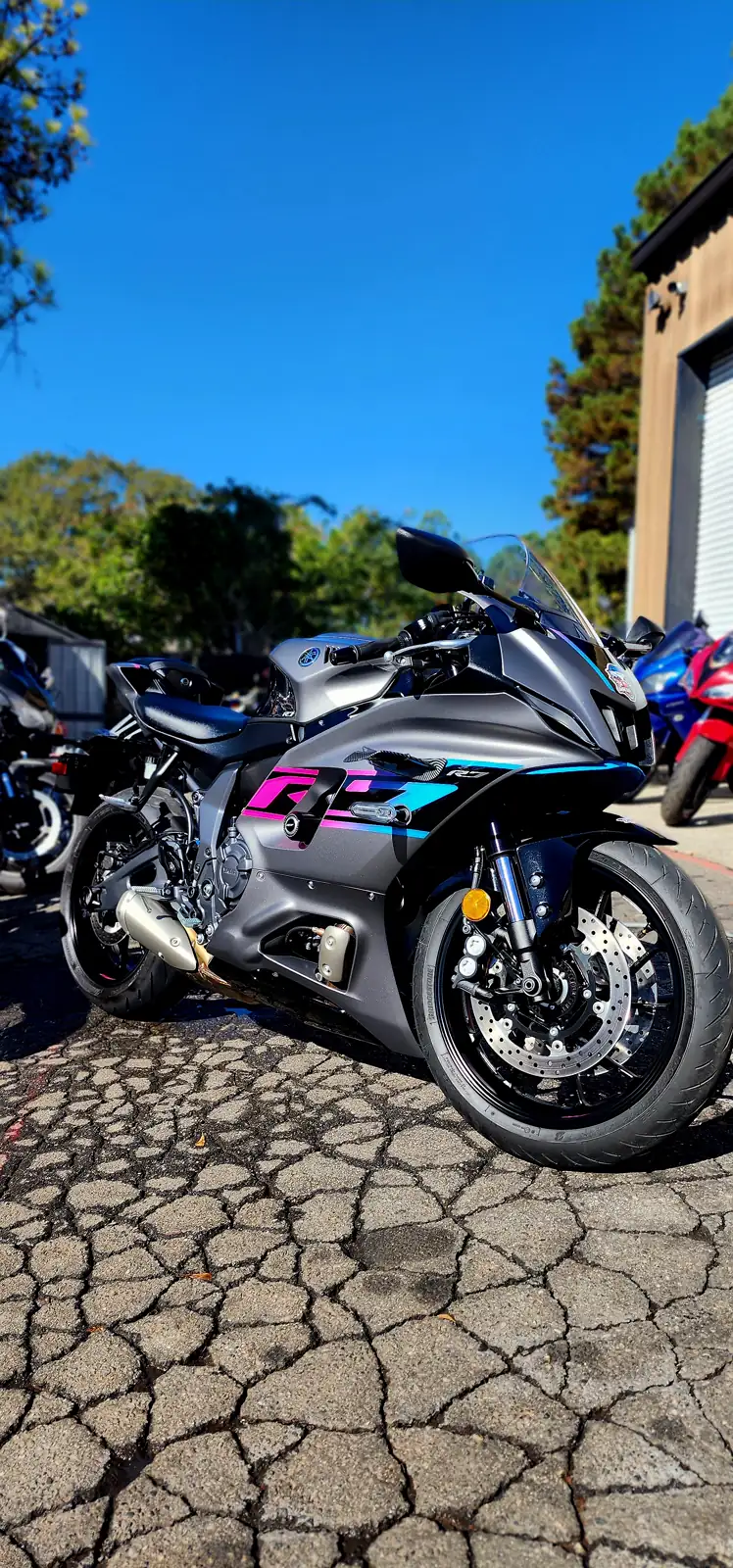
That’s it. That’s the whole thing. It isn’t complicated work so much as careful work, and the careful part is exactly what separates a bike that starts every spring from a bike that becomes a project.
Parts are the small half of the job. Access is the big half.
How to tell a good shop from a fast one
You don’t need to know torque specs to judge a shop. That’s why you just need to listen to how they talk about the work. A shop that quotes you a firm final number before seeing your bike is either padding the number to cover the unknown or setting up a phone call later that starts with “so, about that estimate.” Neither one is fun. An honest shop gives you a clear range of what’s typical, tells you plainly what could change it, and then calls you before it changes.
Green flags worth watching for:
- They ask what you ride and how before they say anything about the work
- They separate what’s due now from what’s coming, instead of putting it all on one ticket
- They call for approval on anything found mid-job, every time, without exception
- They’ll show you the worn part rather than describe it
- They write down what was done and what to watch, so the next visit starts with information instead of guesswork
None of that is unique to us. Riders in other towns judge shops on exactly the same signals, and it’s worth seeing what Woodstock riders run into for a look at how the same conversation plays out on the other side of the metro. Groups like the American Motorcyclist Association have been saying the same thing for decades: document the work, keep the records, ask questions.
Now the honest part about Douglasville
Douglas County riders have options, and we’re not going to pretend otherwise. Southeast Motorcycle sits right there on Spring Street pulling customers in from five states, and the Harley store up on Thornton Road anchors the west metro’s bike night. That’s a real service base for a real riding town. We’re about twenty-eight to thirty-two miles east of you, which realistically runs forty minutes to an hour depending on the day. Nobody is riding an hour for an oil change, and we’d think less of you if you did. So the drive is part of the honest motorcycle service cost Douglasville math.
So here’s the realistic version. First, if you do make the run, take Thornton Road and GA-6 north to the East-West Connector instead of I-20 east to I-285. The interchange out that way is one of the ugliest congestion knots in Georgia, and the surface route is calmer and usually quicker on a bike. Second, batch it. Riders from Chapel Hills and Brookmont tend to save up three or four things and bring the bike in once: service, tires, a chain and sprocket set, maybe a tune. One trip, one Saturday, everything handled. Third, ask us about pickup. We come get bikes. If you’re working a shift at Wellstar Douglas Hospital or stuck downtown near the courthouse all week, the bike can travel without you.
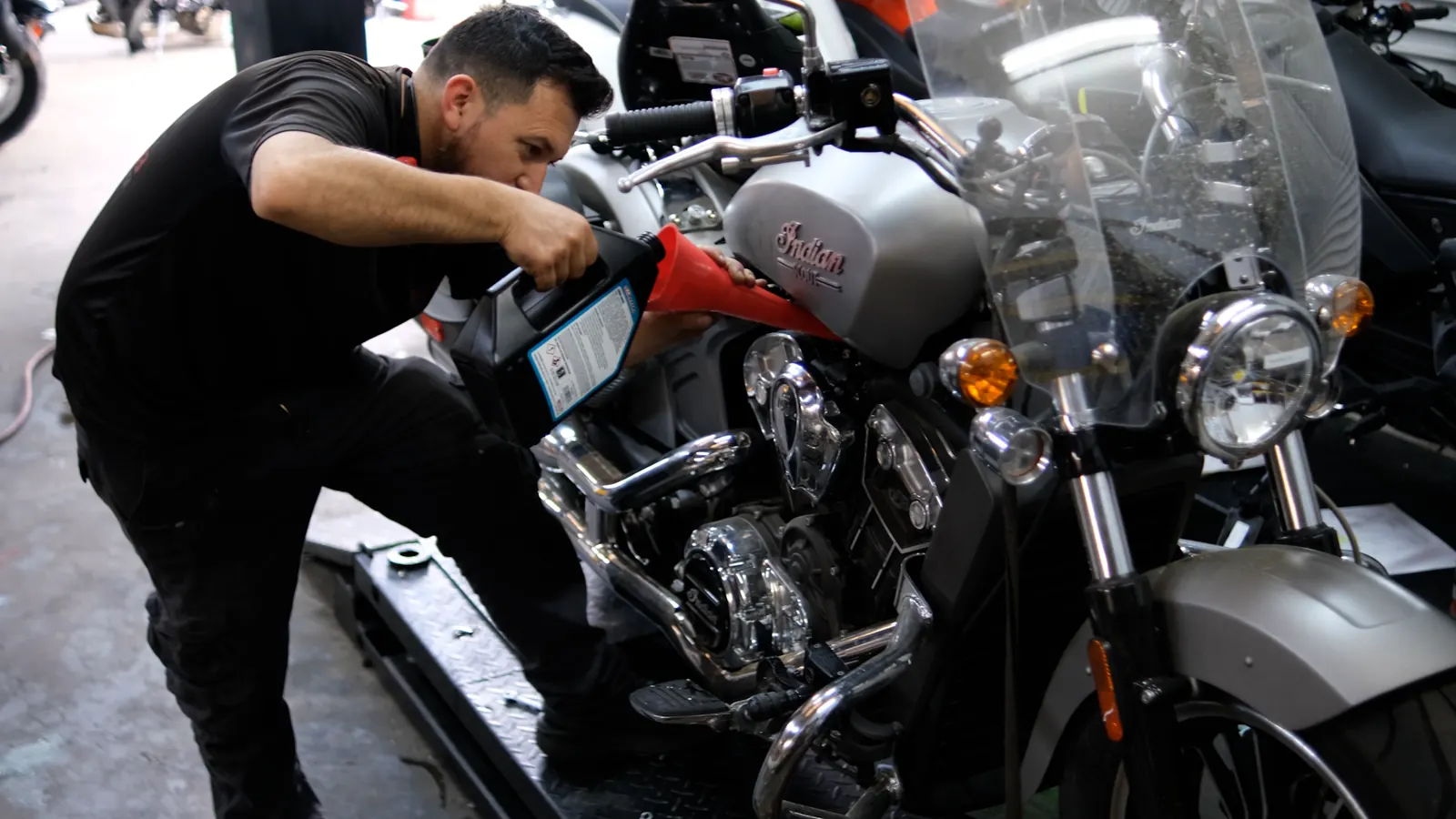
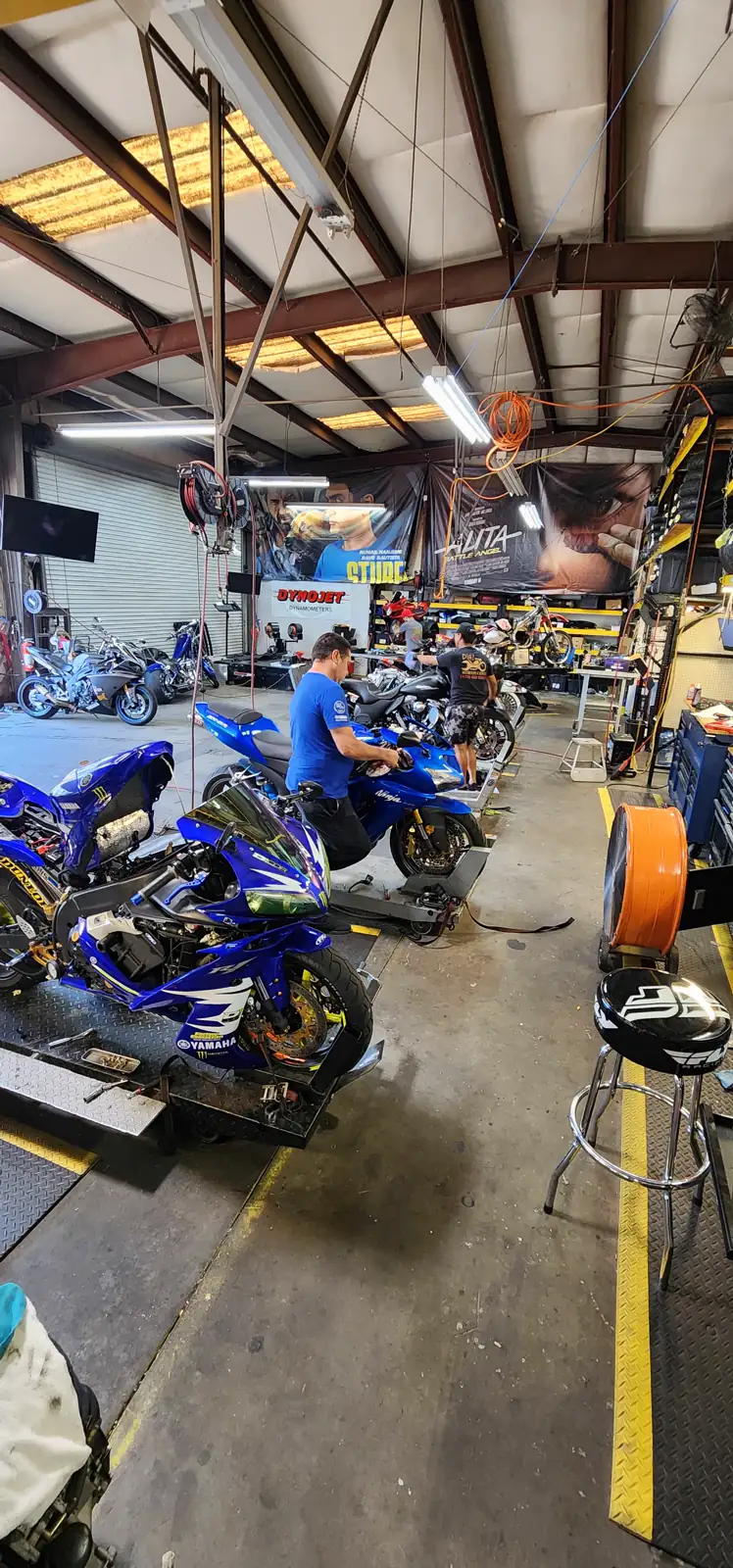
And then there’s the work that’s actually worth the drive. West-side riding culture cares how a bike looks, and that’s not a small thing out here. Baggers with big front wheels, custom paint and audio. Sportbikes built to be looked at as much as ridden. We run our own paint booth in house, which is the part dealership service departments generally don’t offer, and we do dyno and ECU tuning on the same floor. Paint, tuning and sportbike work are trip-worthy. An oil change is not, and we’d rather tell you that up front.
Roads matter here too. I-20 through Douglas County carries an enormous amount of truck traffic, and it shows up as rutting, grooved pavement, expansion joints and shredded truck tires in the lane. Thornton Road is polished smooth in the wheel tracks. The retail intersections around Arbor Place, Bill Arp and Fairburn Road get slick under rain or heavy pollen, and out in south Douglas the chip-sealed roads wash gravel into the corners. All of that lands on tires, brakes and chains faster than a gentler commute would.
It cuts the other way too. Folks over in Tributary at New Manchester have a whole trail network running toward Sweetwater Creek, and GA-166 out to Chapel Hill and the river is a genuinely good six and a half miles of curves. A bike that’s actually maintained is a completely different animal on a road like that.
Picture the version of this where you caught it early. Same first warm Saturday, same soft light, same plan. Except the battery was on a tender since November, the chain got cleaned in the fall, and the fluids were changed before the bike sat. You hit the starter, it catches on the first turn, and you’re out on Chapel Hill Road before your coffee finishes cooling. That’s the whole payoff. Not a dramatic rescue, just an ordinary morning that goes exactly the way you imagined it. That’s also why a service that seems boring in October is the best money you spend all year.
What good maintenance actually buys you
A well-kept bike is worth more when you sell it, and the paperwork proves it. Keep your service records with your registration documents, since the Georgia Department of Revenue handles title and tag on your end, and a folder that shows steady care answers a buyer’s questions before they ask. Riders we’ve helped have sold bikes fast on the strength of that folder alone.
More than that, though, there’s a quiet kind of pride in owning a machine that just works. You know its history. Either way you know what was replaced and when. You know that when the season turns and everybody else is troubleshooting in the driveway, you’re already gone. If you want a longer look at what the work covers and how to judge a shop before you commit, that’s the piece to read next.
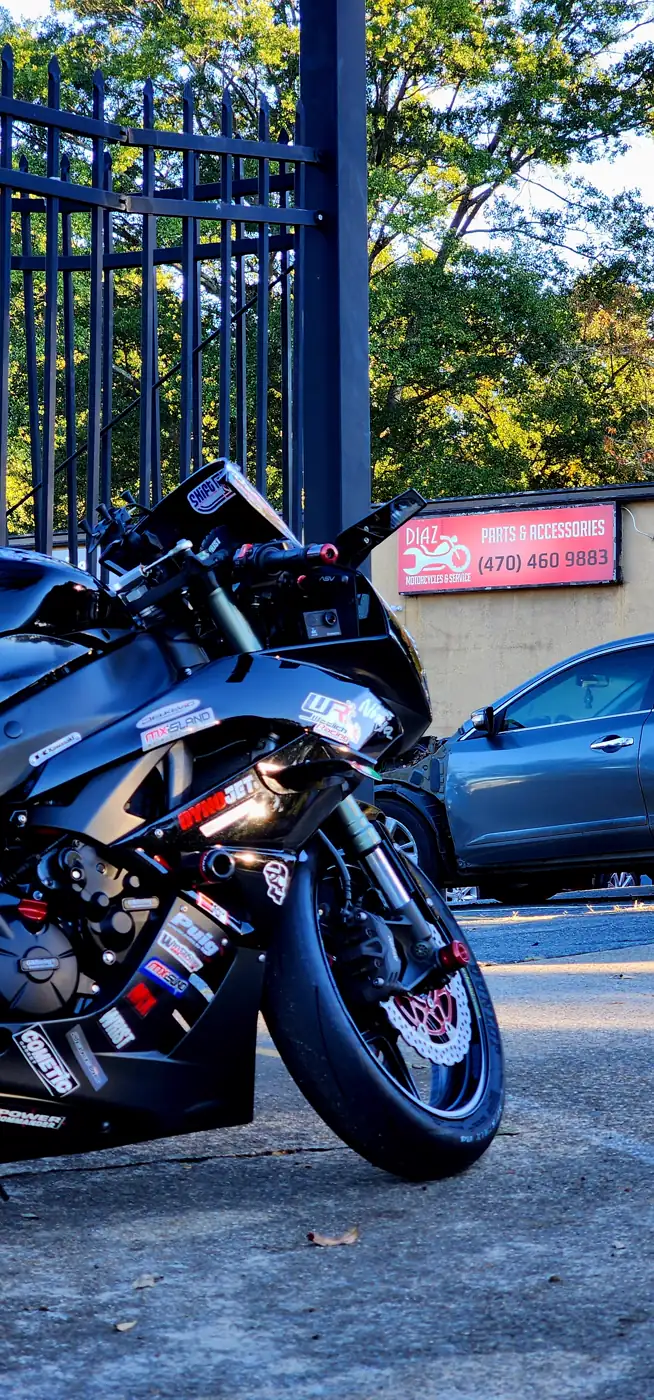
Call or text us with your year, make, model and rough mileage and we’ll tell you what a service on your bike typically involves, what tends to change it, and whether it’s even worth your drive. Sometimes the honest answer is that it isn’t, and that’s a fine answer too.
Questions Douglasville riders ask us
How long does a motorcycle service actually take?
A routine service on an easy-access bike is usually a same-day job. Add bodywork, a valve check, tires or a tune and it can stretch to a couple of days. We give you a realistic window when you drop off, and we call you if anything changes it.
Is more of it parts or labor?
Labor, most of the time. The oil, filters, plugs and fluids are ordinary items. What moves the total is how much has to come apart to reach them, which is why a faired sportbike takes longer than a bare cruiser doing the identical work.
Does the type of bike change the job?
A lot. Bodywork, engine layout, plug location and cooling system all change how long access takes. A metric cruiser, a bagger and a supersport can all need the same maintenance items and still be three very different afternoons on the lift.
What happens if you find something else while you're in there?
We stop and call you. You hear what we found, what it means, and whether it’s urgent or can wait until the next visit. Then you decide. We never add work to a bike without a yes from the owner first.
How do I avoid surprises?
Bring your owner’s manual so the schedule comes from the manufacturer rather than a guess, tell us honestly when the bike was last serviced, and ask for the not-yet list along with the due-now list. Knowing what’s coming in six months removes almost every surprise.
Douglasville is a long ride. Is it worth coming out?
For an oil change, honestly, no. For custom paint, dyno and ECU tuning, sportbike work, or several jobs batched into one visit, plenty of riders make the trip. Ask about pickup and delivery too, since the bike can make the drive without you.
We work on bikes from across the west metro and beyond. Riders come to us from Douglasville and Lithia Springs, from Villa Rica and Temple out west, and from Austell, Mableton and Powder Springs closer in. We see plenty of bikes from Hiram and Dallas up in Paulding County, from Winston and Fairplay in south Douglas, and from Smyrna and our home turf here in Marietta. If you’re somewhere in that stretch, ask about pickup and delivery and we’ll sort out the logistics with you.
TELL US WHAT YOU RIDE
Text or call with your year, make, model and rough mileage, and we’ll walk you through what a service on your bike involves and what tends to change it. If you’re in Douglasville, we’ll also tell you straight whether the drive is worth it or whether pickup makes more sense. No pressure, no mystery box.
470-460-9883Diaz Motorcycles and Service, LLC · 847 Barnes Mill Road, Marietta, GA 30062