Motorcycle Transport in Acworth — Straight Answers
When the bike won't run, riding it in isn't the plan. We come to you, load it safe, and bring it home.
Meanwhile, the first warm Saturday of the year has a sound to it. Lawn mowers three yards over. Of course, a boat trailer rattling toward the ramp at Lake Acworth. In fact, and your bike, which has sat all winter in a clean, dry garage, cranking, catching, and then dying. Crank, catch, die. For example, you had a whole loop planned up Old US-41 through Emerson. Even so, you’re standing over a machine that won’t take you anywhere. What’s more, this is the exact moment motorcycle transport Acworth riders count on stops being an abstract idea and becomes the smartest call you’ll make all day.
Here’s the good news first, because there’s plenty of it. After that, a bike that won’t start after a long sit is almost never a bike that’s dead. It’s a bike that’s asleep, and getting it to a shop that can wake it up doesn’t require it to run at all. So take a breath, grab your phone, and let’s walk through how this works.
The myth that keeps good bikes stuck in the garage
A lot of folks believe a motorcycle has to be running, or at least rolling under its own power, before anyone will move it. That belief keeps more bikes parked than any mechanical problem ever could. People wait weeks because they think the only way to a shop is to limp the thing there themselves.
That’s just not true, and it never was. Moving a non-running bike is routine work for anyone who does it right, and we do it every week. A bike with a flat battery, a gummed-up carb, a seized caliper, or a fresh dent from a driveway spill is exactly the bike our trailer was built for.
So the myth is that you’re stuck. The reality is that you have options, and the best one is embarrassingly simple. You don’t bring the bike to the fix. The fix comes to the bike.
What motorcycle transport actually is, and who it's for
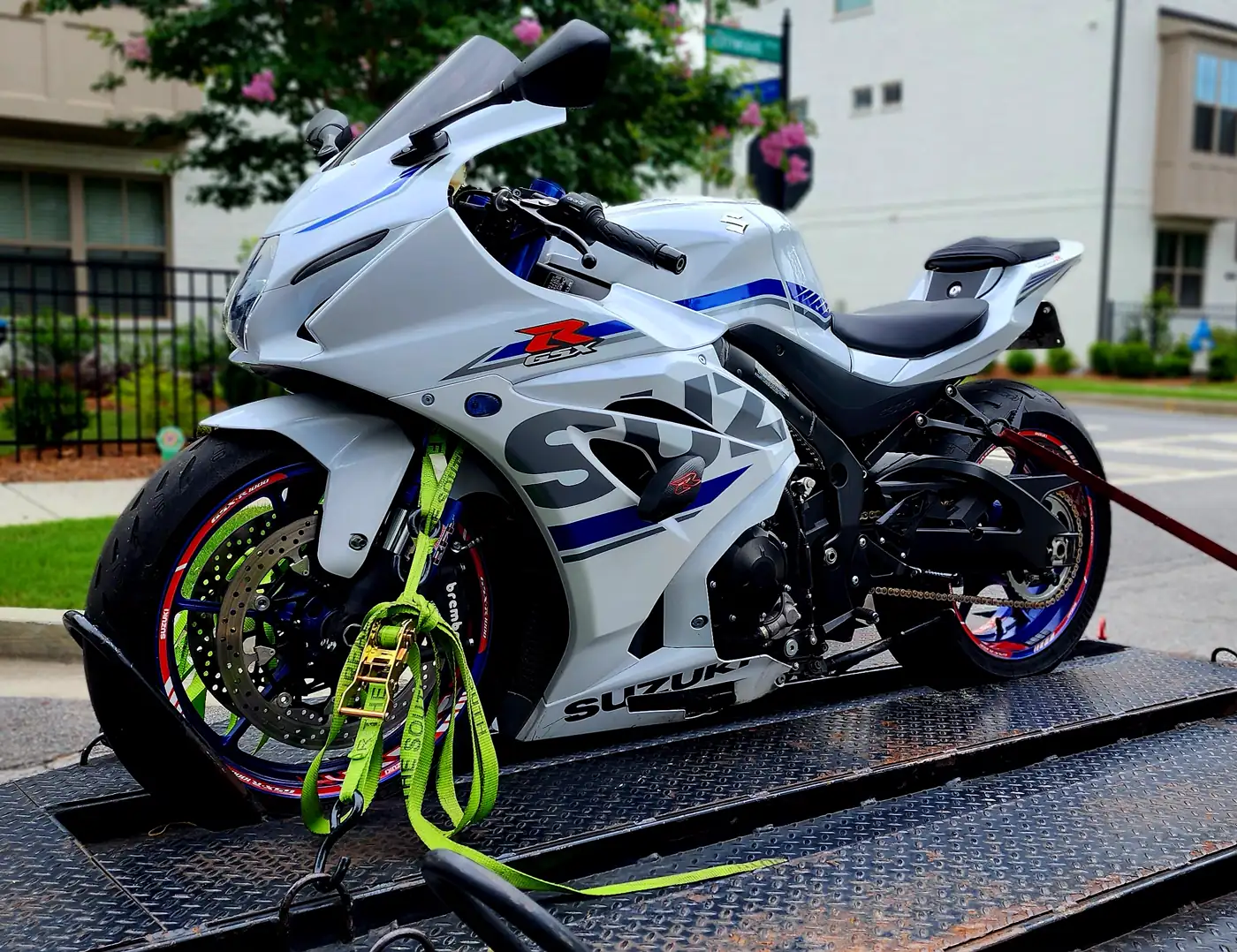
Let’s say it plainly. Motorcycle transport means we load your bike onto a trailer or into an enclosed box, secure it so it can’t shift, and haul it wherever it needs to go. Usually that’s from your garage to our shop and back. Sometimes it’s a longer run across state lines. Either way, you never have to touch a strap or sweat a ramp.
This service reaches the riders that riding-it-in simply doesn’t work for. Your bike won’t run, that’s the obvious one. Or you just bought a machine out of state and need it home, so we handle the pickup and a good deal three states away never becomes a road-trip headache. Maybe a bike was passed down to you, an estate find or an old project left in a barn, and we bring it in gently even when it hasn’t turned a wheel in years. Moving, downsizing the garage, or swapping one bike for the season all count too. That, in a nutshell, is motorcycle transport Acworth families lean on.
Acworth is a fleet town, and we say that as a compliment. Households here don’t own a motorcycle so much as a collection: a cruiser or a bagger, a dual-sport or a dirt bike, an ATV or a side-by-side, and often a project bike waiting its turn under a cover. When a garage holds a Harley, a KTM, a four-wheeler, and a 1978 barn find all at once, no single dealer covers that whole spread. We do, and we’ll come get any of them. If you want the full picture of what happens once your bike reaches us, here’s what happens in our bays from the moment it rolls off the deck.
How a bike gets tied down without a scratch
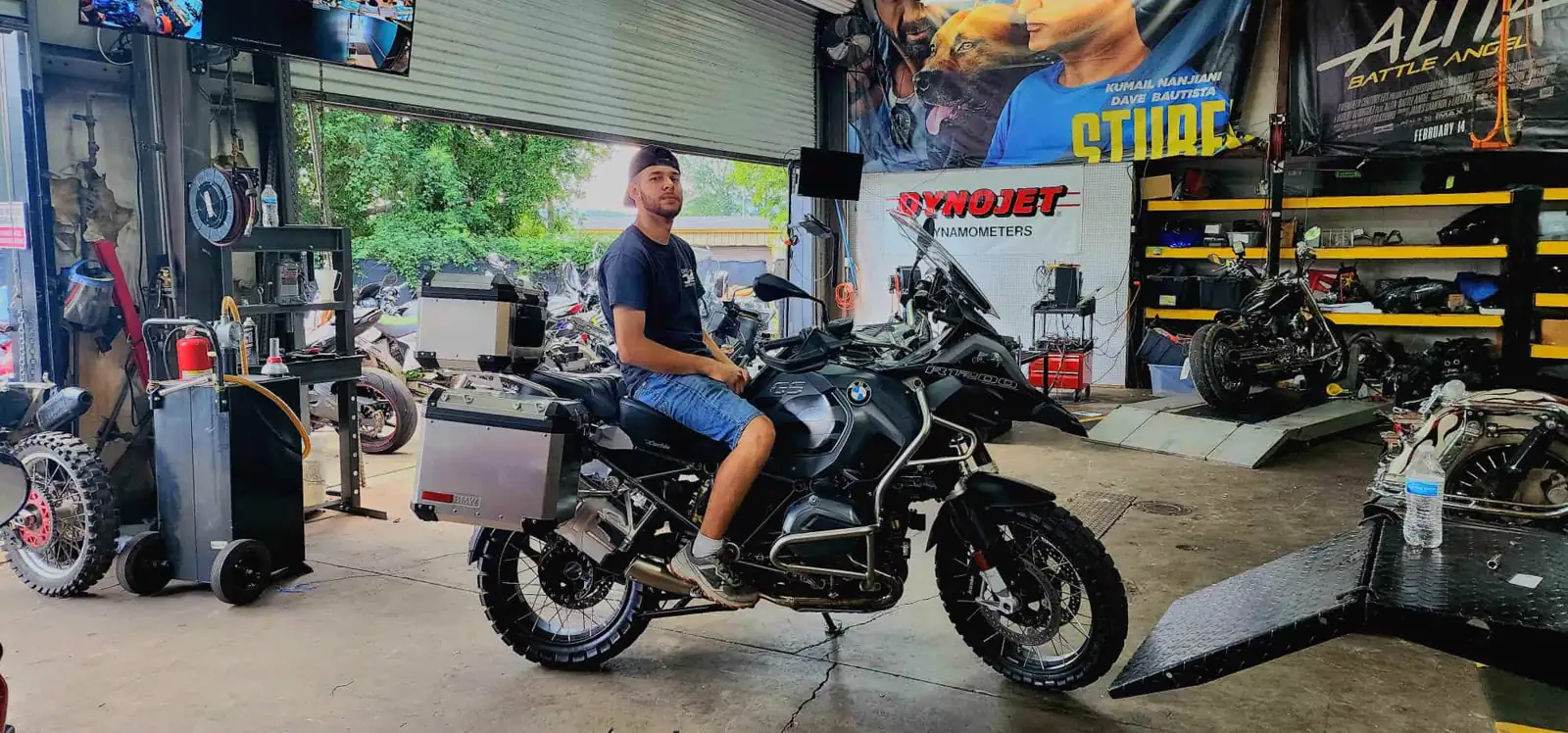
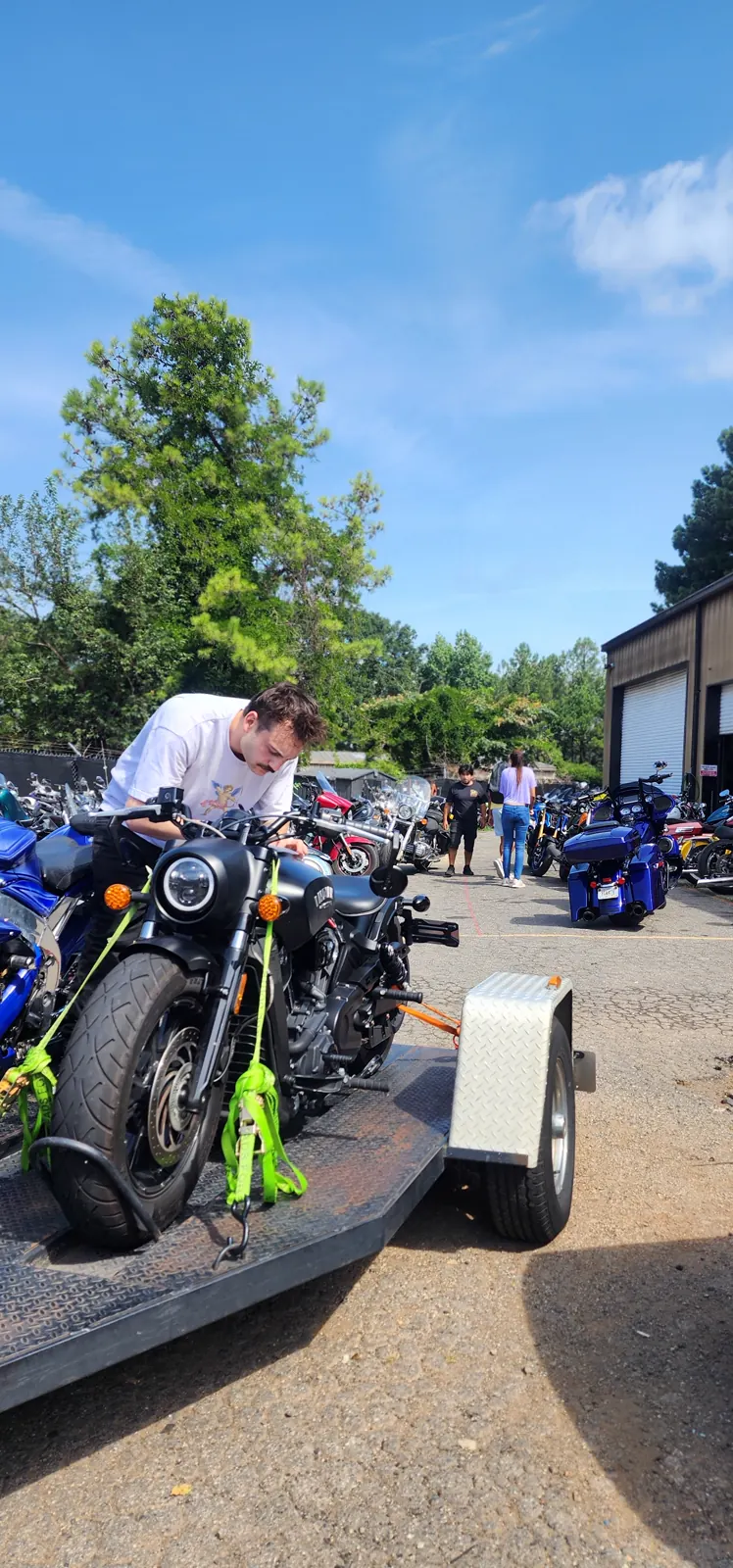
The part people worry about most is the ride itself. Nobody wants their pride and joy bouncing around loose on the highway. Good news: a properly secured motorcycle is locked in tighter than it would be sitting on its own kickstand. Here’s the order we work in every single time.
- Roll the bike up on aluminum ramps rated to hold far more than the machine weighs, with a spotter steadying it the whole way.
- Seat the front wheel into a wheel chock so it can’t roll forward or back before a single strap goes on.
- Run soft loops around the handlebars or lower triple clamp so the ratchet straps never bite bare paint or bend a lever.
- Pull the front down evenly on both sides to compress the fork a little, which is what actually holds the bike planted.
- Add rear straps to stop any side-to-side sway, then walk around and shake it to confirm nothing moves.
- Recheck every strap after the first few miles, because straps settle and a two-minute stop saves a two-thousand-mile worry.
That’s it. No magic, just a routine done the same careful way whether it’s a featherweight dirt bike or a fully dressed touring bagger. The soft loops matter more than people realize, because a ratchet strap wrapped straight around a painted bar will rub a mark in one bumpy trip.
Open trailer or enclosed box: which one you need
You’ve got two ways to travel, and both are safe. The difference is mostly about distance and how precious the finish is.
An open trailer is the workhorse. It’s quick to load, easy to see, and perfect for a short hop across Cobb County. If we’re grabbing your non-running cruiser from a driveway off Cedarcrest Road and bringing it twenty-some miles to the shop, an open deck gets it done cleanly and fast.
An enclosed box trailer is the white-glove option. Four walls and a roof mean no road grime, no rock chips, and no weather, which is what you want for a fresh custom paint job, a restored classic, or a long-distance haul. If you just brought home a museum-piece barn find, the enclosed box keeps it as clean at the destination as it was when it rolled aboard.
There's a second failure that hides behind the first one
You called about a bike that won’t start. Fair enough. But the no-start is often just the symptom you happened to notice. The reason it sat long enough to not start is where the real story lives, and that’s the failure hiding behind the failure.
Think about what a long sit does. The battery slowly sulfates until it can’t hold a charge. Fuel turns to varnish and gums up the carb or clogs the injectors. Brake calipers seize, tires flat-spot and dry-rot, and fork seals dry out and start to weep. Mud daubers even build nests in a quiet exhaust tip. Any one of those can be the thing that finally kept the engine from catching, and you’d never know which until someone looks.
This is exactly why we diagnose before we quote. Guessing over the phone does you no favors. We get the bike on the bench, find out what actually failed and what merely got tired sitting next to it, and only then do we tell you what the job really involves. A friend we helped last spring brought in what he swore was a dead engine. It was a dead battery and a varnished carb, and he rode it home the same week. For the full breakdown of what moves the number up or down, we spelled out what changes the total in a companion post.
The paperwork that protects you
Moving a bike is physical, but protecting a bike is paperwork. A shop worth hiring documents the machine before it ever touches the trailer, and hands you a record you can hold on to.
- Still, a written condition report noting existing scratches, dents, and wear before pickup, so there’s no argument about what happened when.
- Photos of the bike from every angle at load-up, timestamped and shared with you.
- A signed transport agreement laying out pickup, drop-off, and what’s covered in transit.
- Confirmation of insurance coverage on the bike while it’s in our hands, so it’s protected the whole way.
- For an out-of-state or estate bike, a clear paper trail of who released it and who received it.
None of that is fancy. It’s just the difference between a real service and a guy with a truck, and it’s the mark of a shop that plans to still be answering your calls next year.
How to tell a good transport shop from a stranger with a trailer
Anyone can rent a trailer. Not everyone should be strapping down your motorcycle. Here’s how you separate the pros from the folks winging it, and none of it takes an expert eye.
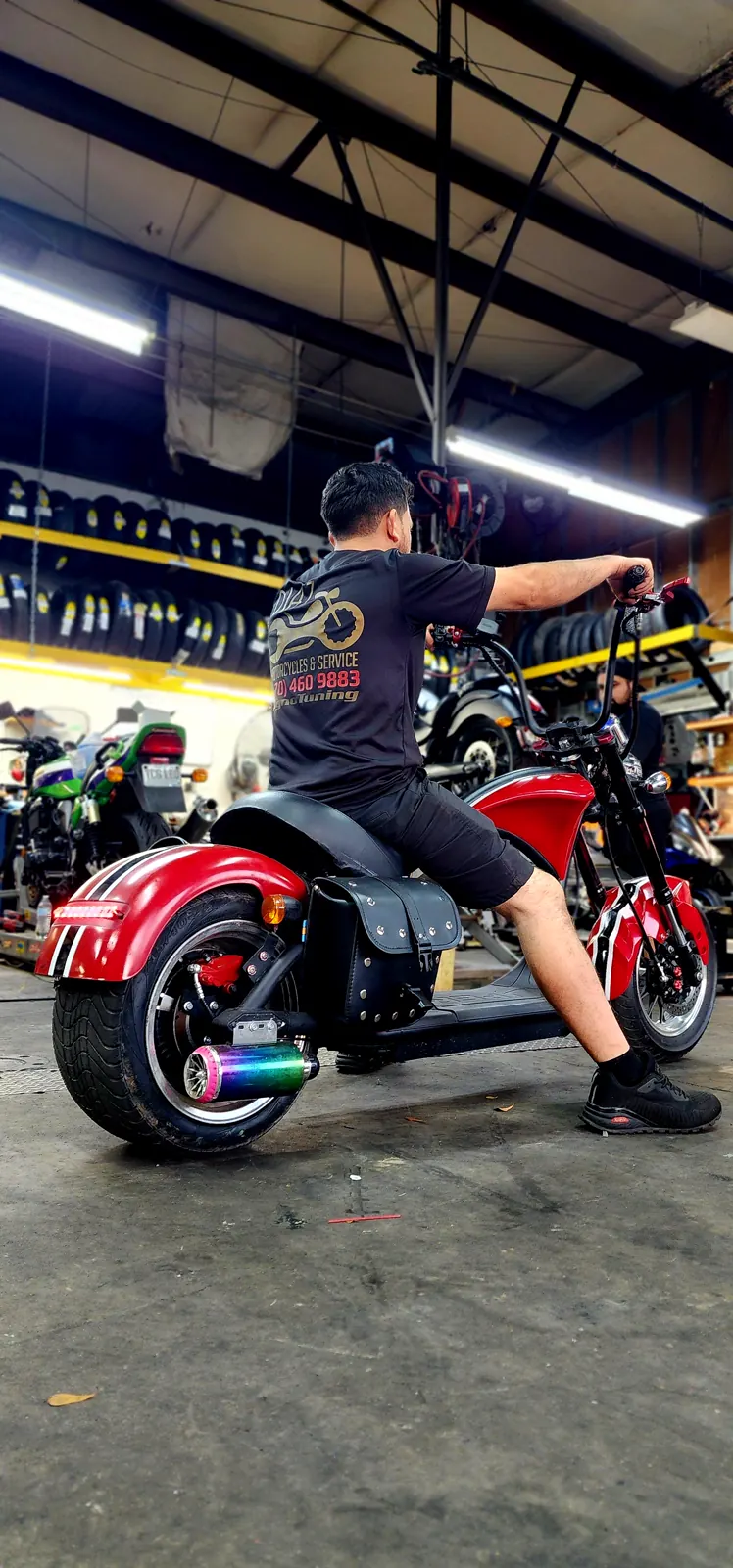
A good shop uses soft loops and a wheel chock, every time. Plus, a good shop documents the bike before it moves, diagnoses on a bench instead of quoting a rebuild sight-unseen, and works on old bikes as happily as new ones. A 1978 project deserves the same care as a current-year ADV machine. And a good shop makes the next step easy instead of making you chase a callback.
One more tell: a good shop is honest about what it isn’t. Around here, a couple of solid generalist powersports shops handle routine work well. But performance tuning, ECU work, custom paint, and full restorations already leave town for those. Once you’re driving thirty minutes for the specialist job anyway, the shop that also comes and gets the bike has just made your life easier. That’s the gap we fill. If you’re curious how the same service plays out in another town, here’s what Newnan riders run into when their bikes go quiet.
You don't bring the bike to the fix. The fix comes to the bike.
Acworth roads, Acworth bikes, Acworth reality
The Lake City earns its nickname. Two lakes, three-car garages, and more powersports per driveway than just about anywhere in the metro. And because an Acworth address can land in Cobb, Paulding, or Cherokee County, the roads under your tires vary a lot more than the mailing label suggests.
On the Cobb side around Brookstone, where the golf-course community blurs the Acworth and Kennesaw line, the pavement is generally smooth. Head out toward Bentwater off Cedarcrest in North Paulding, or across an I-75 interchange like Glade Road on the Cherokee edge, and the roads get rougher: shoulder drop-offs, loose gravel at driveway aprons, and tar-snake patches that turn greasy in summer heat. Even the pretty rides have traps. A morning loop past Governors Towne Club, the gated resort community straddling the Cobb and Paulding line, can hand you wet leaves and boat-ramp sand without warning, and the run down toward Kennesaw Mountain National Battlefield Park, about fifteen minutes southeast, mixes fog and old railroad crossings into the same trip.
None of that causes the no-start in your garage, of course. That’s usually just a long winter’s nap. But it explains why so many bikes here need a going-through after the cold months, and why coming to get a stuck one beats asking you to nurse it over rough Paulding blacktop. If you’re planning to ride again soon, it’s worth a look at Georgia Class M licensing to keep everything current before that first real trip.
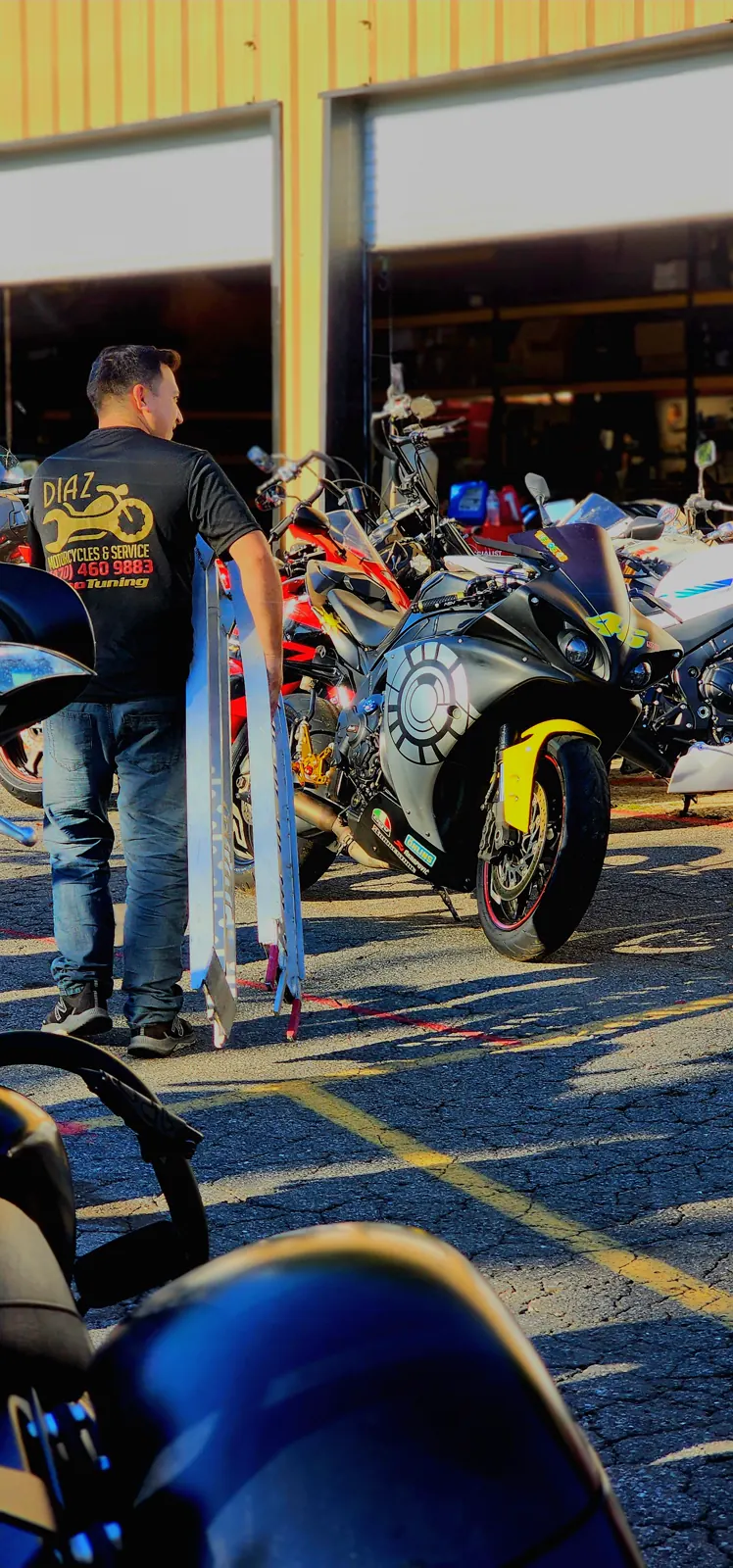
Picture the version of this where you caught it early
Imagine last February instead of this first warm Saturday. The bike’s been under its cover for a few months. You text a photo, we haul it in for a spring wake-up while the garage is still cold, and we sort the battery, the fuel, and the tires before anyone else is even thinking about riding. Then March arrives, the whole neighborhood’s fleet wakes up at once, and yours is the one that fires on the first button-push.
That’s the version where you’re not standing over a dead bike on the prettiest day of the year. That’s the version where the loop up Old US-41 toward Cartersville actually happens, on time, with a machine that’s been checked head to tail. Catching it early doesn’t take a crystal ball. It takes one text before the season starts, and a shop that batches the spring work so you’re not last in line.
And if you didn’t catch it early? That’s fine too. That’s what today is for. A stuck bike this morning can be a running bike this week, and either way you end up in the same good place: back on the road, on your terms. If you’ve ever wondered what a full transport call looks like start to finish, we walked through what the work covers in plain language.
THE HONEST ANSWER
For a bike that won’t run, “we come get it” beats every other option. No borrowed truck, no ramp wrestling, no favor you owe your neighbor. One text, and it’s handled.
When the day comes to ride again, riding well is its own skill. Georgia makes it easy to sharpen through the Georgia Motorcycle Safety Program, a solid tune-up for your reflexes the same way we tune up the machine.
So here’s where you land. A bike you thought was done is just resting. A move you thought was impossible is a routine trailer run. And a problem that felt like a ruined Saturday is really just a text you haven’t sent yet. You got here by knowing your options instead of guessing. Nicely done.
Questions Acworth riders ask us
Do I need an appointment before you come get my bike?
A quick heads-up helps, but you don’t need a formal appointment to get started. Just text us a photo of the bike and your location, and we’ll set a pickup window that works for you. We plan the route so the trailer shows up ready to load.
Can you actually pick up a bike that won't run at all?
Yes, and it’s some of the most common work we do. A dead battery, a gummed carb, a seized brake, or a flat tire doesn’t stop us from loading it safely. The bike never has to start or roll under its own power. That’s the whole reason transport exists.
How do I get a quote for transport and repair?
Text us the make, model, and where the bike is, plus a note on what it’s doing or not doing. For the transport itself we can give you a straight answer fast. For any repair, we diagnose on the bench first so the number reflects what actually failed, not a guess.
Do you work on older bikes and long-forgotten projects?
Absolutely. Acworth has the biggest garages in the area, which means the best barn finds and project bikes. A 1978 machine that hasn’t run in years gets the same careful load, the same honest look, and the same respect as a current-year model.
What happens if the bike needs more work than expected?
We call you before we do anything beyond what we agreed on. Once the bike’s on the bench, if we find a second issue hiding behind the first, you get a plain explanation and a decision to make. Nothing extra happens without your okay.
Can you transport a bike I bought out of state?
We can. Out-of-state pickups, estate bikes, and inherited machines are a regular part of what we haul. We handle the load-up and the paper trail so a good deal far from home doesn’t turn into a stressful road trip for you.
We come to Acworth and the whole lake country around it, from the neighborhoods off Cedarcrest in North Paulding to the Cherokee-side addresses near Glade Road. That covers Kennesaw and Woodstock just down the road, Cartersville and Emerson to the north, and Dallas, Powder Springs, and Canton across the county lines. We also run out to Adairsville, Euharlee, Taylorsville, and White, and of course back home to Marietta where the shop sits. If your bike is in the driveway and it won’t budge, chances are we’re already working your part of the map.
STUCK BIKE IN ACWORTH? TEXT US.
Don’t let a machine that won’t start eat up your riding season. Text us a photo of your bike and your Acworth address, tell us what it’s doing, and we’ll set up a pickup that fits your day. We’ll tie it down safe, diagnose it honestly before we quote a thing, and get you back on the road. One message is all it takes to get moving.
470-460-9883Diaz Motorcycles and Service, LLC · 847 Barnes Mill Road, Marietta, GA 30062