Motorcycle Transport Cost Dallas, GA — What Really Sets the Price
A bike that won't move isn't stuck for good. Here's how transport really works, and what makes one job bigger than the next.
It’s Saturday morning in your garage. The coffee’s still hot. Instead you thumb the starter on the bike you finally had time to ride, and nothing happens. Maybe a click. What’s more, Maybe a groan. Besides Maybe just silence and that little sinking feeling in your chest. Actually the one ride you carved out isn’t happening, and now the bike is stuck exactly where it sits. So you start wondering about the real motorcycle transport cost Dallas, GA riders keep asking us about, and whether it’s worth having someone come get it.
Take a breath. That’s why a bike that won’t move is not a disaster. Either way it’s just a bike that needs a ride, and giving bikes a ride is a big part of what we do. In short Diaz Motorcycles sits over in Marietta, and we come to you. At the same time No hero moves in the driveway, no begging favors, no borrowing a buddy’s truck and a ratchet strap that has clearly seen better days. We load it, we haul it, we fix it, and most of the time you never break a sweat.
Here’s the real question riders want answered: what makes one transport job bigger than another? It’s a fair thing to ask, and the honest answer is that a handful of things move the needle. Before we walk through them, it helps to understand what that service actually involves, from the moment you text us to the moment your bike is back on two wheels.
Why a bike ends up needing a ride
Bikes get stranded for all kinds of reasons, and almost none of them are your fault. Some are mechanical. Some are just life. Here are the ones we see most:
- The bike won’t start and won’t roll, thanks to a dead battery, a gummed-up fuel system, or an engine that’s locked up from sitting.
- You bought it out of state and need it brought home in one piece.
- It came to you from family, and it’s been parked in a shed or a back corner of the garage for years.
- You went down, and riding it home isn’t safe or smart.
- The season turned, and it’s time to move a project bike from one garage to another.
Each of those is a different job, even though they all end the same way: your bike riding on our trailer instead of under your own power. And that difference is exactly where cost starts to come from.
What each situation means for the job
When a bike simply won’t start or roll, the transport part is usually the easy part. A locked front wheel or a seized engine means we winch it up the ramp instead of walking it, which takes a few more minutes and a little more muscle. The bigger story is what’s waiting once we get it back to the shop. A no-start can be a five-minute battery or a deeper fuel-system cleanup, and until we see it, we’re guessing.
A bike bought out of state is a different animal. The riding part is done by the time it reaches us, so this is mostly about safe loading, careful strapping, and paperwork that matches the title in your hand. If it’s your first bike and you’re still sorting the legal side, the state makes Georgia Class M licensing pretty clear, and we’re happy to point you in the right direction while your bike gets settled in the shop.
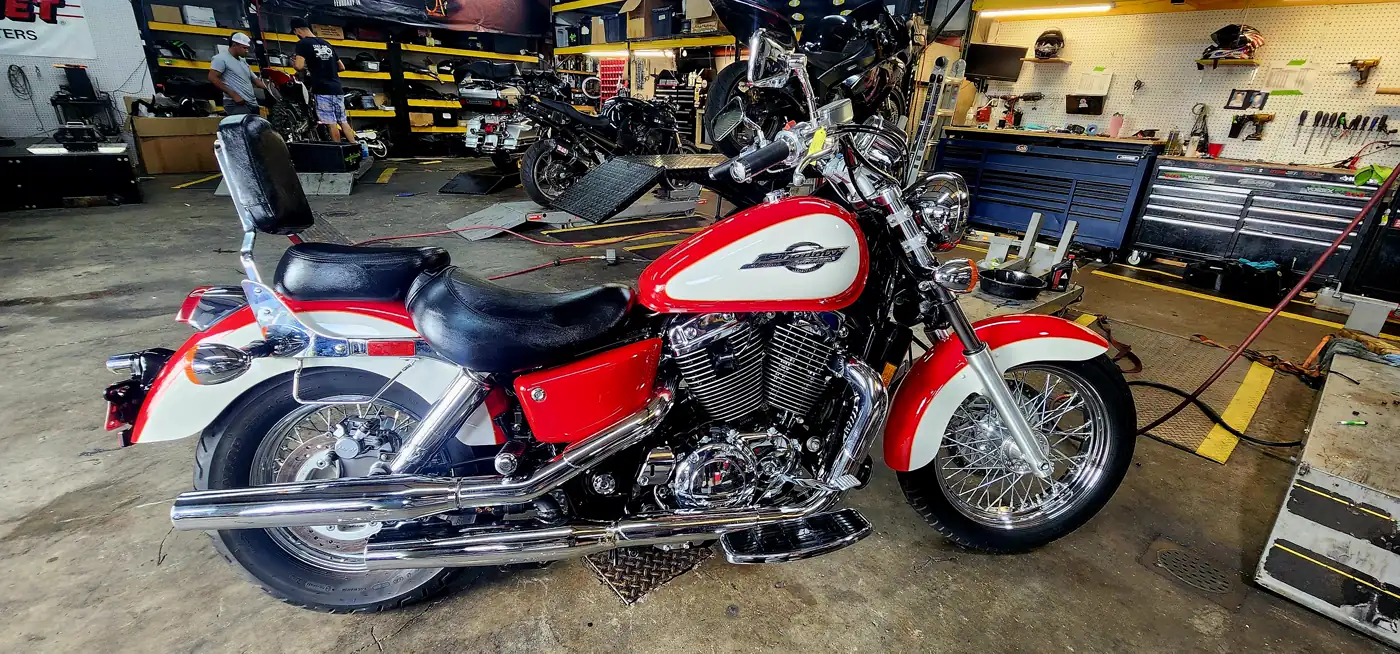
An inherited or estate bike pulls at the heart a little more. That machine might carry a lot of memories and not much fresh fuel. Bikes that sit for years develop varnished gas, a dead battery, and tires that look brand new but have quietly dry-rotted from the inside. We treat those bikes gently, both because they deserve it and because a stiff, stubborn machine needs a careful hand on the ramp.
After a crash, the smartest move is almost always to let someone else move the bike. Even when it looks rideable, hidden frame or fork damage can turn a short hop home into a bad idea. The folks at IIHS motorcycle research have spent years studying how much rides on a bike being mechanically sound. When you’re already shaken up, handing off the drive is a relief, not a defeat.
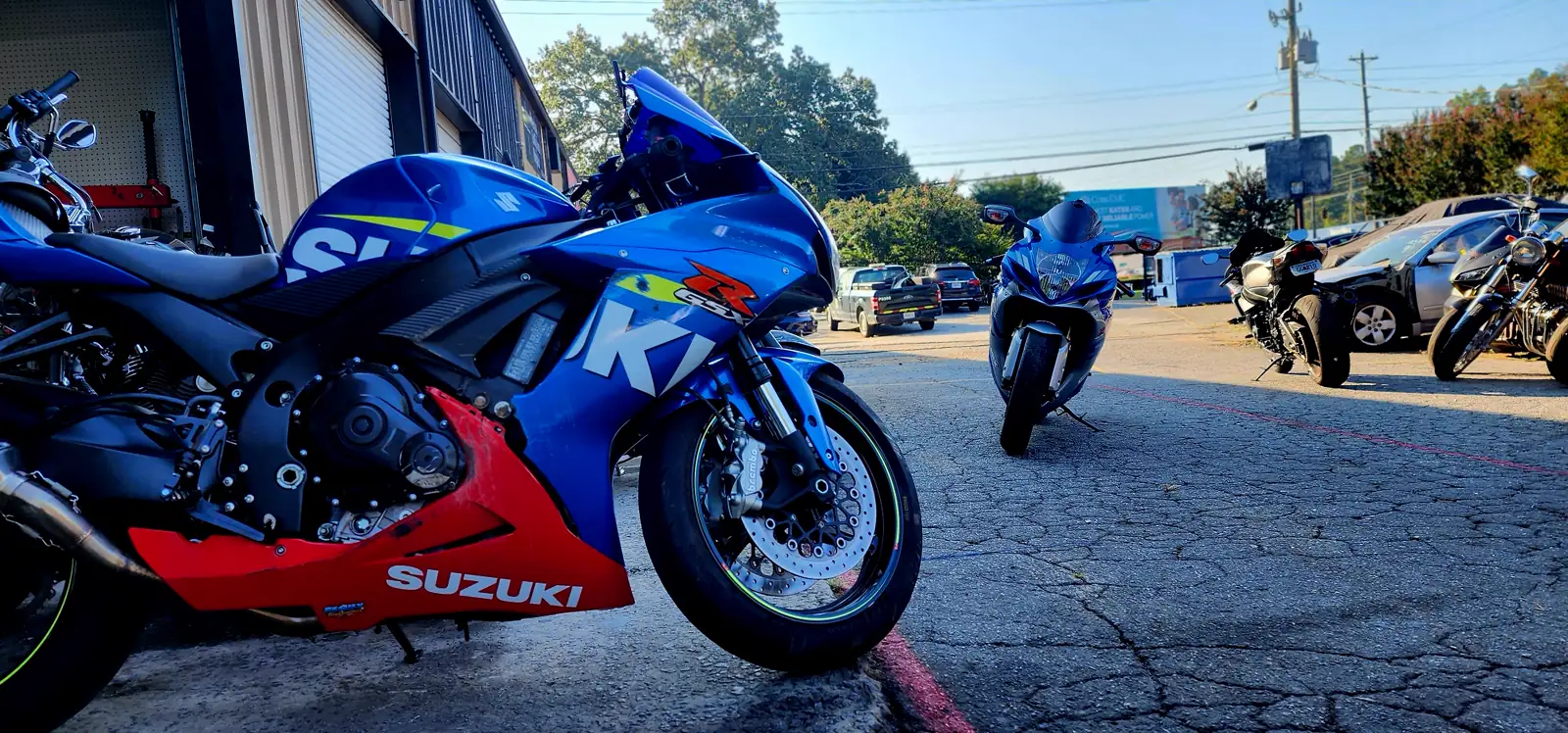
But here’s what most riders get wrong about this. They assume transport cost is all about miles, like a taxi meter ticking up the farther you go. Distance matters, sure. It’s just not the biggest lever. Two bikes the exact same distance away can be very different jobs, and the reason has almost nothing to do with the road between us.
What actually happens when we come get it
Loading a motorcycle the right way is a small art, and doing it wrong is how bikes get scratched, dropped, or worse. Here’s the basic flow when we roll up to your driveway:
- We size up where the bike sits and how we can reach it with the trailer.
- After that, we roll it onto the ramp, or winch it slowly if the wheels won’t turn.
- We chock the front wheel and strap the bike down at the frame, never the handlebars.
- Also we note its condition with photos before we ever pull away from the curb.
- We haul it to the Marietta shop, unload it just as carefully, and get to work.
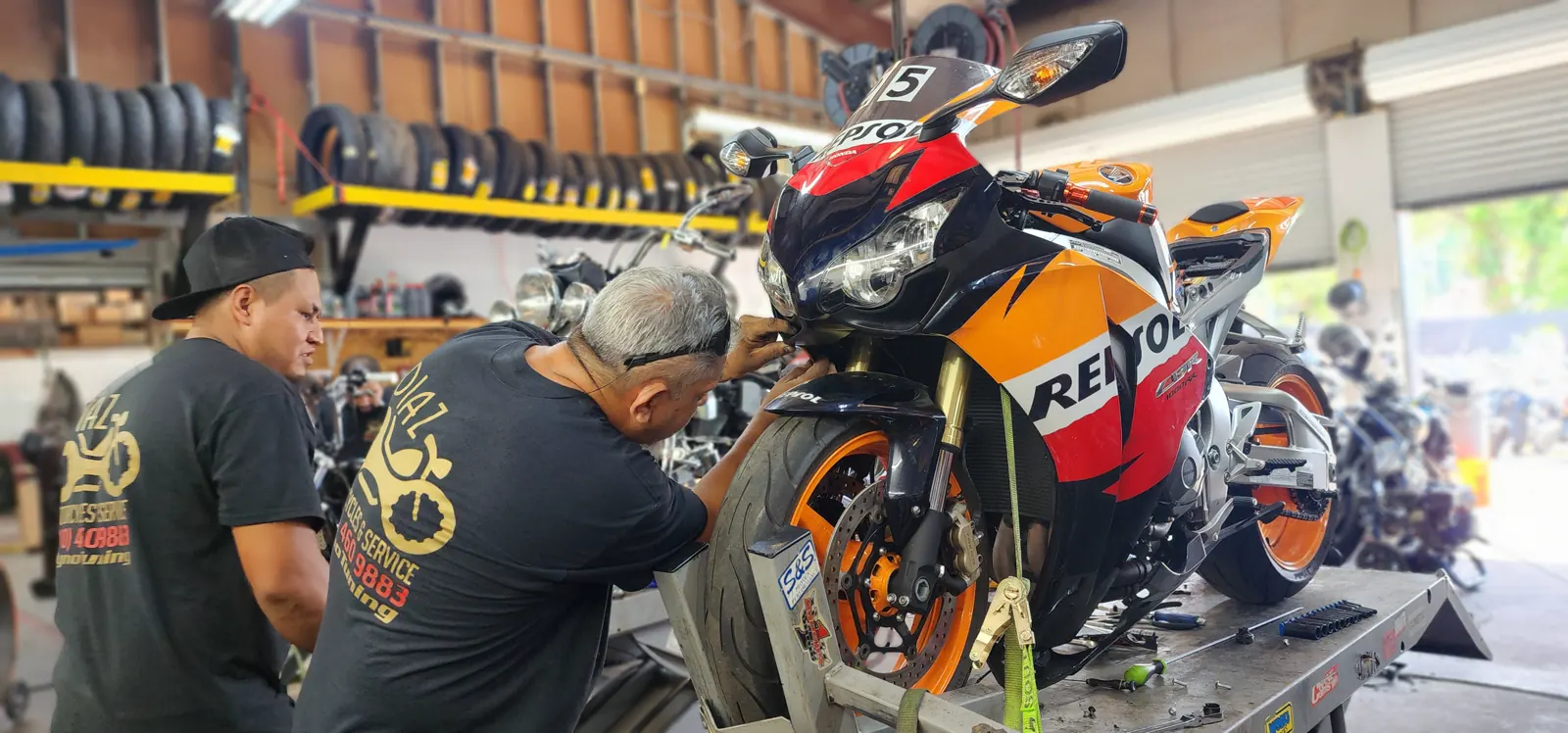
That strapping step is where experience earns its keep. We use soft straps, and we compress the front fork evenly so the bike is locked in without leaning on the wrong parts. Cinching down on the handlebars might feel secure, but it can bend, twist, and stress steering components you’d rather keep straight. A bike tied down right rides on the trailer like it’s parked on a lift.
You’ll also hear folks talk about open versus enclosed trailers. An open trailer is fine for plenty of jobs and gets your bike moving quickly. An enclosed trailer wraps everything in a hard shell, away from rain, road grime, and prying eyes, which is the move for a pristine cruiser, a fresh custom, or a long haul. Neither one is wrong. The right pick depends on the bike and the day, and we’ll tell you straight which one fits yours.
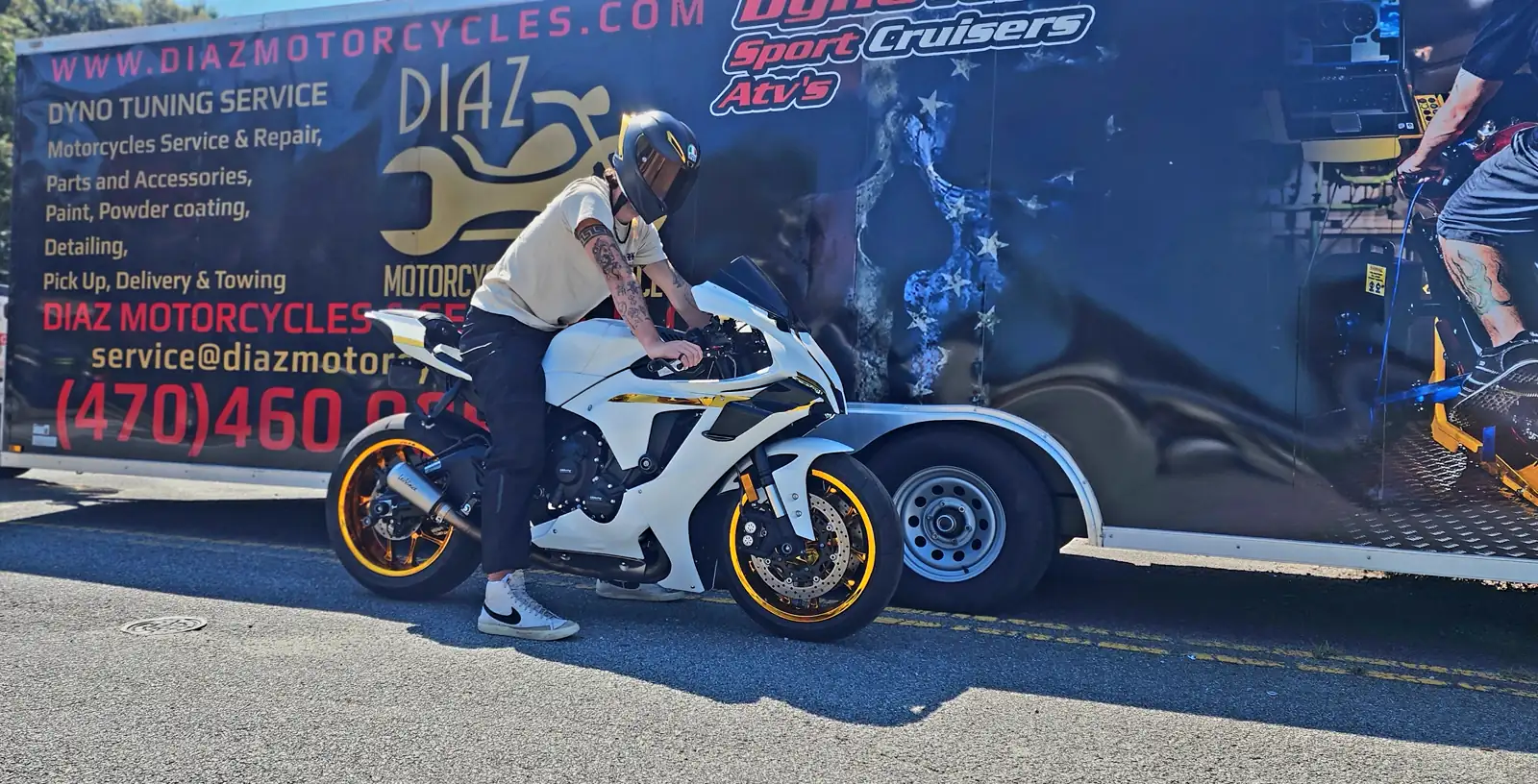
Documentation is the quiet part that protects you the most. Those photos we take before loading aren’t for show. They’re a record of exactly how your bike looked the second it left your hands, so there’s never a question about a scratch or a scuff later. It’s the same reason we keep clear notes on what we found and what we did. If you want to see how that plays out on a stranded pickup, we gave friends near Smyrna the full rundown on it.
So what really drives the cost
Now to the heart of it. A few honest factors decide how big a transport job really is, and access sits right at the top.
Access means how easily we can reach your bike and get it onto the trailer. A bike in a clear, flat driveway is a quick load. A bike wedged behind a car in a tight new-construction garage, or down a driveway off a torn-up stretch of Cedarcrest Road where the mud and gravel from fresh subdivisions never quite settles, takes more time and care. The harder the bike is to reach and roll, the bigger the job. That’s not us padding a bill. It’s just honest minutes and muscle.
Condition is the next big one, and it’s really a question of labor versus parts. A bike that rolls loads fast. A bike with a locked engine or a flat, rotted tire needs winching and finesse. Then there’s the work waiting at the shop. Labor is our time and hands. Parts are, well, the parts. A dead battery is mostly a part. A gummed carburetor is mostly labor. Two bikes can look identical in the driveway and turn into very different jobs once the covers come off.
Distance matters too, just less than people expect. From Dallas out to our Marietta shop is roughly 24 to 28 miles, usually about 40 to 50 minutes running Charles Hardy Parkway onto Dallas Highway east through West Cobb. That’s a real drive, and we’re honest about it. It also means the value is in the pickup itself, because we come to you and you never have to solve the puzzle of moving a dead bike on your own. Once it’s here, you’ll see exactly what you get when you bring it in.
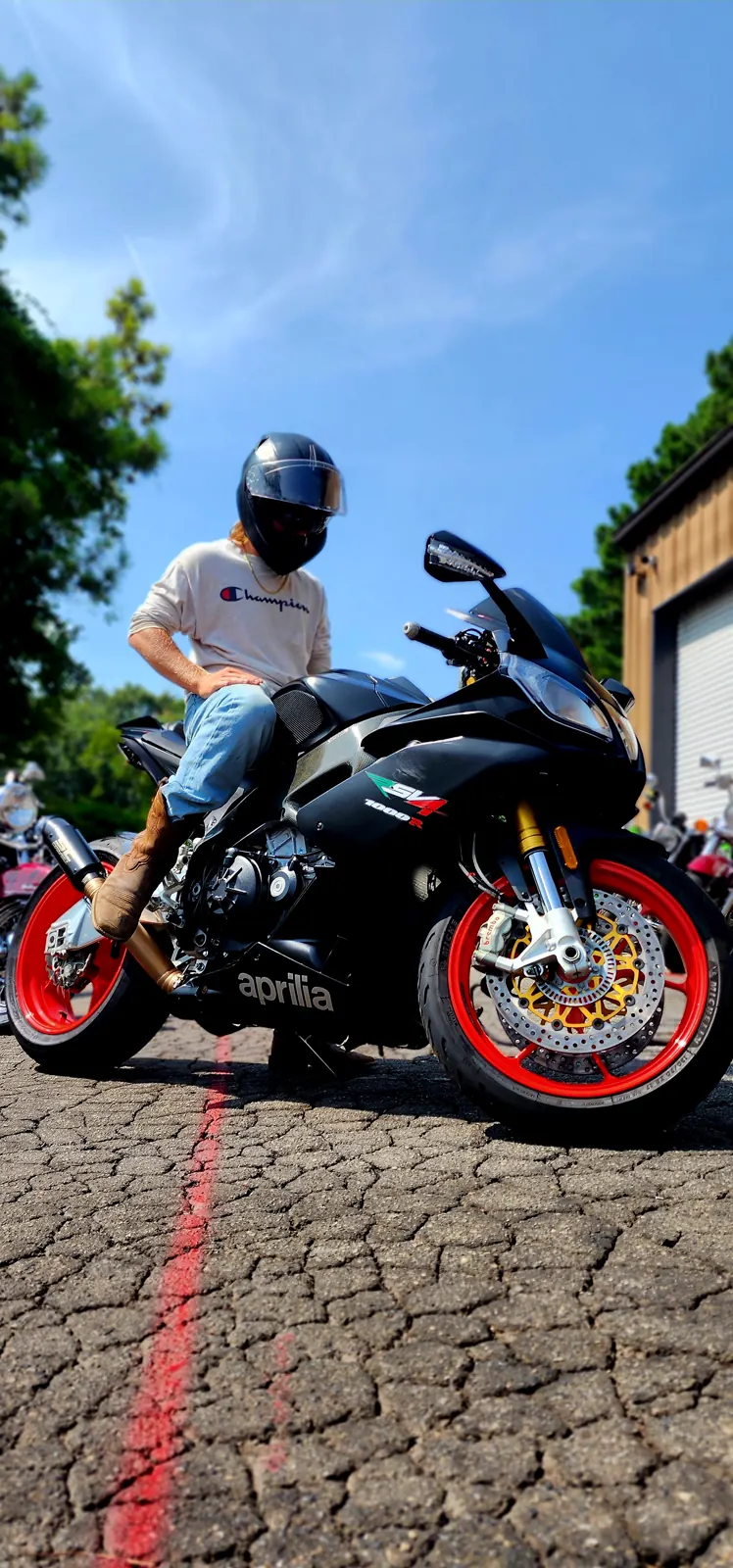
The bike itself plays a role, too. A heavy bagger, a low-slung sportbike, and a lifted dirt bike each ride differently on a trailer and strap down differently. A wide, tall cruiser needs more room and more anchor points than a compact standard. None of this is complicated once you’ve done it a thousand times, but it does explain why we like to know what we’re coming to get before we promise anything.
Why we won't quote it over the phone
Plenty of shops will rattle off a number the second you call. We won’t, and it’s on purpose. A quote given sight-unseen is either padded high to cover surprises or lowballed to win the call, and both of those cost you in the end. We’d rather ask a few real questions first: where the bike sits, whether it rolls, how it’s boxed in, and what’s actually wrong. The honest motorcycle transport cost Dallas, GA riders deserve is one that matches the bike in front of us, not a guess over the phone. Riders over in Woodstock had the same fair question, and we broke it down the same way for riders over in Woodstock.
A number given before we've seen your bike isn't a quote. It's a coin flip, and you shouldn't have to gamble.
How long does transport take
Timing is usually simpler than folks fear. Once we lock in a window, the pickup itself is quick, often under an hour on your end from the time we arrive to the time we’re rolling. The drive back to Marietta is a straight shot. After that, the clock depends on the work, not the transport. A battery and a fresh charge might have you riding again in a day or two. A deep carburetor cleanup, tires, and fluids on a bike that sat for years takes longer, and we’ll give you a real timeline once we’ve had eyes on it.
TEXT-FIRST, ALWAYS
We know Dallas mornings start early and the commute starts earlier. Text us a photo of where your bike sits and we’ll sort the pickup around your schedule, no phone tag required.
Dallas riders, this one's for you
Paulding County is a great place to own a bike and a tough place to get one serviced. There’s no full-line motorcycle shop out here, no transport service advertised, and the nearest big dealer, Atlanta Harley-Davidson down in Lithia Springs, is 35 to 45 minutes the other direction. Meanwhile the square at Historic Downtown Dallas keeps its small-town charm, the roads keep filling with new neighbors, and the new-construction dust off Cedarcrest Road keeps grinding on tires and chains. A straight run east lands you at our door in Marietta.
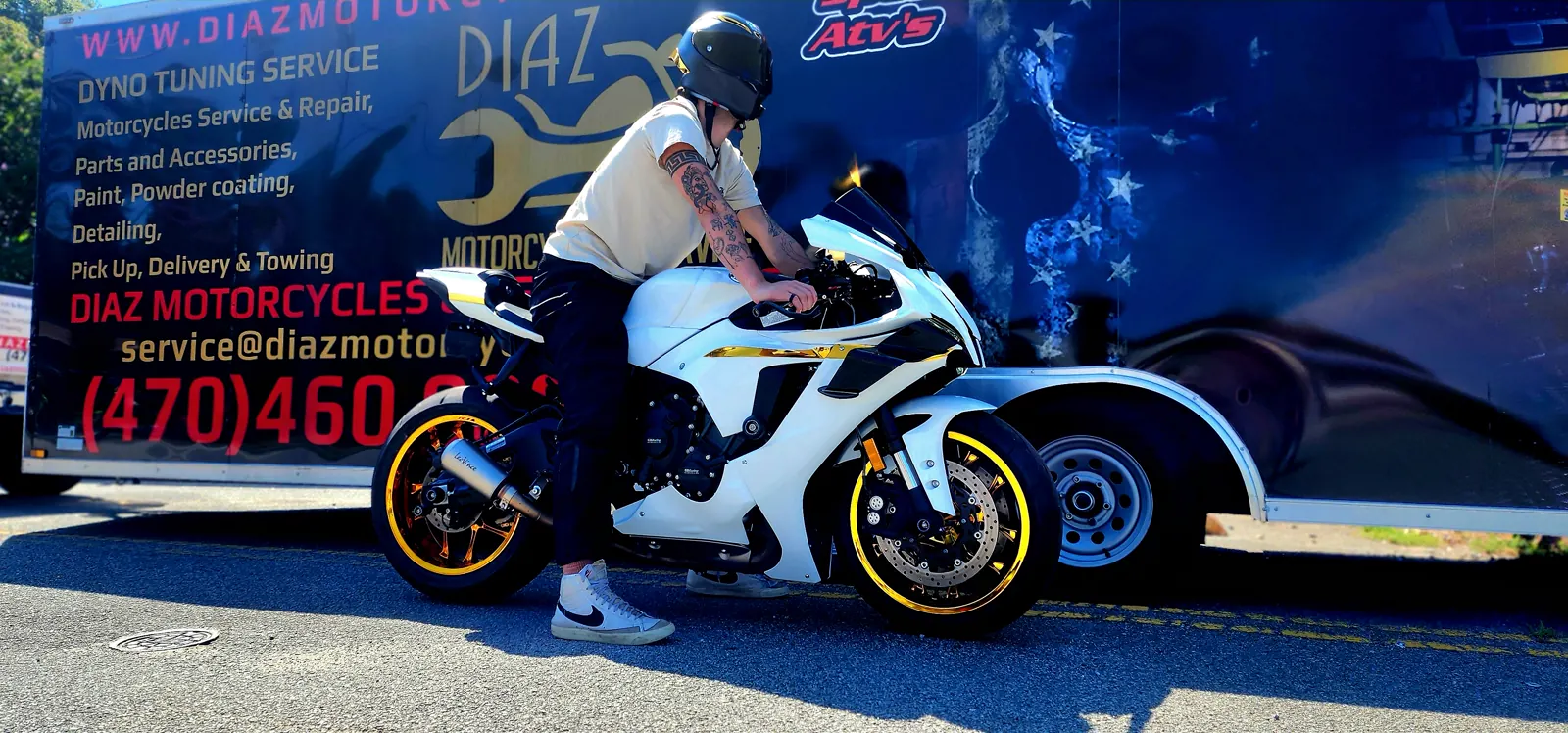
Let us tell you about a rider near Seven Hills. He’d inherited his dad’s cruiser, and it had been parked so long the tank smelled like old varnish and the battery wouldn’t hold a spark. He didn’t have a trailer, and honestly he didn’t want to risk dropping his dad’s bike learning how. So we came to him. We loaded it gently, hauled it in, and a week later he rode it out. Same story plays out for folks in newer spots like Birchwood at Naturewalk and older Paulding subdivisions like Hickory Creek, where garages hide more than a few sleeping bikes.
That’s the thing about Paulding. Big garages mean a lot of second bikes and project bikes waiting for a reason to run again. Get one going and you’ve got some of the best backroads in the metro right out your door, plus destination rides like the 72 miles from Johns Mountain to Cloudland Canyon when the ridge tops turn gold in fall. You could ride it over to the Paulding Meadows Arts & Crafts Festival, or just enjoy having your Saturday machine back. Either way, the bike coming home is the whole point.
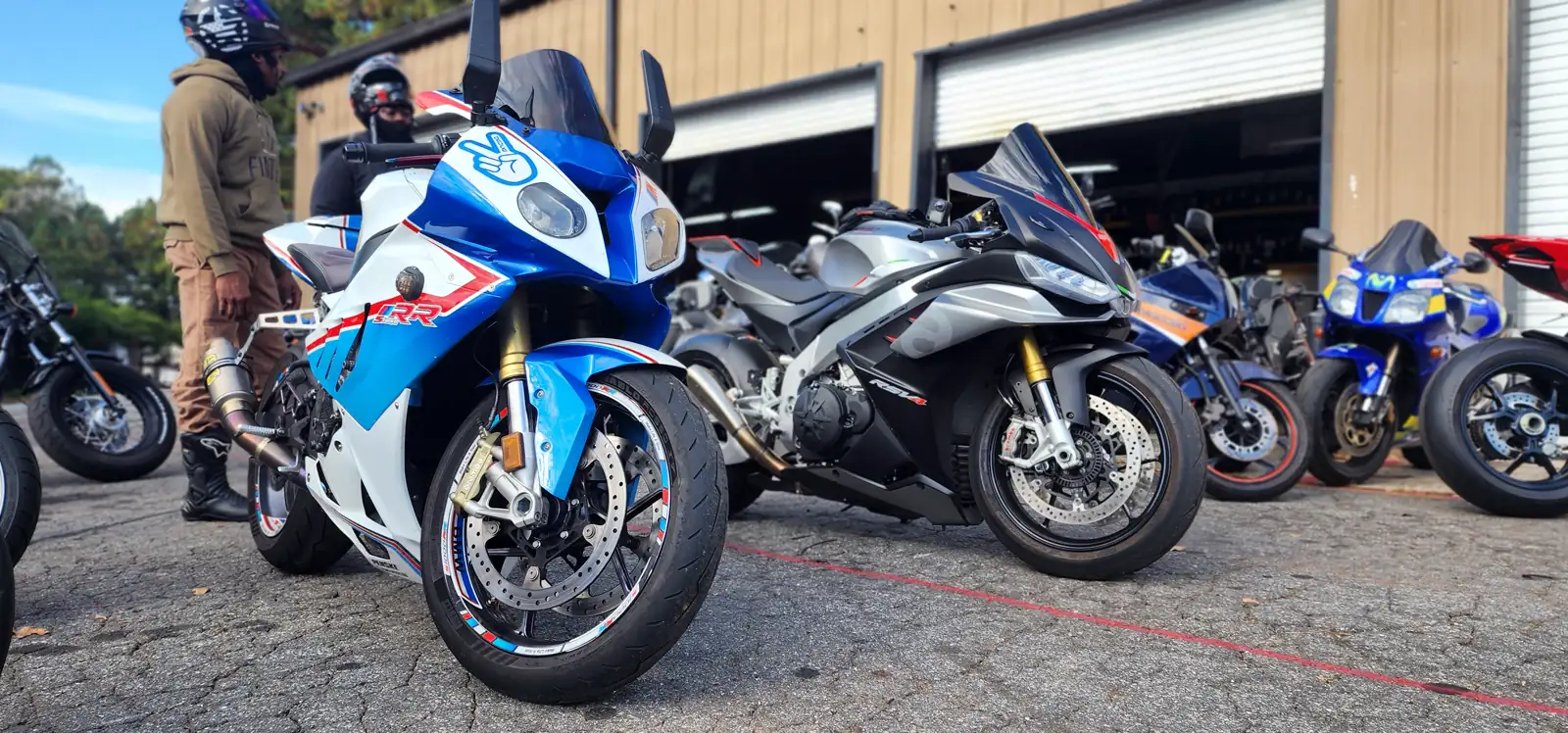
So if your bike is sitting quiet in the garage this morning, take heart. You don’t need a truck, a trailer, or a strong-backed friend who owes you one. You need a shop that comes to get it, treats it right on the ride over, and tells you straight what’s going on once it’s here. That’s the plan. And knowing it’s handled, that quiet garage stops feeling like a problem and starts feeling like the beginning of your next good ride.
Your bike isn't stuck. It's just waiting on a ride, and we've got a trailer with its name on it.
Questions Dallas riders ask us
What makes one transport job bigger than another?
Mostly access and condition, not miles. A bike in a clear driveway that rolls easily is a fast, simple load. A locked-up bike wedged in a tight garage takes more time, care, and muscle. Distance plays a smaller role than most folks expect.
Why can't you just quote it over the phone?
Because a quote given before we’ve seen your bike is either padded high to be safe or lowballed to win the call. Neither is fair to you. We ask where the bike sits, whether it rolls, and what’s wrong, then give you a number that matches the real job.
What's included when you pick up my bike?
We handle the loading, the tie-down, and the haul back to Marietta, plus condition photos taken before we ever pull away. Once it’s at the shop, we look it over and tell you exactly what it needs before any work starts. No surprises.
How long does the whole thing take?
The pickup itself is usually under an hour on your end, and the drive back to Marietta is a straight shot. After that, timing depends on the repair, not the transport. A simple fix can have you riding in a day or two, while a bike that sat for years takes longer.
Is the price mostly parts or mostly labor?
It depends on the bike. A dead battery is almost all parts. A gummed-up fuel system or a deep cleanup is almost all labor, meaning our time and hands. We break down both for you once we’ve had a real look, so you always know what you’re paying for.
Open trailer or enclosed trailer for my bike?
Both work, and the right one depends on your bike and the trip. An open trailer is quick and fine for plenty of jobs. An enclosed trailer shields against weather and road grime, which is the smart pick for a clean custom, a pristine cruiser, or a longer haul.
We roll out from Marietta to riders all across the west metro, and Dallas in Paulding County is a regular stop. That means we’re glad to come get your bike in Hiram, Powder Springs, Acworth, and Kennesaw, and we head the other direction just as often for friends in Douglasville, Villa Rica, and Cartersville. Whether you’re closer to Rockmart, Taylorsville, Braswell, or Yorkville, or right here near the shop in Marietta, a stranded bike is never really stuck. It’s just waiting on a ride to us.
STUCK BIKE IN DALLAS? WE'LL COME GET IT
If your bike won’t start, won’t roll, or just landed in your garage from out of state, don’t wrestle with it alone. Text us a quick photo of where it sits in Dallas and we’ll set up a pickup that fits your schedule, load it up safely, and tell you straight what it needs once it’s back in Marietta. No truck required, no favors owed. Just your bike, coming home.
470-460-9883Diaz Motorcycles and Service, LLC · 847 Barnes Mill Road, Marietta, GA 30062