Motorcycle Transport Cost in Mableton: The Full Breakdown
Why one flat number never fits every haul, what the process really looks like, and why coming to you beats every other option.
Either way most riders believe moving a bike is a flat rate. In short you look up a number, you pay it, and a truck shows up. That is the myth, plain and simple. At the same time the truth is that no two hauls are the same, and the second you see why, the whole idea of one flat motorcycle transport cost Mableton riders keep asking about starts to fall apart in a good way.
As a result here is the part that trips people up. On the other hand a price you find online is built for an average bike, on an average day, with an average driveway. Your bike is not average. It might not run. So it might sit behind a gate, up a hill, or wedged in a garage packed to the walls. So a real number depends on real details, and that is not a shop being cagey. That is a shop being honest with you.
Still, we fix bikes for a living, and we also go get them when they can’t come to us. This post breaks down what actually drives the number, what the whole job looks like from the first call to the last strap, and how to tell a straight-shooting shop from one that’s guessing. Plus, By the end, you’ll know exactly what you’re paying for and why.
Reality: what actually drives the number
Meanwhile, Think of any transport job as two halves. One half is the miles. The other half is the work. Of course, the miles are the easy, predictable part, like the parts on a repair invoice. You can measure them on a map before anyone lifts a finger. The work is different. That’s the access, the loading, the tie-down, and the care, and it swings wildly from one bike to the next. That work is the labor, and labor is where the real difference hides.
Distance sets the floor. A hop across South Cobb costs less to move than a bike bought three states away, and that surprises nobody. But two hauls of the exact same distance can still land in very different places, because the second half of the job changes everything. A short pickup with an easy driveway and a running bike is light work. A short pickup with a dead bike behind a gate is not, even though the map says they’re twins.
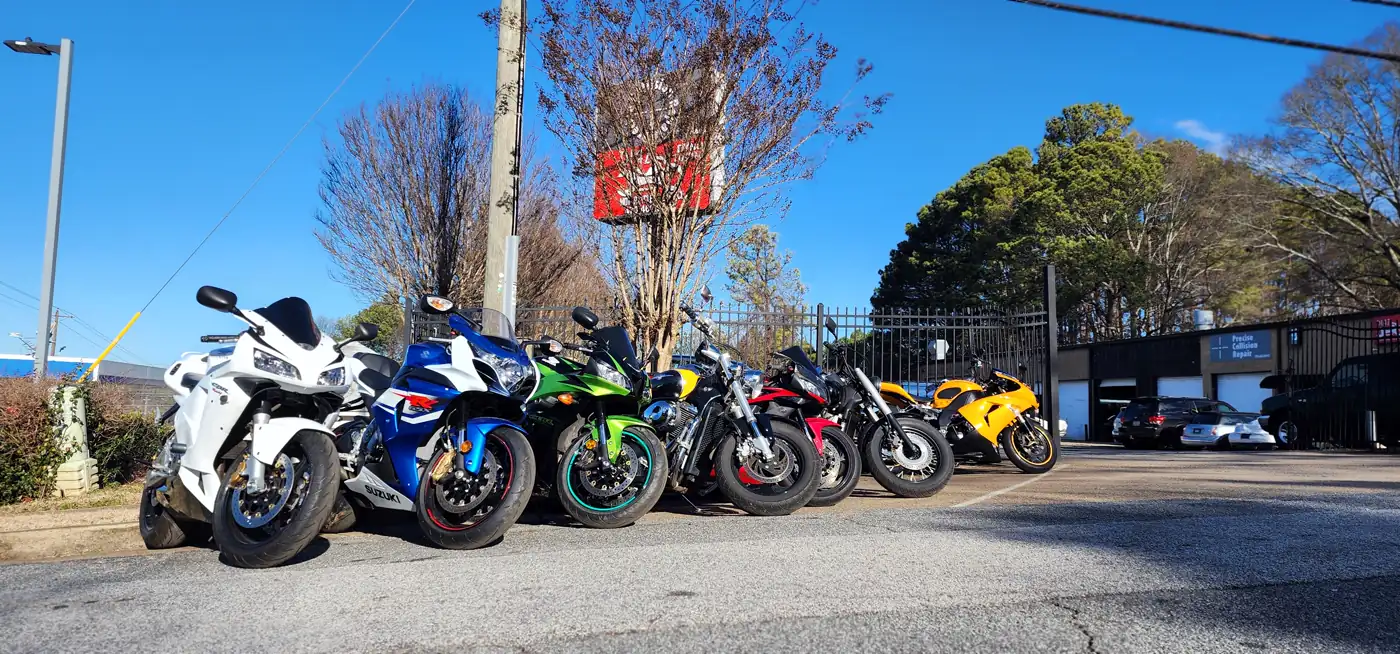
Then there’s open versus enclosed. An open trailer is fine for a lot of runs, and plenty of bikes ride home that way in perfect shape. Enclosed is a different level. It shields the bike from rain, road grime, sun, and prying eyes, which matters a great deal for a fresh paint job, a rare build, or a long haul down the interstate. More protection means more truck, and more truck shifts the number. You choose the level of cover that fits the bike, not the other way around.
Access is the wild card. A bike that fires up and rolls onto a ramp under its own power is one job. A dead bike that has to be muscled, winched, or carried out of a tight spot is another. If it won’t start, the reason matters, and what usually causes it ranges from a flat battery to a seized engine. Each of those needs a slightly different plan to load safely, and that plan is part of what you’re paying for.
The actual process, start to finish
Let’s walk the whole thing, because once you’ve seen it, none of it feels like a mystery. A good haul is boring on purpose. Boring means nothing went wrong, and nothing going wrong is the entire goal.
- You call or text and tell us the bike, where it sits, and where it’s going. We ask about the driveway, the surface, whether it runs, and whether it leans on a stand or lies on its side.
- Actually we look it over, in person or through photos and a quick video. This is where the real number comes from, not a guess.
- We schedule a window and show up with the right trailer, ramp, straps, and wheel chock for that specific bike.
- That’s why we roll or winch it up the ramp, seat the front wheel in the chock, and lock it in.
- We tie it down at four points, compress the front suspension a touch, and check every strap twice before the wheels move.
- We haul it, deliver it, unload it the same careful way, and hand you paperwork that proves the bike’s condition start to finish.
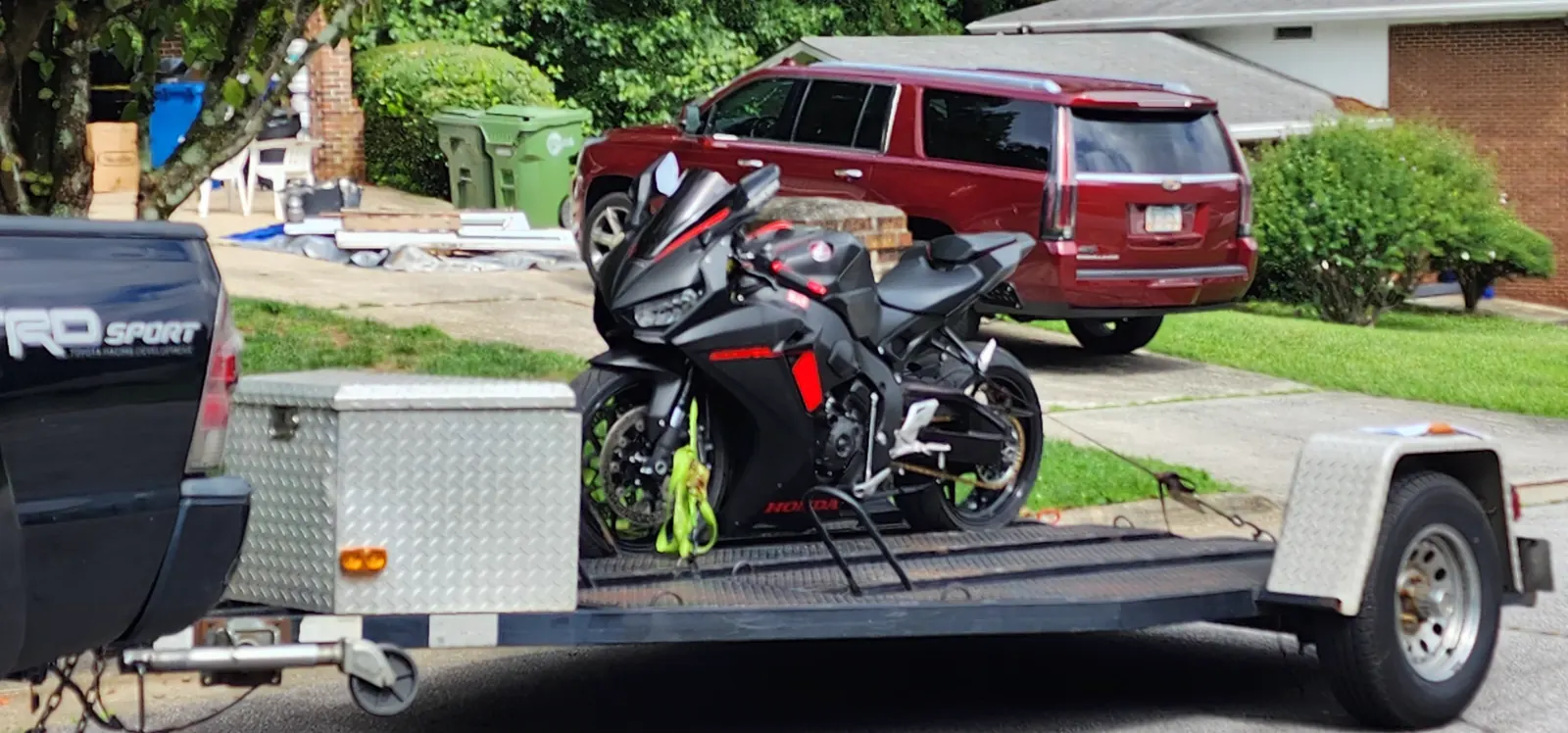
The tie-down is where craft shows. You’ve probably seen a bike on a trailer swaying like it’s dancing. That’s a bad strap job, and it puts a bike on the ground. We run soft loops so the straps never chew handlebars or plastics, pull the front end down until the fork sits firm, and balance the tension side to side. A properly strapped bike sits dead still at highway speed, humming along like it’s parked in your garage.
Paperwork protects you, and folks skip this part until they wish they hadn’t. Before we move an inch, we note the bike’s condition, scratches and all, with photos. That record is your proof if a question ever comes up. It also keeps a title or registration question clean, and if you’re ever unsure what a title move requires, the Georgia Department of Revenue spells it out. Loading, hauling, condition photos, and safe delivery are all part of what we take care of here.
Now, the part nobody mentions until you're already paying for it.
The hidden cost is almost never the driving. It’s the labor to get a stuck bike out of a hard spot. A running bike on flat pavement loads in minutes. A non-running bike behind a fence, up a grade, or on gravel takes muscle, a winch, and time, and time is the thing people forget to picture. That’s the labor half doing the heavy lifting while the miles sit unchanged. Two identical addresses, two very different amounts of work.
Here’s the honest flip, though, and it’s the whole point. For a bike that won’t run, coming to get it beats every other option cold. You can’t ride it. A buddy’s truck means ramps, straps you may not own, and a real risk of a drop. A bike that’s been sitting after a spill needs hands that have loaded a hundred of them. When we come get it, the hard part is our problem, not yours, and that’s exactly what you’re paying for.
How to tell a good shop from a guess
Here’s the tell, and it sounds backwards at first. A shop that fires off a firm price before seeing your bike is guessing, and a guess only goes two ways. Either they padded it high to cover themselves, so you overpay, or they lowballed it and the number climbs once they see the real driveway. Neither one is fair to you. An honest shop asks questions first, because it wants to quote the job you actually have, not an average one.
So when someone quotes sight-unseen, that’s a yellow flag, not a green one. The good ones want the details. What’s the bike, does it run, where does it sit, how’s the surface, and where’s it headed. Riders in other towns hit the same wall, and it’s worth seeing what Sandy Springs riders run into when they price a longer haul. The pattern’s identical everywhere. Real numbers come from real details.
THE FAST TEST
Ask the shop one thing: do you need to see it first? A yes means they care about getting your number right. A confident price with no questions asked is a coin flip you didn’t agree to.
The same rule holds for the wrench work waiting on the other end. Whether the bike needs a battery, a full service, or a fresh start after months outside, an honest shop scopes it before it quotes it. If you’re weighing a dealer against an independent, what the work covers tends to matter more than the badge on the door. The transport and the repair run on the same simple idea: see it, then price it.
Mableton in the picture
Mableton is really two riding towns in one, and that shapes who calls us and why. Up in the premium pockets, folks in The Ridge at Vinings Estates, The Retreat at Old Vinings Lake, and Vinings Plantation tend to keep well-optioned baggers and European bikes tucked in two- and three-car garages. Down along the Mableton Parkway and Floyd Road corridors, a big share of bikes live outside under a cover or in a carport. That outdoor half is exactly where a dead battery, water in the fuel, or a seized-up bike turns a Saturday ride into a phone call to us. Both halves ride the same roads, though, and both hit the same wall when a bike simply won’t move. Riders here tend to be value-aware without being cheap, so a fair, see-it-first number lands well on either side of town.
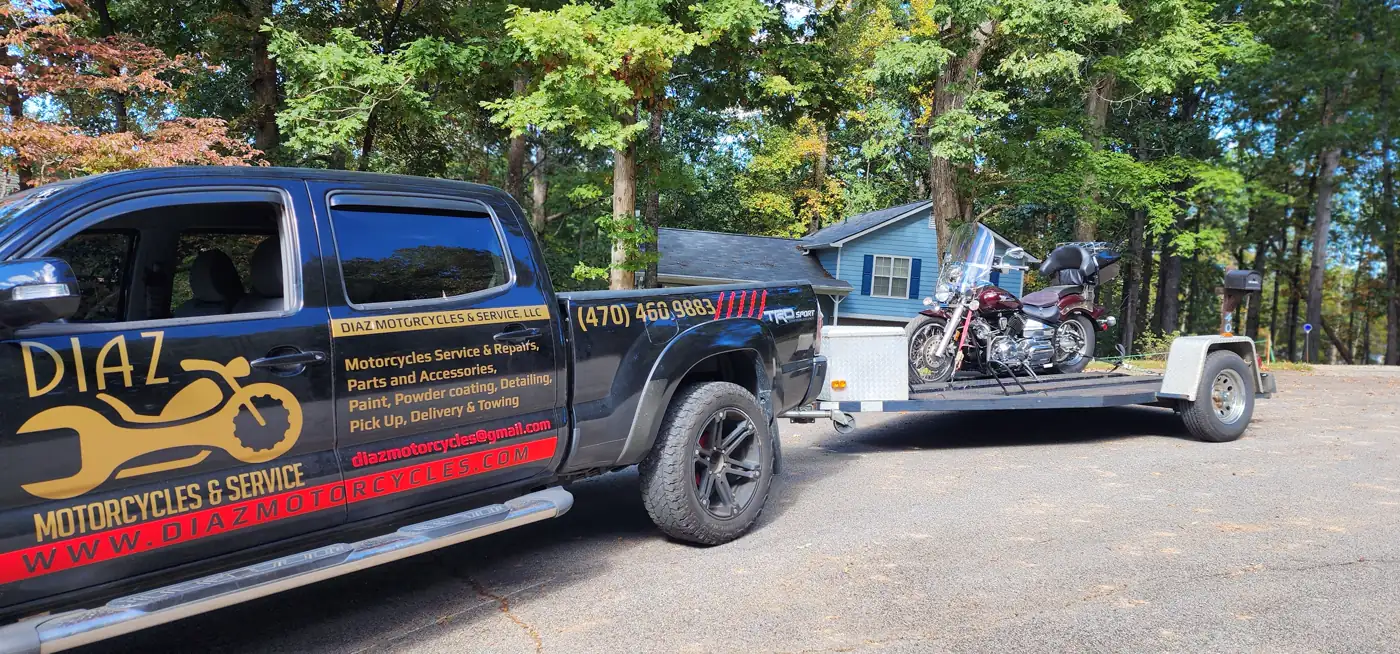
Coming to you erases the drive, and in a city this busy that’s the whole pitch. From most of Mableton it’s about 13 to 16 miles to the shop, roughly 25 to 35 minutes up South Cobb Drive through Smyrna into Marietta, then east toward Barnes Mill Road. That’s an easy run for us with a trailer, but it’s a run you simply can’t make on a bike that won’t start. So we make it instead, and you keep your day.
Local roads factor in too. The historic stretch of Nickajack Road cuts through the oldest part of town, near the Mable House Arts Center where classes and gallery shows run all year, and the Chattahoochee River marks the southeastern edge of town. Heavy truck traffic and older neighborhood streets mean rutted pavement and washed gravel after a storm, which is rough on a bike already limping. Meanwhile the big-box option, RideNow Powersports Canton over on Riverstone Parkway, sits close to 40 miles north, a long way to send a bike that can’t move on its own.
And then there's the part that's just about riding again.
Because the point of all this is not the trailer. The point is the ride waiting for you once the bike’s sorted. Around here, that dream ride is the long one north to the mountains, up SR 60 toward Suches and around Wolf Pen Gap Road, the Georgia Triangle out of Stonepile Gap. It’s a full day, two to two and a half hours out before the fun even begins, and no rider wants to miss the good weather stuck at home because a bike wouldn’t crank. Getting it here is step one. Getting you back on the road is the whole reason we do it.
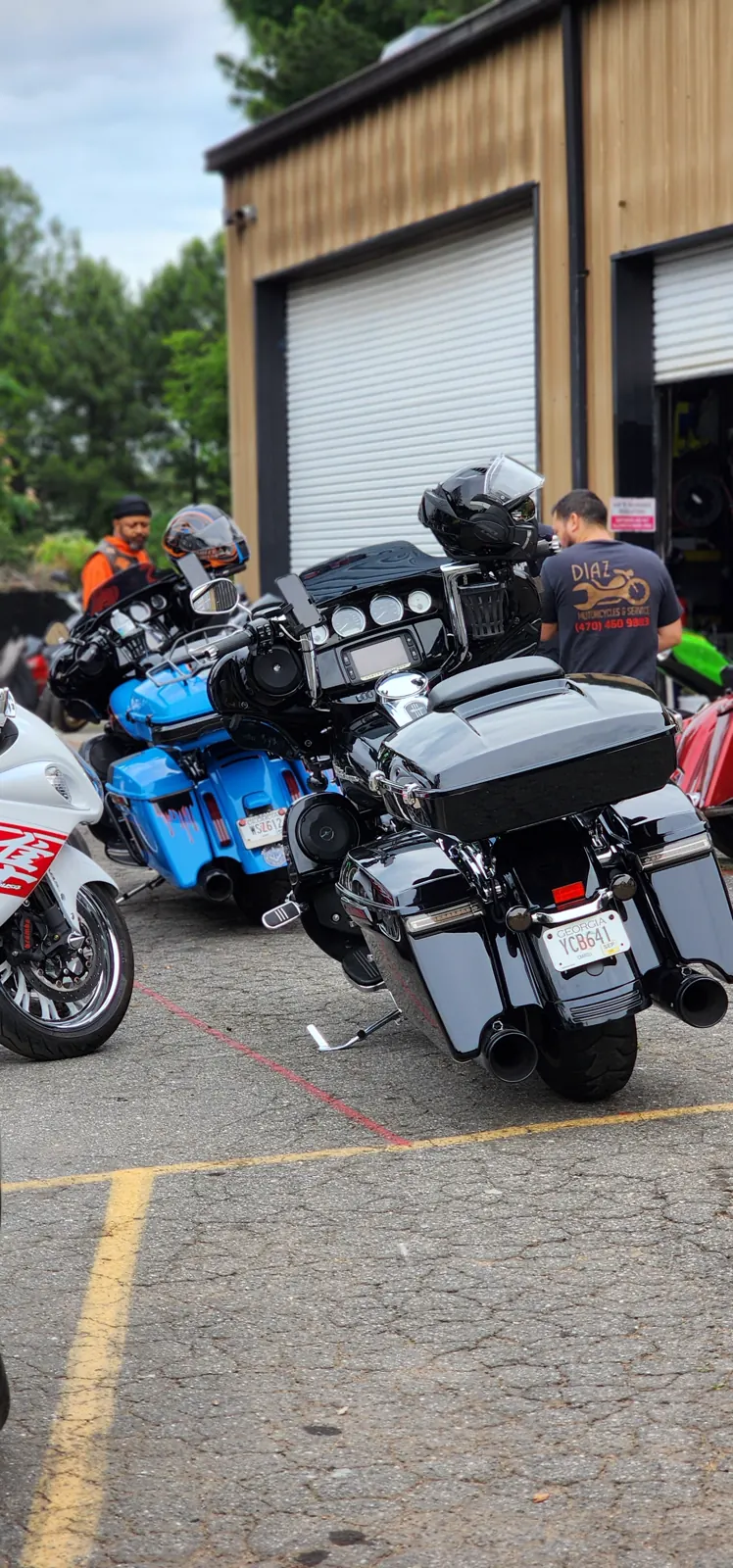
So the clear-headed takeaway is this. There’s no single motorcycle transport cost Mableton riders can copy off a website, and that’s actually the good news, because it means you only pay for the job you truly have. Miles you can see coming. The work depends on the bike, the spot, and the level of care it needs. A shop worth trusting will look first, tell you straight, and treat your paperwork like it matters. For the deeper rules of the road on all of this, groups like the American Motorcyclist Association are a solid resource.
When a bike’s stuck, the smartest move is the simplest one. You don’t wrestle a ramp, borrow a truck, or risk a drop in the driveway. You make one call, we come get it, and the hard part becomes ours. That’s the honest version of motorcycle transport cost in Mableton: clear, fair, and built around your bike instead of an average one.
Questions Mableton riders ask us
How do I avoid surprises on the number?
Give us the full picture up front. Tell us the bike, whether it runs, where it sits, and the surface it’s parked on. When we see the real details, we quote the real job, so nothing jumps on you later. Surprises come from guesses, not from an honest look.
What makes one job bigger than another?
Two things: distance and access. Miles set the floor and are easy to measure. Access is the wild card, because a running bike on flat pavement loads in minutes, while a dead bike in a tight or uphill spot takes a winch and time. Open or enclosed cover also plays a part.
Why can't you quote it over the phone?
Because a firm phone price is a guess, and a guess only goes two ways: padded high so you overpay, or lowballed so it climbs later. Neither is fair to you. We ask questions or look at photos first so the number fits the job you actually have.
What's included in the haul?
Everything from the driveway to the drop. That means loading, a proper four-point tie-down with soft loops, condition photos before we roll, safe transport, and careful unloading. You also get paperwork that proves the bike’s shape start to finish, which protects you.
How long does it take?
A local Mableton pickup and delivery is usually a same-day or next-window job, depending on our schedule and the distance. Longer, out-of-state hauls take more time and often call for an enclosed trailer. We give you a real window once we know the bike and the route.
My bike won't start at all. Can you still move it?
Absolutely, and that’s exactly when coming to get it beats every other option. A non-running bike takes a winch and experienced hands, not a borrowed truck and a hope. We handle the hard loading so you never risk a drop. You just tell us where it sits.
We roll out to riders all over South Cobb and beyond, so a stuck bike in Mableton is an easy call for us. From here we regularly run into Smyrna, Austell, Powder Springs, and Vinings, up to the shop in Marietta, and west toward Douglasville, Lithia Springs, and Hiram. We also cover Clarkdale, Fair Oaks, the Cumberland corridor, and into Atlanta itself. If your bike can’t come to us, odds are strong we can come to it.
STUCK BIKE IN MABLETON? WE'LL COME GET IT.
Don’t wrestle a ramp or borrow a truck. If your bike won’t run, sits in a tight spot, or came home from out of state, one text gets it moving. Tell us the bike and where it’s parked in Mableton, and we’ll handle the hard part, the paperwork, and the safe delivery so you can get back to the good part: riding.
470-460-9883Diaz Motorcycles and Service, LLC · 847 Barnes Mill Road, Marietta, GA 30062