Running Lean in Peachtree City — Why It Happens and What to Do
Those little pops and that extra heat have plain causes. Here's what's really going on, and when it's still safe to ride.
It started small. Meanwhile, one little pop on a cool morning, right as you rolled off the throttle coming back into town. You almost missed it. A week later it was two pops, then a soft crackle every time you slowed for a light near Aberdeen. Of course, that tiny sound is usually the first clue of the kind of running lean Peachtree City riders bring us all season long. So here’s the calm truth up front: a small noise like that is your bike asking for help early, while the fix is still simple.
Running lean, in plain words
In fact, let’s start with what the words actually mean, because “lean” gets tossed around a lot. Your engine runs on a mix of air and fuel. When that mix has too much air and not enough fuel, we call it lean. When it has too much fuel, we call it rich. A healthy bike sits right in the sweet spot between the two, and it stays there whether you’re crawling past Kedron Village or opening it up out on the highway.
At the same time a dyno is just the tool that lets us see that mix while the engine works. The bike gets strapped to a big drum, the rear wheel spins it, and sensors read what the motor is really doing under load. We watch the air-fuel ratio, we listen, and we read the exhaust. A dyno doesn’t guess at any of it. It measures. That’s the whole reason we use one instead of eyeballing it.
So how does running lean feel from the seat? For starters, you might notice more heat rolling off the engine, especially in stop-and-go traffic around Lake Peachtree. The throttle can feel jerky at low speed. You get popping on decel, hard starts when the bike is already warm, or a little surge at a steady cruise. Some riders just say it feels “busy,” like the bike is working harder than it used to. None of that is in your head. It’s the mix drifting off center, and it’s very fixable.
Here’s a comforting bit, too. The symptoms are loud, but the underlying problem is usually one small thing. That’s the good and bad of a bike running lean: the noise gets your attention, yet the cause is almost always a simple mismatch we can spot in an afternoon. Once you understand what you’re hearing, that morning pop stops feeling like a warning siren and starts feeling like a to-do item. And a to-do item is a whole lot easier to live with than a mystery.
What actually makes a bike go lean
Most of the time, this isn’t some deep mystery. A lean condition comes from a change to how much air the engine breathes or how much fuel it gets. Here are the usual causes, most common first, so you can see where your bike probably fits.
- A new exhaust or air filter. This is the big one, by far. A slip-on or a full system lets in more air, but the factory fuel map has no idea anything changed, so the mix swings lean.
- As a result a vacuum or intake leak. A cracked boot or a loose clamp sneaks in extra air that the sensors never counted, and the bike leans out.
- On the other hand a clogged or failing fuel part. A tired pump, a dirty injector, or a restricted filter starves the engine of the fuel it’s asking for.
- Weather and altitude swings. Air is thinner or denser from one day to the next, and a stock map can’t chase all of it.
- An old tune that no longer fits. Maybe someone flashed it years back for a setup you’ve changed twice since.
See the pattern? Almost every cause is the same thing: a mismatch between air and fuel. Something changed on one side and the other side never caught up. That’s exactly what a tune corrects on the dyno, and it’s a big part of what you get when you bring it in. Instead of loading one generic file and hoping, we map it for your bike, your parts, your air.
What we check when it's on the dyno
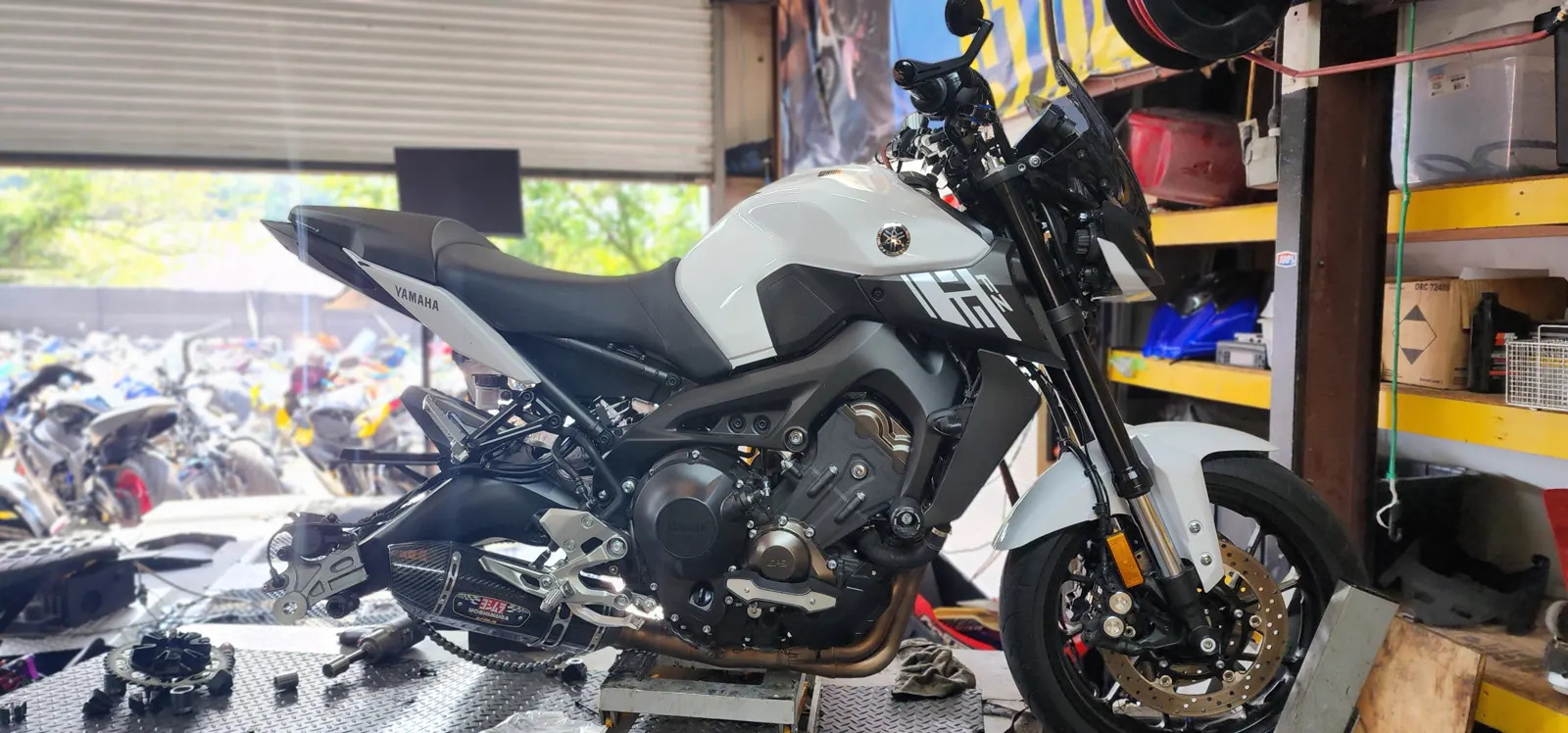
When your bike rolls in, we don’t just plug in and start twisting knobs. First we look at the whole picture, because a lean reading is a symptom, not the root cause. Chasing the number without finding the reason is how folks end up back where they started.
- We talk it through. What changed on the bike, what it feels like, and when it acts up.
- We inspect the intake and exhaust for leaks, loose clamps, and tired seals.
- So we check the fuel side — pump pressure, filter, injectors, and spark plugs.
- We strap it to the dyno and run it under load while we read the air-fuel ratio across the whole rev range.
- Still, we build or adjust the map — an ECU flash or Power Commander — so the mix is right everywhere, not just at idle.
- We run it again to confirm the numbers held.
That last step matters more than most folks expect. Anybody can make a single pull look pretty. Making a bike run clean from a cold start in Kedron all the way to a steady highway cruise takes reading the whole curve, top to bottom. Plenty of multi-line dealers around here don’t do that custom mapping in-house at all, so the bike gets shipped off to someone else and comes back wearing a one-size file.
The parts on your bike, the shape it’s in, and how far the mix has drifted all feed into what changes the total, so honestly no two tunes look quite the same. And if you’d rather read the plain-English version of what the work covers before you commit, we lay the whole thing out step by step.
The calls riders get wrong
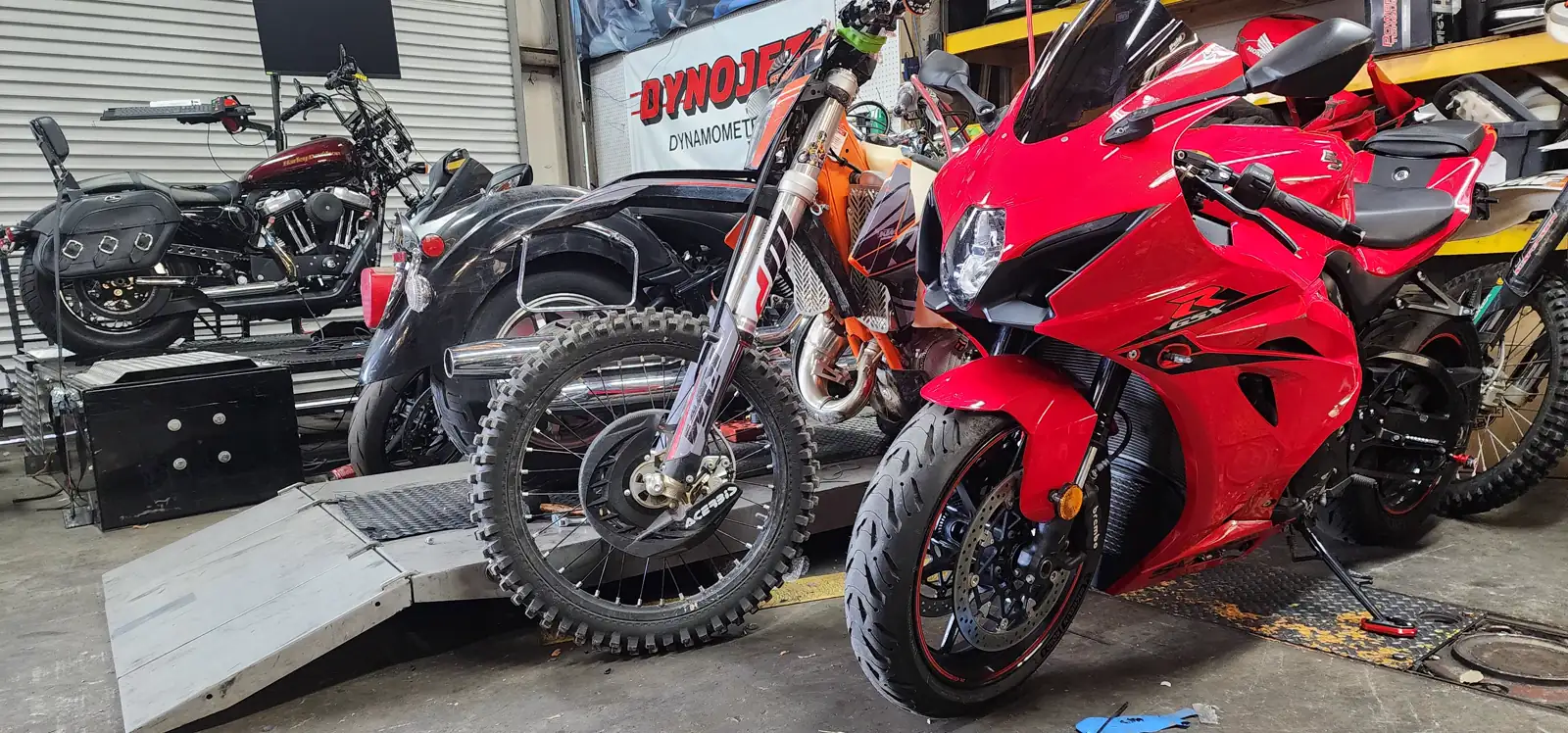
This is the point where a lot of riders make the wrong call. A bike starts running lean, the pops show up, and the temptation is to either ignore it or throw the cheapest part at it. Both of those roads usually cost more time in the end than just getting it read once.
- Ignore it and keep riding hard. A little lean gets worse, not better. More heat, more chance of knock, and over a season that heat is tough on valves and pistons.
- Buy a download tune. A generic map made for a bike in another state, at another altitude, with another exhaust, rarely matches what’s actually in your garage.
- Swap parts blind. New plugs, then a new filter, then a new pump, one at a time, all on a hunch. That’s slow, and it stacks up quick.
- Turn up the idle to bury the stumble. That hides the sound for a while, but the mix is still wrong underneath.
And it’s not just a local thing, either. It’s worth a look at what Woodstock riders run into, because the same pattern repeats from one city to the next. Same causes, same easy fixes, same relief once the mix is set right. If your bike is telling you something, it’s usually telling the truth.
Is it safe to ride right now?
Here’s the straight answer, because you deserve one. A mild lean condition — a few pops on decel, a touch more heat than usual — is generally fine to ride gently for a short spell while you get it booked in. Keep it easy, don’t lug the motor, and skip the long idles. But if you feel pinging or knock under load, if the bike is bogging or stalling, or if it’s running hot enough to worry you, stop riding it and trailer it in. Heat and knock are what actually hurt an engine, and there’s no reason to gamble a garage-kept bike over a two-week wait. If you’re still building a feel for how your bike behaves, the MSF Basic RiderCourse is a solid way to sharpen that instinct, and Dunlop’s technical resources are a good plain read on how heat and load work on a bike.
A lean bike isn't broken. It's out of tune — and tune is fixable.
Why it hides so well around PTC
Here’s the thing we wish every rider knew a season earlier: the way you ride in Peachtree City makes lean symptoms extra sneaky. So much of daily life here runs on the cart paths. Those 100-plus miles of golf-cart, pedestrian, and bicycle paths sit physically separate from the roads, and motorcycles aren’t allowed on them, so your bike almost never does the short errands. It stays garaged, covered, and on a tender, and it only comes out for the good stuff — a clear run down GA-74 south toward Senoia and the Coweta line.
That riding style is exactly what hides a lean mix. A bike that mostly cruises open road doesn’t nag you the way a daily commuter would. Instead, you feel it as a little pop near Planterra Ridge, or a bit more heat while you idle by Lake Peachtree with the paths humming with carts all around you. Falcon Field sits right in the middle of it too — the Atlanta Regional Airport at Falcon Field, with its 165 based aircraft, is one of those landmarks locals set their whole ride by. The point is simple: a low-mileage, well-kept bike can drift lean quietly, because you’re not on it every day to catch it.
And sure, there are closer options for some jobs. Cycle Specialty over in Fayetteville is a Yamaha dealer about fifteen minutes out, with sales, parts, and service. But real in-house custom mapping — a dyno, ECU flashing, and Power Commander work all under one roof — is a different animal than a parts counter. For that, the short drive is more than worth it, because the mix gets set for your exact bike instead of a category of bike.
What you get back
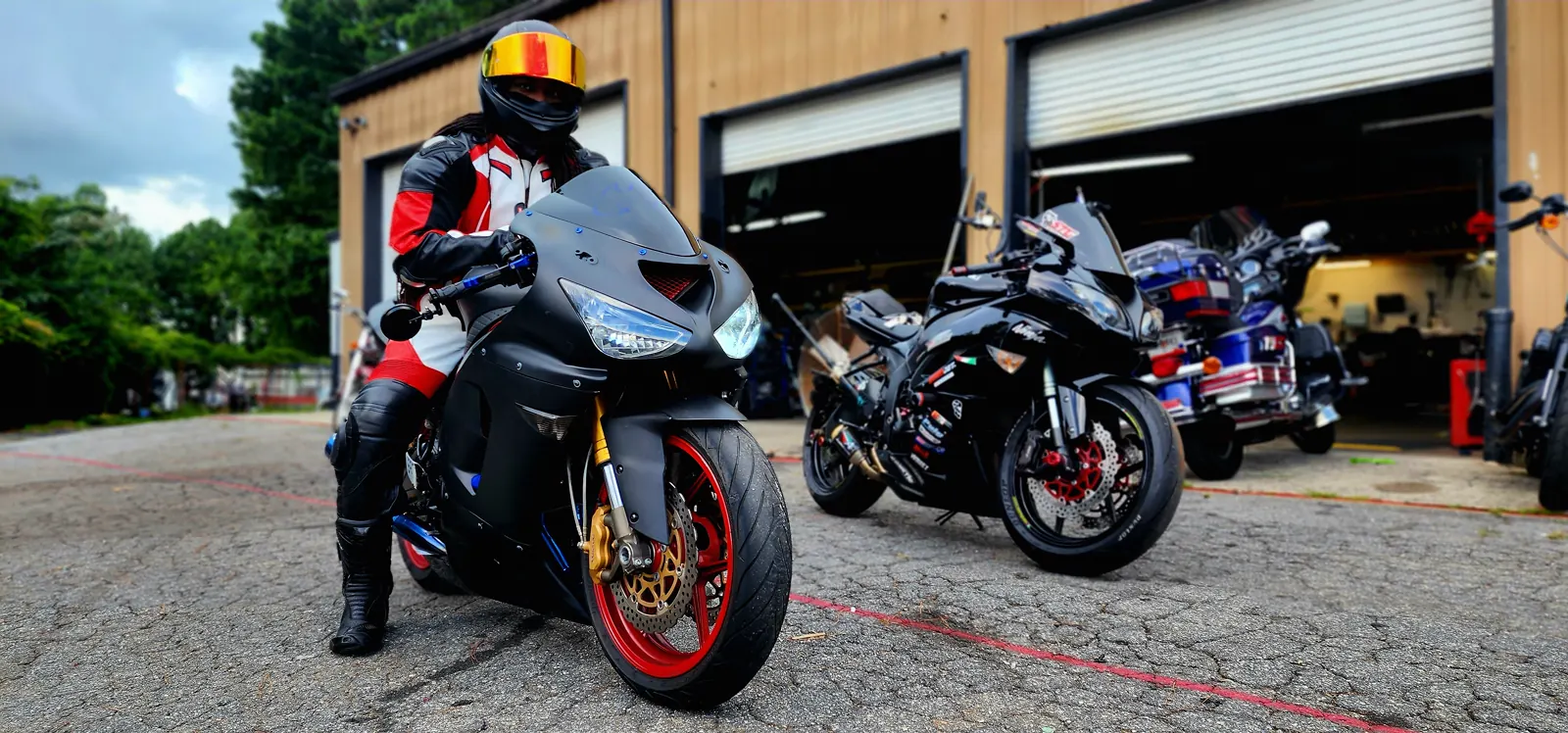
So what does a proper tune feel like when you climb back on? In a word, smoother. The throttle picks up clean right off the bottom. Plus, the popping on decel goes quiet. The engine runs cooler and calmer, fires right up whether it’s warm or cold, and pulls in one even sweep instead of that surging, busy feeling. It stops fighting you. It just feels like your bike again, only better than you remember.
That’s really the whole goal here — a bike dialed in for your setup, your parts, and your roads, with no guesswork and no canned file doing the work. Just the right mix, checked front to back on the dyno, so you can point it down GA-74 and think about the ride instead of the noise. A lean condition sounds scary at 6 a.m. on a cold start. It’s a lot less scary once you know it’s one of the simplest things we fix.
So if that first little pop has turned into a habit, take it as a good sign that you caught it early. The kind of running lean Peachtree City riders bring us is rarely a big repair — it’s a tune-up in the truest sense, a matter of matching fuel back to air until the bike breathes easy again. You don’t need to worry it, and you definitely don’t need to baby it forever. You just need one good look on the dyno, and then you’re back to enjoying a bike that’s kept as nice as yours clearly is.
QUICK GUT CHECK
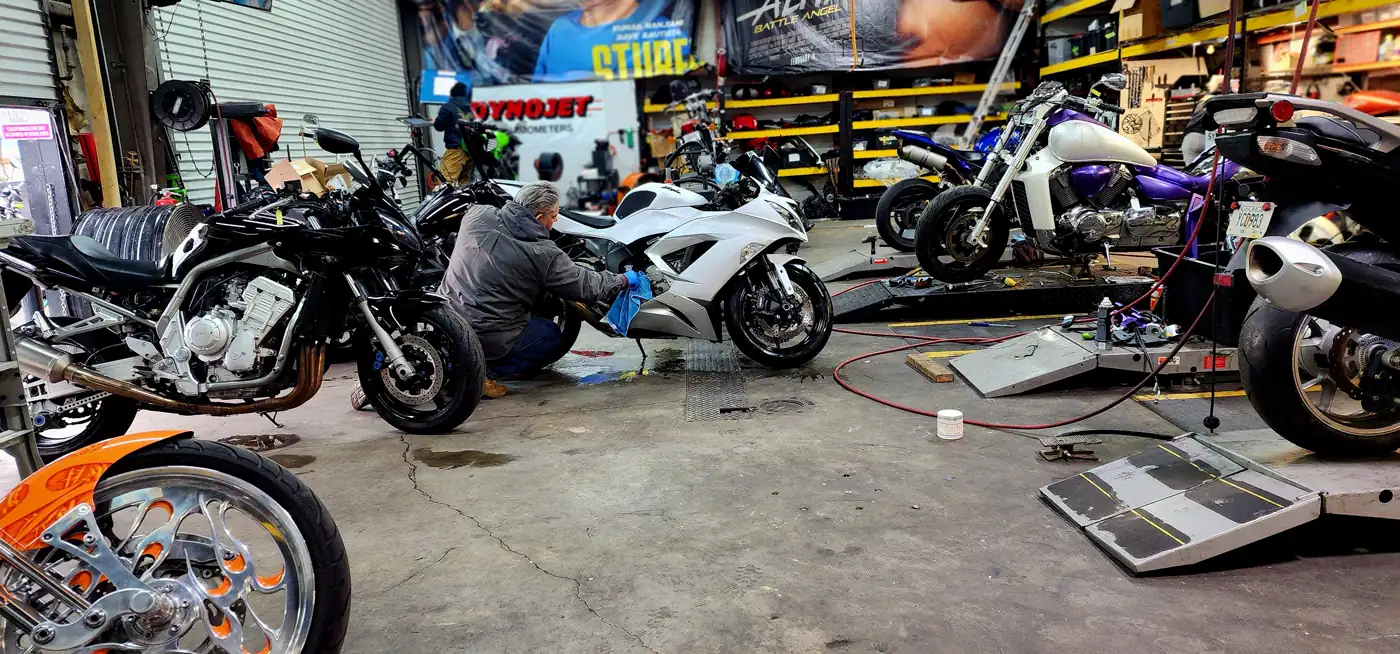
A few pops and a little extra heat? Ride it gently and book it in. Pinging, knock, bogging, or worrying heat? Trailer it in and let it cool. When in doubt, don’t cook a good engine over a short wait.
Questions Peachtree City riders ask us
Could it be something other than a lean mix?
Sometimes, yes. Pops and rough running can also come from an ignition issue, a weak battery, or bad fuel. That’s exactly why we inspect the whole bike before we tune. The dyno tells us for sure whether the air-fuel mix is the real story or just part of it.
Is it safe to ride like this?
A mild lean condition is usually fine for short, gentle rides while you get it scheduled. Keep it easy and skip long idles. But if you hear knock or pinging under load, or it’s bogging, stalling, or running very hot, stop and trailer it in. Heat and knock are what actually damage an engine.
What actually causes a bike to run lean?
Most often it’s a new exhaust or air filter that added airflow the factory fuel map never planned for. Other common causes are intake or vacuum leaks, a tired fuel pump or clogged injector, and big weather swings. A tune matches the fuel back to the air so the mix sits right again.
Can I fix it myself?
You can handle some of the groundwork, like checking clamps and swapping a filter or plugs. But dialing in the actual fuel map needs a dyno so you can read the mix under real load across the whole rev range. Guessing without that data usually trades one problem for another.
Will it get worse if I wait?
A lean mix tends to drift further, not settle down. More heat and possible knock over a season are hard on valves and pistons. The good news is that catching it early, back when it’s just a few pops, is the easy and inexpensive time to sort it out.
Do I really need to drive to Marietta for this?
Peachtree City has no motorcycle shop of its own, so you’re driving out for service either way. The question is what you’re driving for. Real in-house dyno tuning, ECU flashing, and Power Commander work under one roof is worth the trip to get the mix set for your exact bike.
We tune and service bikes for riders all across the south metro, so you’re in good company if you’re rolling in from Fayetteville, Tyrone, or Newnan. Folks trailer in from Senoia, Sharpsburg, and Brooks, along with the quieter corners around Woolsey. We also see plenty of riders from Union City, Fairburn, Jonesboro, Riverdale, and Palmetto who want the mix set right the first time. Wherever you keep your bike, the drive is the same short errand — and the tune comes back matched to your exact setup.
LET'S GET THAT MIX RIGHT
If your bike is popping, running hot, or just feeling busy, don’t guess your way through it. Text us a quick note about what your Peachtree City bike is doing and when it acts up, and we’ll get it on the dyno, find the cause, and set the fuel mix right for your exact setup. One check, one confirm, and you’re back to thinking about the ride instead of the noise.
470-460-9883Diaz Motorcycles and Service, LLC · 847 Barnes Mill Road, Marietta, GA 30062