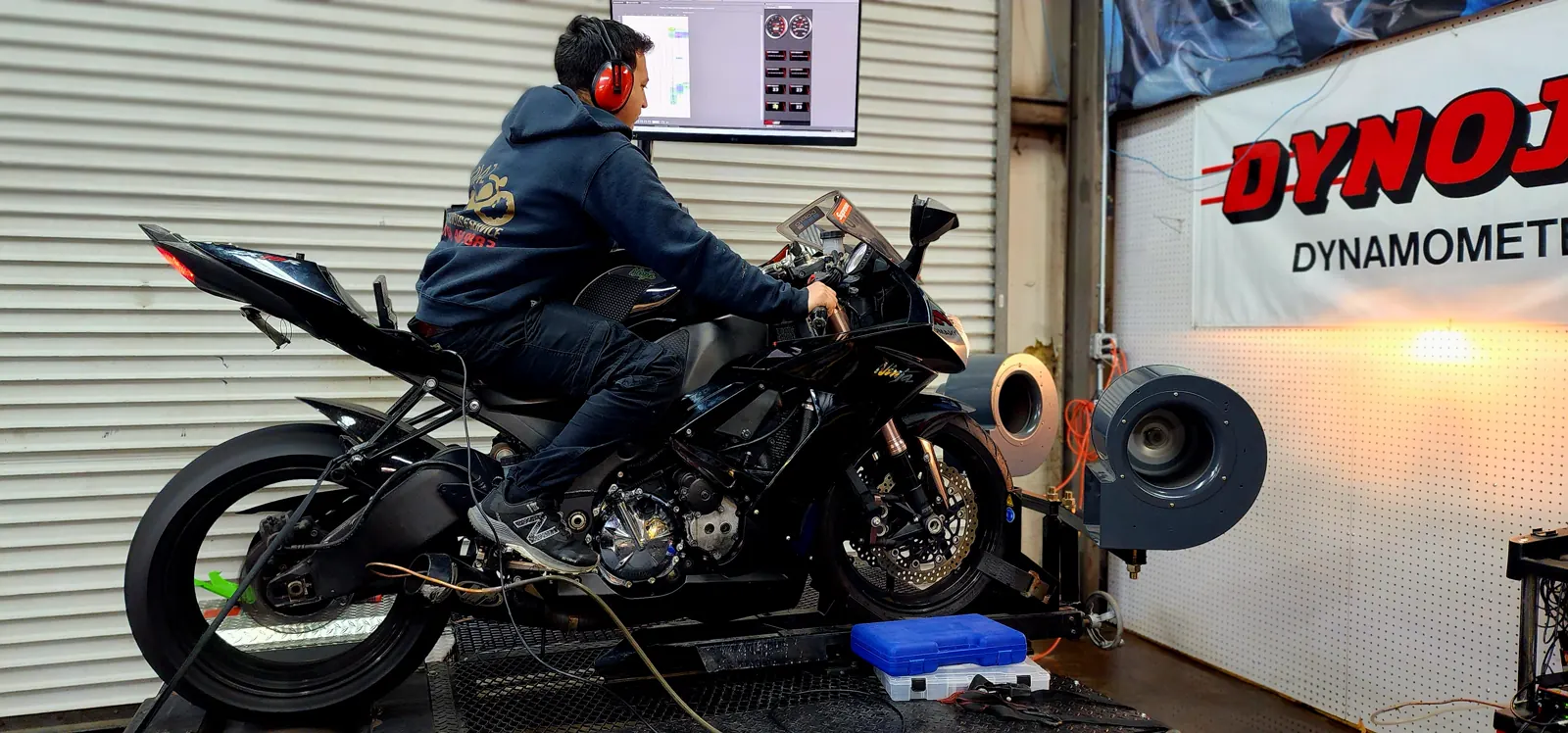
The Connection Between Dyno Tuning, Engine Temperature, and Long-Term Reliability for Georgia Riders
Most riders think about dyno tuning motorcycle reliability in Georgia in terms of performance — more power, better throttle response, smoother delivery. Those benefits are real, but they undersell the most important thing a proper tune actually does: it corrects the fuel calibration errors that cause your engine to run hotter than it was designed to run, and it does so at precisely the temperatures and riding conditions that define everyday motorcycle ownership in Georgia. The performance is the headline. The engine longevity is the story beneath it.
Combustion temperature is the variable that determines how long an engine lasts. It dictates the rate at which valve seats wear, how quickly piston rings lose their tension, whether cylinder walls maintain their cross-hatch oil retention pattern over time, and how rapidly oil degrades between changes. A factory fuel map calibrated conservatively for emissions compliance creates predictable temperature conditions — until you modify the bike. Once you add an aftermarket exhaust, change the air intake, or even just put significant mileage on a bike that was always slightly lean from the factory, the thermal balance shifts. The engine starts running hotter than the engineers intended, and the long-term reliability consequences accumulate quietly with every mile.
How a Lean Fuel Mixture Raises Engine Temperature
The relationship between air-fuel ratio and combustion temperature is direct and well-documented. A lean mixture — too much air relative to the fuel — burns hotter than a stoichiometric or slightly rich mixture. The reason is thermodynamic: when there’s excess oxygen present during combustion, the burn duration extends, peak cylinder pressure arrives later, and the combustion event transfers more heat to the cylinder walls, piston crown, and exhaust valves rather than converting it to mechanical work. On a single ride, the difference is negligible. Over 10,000 miles of Georgia summer riding with a lean map, the cumulative thermal stress is measurable on a teardown.
- Lean combustion increases exhaust valve temperatures — the component most sensitive to sustained heat
- Elevated piston crown temperatures accelerate ring groove wear and reduce ring seal over time
- Engine oil degrades more rapidly at higher sustained temperatures, reducing lubrication quality between changes
- Air-cooled and oil-cooled engines are especially vulnerable because they lack coolant to buffer temperature spikes
- Lean surge at highway cruise RPM indicates a chronically lean condition exactly where Georgia riding accumulates the most miles
- A properly tuned AFR at cruise reduces steady-state combustion temperature by a meaningful margin
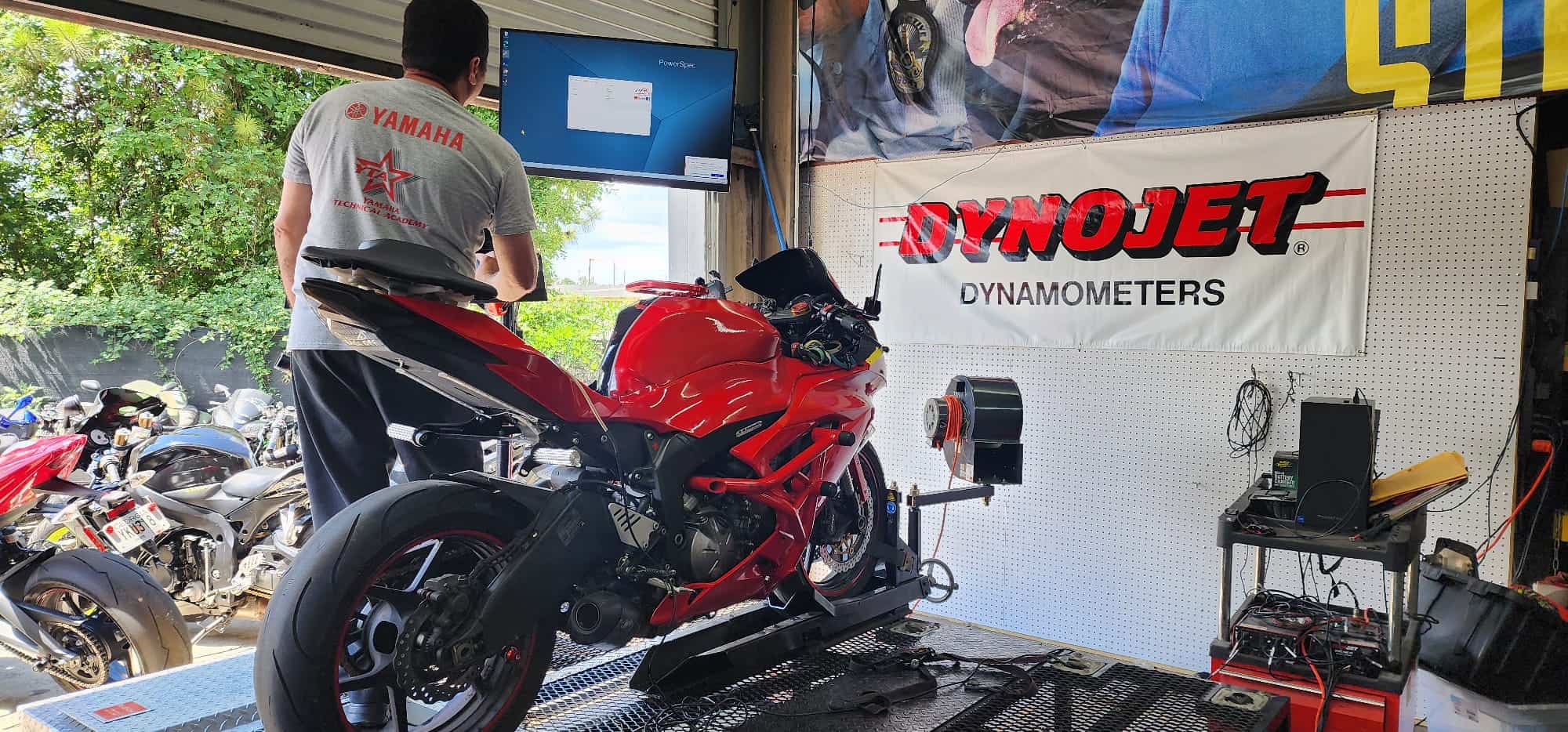
Lean combustion transfers excess heat to exhaust valves and piston crowns — a dyno tune corrects the air-fuel ratio and brings combustion temperatures back within the engine’s design limits.
Georgia’s Climate and Why It Compounds the Problem
Georgia’s riding season spans nearly the entire year, and summer temperatures in the Atlanta metro regularly exceed 90 degrees Fahrenheit with meaningful humidity. That ambient heat load is stacked on top of whatever heat the engine generates internally. Air-cooled Harleys, naked sport bikes, and adventure tourers that see significant Atlanta stop-and-go traffic are all operating in a thermal environment that leaves very little margin for the additional heat load of a lean fuel calibration. Liquid-cooled bikes have more thermal buffer, but they’re not immune — the lean condition still burns exhaust valves harder and degrades oil faster regardless of what the coolant temperature gauge shows.
“In Georgia, your engine fights the heat from the outside and the heat from bad fueling at the same time. Fix the fueling and you give the engine a fighting chance in the summer.”
The dyno tune addresses both sides of the thermal equation. On the fuel side, correcting the air-fuel ratio at cruise brings combustion temperatures down to the range the engine was designed for. On the mechanical side, the pre-tune inspection that precedes every calibration session at Diaz Motorcycles often catches cooling system issues — low coolant, clogged oil coolers, thermostat problems — that were invisible during normal riding but become critical when you understand the full thermal picture. A tune session is as much a reliability investment as it is a performance upgrade.
The Long View: What a Tune Is Worth Over 50,000 Miles
Riders who hold onto their bikes long-term — and there are many in Cobb County who put 50,000 or 100,000 miles on a machine they love — will tell you that the difference between a well-maintained, properly-tuned engine and one that ran slightly lean for years shows up clearly at the first serious mechanical event. Valve jobs, ring replacements, and piston work that arrive 20,000 miles earlier than they should aren’t random. They’re the bill for heat that accumulated slowly, invisibly, over thousands of Georgia miles. A dyno tuning service is not the most expensive thing you’ll do to your motorcycle. It is almost certainly the most cost-effective thing you can do to protect what you’ve invested in it.
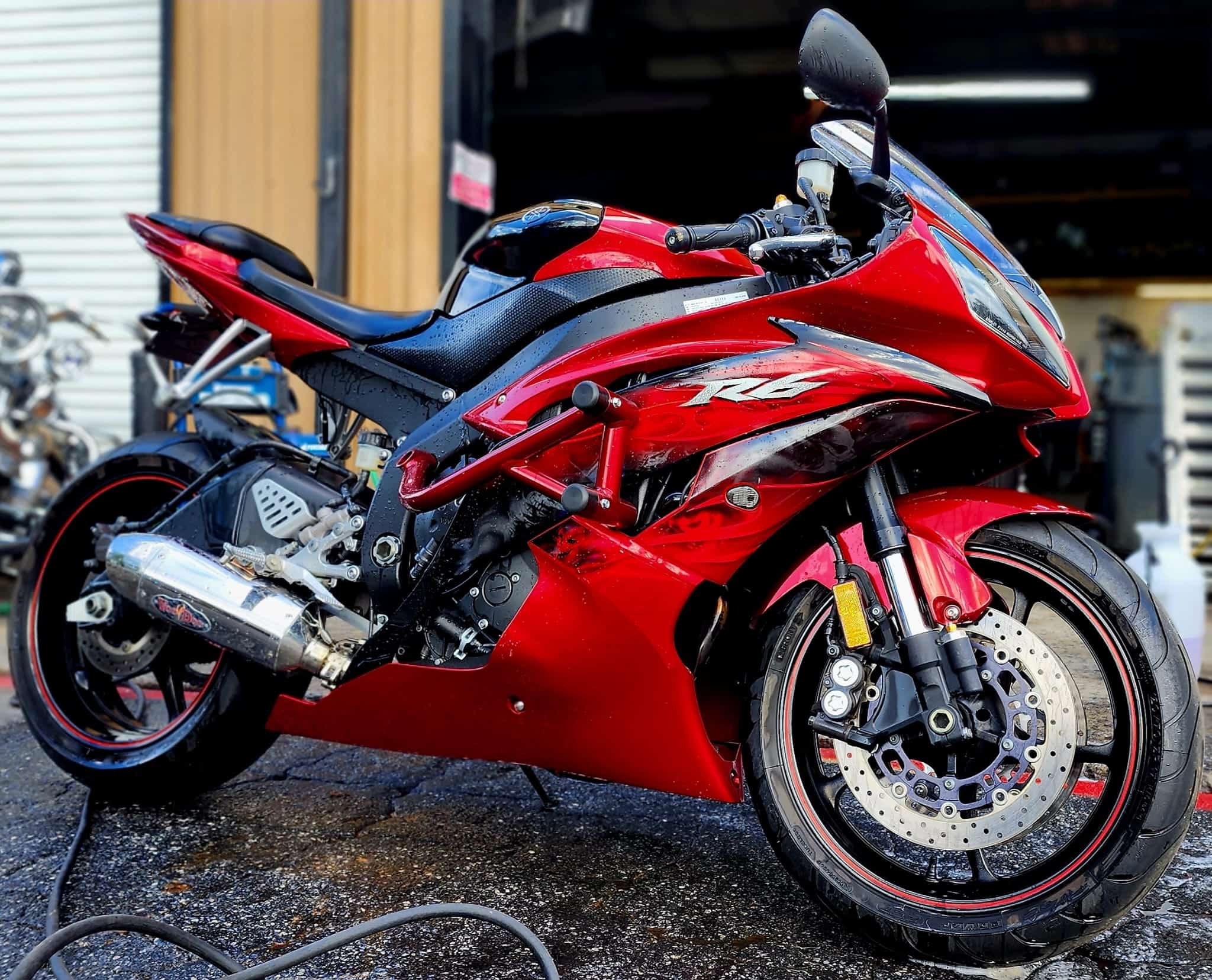
Long-term engine reliability in Georgia starts with the fuel calibration — a dyno tune is the most direct way to ensure combustion temperatures stay within the design limits of the engine.
Diaz Motorcycles serves riders throughout Cobb County, Marietta, Kennesaw, and the broader Atlanta metro who understand that keeping a motorcycle performing well for years requires more than oil changes and tire swaps. The fuel map is the foundation of the engine’s thermal environment on every single ride. If it’s wrong, everything downstream suffers — gradually, quietly, and expensively. If it’s right, the engine runs at the temperatures it was designed for, oil stays cleaner longer, components wear at the rates the engineers calculated, and the machine you love continues to deliver exactly what it promised when you bought it. That’s what a proper dyno tune protects.

A properly calibrated fuel map keeps combustion temperatures in range on every Georgia road — protecting the engine that gets you there and home again.
Protect Your Engine Before Georgia’s Heat Does the Damage
A dyno tune at Diaz Motorcycles in Marietta is the most effective reliability investment you can make for long-term motorcycle ownership in Georgia.
470-460-9883 Schedule Service Today847 Barnes Mill Road, Marietta, GA 30062
Serving Cobb County · Marietta · Kennesaw · Atlanta · and surrounding Georgia communities