What Your Motorcycle Tire Wear Patterns Are Actually Telling You
Most riders check tire tread depth and treat tire wear as a one-dimensional question — how much is left? But the pattern of how a tire wears tells you things that tread depth alone doesn’t. Uneven wear, cupping, center wear, and edge wear each indicate different issues: incorrect tire pressure, suspension problems, alignment, riding style, or simply the nature of your routes. Reading the wear correctly means you can address the cause — not just replace the tire and repeat the same pattern.
Here’s what the most common motorcycle tire wear patterns indicate for Cobb County riders, and what to do about each one.
Center Wear — Too Much Highway
A tire worn heavily in the center with relatively fresh edges has been running at consistent highway speeds for most of its life. The tire contact patch under straight-line acceleration and cruising sits at the center of the tread. This is the most common wear pattern for touring and commuter riders and isn’t a sign of a problem — it’s a sign that the tire has been used the way you’d expect. When the center wear approaches the wear indicators, it’s time to replace. Don’t wait for the edges to catch up — they may never see that much use.
Cupping or Scalloping — Suspension Issue
Cupped tires — where the tread has an irregular, scalloped surface rather than even wear — are a sign of suspension that isn’t damping correctly. The tire bounces slightly as it rolls, wearing in an inconsistent pattern. Worn shock absorbers and fork dampers are the most common culprits. Riding on cupped tires is both uncomfortable and unsafe — the uneven contact patch reduces traction, especially in cornering. The tire needs replacement and the suspension needs service. Replacing the tire without addressing the suspension means the new tire will cup faster than the old one did.
- Center wear: Normal highway use pattern — replace at wear indicators
- Cupping / scalloping: Worn suspension — replace tire and service suspension
- One-sided wear: Misalignment or consistently riding the same lean angle — have alignment checked
- Flat spotting: Long-term static storage — inflate above normal spec and check if it rounds out
- Edge cracking without wear: Age degradation — replace based on age, not mileage
- Feathering (fine ridges): Camber issue or consistently hard braking in one spot

Tire wear tells a story — reading it correctly saves money, extends tire life, and keeps you safe on Georgia roads.
How Georgia’s Roads Affect Tire Wear
Georgia’s road surfaces range from smooth highway to rough secondary roads with regular tar strips, repaving ridges, and surface irregularities from heat expansion. Stop-and-go Atlanta traffic accelerates rear tire wear from repeated hard acceleration. The summer heat softens tire compounds faster than in cooler climates — a tire that would last 8,000 miles in the Midwest may see 6,000 miles in a Georgia summer. Factor this into your replacement schedule.
“Tire age matters as much as tread depth. A six-year-old tire with plenty of tread left has rubber that’s no longer performing the way it should — and you can’t see that from the outside.”
A tire that’s more than five years old should be inspected carefully and replaced regardless of tread depth. The rubber compounds degrade over time — UV exposure, ozone, and heat cycling all reduce grip characteristics even on a tire that looks fine visually. The sidewall date code (a four-digit number indicating week and year of manufacture) is on every tire if you know where to look.
When to Replace vs. When to Inspect
Replace your tires when: tread depth reaches the wear indicators, the tire is more than five years old, sidewall cracking is present, the tire has taken a nail or puncture in the sidewall, or cupping is severe enough to affect handling. Inspect (don’t immediately replace) when: you notice early cupping, uneven wear that may indicate a correctable alignment or pressure issue, or inconsistent wear that hasn’t reached safety thresholds.
When tires are on your radar, bring the bike in for a full inspection. A tire that’s telling you something about the suspension is only half the diagnosis. For a complete look at the maintenance intervals that keep tires and suspension in good shape, our complete motorcycle maintenance guide covers the full service schedule.
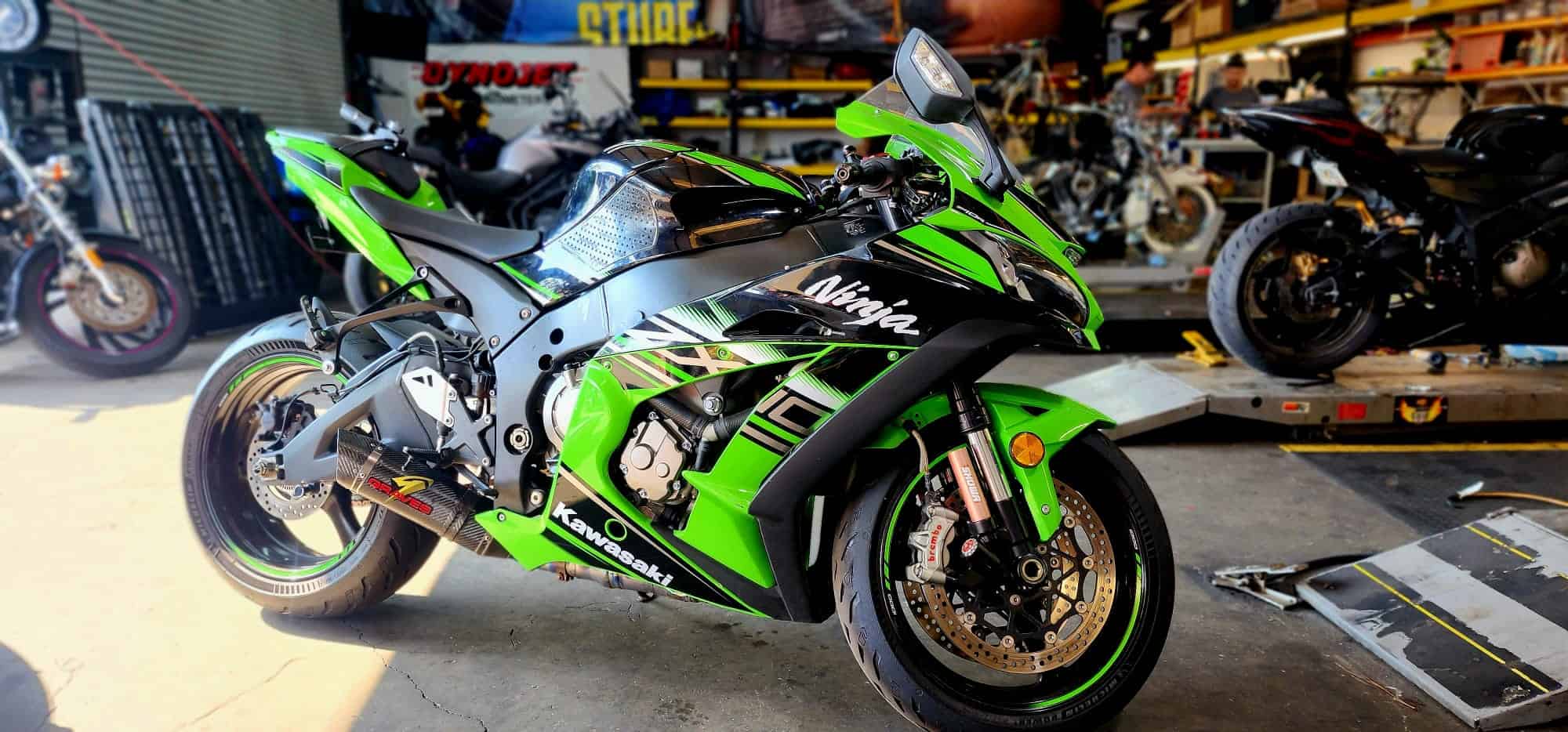
The right tires, mounted correctly and inspected regularly — the foundation of safe riding on Cobb County roads.
Time for New Tires?
Bring your bike in and we’ll inspect the wear pattern, check the suspension, and put the right rubber on it.
470-460-9883 Schedule a Tire Service847 Barnes Mill Road, Marietta, GA 30062
Serving Cobb County · Marietta · Kennesaw · Atlanta · and surrounding Georgia communities