What Happens to Your Motorcycle During Professional Transport — Inside the Process at Diaz Motorcycles
Most riders handing off a bike for professional transport have no real idea what happens to it after it leaves their driveway. That uncertainty is one of the biggest sources of anxiety in the whole process — not the move itself, but the mental image of your motorcycle in the hands of strangers, being handled in ways you can’t observe. Pulling back the curtain on the motorcycle transport process in Marietta, GA, from the moment we schedule pickup to the moment the bike is delivered, replaces that anxiety with something more useful: a clear picture of what a well-run operation actually looks like.
The Diaz Motorcycles transport process is built around one guiding principle: treat every bike as if it belongs to someone who cares deeply about it — because it always does. That principle shapes how we handle scheduling, pickup logistics, loading, transit, and delivery. It’s not a marketing statement. It’s the practical standard we hold every job to, regardless of whether the bike is a current-model sport bike or a decades-old cruiser that hasn’t been ridden in years.
Scheduling and Pre-Transport Communication
The process starts before we ever arrive. When a transport job is booked, we confirm the pickup address, the delivery address, the bike’s make, model, and any known mechanical issues that affect how it can be loaded or handled. A bike that won’t roll under its own power requires different staging than a ride-ready machine. A bike with a cracked fairing needs to be flagged before loading so that any pre-existing damage is documented and not mistaken for transit damage at delivery. We ask these questions up front so nothing is a surprise on pickup day.
We also confirm whether the bike has been recently ridden and whether the fuel level should be reduced for transport. Most transport guidelines recommend keeping fuel below a quarter tank for safety — less weight over the tank, and less fuel to manage if the bike tips or leaks during loading. We’ll walk you through any prep steps specific to your motorcycle before we arrive.
- Confirm pickup and delivery addresses, contact names, and availability windows
- Identify any mechanical issues that affect loading — non-rolling bikes, missing mirrors, damaged controls
- Note all pre-existing cosmetic damage in writing before the bike is touched
- Photograph the bike at pickup from all angles as part of the condition record
- Confirm fuel level and battery condition appropriate for transport
- Provide the owner with a copy of the condition report before departure
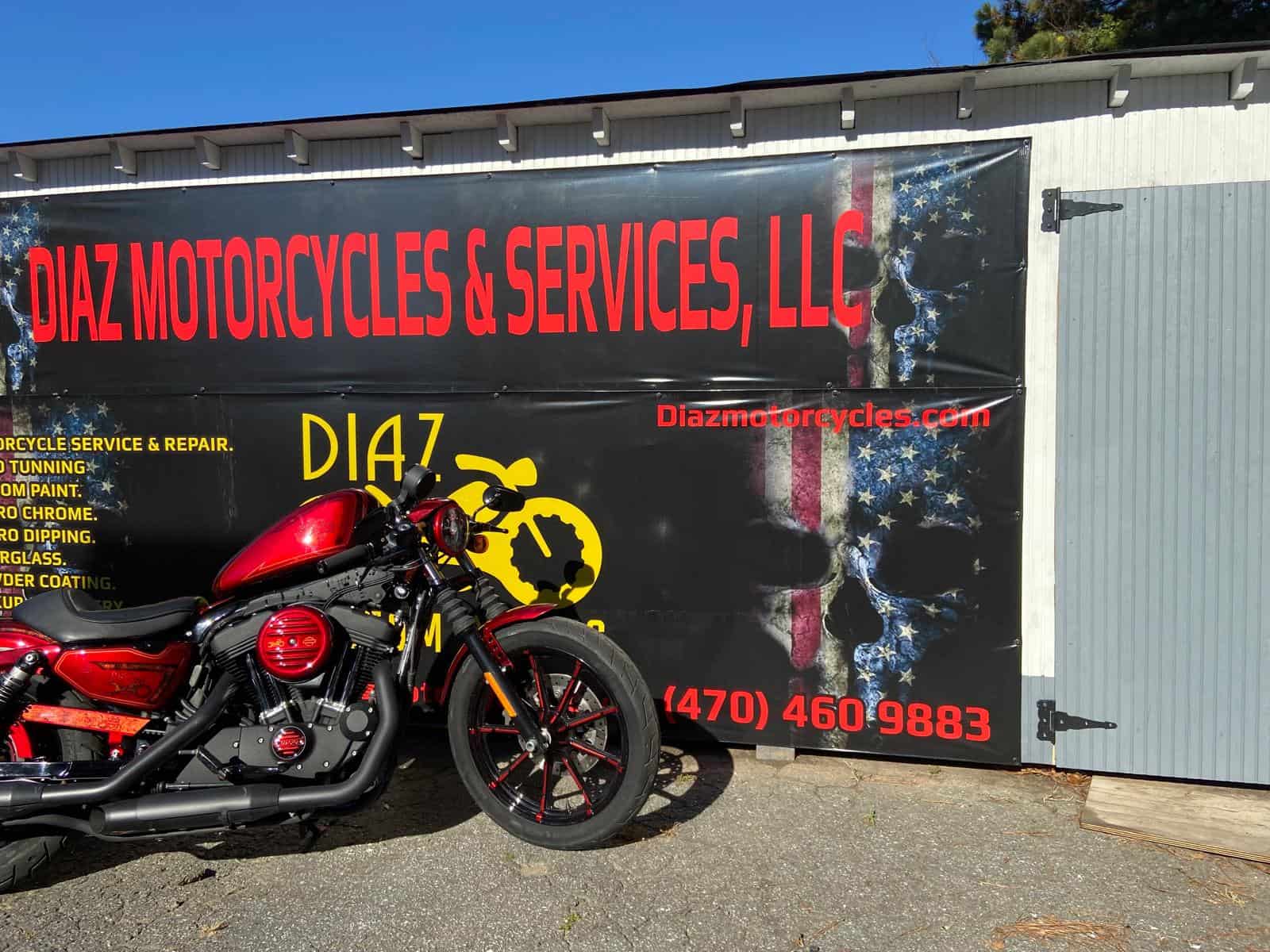
Every transport job at Diaz Motorcycles begins with a full condition inspection and photographic documentation at the pickup location.
Loading, Securing, and Transit
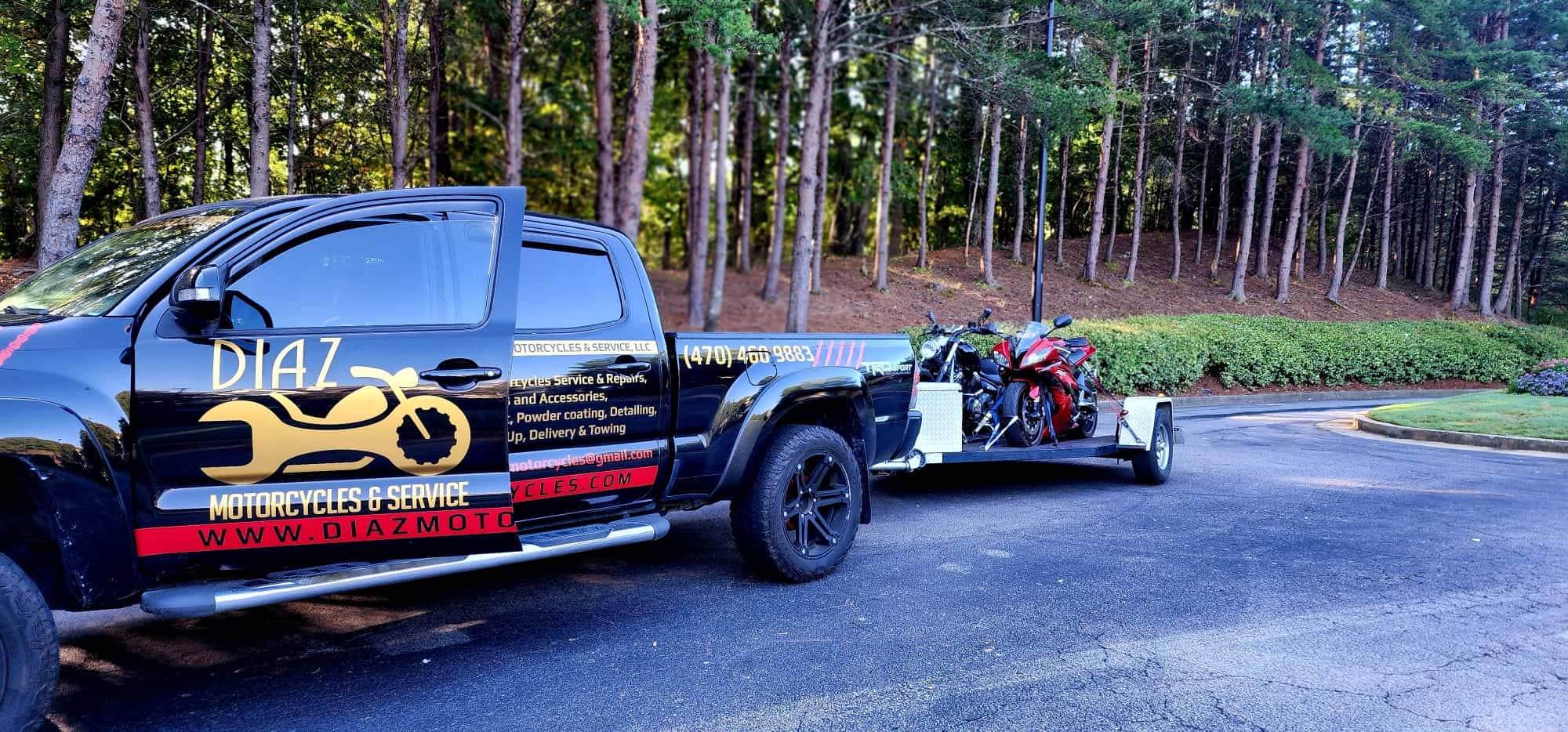
Loading a motorcycle correctly is a skill that looks simple and isn’t. The bike goes onto the trailer or carrier via a ramp, walked on by a handler who controls the bike’s balance and forward momentum without touching the brakes abruptly. Once positioned, it’s secured with soft-tie straps through the subframe or designated tie-down points — never over painted bodywork, never through bodywork gaps that can rattle loose, and never in a way that compresses the suspension unevenly. The front wheel goes into a wheel chock designed to hold the bike upright without lateral movement. Once loaded, the bike should have zero movement at any point during normal transit.
“A motorcycle secured correctly doesn’t move during transit. It doesn’t wiggle, it doesn’t shift, it doesn’t rattle. If your bike arrived with fresh rub marks from its own restraints, it wasn’t secured correctly — and that’s a standard problem with a standard solution.”
During transit, our drivers are aware they’re carrying motorcycles — not pallets of lumber. Speed over bumps, entry and exit of ramps, and hard braking all affect how the bike sits in its restraints. Checking strap tension during longer runs is standard practice. The goal is that the bike arrives in exactly the same condition it was loaded.
Delivery and Handoff
At the delivery location, the condition report created at pickup becomes the reference. We unload the bike using the same care taken at loading, walk it to the agreed delivery point, and conduct a joint review with the receiving party against the original condition notes. If something changed in transit — anything at all — it gets documented and addressed before we leave. This is the motorcycle transport service standard that Marietta and Cobb County riders have come to expect from Diaz: accountable at both ends, not just the pickup.
Understanding the process makes the whole experience different. Instead of handing your keys to a stranger and hoping for the best, you’re handing your bike to a team with a documented procedure and a clear standard of care at every step. That’s the Diaz difference — and it starts with a phone call to 470-460-9883.
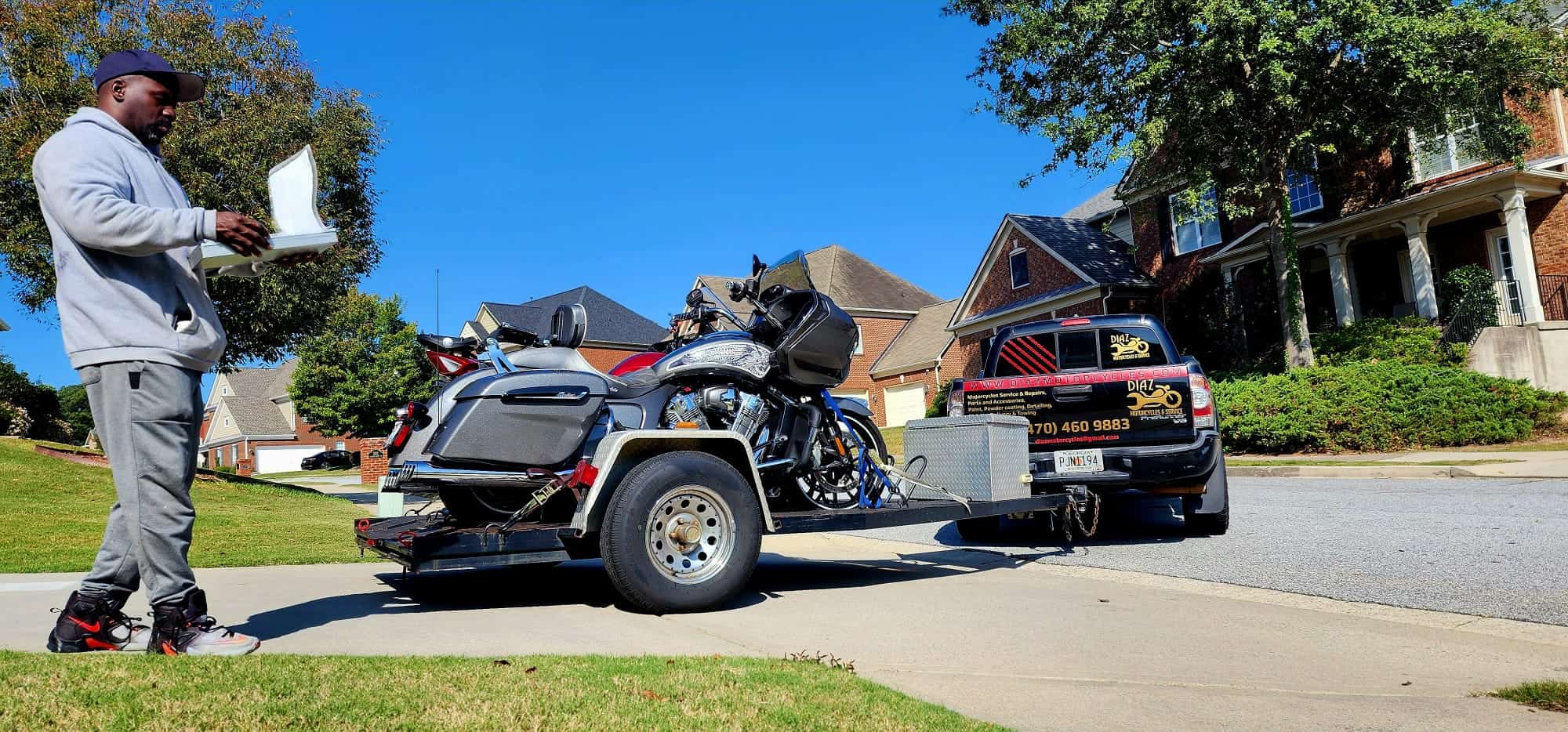
Delivery day closes the loop: the bike is unloaded, reviewed against the pickup condition report, and handed off with a full account of the journey.
Professional motorcycle transport in Marietta, GA isn’t a mystery — it’s a repeatable process built on attention to detail and respect for what you’re carrying. At Diaz Motorcycles, every step from the first call to the final handoff is handled with that standard in mind. Call us and let’s talk through what your job requires.
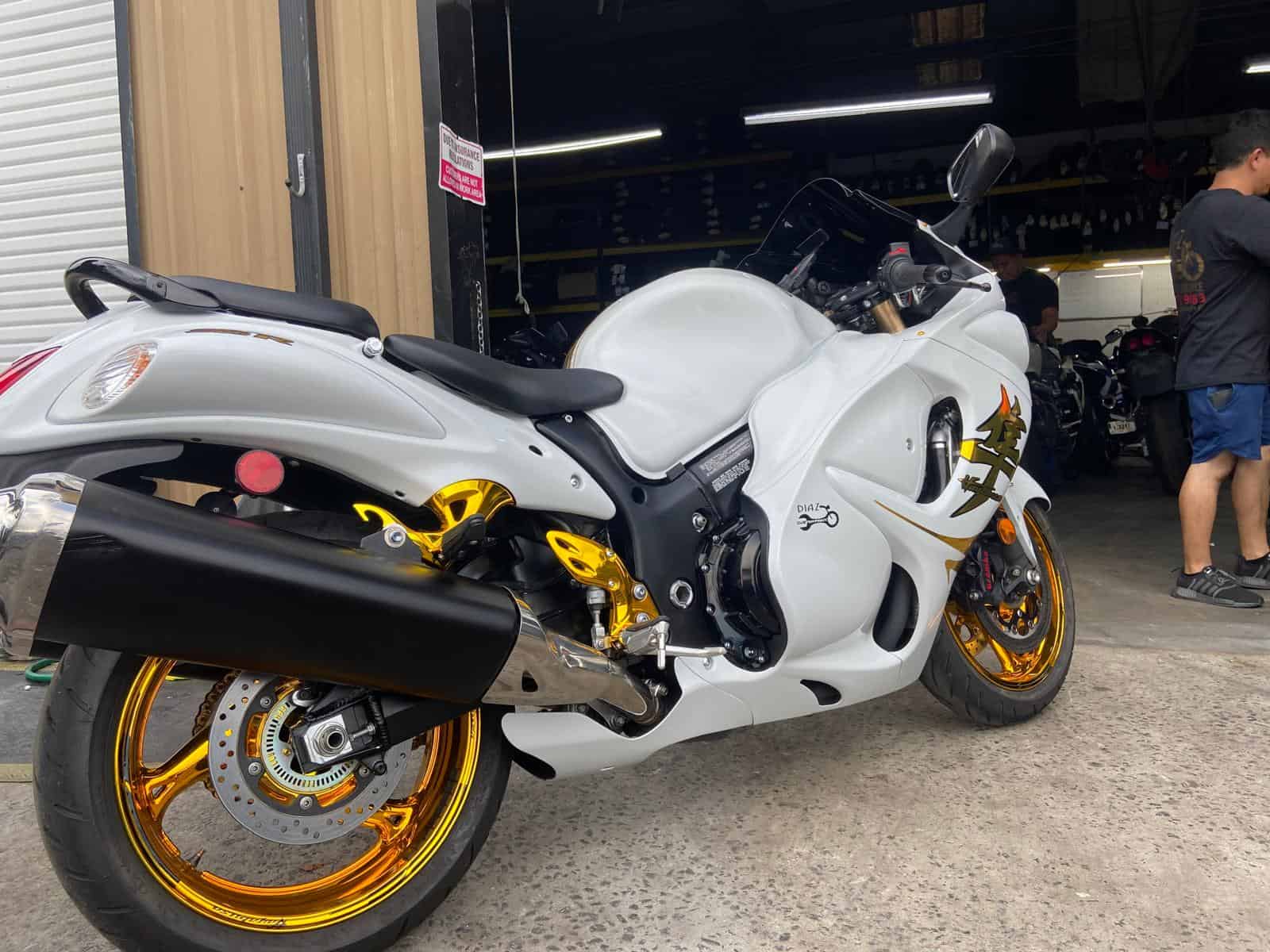
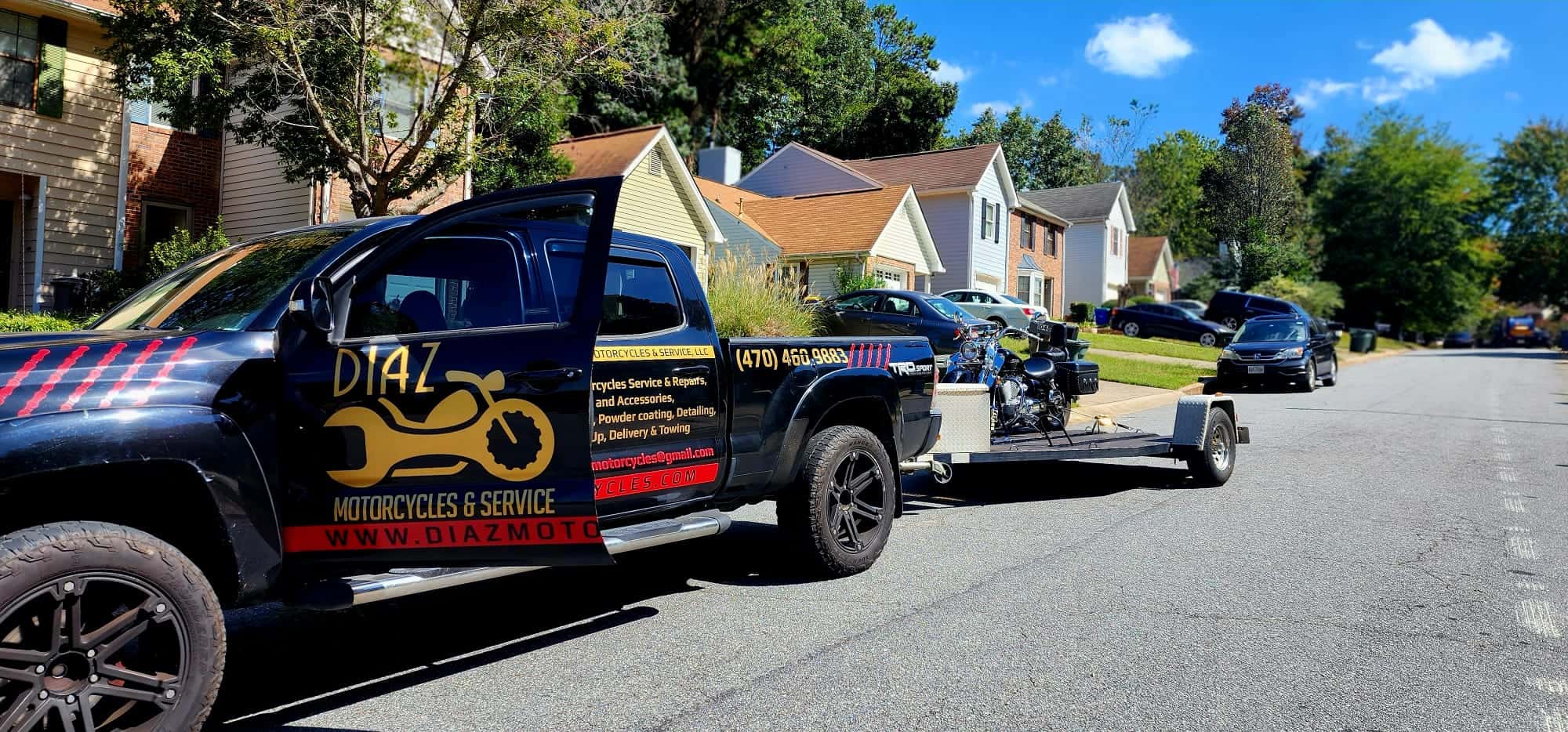
The Diaz Motorcycles team in Marietta — every transport job handled with the same standard of care from pickup to delivery.
See the Process in Action — Book Your Transport Today
No mystery, no guesswork. We’ll walk you through exactly how we handle your bike before we ever arrive at your door.
470-460-9883 Schedule Service Today847 Barnes Mill Road, Marietta, GA 30062
Serving Cobb County · Marietta · Kennesaw · Atlanta · and surrounding Georgia communities