When Your Motorcycle Makes a Noise You’ve Never Heard Before — A Practical Diagnostic Guide for Atlanta-Area Riders
Motorcycle repair diagnostic work in the Atlanta, GA area often begins the same way: a rider calls the shop and says their bike is making a noise they have never heard before and they are not sure whether it is serious. That uncertainty is completely reasonable — motorcycles are complex machines with dozens of overlapping mechanical sounds, and a noise that is genuinely new can range from a loose heat shield that vibrates at highway speed to the early symptom of a failing primary bearing. Knowing how to describe and isolate an unfamiliar sound before calling a shop — or before deciding whether to ride the bike at all — is one of the most valuable diagnostic skills a rider can develop.
The challenge with new motorcycle noises is that the human ear is not a calibrated instrument. The same mechanical event can sound like a rattle to one rider and a knock to another, depending on where they are positioned on the bike, what speed they are traveling, and whether their helmet is full-face or open. Describing a noise accurately enough to enable remote pre-diagnosis requires moving past subjective terms and toward the observable characteristics that actually matter: when it occurs, where it seems to originate, and how it changes with RPM, speed, load, and temperature.
Categorizing the Sound — The First Step in Any Noise Diagnosis
Before describing a noise to a technician or attempting any diagnosis yourself, it helps to characterize the sound as precisely as possible. Mechanical noises fall into a few broad categories, and each category points toward a different family of potential causes. A sharp metallic knock that occurs in rhythm with engine speed and worsens under load points toward internal engine components — connecting rod bearings, piston slap, or valve train contact. A regular ticking that is present at idle and disappears as RPM rises typically points toward valve clearance that has gone out of specification. A grinding sound that corresponds to wheel rotation rather than engine speed implicates wheel bearings, brake components, or debris caught between a rotor and caliper.
- Rhythmic knock that follows engine RPM and worsens under hard acceleration: possible rod bearing, piston, or wrist pin wear — stop riding and seek diagnosis immediately
- Metallic ticking at idle that decreases at higher RPM: likely valve clearance out of specification — schedule service promptly, not an emergency but should not be deferred
- Grinding or dragging sound that follows wheel speed, not engine speed: wheel bearing, brake pad contact, or rotor debris — inspect brakes and wheel before further riding
- Rattle or buzz at specific RPM bands that disappears above or below that range: likely a heat shield, exhaust bracket, or fairing panel resonating at a harmonic frequency — typically low urgency
- Clunking from the front end over bumps: head bearing wear, loose triple clamp, or degraded fork seals allowing the legs to move independently — suspension inspection needed
- High-pitched whine that rises and falls with speed but not RPM: possible chain tension issue, wheel bearing beginning to fail, or belt drive tension out of specification
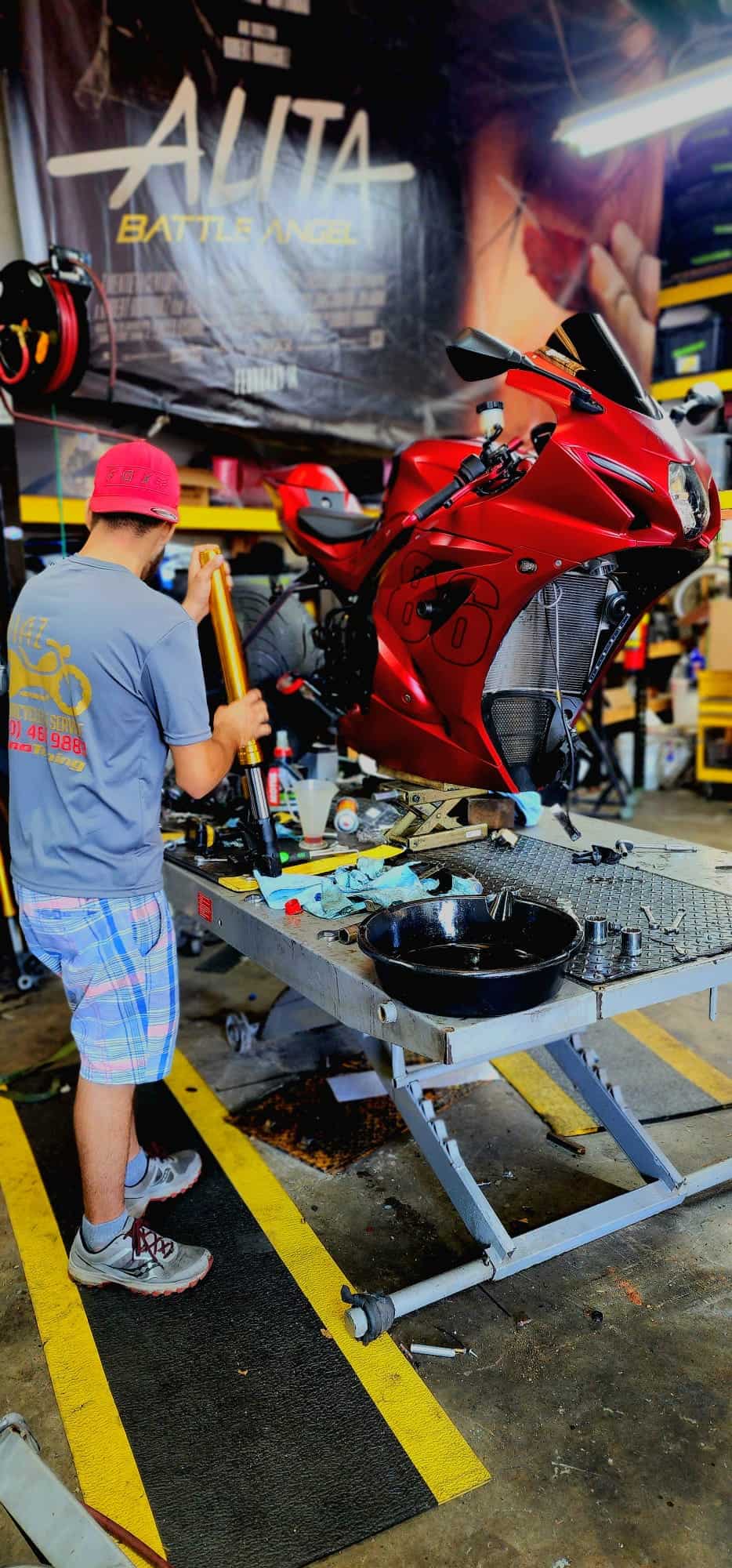
Experienced technicians use sound, feel, and systematic testing together — a new noise is data that points toward the source when interpreted correctly.
When to Stop Riding Immediately vs. When to Monitor
Not every new noise demands that you pull over immediately, but some do. A sharp, sudden knock that develops mid-ride and changes character with engine load is a noise that demands immediate attention — continuing to ride risks turning a repairable situation into a seized engine. A light rattle that sounds like it is coming from the bodywork and does not change with RPM or speed is far less urgent and can be monitored through a short ride to confirm it is not escalating. The key principle: noises that change with load and RPM are mechanical in nature and should be treated seriously. Noises that are constant and do not respond to changes in throttle, speed, or braking are more likely to be cosmetic resonance issues.
“The most expensive motorcycle repairs in our shop are the ones that started as a small noise that was ignored for two weeks.”
Georgia summer heat deserves a specific mention in noise diagnosis because heat changes how motorcycles sound. An engine that runs 15 degrees hotter than it was designed for — because the cooling system is marginal, the oil is overdue for a change, or the air filter is partially blocked — will begin producing sounds that it would not produce at correct operating temperature. A valve train noise that only appears on hot summer days in Atlanta traffic, for example, is often a lubrication issue rather than a component failure, and addressing the root cause eliminates the noise without any parts replacement.
How to Get the Most Out of Your Diagnostic Appointment
When you bring a motorcycle to Diaz Motorcycles for noise motorcycle repair diagnosis, the most useful thing you can do is bring as much context as possible. When did the noise first appear? Under what conditions? Does it change with throttle position, with braking, with lean angle, with temperature? Has anything changed recently — new oil, a tire change, a recent fall? The more context a technician has, the faster the diagnostic process moves, and faster diagnosis means a faster, more accurate repair at lower cost to you.
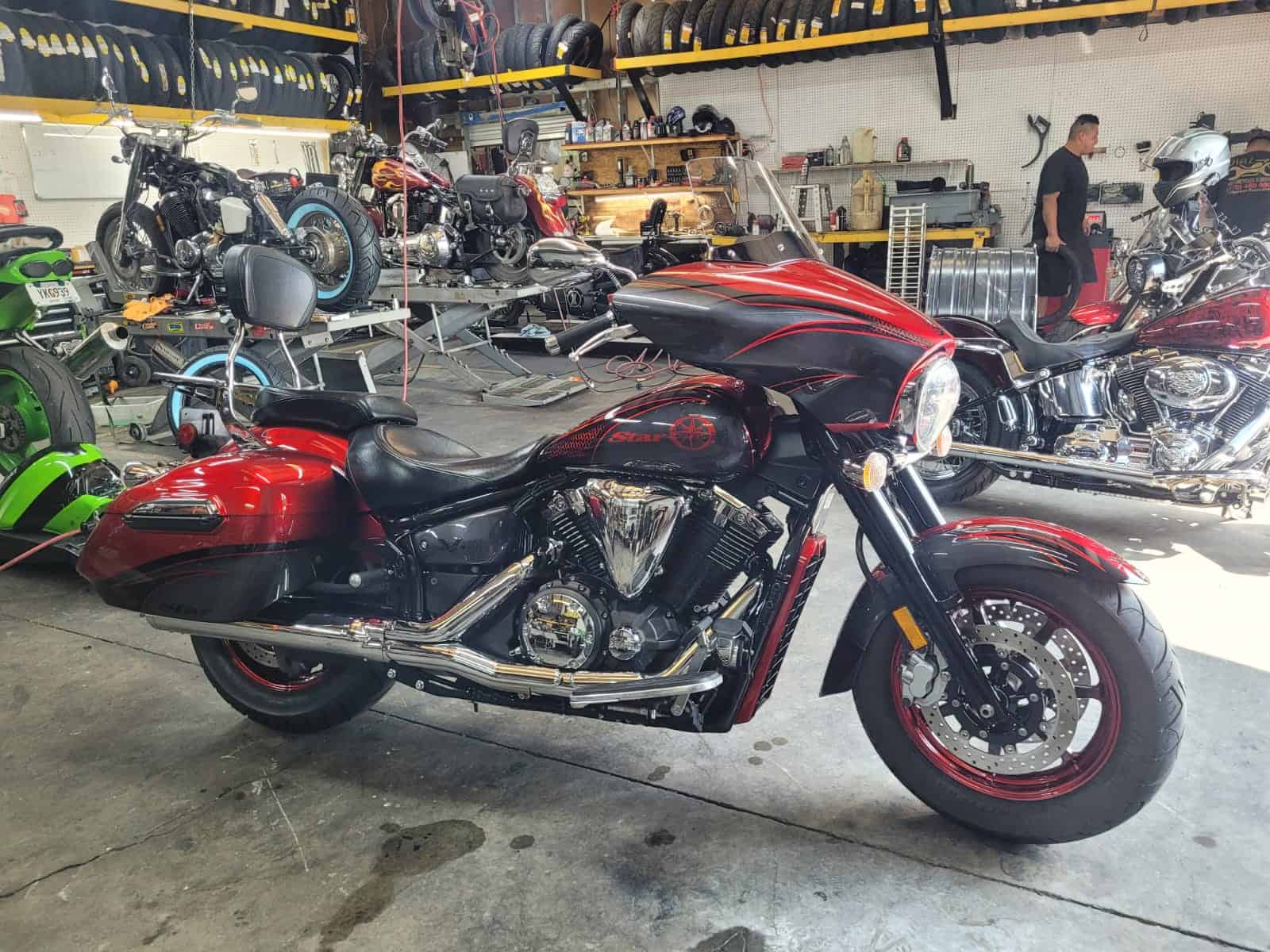
Riders across Metro Atlanta trust Diaz Motorcycles for noise diagnosis — accurate, fast, and explained in plain language every step of the way.
The outcome of a proper noise diagnosis is clarity — an honest answer about what is causing the sound, what repair it requires, and what happens if it is addressed now versus deferred. That clarity is what lets riders in Cobb County, Marietta, and across the Atlanta area make confident decisions about their motorcycle rather than riding with quiet anxiety every time they hear something that does not sound quite right.
An accurate diagnosis ends the uncertainty — riders leave knowing exactly what their motorcycle needed and confident it was fixed right.
Hearing Something New? Let’s Find Out What It Is.
Diaz Motorcycles in Marietta diagnoses unfamiliar motorcycle noises accurately — no guessing, no unnecessary parts, just clear answers and professional repair.
470-460-9883 Schedule Service Today847 Barnes Mill Road, Marietta, GA 30062
Serving Cobb County · Marietta · Kennesaw · Atlanta · and surrounding Georgia communities