Motorcycle Transport Lawrenceville Riders Can Actually Trust
You found a bike two counties away and you're not sure it'll start. Here's how we come get it, safely and honestly.
You found the bike online. Also the photos looked clean, the price felt fair, and the seller seemed honest enough over text. Instead, it’s sitting in a stranger’s garage two counties away, and you have no real idea whether it’ll even fire up. That’s usually the moment a rider starts hunting for motorcycle transport Lawrenceville folks can actually trust, because riding an unknown bike home is a gamble nobody should have to take.
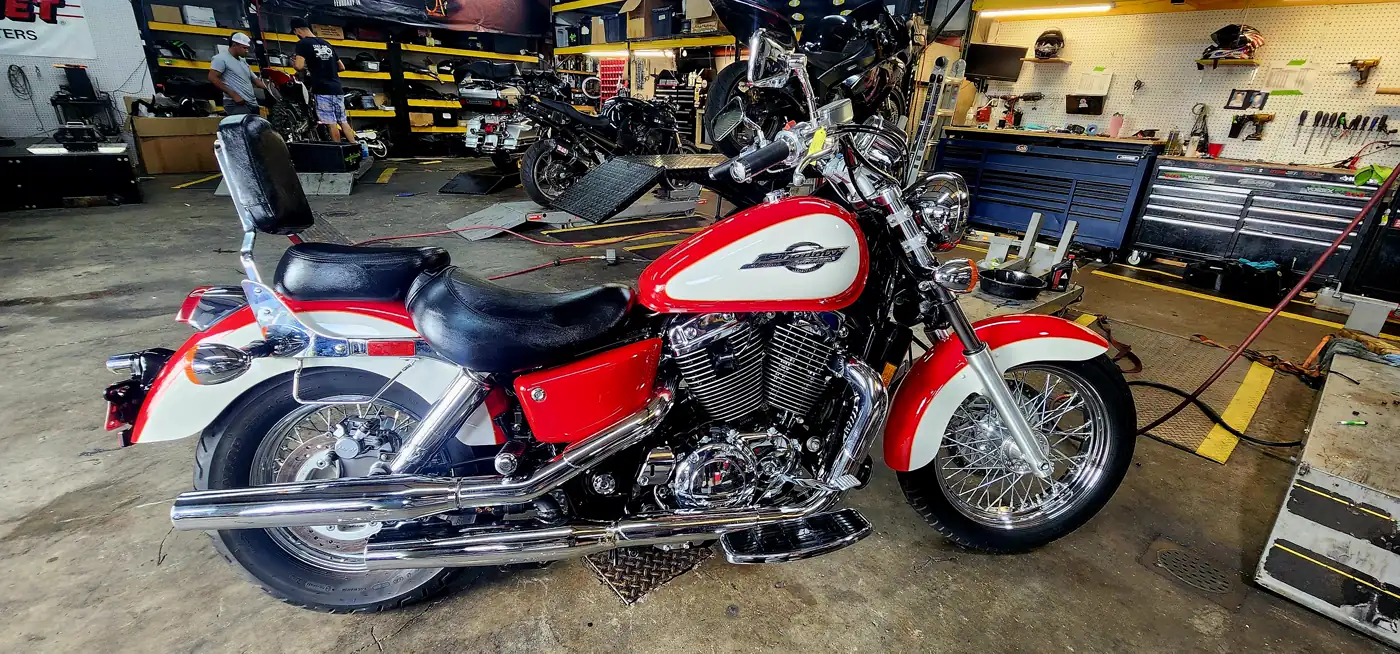
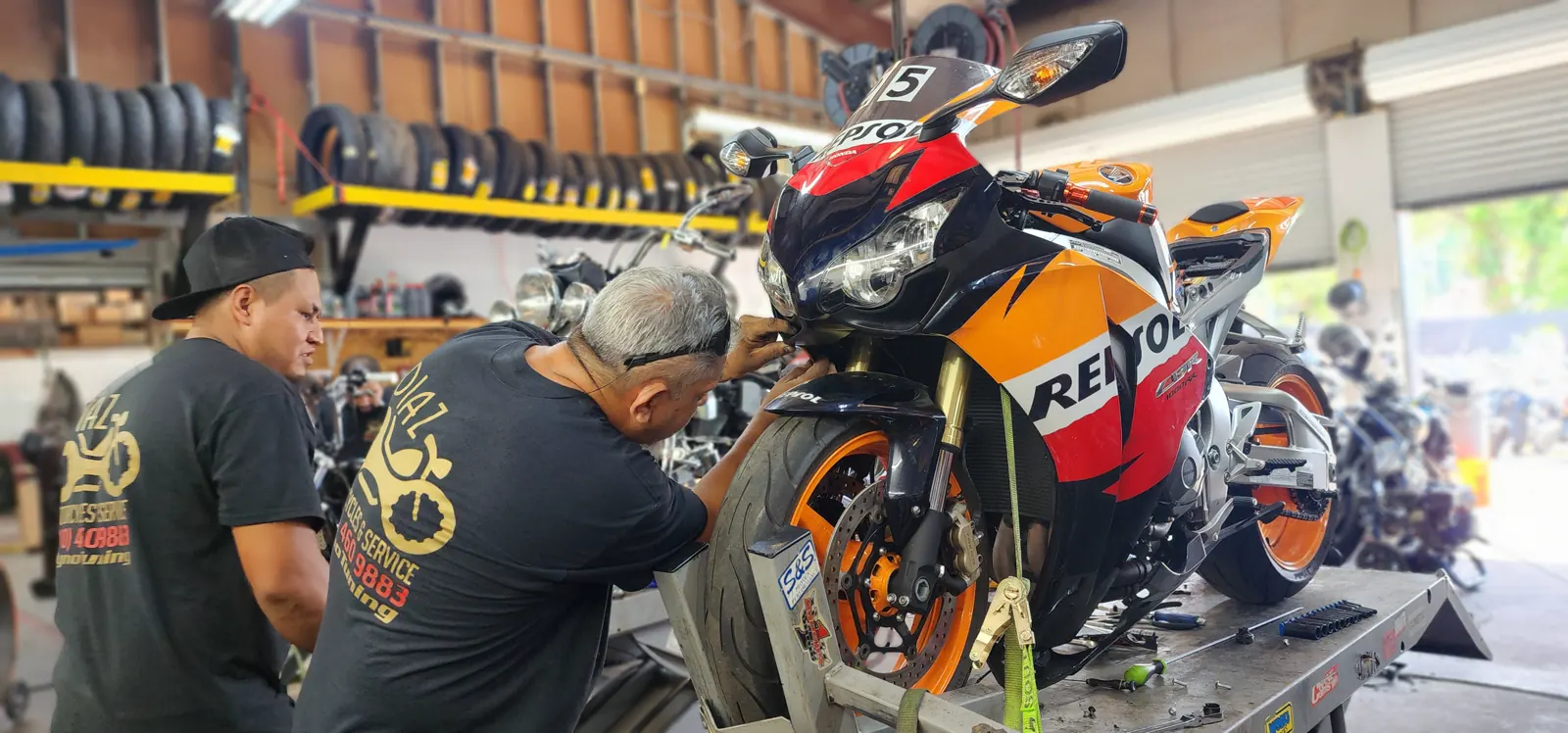
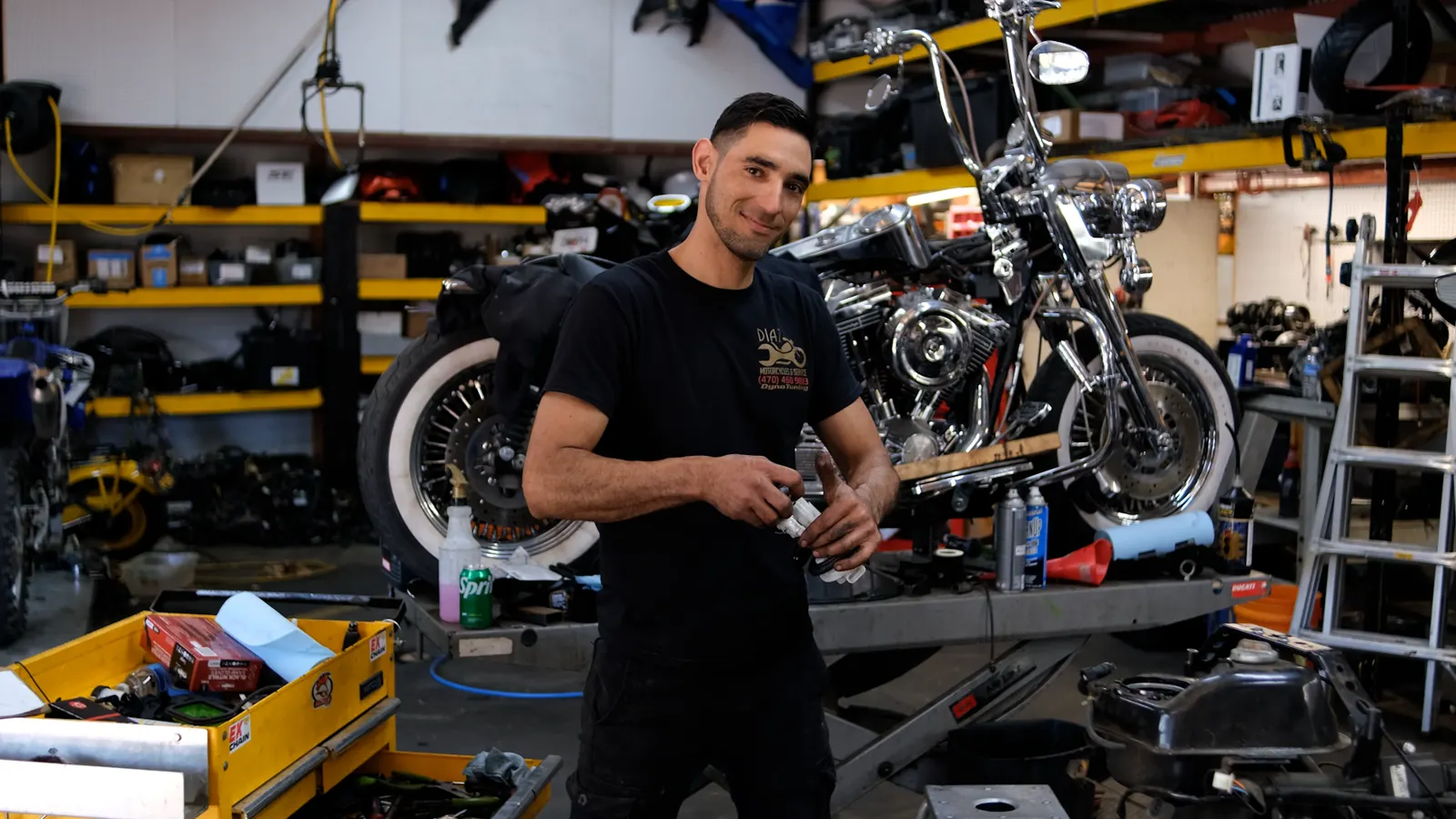
We’re Diaz Motorcycles, based over in Marietta. We fix bikes for a living, and we go get the ones that can’t make the trip on their own. So when you buy something secondhand and the history is a big question mark, you don’t have to guess and hope. We’ll load it up, bring it in, and tell you what you actually bought.
A used bike with an unknown past is one of the most common calls we get. Maybe it runs. For example, Maybe it coughs once and quits. Maybe the previous owner swears it’s perfect and you’d rather not test that theory at highway speed. Whatever the case, the smart play is to have it picked up, strapped to a trailer, and looked over by someone who does this every single day.
The situations that bring riders to us
Most transport calls fall into a handful of buckets. You might see yourself in one of these already. None of them are unusual, and none of them are a problem we haven’t handled before.
- A bike that won’t start, or fires up and dies right away
- Even so, a bike bought out of state, sight unseen or barely seen
- A bike from an estate, or one left behind by a family member who passed
- What’s more, a bike that went down and can’t safely be ridden anywhere
- A seasonal move, or a garage that’s changing hands and needs to empty out
Each of those tells us something different before we ever show up. A no-start could be a dead battery or a bad fuel pump. After that, a bike that ran when parked but sat for two years usually needs old gas dumped and fresh fluids. Knowing which situation you’re in helps us bring the right gear and set the right expectations, so nobody’s surprised in the driveway.
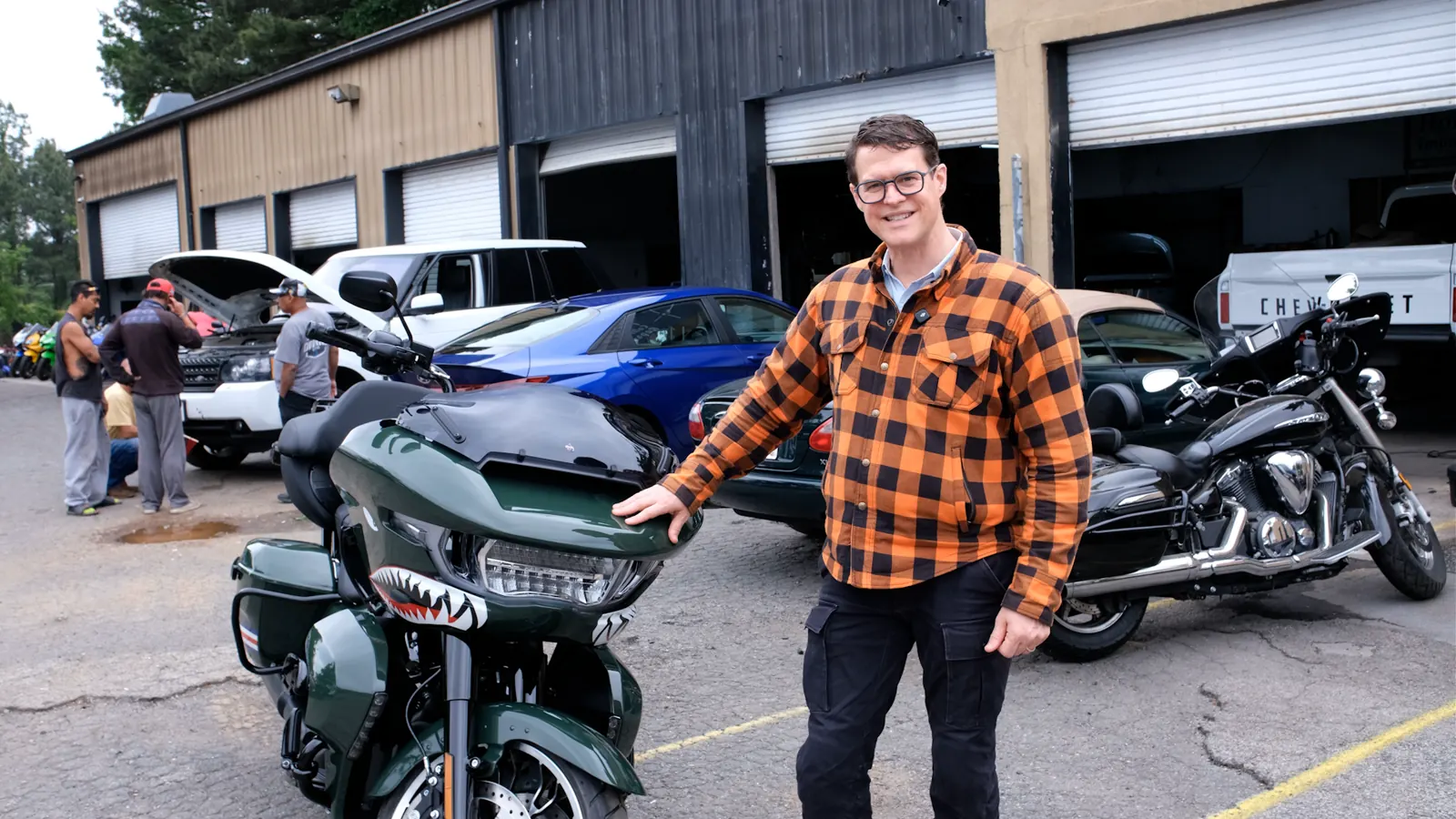
What each situation actually means
A bike that won’t start is the least scary of the group. Batteries die when a bike sits. Fuel goes stale and gums up carbs or clogs an injector. These are cheap fixes most of the time, and they don’t mean you overpaid for junk. We’d rather roll it onto the trailer than watch you push it up a ramp and pull something in your back.
A bike bought out of state is where transport really earns its keep. You can’t inspect a machine sitting in another city, and shipping it yourself gets complicated fast. We coordinate the pickup, confirm the bike matches the listing, and note anything off before it leaves the seller’s property. That way you’re protected from the second it rolls onto our trailer.
An estate bike or an inherited bike carries a different weight. Somebody you cared about rode it, and now it’s yours to figure out. We handle those gently. There’s no rush, no pressure, and no judgment if it’s been sitting under a cover for years with flat tires and a mouse nest in the airbox. We’ve seen it, and we bring those back to life all the time.
A bike that went down is its own category. Whether it slid in a parking lot or got clipped in traffic, you shouldn’t ride it until someone confirms the frame, forks, and controls are straight. That’s not a job for the shoulder of the road. We move it flat and safe, then check the bones before you ever think about riding again.
A seasonal move is the easy one. Maybe you’re relocating, maybe the garage is being sold, or maybe winter’s coming and the bike needs to land somewhere it’ll get some attention. No drama, no breakdown, just a machine that needs to go from point A to point B without racking up miles or risk. We slot those in around the calls that can’t wait.
We’ve loaded bikes out of garages all over Gwinnett, from the tidy pockets of Collins Hill Heights near the schools and the aquatic center, to the lake-amenity streets of Cardinal Lake Estates, to the mid-market cluster of Fountain Lakes, Fountain Glen, and Fountain Cove. If you know downtown by the Gwinnett Veterans War Museum and the Fallen Heroes Memorial & Armed Forces Monument, you’re right in the middle of the area we cover.
There's a version of this that's cheap and a version that isn't.
That line matters more than it sounds. The cheap version is open transport, where your bike rides strapped to a flat trailer out in the weather. It’s perfectly safe and it’s what most bikes ride on. The pricier version is enclosed transport, which shuts the bike inside a box away from rain, road grime, and prying eyes. If you’re curious about the tradeoffs between them, we break that down in plain language, because the right choice depends on the bike, not on what costs more. A daily rider and a garage-kept show bike rarely want the same answer.
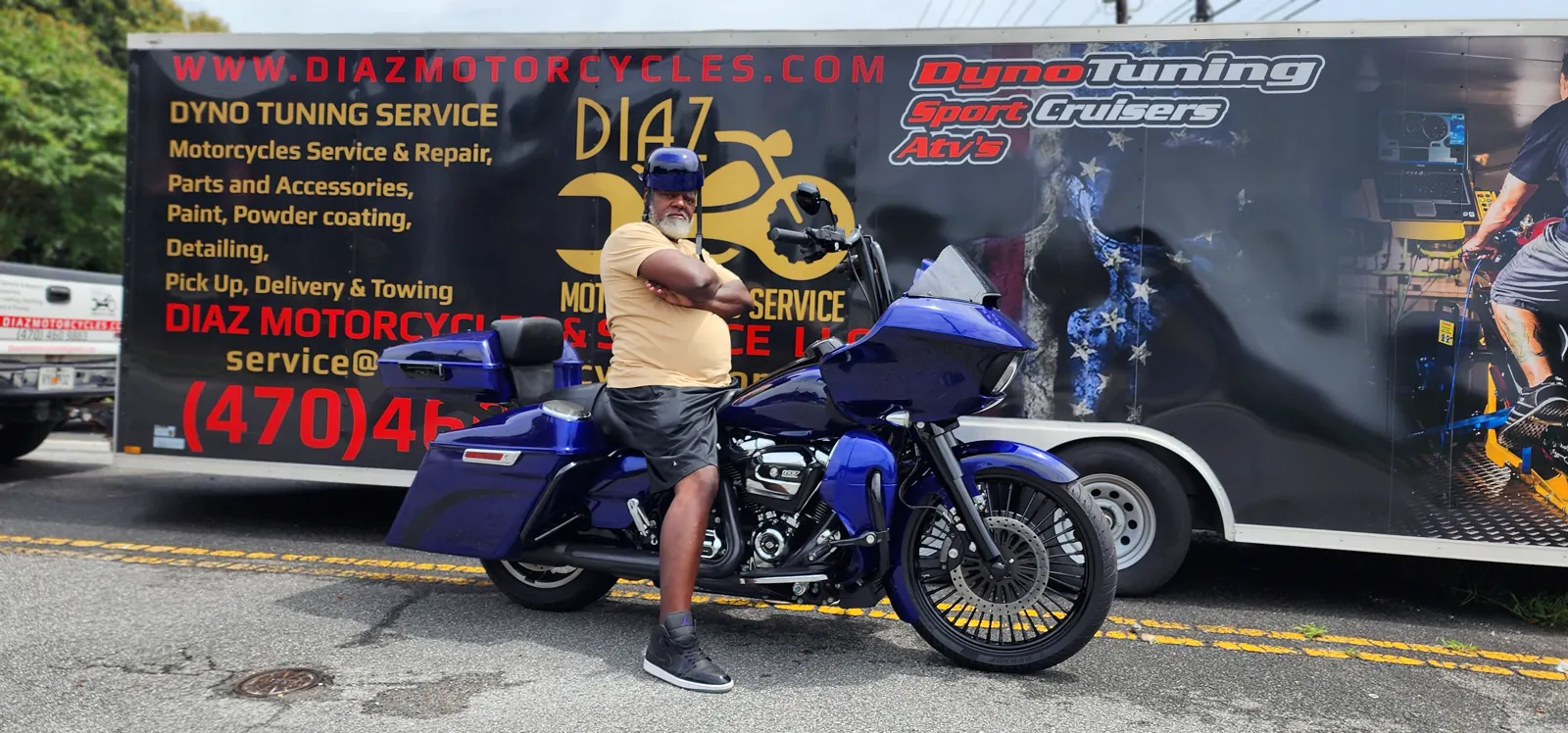
Here’s the part a lot of shops skip. We diagnose before we quote. We won’t throw a number at you over the phone for a bike we’ve never laid eyes on, because that’s how people end up feeling nickel-and-dimed later. Once it’s in the shop, we look it over, tell you what it needs, and let you decide. Honest pricing means you hear the real story first, then choose what happens next.
You get a straight answer, not a sales pitch. If the bike only needs a battery and a carb clean, that’s what we’ll say. If it needs more, we’ll show you why. Either way the decision stays yours, and nothing gets touched without your okay.
What happens once we pull up
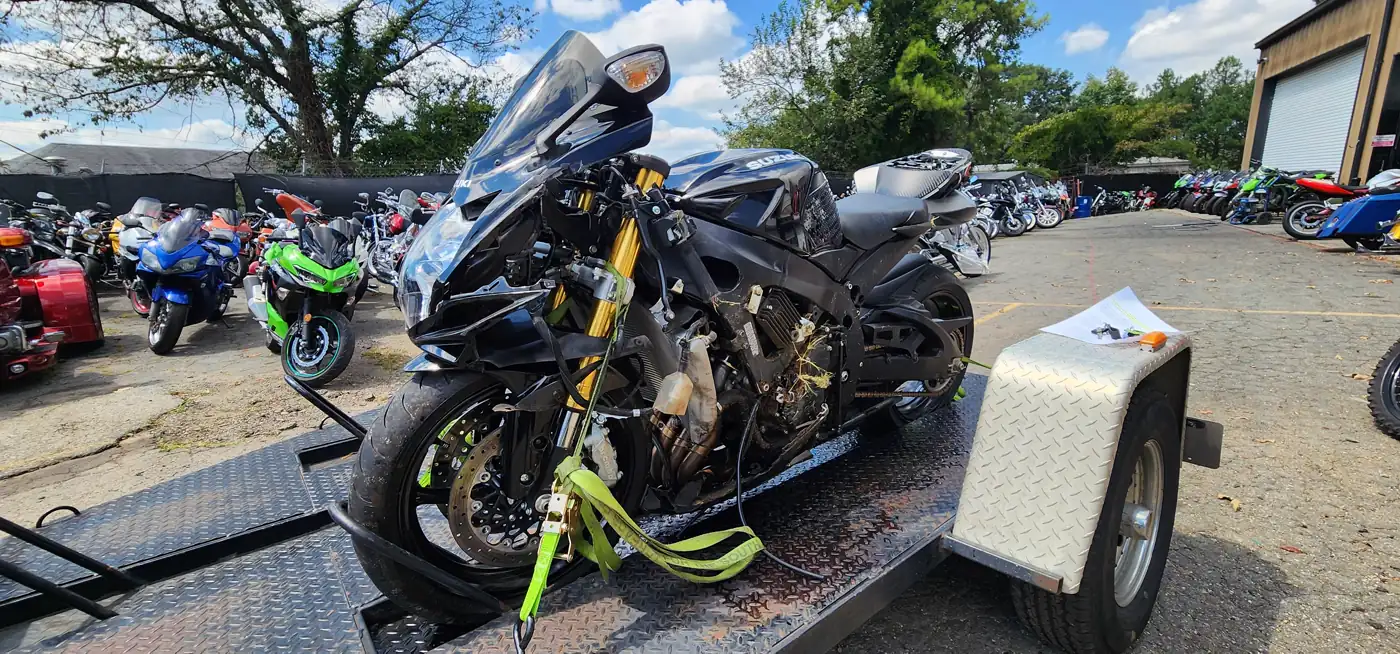
Loading a bike right is a craft. Done wrong, you get scratched paint, bent bars, or a machine that shifts on the highway. Done right, that bike doesn’t budge an inch between your driveway and our shop. We use soft ties and ratchet straps at the correct anchor points, we compress the front suspension just enough, and we never crank a strap down on something that’ll crack.
- We roll the bike up a proper ramp, engine off, in neutral, with a spotter
- We anchor the front to the trailer and load the fork so it can’t rebound
- We add rear straps and a wheel chock so nothing rocks side to side
- We double-check every point before the wheels ever turn
- We deliver it, unload it the same careful way, and walk you through it
Damaged bikes get extra care. A machine that went down might have a snapped lever, a bent peg, or fairings hanging by a wire, and it can’t be treated like a healthy bike. We plan the load around whatever’s broken so we don’t make it worse on the way in.
How long the whole thing takes
Pickup itself is quick, usually well under an hour at your place. The drive is the honest part, so here’s the honest version. Lawrenceville sits emphatically OTP, roughly 33 to 38 miles out from our shop by our best read of the map. Depending on traffic, that’s usually somewhere between 45 minutes and a bit over an hour each way. We’re not going to pretend it’s around the corner.
So why would you use a Marietta shop when you’re across the metro? Because that drive is our problem, not yours. You text us, we come to you, and the bike ends up somewhere it’ll actually get fixed right. For a rebuild, a custom job, or a bike that no local spot wants to touch, an hour on the trailer is nothing compared to the result. Plenty of our friends first called because nobody nearby would take on their project, and the pickup made the distance a non-issue.
Fall is when this really pays off. September through November is the best riding of the year around here, with mountain runs pulling riders north on GA-20 and GA-11. If your bike is dead in the spring, that’s the season you’re missing. Getting it picked up early means it’s sorted and ready when the good weather lands, instead of you staring at a cold engine in October.
The local reality, told straight
Gwinnett moves a lot of bikes. You feel it on the apartment lots off Sugarloaf Parkway, the artery that ties GA-316 to GA-20 and the Duluth corridor, where sportbikes park three deep. The upside is obvious once your machine runs right, because GA-20 north toward Buford and Lake Lanier is the standard escape route, and it’s a great one. If you ride a Harley, Frazier’s Harley-Davidson up in Buford anchors that side of the market, about twenty minutes from most of Lawrenceville.
Lawrenceville even quietly holds a federal facility most locals have never heard of, the CDC and ATSDR Specimen Packaging, Inventory and Repository, keeping more than 6.5 million samples on site. It’s a fitting fact for this topic, honestly, since a town full of hidden history is exactly the kind of place a bike with a mystery past comes from. And the mystery is the whole reason people call. A secondhand machine can look perfect in a listing and still hide a soft battery, a weeping fork seal, or fuel that’s turned to varnish. Good motorcycle transport Lawrenceville buyers rely on doesn’t just move the bike, it starts the process of turning those unknowns into a plain list of what’s real. Speaking of moving bikes across the metro, here’s how this plays out in Mableton for riders on the other side of town.
BEFORE YOU BOOK
Something worth knowing before you book anywhere: the paperwork protects you as much as the straps do.
Documentation is the quiet hero of a good transport. A written condition report at pickup, photos of the bike before it’s loaded, and a clear note of any existing damage mean there’s never a he-said-she-said later. Groups like the Motorcycle Industry Council and hands-on writers such as RevZilla’s Common Tread have long pushed riders to insist on that kind of paper trail, and we agree. You should always know the condition your bike left in and the condition it arrived in.
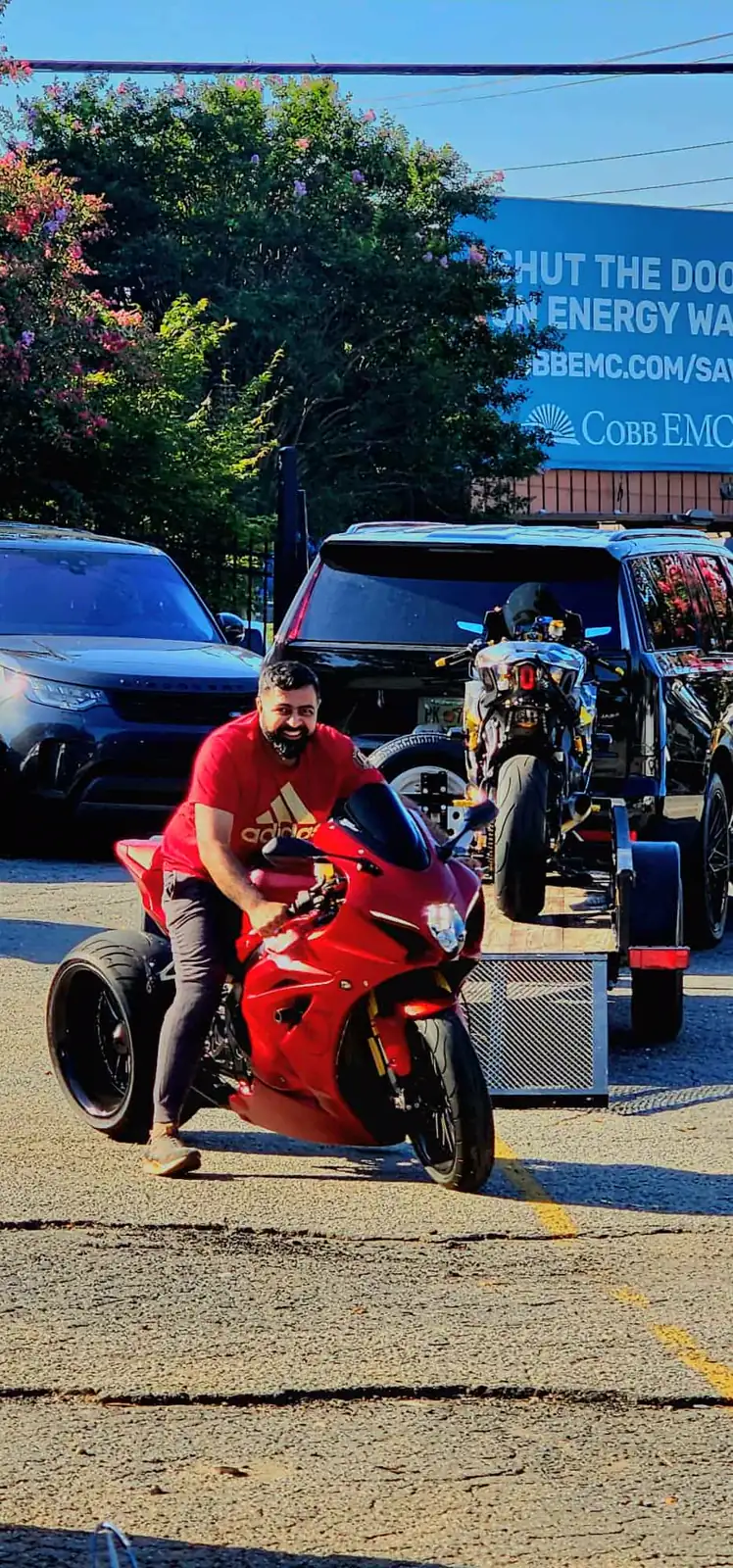
The Motorcycle Industry Council tracks just how many machines change hands every year, and a big share of those move on a trailer at some point. When the day comes that your bike needs to travel, whether it runs or not, the goal is simple. It gets there safe, you know exactly what shape it’s in, and the next step is already handled. If you want to see what you get when you bring it in, we lay it all out for you in plain terms.
That’s really the whole promise. A used bike with a shaky history becomes a known quantity. A dead bike becomes a running one. An inherited bike gets a second life instead of a spot in a corner gathering dust. We’ve done this for a lot of friends we’ve helped, and the ending is almost always better than the driveway looked at the start. If your bike simply won’t move under its own power, here’s what that service actually involves, step by step.
Questions Lawrenceville riders ask us
Do you work on older bikes?
Yes, and we love them. Age isn’t a dealbreaker at all. Bikes that have sat for years usually just need old fuel dumped, fresh fluids, a battery, and a good going-over. We bring vintage and neglected machines back to running order all the time.
What if the bike needs more than expected?
You’ll hear about it before we touch anything. We diagnose first, show you what we found, and give you a straight answer. Nothing extra gets done without your okay, so there are no surprise add-ons waiting for you at the end.
What does the transport service actually include?
We come to your location, inspect and document the bike, load it with proper soft ties and ratchet straps, and deliver it to our shop. You get a written condition report and photos at pickup. From there, we diagnose it and walk you through what it needs.
How long does pickup and delivery take?
The pickup at your place usually takes under an hour. The drive from Lawrenceville to our Marietta shop is roughly 33 to 38 miles by our read of the map, so traffic makes it about 45 minutes to a little over an hour each way. We handle the drive so you don’t have to.
Do you work on my brand of motorcycle?
Almost certainly. We handle Harley baggers and softails, Indian cruisers, Japanese sportbikes like the Yamaha R-series, Suzuki GSX-R, Kawasaki Ninja and Honda CBR, plus European machines such as Ducati and Aprilia. If you’re not sure, just text us a photo and we’ll confirm.
My bike went down and can't be ridden. Can you still move it?
Absolutely, and that’s a big part of what we do. A bike with a broken lever, bent peg, or hanging fairings gets loaded with extra care so nothing gets worse in transit. We plan the whole load around whatever’s damaged.
From our shop in Marietta we run pickup and delivery all across Gwinnett and the surrounding metro, so Lawrenceville is right in our regular rotation along with Duluth, Suwanee, and Snellville. We come out to Grayson, Dacula, and Lilburn, swing up toward Buford and Sugar Hill, and reach Norcross, Loganville, Tucker, and Stone Mountain too. If your bike sits within that stretch and it won’t or shouldn’t be ridden, we’ll come get it.
TEXT US AND WE'LL COME GET IT
If there’s a bike sitting somewhere in Lawrenceville that won’t start, just got bought, or shouldn’t be ridden, you don’t have to figure out the trailer yourself. Text Diaz Motorcycles a couple of photos and where it’s parked, and we’ll set up a pickup, load it right, and tell you exactly what you’re working with. Honest answers, careful hands, no guessing.
470-460-9883Diaz Motorcycles and Service, LLC · 847 Barnes Mill Road, Marietta, GA 30062