Faded Paint Peachtree City — Why It Happens
That dull tank isn't the end of your bike. It's usually the start of the color you actually wanted.
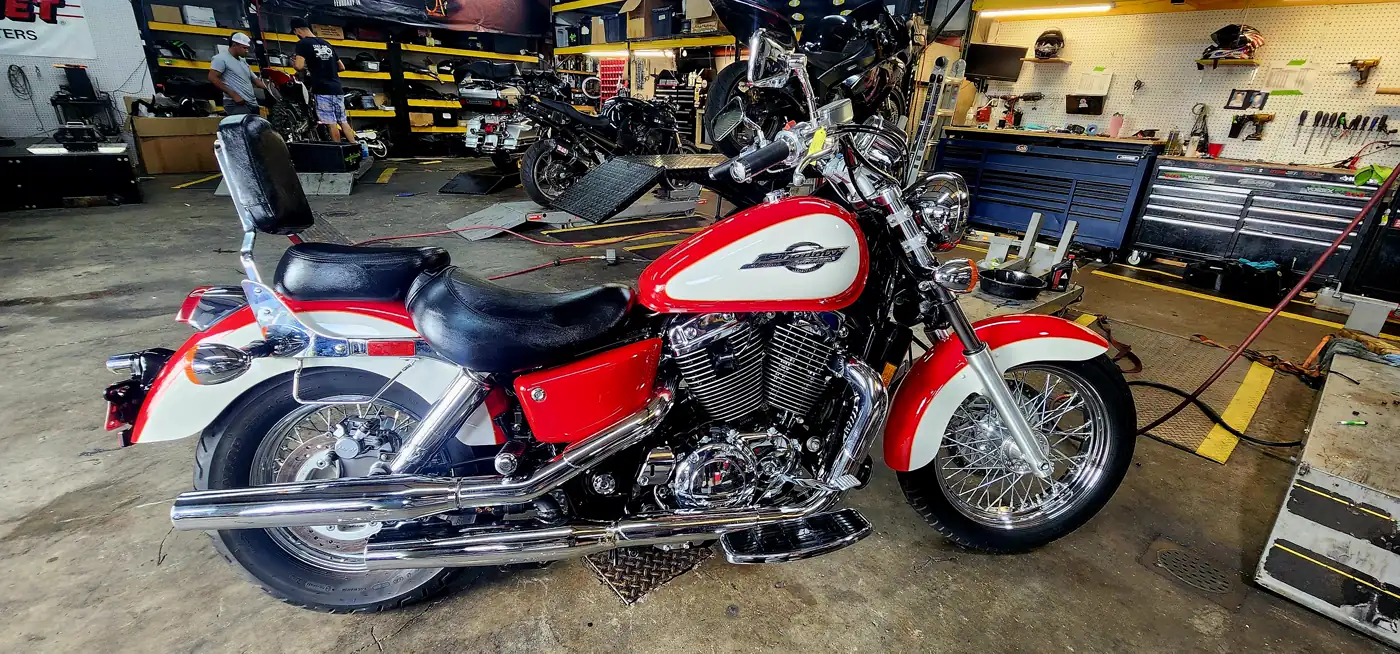
At the same time a blacked-out bagger rolled onto our lift last Tuesday, and its tank stopped us cold. As a result that deep candy red the owner used to brag about had gone dull as an old penny. On the other hand he dragged a thumb across the surface, and the chalk came off on his skin. Riders all over town know that exact feeling, which is why so many of them search for faded paint Peachtree City before they ever pick up the phone. So the good news comes fast: we know precisely why it happens, and it’s fixable.
The Short Answer, Straight Up
Here’s the honest version. Paint fades because the sun eats it. Still, Ultraviolet light hits the clear coat on top of your tank and fenders, and over the years it breaks that finish down bit by bit. First the gloss goes flat. Then the color underneath starts to wash out. Plus, a candy red drifts toward pink, and a rich black turns gray and cloudy. Meanwhile, it’s not your fault, and it’s not a sign you did anything wrong. Of course, Sunlight is just patient, and it never takes a day off.
Heat speeds it up. So does oxidation, which is a fancy word for the finish drying out and chalking over. In fact, Rain, tree sap, and bird droppings leave their marks too, especially when they sit for a while. For example, the paint on a motorcycle takes more abuse than the paint on a car, because there’s nothing between your tank and the sky. Even so, No garage roof follows you down the road. So the surfaces that face the sun the most, usually the top of the tank and the tops of the fenders, are the ones that fade first.
Quick reassurance before we go deeper: a fade is a looks problem, not a safety one. What’s more, you can ride a dull tank all day long and nothing bad happens. After that, the only time to slow down is when the finish has worn clear through to bare metal and rust starts creeping in, because that spreads. Everything short of that is perfectly safe to enjoy while you plan the fix.
What Drives A Fade, Most Common First
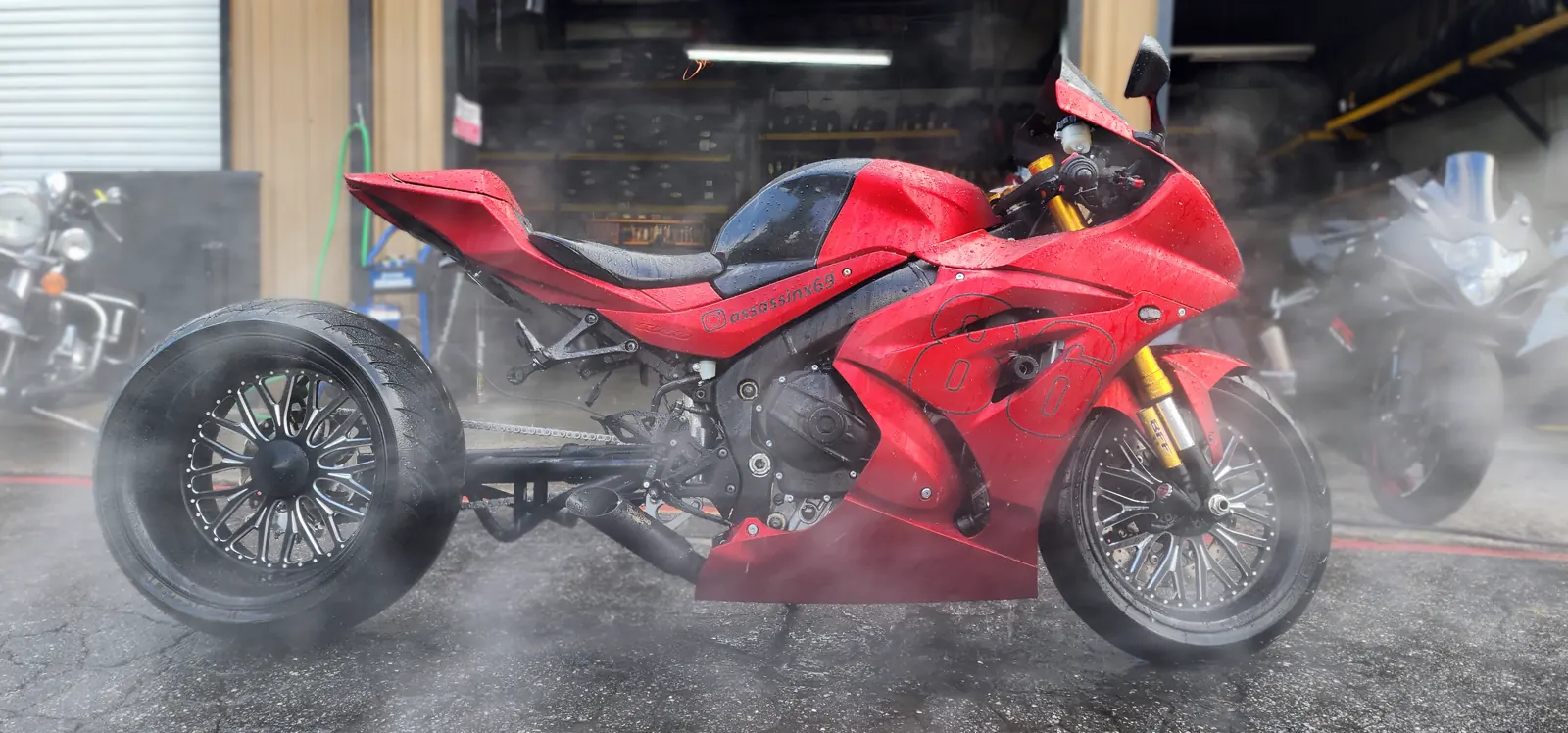
When a bike comes in, we sort the causes from most likely to least. Also Age and sun exposure sit at the top of the list nearly every time. After that, we look at how the bike was stored, what products got used on it, and whether it ever had paintwork done before. Instead each cause leaves its own clues behind, and reading them is half the job.
- Sun and time. The number one cause, hands down. UV light wears the clear coat thin until the color below has no shield left.
- Storage out in the open. A bike parked under the sky or a thin carport ages faster than one kept in a closed garage.
- Harsh cleaners and hard buffing. Strong chemicals and aggressive polishing strip the clear coat and speed up the very fade you were trying to stop.
- Old or cheap paintwork. A prior respray with thin coats or skipped prep will chalk and peel long before a factory finish ever would.
- Road life. Sap, acorns, bug guts, and bird droppings etch tiny pits that dull the shine over time.
Notice that most of these come down to time and exposure, not neglect. Plenty of our friends baby their bikes and still watch a fade creep in. A garage helps a lot, but it can’t stop the clock. The same UV that dulls your paint also hardens your tires from the inside out, and Dunlop’s technical resources explain that side of sun damage well if you want the science.
The Second Problem Hiding Underneath
There’s a second failure that hides behind the first one. Most riders see the dull color and figure the whole issue is skin deep. Often it isn’t. Once the clear coat gives out, water and air reach the color coat below it. That layer starts to lift, and in bad cases the damage reaches the primer or the bare metal. Now you’re not looking at a simple fade anymore. You’re looking at the early stage of real paint failure, and that changes the fix.
This is exactly why we never judge a tank by one glance in the driveway. Shade hides a lot, and a fresh coat of wax hides even more. Under good shop light, though, we can tell whether the clear coat is just tired or actually breaking apart. We can also spot bubbling, hairline cracks, and places where old bodywork was buried out of sight. Catching that layer early is the whole difference between a light refinish and a full strip-down. It’s worth seeing what Smyrna riders run into with the same problem, because the pattern repeats all over metro Atlanta.
What We Check Before We Touch A Thing
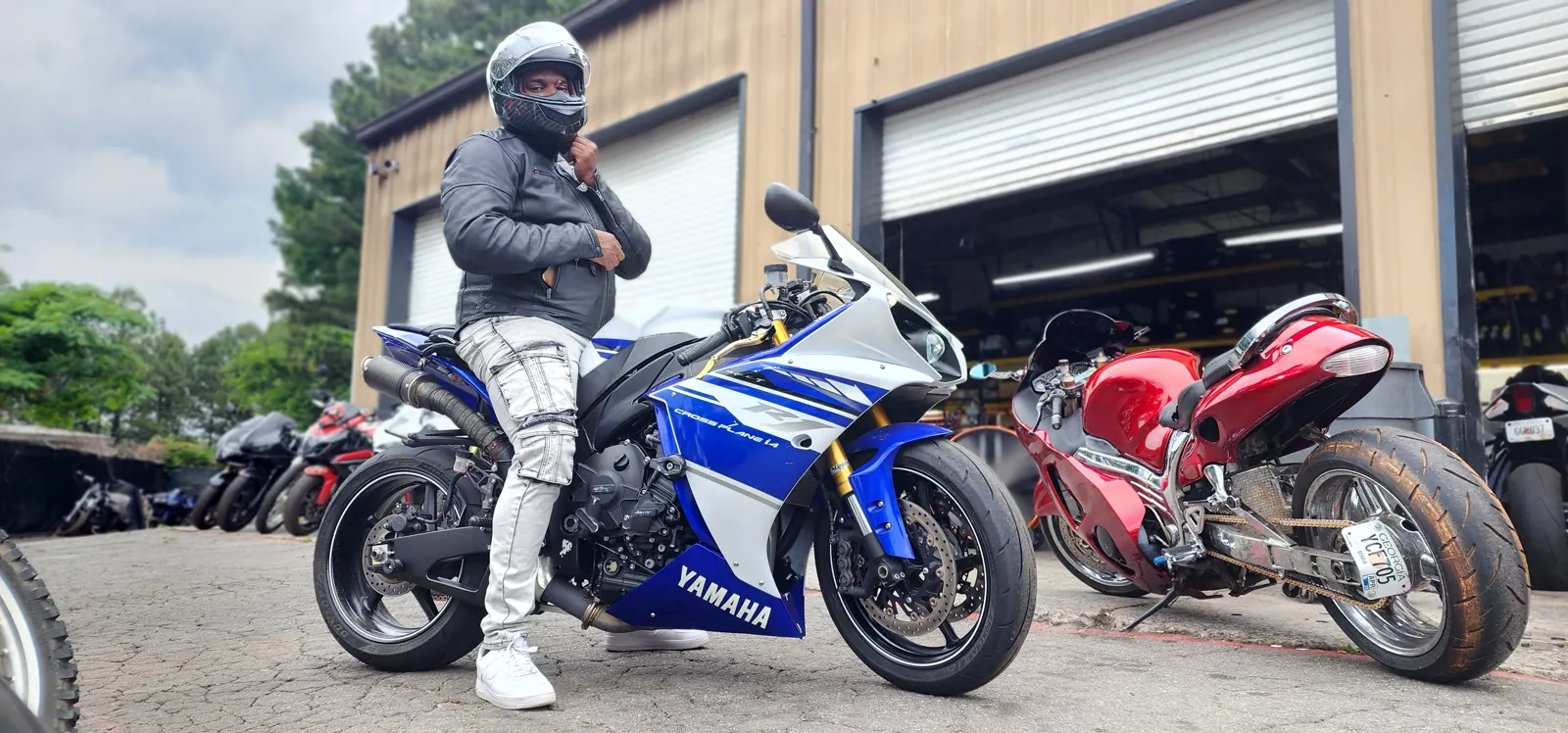
Before any sanding starts, we run through a checklist. This part matters far more than most people think, and rushing it is how shops end up with bad results. Good paint is mostly good prep. The spraying is the fun part, sure, but the inspection and the bodywork are what decide whether a finish lasts five months or fifteen years.
- Depth of the fade. Is it only the clear coat, or has the color coat started to go too?
- Old bodywork. Filler and prior repairs react differently to fresh paint, so we map them out first.
- Rust and pitting. Any bare spots need treating before a single coat goes on.
- Panel matching. When we blend a repair into good paint, we test the color so the new work disappears into the old.
- The finish you want. Solid, metallic, candy, or a full graphic. Each one needs a different plan from the ground up.
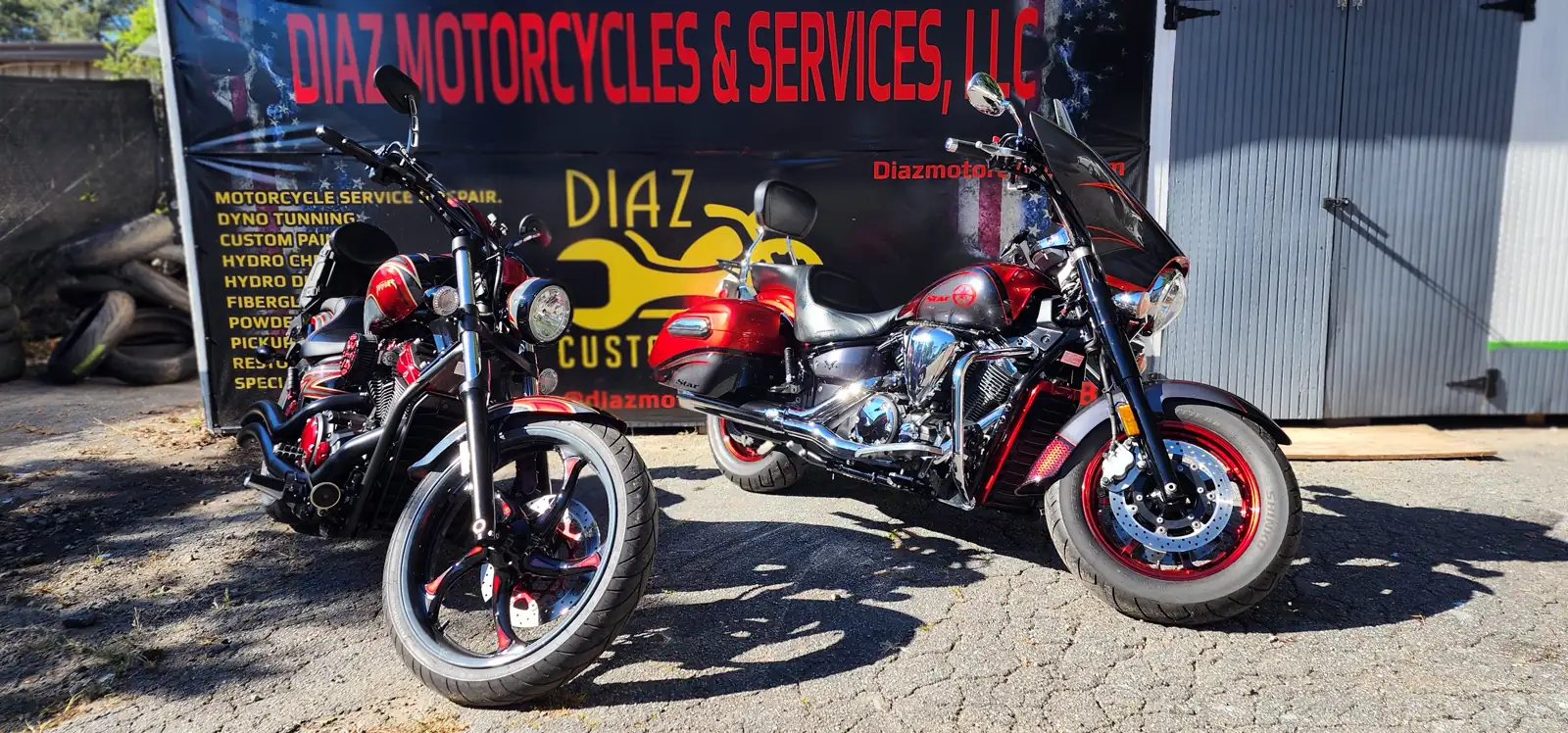
That last one is where the fun really starts. A base coat lays down the color. A clear coat goes over it for depth, gloss, and armor against the weather. Candy finishes stack a tinted layer in between, and that’s what gives a tank that lit-from-within glow when the sun catches it just right. Metallics fold in tiny flake that flashes as you walk past. None of it holds up without clean prep underneath. Want a full look at the work we do in house? We keep nothing farmed out to another shop.
Mistakes That Make A Fade Worse
Here’s where we save you some grief. When a fade shows up, the urge is to grab whatever’s under the sink and start rubbing. We get it, we really do. But a few common moves turn a small problem into a much bigger one.
- Buffing too hard. A tired clear coat is thin already. Grind on it and you cut right through to the color, which no rag can fix.
- Waxing over chalk. Wax hides a fade for a weekend, then it’s back. Worse, it traps the junk that’s eating the finish.
- Rattle-can touch-ups. Hardware-store spray paint won’t match, won’t bond, and won’t last a season in the Georgia sun.
- Ignoring it. A fade that reaches bare metal invites rust, and rust is a whole different repair.
- Chasing the cheapest respray. Thin coats and skipped prep look fine in the lot and fail within a year.
There’s no shame in any of these, by the way. We’ve quietly undone plenty of driveway experiments, and those bikes turned out beautiful. The real point is that paint rewards patience. A true custom job can’t be rushed, and any shop promising a same-day miracle is skipping steps you’ll pay for later. If you’re wondering about what changes the total on a job like this, the honest answer is simple: the amount of prep and the finish you choose.
A fade isn't the end of your paint. Most days, it's the start of the color you actually wanted.
Catch It Early And You Win
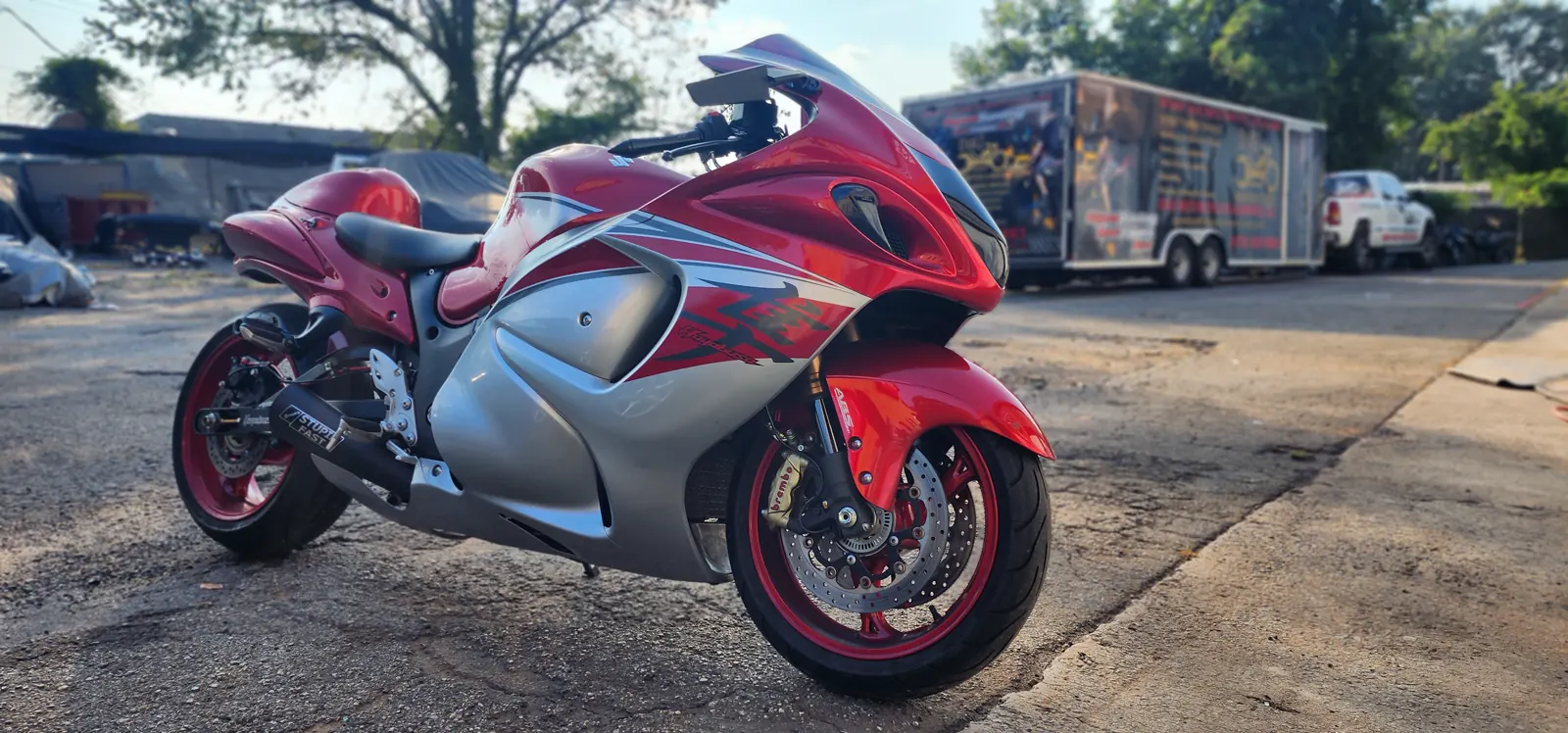
Picture the version of this where you caught it early. The clear coat was just starting to dull, well before the color ever lifted. In that story, the fix is quick and light. We refresh the finish, protect the color underneath, and you ride off with a tank that looks the way you remember it. No strip-down. No bodywork. Just a bike that turns heads at the light on GA-54 again.
That’s the whole reason we tell riders not to wait around. A fade is easiest to beat when it’s small. And when the timing lines up, the tired tank you were dreading becomes the perfect excuse to finally do the custom color you always wanted. Plenty of our friends walk in worried about a dull finish and walk out planning a candy flake job they’ll brag about for years. If you’re weighing shops, this rundown of what the work covers shows what good actually looks like.
Why This Matters In Peachtree City
Bikes in PTC live a good life. When folks ask us about faded paint Peachtree City owners are usually surprised how well their machines held up otherwise. Most sit in closed garages, covered and on a tender, in a town built around cart paths instead of daily commutes. That means low miles and clean bikes. It also means the fade you see is almost always sun and age, not hard use. A Sunday ride out on GA-74 south toward Senoia and the Coweta line doesn’t rack up the wear that beats up a commuter bike. Your finish is fighting time, not mileage.
We know the local roads too. The GA-54 corridor is the heart of town, and it’s also where a lot of folks first notice their paint under the harsh light at a long red. Riders over in Aberdeen, one of the original villages, tend to own older bikes that quietly show their years. Newer streets like Cardiff Park and established neighborhoods such as Wynnmeade send us everything from fresh baggers to garage-find project bikes. The one thing all of them share is pride in how the machine looks.
PICKUP + DELIVERY
East Cobb is a real drive from Fayette County, and nothing in daily life routes you our way. So we come to you. We’ll grab the whole bike, or just the tank and panels if that’s easier, and bring the finished work back to your garage.
Getting the bike to us is genuinely the easy part. Since there’s no motorcycle paint shop inside PTC, and a Yamaha dealer like Cycle Specialty over in Fayetteville handles sales and service rather than custom finishes, pickup and delivery is the piece that makes this actually work. You don’t have to fight the interstate with a trailer. You just hand us the bike and wait for the good part.
Timing has a rhythm here, too. Fall, from September into November, is the best riding of the year, and it’s also when the low sun makes every flaw pop. That’s when calls about faded paint Peachtree City riders had been ignoring all summer really start to pick up. Beat the rush and reach out before the leaves turn and the acorns start dropping on the shaded curves.
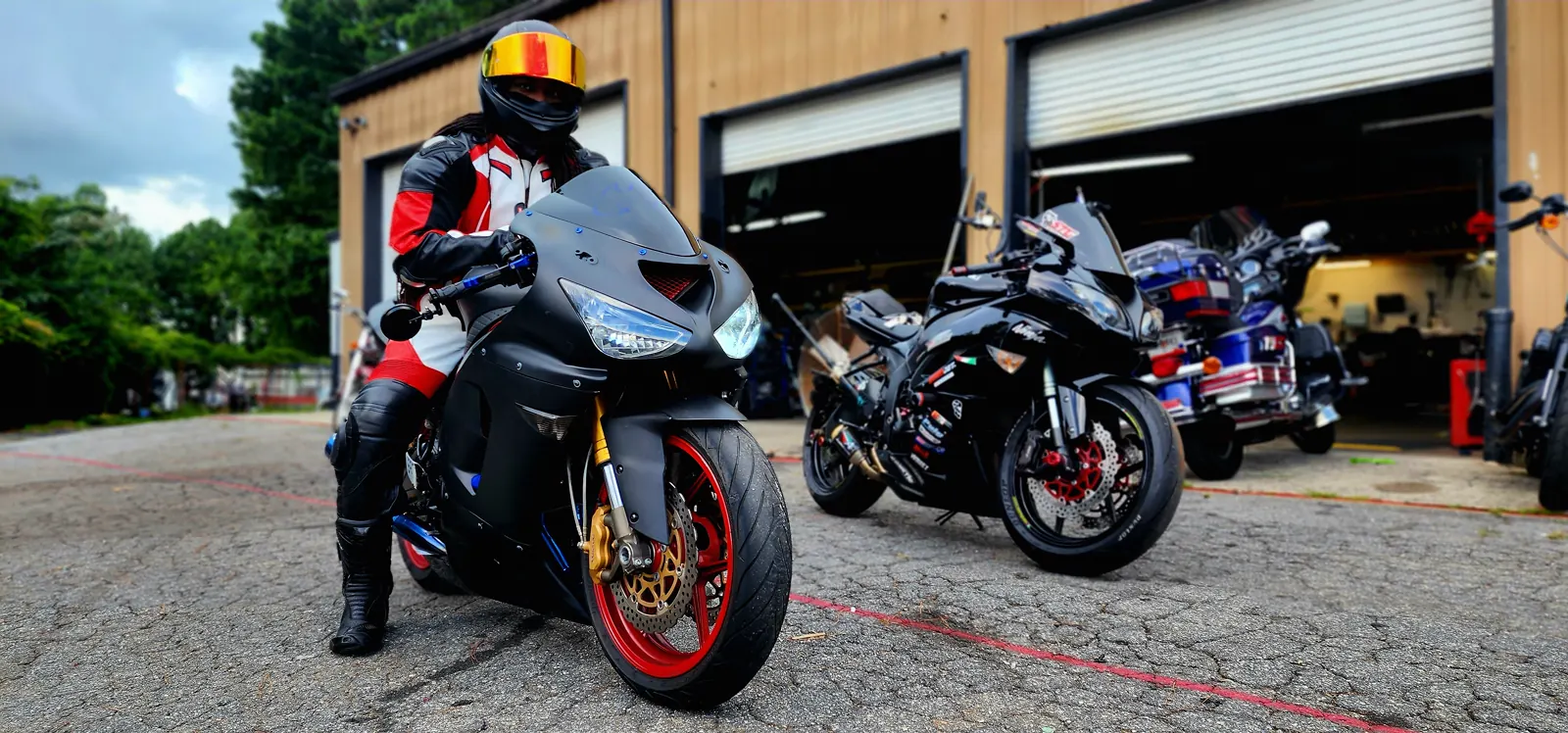
One more local note. Riders here love to show their bikes off. You’ll see them lined up near the Frederick Brown Jr. Amphitheater, the outdoor venue folks call The Fred, on a warm concert night, and cruising the loop by Lake Kedron up in the north end. A dull tank stands out in that crowd for the wrong reason. A deep, glassy custom finish stands out for the right one. New to riding, or getting back on after years off? The MSF Basic RiderCourse is a smart first stop before you go chasing the perfect paint.
The Payoff
Here’s the part we love most. A custom paint job is the most personal thing you can do to a bike. Your engine choices stay between you and the road, but your color is what the whole world sees. When we hand back a tank with deep, even gloss and flake that dances in the light, riders go quiet for a second. Then they grin like kids. That right there is the whole job.
So if your finish has gone flat, don’t write the bike off, and don’t panic either. A fade is a fixable thing, and more often than not it’s the doorway to something better than stock ever was. You’ll ride away proud of how it looks, and you’ll catch yourself sneaking glances at it in the garage light. That’s not vanity. That’s a rider who loves their machine, and honestly, we’re all a little guilty of that around here.
Questions Peachtree City riders ask us
Will the fade keep getting worse?
Yes, almost always. UV damage builds on itself, so a dull clear coat only gets duller and eventually lets the color underneath lift. The sooner we take a look, the smaller and simpler the fix tends to be.
How urgent is this, really?
It depends on the work. If it’s only the clear coat dulling, you’ve got some time to plan. If the color coat is lifting or metal is showing through, that’s when we’d want to see it soon, before rust joins the party.
What happens if I just ignore it?
For a while, not much beyond the looks. Left long enough, though, a fade reaches bare metal, rust sets in, and a simple refinish turns into real bodywork. Ignoring it only makes the eventual job bigger.
How do you find the real cause?
We inspect the bike under strong shop light, feel the surface for chalk, and check the depth of the fade one layer at a time. Old bodywork, thin prior paint, and storage habits all leave clues we can read.
Could it be something other than a fade?
Sometimes it is. What looks like a fade can turn out to be heavy oxidation, water spotting, or a failing older respray. We sort out which one it is before we recommend anything, because the fix is different for each.
Is it safe to ride with faded paint?
A fade is a cosmetic thing, not a safety problem, so yes, ride and enjoy it. The one exception is when metal is exposed and rusting, since that can spread. Short of that, there’s nothing stopping you while you plan the paint.
We paint and refinish bikes for riders all across the south metro, not just inside Peachtree City. That includes friends in Fayetteville and Tyrone, out west in Newnan, Senoia, and Sharpsburg, and the smaller towns like Brooks and Woolsey. It reaches north toward Union City, Fairburn, and Palmetto, and east to Jonesboro and Riverdale. If your bike is garage-kept anywhere in that stretch, we’ll come get it and bring it back looking new.
READY TO BRING THE COLOR BACK?
If your finish has gone flat, let’s fix it right. Text us a few photos of your tank and we’ll tell you honestly what it needs, from a quick refresh to a full custom color. We’ll pick the bike up in Peachtree City, do all the work in our own booth, and bring it home looking better than the day you bought it. Text us when you’re ready to make it yours.
470-460-9883Diaz Motorcycles and Service, LLC · 847 Barnes Mill Road, Marietta, GA 30062