Custom Paint Cost Peachtree City Riders Can Actually Trust
Why a real number comes from looking at the bike, not from a sticky note over the phone.
A rider from PTC called us one afternoon with a story we hear all the time. He’d taken his bagger to a shop closer to home and asked what a fresh custom paint job would run. He walked out with a number scribbled on a sticky note. It didn’t sit right, and he was right to feel that way. The guy never looked at the bike. He never asked a single question. That’s the whole problem with paint cost Peachtree City riders keep bumping into: a real answer can’t come from a sticky note, and a sticky-note answer almost never survives the actual work.
We’re a shop out in East Cobb, and a good share of our custom paint comes from folks a solid drive away. So we’ve gotten good at explaining this stuff in plain words. Nobody should hand over a bike, or even just a tank and a set of panels, without knowing what they’re paying for. This is the honest version. What drives the price, what the process really looks like, and why any shop worth trusting won’t give you a hard number over the phone.
Why That Quote Felt Off
From the outside, paint looks like paint. One tank is orange, the next tank is orange, and they look about the same in the parking lot. Under the surface, though, those two tanks can hide wildly different amounts of work. One might be smooth and straight and ready for color. The other might have a dent under the old clear, a botched repair from a past owner, or three layers of someone else’s mistakes that all have to come off first.
So when a shop quotes you without looking, they’re really just guessing. And a guess goes one of two ways. Either they pad the number way up to cover themselves, or they lowball it to win the job and then hit you with change orders once the bike is torn apart. Neither one feels good. The rider from that sticky-note story sensed it, even if he couldn’t name it. He knew a real answer had to start with someone actually seeing the bike.
THE SHORT VERSION
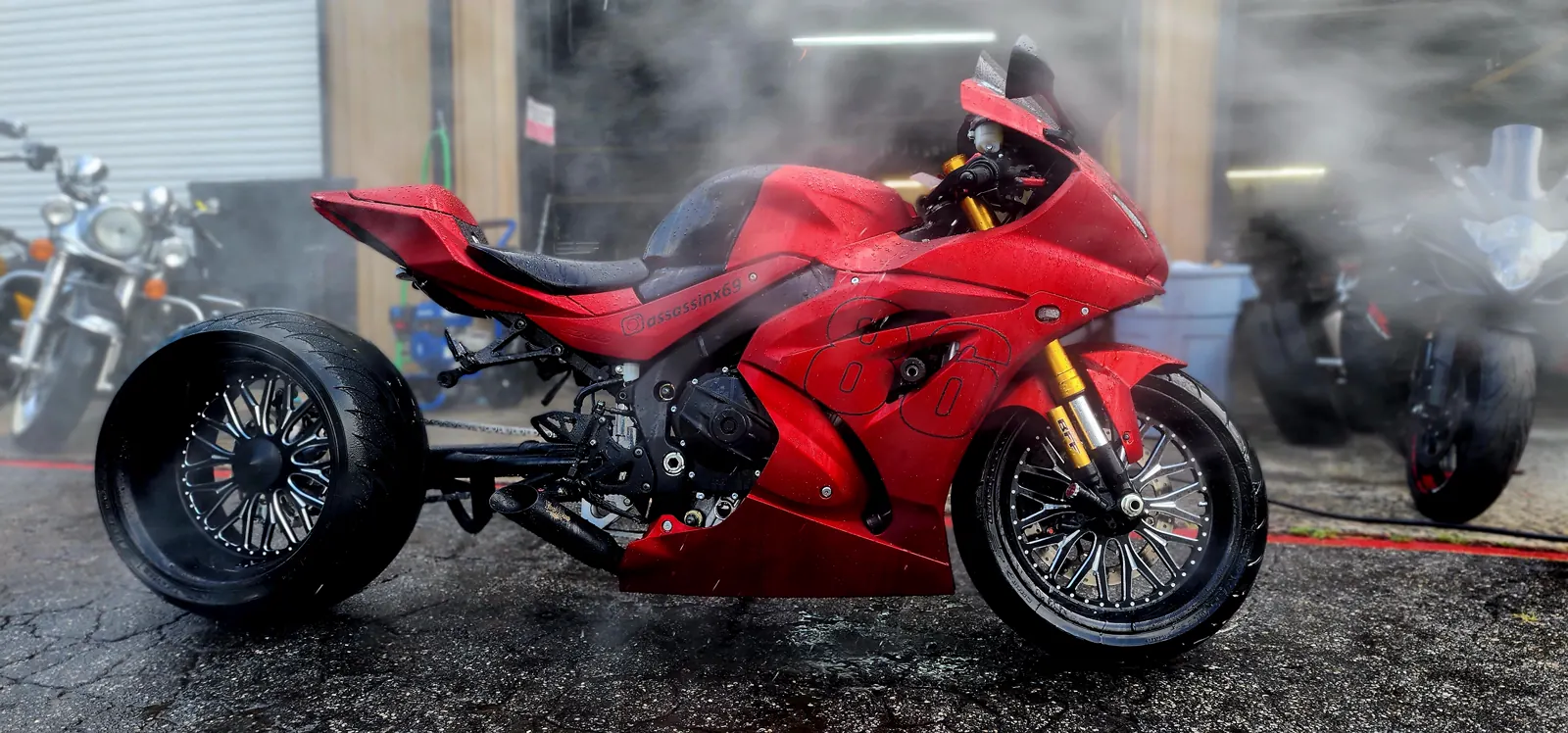
Custom paint isn’t priced by the color you pick. It’s priced by the shape of the metal underneath and the number of steps it takes to get there. That’s why we look first and quote second.
What Actually Drives the Number
Most of a paint job’s cost lives in two places, and neither one is the paint. The first is access. To spray a fairing right, it has to come off. To do a tank properly, the badges, the cap, and the petcock come off too. Some bikes shed their bodywork in twenty minutes. Others fight you for hours, with fasteners buried under other parts and wiring that has to be tucked out of the way. That labor is invisible in the final photo, but it’s real, and it’s a big chunk of the job.
The second driver is prep and bodywork, and this is the part folks always underestimate. Sanding, filling low spots, blocking a panel dead flat, priming, and sanding again. A finish is only as good as what’s under it. A gorgeous candy red sprayed over a wavy panel just gives you a very shiny wavy panel. So the honest truth is that the color and the clear are the fast part. The slow, careful groundwork is what makes the whole thing look like glass in the sun.
- How much bodywork comes apart and how easily it comes off
- The condition hiding under the old paint, which nobody sees until it’s stripped
- How many colors, how much artwork, and whether there’s flake or candy involved
- Whether we’re matching an existing finish or starting from a clean slate
- Special finishes like pinstriping, murals, or a full color change
There’s a version of this that’s cheap and a version that isn’t. The cheap version skips steps. It scuffs the old finish, sprays color, and calls it done, and it looks fine for about one season before it starts to peel, fade, or check. The version that isn’t cheap does the boring work in the right order, and it still looks deep and wet years down the road. If you want a closer look at how a finish holds up over time, our guide on matte versus gloss walks through the tradeoffs between them in plain language.
How We Figure Out What Your Job Really Needs
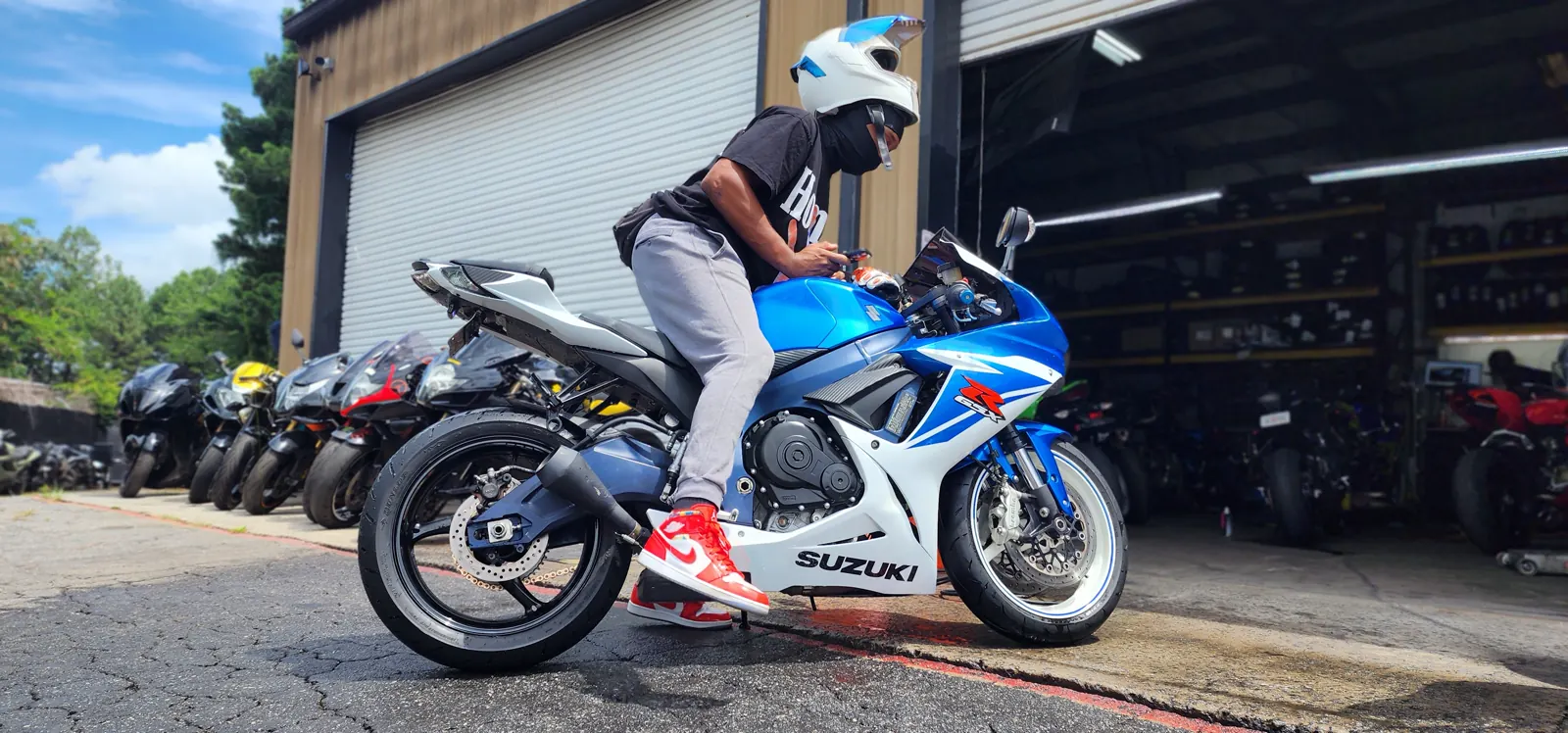
When a bike comes in, or even just a bare tank and a pile of panels, we don’t start with a price. We start with a look. Good light matters here, because a lot of PTC bikes come off those long curvilinear streets where the heavy tree canopy throws dappled shade over the pavement. That same dappled light hides dents and ripples on a fuel tank too. A panel that looks flawless in a shady garage can show a dozen little waves once it’s under our shop lights.
- We look the whole bike over in strong, even light to catch what shade hides.
- As a result we check for old repairs, filler, and paint layers that have to come off first.
- We talk through what you actually want, from a simple color change to full artwork.
- We tell you what we found, in plain words, before we ever talk numbers.
- Only then do we give you a real, honest estimate you can plan around.
That order matters. By the time we quote, we’ve already seen the surprises instead of discovering them halfway through with your bike in pieces. That’s the real paint cost Peachtree City answer: a number you can trust instead of a sticky-note guess that changes on you later. And if you’re weighing shops across the metro, you can see how this plays out in Acworth, where the same logic drives the same honest process.
The Process, Start to Finish
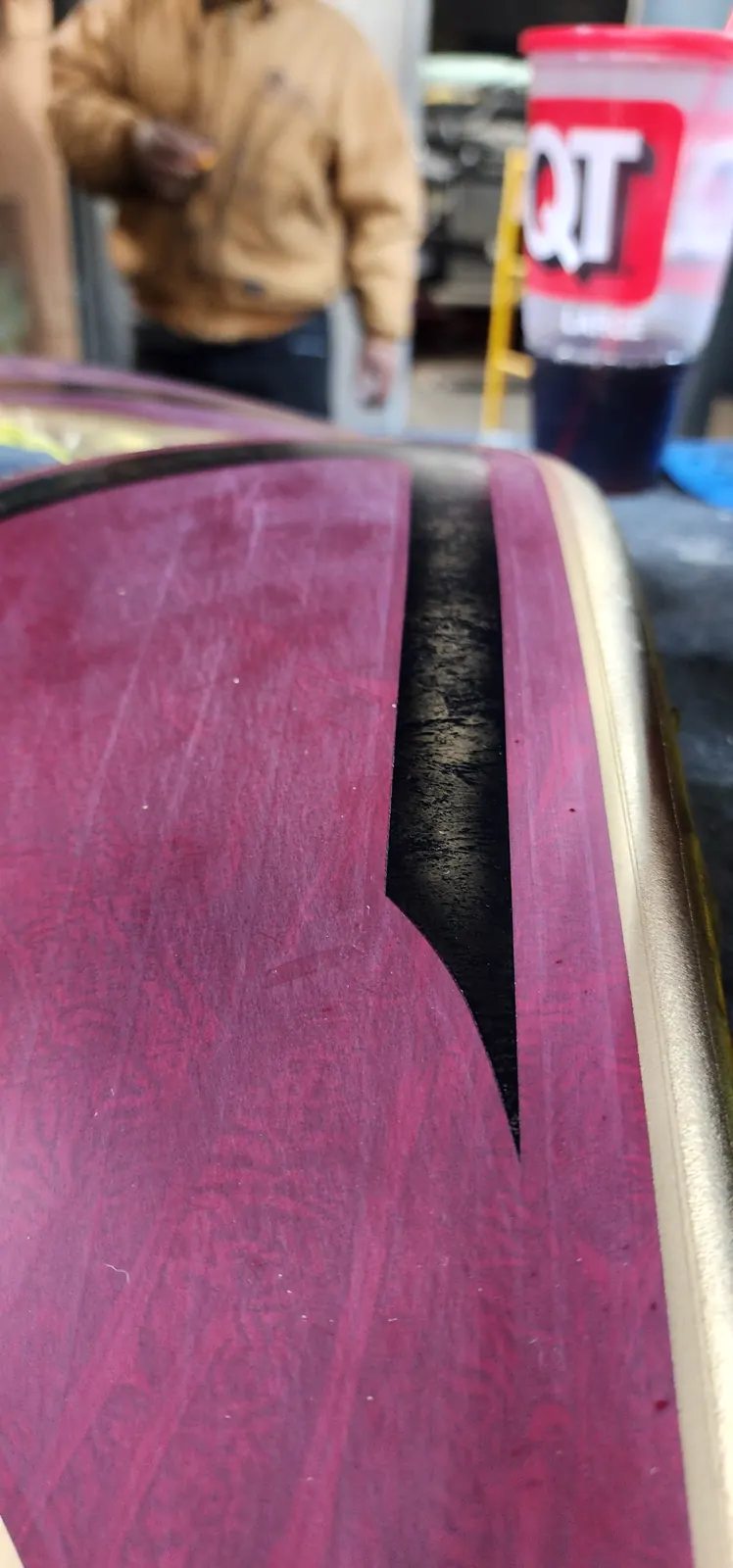
Here’s what really happens once you say go. First comes teardown, where the bodywork comes off and gets separated from everything it’s bolted to. Then comes the strip and repair stage, where old finish comes off and any dents, cracks, or bad past work get fixed. This is the messy, patient part nobody photographs. After that, the panels get primed, blocked flat, and primed again until every surface is true.
Then, finally, the fun part. Base coat lays down the color, whether that’s a deep candy that glows from within, a metallic that shifts as you walk past it, or a clean solid that reads rich and even. Artwork, graphics, and pinstriping go on at this stage, all by hand. Last comes the clear coat, and this is where the magic happens. Clear is what gives paint that liquid depth and that mile-deep gloss. We lay it, let it cure, then wet-sand and buff it until the surface looks like you could dip your hand into it.
Base is the color you see. Clear is the armor and the shine over it. Skip clear, or go thin on it, and the finish has no depth and no protection. Do it right, with real cure time between steps, and the whole panel takes on that wet, glassy look that makes people stop in a parking lot. All of this happens in our own booth, in house, which is a big part of why we can control the outcome instead of hoping a third party got it right. If you want the full rundown, our custom painting page covers everything we cover.
Why a Real Custom Job Takes Time
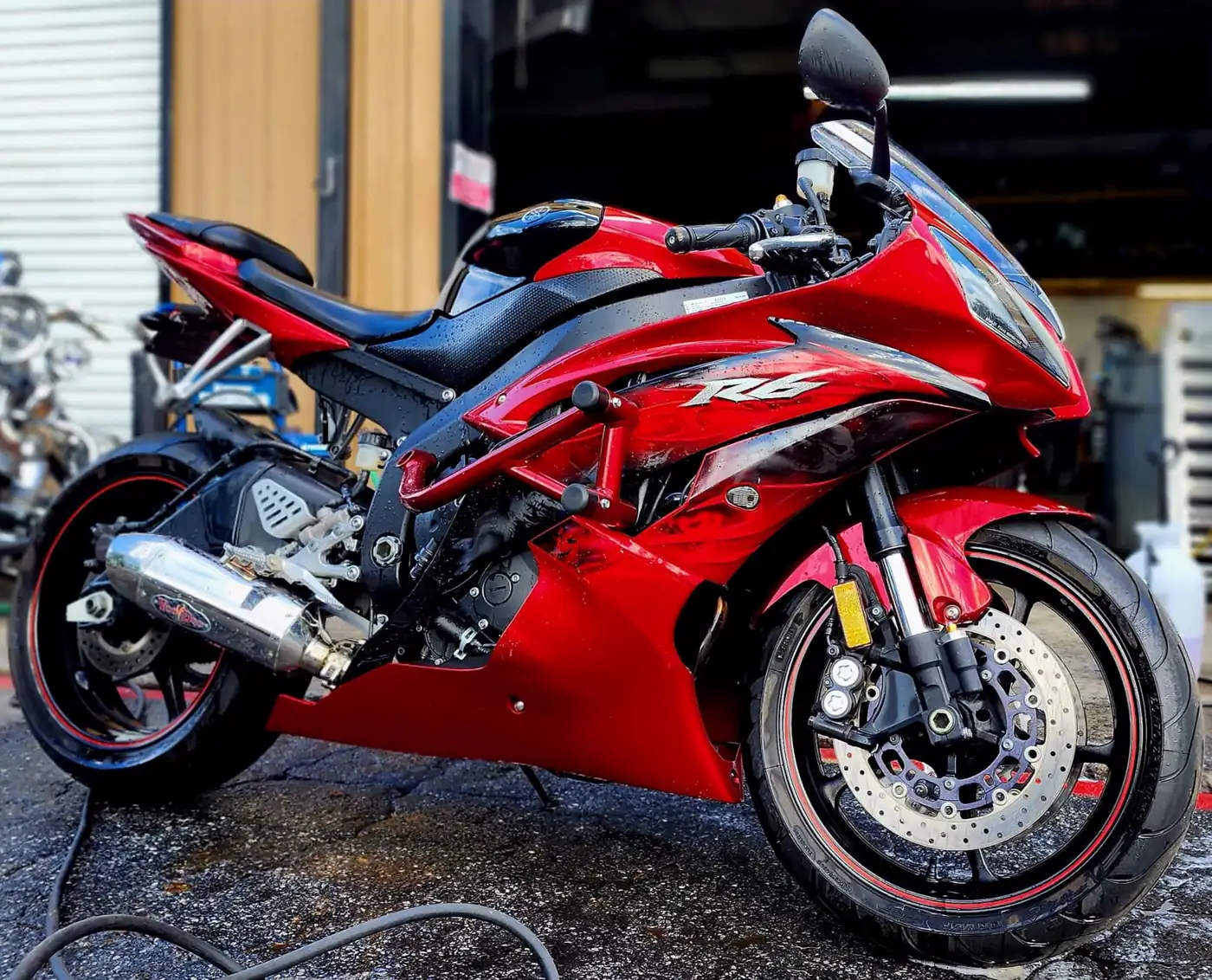
People ask how long it takes, and the honest answer is that it depends on the work. A simple color change on an easy bike is one thing. A full artwork job with candy, flake, and hand-laid pinstriping over a tank that needed real bodywork is another thing entirely. What we won’t do is rush the cure times, because paint that gets hurried is paint that fails. Every coat needs to set before the next one goes on, and no shortcut makes that faster without costing you later.
Something worth knowing before you book anywhere: a shop that promises a lightning-fast turnaround on a big custom job is telling you they plan to skip steps. Curing can’t be hurried, and neither can careful block sanding. So when we say it depends on the work, we mean it. We’d rather give you a real timeline once we’ve seen the bike than promise a number we’d have to cheat to hit. Your paint outlives the wait every single time.
This is exactly the crowd that gets it. PTC is a garage-kept, appearance-forward town. Bikes here live indoors, covered, on tenders, and they come out looking sharp. Whether the bike lives over in Kedron or down in Braelinn, in an original-era spot like Aberdeen or a premium pocket like Cardiff Park or out toward Whitfield Farms, the story is the same. These are hobby machines, cared for by riders who research everything and want the work done right. When you take that much pride in a bike, a real custom finish is the natural next step, and it’s the most personal thing you can do to it.
The Drive, and Why It Isn't a Dealbreaker
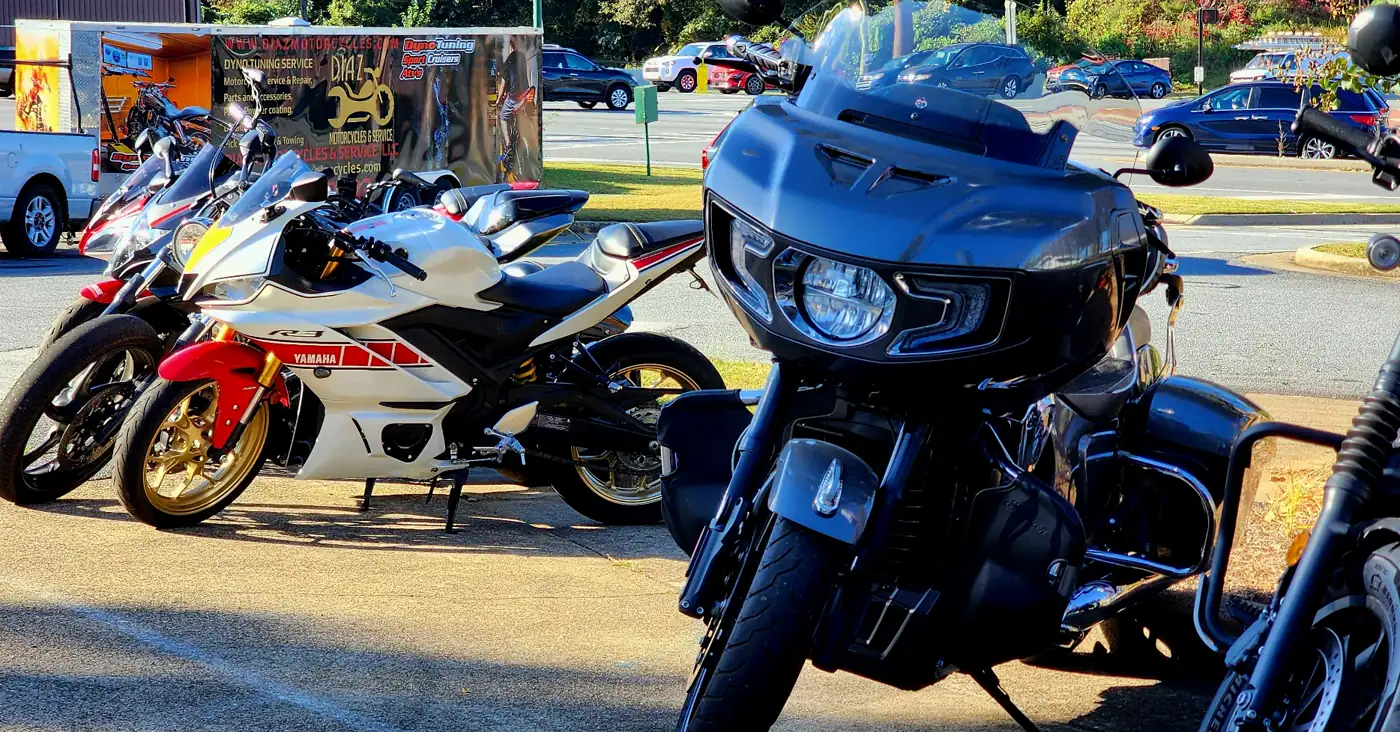
Let’s be real about the map. From PTC to our shop on Barnes Mill Road is a real drive, roughly an hour or so up toward East Cobb depending on traffic and route. Nothing in daily life routes a Peachtree City resident our way, so a trip to us is always a planned errand. But here’s the thing that makes it easy: you don’t have to make that drive at all. We can pick up the whole bike, or just the tank and panels if you’d rather keep riding while we work. That enclosed trailer in the photo above isn’t for show.
There’s really no shop inside the city limits doing this anyway. The marque folks like Moto Guzzi Peachtree City, despite the name, actually sit about twenty minutes away over in Fairburn, and they’re a brand specialist, not a custom paint booth. So the choice isn’t close versus far. It’s whether the paint gets done right, by a shop that does it all in house. When we handle transport, the distance stops mattering. You drop off nothing, drive nowhere, and your bike comes back looking like a show piece.
What You Actually Get at the End
The outcome is the whole point. You roll the bike out for a short ride down to Senoia on a Saturday, park it near all that historic downtown, and it stops people. The color has depth. On the other hand the flake catches the light and moves as you walk around it. The gloss is deep enough to see the clouds in. That’s not a fresh paint job, that’s your bike finally looking the way you always pictured it. And it holds up, because the boring groundwork was done first, in the right order, at the right pace.
A custom finish is the most personal thing you'll ever do to a bike. It should be done by hands that treat it that way.
If you’d like to see the standard we hold ourselves to, our piece on the best custom paint in the area breaks down what that service actually involves and what separates real craft from a quick respray. Groups like the American Motorcyclist Association are worth a look too if you enjoy the culture and community side of riding. And if a fresh look pushes you toward a plate or title update, the Georgia Department of Revenue keeps the motor-vehicle details straight. Whatever your bike needs, it starts the same way: we look first, we tell you the truth, and then we quote.
Questions Peachtree City riders ask us
Why can't you just quote my paint over the phone?
Because the price lives under the old finish, not on top of it. Two tanks that look identical can hide very different amounts of dent repair, filler, and old paint that has to come off first. We’d rather see the bike, or your tank and panels, and give you a real number than guess and change it on you later.
What if you find something else once the bike is apart?
We stop and call you before we do anything about it. Sometimes stripping a panel reveals an old repair or hidden damage nobody knew was there. We show you what we found, explain your options in plain words, and let you decide. No surprise work ever happens without your say-so.
How do I avoid surprises on the final bill?
Start with a shop that looks before it quotes. When we inspect the bike under strong light up front, we catch most of what’s hiding before we ever give you a number. That’s the whole reason we diagnose first. It turns a guess into a plan you can actually count on.
What makes one paint job bigger than another?
Access and prep, mostly. A bike whose bodywork comes off fast and whose panels are already straight is a smaller job. One that fights the teardown, needs real bodywork, and calls for artwork, candy, flake, or hand pinstriping is a much bigger one. The color you pick matters far less than the work underneath it.
How long will my custom paint take?
It depends on the work, and we’ll give you a real timeline once we’ve seen the bike. A simple color change is quicker than a full artwork job with multiple stages. What we won’t do is rush the cure times between coats, because hurried paint fails early. Good clear needs time to set, and that time is what gives it depth.
What's included when you paint my bike?
The whole thing, done in house in our own booth. That means teardown, stripping, any needed bodywork, priming and blocking, base color, any artwork or pinstriping, and the clear coat, then wet-sanding and buffing to a deep gloss. We can also pick up your bike or just your tank and panels, so you don’t have to make the drive to us at all.
Most of our custom paint riders come from a good drive away, and we’re set up for exactly that. We regularly help friends across Fayetteville, Tyrone, and Newnan, along with Senoia, Sharpsburg, and the quieter roads through Brooks and Woolsey. We also cover the northern side toward Union City, Fairburn, and Palmetto, plus Jonesboro and Riverdale. Wherever you are, we can arrange pickup and delivery so the distance never stands between you and a finish you’re proud of.
LET'S TALK ABOUT YOUR BIKE FIRST
If you got a paint quote that didn’t sit right, bring it here and let’s start the honest way. We’ll look at your Peachtree City bike, tell you what’s really under the finish, and give you a number you can trust. Text us to set up a pickup, or send photos of your tank and panels to get the conversation going. No sticky-note guesses, just real work done right.
470-460-9883Diaz Motorcycles and Service, LLC · 847 Barnes Mill Road, Marietta, GA 30062