Motorcycle Detailing Cost in Gainesville: A Plain-English Price Guide
What actually drives the number on a detail — the bike's condition, correction, coating, and why no honest shop quotes blind.
You want a number, and you want it to be honest. Totally fair. But motorcycle detailing cost Gainesville shops quote can swing a lot, and it is not because anybody is playing games. It is because a detail is priced on labor, and labor is driven by the bike’s condition. This guide breaks down exactly what moves the number up or down, so when you get a quote, you understand every dollar of it.
Think of it like a paint job on a house. A fresh, clean wall gets one price. A wall with peeling paint, water stains, and cracks to fix first gets another. Same painter, same skill, wildly different hours. Detailing works the same way. The shop is not pricing the bike; it is pricing the condition of the bike. Once you see it that way, the whole thing makes sense.
The four things that drive the price
Almost every dollar comes down to four factors. First, the starting condition: a garage-kept bike is fast, a neglected one is slow. Second, whether you need paint correction, which is hours of machine polishing. Third, whether you add a ceramic coating, which needs prep and cure time. Fourth, the extras, like heavy chrome, engine-bay work, or leather that needs reconditioning. Stack those up and you have your number.
Notice what is not on that list: your bike’s brand or how much it cost new. A well-kept Honda and a well-kept Harley in the same shape take similar work. What separates a cheap detail from an expensive one is not the badge on the tank. It is how many hours of hand labor it takes to bring the finish back and protect it. Hours are the currency here.
Tier one: the wash-and-shine
The lowest tier is a thorough clean, not a correction. Deep wash, careful dry, dress the trim, polish the chrome, wipe down the leather. This is the right call for a bike that is already in good shape and just needs to look sharp for the season or a show. It is the least expensive option because it is the least hours, and there is no shame in it if that is all your bike needs.
Where riders get burned is assuming a wash-and-shine will erase swirls or water spots. It will not. It cleans what is on top of the paint; it does not correct the surface underneath. If your tank looks hazy in the sun, this tier will make it clean and hazy. Knowing that up front saves you from paying for the wrong service and feeling let down when the swirls are still there.
Tier two: the full detail with paint correction
This is the tier most people picture when they imagine a real detail. It adds decontamination, a clay step, and machine paint correction to remove swirls and light scratches. This is where the hours pile up, because correction is slow, careful work done panel by panel. It is also where the wow happens: the color goes deep and wet-looking, and the reflection sharpens like the day the bike left the showroom.
The price here depends almost entirely on how bad the paint is. A bike with light swirls corrects fast. A bike that lived under a cover through a few Hall County winters, collecting hard-water spots and etching, takes more passes and more product. That is why two full details can carry different prices. The service is the same; the condition is not. This is the single biggest swing in any quote.
CORRECT FIRST, PROTECT SECOND
Never pay to ceramic coat a bike before the paint is corrected. A coating locks swirls in underneath, and you pay again to strip it off later. Order matters more than almost anything else in what you spend.
Tier three: adding a ceramic coating
Once the paint is corrected, protection is the last step, and a ceramic coating is the premium option. It adds cost for two reasons: the extra prep to get the surface coating-ready, and the cure time the coating needs before the bike can go back out. What you get is a hard, slick shell that beads water, resists spotting, and makes future washes faster. For a bike stored outside near the lake, that easy cleaning pays you back over time.
Be wary of any shop that quotes a rock-bottom coating price or promises it lasts forever. A coating is not scratch-proof and will not stop a rock chip off 365. How long it lasts depends on storage and care, so honest shops talk in years depending on care, not a magic number. A suspiciously cheap coating usually means skipped prep, and skipped prep means it will not bond right and will not last.
The add-ons that move the number
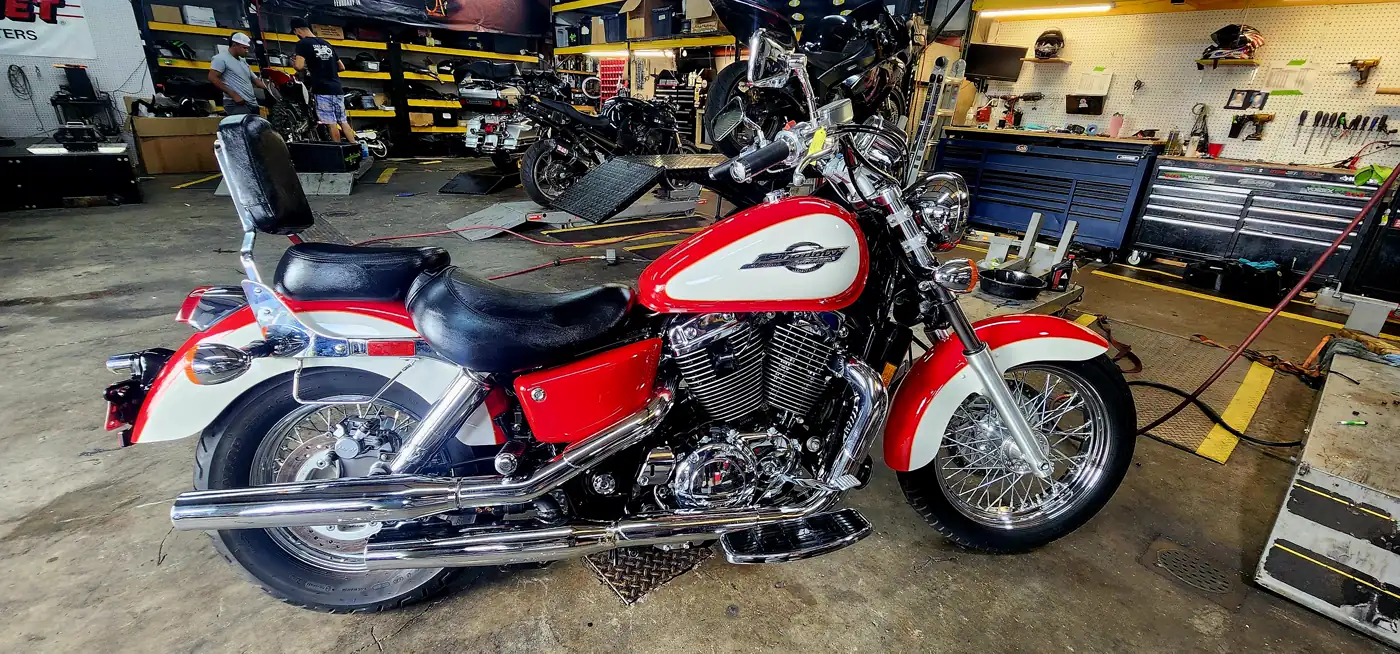
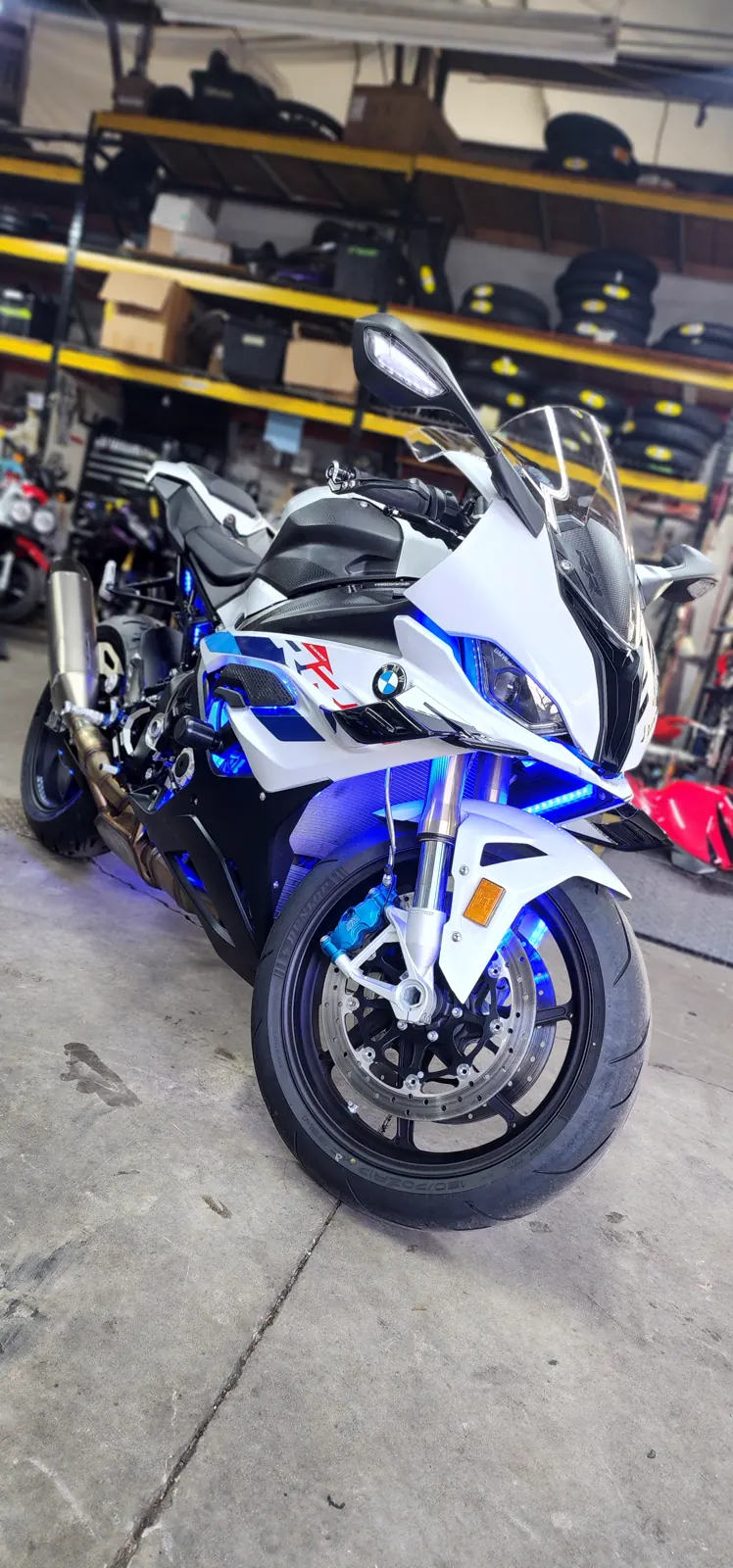
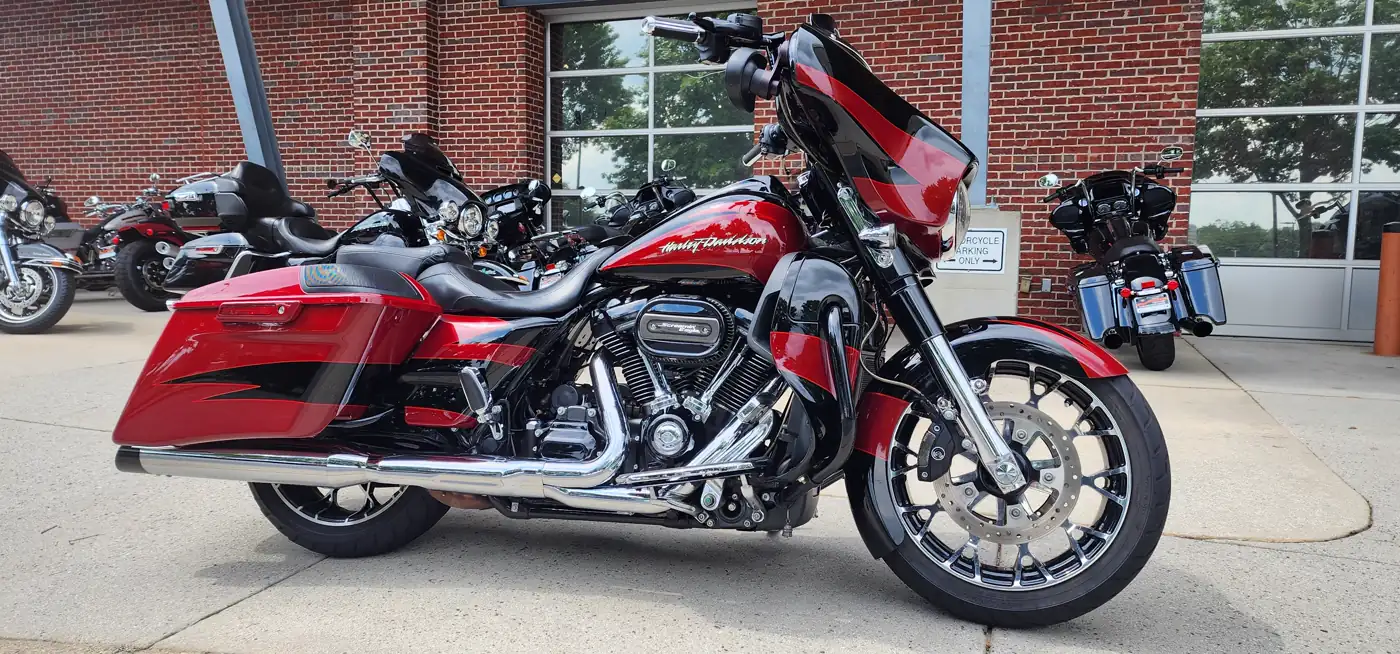
Beyond the main tiers, a few extras nudge the price. Heavy chrome, like a full-dress cruiser, is more polishing time than a stripped-down sportbike. A grimy engine bay that has not been touched in years takes real digging. Leather that has dried and cracked needs reconditioning. Faded plastic and trim need restoring back to black. None of these are surprises if the shop looks the bike over and tells you before the work starts.
- Starting condition — a clean bike is fast, a neglected one is slow.
- Paint correction — the biggest single swing, driven by how bad the swirls are.
- Ceramic coating — adds prep and cure time on top of correction.
- Heavy chrome — full-dress cruisers take far more polishing than sportbikes.
- Engine-bay, leather, and trim work — add-ons priced by how much digging they need.
The honest move is to bundle only what your bike actually needs. A newer bike with light swirls does not need restoration-level correction, and a garage-kept cruiser does not need a full engine-bay excavation. A good shop tells you where to spend and where to save. Anybody pushing you toward the top tier without looking at the paint first is selling a package, not a solution.
WHY WE QUOTE AFTER WE LOOK
A phone quote is a guess, and guesses run high to be safe. We diagnose the finish first, then price the actual work. You pay for what your bike needs, not for the shop’s worst-case padding.
Detailing is priced on hours, and hours are decided by condition — not by the badge on your tank.
So how do you get a real number without driving anywhere? Text us a few photos of the bike and tell us how it is stored. Garage, carport, or under a cover by the lake all change the answer. We read the paint condition from the photos, give you an honest tier and a straight price, and if you want it done, we pick up in Hall County. You never make the 70-minute drive just to get a quote.
Timing your detail to save money
Here is a lever most riders never pull: when you get the detail done. Correction is priced on how bad the paint is, so the longer you wait, the more it costs, because swirls deepen and water spots etch in. A bike detailed every year needs light, cheap correction. A bike detailed once a decade needs a heavy, expensive rescue. Same bike, very different bills, decided entirely by timing.
Our local calendar gives you natural windows. Winter is the storage season here, when the bike is not being ridden anyway, so it is the perfect low-pressure time to correct and coat without missing rides. And getting protected before the late-March pollen blast means the yellow wipes off instead of etching in. Time it right and you spend less and keep your riding weekends intact.
The pattern holds year after year. Riders who stay on a regular detail schedule pay small, predictable amounts. Riders who let it slide until the paint looks rough pay a big one-time correction bill, then usually a coating on top to protect what they finally brought back. Staying ahead is not just easier on the eyes; it is easier on the wallet, every single time.
What a fair shop will not charge you for
A straight-shooting shop saves you money by not selling you work you do not need. A newer bike with light swirls does not need restoration-level correction. A garage-kept cruiser does not need a full engine-bay excavation. A bike you are about to sell might only need a mid-tier detail to read as cared-for. Matching the service to the goal is where an honest shop earns your trust and your repeat business.
The other thing you should never pay for is a redo. If a shop coats over uncorrected paint, you pay again to strip it and do it right. If a coating is applied with skipped prep, it fails and you buy another. Doing it in the correct order the first time, correct then protect, is the cheapest path there is. Cheap up front that leads to a redo is the most expensive detail you can buy.
The bottom line: a detail costs what the work costs, and the work is set by your bike’s condition. Understand the four drivers and no quote will ever feel like a mystery. Protecting the finish early keeps the number low, because you avoid the heavy correction that neglect demands later. Waiting does not save money; it just raises the bar for the next detail. Text us and let’s put a real number on your bike.
Questions Gainesville riders ask us
Why can't you just tell me a price over the phone?
Because a detail is priced on labor, and labor depends on the bike’s condition, which we cannot see over the phone. A blind quote runs high to be safe, and that is not fair to you. Text us photos and we can read the paint condition and give an honest tier and price without you driving anywhere.
What makes one detail cost more than another?
Four things: the bike’s starting condition, whether it needs paint correction, whether you add a ceramic coating, and extras like heavy chrome or engine-bay work. Correction is the biggest swing because a neglected finish takes far more hours than a clean one. Two full details can carry different prices for that reason alone.
Is a cheap ceramic coating a good deal?
Usually not. A suspiciously low coating price often means skipped prep, and without proper prep the coating will not bond or last. Honest shops charge for the prep and cure time and talk in years depending on care, never a magic forever number. Cheap and coating rarely belong in the same sentence.
Do I have to pay for the top tier?
No. You should pay only for what your bike needs. A newer bike with light swirls does not need restoration-level correction. A good shop tells you where to spend and where to save, and looks at the paint before recommending anything. Anybody pushing the top package without a look is selling, not solving.
How do I get an accurate quote from Gainesville?
Text us a few photos of the bike and tell us how it is stored. We read the paint condition, give you an honest tier and a straight price, and if you move forward we pick up in Hall County. You never make the 65 to 85 minute drive just to get a number.
Does detailing really protect resale value?
Yes. A clean, corrected, protected finish reads as a cared-for bike in about two seconds to any buyer, and it holds its number better. Spending a little to stay ahead of swirls and water spots is cheaper than heavy correction later, and it pays back when you sell.
We price and detail bikes across Hall County and Northeast Georgia, not just downtown Gainesville. Quotes come in from the Green Street District, Mundy Mill, and Chestatee Hills, plus lake spots like Harbour Point. We hear from riders near Lake Lanier Olympic Park on Clarks Bridge Road and out by the Square on Main Street SW. If you ride the roads around Lake Lanier, you are close enough for us to come get the bike.
TEXT US PHOTOS FOR A REAL QUOTE
Want a straight price instead of a mystery? Text us a few photos of the bike and tell us how it is stored, and we will read the paint condition and give you an honest tier and number. We are in Marietta, about 65 to 85 minutes from Gainesville, so you do not drive it in for a quote — and if you move forward, we pick up in Hall County and bring it back. No padding, no sales script.
470-460-9883Diaz Motorcycles and Service, LLC · 847 Barnes Mill Road, Marietta, GA 30062