Found a Barn Find in Powder Springs? What Sitting Really Did to It
The bike ran when it was parked — years ago. Here's what quietly rots while a motorcycle sits, and what a safe revival actually takes before you trust it on the road.
Plus, every barn find Powder Springs riders drag home comes with the same four magic words: ‘it ran when parked.’ Meanwhile, that was probably four winters and a lot of humidity ago. In fact, a motorcycle that sits still doesn’t just pause — it quietly falls apart from the inside out. So here’s the honest version: the bike didn’t die from riding. It died from resting. And the good news is most of that damage is fixable if you handle it right.
We get it. You cleaned out a relative’s shed off Brownsville Road, or bought a dusty project from a neighbor in one of the older subdivisions, and now there’s a bike in your garage that hasn’t turned a wheel since before the last McEachern playoff run. It looks tired but honest. The temptation is to throw in a battery, splash in some gas, and hit the starter. Please don’t. That’s exactly how a savable bike becomes a broken one.
Why 'it ran when parked' means almost nothing
Here’s the hard truth. A bike that ran when it was parked tells you how it was doing years ago, not today. Sitting still is worse for a motorcycle than riding it. Riding keeps fluids moving, seals wet, and metal warm and dry. Parking lets moisture creep in, fuel turn to varnish, rubber dry out, and rust set up shop. West Cobb humidity doesn’t help, and a bike stored in a shed instead of a climate-controlled garage takes the worst of it.
Think of it like a pair of running shoes left out in the yard for three summers. They were fine when you kicked them off. Now the soles crumble the second you put weight on them. A bike is the same, except the crumbling parts include your brakes and your fuel system, which are the two things you really want working when you’re rolling down C.H. James Parkway. So before anything else, we assume nothing and check everything.
The good part of that story is that West Cobb bikes usually sat in decent conditions. With homeownership over 80% and two-car garages the norm, most Powder Springs projects lived indoors, not out in the weather. A garage bike ages slower than a shed bike, and a shed bike ages slower than one left under a tarp in the yard. Where your find spent its nap tells us a lot before we ever touch it.
The fuel system: the first thing to die
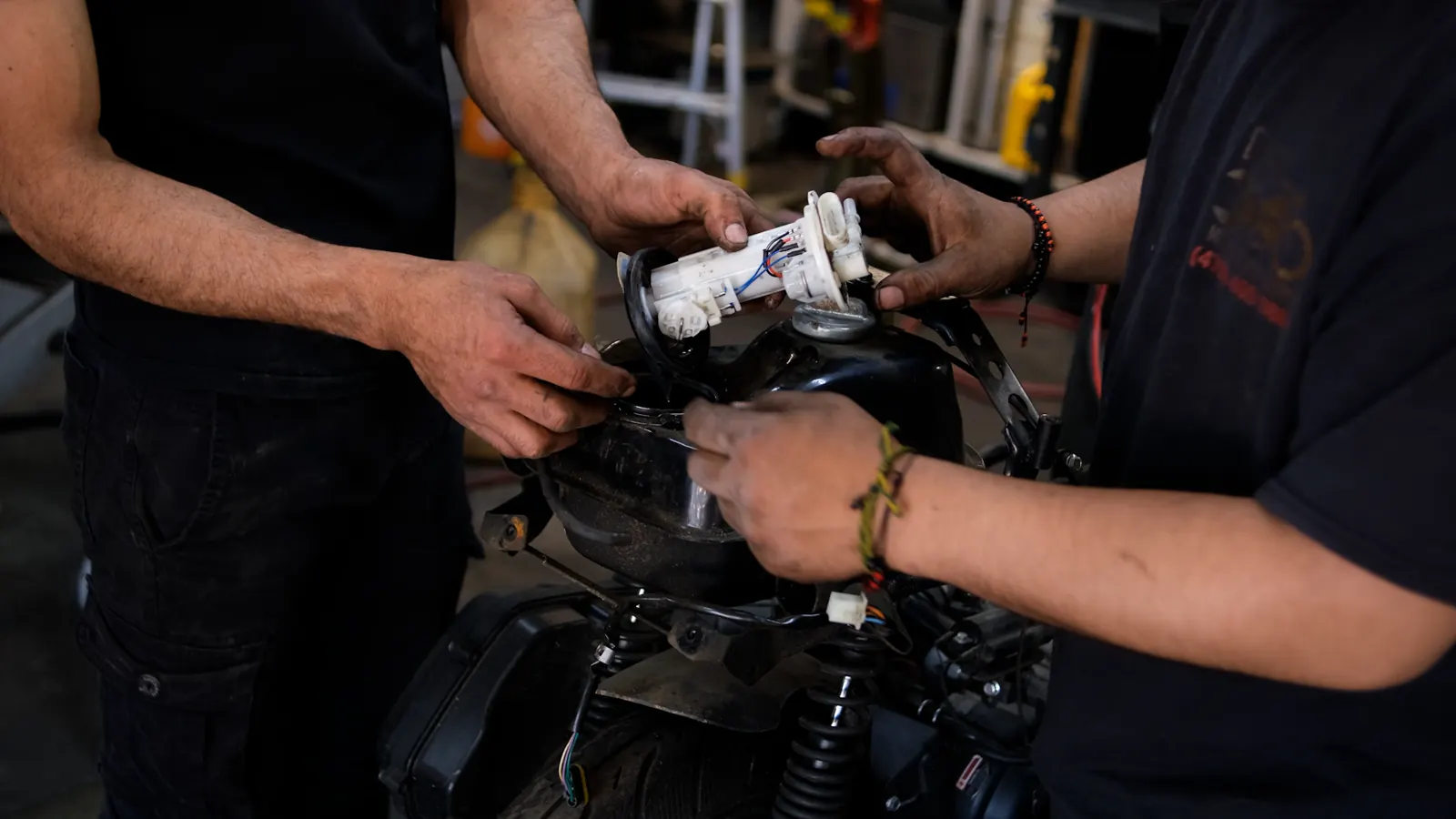
Gasoline goes bad. Left alone, it turns into a sticky varnish that gums up everything it touches. In a carbureted bike, that varnish glues the tiny passages inside the carburetor shut, and no amount of fresh gas fixes a carb that’s already clogged. On a fuel-injected bike, stale fuel can foul the injectors and pump. Either way, the fuel system is almost always the first casualty of a long sit, and it’s the number-one reason a barn find won’t start or won’t run right.
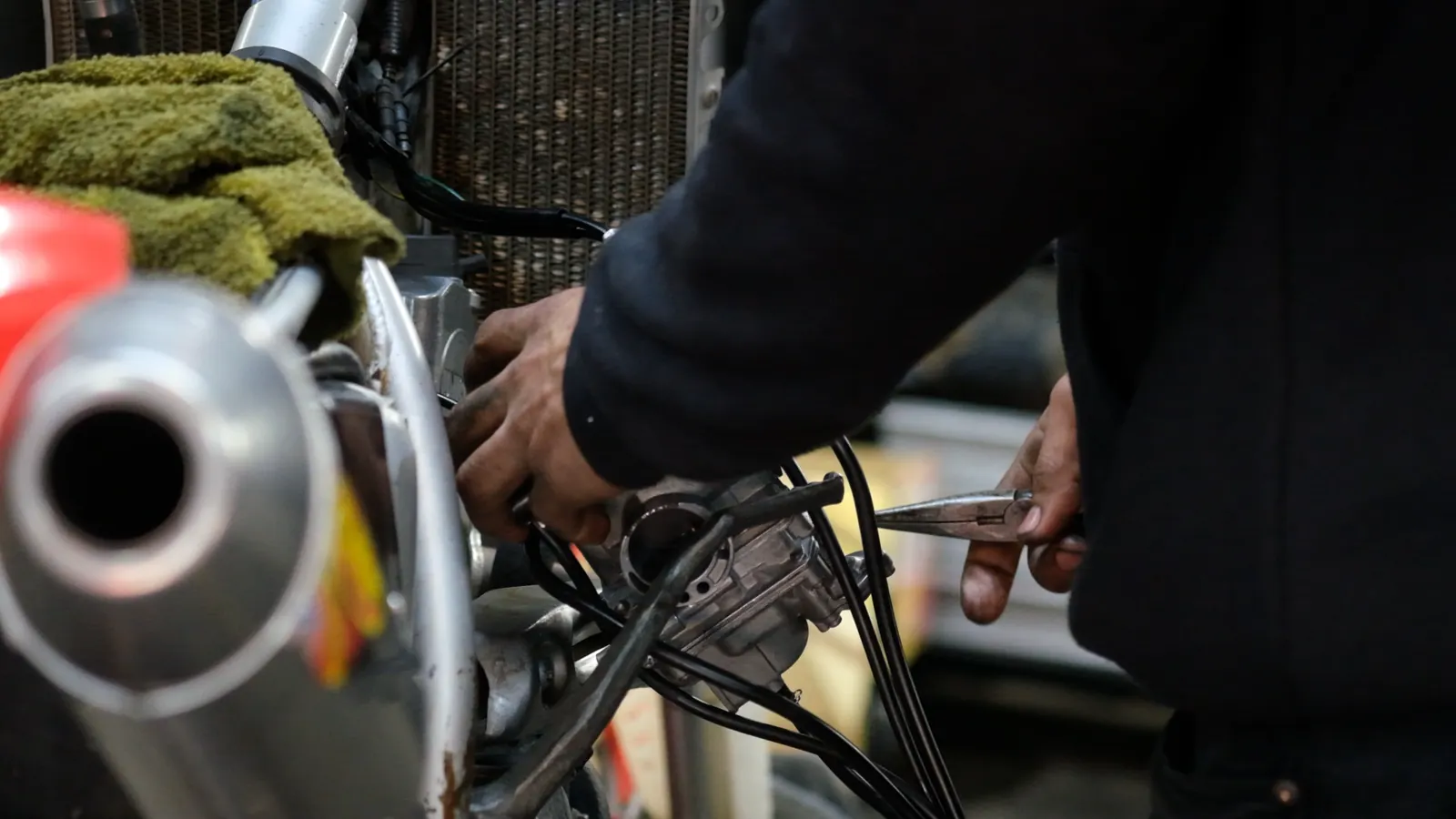
Then there’s the tank itself. If any old gas was left inside, the bare steel above the fuel line rusts. Now you’ve got rust flakes waiting to wash down into your freshly cleaned carbs the moment you fill it. So a proper revival means draining the old fuel, checking inside the tank for rust, cleaning or lining it if needed, and going through the carbs or injectors before we ever try to light it off. Skip this and you’re just feeding grit into clean parts.
Rubber, seals, and everything that dries out
Rubber is the next thing sitting kills, and it’s sneaky because it looks fine until it fails. Tires that sat for years develop dry rot and flat spots, even with plenty of tread left. Those cracks can let go at speed, and a tire that fails on a pothole-strewn stretch of Macland Road is not a fixable mistake. Fuel lines go hard and crack. Brake and clutch lines swell shut inside. Fork seals dry out and start weeping the moment you use them.
None of this is dramatic to look at, which is the trap. A dry-rotted tire and a fresh tire look about the same from ten feet away, right up until one of them doesn’t hold air on the highway. So a safe revival treats every piece of rubber as suspect: tires, lines, seals, and gaskets all get inspected and replaced as needed. It’s not us running up the bill — it’s the difference between a bike you can trust and a bike that’s a nice-looking gamble.
This matters double around here because the good riding is far from home. Nobody revives a barn find to circle the block. You want it ready for a Dallas Highway loop or a fall run up to Two Wheels of Suches, which is a couple hours out. A tire or line that fails at a Powder Springs stop sign is scary. The same failure in the north Georgia mountains, an hour from the nearest help, is a whole different problem. Safe means safe where you actually ride.
HEADS UP
A tire with good tread can still be dangerously dry-rotted after years of sitting. Tread depth doesn’t tell you the rubber is safe.
The stuff you can't see: brakes, battery, and internals
Now for the hidden stuff. Brake fluid absorbs water over time, and old fluid can leave calipers seized and pistons stuck. A dead battery is a given — batteries don’t survive years of sitting. Chains rust and stiffen. And inside the engine, oil that sat for years has lost its protective additives, so the first startup on old oil is grinding metal on metal with no real cushion. That’s why we never just hit the starter and hope.
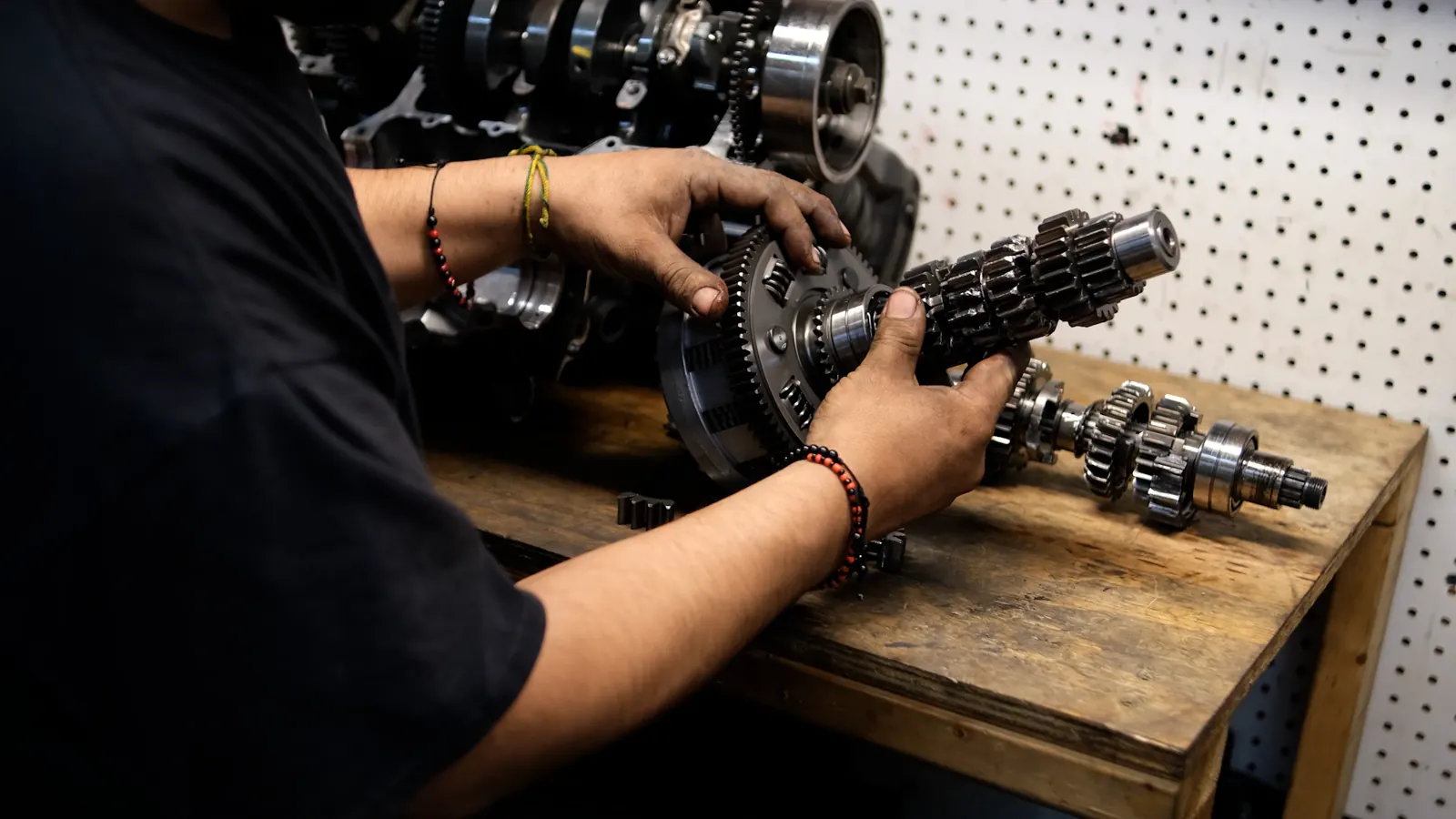
Sometimes a long-stored engine is totally fine internally and just needs fresh oil and a careful wake-up. Other times, moisture got inside and left rust on the cylinder walls or seized rings, and then the engine needs opening up. We can’t tell which from the outside, so the honest move is to check compression, prime the engine with oil, and turn it over by hand before it ever runs under its own power. That’s how you protect the good bikes and catch the bad ones early.
The safe wake-up: how we actually revive a barn find
So what does a real revival look like, in order? It’s not glamorous, but the order is everything. Rush it and you can wreck an engine in the first ten seconds. Here’s the honest sequence we follow on a bike that’s been sitting.
- Full inspection first — we look the whole bike over and tell you honestly what’s savable before spending a dime.
- Drain the old fuel and check the tank inside for rust; clean or line it if needed.
- Clean or rebuild the carbs or service the injectors and fuel pump so fuel actually flows clean.
- Fresh battery, fresh oil and filter, new fluids all around, and a coolant check on liquid-cooled bikes.
- Replace suspect rubber — tires, fuel lines, brake and clutch lines, and dried-out seals.
- Free and service the brakes, check compression, prime the engine, and turn it over by hand before the first real start.
Only after all that do we try to start it. And when it fires, we don’t just rev it and call it done — we watch how it idles, how it charges, whether it leaks, and how it stops. A barn find isn’t ‘revived’ when it starts. It’s revived when we’d let our own family ride it to Wild Horse Creek Park and back without a second thought. That’s the bar, and it’s the bar because your safety rides on it.
Yes, this careful order takes longer than a battery and a splash of gas. But rushing a wake-up is exactly how a savable bike turns into an expensive lesson. Do it in order and the bike lasts. Do it backwards and you’re often paying to fix the damage the shortcut caused. Slow and right beats fast and sorry every single time on a bike that’s been sitting.
A barn find isn't done when it starts. It's done when it's safe to ride — and those are very different days.
WISH YOU KNEW
The worst thing you can do to a savable barn find is try to start it yourself. Dry engine plus stale fuel plus a hopeful thumb on the starter is how good bikes get ruined.
Is your barn find worth reviving? Usually, yes
Here’s the encouraging part. Most barn finds are absolutely worth saving, especially in a place like Powder Springs where bikes are garage-kept and cared-for by home-owning riders who don’t abuse them. A bike that simply sat is usually a much easier project than a bike that was ridden hard and neglected. The damage from sitting is predictable, and predictable damage is fixable damage. We just have to work through it in the right order.
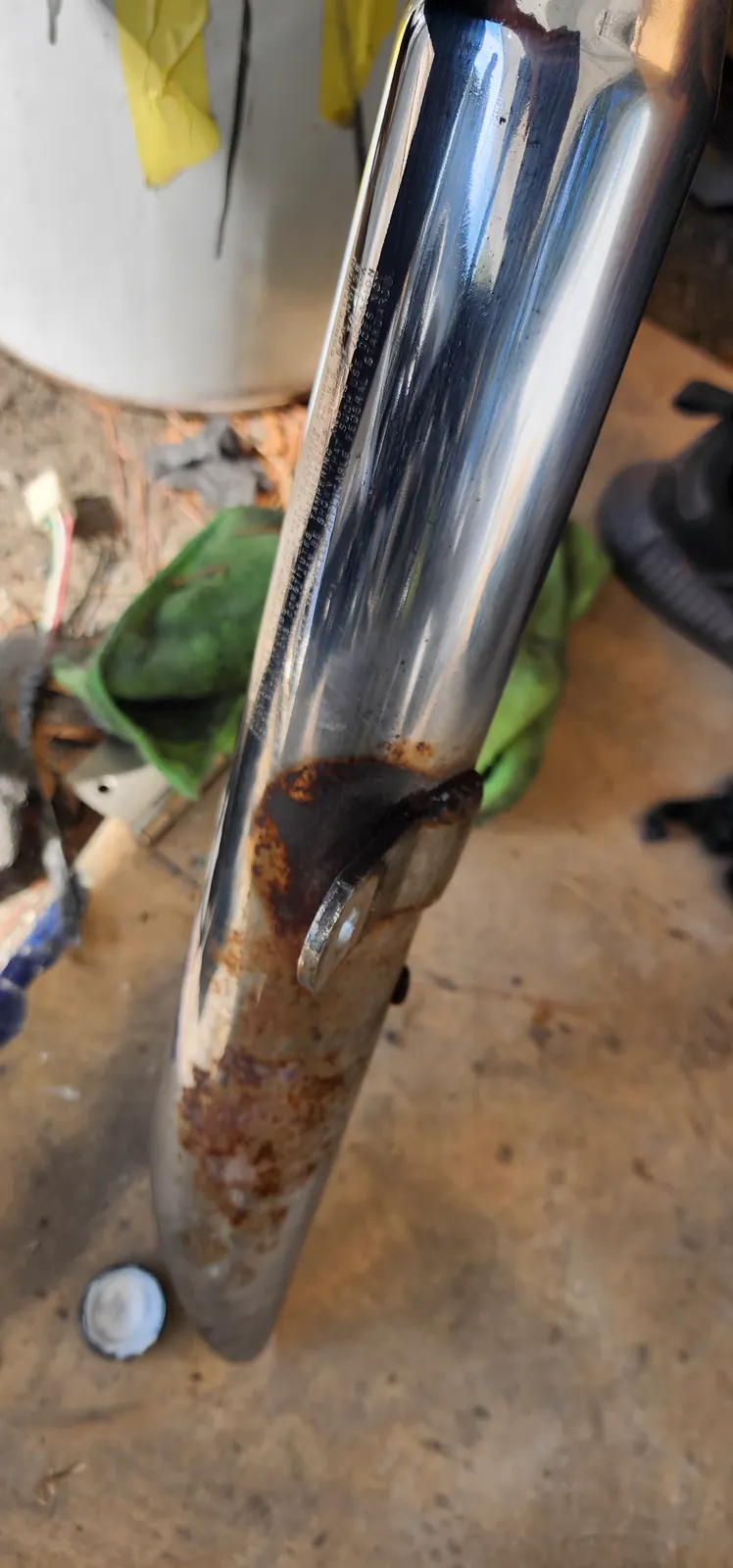
The bikes that give us pause are the ones stored badly and full of internal rust, or rare models where parts are nearly impossible to find. But even then, we’d rather tell you the honest truth than take your money on a lost cause. If a bike isn’t worth it, we’ll say so, and we’ll help you think through whether to revive it or move it along. Straight answers, even when they’re not the fun ones.
Let's take a look before you turn a wrench
There’s no full-service shop in Powder Springs, so barn finds around here usually get a well-meaning garage attempt before they get a real one. Save yourself the heartache and let us look first. We’re an all-makes independent about 15 to 18 miles northeast in East Cobb, and we offer pickup and delivery — which matters a lot when the bike doesn’t run and won’t roll onto a trailer on its own.
Text us a few photos of your find, tell us how long it sat and where it lived — climate-controlled garage or damp shed makes a real difference — and we’ll give you an honest read on what it’ll take to bring it back safely. No blank checks, no guessing, and no starting it before it’s ready. Just a real plan to get your project running right.
Questions Powder Springs riders ask us
Should I try to start my barn find myself first?
Please don’t. Old oil has lost its protection and stale fuel can be full of varnish and rust, so hitting the starter can grind an engine and wash grit into clean parts. The safe move is to drain old fuel, service the fuel system, prime the engine, and turn it over by hand first. Let us look before you power it up.
The bike ran when it was parked — doesn't that mean it's fine?
It means it was fine years ago, not today. Sitting is harder on a motorcycle than riding. Fuel turns to varnish, tires dry-rot, seals dry out, and brakes seize. ‘Ran when parked’ is a starting point for hope, not a promise about the bike’s current condition.
Do I need new tires if the tread still looks good?
Probably, yes. Tires that sat for years develop dry rot and flat spots even with plenty of tread. Cracked rubber can let go at highway speed, which is not a fixable mistake on a pothole-strewn road. We inspect the sidewalls and replace anything that isn’t safe, tread or no tread.
How do I even get a bike that won't start to your shop?
We offer local pickup and delivery in Powder Springs. If your barn find won’t fire up or won’t roll onto a trailer, we bring a truck and get it. A non-running project is exactly the situation pickup service was made for.
Is my barn find even worth reviving?
Usually, yes. A bike that simply sat is often an easier project than one ridden hard and neglected, because the damage from sitting is predictable and fixable. The exceptions are heavy internal rust or a rare model with no parts. We’ll tell you the honest truth either way before you spend real money.
What does a safe revival actually include?
Full inspection, draining old fuel and checking the tank for rust, cleaning or rebuilding the carbs or servicing injectors, fresh battery and fluids, replacing suspect tires and lines, freeing and servicing the brakes, and priming the engine before the first start. It’s done when the bike is safe to ride, not just when it starts.
We bring barn finds back to life for riders across West Cobb, not just central Powder Springs. Projects come in from Country Walk, Peach Plantation, and Stonebridge at Mud Creek, plus older homes near the historic core on Marietta Street. Whether your shed sits by Thurman Springs Park, out near Wild Horse Creek Park, or off Macland Road, an easy trip up Powder Springs Road drops it in our bay — and pickup handles the ones that won’t roll.
TEXT US A PHOTO BEFORE YOU START IT
Dragged home a barn find? Text us a few photos, tell us how long it sat and whether it lived in a garage or a damp shed, and we’ll give you an honest read on what a safe revival takes. We’re an easy run up Powder Springs Road in East Cobb, we offer pickup and delivery for non-running bikes, and reviving long-stored projects is what we do all week. Don’t hit the starter yet — let us look first.
470-460-9883Diaz Motorcycles and Service, LLC · 847 Barnes Mill Road, Marietta, GA 30062