Your Motorcycle Sitting for Years in Mableton: What Breaks and What It Takes to Ride Again
What really happens to a bike that's been parked, why you shouldn't just crank it, and the safe way to bring it back.
So you found it again: a motorcycle sitting for years Mableton weather has quietly gone to work on, tucked in the corner of the garage or under a cover out back. The tank’s dusty, the tires look sad, and you’re wondering if you can just charge the battery and ride. Please don’t. A bike that’s been parked isn’t a bike that’s ready. It’s a bike that needs waking up the right way, and cranking it cold can turn a small bill into a big one.
We get the temptation. It’s a machine, machines run, how bad can it be? But time is rough on a parked bike in a way that isn’t obvious from the saddle. Fuel turns to varnish, rubber dries out, metal corrodes, and the humidity down here in South Cobb speeds every bit of it up. The good news is that a bike which sat is usually very fixable. You just have to fix it in the right order, and skipping steps is where people get burned.
Why a parked bike isn't just a dusty bike
When a bike sits, it doesn’t pause, it decays. Every system that relies on fresh fluids, flexible rubber, or a healthy charge slowly falls out of spec. The paint might still look okay under the dust, which fools people into thinking the machine underneath is fine too. It usually isn’t. The important damage is hiding in the fuel system, the tires, the battery, the brakes, and the seals, and none of it announces itself until you try to ride.
Mableton makes it worse than most places, and here’s the reason. A huge share of bikes here live outside under a cover, in a carport, or in a shared lot along the Mableton Parkway and Floyd Road corridors. That means UV, moisture, and temperature swings all year. Even the garage-kept bikes in the Vinings Estates area aren’t immune, because Georgia humidity finds its way into everything. A cover keeps the rain off. It does not stop time, sadly, or we’d all be using them on ourselves.
The fuel system: enemy number one
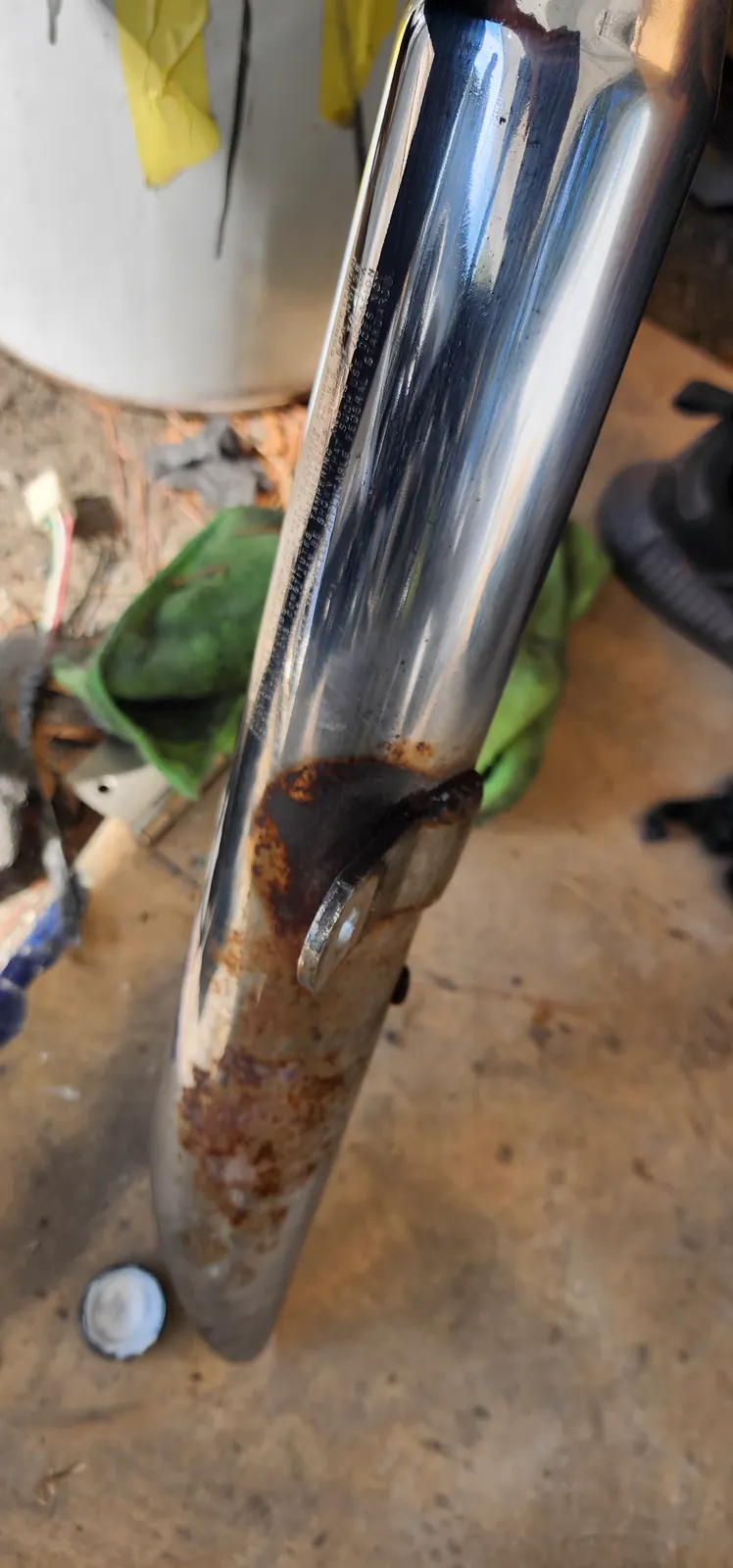
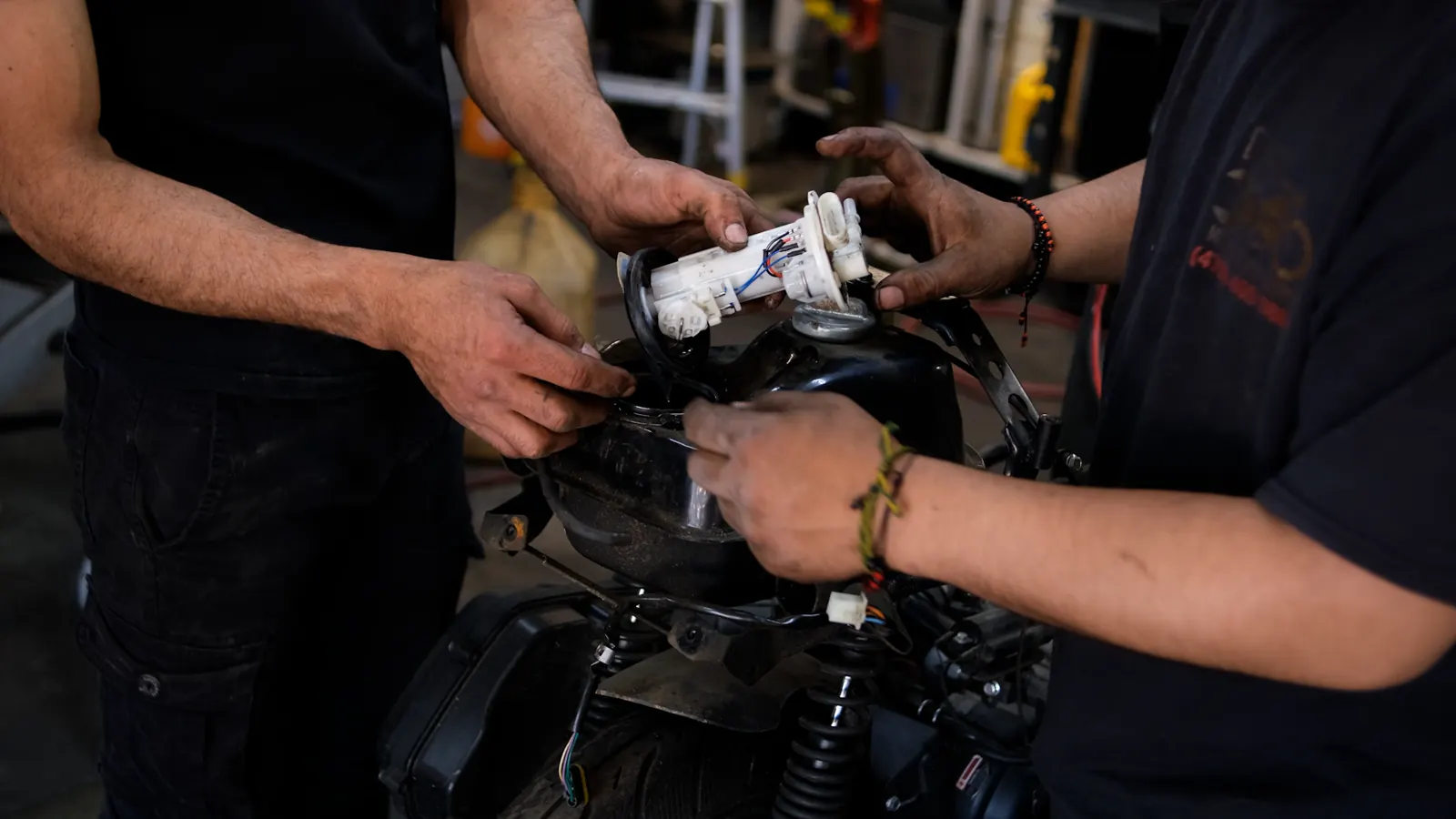
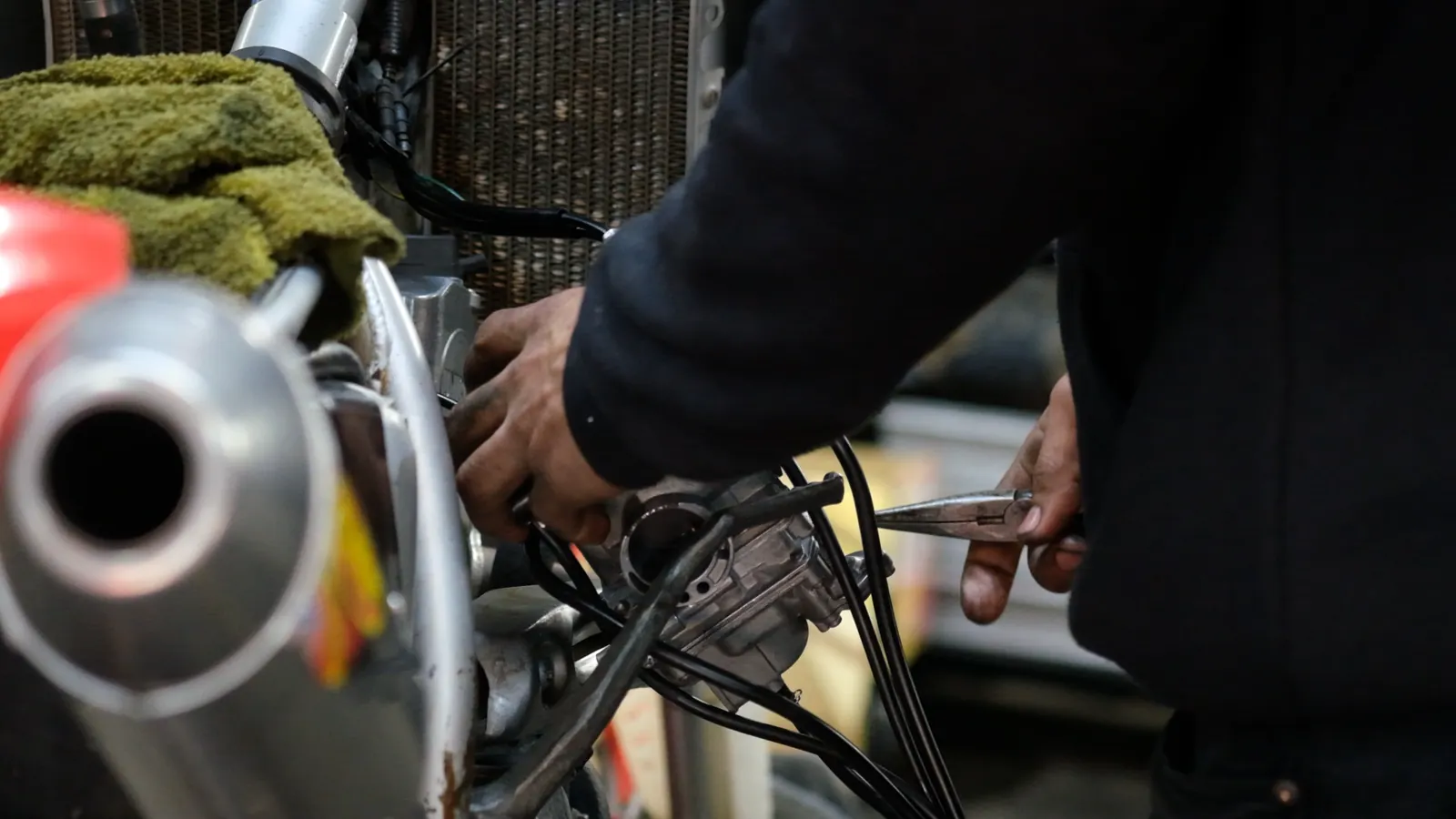
The single biggest casualty of a long sit is the fuel system. Gasoline goes stale in a matter of months, and as it breaks down it leaves behind a sticky varnish that gums up the carburetor jets or clogs the fuel injectors. On carbureted bikes, those tiny passages get glued shut, which is why a bike that sat often won’t start, or starts and won’t idle, or idles and dies the second you touch the throttle.
It gets uglier inside the tank. Old fuel plus moisture equals rust on bare steel tank walls, and that rust flakes loose and travels straight into your fuel lines and carbs. So now you’ve got a rusted tank feeding gunk into a gummed carb through cracked, brittle fuel lines. That’s the classic trifecta on a Mableton project bike, and it’s exactly why just adding fresh gas and hitting the button almost never works. You’re feeding a clogged system, not fixing it.
Tires, brakes, and rubber: the safety stuff
Rubber doesn’t like sitting still. Tires develop flat spots where they rested on the ground, and the compound hardens and cracks with age even if the tread looks deep. A hard, cracked, years-old tire has almost no grip, and grip is the only thing keeping you off the pavement when you brake hard on Veterans Memorial. Old tires aren’t a maybe-later item. On a bike that sat, they’re usually a must-replace before it’s safe to ride at all.
Brakes suffer too. Brake fluid absorbs moisture over time, which drops its performance and can corrode the system from the inside. Calipers seize, pads glaze, and the whole system gets spongy or grabby. Add in dried-out fork seals that weep oil and perished rubber lines and cables, and you start to see why we don’t just clean a carb and call it a day. The stuff that stops you and holds the road matters even more than the stuff that makes it go.
DON'T JUST CRANK IT
Turning over an engine that’s been sitting for years, before oiling the internals and checking the fuel, can wash cylinders, spin a dry bearing, or pump rusty fuel through the whole system. One button push can undo a lot.
Here’s the part that costs people real money. A dead battery is annoying but cheap. A scored cylinder from firing a dry engine, or a fuel pump ruined by rust, is a whole different bill. The safe move is to check and prep before you ever try to start it. That’s the difference between a revival and a repair, and it’s a big theme in what actually drives a restoration’s cost once a bike has sat a long time.
The electrics and the battery
A battery that sits without a tender goes flat and often won’t hold a charge again, so plan on a new one. But the battery is just the headline. Connections corrode, grounds get flaky, and mice sometimes treat a wiring harness like a snack bar and a bathroom. On a bike that’s been parked in a carport or shed, chewed wires and green corrosion on the connectors are common, and they cause the kind of maddening electrical gremlins that make a bike run one minute and quit the next.
Chasing electrical problems is patience work, not guesswork. We trace it, clean it, and fix the actual fault instead of throwing parts at it and hoping. That matters on older bikes especially, where a single bad ground can mimic a dozen different failures. Get the electrical system honest and reliable, and half the mystery of a long-parked bike disappears. The other half, as always, is the fuel system doing something rude.
Winter is the right window to do this
Here’s a bit of local timing that works in your favor. Georgia winters are mild, but most bikes come off the road anyway from late November through February, which makes it the perfect window to wake up a long-parked machine. You’re not giving up any riding you’d actually be doing, and the bike’s just sitting there anyway. Better to have it torn down and sorted in January than to discover the carbs are shot on the first warm March day when you’re itching to ride.
Timing it for winter also gets you ahead of the spring rush. February through April is the busiest service window of the year, when every dealer service department in Cobb County is backed up with folks who waited until pollen season to think about their bikes. If your revival is already done by then, you roll out the moment the yellow pine pollen settles and the riding season opens, instead of sitting on a waitlist watching everyone else ride.
And a bike that’s woken up properly over the winter is a bike you can actually trust when the mountain runs start calling. Come fall, when riders point their bikes north toward Suches and the Wolf Pen Gap curves, you want a machine that’s been sorted, not one you’re nursing along and praying over. Do the wake-up now, ride it all season, and you skip the whole white-knuckle experience of wondering whether a five-year-parked bike will make it home.
GOOD TIMING
Winter is the smart season to revive a parked bike. It’s off the road anyway, and getting it done beats waiting for the spring rush when every shop in Cobb County is slammed.
What a safe revival actually looks like
Reviving a bike that sat is all about order. You don’t just start turning wrenches at random, and you definitely don’t start with the ignition. Each step sets up the next one, and skipping ahead is how you lock in damage or miss the thing that would’ve bitten you at 45 miles an hour. Here’s the honest sequence we follow on a bike that’s been parked for years, so you can see there’s no magic to it, just discipline.
- Look it over first and find the real problems before touching the starter.
- Drain the old fuel, clean or rebuild the carbs or injectors, and check the tank for rust.
- Replace brittle fuel lines and any perished rubber, hoses, and cables.
- Fresh oil and filter, and pre-oil the internals before the engine ever spins.
- New battery, then trace and fix corroded connections, grounds, and chewed wiring.
- New tires if they’re old or cracked, plus a full brake service before any road test.
- Start it, tune it, and test-ride it before it ever goes back to you.
Notice the first step is looking, not cranking. A bike that sat two years in a dry Vinings Estates garage is a different animal than one that spent five summers under a leaky cover near Nickajack Creek. The condition drives everything, which is why we diagnose before we quote and never guess high over the phone. If you’re weighing whether the bike is even worth reviving, our take on restoring versus selling lays out how to decide.
Why this is a Mableton specialty
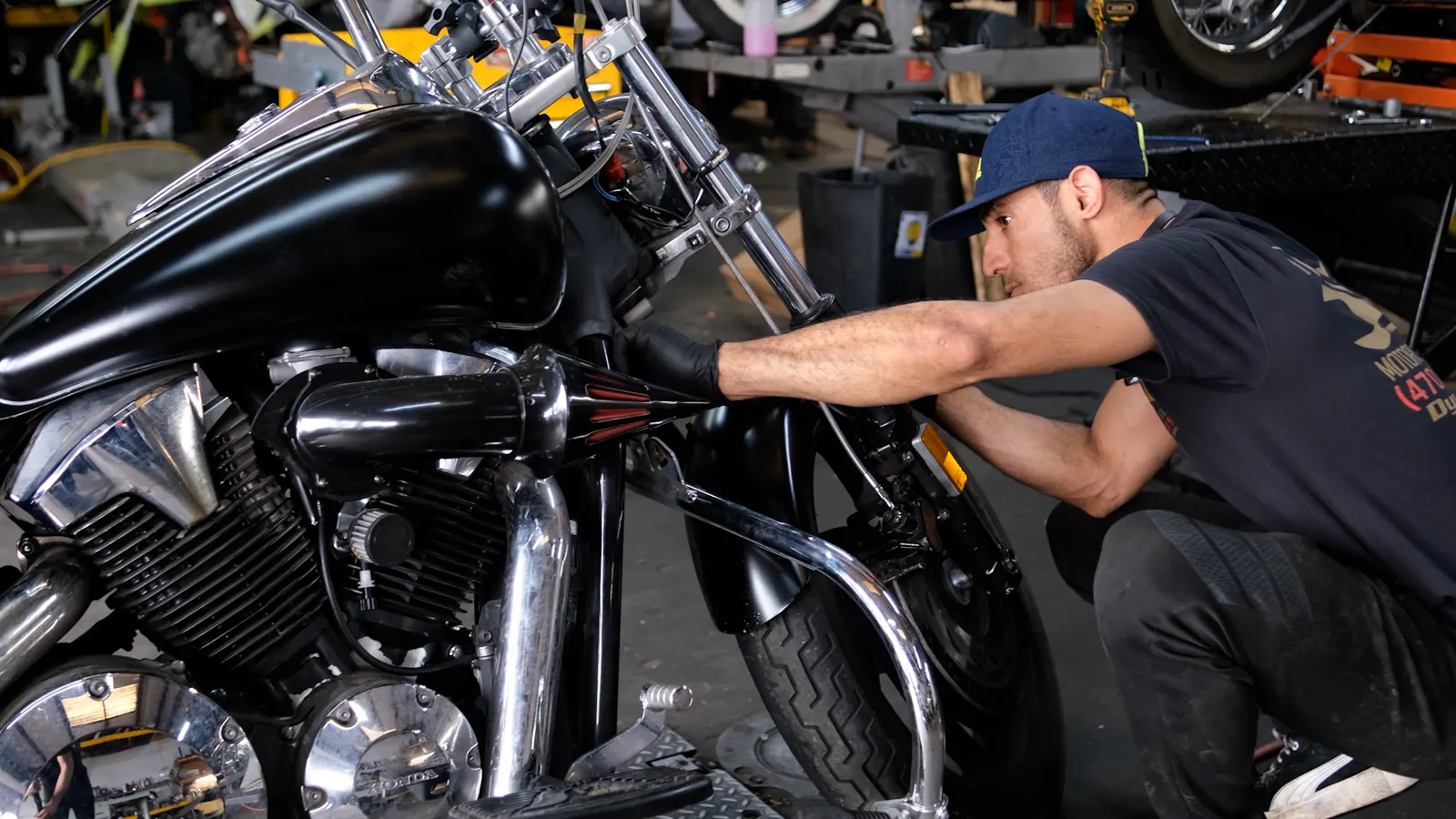
Mableton’s neighborhoods boomed in the 1980s, which quietly made it one of the best long-parked-bike markets in our whole radius. Those garages are full of 1980s and 1990s machines that stopped running back when gas was cheap and everybody had more time. Add the outdoor-storage reality along the Mableton Parkway corridor and the Georgia humidity, and you’ve got a lot of bikes that need exactly this kind of careful wake-up.
The catch is that the city itself has essentially one small shop, so for a real revival most folks already head north. We’re an all-makes shop about 25 to 35 minutes up South Cobb Drive, and we offer pickup and delivery, which is the whole ballgame for a bike that can’t be ridden in. You’re not going to push a dead project bike 15 miles, and you shouldn’t have to. Text us and we’ll come get it.
A bike that sat isn't broken. It's asleep. Wake it up in the right order and it'll ride again.
So before you charge that battery and thumb the starter, send us a couple photos and tell us how long it’s been parked and where it lived. We’ll give you an honest read on what it needs to be safe, and we’ll do it in the right order so you’re not paying to fix damage that a rushed start caused. Want the bigger picture first? Here’s how our revival and restoration work fits together. Then let’s get your bike breathing again.
Questions Mableton riders ask us
Can I just charge the battery and ride a bike that sat for years?
Please don’t. A new charge might spin the engine, but the fuel is likely stale and gummed, the tires may be cracked and unsafe, and the brakes could be seized or spongy. Cranking a dry engine can also cause real internal damage. A bike that sat needs a proper wake-up in the right order before it’s safe, or a cheap fix becomes an expensive one.
What's the first thing that goes bad when a bike sits?
The fuel system, almost every time. Gas goes stale in months and leaves a sticky varnish that clogs carbs and injectors, and moisture rusts bare-steel tanks. That rust then travels into the fuel lines and carbs. It’s why a parked bike often won’t start, won’t idle, or dies the second you touch the throttle, even with fresh gas added on top.
Do I really need new tires if the tread still looks fine?
Usually yes. Tires harden and crack with age even when the tread looks deep, and they develop flat spots from resting in one place. Old rubber has almost no grip, which is exactly what you need when you brake hard. On a bike that sat for years, tires are typically a must-replace before it’s genuinely safe to ride, not a later item.
How long can a bike sit before it needs this kind of work?
It varies with storage, but trouble often starts within a single season of sitting with fuel in it, and it compounds every year after. A dry garage in the Vinings Estates area buys you more time than a leaky cover near a creek. The honest answer is that any bike parked a year or more should be checked before you try to ride it.
My bike sat under a cover, so it should be fine, right?
A cover keeps rain off, but it doesn’t stop UV, humidity, temperature swings, or time. Outdoor-stored bikes along the Mableton Parkway corridor still get dried-out rubber, corroded connections, stale fuel, and dead batteries. Covers help, but they don’t pause the aging. Plan on the same careful revival a parked bike always needs, cover or no cover.
Can you pick up a bike that won't run?
Yes, and that’s exactly why we offer pickup and delivery. You should never have to push or haul a dead project bike 15 miles. We’re about 25 to 35 minutes north on South Cobb Drive, but you don’t have to make that happen yourself. Text us where the bike is, and we’ll come get it and bring it back running.
We wake up long-parked bikes from across South Cobb, not just central Mableton. Projects come from the Vinings Estates and Oak Hills areas, the Nickajack Road corridor, and the carports along Mableton Parkway. Whether your bike sat near Heritage Park or a short ride from the Mable House and the Silver Comet Trail, we’re an easy run north on South Cobb Drive. Anywhere in the new city of Mableton, we can come get a bike that won’t start.
TEXT US BEFORE YOU CRANK IT
Found a bike that’s been sitting for years? Don’t just charge the battery and hit the button. Text us a few photos, tell us how long it’s been parked and where it lived, and we’ll give you a safe, honest plan to bring it back. We’re about 25 to 35 minutes north on South Cobb Drive, and we offer pickup and delivery for bikes that won’t run. No pressure, just answers.
470-460-9883Diaz Motorcycles and Service, LLC · 847 Barnes Mill Road, Marietta, GA 30062