Motorcycle Restoration Cost in Mableton: A Plain-English Price Guide
What actually drives the number, where your dollars go, and how to read a quote without a headache.
Let’s talk numbers without the runaround. The motorcycle restoration cost Mableton riders want to know isn’t one figure, it’s the sum of a bunch of smaller decisions, and once you can see those pieces, the whole thing stops feeling like a slot machine. In this guide we’ll break down exactly what drives the price, where your money actually goes, and how to read a quote so you know you’re paying for real work instead of guesswork.
Here’s the thing nobody tells you up front: two identical bikes can cost wildly different amounts to restore, and neither quote is wrong. The difference is in the details you can’t see from the saddle. So instead of chasing a single magic number, let’s build your understanding piece by piece. By the end, you’ll be able to look at your own bike and roughly guess which way the cost leans. That’s a superpower at the shop counter, honestly.
Price driver #1: where the bike is starting from
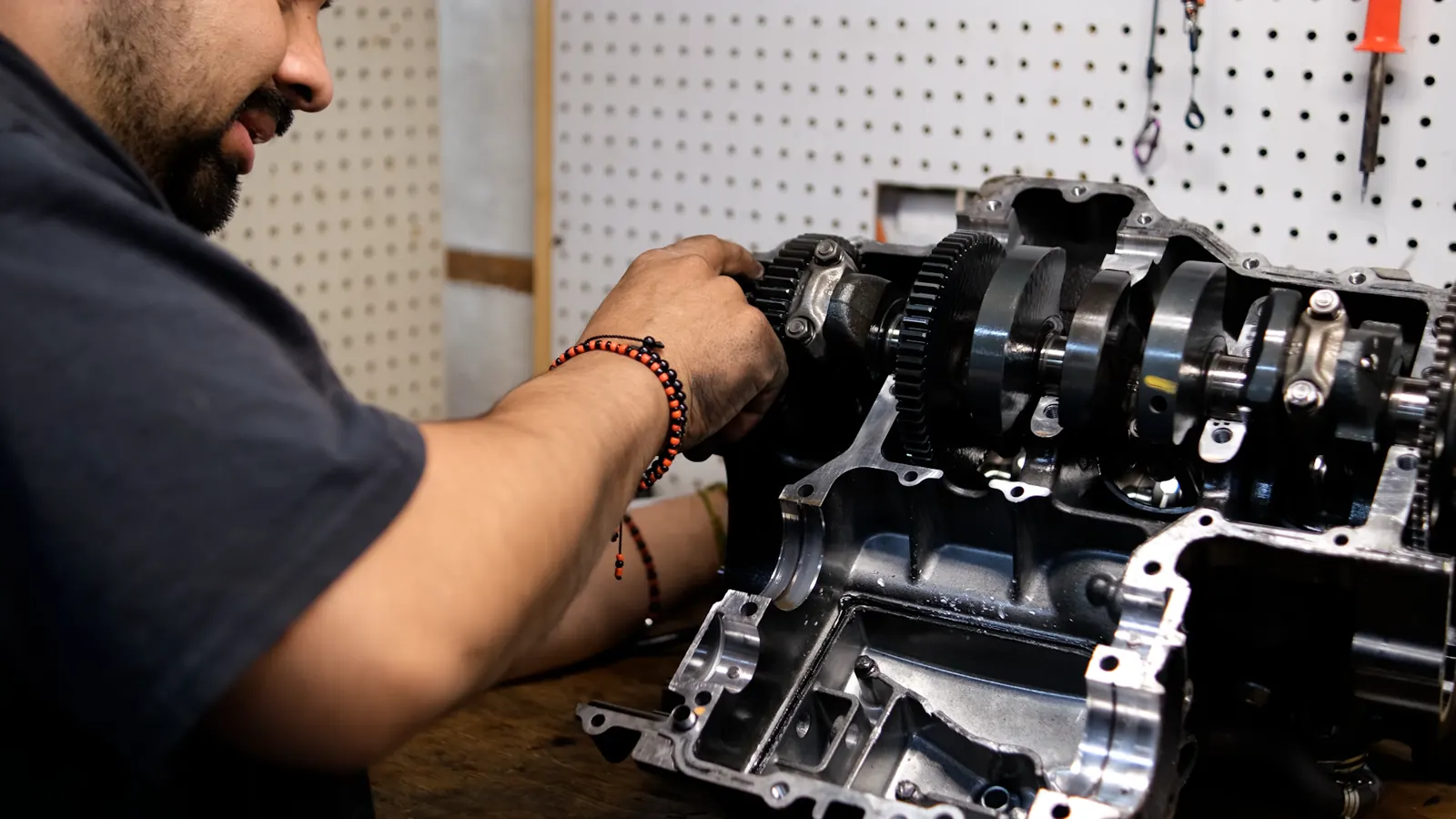
The biggest lever on cost is the bike’s starting condition, full stop. A bike that ran last year and just needs freshening is cheap compared to one that sat under a carport cover off Mableton Parkway for six humid summers. The second bike needs the fuel system rebuilt, probably new tires, likely a brake overhaul, and it may be hiding rust and seized fasteners that only show up once we’re in there. Condition is the number one thing that moves the total, up or down.
This is why an honest shop insists on looking before quoting. Georgia humidity is a master of disguise. It gums carbs, rots tank interiors, and corrodes connectors while the paint still looks presentable. Nobody can price that accurately from a photo, and anybody who tries is either guessing high to protect themselves or guessing low to reel you in. We diagnose first because the bike, not the phone, tells the truth.
Price driver #2: how far you want to take it
The second lever is your goal, and this one’s fully in your control. Do you want the bike running and safe, or do you want it running, safe, and beautiful? Those are very different bills. A revival that gets a solid bike back on the road is the least expensive path. A mechanical restoration that rebuilds the worn systems costs more. A full cosmetic restoration with paint and chrome costs the most, because beauty is labor and labor is money.
The trick is being honest with yourself about what you actually want. If this is a daily rider for your South Cobb commute, mirror-finish paint might be a waste of your money. If it’s your late father’s bike and you plan to keep it forever, the cosmetic work might be the whole point. Neither answer is wrong. What’s expensive is changing your mind halfway, so decide early and tell the shop straight.
Price driver #3: parts availability
Here’s a sneaky one. On a lot of older project bikes, especially the 1980s and 1990s machines that fill Mableton garages, the parts themselves can be the hard part. Some components are cheap and everywhere. Others are discontinued, and finding a good used piece or a quality reproduction takes time and sometimes real money. A rare fairing or an obsolete electrical part can move a quote more than you’d expect, purely because of hunting and sourcing.
The flip side is good news. Common bikes with strong aftermarket support are cheaper to restore because parts are easy to get. Your bread-and-butter Japanese cruiser or a popular Harley model usually has a healthy supply chain behind it. So the same amount of labor can cost different amounts depending on how cooperative your bike’s parts catalog is. It’s a little like grocery shopping. Some ingredients are on every shelf, and some you have to special order and pay for the privilege.
Where your money actually goes
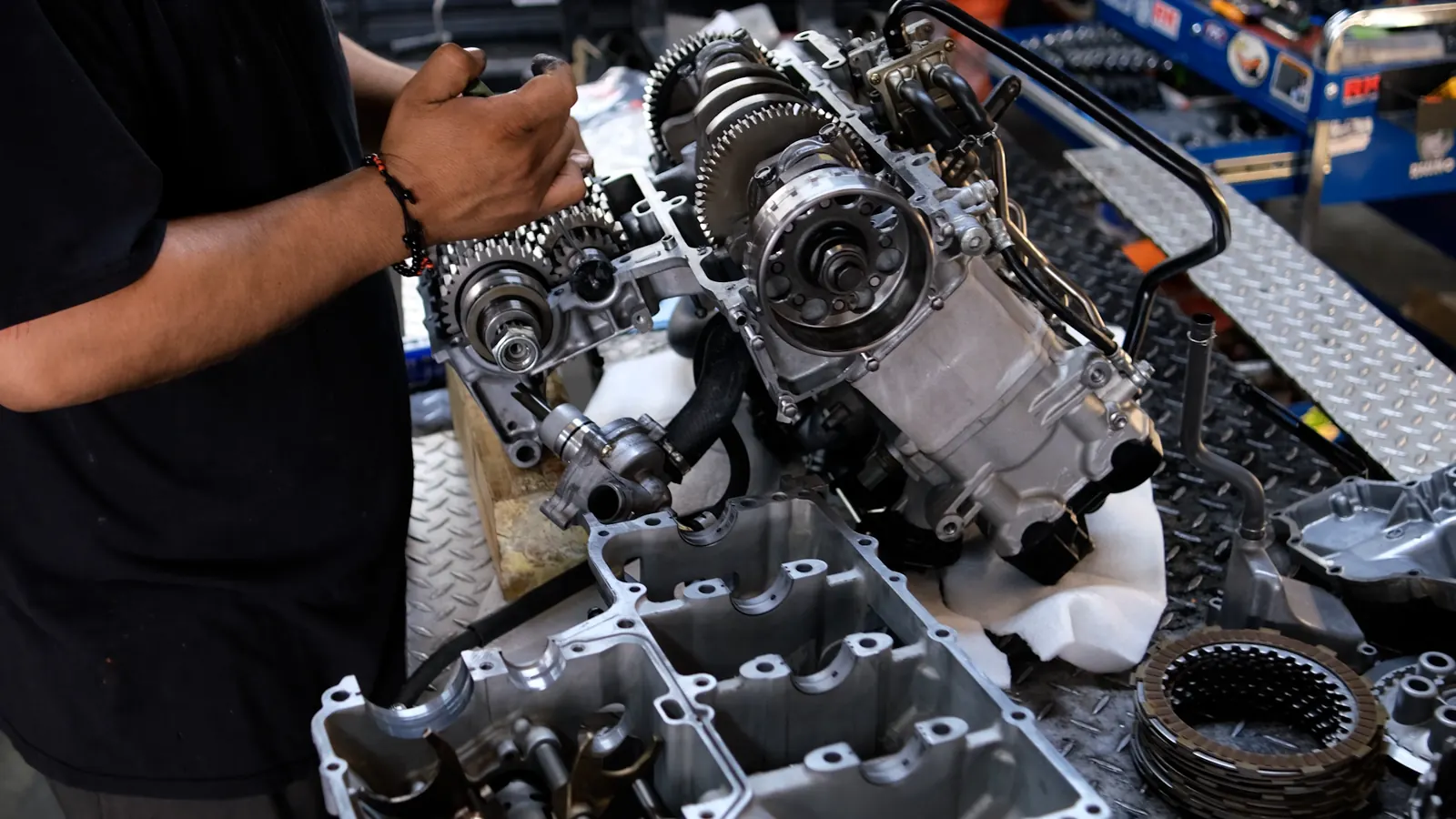
Let’s open the hood on a typical restoration bill so nothing feels like a black box. Most people assume it’s mostly parts. On a real restoration, it’s usually mostly labor, because good work takes real hours and there’s no shortcut around that. Here’s a plain-English map of where the dollars land on a bigger job, roughly in order of how much they tend to move the total.
- Labor: the largest slice on almost every restoration, since careful work takes real time.
- Paint and bodywork: our in-house paint booth is where the cosmetic tier earns its cost.
- Chrome and plating: re-polishing or replacing rusted, pitted pieces is slow, skilled work.
- Engine internals: gaskets, seals, bearings, and machine shop time if the motor needs it.
- Fuel and electrical: carb or injector rebuilds, new lines, and tracing wiring gremlins.
- Wear parts: tires, battery, chain and sprockets, brake pads, fluids, cables, and filters.
- Parts sourcing: extra cost and time when pieces are discontinued or hard to find.
See how labor sits at the top? That’s why the cheapest hourly rate in town isn’t automatically the best deal. Slow, careful, done-right work protects your money over the long haul, while a rushed job you have to redo costs you twice. If you want the tier-by-tier view of what all this adds up to, our overview of what a Mableton restoration costs and gets you puts the pieces together.
PARTS VS LABOR
On most real restorations, labor and specialty work like paint and machining cost more than the parts. That’s why honesty and skill matter more than the lowest shop rate you can find.
One more money-saver worth knowing: you don’t have to do everything at once. Staging the work, reviving the bike first and adding cosmetics later, spreads the cost out and lets you ride sooner. There’s no rule that a restoration happens in a single swing. Plenty of smart Mableton riders revive now, enjoy the bike through a riding season, and book the paint booth over the quiet winter months when the bike’s off the road anyway.
How to read a restoration quote
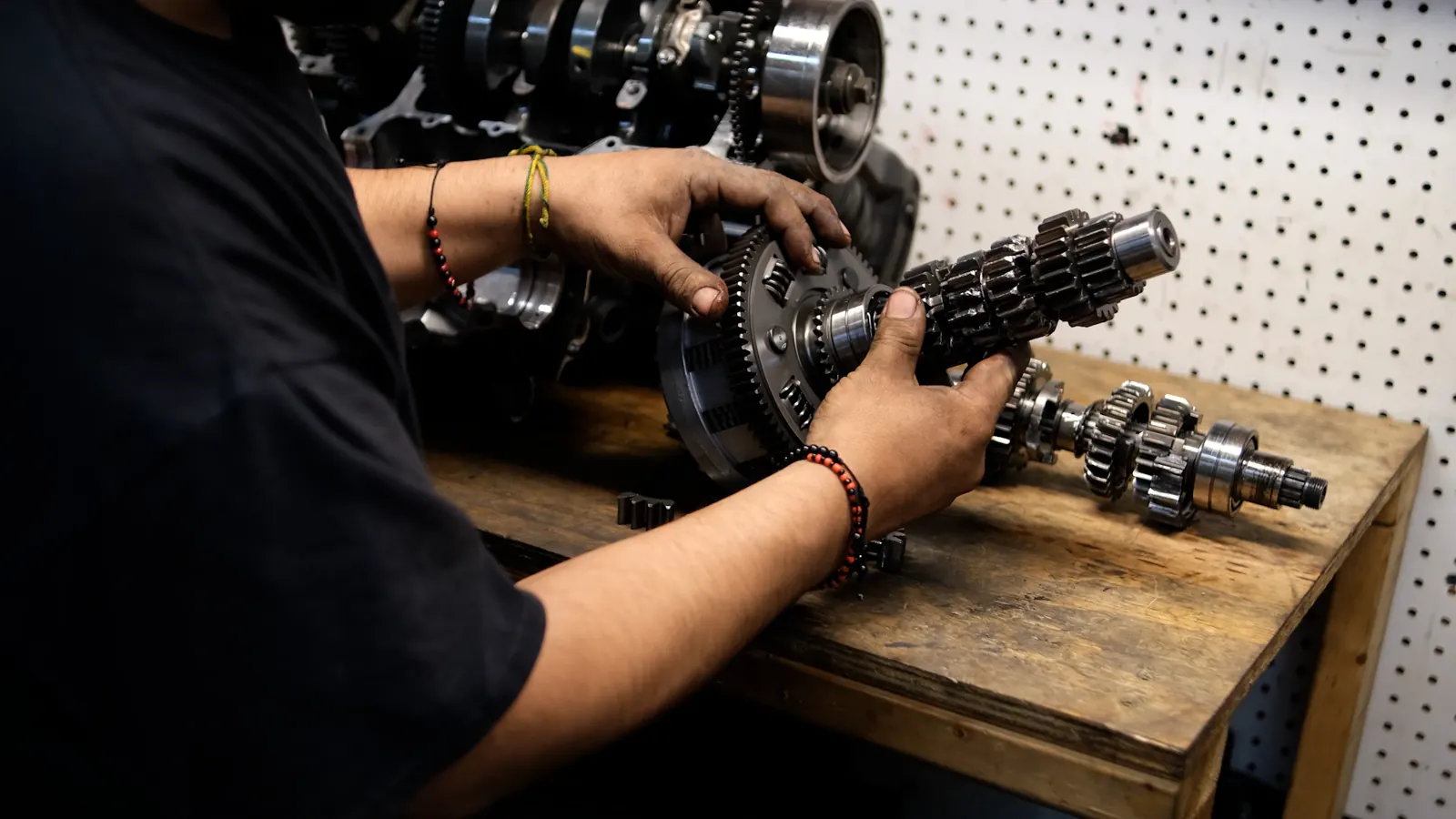
A good quote is itemized and understandable. It separates the must-haves that make the bike safe from the nice-to-haves that make it pretty, and it tells you which tier you’re paying for. If a quote is one big round number with no explanation, ask questions, because you deserve to know whether you’re buying safety, reliability, or shine. Those are three different things and three different prices.
Be just as wary of a quote that’s shockingly low. In restoration, cheap usually means somebody plans to skip steps, use throwaway parts, or vanish when the ugly surprise appears. A rusted tank and a seized caliper don’t fix themselves for pocket change, and pretending they will just moves the pain down the road. An honest range that’s bigger than you hoped beats a fairy-tale number that balloons later, every single time.
ASK THIS AT THE COUNTER
Which tier is this quote, what’s a must-have versus a nice-to-have, and what might change once you’re inside the bike? A shop that answers those clearly is a shop you can trust.
It also helps to expect the occasional surprise, because restoration sometimes uncovers deeper trouble once things come apart. A good shop stops and calls you before doing extra work, so you approve the change instead of finding it on the final bill. That’s the same rule that keeps a bike that’s been sitting for years from becoming a runaway project. No surprises you didn’t okay first.
The hidden cost of waiting
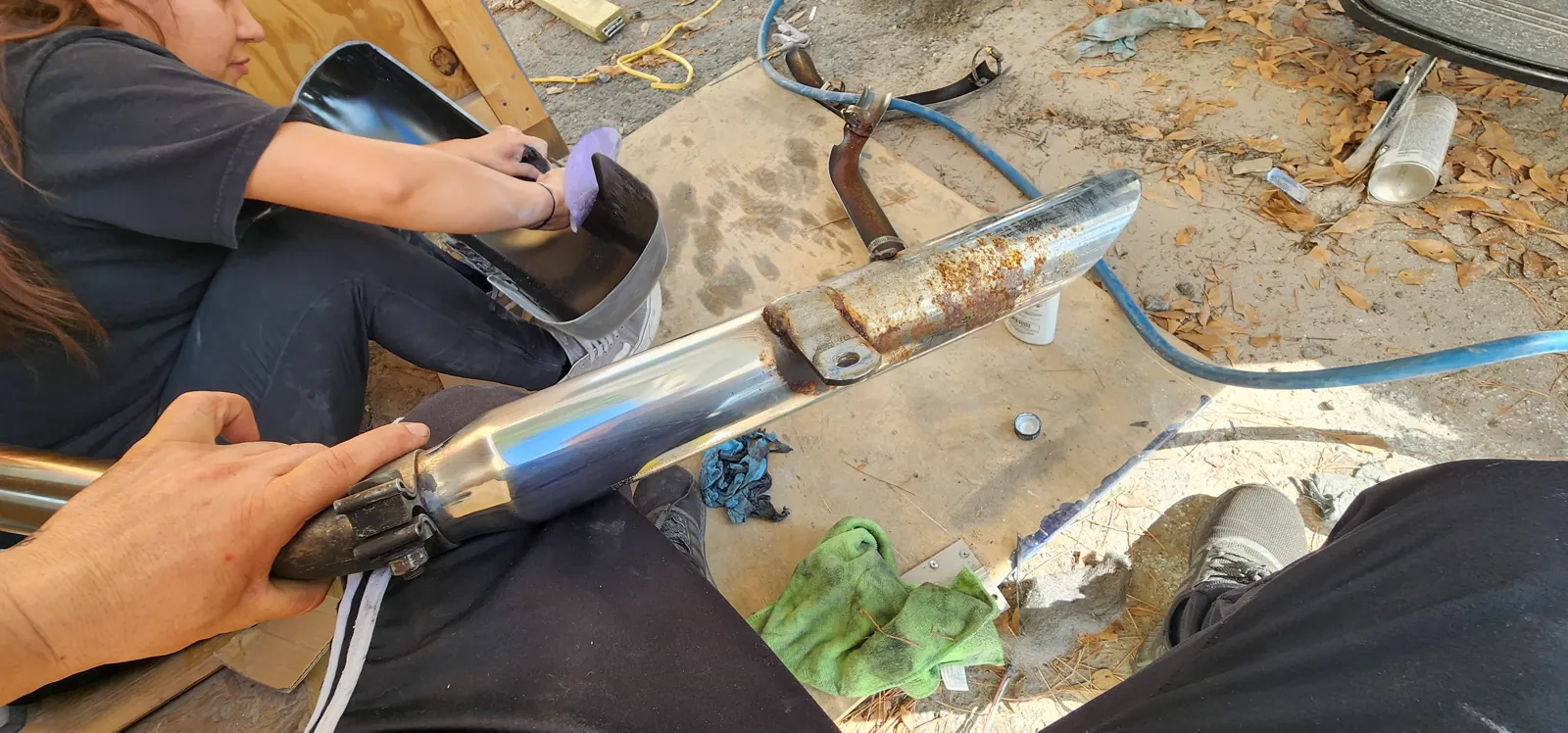
Here’s a cost driver that doesn’t show up on any quote: time. Every extra year a bike sits in a Mableton garage, the price to revive it quietly climbs. Georgia humidity keeps working the whole time, so a tank that just has a little surface rust today becomes a tank that needs relining in two years, and a carb that needs cleaning now becomes a carb that needs replacing later. The bike isn’t waiting patiently. It’s slowly getting more expensive.
That means the cheapest restoration is usually the one you start soonest, which feels backwards but it’s true. We’re not saying rush it, we’re saying don’t let a fixable bike rot into a bigger bill because it’s easy to keep putting off. If you’ve got a project bike that’s been sitting since the last time the Mable House amphitheatre had a full summer lineup you remember, the clock’s been running. Starting now is almost always cheaper than starting next winter.
Why Mableton is a restoration town
Mableton’s housing boomed in the 1980s, and that one fact makes it a restoration hotspot. Those garages are packed with 1980s and 1990s bikes that stopped running years ago, waiting for someone with time and a plan. The city has essentially one small shop inside its limits, so for anything past routine work, riders already head north. Being an all-makes shop matters here, because Mableton garages hold Harleys, old Hondas, Suzuki cafe projects, and the occasional European surprise.
The logistics are easier than the distance suggests. We’re about 25 to 35 minutes north on South Cobb Drive, a road plenty of Mableton folks already drive for errands, and we offer pickup and delivery for bikes that can’t roll in on their own. Winter is the smart season to book restoration and paint work, since nobody wants to surrender a running bike in May, and the bike’s parked anyway once the mountain runs up toward Suches wrap for the year.
The number isn't random. It's condition, plus how far you take it, plus how hard the parts are to find.
Ready for a real number instead of a guessing game? Text us a few photos, tell us how long the bike sat and what you’re hoping for, and we’ll give you an honest range with the pieces broken out so you can see where every dollar goes. If you’d like the big-picture view first, here’s how our restoration and finish work fits together. Then let’s price your project the honest way.
Questions Mableton riders ask us
What's the single biggest thing that drives restoration cost?
The bike’s starting condition. A machine that ran recently and just needs freshening is far cheaper than one that sat for years and needs the fuel system rebuilt, new tires, brakes, and hidden rust addressed. Your chosen tier and parts availability matter too, but condition is the top lever. That’s why we look at the bike before quoting instead of guessing from a photo.
Is a restoration mostly parts or mostly labor?
On most real restorations, mostly labor. Careful work, paint through our in-house booth, chrome polishing, and any machine work all take real hours, and there’s no shortcut around good hours. Parts matter, especially when a piece is discontinued, but the labor and specialty work usually lead the bill. That’s why the cheapest hourly rate isn’t automatically the best value.
Why can't you give me a price over the phone?
Because Georgia humidity hides the expensive stuff. A gummed carb, a rusted tank interior, corroded wiring, or a seized fastener won’t show in a photo, and those are exactly the things that move the total. A number blurted before anyone sees the bike is a guess. We diagnose first, explain what we find in plain words, then give you a realistic itemized range.
Can I lower the cost by doing it in stages?
Absolutely, and many Mableton riders do. We revive the bike so it runs and rides safely, you enjoy it through a riding season, and later you book the cosmetic work, often over winter when the bike’s parked anyway. Staging spreads the cost out and gets you riding sooner. There’s no rule that a restoration has to happen all in one swing.
Do rare or discontinued parts really change the price that much?
They can. Common bikes with strong aftermarket support are cheaper because parts are easy to find. Older or unusual bikes sometimes need discontinued pieces that take real time to source or a quality reproduction to substitute. The same labor can cost different amounts depending on how cooperative your bike’s parts catalog is, so we flag parts risk up front.
What should a good quote include?
It should be itemized and understandable, separate must-haves that make the bike safe from nice-to-haves that make it pretty, and tell you which tier you’re paying for. It should also note what might change once we’re inside the bike. If a quote is one round number with no explanation, ask questions. You deserve to know whether you’re buying safety, reliability, or shine.
We price and restore bikes from across South Cobb, not just central Mableton. Projects reach us from the Vinings Estates and Providence neighborhoods and the townhomes along Mableton Parkway. Whether your bike waits near Heritage Park or a short ride from the Mable House and the Silver Comet Trail, we’re an easy run north on South Cobb Drive. Anywhere in the new city of Mableton, we’ll give you an honest, itemized number.
TEXT US FOR AN HONEST RANGE
Want a real restoration number instead of a guessing game? Text us a few photos, tell us how long the bike sat and what you’re hoping for, and we’ll give you an honest range with the pieces broken out so you can see where every dollar goes. We’re about 25 to 35 minutes north on South Cobb Drive, and we offer pickup and delivery across Mableton. No fantasy numbers, just answers.
470-460-9883Diaz Motorcycles and Service, LLC · 847 Barnes Mill Road, Marietta, GA 30062