Your Motorcycle Sitting for Years in a Cartersville Garage? Read This First
What really goes wrong while a bike sits, why cranking it can make things worse, and how we wake one up the safe way.
Here’s a scene every rider knows: a motorcycle sitting for years. In Cartersville, garages are full of them — under a tarp, behind the lawnmower, promised a comeback that never quite happened. Maybe it was yours before life got busy. Maybe it was Dad’s. The good news is that a bike that’s sat that long is almost never dead — it’s just asleep. The bad news is that waking it up wrong can turn a cheap fix into an expensive one. Let’s walk through what really happens, and how to bring it back without breaking it.
Why good bikes end up sitting
First, let’s get one thing off the table: a bike sitting for years isn’t a sign you did something wrong. Life happens. A move, a new baby, a busy stretch at the plant, a knee that needed a year off. The bike gets parked for a season, and a season turns into a decade. It’s the most normal story in Bartow County, and we hear a version of it every single week.
The trouble is that a motorcycle doesn’t like sitting still any more than a rider does. It’s built to run, and standing quiet for years is actually harder on it than putting miles on it. Fuel goes bad, rubber dries out, and metal finds moisture. None of that is your fault. It’s just chemistry doing its slow, patient thing in the corner of the garage while you weren’t looking.
What actually goes wrong while it sits
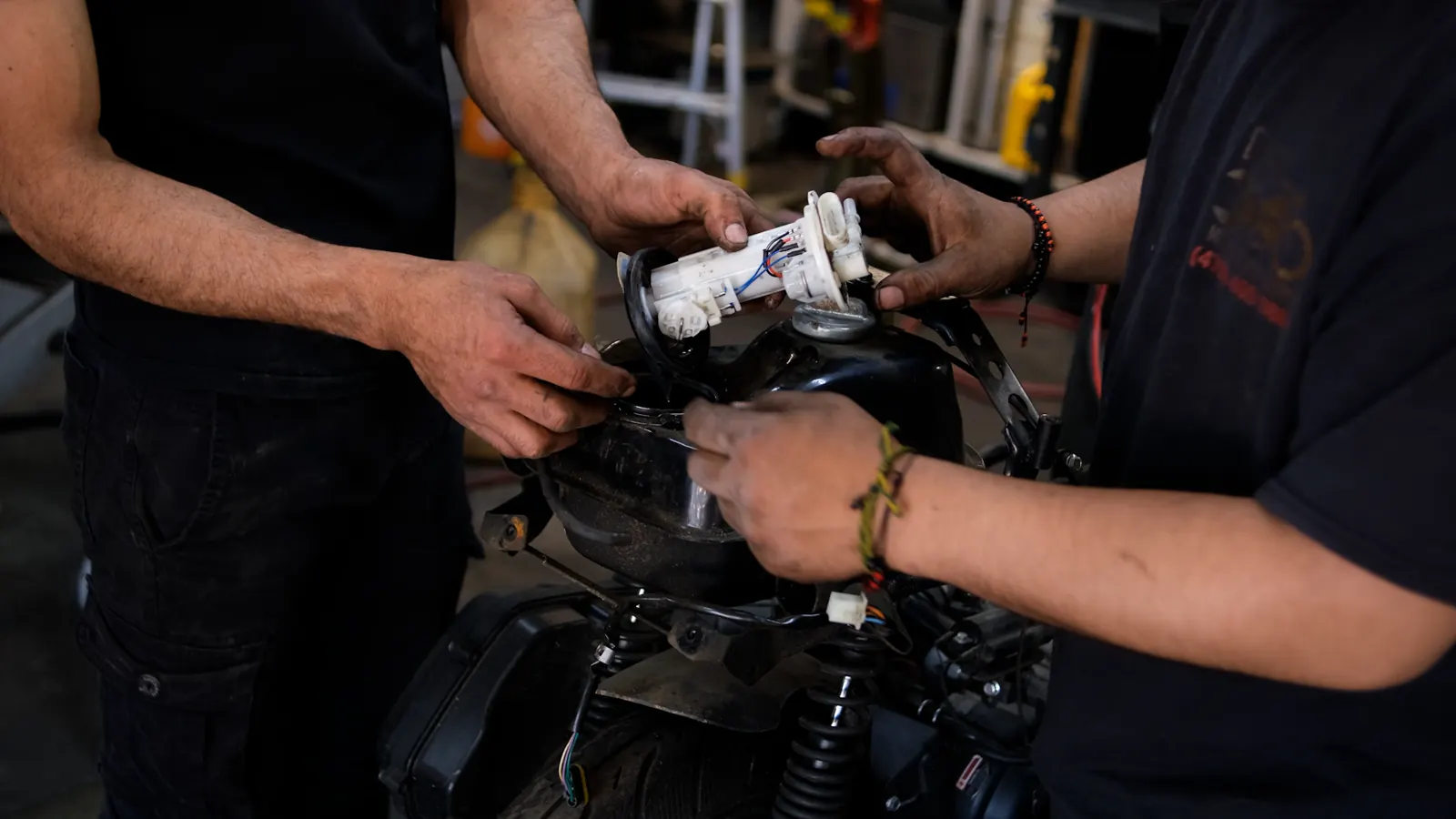
So what’s happening under that tarp? A few things, and they stack up. The biggest one is the gas. Modern fuel has ethanol in it, and ethanol pulls in water and turns to a sticky varnish as it ages. That gunk clogs carburetors, glues up fuel injectors, and rots the inside of a steel tank. On a bike that sat years, the fuel system is almost always the first and biggest job.
But it’s rarely alone. Here’s the usual lineup of what we find on a long-sat bike:
None of these are surprises to us, and most of them are routine to fix. The reason to list them out is so you understand why we don’t just charge the battery and call it done. A bike that sat is a package deal — the problems come as a set, and treating one while ignoring the rest is how you end up stranded on Old Alabama Road wondering what went wrong.
- Varnished fuel gumming up carbs, injectors, and fuel lines, plus a rusty tank inside.
- A dead battery — and often a charging system that needs checking, not just a jump.
- Seized or dragging brakes, because calipers and pistons corrode when they sit.
- Dry-rotted tires that look fine but have hard, cracked rubber that’s no longer safe.
- Old oil that’s turned acidic, plus perished seals and gaskets that now weep.
- Surface rust on chrome and bare metal, courtesy of Georgia humidity.
- Mouse condos in the airbox and exhaust — yes, really, and more often than you’d think.
That last one gets a laugh until you’re the one pulling a nest out of an air filter. Critters love a quiet exhaust pipe about as much as riders love a clear one. It’s harmless comedy right up until it isn’t — a blocked pipe or a chewed wiring harness can turn a simple wake-up into a real repair.
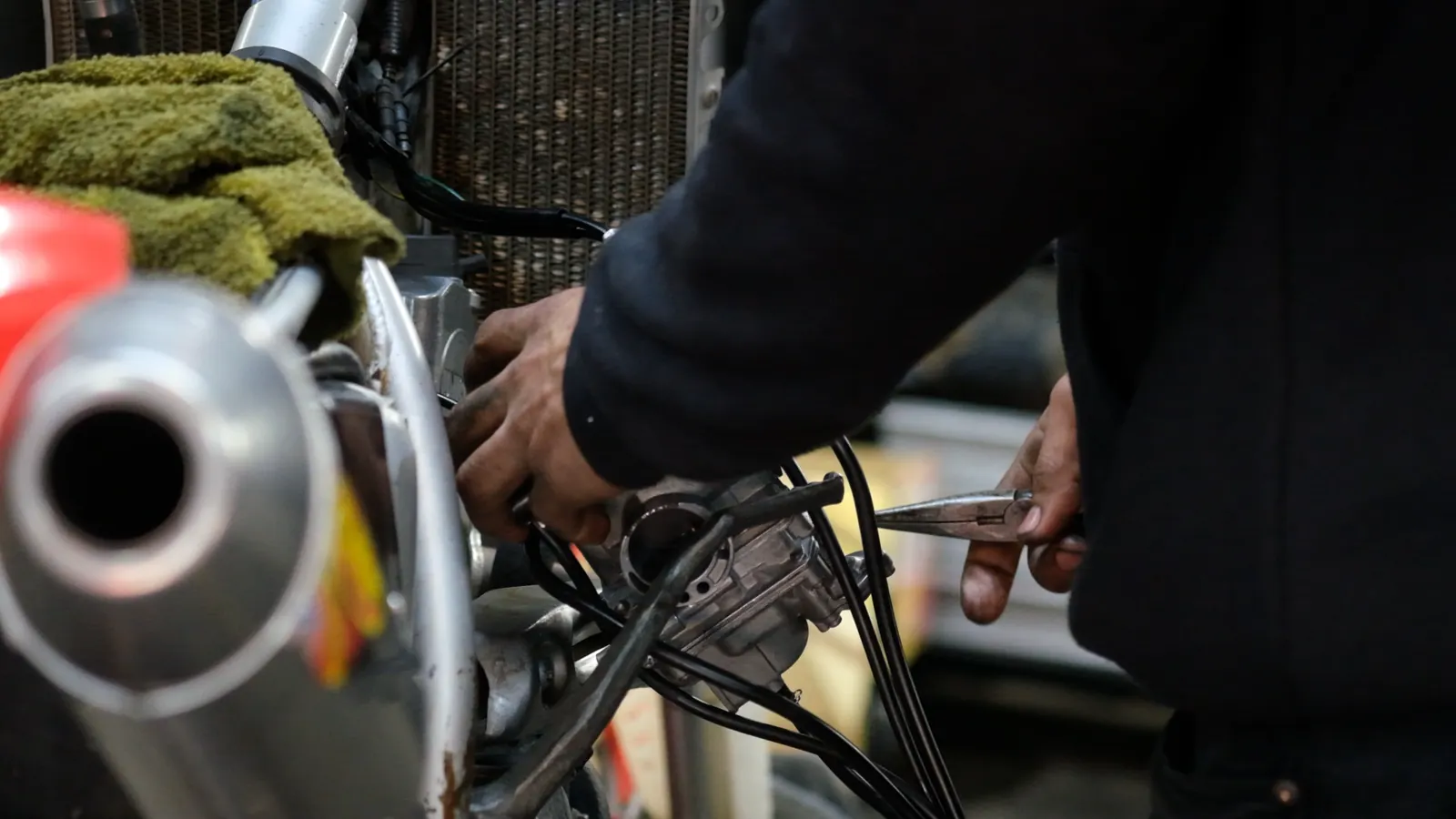
Please don't just crank it and hope
Here’s the mistake that costs people the most money, and it’s an easy one to make: throwing in a battery, splashing in some fresh gas, and hitting the starter to see if she’ll fire. It feels like the natural thing to do. It’s also the fastest way to turn a $400 problem into a $1,500 one.
Why? Because a bike that sat has old, thin, acidic oil sitting in the bottom of the cases, dry cylinder walls with no film of oil on them, and possibly rust starting on internal parts. Spin that engine up cold and dry and you can score a cylinder, wipe a cam, or push a chunk of tank rust straight into a fresh carb rebuild. The engine might even start — and quietly grind itself down while it runs.
DON'T DO THIS
The number one way people ruin a savable bike is cranking it before the oil, fuel, and cylinders are ready. When in doubt, don’t turn the key — text us.
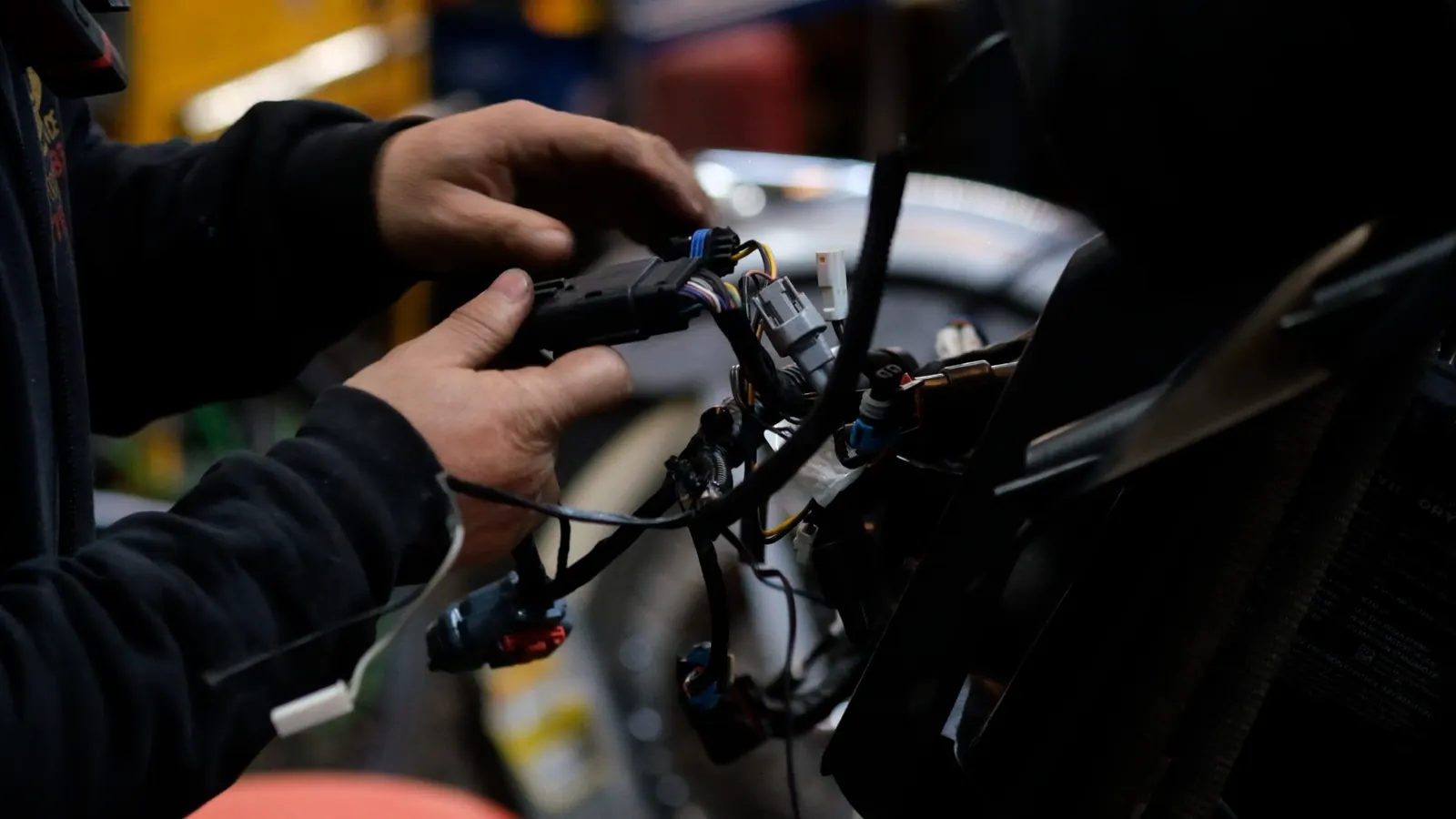
The right way to wake a bike up
The safe way isn’t complicated, it’s just patient. We start by looking, not starting. We drain the old fuel and oil, check the tank for rust, and pull the carbs or clean the injectors so the fuel system is truly clean before any gas flows. We look at the tires, the brakes, and the wiring, because those are safety items and they don’t get a pass just because you’re excited to ride.
Then, before the engine ever spins under its own power, we make sure it’s got oil where it needs oil and that nothing’s seized. Only then does it get woken up — gently, watched closely, listening for anything that doesn’t sound right. Done this way, a bike that sat ten years can come back to life without leaving any of that life on the shop floor. It’s the difference between reviving a bike and finishing it off.
A bike that sat for years isn't dead. But crank it cold and dry, and you can finish the job the years started.
The Bartow garage makes it worse
Here’s the local wrinkle. Cartersville has a lot of older homes with detached, unheated garages and pole barns — West End, Olde Town, and all through the county. They’re perfect for stashing a project. They’re rough on the bike. With no climate control, Georgia’s summer humidity moves right in, and moisture is the enemy of everything that sat: it rusts chrome, rots the inside of tanks, and speeds up every problem on that list above.
So a bike that spent five winters in a damp barn out toward Euharlee is usually a bigger job than one that sat the same years in a dry, finished garage. Same neglect, different weather exposure, different bill. It’s not about how you rode it — it’s about where it slept. And in Bartow, a lot of these bikes slept somewhere humid.
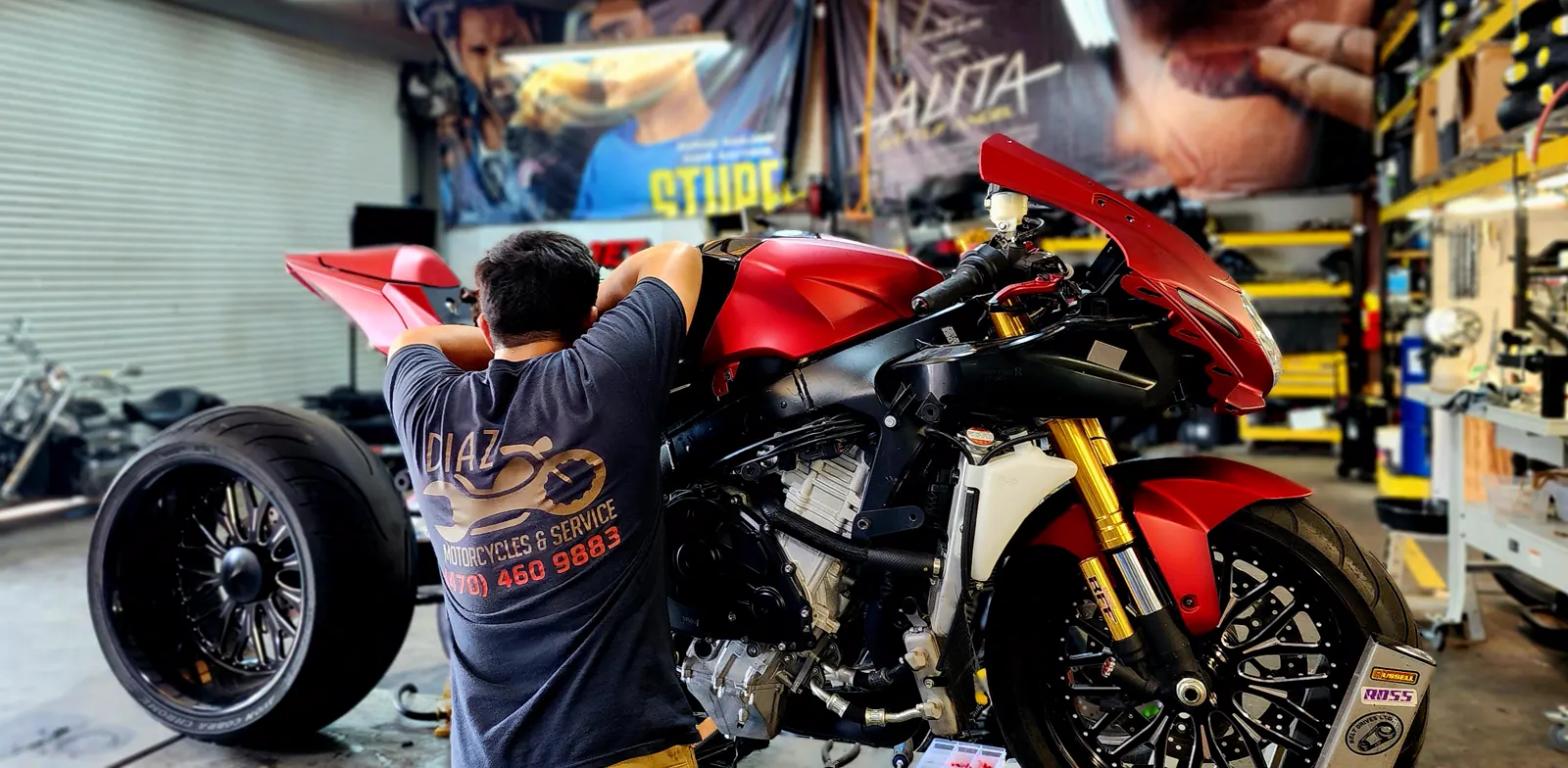
How long is too long?
People ask us this all the time: how long can a bike sit before it’s a lost cause? Honest answer — there almost isn’t one. We’ve brought back bikes that sat twenty years. The clock matters less than the storage. A bike parked properly, with stabilized fuel and a battery tender, can sit a long time and wake up easy. A bike parked wet with a full tank of pump gas can be a project after just two or three years.
THE CLOCK ONLY ADDS
Storage matters more than years. A bike parked wet with old gas can be a project in two winters, while a properly stored one wakes up easy after twenty.
The thing to remember is that waiting only ever adds to the list, never takes away from it. Rust doesn’t reverse itself. Varnish doesn’t dissolve on its own. So if that bike’s been calling to you from the corner of the garage, the cheapest day to deal with it is today, and the most expensive day is always the one further down the road. Same math you’ll see in what it costs to bring one back.
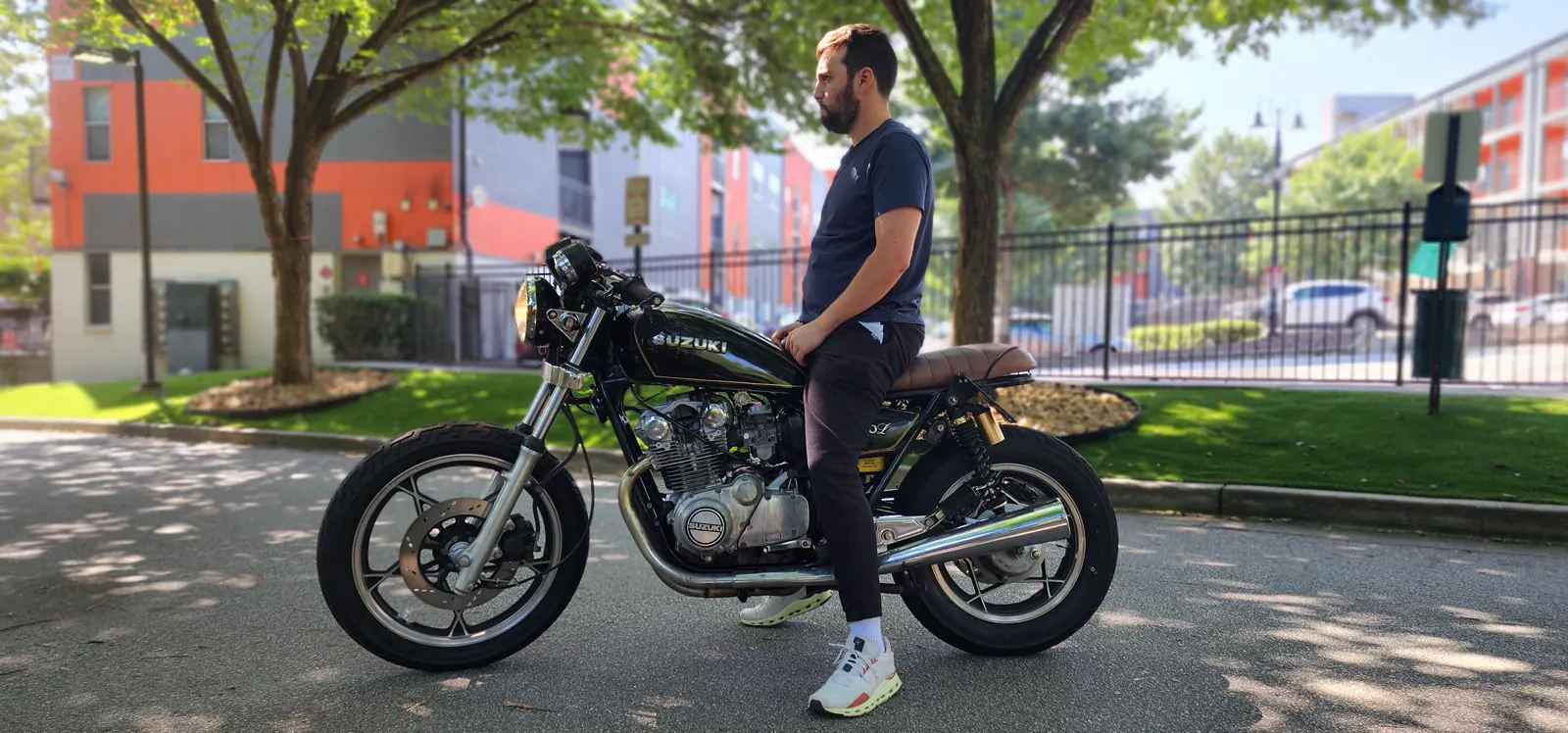
The drive down is on us
Now the part that removes the last excuse. A bike that won’t start is a pain to move, and hauling a dead motorcycle isn’t most people’s idea of a fun Saturday. So we come get it. Pickup and delivery means your barn-find never has to run, roll, or fit on a trailer under its own steam — we handle the loading and the roughly 40-to-55-minute run down I-75 to East Cobb both ways.
That’s the whole point: you shouldn’t have to solve the transport puzzle just to find out if your bike is worth saving. Snap a few photos where it sits, and let us do the heavy lifting from there. For a lot of Cartersville riders who already run 75 south for work, it barely registers as a trip at all.
Text us before you turn the key
If there’s one thing to take from all this, it’s simple: before you put a battery in that long-sleeping bike and reach for the starter, send us a couple of photos instead. Tell us how many years it sat, where it sat, and whether there’s still old gas in the tank. We’ll tell you straight what it likely needs and what it’ll take to wake it up safely — no charge for the honest read, and no pressure after.
We’d genuinely rather talk you through it before the key turns than fix what a hopeful crank broke. A bike sitting for years wants to run again. Give it the right wake-up, and it will — and you’ll be back out on 411 with the rest of Bartow before the leaves turn. Want to see the kind of comebacks we mean? Take a look at our restoration work.
Questions Cartersville riders ask us
My bike has been sitting for years — is it ruined?
Almost certainly not. We regularly bring back bikes that sat ten or even twenty years. What matters more than the time is how it was stored. A bike that sat in a damp Bartow garage needs more work than one kept dry, but ruined is rare. Send us photos and we’ll give you an honest read.
Can't I just put a battery in it and start it?
Please don’t. A bike that sat has old, thin oil and dry cylinders, and cranking it cold can score a cylinder or wipe a cam — turning a cheap fix into a big one. It might even start and quietly grind itself down. The safe wake-up handles fuel, oil, and cylinders first, then starts it gently.
What's the first thing that goes bad when a bike sits?
The fuel. Ethanol gas pulls in water and turns to a sticky varnish that clogs carbs and injectors and rusts the tank from the inside. That’s why the fuel system is almost always the first and biggest job on a long-sat bike, before anything else gets touched.
The tank is rusty inside. Is the bike a lost cause?
No. A rusty tank is common on bikes that sat with old gas, and it’s fixable — we can clean, seal, or replace it. The important thing is dealing with it before that rust gets pushed into a freshly cleaned fuel system. It’s a routine part of a proper wake-up, not a dealbreaker.
How long can a motorcycle sit before it needs professional help?
It depends more on storage than time. A bike parked with stabilized fuel and a tender can sit years and wake up easy. A bike parked wet with pump gas can be a project in two or three. Either way, waiting only adds to the list — problems never shrink on their own.
Do you pick up bikes that won't run?
Yes. Pickup and delivery is built for exactly this — your bike never has to start, roll, or get loaded on a trailer by you. We handle the transport both ways on the roughly 40-to-55-minute run to East Cobb, so a dead barn-find is our problem to move, not yours.
Bikes come out of hibernation all over Bartow County. We wake up projects from Olde Town, West End, and the Waterside and Grove Park subdivisions, plus tucked-away barn-finds from the county roads near Kingston and Cassville. Riders near Red Top Mountain and Lake Allatoona bring us bikes that sat through too many damp winters, and folks who ride US-411 north drop off the ones they want ready for Fort Mountain again. If it’s near the square, it’s close enough for pickup.
TEXT US BEFORE YOU TURN THE KEY
Before you drop a battery in that long-sleeping bike and hit the starter, text us a couple of photos instead. Tell us how many years it sat and where, and we’ll tell you straight what it needs to wake up safely. The honest read is free, and pickup and delivery means a dead bike never has to leave your garage under its own power. No pressure, just answers.
470-460-9883Diaz Motorcycles and Service, LLC · 847 Barnes Mill Road, Marietta, GA 30062