Motorcycle Restoration Cost in Cartersville: What Really Drives the Price
The five things that move a restoration bill up or down, what the different levels cost, and how to get a real number instead of a guess.
Everybody wants the same answer first: what does a motorcycle restoration cost? Cartersville riders are practical people, and a fair question deserves a straight reply. Here it is — it depends, but not in the wishy-washy way shops usually mean that. The price of a restoration is built from a handful of real, knowable things, and once you understand them, you can look at your own bike and get a pretty good feel for where it’ll land. Let’s take the mystery out of it.
First, what restoration even means for the price
A restoration isn’t one fixed thing, which is exactly why there’s no one fixed price. Bringing a bike back can mean anything from a solid mechanical revival — make it run right, stop right, and look sharp — all the way to a nut-and-bolt show build where every washer is correct and the chrome could blind you. Those are wildly different jobs with wildly different bills, and both get called restoration.
So the first real question isn’t how much does it cost. It’s how far do you want to take it. A rider who just wants Dad’s old cruiser running and handsome again is looking at a very different number than someone chasing a trophy at a bike show. Neither one is wrong. But you can’t price a trip without knowing the destination, and this is the same idea.
The five things that actually drive the cost
Peel back the estimate and nearly every restoration price comes down to five things. Get a feel for these and you’ll understand your own quote better than most people ever do — and you’ll spot a padded one a mile away, which matters in a show-me county like Bartow.
Here they are, plain as we can put them:
Read that list and you’ll notice something: only one of the five is really about the bike’s badge. The rest are about condition, completeness, and how far you want to go. That’s why two identical models can carry very different bills — one slept dry and complete, the other slept wet and picked-over.
- Condition: how badly it deteriorated. A dry-stored bike costs less than one that rusted in a damp barn for a decade.
- Completeness: what’s missing. Hunting down a correct side cover or gauge cluster for a rare bike takes time and money.
- Parts price and availability: common bikes have cheap, easy parts; oddballs and imports can mean long searches and premium prices.
- Level of finish: a clean running rider is one price; a show-quality, every-bolt-correct build is another entirely.
- Chrome and paint: re-plating, polishing, and quality paintwork are skilled, time-heavy jobs that move the total more than people expect.
That fifth one surprises folks the most. Chrome and paint aren’t a coat of spray and a buff — good plating and good paint are slow, skilled, careful work, and they show every corner you cut. It’s often the single biggest line on a restoration that’s chasing looks, which is worth knowing before you fall in love with a mirror finish.
Rider-ready or show-ready? Pick your level
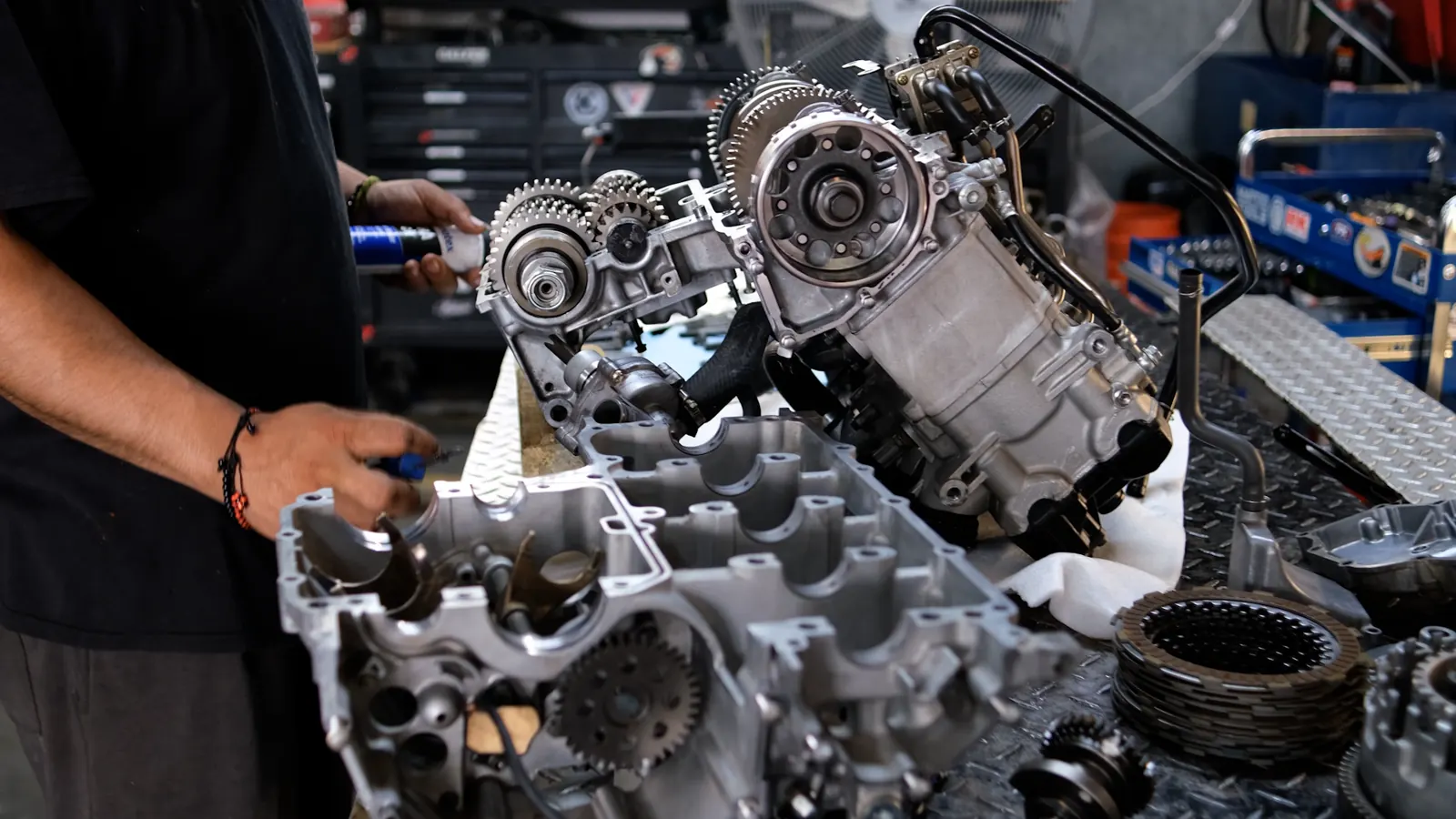
The cleanest way to think about cost is to pick your level up front. On the lighter end is a mechanical restoration — the bike runs strong, stops safely, and looks good from a few feet away. Fuel system, brakes, electrics, fluids, tires, and a good cleanup. This is where most of our Cartersville projects land, and it’s the best bang for the buck by a mile.
In the middle is a full cosmetic-plus-mechanical job: add fresh paint, re-plated or polished chrome, a new seat, and the details that make it turn heads at a Southern Devil event or a Saturday meetup. On the far end is a concours-level build, where correctness and perfection drive every choice and the hours pile up. Each step up the ladder is a real jump in price, so knowing which rung you’re after keeps the whole conversation honest.
Why parts are the wild card
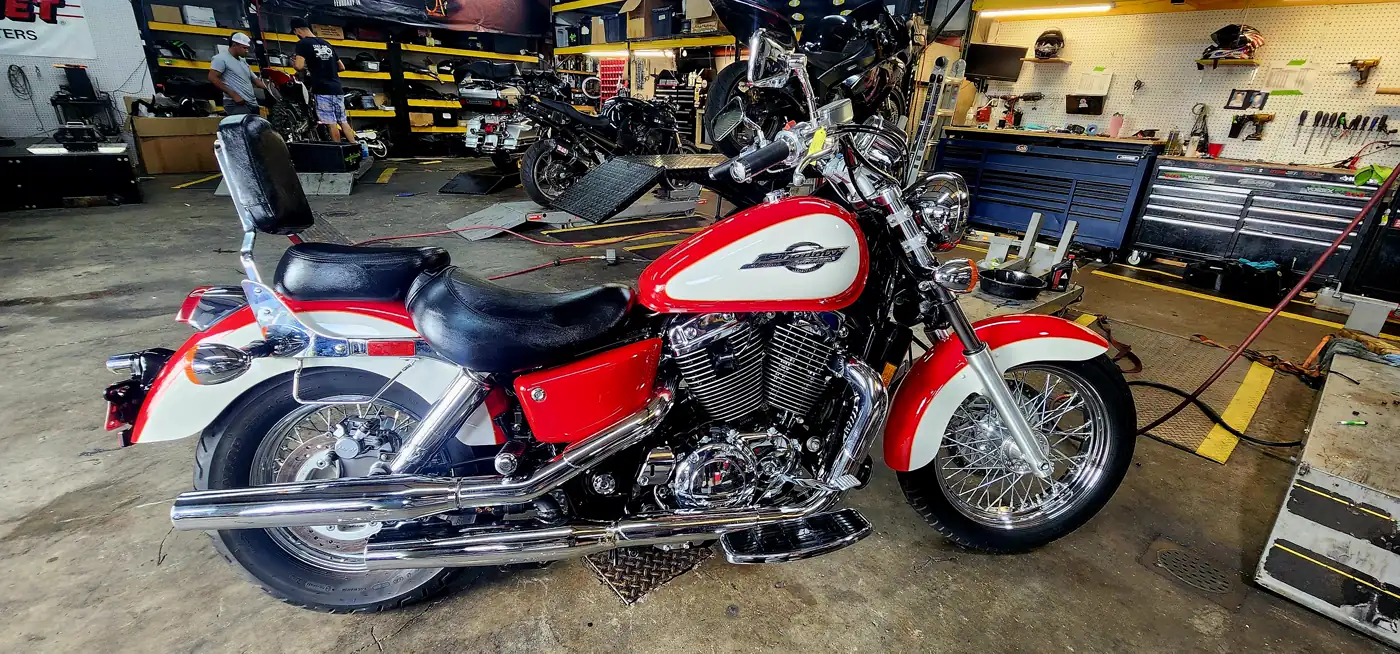
Here’s the part of the bill nobody can fully predict on day one: parts. On a common bike — a popular Honda, a Harley with a long production run — parts are plentiful and reasonable, and that keeps the cost tame. On a rare or import model, a single missing piece can send us on a hunt across the country and cost more than a whole day of labor. Same job, very different parts bill.
This is also why we don’t like to guess high over the phone. Until we see exactly what your bike is missing and what condition the rest is in, a parts estimate is just a story. We’d rather look, tell you what we know for sure, and flag what might swing before you commit a dollar. That’s the honest version, even when it’s less satisfying than a quick number.
GOOD TO KNOW
Common bike, common parts, lower cost. Rare or import bike, harder parts, higher cost. The badge affects the price mostly through what parts run.
Only one of the five cost drivers is really about the badge. The rest are about condition, completeness, and how far you want to go.
The honest way we build a number
So how do we actually price one? We look before we quote. We go over the bike, judge the real condition, note what’s missing, talk through the level of finish you want, and then build a number from those pieces instead of pulling one out of the air. You get to see the logic, not just the total. In Bartow, where a padded estimate gets spotted instantly, that’s the only way we know how to work.
And if we open something up mid-job and find more than the outside showed — a tank rustier than it looked, an engine that needs more than a freshen — we stop and call you before spending another dime. You approve the change. Nobody gets a surprise at pickup. That same honest math is what makes the restore-or-sell decision easy to think through with real numbers in front of you.
What you can do to keep the cost down
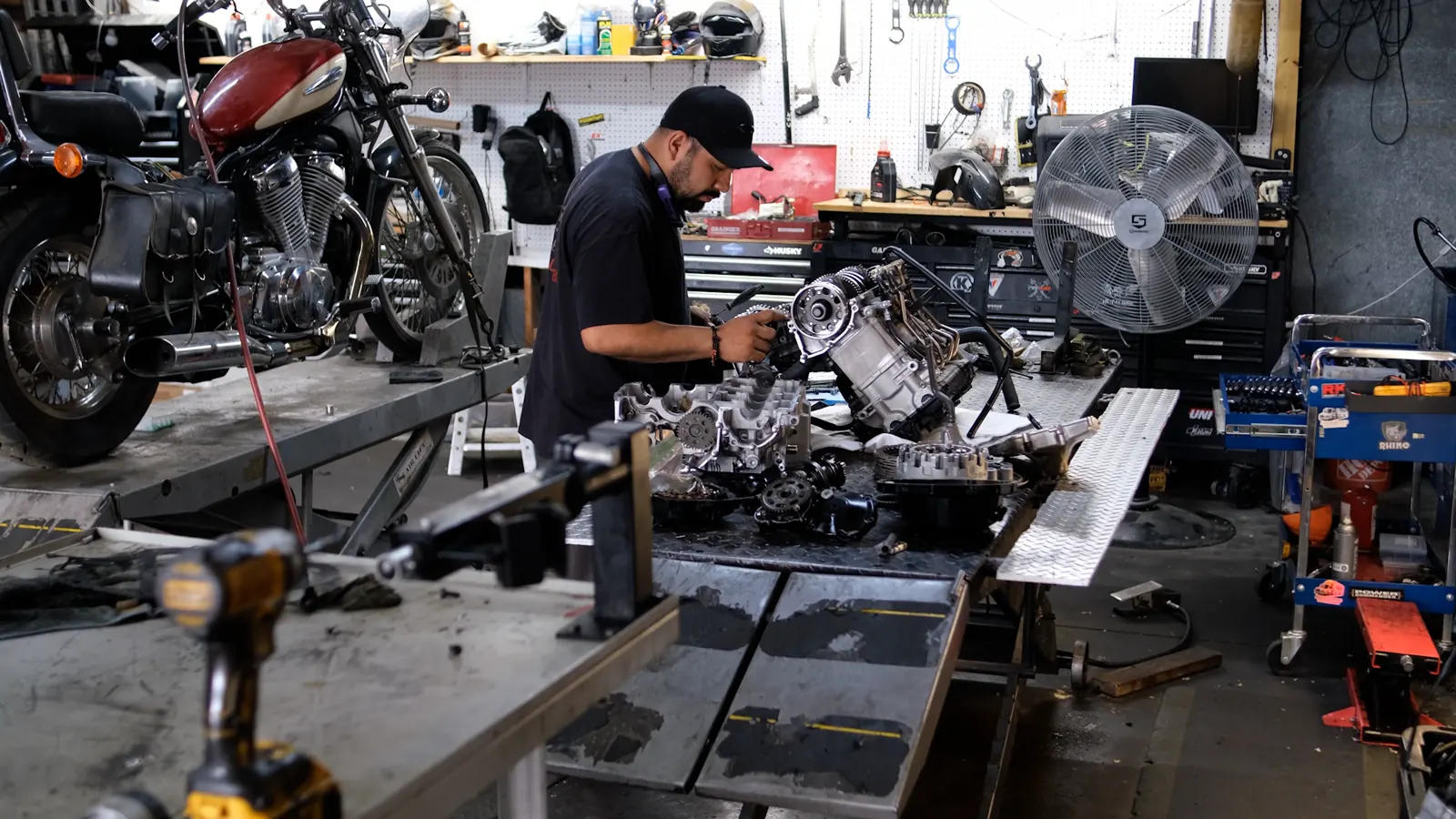
Want to keep the number reasonable? A few things genuinely help. First, be clear about your level — tell us you want a solid rider, not a show queen, and we’ll build to that. Second, don’t crank a long-sat bike before it comes in, because a hopeful start can turn a cheap engine freshen into a rebuild. Third, if you’ve got the original parts in a box somewhere, bring them — every correct piece you already own is one we don’t have to chase.
And here’s the biggest money-saver of all: don’t wait. Every season a bike sits in a humid Bartow garage, the rust spreads and the list grows. The same restoration is almost always cheaper this year than next, because you’re not paying to undo another winter of moisture. Time is quietly the most expensive part of any restoration, and it’s the one part you can control for free.
TIME IS THE EXPENSIVE PART
The same restoration is almost always cheaper this year than next. Every damp Bartow winter spreads the rust and grows the list — and that’s the one cost you control for free.
The drive is handled
One cost people forget to factor in is getting the bike to the shop. For a restoration project that often doesn’t run, that can feel like a real hurdle — but it isn’t one with us. Pickup and delivery is part of the deal, so the roughly 40-to-55-minute run down I-75 to East Cobb is on us, both ways, and you never have to figure out how to trailer a bike that won’t start.
For plenty of Cartersville folks who already commute down 75 to Cobb, dropping in barely counts as a trip. Either way, transport is never the thing standing between you and a real answer on your bike. We take that off your plate so the only decision left is the fun one: how far do you want to take it?
Get a real number, not a guess
Here’s the bottom line on restoration cost: it’s knowable, it’s built from real pieces, and you deserve to see those pieces instead of a mystery total. The five drivers — condition, completeness, parts, level of finish, and chrome and paint — explain nearly every dollar. Understand them, and you’re in control of the budget instead of the other way around.
The best next step is easy and free: text us a few photos of your bike, tell us how long it sat and how far you’d like to take it, and we’ll give you an honest read on where the cost lands and what might move it. No pressure, no sales script — just real numbers from folks who’d rather earn your trust than pad a ticket. See our restoration services when you’re ready.
Questions Cartersville riders ask us
How much does a motorcycle restoration cost?
It depends on five things: the bike’s condition, what parts are missing, how easy those parts are to get, the level of finish you want, and how much chrome and paint work it needs. A clean running rider costs far less than a show-quality build. Send us photos and we’ll give you a real range instead of a guess.
Why can't you just give me a price over the phone?
Because until we see the actual condition and what’s missing, any number is just a story. Two identical models can carry very different bills depending on how they were stored and what parts they need. We look first, then build a number you can see the logic behind. That’s the honest way, even if it’s slower.
What makes one restoration cost more than another?
Mostly condition, completeness, and the level of finish you want. A dry-stored, complete bike getting a solid mechanical revival is one price. A picked-over bike that rusted in a damp barn and needs show-quality chrome and paint is another entirely — even if it’s the same model.
Is it cheaper to restore a common bike or a rare one?
Usually a common one. Popular bikes have plentiful, reasonable parts, which keeps the cost tame. Rare and import models can mean long parts searches and premium prices, where a single missing piece costs more than a day of labor. The badge affects the price mainly through what parts run.
Can I do part of the work myself to save money?
You can help by being clear about your target level, not cranking a long-sat bike before it comes in, and bringing any original parts you already have in a box. Every correct piece you own is one we don’t have to chase. Beyond that, we’ll talk through what makes sense for your budget.
Do you charge to look at the bike and give an estimate?
The honest read from photos is free — text us a few and we’ll tell you what we can. For a firm estimate we look the bike over in person and build a real number from its actual condition. You’ll always know what you’re paying for before any work starts, with no surprise line items.
We price and restore bikes for riders all over Bartow. Projects come from the Carter Grove and Parkside neighborhoods, from historic West End and Granger Hill, and from ranch homes out along GA-20 near Lake Allatoona. We see bikes from folks close to the Booth and Tellus museums downtown, and from riders who run US-411 north on weekends. Wherever you are around Cartersville, an honest estimate and free pickup are just a text away.
GET A REAL NUMBER, NOT A GUESS
Want to know where your restoration would actually land? Text us a few photos, tell us how long the bike sat and how far you’d like to take it, and we’ll give you an honest read on the cost and what could move it. The read is free, pickup and delivery is handled, and there’s no sales script — just real numbers from folks who’d rather earn your trust than pad a ticket.
470-460-9883Diaz Motorcycles and Service, LLC · 847 Barnes Mill Road, Marietta, GA 30062