Motorcycle Repair Atlanta — Straight Answers From People Who Turn Wrenches
What we can tell you over the phone, what we can't, and how we figure out the difference.
After that, Here’s the thing almost no shop will say out loud on the phone: we don’t know what’s wrong with your bike yet. Nobody does. Not from a description, not from a video of the noise, not from the six paragraphs you typed at midnight. Anybody who names a firm number before the bike is on a lift is guessing, and a guess always drifts one direction. So when riders ask us about motorcycle repair Atlanta shops keep vague, we start by admitting the limit — then we tell you exactly how we close it, fast, and what happens next.
That admission isn’t us dodging. It’s the opposite. Once you know a real answer takes eyes and hands on the machine, everything after it gets simple. You stop shopping for the cheapest phone quote and start shopping for the shop that actually looks. Those are very different purchases, and only one of them ends with your bike running right.
What you're really asking when you call
You probably framed it as a price question. Most people do. But under it, three quieter questions are doing the real work, and they’re the ones we answer first because they’re the ones that decide whether you sleep well tonight.
Riders want to know if the problem is small or serious. They want to know if the person touching the bike knows this model or is about to learn on it. And they want to know if they’ll get a straight update or a week of silence. Those are the three things good motorcycle repair Atlanta riders can actually trust is built on. We’d want them too.
- Is this a bolt-on fix or a real repair?
- Does this shop know my bike, or my brand at least?
- Will somebody tell me before anything gets spent?
- How long am I off the road?
- How do I hand the bike over without burning a whole day?
The honest answer
Most bikes that roll in here have one of a short list of problems, and that list is boring in the best way. Old fuel, tired plugs, a lazy battery, a chain that hasn’t been fed in a while, brake pads down to the backing, fork seals weeping after a hard winter. Boring is good news. Boring means the fix exists, it’s known, and you’re riding by the weekend feeling like you got away with something.
The rest split into two buckets. Some are electrical gremlins that hide until the bike gets hot, and some are internal — a top end, a clutch pack, a gearbox that’s been telling you about itself for months. Those take longer to find. They’re also the exact repairs where guessing on the phone does the most damage, because a wrong guess sends you to the wrong shop with the wrong plan.
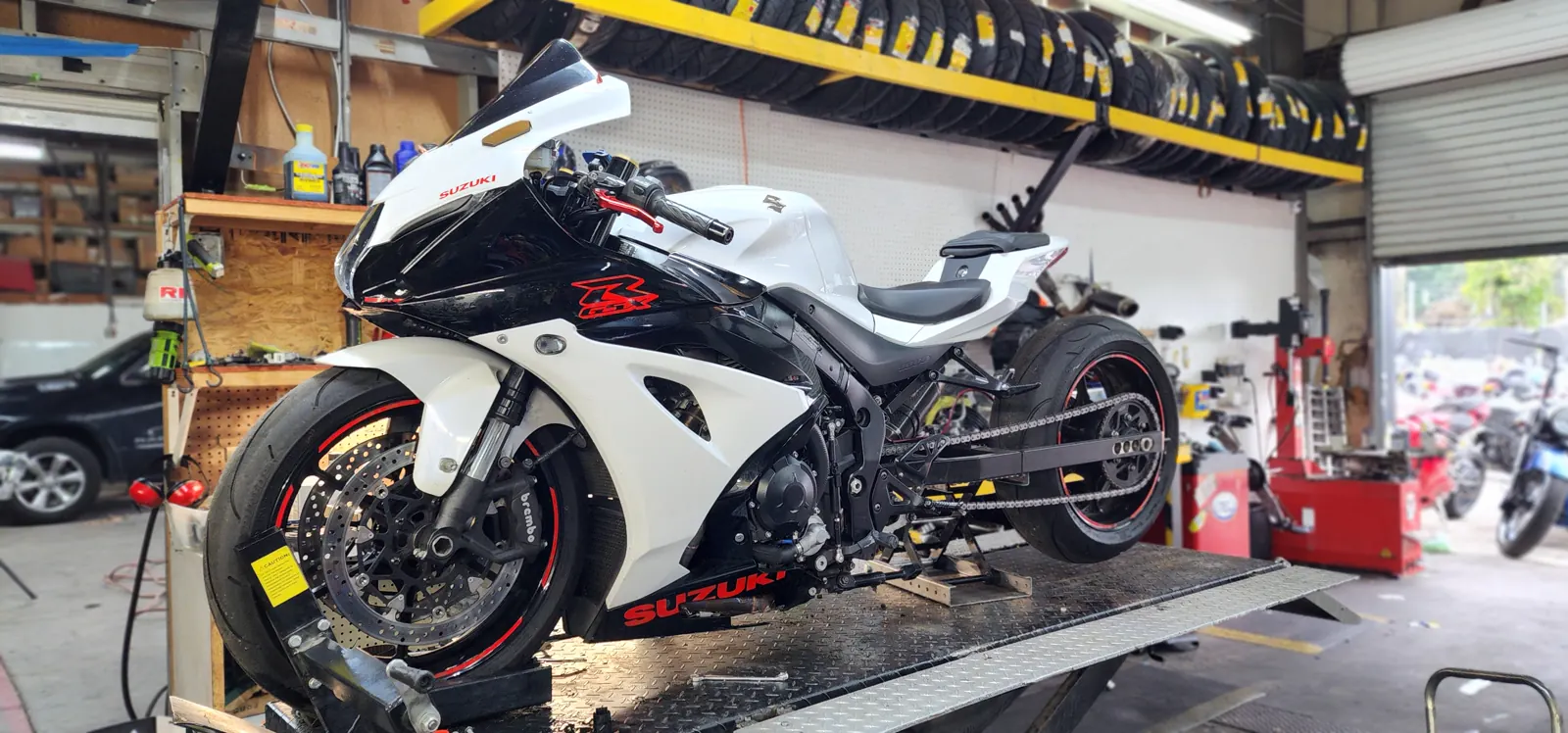
So our honest answer sounds like this: describe it, and we’ll tell you the two or three most likely causes plus a rough sense of scale. Small, medium, or the kind that needs a plan. Then we look. We’ve never once regretted looking first, and neither has a rider who let us.
What actually moves the number
Two bikes with the identical symptom can land in completely different places, and it isn’t random. It’s parts availability, how long the problem has been ignored, whether the last person in there used the right hardware, and whether the model hides its fasteners behind half the fairing. If you want the long version, we broke down what changes the total in its own piece.
Time is the biggest lever, and it’s the one you control. A chain caught early is a chain. A chain caught late is a chain, a sprocket set, and sometimes a countershaft seal. Same rider, same bike, different month. Nothing about that is a moral failing — life gets busy, and bikes are patient right up until they aren’t.
- How long the symptom has been running
- Whether the part is stocked, ordered, or discontinued
- How buried the failed component is on that specific model
- What a previous repair left behind
- Whether one failure took a neighbor part with it
Now, the part nobody mentions until you're already paying for it
Diagnosis and repair are two separate jobs, and plenty of shops blur the line so the first one disappears into the second. That blur is where surprises live. We keep them apart on purpose. You get a diagnosis, in writing, with what we found and what we’d do about it. Then you decide. No work starts on a shrug and a maybe.
The other thing nobody mentions: a bike almost never has exactly one problem. When we open a machine that’s been ridden hard through a Georgia summer, we usually find a small second thing sitting right next to the first. We tell you about it. We do not fix it without asking. If it can wait, we say it can wait, and we’ll note it so next visit isn’t a mystery.
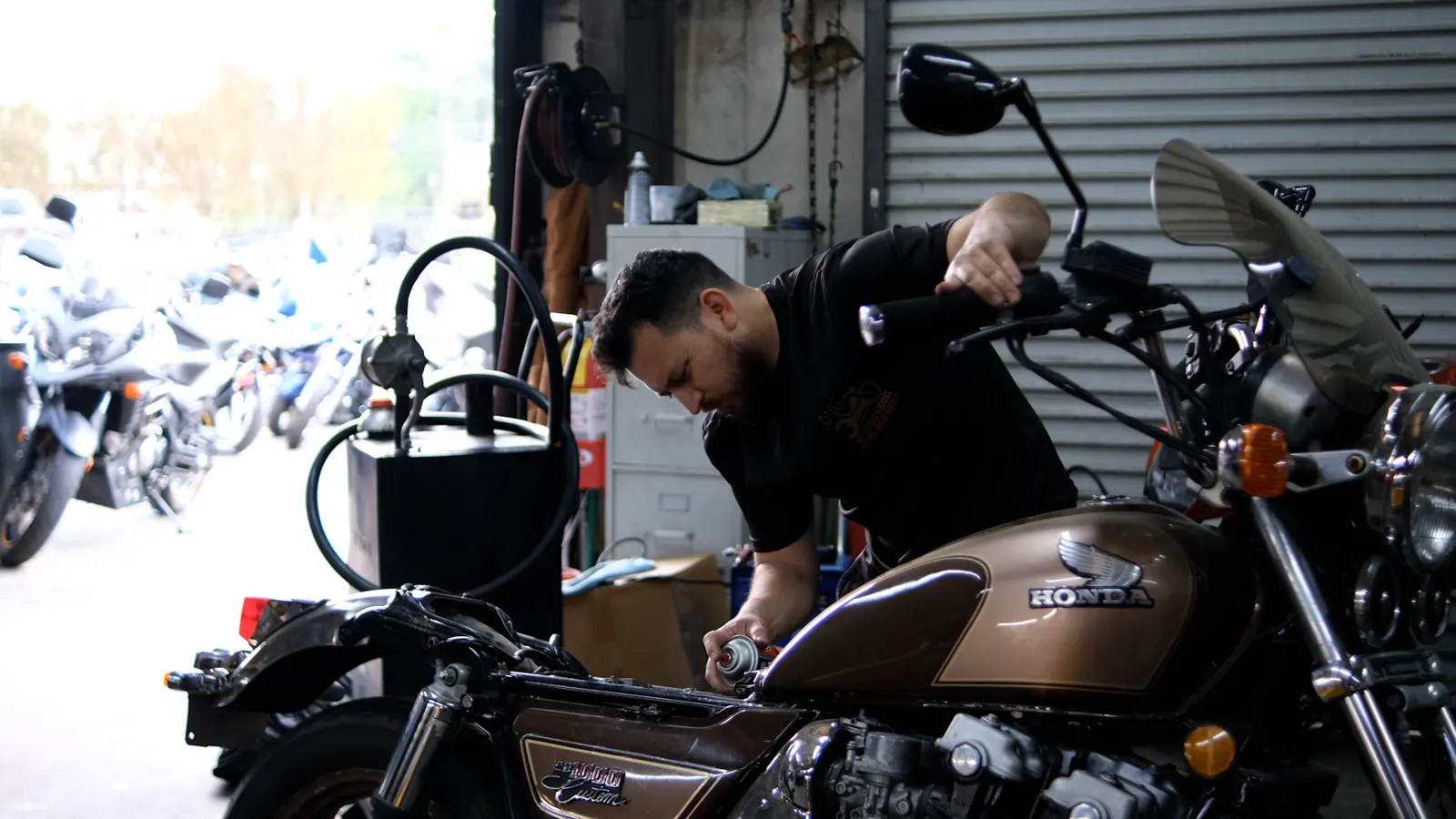
That’s the whole trick, honestly. Separate finding from fixing, put the finding in writing, and let the rider make the call. It isn’t clever. It’s just harder to do than a quick phone number, and most shops pick the quick number.
How we diagnose before we quote
Our process is short and it doesn’t change, whether you ride a supermoto or a dresser. Here’s how our crew approaches it from the second the bike comes off the trailer.
- Talk to you first — when it started, what it does, what changed right before.
- Ride it or run it if it’s safe, because symptoms lie when a bike is cold and standing still.
- Up on the lift for a full look: fluids, chain, tires, pads, bearings, electrics, leaks.
- Scan and test the systems the symptom points at, and the ones sitting next to them.
- Write it all down and send it to you before a single part gets ordered.
Step five is the one riders remember. You get plain language, not a wall of codes. If we say a stator is done, we tell you how we know and what we saw. If we’re not certain yet, we say that too, and we tell you what the next test would be. Uncertainty said out loud is worth more than confidence made up.
BEFORE YOU ANSWER
Nothing gets ordered, opened, or billed until you’ve read what we found and said go. That’s not a policy we advertise. It’s just how we’d want to be treated.
We also keep the record. Next time you come in, we already know what your bike has been through, which shortens everything. Friends we’ve helped tend to notice that around visit two, when the diagnosis takes half as long because we’re not starting from zero.
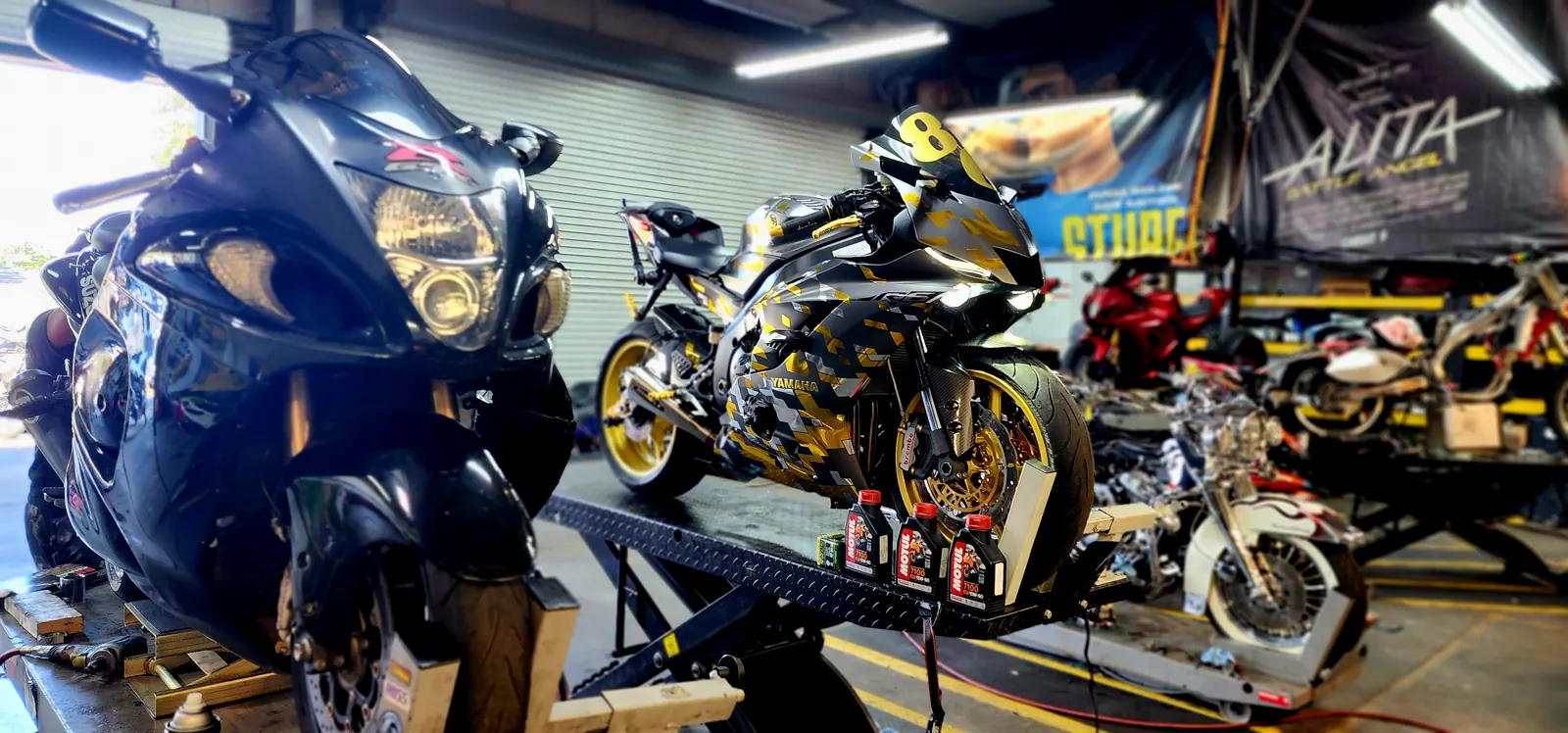
Atlanta roads write their own repair list
City riding here is its own diet, and the pavement does the writing. Peachtree Street through Midtown is famous among riders for utility trenches under steel plates, and in the rain those plates are a classic front-end tuck waiting for somebody’s attention to wander. Add the embedded Streetcar rails running through Edgewood, Auburn, Peachtree, Luckie and Jackson on that 2.7-mile loop, where the flangeway gap is a documented crash risk, and you’ve got a surface that eats hardware.
The city does fight back — there’s a named Pothole Posse and a public road resurfacing dashboard — but the damage still lands on your bike first. In-town riding chews through fork seals, wheel bearings, rims and steering-head bearings noticeably faster than suburban miles do. Good news: those are all known, fixable, and cheap to catch early. That’s why we check them on every bike, even when you came in for something else entirely.
Then there’s the heat problem. Under O.C.G.A. 40-6-312 a motorcycle has to stay fully in one lane, and operating between lanes or rows of vehicles is illegal in Georgia with a police-only exception. So when the Connector locks up, you sit in it with the clutch in. That’s not a lost-time story, it’s a cooling system, clutch and battery story, and it’s why in-town bikes show wear that confuses shops used to highway miles. Keep your registration current through the Georgia Department of Revenue while you’re at it, since a stopped rider with a dead tag has a longer day than they planned.
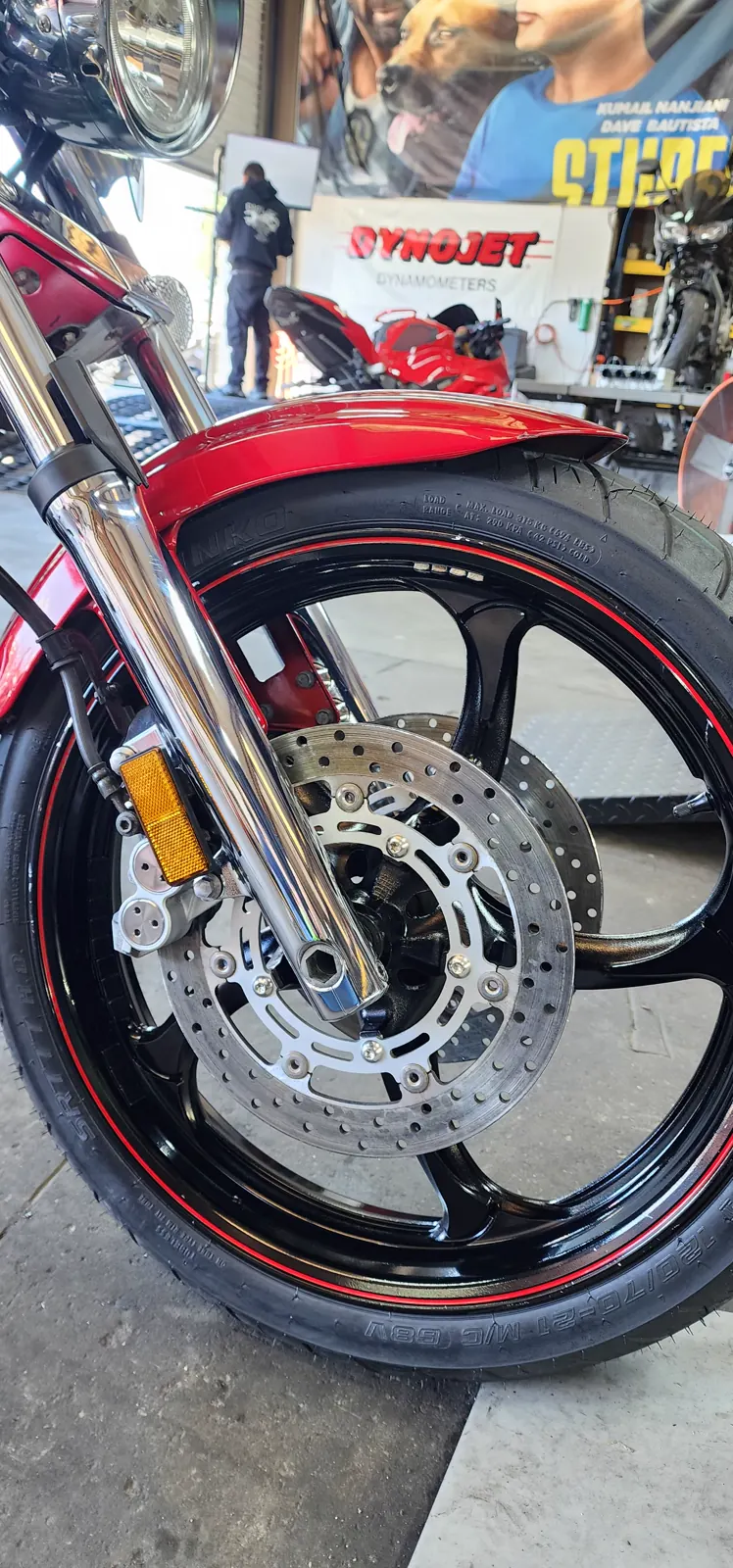
Where you park changes what breaks
Atlanta’s rider population is small next to the car population but tightly clustered by district, and the bikes tell you where you are. Around Tuxedo Park, the Buckhead estate district that’s home to the Georgia Governor’s Mansion, and over near Chastain Park with its 268 acres of city parkland, we see cruisers, big touring bikes and the city’s thickest concentration of expensive European machines. Garden Hills, laid out between 1923 and 1941 with winding tree-lined streets and landscaped traffic islands, sends us a mix of both.
Those riders mostly decide on convenience and confidence, not on being talked down to. Somebody who parks near Lenox Square at Peachtree and Lenox Roads, or across Peachtree at Phipps Plaza, isn’t looking for a bargain hunt. They want pickup arranged, updates in writing, and the bike handed back clean. That’s a low bar and it’s shocking how often it goes unmet, so we just made it the default.
Storage matters more here than people expect. Homeownership inside the city runs well under the national rate, so most in-town riders have no garage at all. Apartment and condo deck parking is the real story in Midtown, West Midtown, Buckhead Village and the Old Fourth Ward — no outlet for a tender, no room to work, tight ramp turns, shared access. Batteries die early because of it, and a healthy tender habit fixes more problems than any part we sell.
And then there's the part that's just about riding again
All of this diagnosis talk exists to serve one moment: you swing a leg over, it starts clean, and you go. That’s the actual product. Nobody wakes up wanting a service record. They want the reverse commute up I-75 toward East Cobb mid-morning, running against the inbound wave while everybody else is stacked up the other direction, and they want the bike to feel exactly like it should when they get there.
Riding season here is basically March through November, with a stubborn winter minority who ride anyway. Those freeze days put black ice on bridges and Connector overpasses first, so we tell winter riders to plan around bridges more than temperature. Pollen season is its own comedy — the city set an all-time record count in late March of 2025 — and yes, it clogs filters and coats everything you own in yellow.
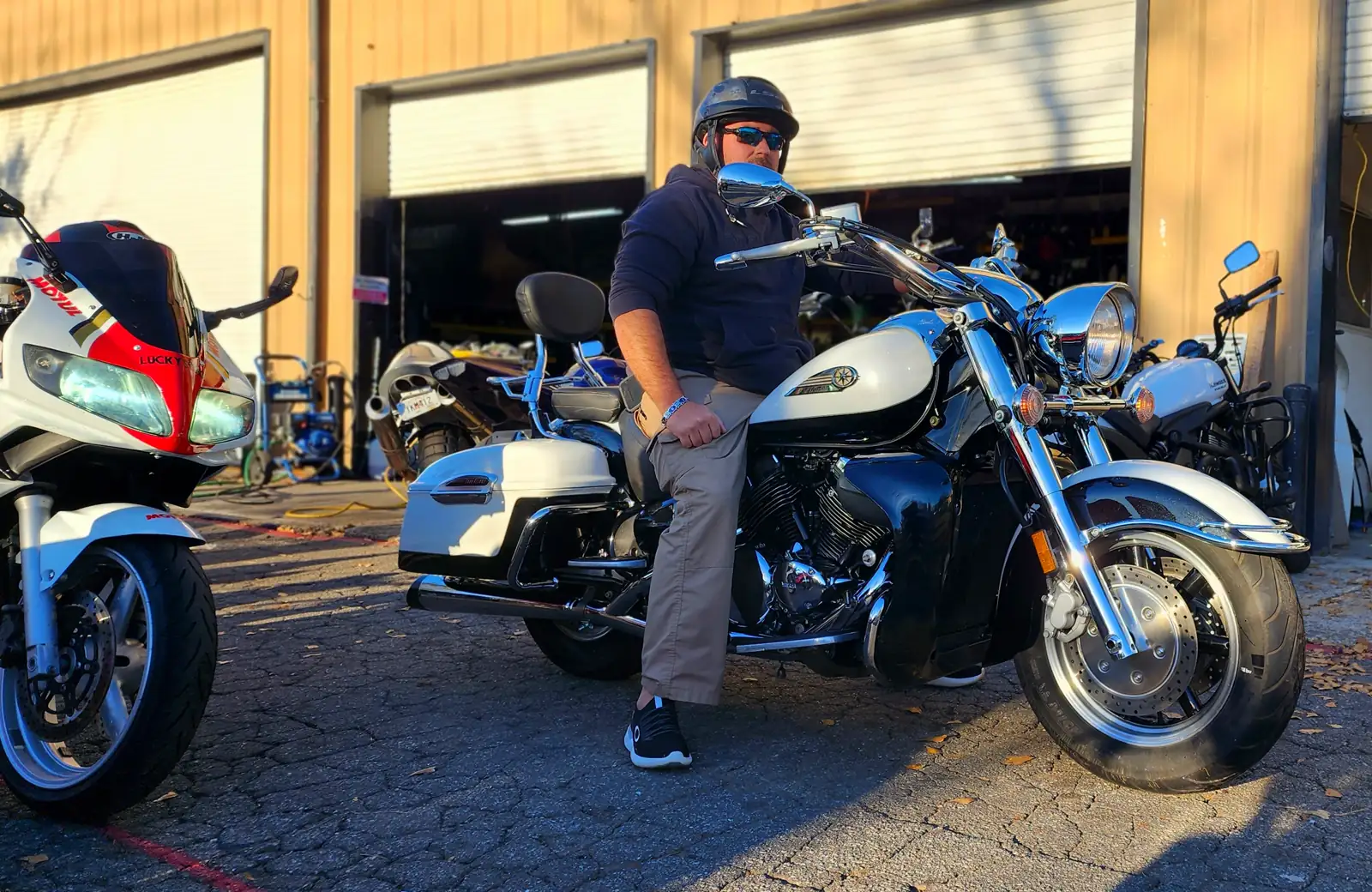
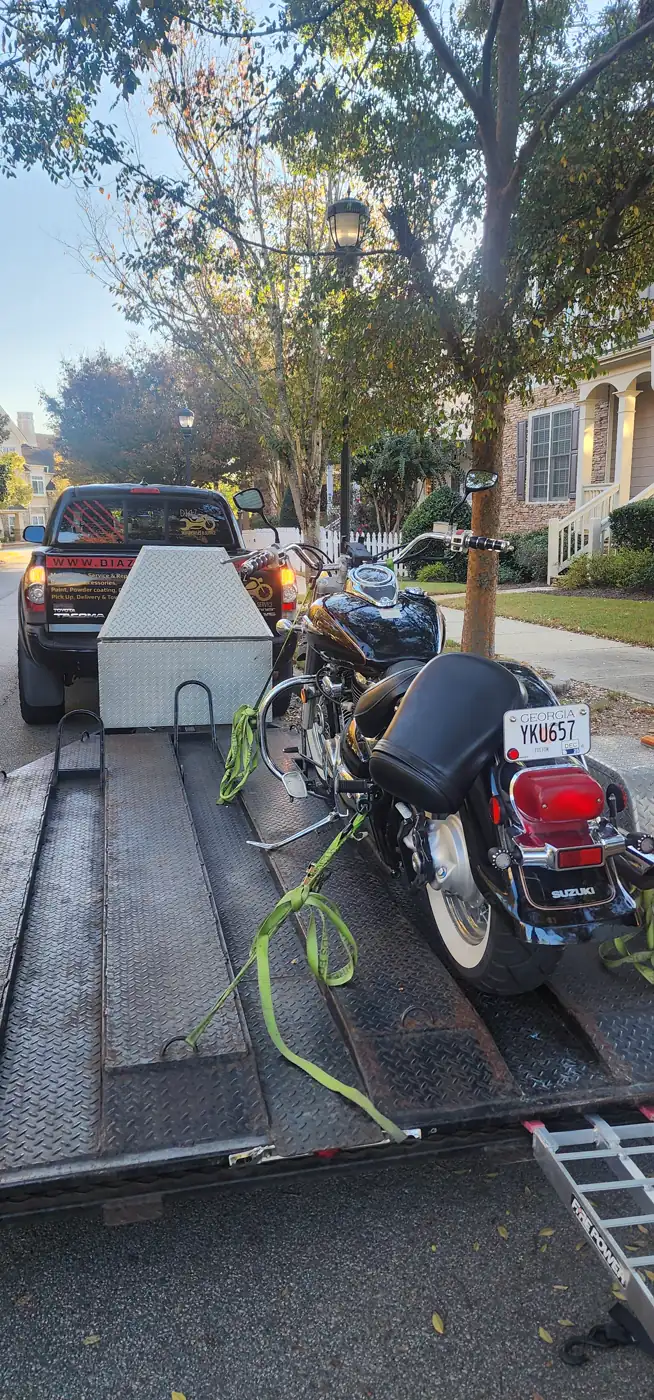
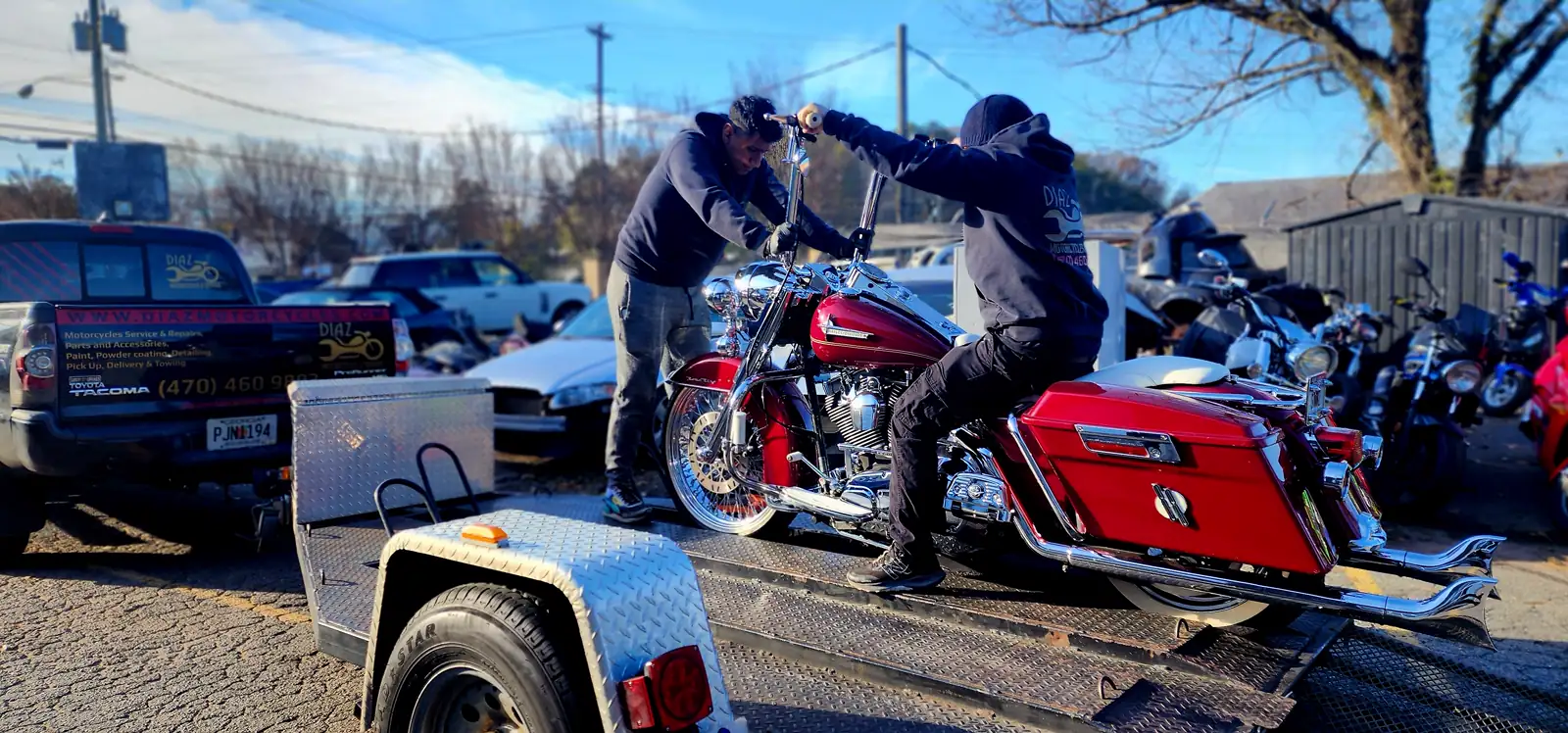
Getting to us is easier than the map makes it look. From Buckhead it’s roughly 13 miles and twenty to thirty minutes, from West Midtown about 14, from Midtown around 16, from the Old Fourth Ward closer to 18, and from East Atlanta Village about 21 — add twenty to forty minutes at peak, because of course. We can also arrange transport, which most riders take once and then never go back. Suburban riders deal with different roads entirely, and we wrote up what Acworth riders run into if you split your miles.
There’s no dense cluster of full-service shops inside the Perimeter, which is why ITP riders already drive out for service. Some head to Atlanta Harley-Davidson at 501 Thornton Rd in Lithia Springs, which has big inventory, a Rider Academy and a steady calendar of group rides. That’s a real option and we’ll say so. We’re the other direction, we’re independent, and we run a dyno, ECU flashing, and an in-house paint booth for restoration work.
Brand-wise, we’re generalists on purpose. Japanese four-cylinders, cruisers, Euro twins, small-displacement bikes, older carbureted machines. For Harleys we work against factory service data, and riders who like reading their own specs can browse Harley-Davidson service information before they ever call us. Informed customers make our job easier, not harder.
What you get back
A bike that runs right, a written record of what we did, and a short honest list of what’s coming. That’s it. If you want to stretch the time between visits, what the work covers lines up neatly with the habits that keep small things small — chain care, tire pressure, a tender in winter, and fresh fuel.
We can't tell you what's wrong over the phone. We can tell you exactly how we'll find out.
Start with a text. Tell us the bike, the year, and what it’s doing in one or two sentences. We’ll answer like a friend who fixes bikes for a living, tell you whether it sounds small, and get you scheduled. No pressure, no runaround, and no number pulled out of the air.
Questions Atlanta riders ask us
What if it needs more than you expected?
We stop and text you before anything else happens. You get what we found, what we’d recommend, and what can safely wait until later. Nothing extra gets done on assumption. You always make the call.
What does a repair actually include?
It includes the diagnosis, the labor, the parts, and a written record of everything we touched. We also do a general once-over while the bike is up — fluids, chain, tires, pads, bearings and leaks — and tell you what we saw. Small tightening and adjustment along the way is just part of doing the job right.
How long will it take?
Routine maintenance and common repairs usually turn around in a day or two once the bike is here. Parts availability is the main variable, especially on older or European machines. Internal engine and gearbox work takes longer because we’d rather be right than fast. We give you a real estimate of days after we look, not before.
Do you work on my brand?
Very likely yes. We handle Japanese sportbikes and cruisers, Harleys, European twins, small-displacement bikes, and older carbureted machines that other shops turn away. If your bike is something genuinely unusual, text us the year and model and we’ll tell you honestly whether we’re the right shop.
Do I need an appointment?
An appointment helps a lot, because it means a lift and a tech are waiting for you instead of the other way around. Text us and we’ll find a slot, usually sooner than you’d guess. If you’re stranded or the bike won’t move, tell us that first and we’ll work out transport.
Can you pick the bike up from inside the city?
Yes. Plenty of riders in Buckhead, Midtown and the Old Fourth Ward have no good way to load a bike from a condo deck or a narrow street. We arrange transport, keep you updated while it’s here, and return it clean. Most riders who try it once stop hauling their own bike for good.
We take care of riders all over metro Atlanta, starting with Buckhead and Midtown and running out through Decatur and Brookhaven on the east side. Sandy Springs and Chamblee riders come to us regularly, and so do folks from Tucker when they’d rather not fight the Perimeter. On the west side we’re an easy run for Smyrna, Vinings and Mableton, and our home base in Marietta puts us close to everybody heading north. East Point riders are welcome too — we arrange transport when the ride out isn’t practical.
TEXT US THE BIKE AND THE SYMPTOM
If your bike is doing something it didn’t used to do, don’t sit on it. Send us a text with the year, the model, and one sentence about what’s happening. We’ll tell you what it’s likely to be, get you on the schedule, and arrange pickup anywhere in Atlanta if hauling it yourself isn’t realistic. You’ll get straight answers and a bike you trust again.
470-460-9883Diaz Motorcycles and Service, LLC · 847 Barnes Mill Road, Marietta, GA 30062