Best Motorcycle Repair Cartersville — How to Choose
A plain-English way to judge a shop before you hand over the keys to your bike.
So and you walk out to the garage on a Saturday morning with a cup of coffee and one plan for the whole day. Still, the bike is right where you left it. Plus, you thumb the starter and get a soft click, then nothing at all. Or it fires, idles rough for about ten seconds, and quits. Or it runs fine right up until you pull the clutch in at a stop sign and the whole machine shudders like it’s mad at you. Either way, the ride you had in your head is over, and you’re standing there in flip-flops staring at something that will not cooperate. That’s usually the exact moment a rider starts hunting for the best motorcycle repair Cartersville has on offer.
So let’s make that search easier. Almost everything a bike does in a driveway is a known problem with a known fix, and the hard part isn’t the repair. The hard part is deciding who to hand the keys to. This post is about that decision, and about what a good shop should be doing before it ever touches a wrench.
Start with the symptom, not the search bar
Before you call anybody, write down what the bike is actually doing. Not “it’s broke.” The specifics. A shop that gets clear information gives you a clear answer, and you’ll be able to tell in about ninety seconds whether the person on the phone knows bikes or is reading from a script.
- It clicks once and the dash lights dim, or it does nothing at all
- It cranks fine but won’t catch, especially after sitting all winter
- It starts, idles high or low, and stumbles when you crack the throttle
- The clutch lever feels vague, or the bike creeps forward at a stop
- Revs climb but speed doesn’t, mostly in the higher gears
- The front end pulses under braking, or the lever pulls to the bar
- There’s a wet spot under the bike and a smell you can’t place
- The charge light flickers, or the bike dies twenty minutes into a ride
That list covers the large majority of what rolls through our door. None of it is exotic. All of it has a cause you can name and a repair you can plan around, which is a lot more comforting than a vague bad feeling in the garage.
What each of those symptoms is usually telling you
A single click with dimming lights is almost always electrical, and in Bartow County it’s usually the battery or the charging system. Bikes here live in detached garages, outbuildings and pole barns, and unheated storage is rough on a battery. A bike that cranks but won’t catch after sitting is usually a fuel problem, because ethanol turns to varnish in a carb bowl or an injector over a long, humid off-season. Neither one is a big repair. Both are extremely common around here.
Rough idle and a stumble off idle point back at fuel and air too, though sometimes it’s a lazy sensor or a plug that’s been in there a few too many seasons. A vague clutch lever or a bike that creeps at a stop is a cable, a hydraulic, or worn plates, and we wrote up the full rundown on it if you want to narrow it down at home. Revs climbing without speed in fifth or sixth is classic clutch slip. Brakes that pulse or pull long are pads, fluid, or a caliper that’s stiff from sitting.
Notice what all of that has in common. Every one of those has a real cause you can point at. That’s why a good diagnosis feels so much better than a guess, and why the shop you pick matters more than the part number.
WRITE IT DOWN
Bring a note with when it started, what it does cold versus hot, and what you already changed. Ten seconds of writing can save an hour of shop time.
But here’s what most riders get wrong about this. They think picking a shop is about who has the part in stock or who can fit them in tomorrow. Those things are nice. Neither one tells you whether the work will hold up in six months. What actually separates shops is process, and process is something you can ask about before you spend a dime.
Real criteria for judging a shop
Bartow is a show-me county. Plenty of folks here work in manufacturing and the trades, and they judge a shop the same way they judge a machine on the floor — by how it’s set up, not by how it’s described. So judge it that way. Here’s what we’d look at if we were the customer.
- Do they ask questions before they quote? A shop that quotes a repair sight-unseen is guessing, and you’ll pay for the guess later.
- Do they tell you the diagnosis in plain terms, with the part named and the reason it failed? “Bad electrical” is not a diagnosis.
- Do they call before extra work happens? No surprises on the invoice is a policy, not a personality trait.
- Will they show you the old part? Good shops keep it on the bench and hand it to you.
- Do they write down torque specs, fluid types and what was actually replaced? Paperwork is a habit, and habits show up in the work.
- Do they say no sometimes? A shop that admits a job isn’t in their wheelhouse is a shop that isn’t winging the ones it takes.
Dealer or independent?
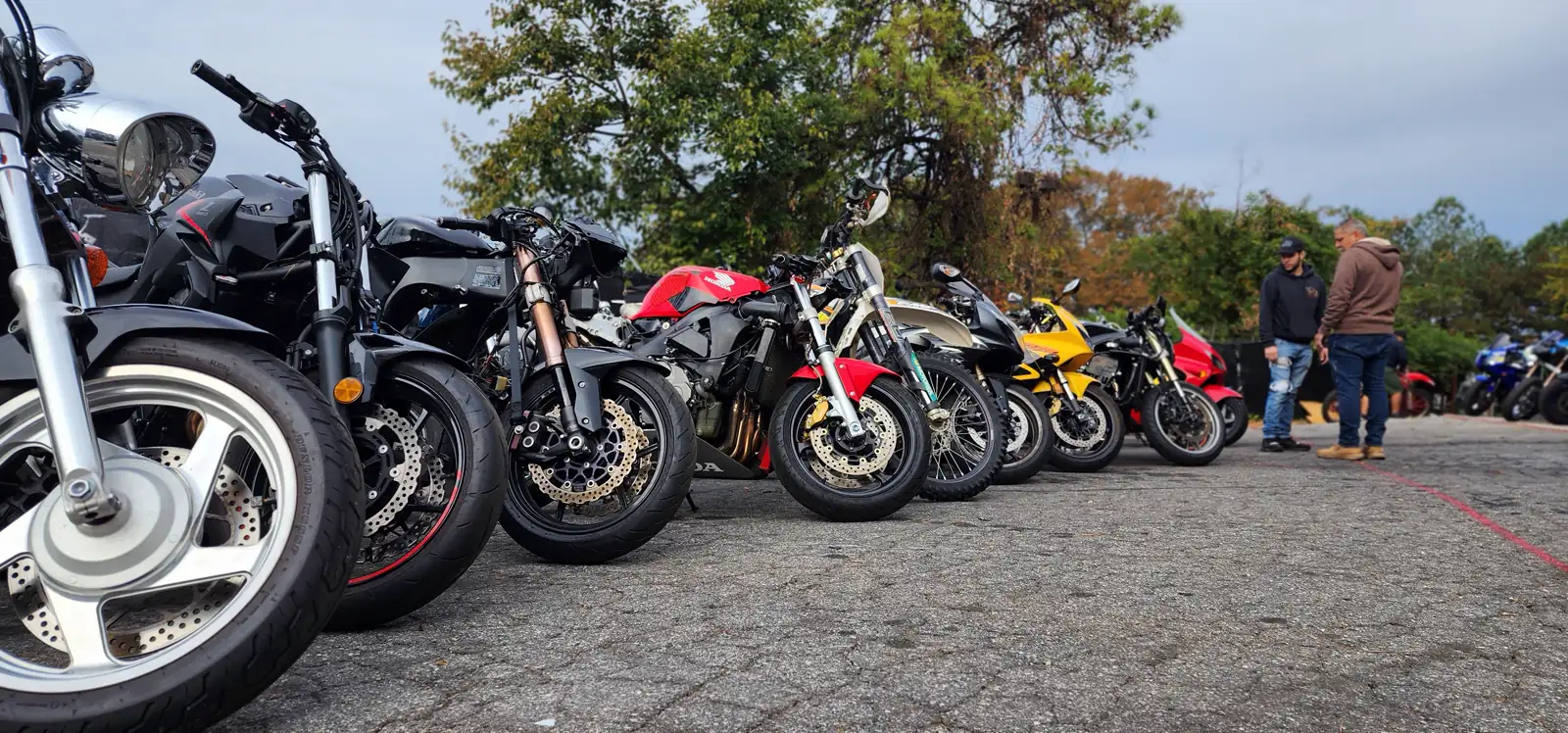
Both are good answers, honestly. Cartersville is a genuine Harley town, and the dealer network here is strong for a reason. If your bike is under warranty, or there’s a recall or a factory software update involved, the dealer is the right call and we’ll tell you so. Dealers also have factory tooling for the newest models that independents sometimes don’t.
Where a good independent earns its keep is range. We see a lot of riders with a bagger in the garage, a project UJM under a tarp, and a kid’s dirt bike in the corner. One shop that can handle all three saves you three phone calls. If you want the specifics of how we handle a job, here’s what you get when you bring it in.
Ask about process, not price. Process is what you're actually buying.
What happens after you drop it off
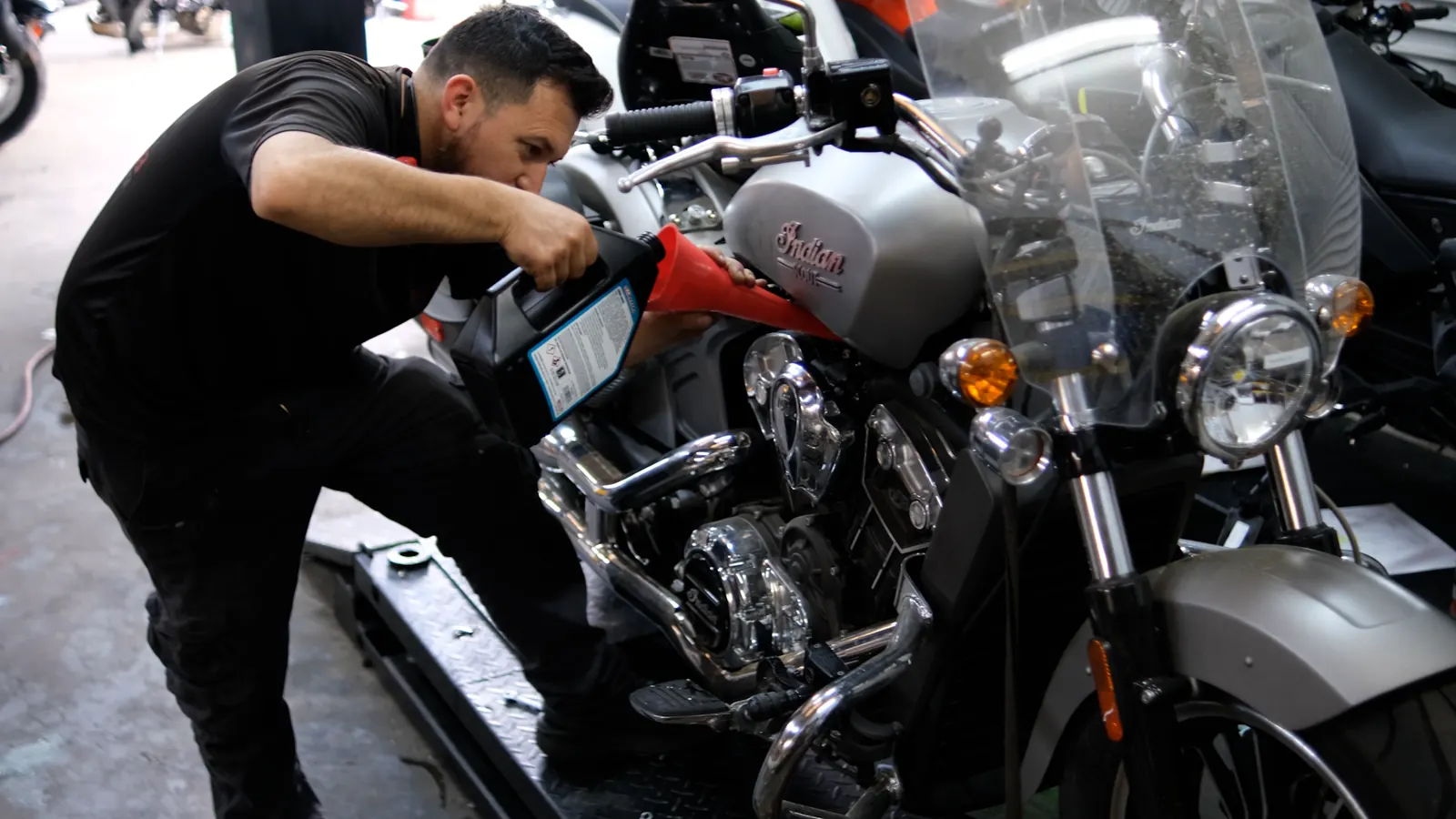
Here’s our side of the counter, because knowing the steps takes the mystery out of it. First we listen to you describe the symptom, then we ride it or run it if it’s safe to. Then we test rather than assume — battery load, charging output, compression, fuel pressure, whatever the symptom points at. Then we call you with what we found, what it’ll take, and what we’d do if it were ours.
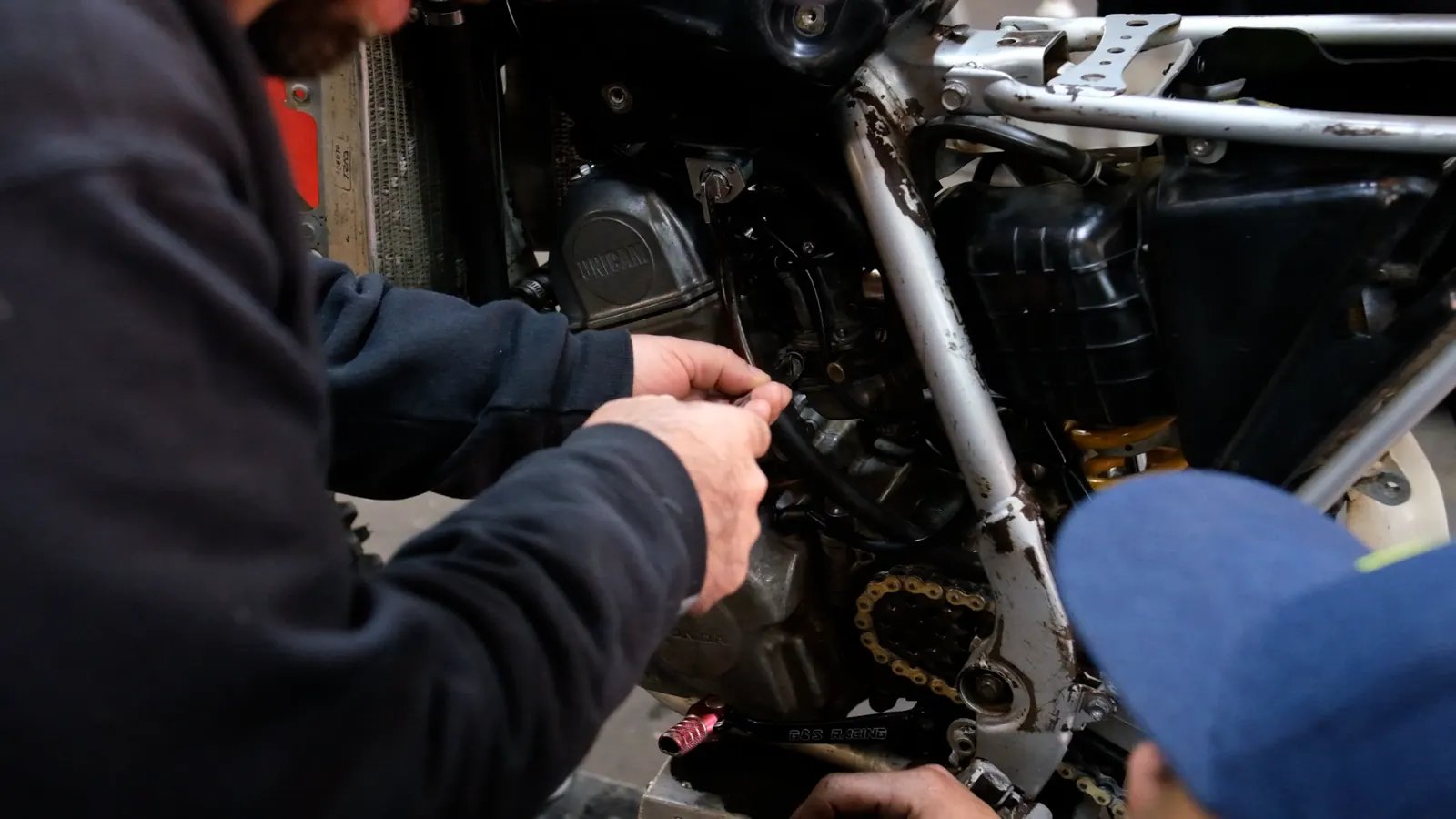
After that it’s the repair, then a road test, then a walk through what we replaced and why. If we spot something else that’s getting close to done, we tell you now and let you decide. Nobody likes finding out in March that we saw it in November. For the longer version, here’s what that service actually involves from start to finish.
How long it really takes
Timing is the question everybody wants answered first, so let’s answer it. Routine service and most brake work is usually same-day or next-day. Fuel system cleanup on a bike that sat all winter runs a day or two, sometimes longer if the tank needs attention. Clutch and charging work depends on parts. Anything that involves opening an engine or waiting on a hard-to-find piece for a vintage build takes as long as it takes, and we’d rather tell you that up front than promise Friday and call you on Tuesday.
September and October are the best riding weeks of the entire year around here, so shop calendars fill up in late summer. If you know you want the bike right for autumn, the smart move is booking in July or August. That’s not a sales pitch. It’s just how a garage works.
Let us tell you about a rider near Downtown Business District. He’d parked a cruiser in a detached garage behind a pre-1940 house, the kind you see all over Granger Hill, and it sat through a wet winter. Come spring it cranked strong and wouldn’t light. He figured engine trouble and figured wrong — it was varnish in the fuel system and a battery that had given up in the cold. Cleaned, refreshed, tested, and back on the road. The relief on that guy’s face was worth more than the repair.
Why Bartow bikes break the way they do
Local roads write their own repair list. I-75 through Bartow carries enormous truck volume, with rutting, grooved concrete, expansion joints and the occasional blown retread lying in the lane. Head north on 411 toward the mountains and you’re sharing pavement with quarry and aggregate traffic that drops gravel on the exact road riders use to get out of town. Then there’s the rural county stuff — Euharlee Road, Stilesboro Road, Old Alabama Road, GA-113 and GA-293 — where chip-seal, tar snakes and gravel wash at driveway aprons keep tires, suspension and wheel bearings honest. Freeze-thaw pothole season runs February through April and it’s worse on the north-county approaches. The Georgia DOT patches what it can, but a bike feels every seam a truck never notices.
Storage is the other half of it. Older housing stock around the Cartersville Downtown Historic District means a lot of detached, unheated buildings, which is wonderful for project bikes and hard on batteries, fuel systems and chrome. Humidity-driven surface rust and ethanol varnish are simply Cartersville problems, the way pollen is an Atlanta problem. Once you know that, you stop being surprised by it and start getting ahead of it.
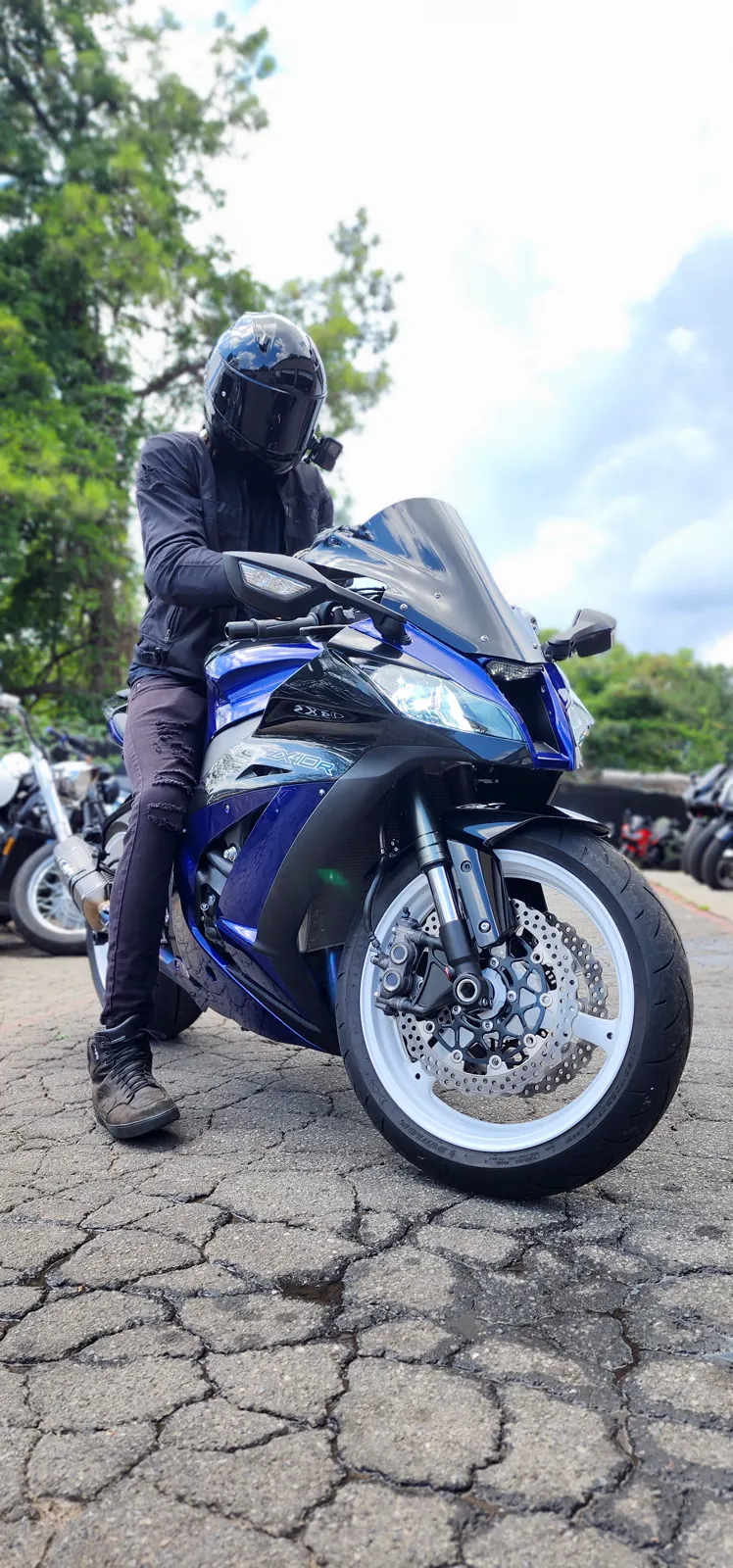
The town rides more than people think
Cartersville has the most organized motorcycle community in the northwest metro, and Cartersville Georgia H.O.G. Chapter #1593 is a big part of that, with poker runs, toy runs and charity rides on the calendar. It’s also the staging city for the best riding in this corner of the state. The Johns Mountain to Cloudland Canyon route is a documented 72 miles on GA-136, Armuchee Road, Pocket Road and Floyd Springs Road plus the Lookout Mountain Scenic Highway, picked up through Villanow, and autumn is its peak season. If you want touring resources and rider advocacy beyond the local chapter, the American Motorcyclist Association is a solid place to start.
Shorter days out matter too. Plenty of riders make a loop out to Tellus Science Museum just off I-75 with the family, or take the quiet run down to Etowah Indian Mounds State Historic Site along the river when they want a ride that ends somewhere worth standing around in. A bike you trust makes both of those a spur-of-the-moment decision instead of a project.
What you're really buying
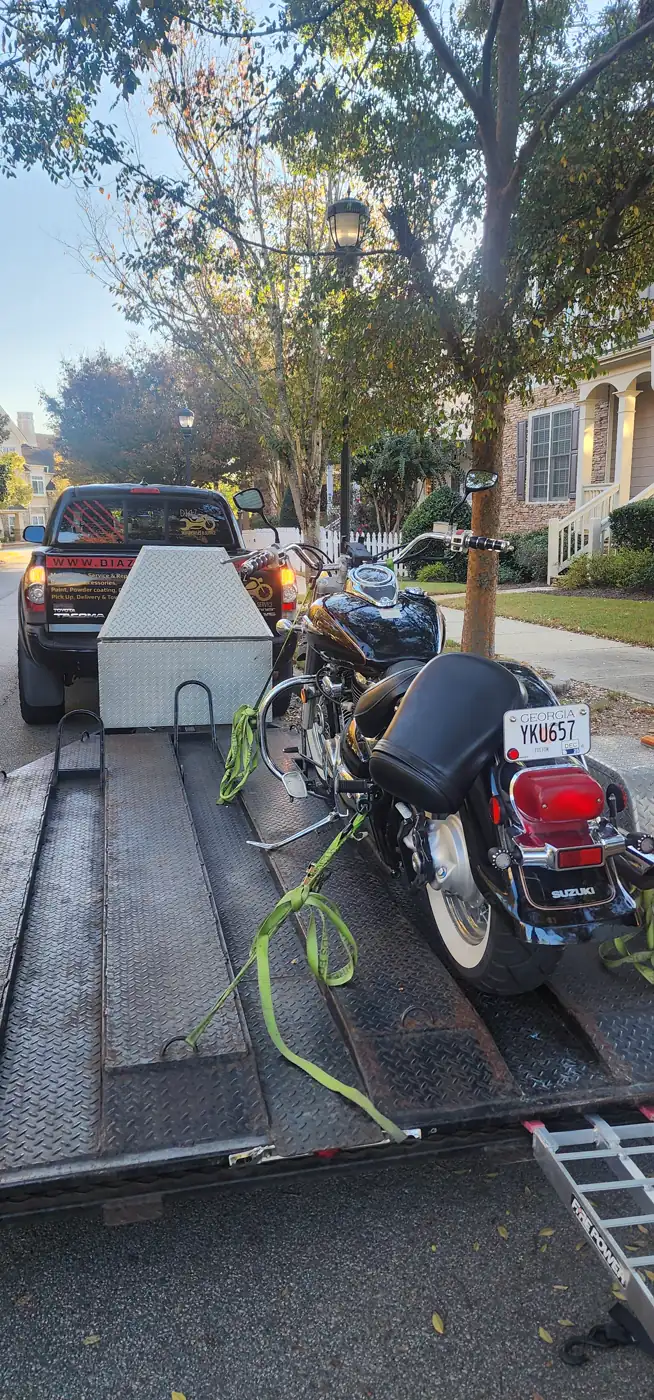
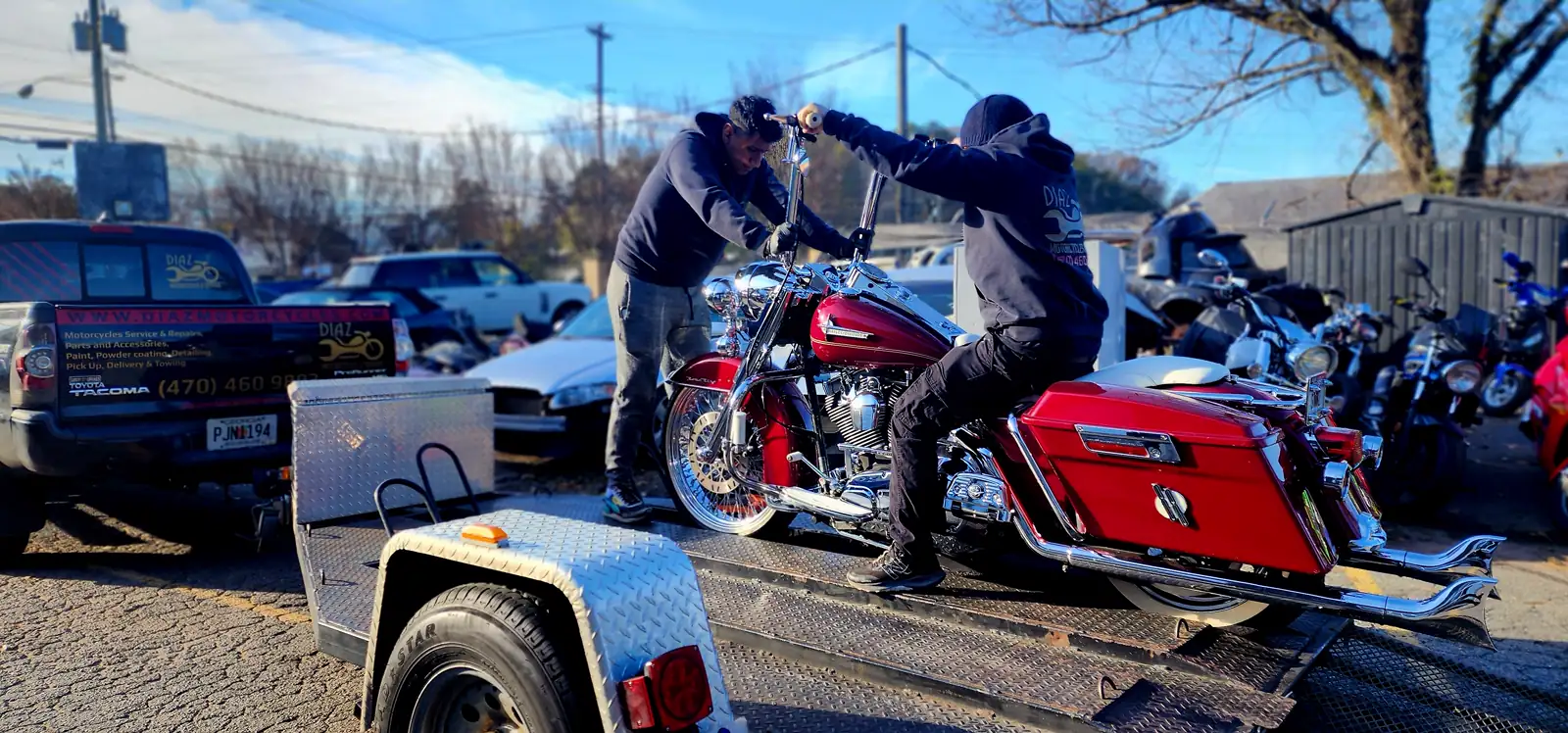
The distance question comes up, so here it is: our shop sits in East Cobb, and from Cartersville it’s roughly 35 to 40 miles, generally 40 to 55 minutes running I-75 south and then east. That’s an estimate from the map, not a stopwatch. It’s also why we do local and out-of-state motorcycle transport. Riders here buy bikes out of Chattanooga, Alabama and Tennessee all the time, and picking the bike up from your driveway removes the drive from the conversation entirely.
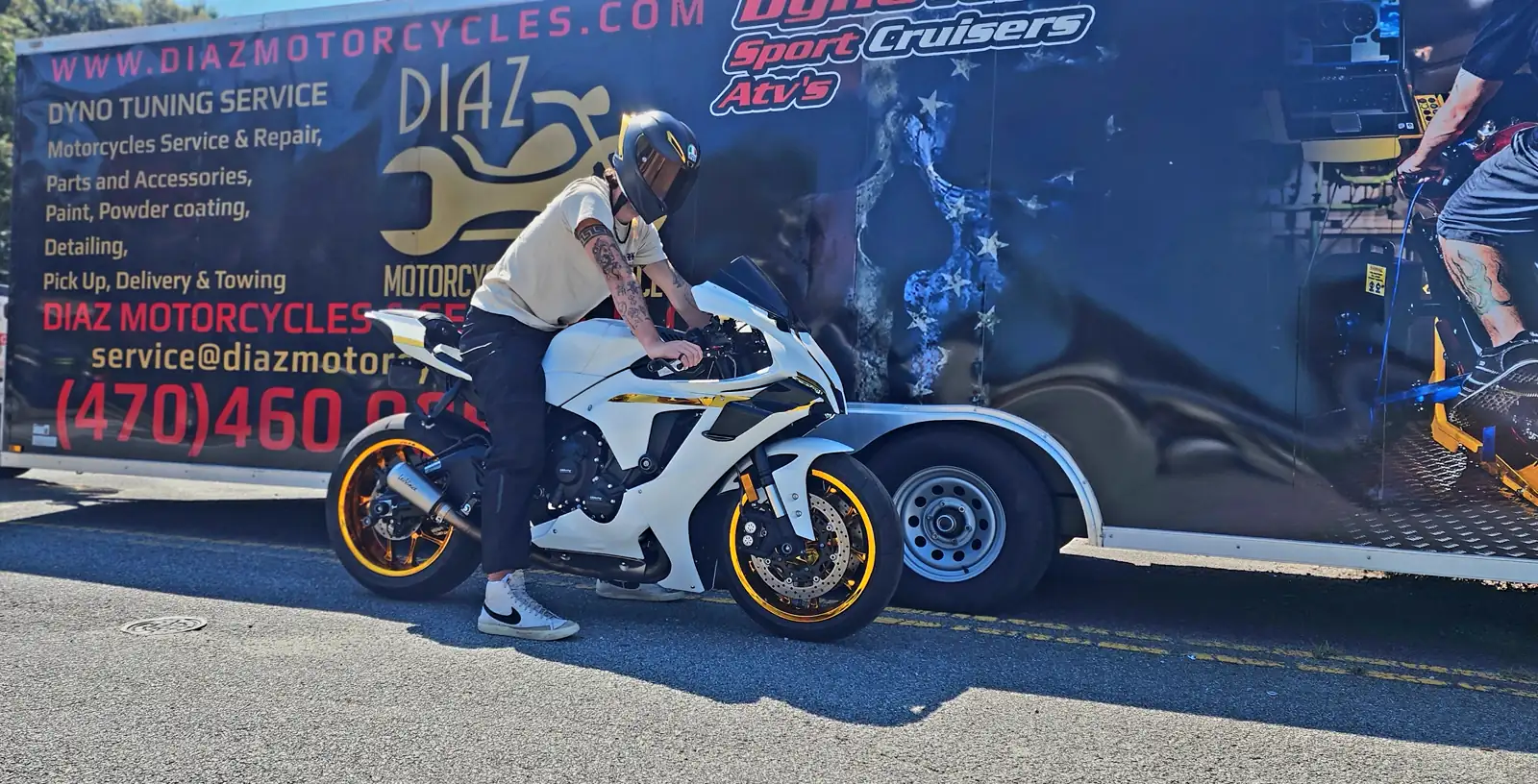
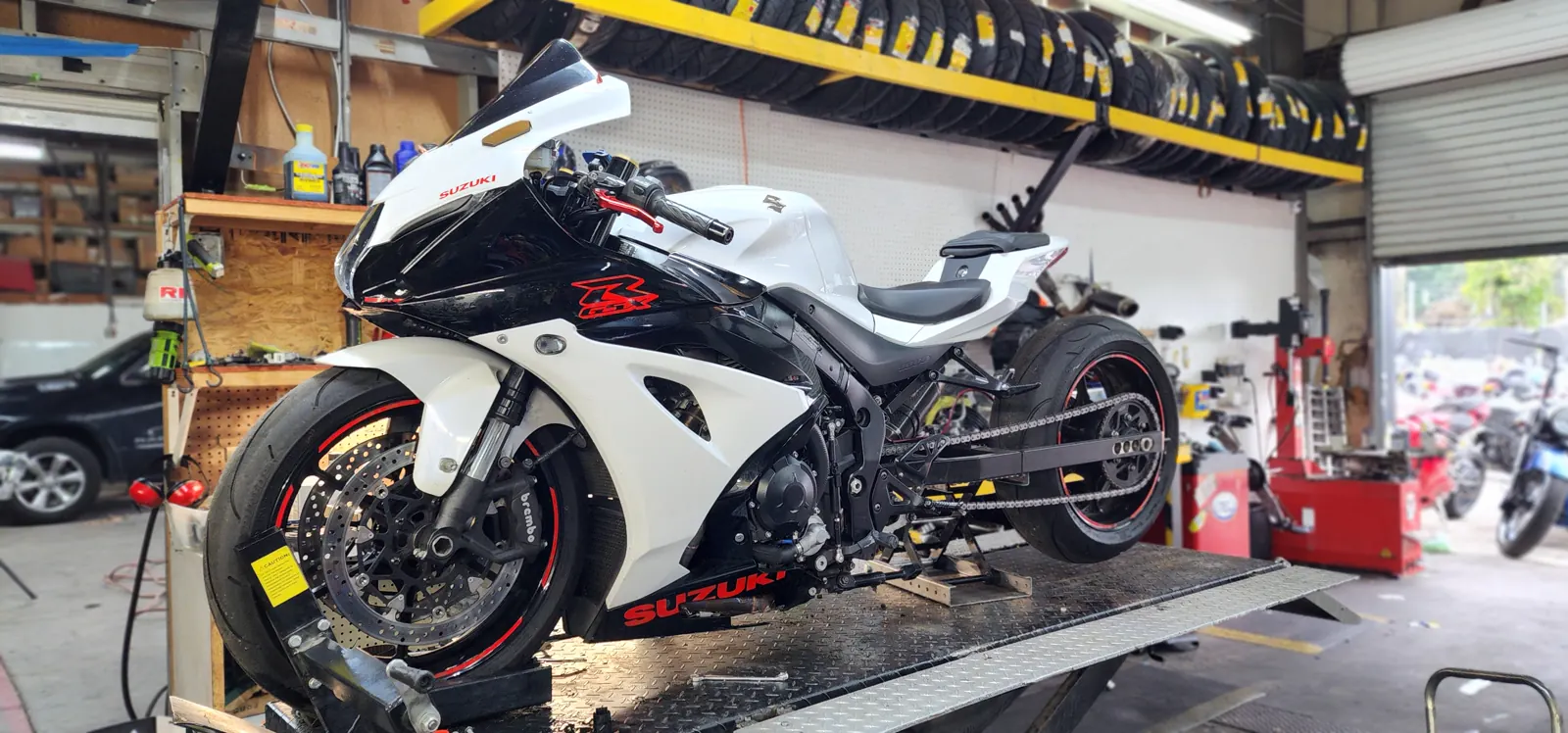
We work on cruisers, baggers, touring bikes, sportbikes, dirt bikes and barn-find projects, which fits a county where old Sportsters and Evo projects live in pole barns next to a new Road Glide. Same standard applies to riders over in Acworth and everywhere else we serve. There’s no trophy handed out for best motorcycle repair Cartersville riders can point to, so choose the shop that explains itself. You should leave knowing what was wrong, what got fixed, and what to watch — and then go ride, which was the plan that Saturday morning anyway.
Questions Cartersville riders ask us
How do I pick a good motorcycle shop?
Judge the process, not the pitch. A good shop asks questions before quoting, names the failed part and the reason it failed, calls you before doing extra work, and hands you the old part if you want it. If those four things are in place, the rest usually is too.
Should I go to a dealer or an independent shop?
It depends on the bike. If you’re under warranty, or there’s a recall or a factory software update involved, go to the dealer — that’s their lane and they’re good at it. A strong independent shines when you own several different bikes, ride something older, or want work that isn’t tied to a single badge.
What should I actually ask a shop before I leave my bike?
Ask how they’ll diagnose it, not just what they think it is. Ask whether they’ll call before adding work, how long the repair should take, and what the warranty on the work looks like. Clear answers to those three questions tell you almost everything.
Do you work on all brands?
We work on Harley-Davidson, Indian, the Japanese and European makes, and plenty of vintage machines that don’t have a dealer left anywhere. Cruisers, baggers, touring bikes, sportbikes, dirt bikes and project builds all come through. If something truly needs factory-only tooling, we’ll say so and point you the right direction.
How far do you travel for pickup?
We handle motorcycle transport across the metro and out of state, so Cartersville is an easy run for us. Riders regularly have us collect bikes bought in Chattanooga, Alabama and Tennessee. Text us the address and what you’re moving and we’ll sort out the details.
When is the best time to book service?
July and August, if you can. September and October are the best riding weeks of the year in northwest Georgia, and shop calendars tighten up right before them. Booking early means the bike is sorted while the mountain roads are at their best.
We take care of riders all over Bartow County and the northwest metro, starting with Cartersville and reaching out to Emerson, White, Adairsville, Kingston, Euharlee, Taylorsville and Rydal. Head south and we’re just as busy in Acworth, Kennesaw, Woodstock, Canton and Dallas. If your bike lives anywhere along the 41 and 411 corridors, or out on the county two-lanes past them, we can either see you in the shop or come get it.
TELL US WHAT IT'S DOING
If your bike is sitting in a Cartersville garage right now doing something it shouldn’t, text us a quick description or a short video of the noise. We’ll tell you what we think it is, what it usually takes to fix, and how soon we can get to it — and if transport makes more sense than riding it down, we’ll bring the trailer.
470-460-9883Diaz Motorcycles and Service, LLC · 847 Barnes Mill Road, Marietta, GA 30062