Motorcycle Repair Cost Gainesville — What You Pay
What the work really involves, why access matters more than parts, and how an honest shop builds a number you can trust.
You hear it before you feel it. Of course, a faint tick at idle that wasn’t there last Saturday. Plus, a dry rasp from the chain as you roll down the driveway. Then again, a soft shimmy in the bars at forty that makes your hands go quiet and your ears turn up. Even so, riders in Hall County catch that stuff early, because the roads out of town hand you plenty of feedback. Then the next thought lands, and it’s always the same one: what is this going to take? Meanwhile, that question is really what people mean when they search for motorcycle repair cost Gainesville shops can explain. In fact, that said, not a number pulled from thin air. The work behind the number.
So let’s talk about the work. For example, We’re a shop in Marietta, and we’ve had bikes trailered down from Northeast Georgia for years. After that, the riders who call us aren’t looking for a magic figure over the phone. What’s more, they want to know what the job involves, what makes one repair bigger than the one their buddy had, and how a shop decides. That’s a fair thing to want. It’s also completely answerable, and the good news is that once you understand the shape of the job, the number stops feeling like a mystery.
The straight answer first
So and Better yet, every motorcycle repair breaks into three buckets: parts, labor, and access. Still, Parts are what you’d guess — the pad, the seal, the regulator, the sprocket. Plus, Labor is the hands-on time to get the old one out and the new one in and to prove the fix holds. Access is the sneaky one. Of course, access is everything a tech has to remove, unbolt, drain, or move out of the way before the actual repair even starts. On some bikes that’s four bolts. Then again, On others it’s a fairing set, a tank, a radiator, and an airbox before anyone lays a finger on the part.
Plus, here’s the part most people never hear: parts are usually the smaller half. Of course, two riders can need the identical part and end up with two very different jobs, because one bike wears that part out in the open and the other buries it under half the motorcycle. Then again, Nobody built these machines with a mechanic in mind. They built them to look right and weigh nothing, and we respect that. We just have to work around it.
- Parts — the component itself, plus the small stuff nobody thinks about like gaskets, clips, fluids and hardware
- Labor — the hands-on time to remove, replace, adjust and verify
- Access — the teardown and rebuild that surrounds the repair
- Diagnosis — the time to prove what’s actually wrong instead of guessing
What makes one job bigger than another
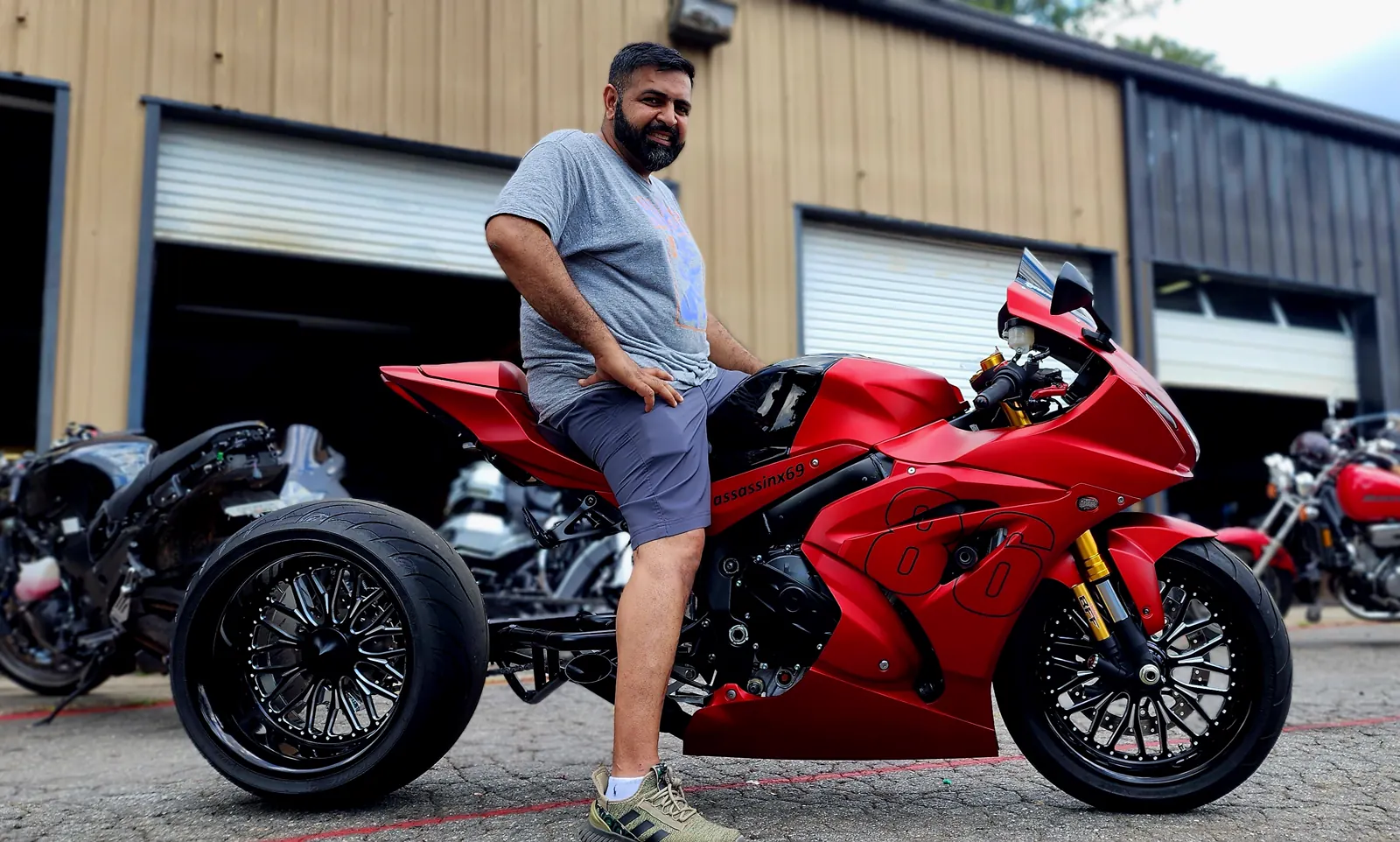
Picture two bikes with a leaking fork seal. One is a naked standard with the fork tubes hanging out in the breeze. Pull the wheel, drop the leg, done. The other is a full touring bike with a fairing, a windscreen, lowers, lights, and a brake line routed through the middle of all of it. Same seal. Same part. Wildly different day. That’s not a shop being difficult, and it isn’t the seal’s fault either. It’s just geometry.
Engine work follows the same rule, only louder. A valve adjustment on a bike with easy cam cover access is a morning. On a machine where the tank, the airbox, the coolant plumbing and half the wiring loom sit on top of the cylinder head, the same adjustment eats a day before the feeler gauge ever comes out. Electrical faults have their own version of this, since the actual repair might be one connector while finding that connector takes real time with a meter.
Access is the hidden half of the job
When we quote a job, we’re quoting the path to the part as much as the part. A stator on a bike where the cover comes off with the engine in the frame is one story. A stator that needs the exhaust down and the oil out is another. Riders who understand this stop feeling blindsided, because they can look at their own motorcycle and roughly guess which camp it falls into. That’s a genuinely useful skill to have in your back pocket.
You're not paying for the part. You're paying for the road to the part.
What we actually check when a bike comes in
Before anything gets ordered, the bike gets looked at. That sounds obvious, and yet it’s the step people are most surprised by, because they expected a number over the phone and got an invitation instead. Here’s the order it goes in.
- Talk to you first. What you hear, when you hear it, whether it changes cold or hot, and what the bike was doing right before it started.
- Ride it or run it. A symptom you can feel beats a symptom described in a text message every single time.
- Put it on the lift and get eyes on it. Chain, sprockets, tire condition, brake pads, fluid color, fastener condition, anything wet that shouldn’t be.
- Test what can be tested. Charging output, compression, codes, pressure — real readings instead of hunches.
- Separate must-fix from can-wait, and tell you which is which honestly.
- Then build the estimate: parts, labor, access, all written out so you can see where the time lives.
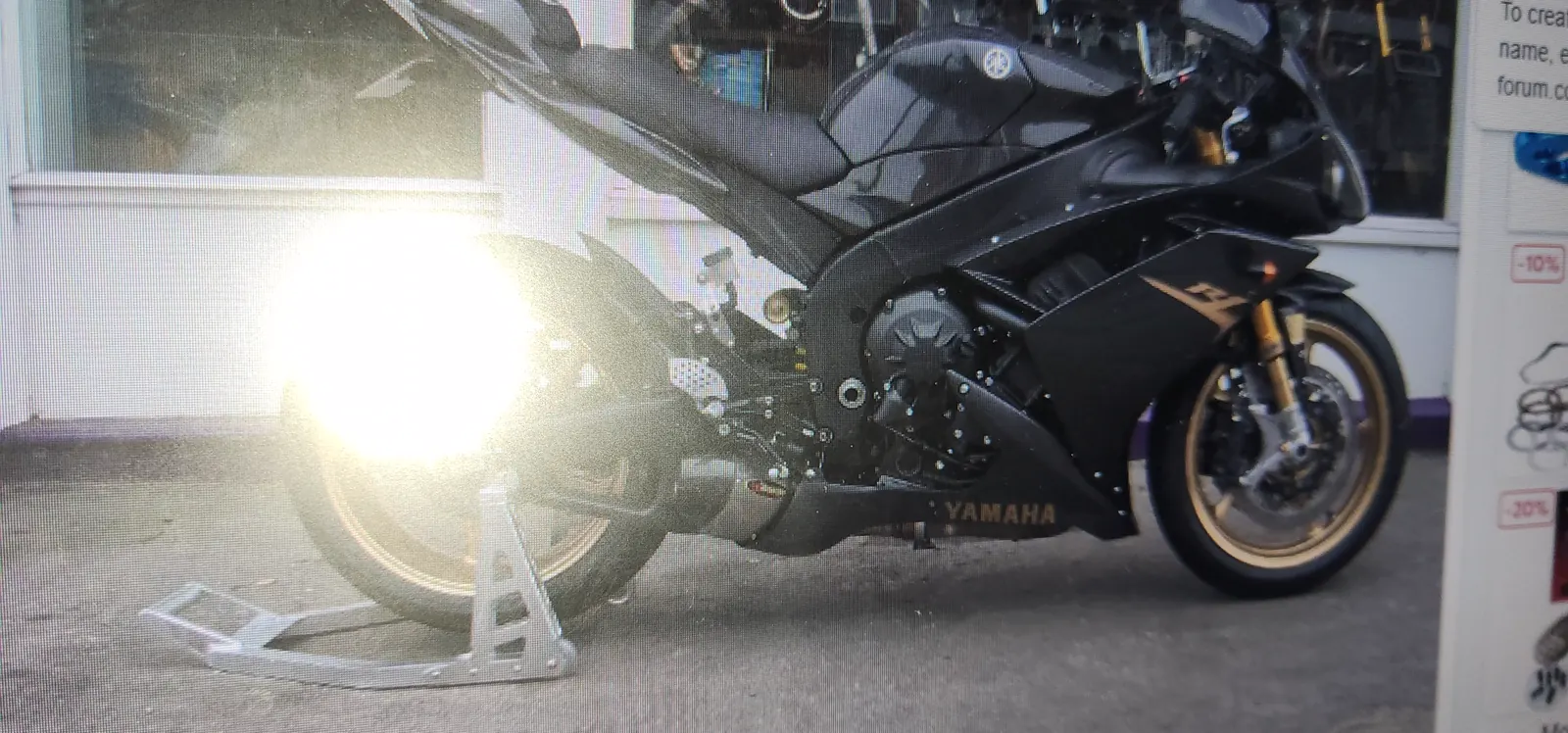
The timing on this matters more than the fix does. A chain that’s stretched but still hooked up is a maintenance item you plan around your riding weekend. That same chain three hundred miles later can take the sprocket with it, and now it’s a bigger job with more parts and a longer wait. The fix never changed. The window did. Catching things while they’re still small is the single biggest lever you control, and it costs you nothing but attention.
That’s also why we won’t hand you a firm number sight-unseen. A phone quote is a guess dressed up in confidence. It sets you up for one of two bad outcomes: we quote high to protect ourselves and you overpay, or we quote low and then call you mid-job with news you didn’t sign up for. Neither one is how we want to meet somebody. We’d rather look at the bike and tell you the truth once. If you want more on that mindset, here’s what separates a good shop from one that just answers fast.
Mistakes that make a small job into a big one
None of these are dumb. Every one of them is something a smart rider has done, usually for a sensible reason at the time. But they all share the same shape: a small problem gets a little more time than it should have, and time is the one ingredient that makes repairs grow.
- Riding on a noise. Sounds are information. Free information, delivered early.
- Topping off a leak instead of finding it. The fluid going somewhere is the real message.
- Parking a bike for a season with old fuel in it, which turns a fine carburetor into a weekend project.
- Swapping parts to chase a symptom instead of testing first. Two wrong parts cost more than one right diagnosis.
- Skipping the chain and tire check because the bike still feels okay at neighborhood speed.
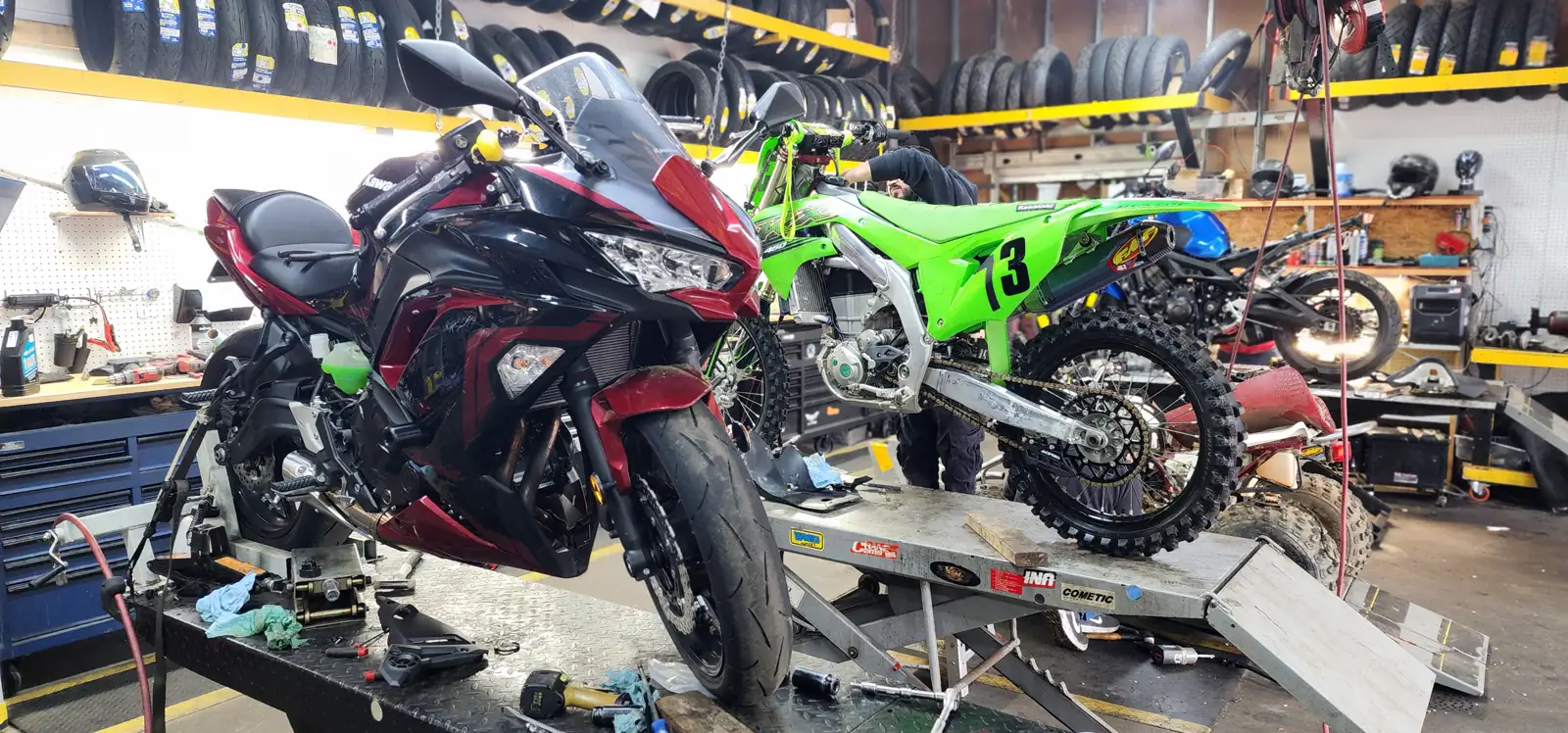
The fix for all of it is the same and it’s cheerfully simple. Get the bike looked at while the symptom is still annoying rather than alarming. Riders who do that almost never end up with the surprise repair, and they ride a lot more weekends. If you want the full menu, here’s the work we do in house.
What this looks like in Hall County
Gainesville riding isn’t Atlanta riding, and pretending otherwise misses the whole point. You sit at the mouth of the North Georgia mountains, which means the roads people drive an hour to reach are the ones you take on a Saturday morning before the heat builds. The easy loop on GA-53 around the north end of Lake Lanier is right out the door. Lanier itself has shaped life in this county since Buford Dam filled it in 1956, and plenty of the same households with a boat on the water keep a cruiser or a tourer in the garage. That mix drives the work we see: mountain miles, real heat, and bikes that sit between adventures.
The local landscape matters too. Gainesville Motorsports has been family-owned at 2750 Browns Bridge Road since 1974 and handles a lot of the routine service in town, and Frazier’s Harley-Davidson down in Buford owns the Harley side of the market about twenty to twenty-five minutes south. Nobody should make a long trip for an oil change, and we’d tell you that ourselves. Where riders come to us is the deeper end: dyno work, ECU flashing, custom paint, restoration, and the diagnostic jobs that have already been to two places. Track-day regulars running out to Road Atlanta tend to find us that way.
THE DRIVE, HONESTLY
From Gainesville to our door is roughly 55 to 62 miles and usually 65 to 85 minutes, estimated from the road map rather than clocked — either the lake route through Cumming or the interstate run down I-985. We own that. It’s why we offer pickup and delivery instead of pretending the distance isn’t there.
Neighborhood habits show up in the work too. The mill-village streets in Chicopee Village are narrow and patched, which is hard on suspension and rims over the years. Out toward Saddle Creek and Saddle Creek Farms the lots are big, the garages are deep, and bikes get parked longer between rides — that’s where the no-starts, tired batteries and gummed fuel systems come from. And downtown, the stop-and-go crawl along Jesse Jewell Parkway is exactly the kind of heat-soak, low-airflow riding that finds a weak cooling system in July.
A bike came in from Green Street District with exactly this. Grand old street, deep garage, a tourer that had spent two summers mostly parked. The owner heard a ticking he didn’t like and assumed the worst about the engine. What we actually found was a fuel system full of stale gas and a battery that couldn’t hold a charge overnight, both of which made the bike run lean and sound unhappy. Clean it out, sort the charging side, set the valves properly, and it ran like it had been asleep, not broken. He’d braced himself for a rebuild and got a service instead. That’s a good day for everybody, and it only happened because we looked first.
What you get for the work
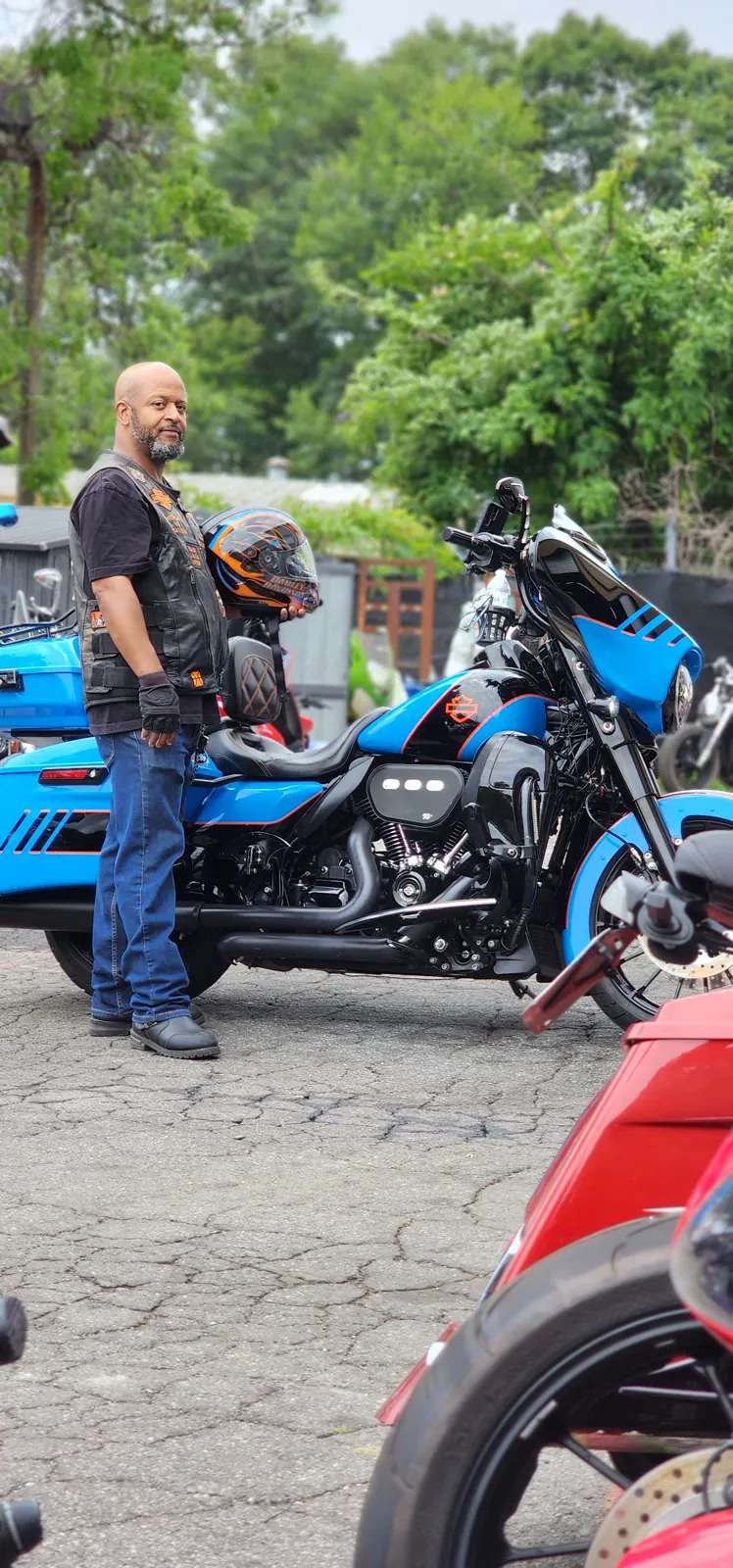
An estimate from us is written, itemized, and boring on purpose. Parts listed. Labor listed. Access called out where it’s the reason the hours look the way they do. If we find something mid-job that changes the picture, you get a call before we touch it, not a surprise line at pickup. You also get told what can wait, because a repair list isn’t a shopping list and we don’t need you to do everything today.
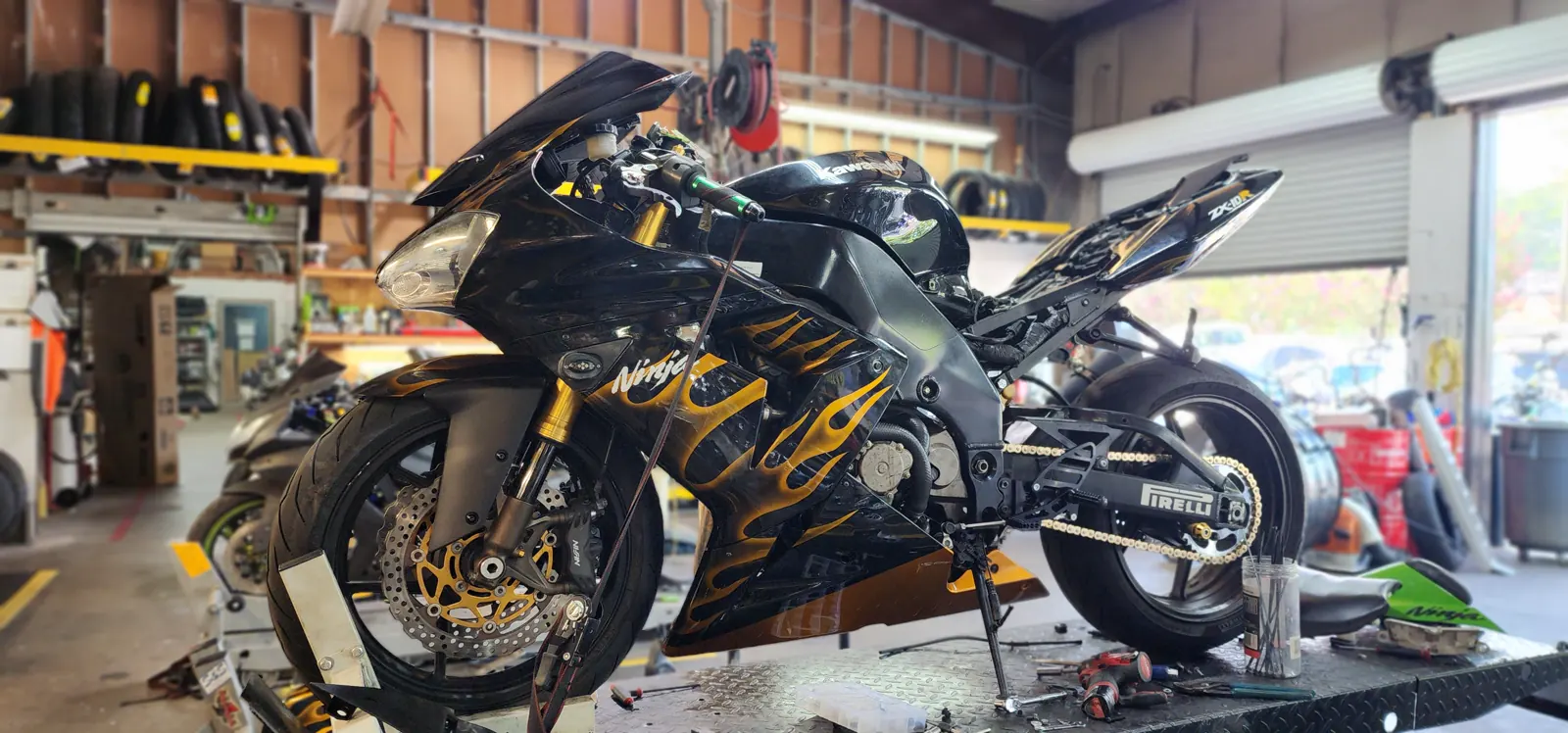
Bike type changes the shape of the job more than most riders expect. Sportbikes carry fairings, so access time runs high. Cruisers are usually friendlier to reach but heavier to handle. Baggers hide their wiring. Dual-sports and ADV bikes come in with grit in places that street bikes never see, especially after gravel days up toward the national forest. None of that makes one bike harder to own. It just means the same repair name can mean two different afternoons, and we’ll tell you which one you’ve got.
Getting the bike to us
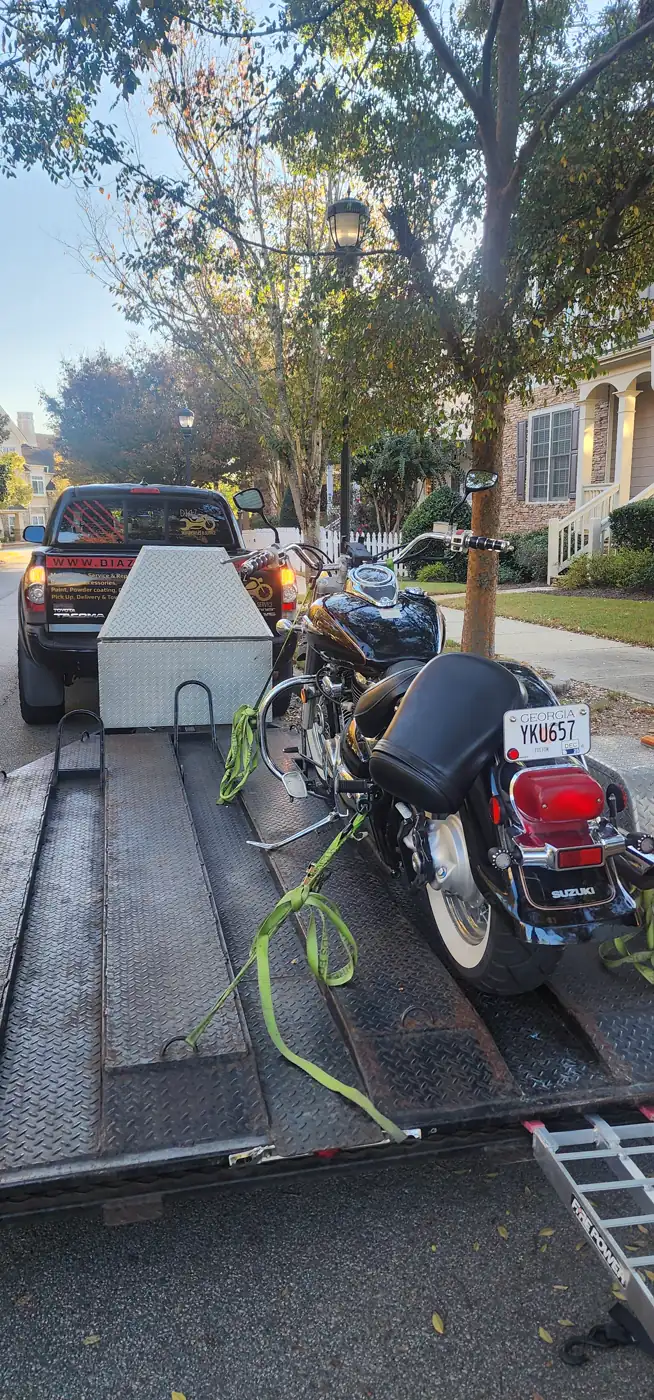
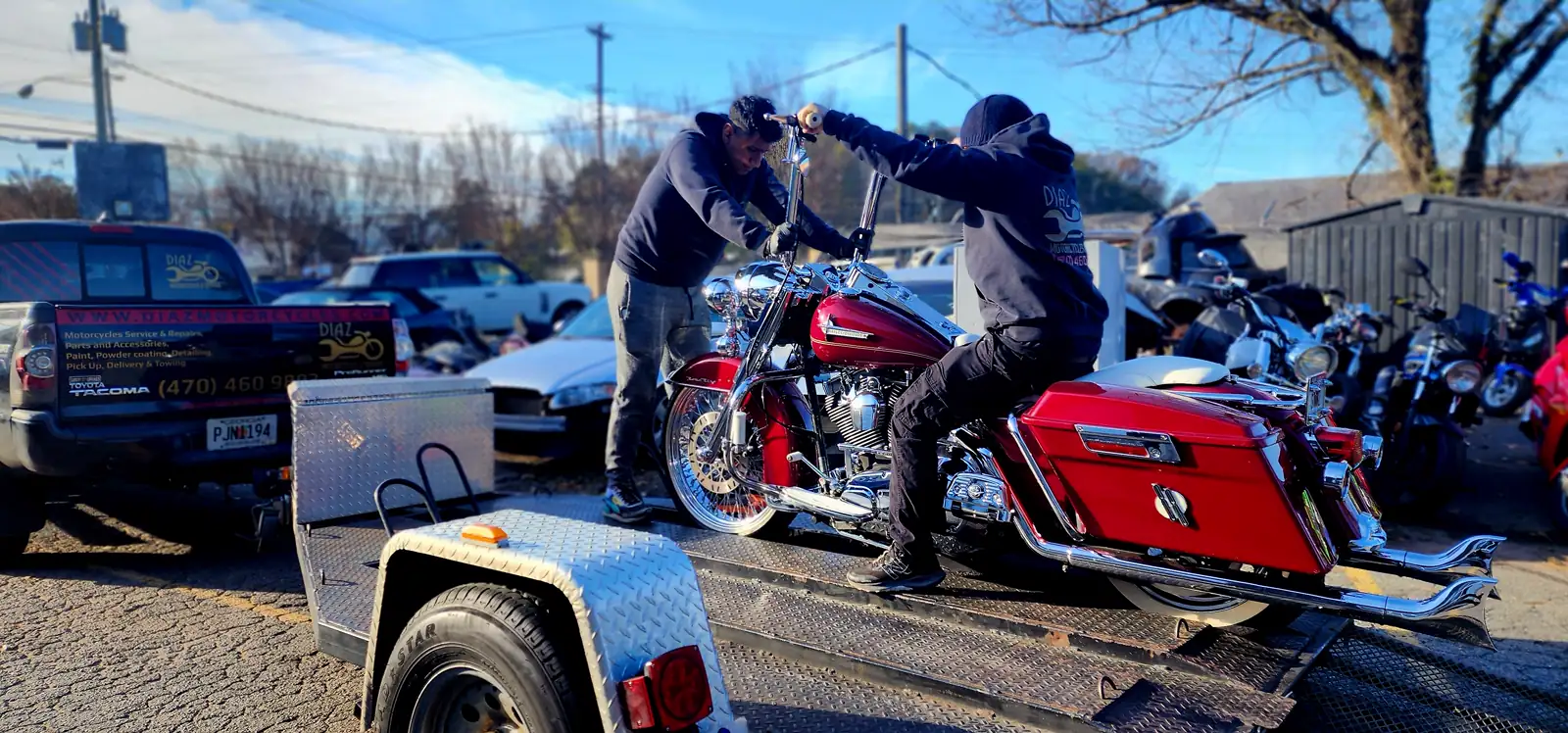
Distance is the honest objection, so we answer it with logistics instead of a sales pitch. We pick up and deliver. You keep riding your weekend, we handle the trailer, and the bike comes home sorted. Riders who’ve done it once stop thinking about the miles at all. If you want to see how we run a job start to finish, read how we handle that job, and if you’re curious how pricing logic shifts by market, here’s the Woodstock side of things.
You can walk in knowing what to expect
Here’s the whole thing in one breath. Parts are the smaller half. Labor is the hands. Access is the hidden half that explains why two identical repairs land differently. Diagnosis is cheap compared with guessing. And time is the variable you control, because small problems stay small when somebody looks at them early. That’s the honest version of motorcycle repair cost Gainesville riders deserve to hear, and it holds up no matter which shop you use.
So next time you hear that tick or feel that shimmy on the way out to the lake, you’ll know what happens next and why. Ride your own bike well, keep your gear and your license squared away through Georgia Class M licensing, and if you like data with your riding, the IIHS motorcycle research is a solid read on a rainy afternoon. Meanwhile, we’ll be here with the lift down and the light on.
A good estimate isn't a guess with confidence. It's a look with honesty.
Questions Gainesville riders ask us
Why won't you quote my repair over the phone?
Because a phone quote is a guess, and guesses hurt somebody. We’d either pad it to protect ourselves or lowball it and call you mid-job with bad news. Neither is fair to you. Once we see the bike, the number we give you is the number.
What's actually included in the work?
Parts, the labor to install them, the access time to get there, and the testing to prove the fix holds. We also include the small stuff people forget, like gaskets, clips and fluids. Everything gets written out so you can see where the hours live.
How long does a repair usually take?
It depends far more on access than on the part itself. A job with the component out in the open can be same-day, while one buried under bodywork, a tank and an airbox runs longer. Parts availability plays a role too. We give you a realistic window up front and call if anything changes.
Is more of the work parts or labor?
For most repairs, labor and access add up to the larger share. The part might be small and simple, but reaching it can involve half the motorcycle coming off and going back on. That’s why two riders needing the identical part can end up with two very different jobs.
Does the type of bike change the work?
Quite a bit. Sportbikes carry fairings, so teardown time runs high. Cruisers are usually easier to reach but heavier to handle, baggers hide their wiring, and ADV bikes show up with trail grit in places street bikes never see. Same repair name, different afternoon.
Is the drive from Gainesville worth it?
For an oil change, honestly no, and we’d say so. For dyno tuning, ECU flashing, custom paint, restoration or a diagnosis that’s already stumped somebody, riders make the trip regularly. We also pick up and deliver, so the miles stop being your problem.
We take care of riders all across Northeast Georgia and Hall County, starting with Gainesville and running out through Oakwood, Flowery Branch and Chestnut Mountain on the south side of town. Braselton riders headed to track days find us often, and so do folks in Buford, Sugar Hill and Cumming who ride the lake roads on weekends. North of town we help riders in Clermont, Lula, Murrayville and Talmo, plus the mountain crowd up around Dahlonega who put real miles on real curves. Wherever you park it, pickup and delivery makes the distance a non-issue.
TEXT US ABOUT YOUR BIKE
Heard something you don’t like on the way back from the lake? Send us a text and tell us what the bike is doing, and we’ll tell you straight whether it sounds small or serious. Gainesville riders get pickup and delivery, a written estimate after we actually look, and a call before anything changes. No guessing, no pressure, no surprises at pickup.
470-460-9883Diaz Motorcycles and Service, LLC · 847 Barnes Mill Road, Marietta, GA 30062