Motorcycle Repair Cost Lawrenceville — Real Prices
What actually makes one repair bigger than another, and why a good shop looks before it talks.
Two bikes can roll in with the exact same symptom and leave with two very different bills. In fact, the thing that splits them is almost never the part. It’s access, which is a plain word for how much of the bike has to come apart before a tech can touch the thing that’s broken. That’s the short answer on motorcycle repair cost Lawrenceville riders keep asking us about, and the long answer is a lot more useful to you.
One Gwinnett bike that shows the whole thing
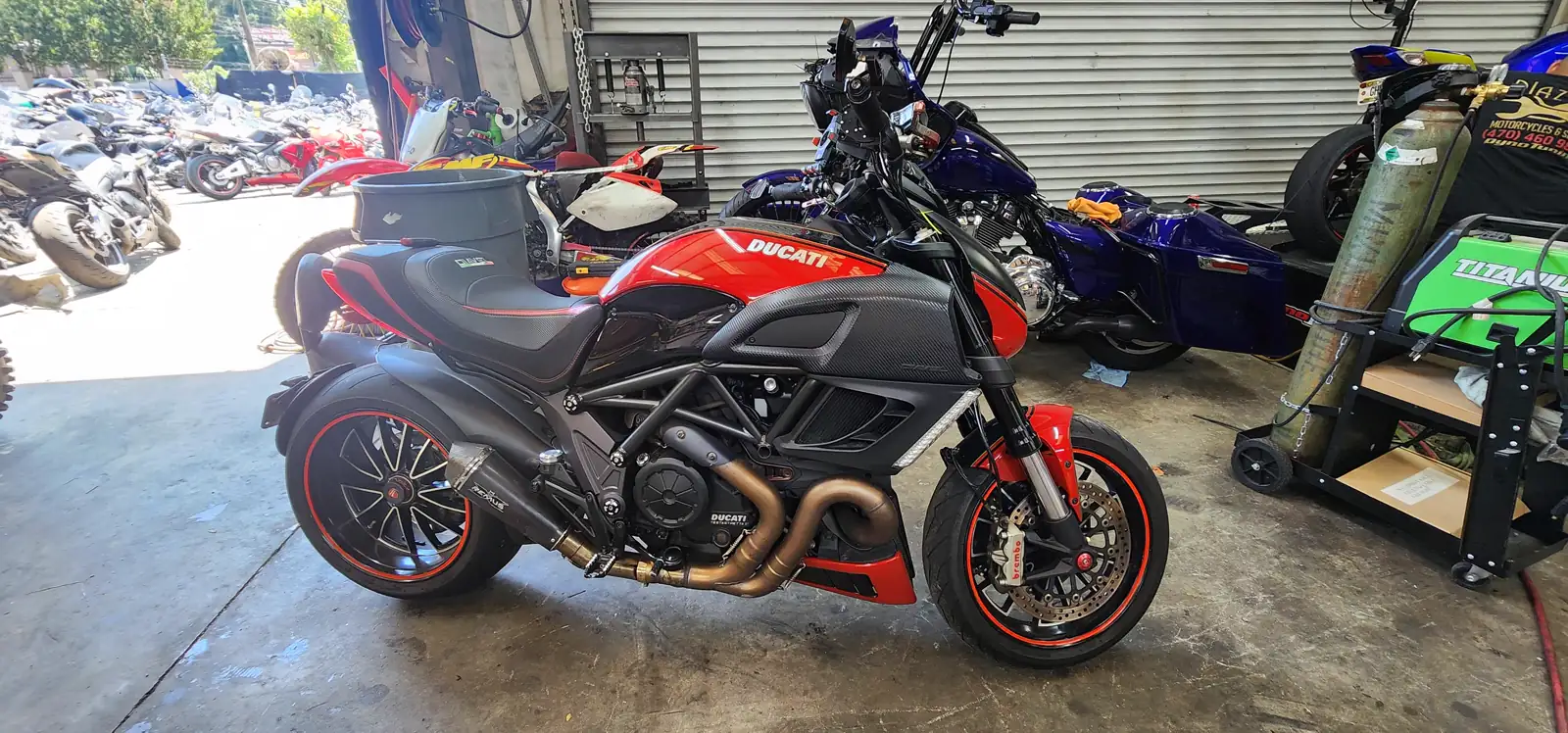
A rider out in Collins Hill Heights picked up a clean used R1 a few years back. He did what most Gwinnett riders do, which is bolt on a slip-on exhaust and a better air filter the same month he got it. Then he rode it to work every day, because a bike beats sitting still on GA-316 and he knew it. By the second summer the thing was running hot in traffic and popping on the way down through the gears. He was sure it needed a part.
It didn’t. It needed fuel, air and spark looked at as one system instead of three separate guesses. For example, the exhaust let more air out, the filter let more air in, and nobody ever told the bike about either change. So it ran lean, ran hot, and got cranky in stop-and-go heat. After that, the parts on that job were small. Even so, the knowledge was the whole ballgame, and that’s the flip most riders never hear.
Here’s the part that matters for your wallet. If that same lean-run condition had cooked a set of valves instead of just annoying him, the parts list barely changes but the labor changes enormously, because now the top end has to come apart. One bike, one symptom, two totally different jobs. That’s why we talk about work in terms of what has to be touched, not in terms of a number we made up before we saw it.
The real cause is access, not the price of the part
Think about a water pump seal. On some bikes it’s four bolts and a cover, right there on the outside where a human hand can reach it. On a fully faired supersport, that same seal sits behind bodywork, behind a radiator, sometimes behind a coolant line that has to be drained and bled properly afterward. What’s more, the seal costs what the seal costs. Meanwhile, the hour count is what moves, and hours are where a repair bill actually lives.
Same story with a stator, a clutch basket, a fuel pump or a regulator. Naked bikes and standards tend to be friendly. Full-fairing sportbikes and anything with a lot of plastic tend to be patient work, because every clip and tab has to come off clean and go back on clean. If you want the nuts and bolts of a normal service visit, we broke down what that service actually involves in its own post.
Better yet, the things that push a job from small to big are pretty predictable once you’ve seen enough of them:
- How much bodywork has to come off before anything can be touched
- Whether fluids have to be drained, refilled and properly bled
- Whether the failed part damaged a second part on its way out
- Whether old fasteners are seized, rounded or already stripped by a previous fix
- Whether the bike has been modified, and how honestly that work was done
- Whether the fault is one thing or three things stacked on top of each other
That last one is the sneaky one. Riders in Flowers Crossing and the Fountain Lakes, Fountain Glen and Fountain Cove pockets ride a lot of miles on a lot of rough county pavement, and a bike that’s been ridden hard rarely has just one issue waiting. And the good news is that stacked problems are usually cheaper to fix together than one at a time, because the bike only has to come apart once.
The internet number versus the bike in front of us
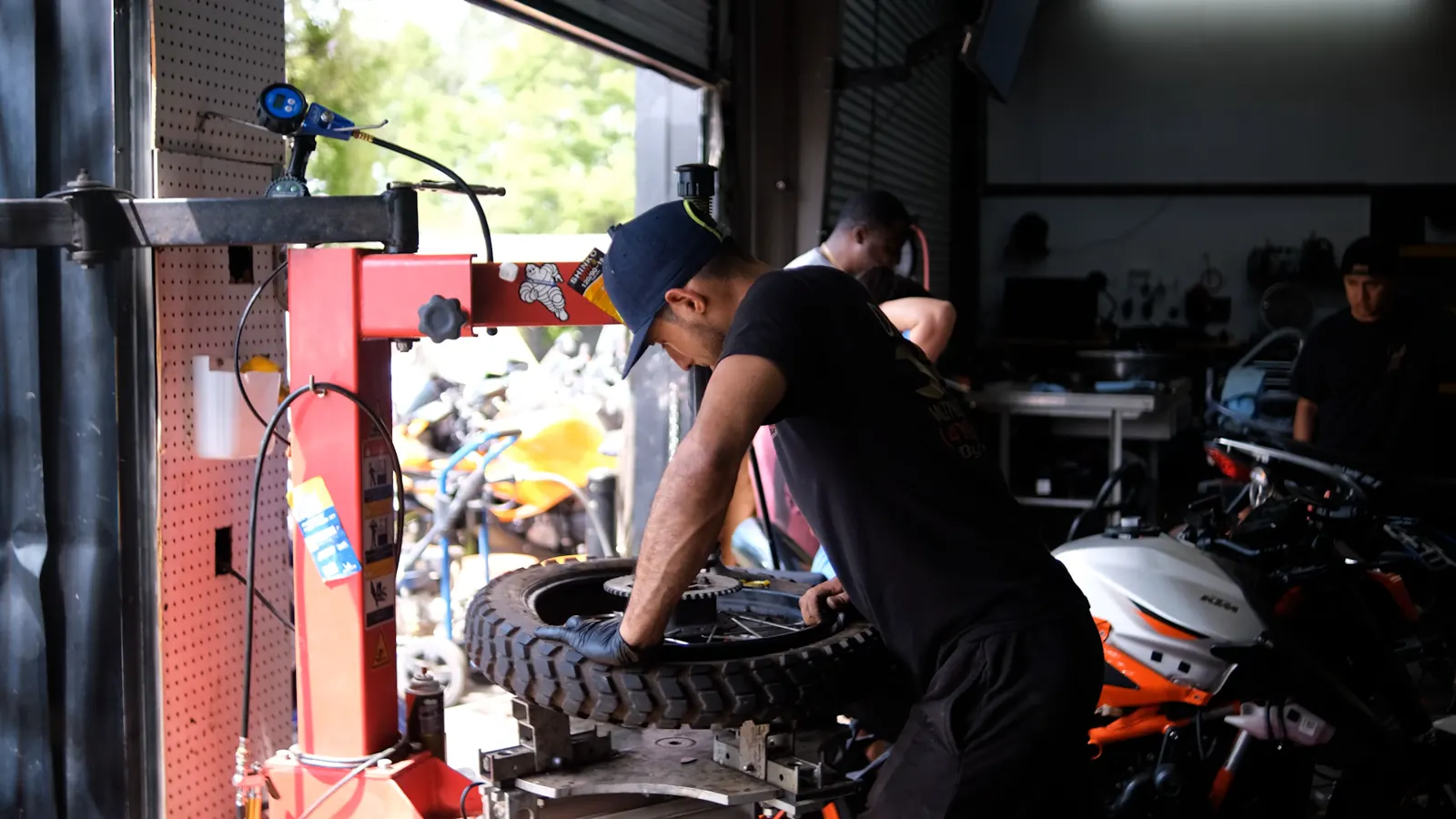
That said, the internet will tell you one thing. So the bikes tell us another. Search any repair and you’ll find a forum thread from somebody with a different model year, a different market, a different set of tools and a bike that had never seen a Georgia summer. Meanwhile our lift has your bike on it, with your miles, your mods and your history. One of those two sources knows what your machine needs, and it isn’t the thread.
Heat is a real local factor too. June through August around here means ninety-degree days and humidity that goes after seals, gaskets and batteries, and liquid-cooled sportbikes crawling through I-85 and GA-316 congestion get no airflow at all. Riding volume is high in Gwinnett generally, which the Motorcycle Industry Council tracks nationally, and more miles means more wear items landing at once. None of that is scary. It just means guessing from a forum post is a coin flip, and we’d rather not flip coins with your bike.
WHY WE WON'T QUOTE IT BLIND
A number given over the phone is either padded to protect the shop or lowballed to win the call. Both are lies, just in different directions. We’d rather look, tell you what we actually found, and let you decide with real information in your hand.
Your options, laid out plainly
Once we know what’s really going on, you almost always have more than one path. Part of our job is telling you which paths exist, including the ones that don’t put money in our pocket. Here’s how the choices usually shake out:
- Fix only the thing that’s failing, get the bike back on the road, and revisit the rest later.
- Fix the failing part plus anything the teardown already exposes, since the labor is already spent getting in there.
- Repair rather than replace where a repair genuinely holds, which happens more often than people expect on older hardware.
- Address the root cause instead of the symptom, which usually means a proper tune on a modified bike so the same failure doesn’t come back.
- Wait. Some faults are safe to ride on for a while, and we’ll tell you when that’s true.
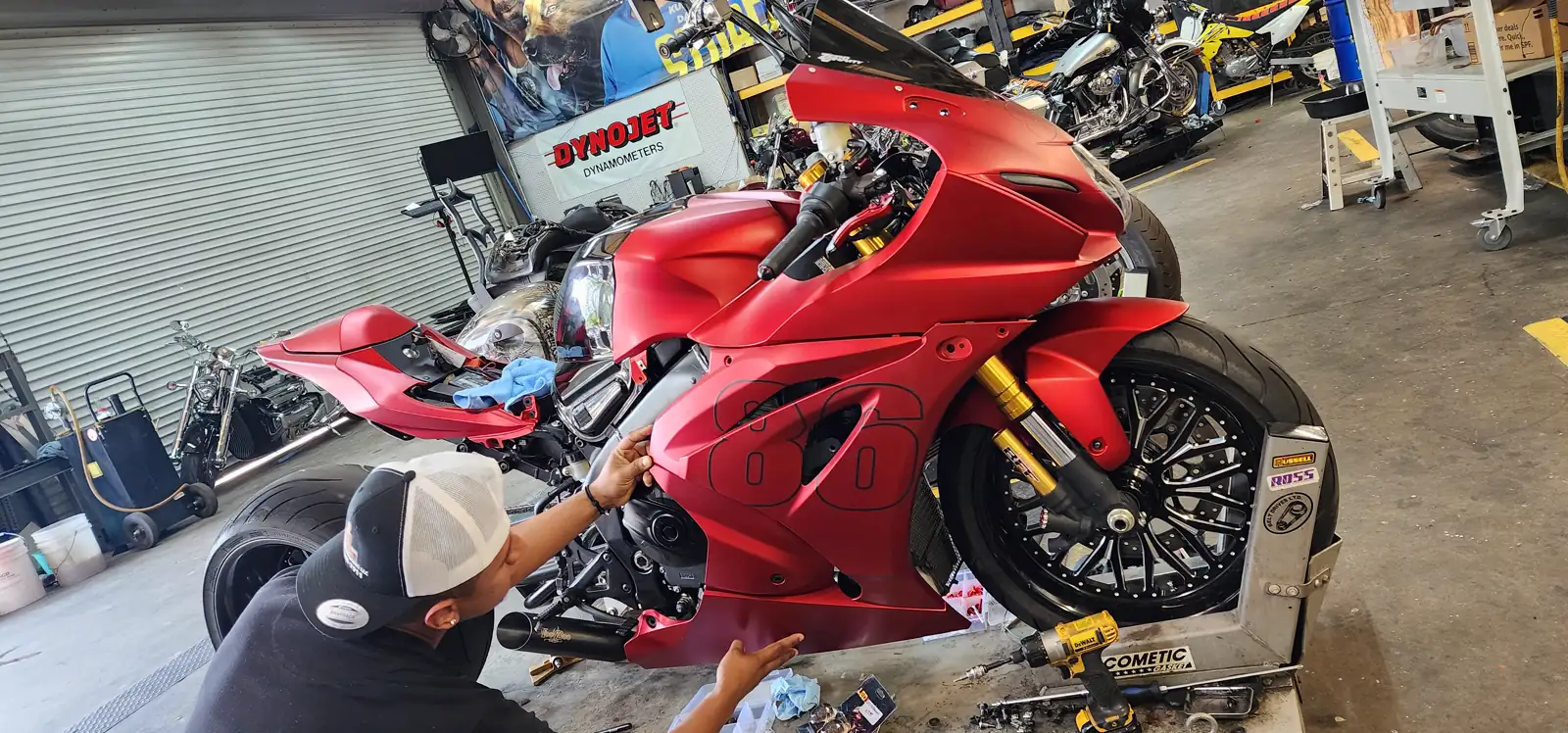
Option four is the one Gwinnett riders need most and hear least. This is a modified-bike county, full of slip-ons, full systems, filters, gearing swaps and fender eliminators, and a whole lot of those bikes are running lean because nobody ever mapped them. Locally you’ve got solid repair shops, and Motorcycles and Trikes of Atlanta has a real reputation for carbureted work, but repair and tuning are different trades. We hear the same thing from riders over in Atlanta, and the fix is the same: make the bike agree with the parts on it.
How we actually decide, start to finish
Nothing here is mysterious. First we talk, and we ask annoying questions: when does it happen, hot or cold, what changed right before it started, who touched it last. Then the bike goes on the lift and gets a walk-around before a single bolt moves, because tire wear, chain slack, brake dust and fluid color tell us a lot about how the machine has been living. After that we pull codes where the bike has them, and we test rather than assume.
Next comes the smallest teardown that will confirm the fault. We don’t strip a bike to the frame to prove a theory. We take off what we need, verify with our own eyes, and then call you before we spend your money, because you deserve to hear the finding before the invoice does. That’s how our crew approaches it on every bike that comes through the door, whether it’s a beat commuter or somebody’s garage-kept pride.
We diagnose first, quote second. Doing it the other way around is how riders get burned.
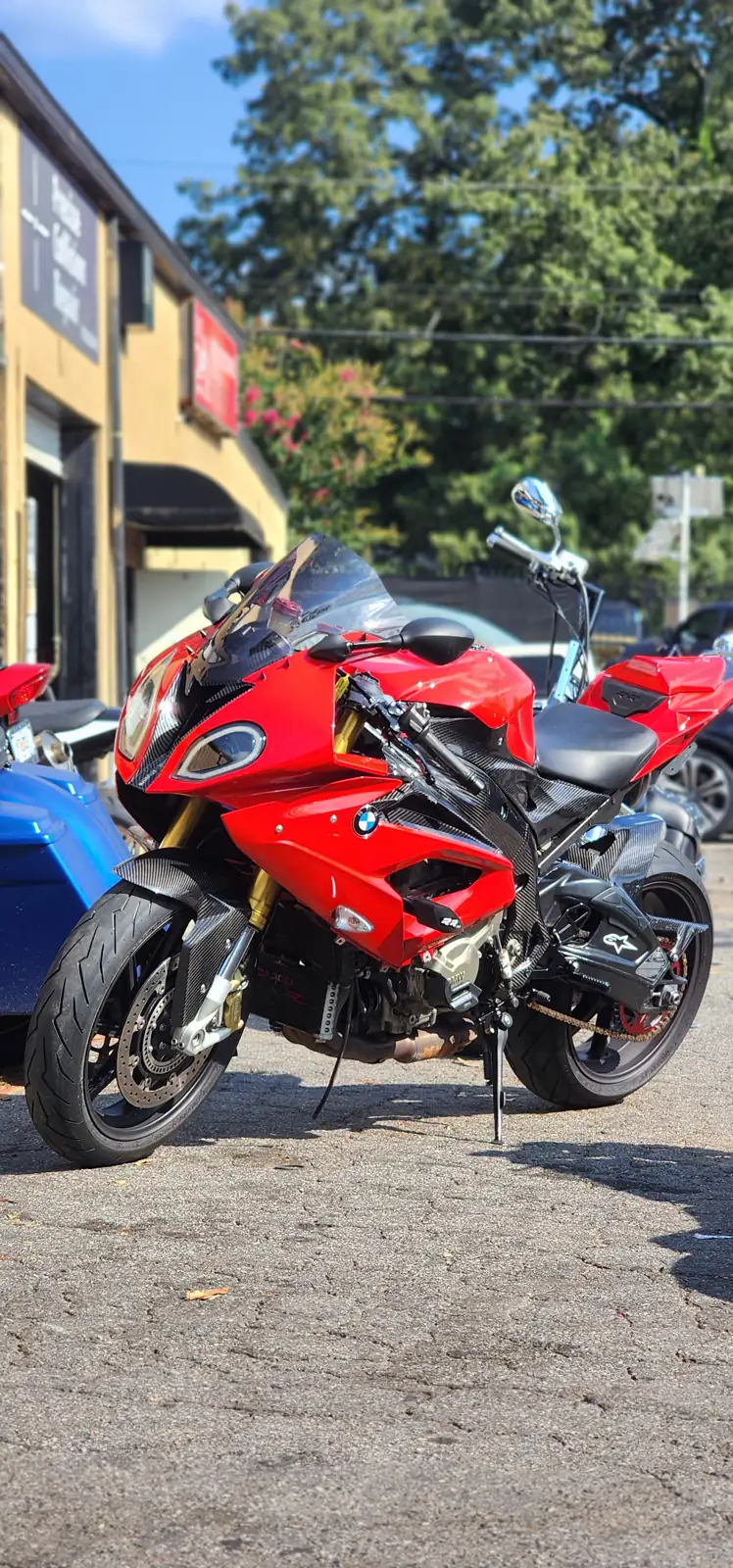
A quick story, because it makes this concrete. A friend we helped brought us a naked bike that had a charging problem, and he’d already been told by an internet stranger that it was a stator. He’d bought the stator. He’d bought the gasket. He was ready. We tested it and the stator was fine, and the actual fault was a corroded connector behind the tail, the kind of thing that a wet winter and a lot of Old Norcross Road and Five Forks Trickum Road potholes will shake loose over a couple of years.
He got the parts returned and got his bike back the same week. That’s not us being heroes, that’s just what happens when somebody tests before they replace. Those older county connectors beat bikes up in ways riders underestimate, since freeze-thaw and heavy truck traffic leave seams and holes that vibrate connectors, fasteners and mounts loose over time. A fastener that’s been buzzing for three winters is a very different fastener than a new one.
There’s a second lesson buried in that one. He’d already spent money before anyone tested anything, which is the most common way riders overpay. Parts feel like progress, so it’s tempting to buy the thing the forum said and hope. Testing feels like waiting. But testing is the cheap step and guessing is the expensive one, every single time, on every bike we’ve ever had on a lift.
What it feels like after
Still, the relief people describe isn’t really about the repair. It’s about not wondering anymore. You stop listening for the noise. Even so, you stop planning your route around whether the bike will act up in traffic. You take the long way home through the Tribble Mill, Grayson and Loganville back roads on a Sunday morning just because the bike feels right again, and that’s the whole reason any of us bought one of these things.
That’s also when the trust part clicks. Once a rider has seen a shop test something instead of just selling a part, the next visit is easy. If you’re still comparing shops, and you should compare, we put together the full rundown on it so you know what questions separate a real diagnostic shop from a parts cannon.
The outcome we're actually after
Lawrenceville is a real town with real landmarks, from the 1885 Gwinnett Historic Courthouse anchoring the downtown Square to the CDC and ATSDR specimen repository known as CASPIR, which quietly holds millions of samples while almost nobody outside the county has heard of it. Our point is simple: the interesting stuff is usually the stuff nobody talks about. Same with your bike. Plus, the interesting part is rarely the part that failed, it’s the reason it failed.
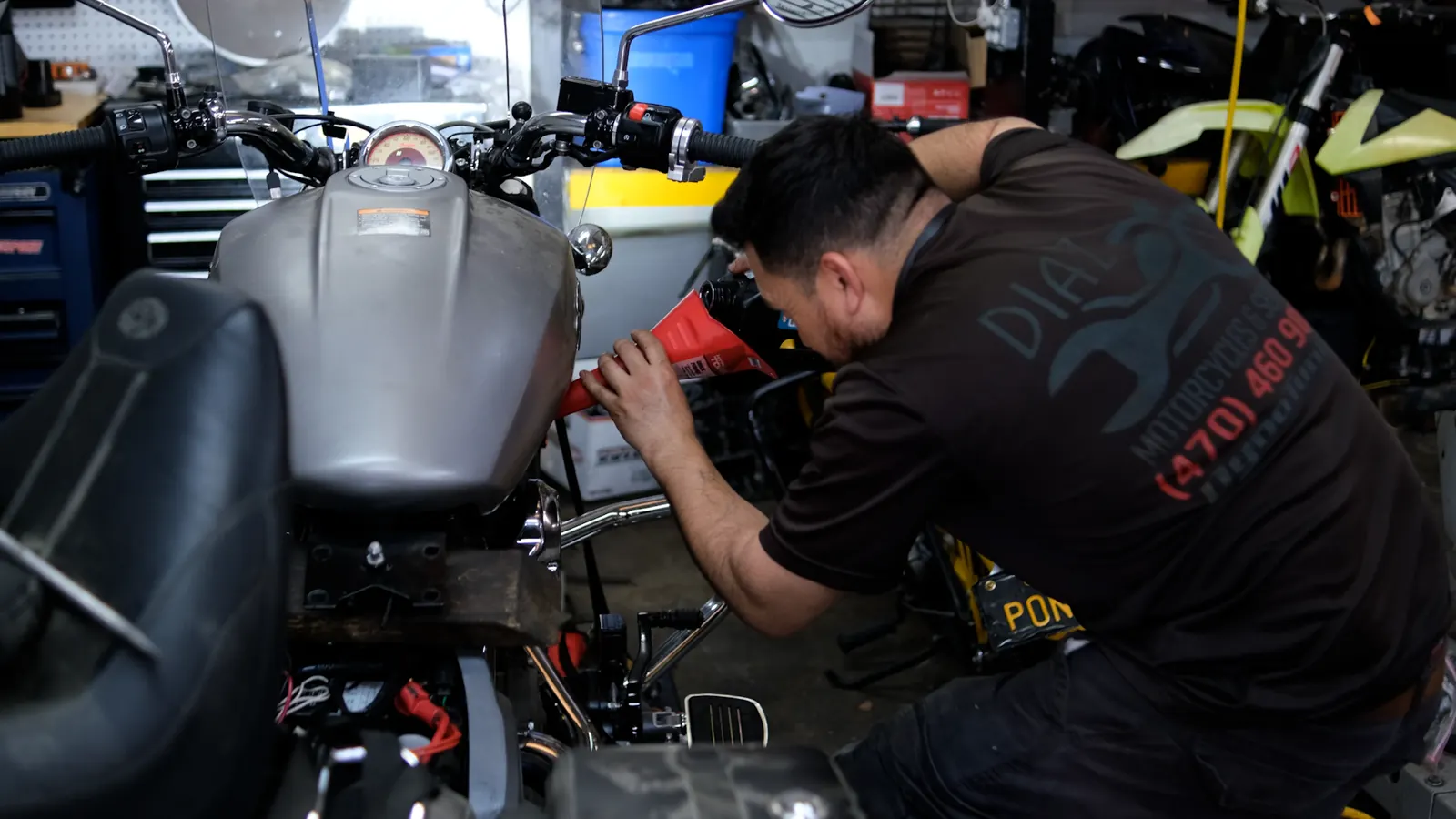
Chase the reason and the same repair tends not to come back. Chase the symptom and it will, usually in worse weather and at a worse moment. Riders here compare shops hard and read reviews carefully, which we think is exactly right. Ask any shop how they’ll confirm the fault before they order a part, then listen to how specific the answer gets. That one question sorts the trade quickly.
Yes, we’re OTP from you, and the run over to our Marietta bench is roughly thirty-something miles, call it a good chunk of an hour depending on how the metro is behaving. That’s estimated from the map, not clocked with a stopwatch. It’s also why pickup and delivery exists, so the drive is our problem instead of yours. Riding safety across the whole country gets tracked in NHTSA crash data, and a bike that runs predictably is a bike you can react on.
So the honest version of motorcycle repair cost Lawrenceville shops should be giving you is this: we’ll tell you what’s wrong, what it takes to fix, what it takes in hours, and what you can safely put off. No mystery math, no phone-call fiction. Just a straight read on your bike, from people who’d rather have you as a rider for ten years than win one invoice today.
Questions Lawrenceville riders ask us
What makes one repair job bigger than another?
Access, mostly. The same failed part can be four bolts away on one bike and behind bodywork, a radiator and a coolant system on another. Add in seized fasteners, a second part that got damaged, or a modification nobody accounted for, and the hours climb even though the parts list barely moves.
Why won't you quote it over the phone?
Because a phone number is a guess dressed up as an answer. We’d have to pad it to protect ourselves or shave it to win your call, and neither one is fair to you. Once the bike is in front of us and tested, we call you with a real finding before any money gets spent.
What's included in the work?
Diagnosis, the repair itself, correct-spec fluids and hardware where the job needs them, and a road test before we hand it back. We also tell you what else we saw while we were in there, whether or not you choose to address it now.
How long does a repair usually take?
Simple jobs often turn around fast, while anything involving parts ordering, deep teardown or a proper tune takes longer. The honest variable is parts availability, especially on European bikes. We give you a timeline once we know the actual fault, and we update you if it moves.
Is more of the bill parts or labor?
It depends entirely on the job. A pricey component on an easy-to-reach spot leans parts, while a cheap seal buried behind half the bike leans labor. That’s exactly why we look before we talk numbers, and why two riders with the same symptom can hear two different answers.
My bike is modified. Does that change things?
Usually yes, and usually for the better once it’s sorted. Exhausts, filters and gearing change how the engine wants to run, and a bike that was never mapped afterward often runs lean and hot. Getting the tune right frequently solves the complaint people were about to throw parts at.
We take care of riders all over Gwinnett and the east side, so Lawrenceville folks are in good company. That includes Duluth and Norcross on the inside edge, Suwanee, Buford and Sugar Hill up north, Dacula out east, and Snellville, Grayson and Loganville down toward the back roads everybody actually enjoys riding. We also see plenty of bikes from Lilburn, Tucker and Stone Mountain. Pickup and delivery makes the drive our job rather than yours, so where you park at night doesn’t decide who works on your bike.
TELL US WHAT IT'S DOING
If your bike is acting up and you’re tired of guessing, send us a text and describe what it does, when it does it, and what’s been changed on it. We’ll tell you straight what we think is going on and what it takes to find out for sure. Lawrenceville riders get pickup and delivery, so the drive never has to be the reason you put it off.
470-460-9883Diaz Motorcycles and Service, LLC · 847 Barnes Mill Road, Marietta, GA 30062