Motorcycle Running Lean Kennesaw — Causes & Fixes
Popping on decel, a hot engine, a stumble off idle — here's what your bike is actually telling you, and how we quiet it down for good.
Too much air, not enough fuel. Plus, that’s the whole answer in six words, and that crackle you hear when you roll off the throttle is the sound of it happening. Of course, riders searching motorcycle running lean Kennesaw almost always describe the same short list: a stumble off idle, a bike that feels hotter than it used to between lights on Barrett Parkway, and popping on decel coming down the hill past Town Center at Cobb. Then again, here’s the relief you came for — the cause is usually simple, the fix is usually permanent, and your engine is very likely just fine.
Even so, let’s start with how it shows up in real life, because a symptom on a forum never quite matches the one in your right hand. Meanwhile, a friend we’ve helped rides north on Old US-41 most Saturday mornings, since that’s the calm way toward Acworth and Cartersville when Cobb Parkway NW is stacked bumper to bumper. In fact, that said, his bike came to him used, with an aftermarket exhaust already on it. For a while everything felt great. Then the little things started: a hesitation off idle, a hot right leg at long lights, a pop-pop-pop every time he closed the throttle.
For example, he rode it that way for a couple of months, which is what most of us would do. Still, those three symptoms together are your engine raising its hand politely, and it pays to listen before it raises its voice.
What "lean" actually means, without the engineering degree
Your engine wants a recipe. Air and fuel, mixed at a ratio it likes, over and over, thousands of times a minute. When there’s more air in that mix than the fuel can keep up with, the mixture is lean. When there’s extra fuel sloshing in, it’s rich. Both are just a recipe that drifted off, and both are correctable.
Lean burns hotter, and that’s the part riders feel first. Fuel does more than make power — it also carries heat away as it vaporizes, so a thin mixture leaves the engine running warmer than designed. Meanwhile the leftover unburned mix lights off in the hot pipe on decel, which is exactly where that snap and crackle comes from. It sounds mean. It’s really just your bike telling on itself.
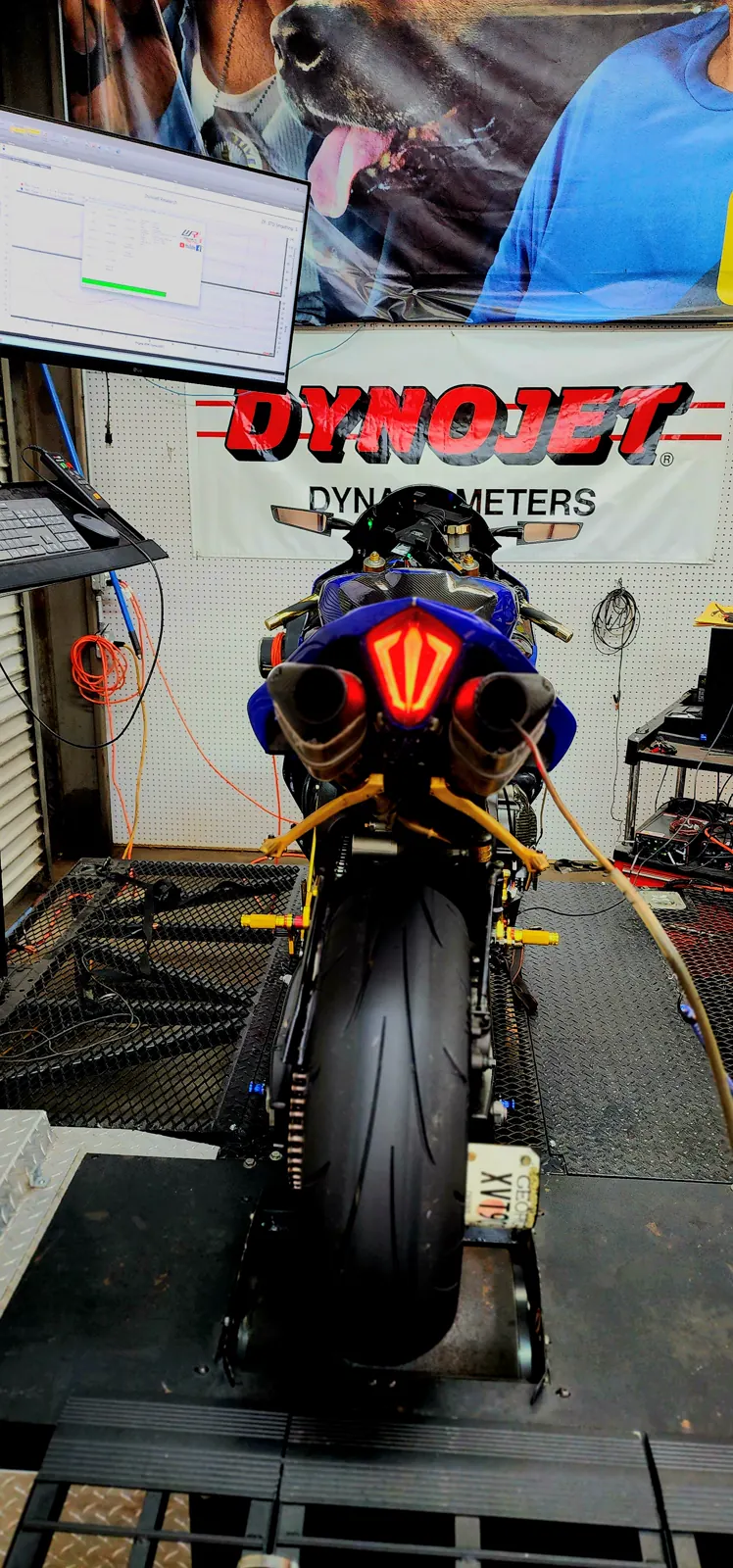
So what’s a dyno? Think of it as a treadmill for your motorcycle. The rear wheel sits on a heavy drum, the bike is strapped down, and we run it through the gears while the drum measures how hard the engine is working. Meanwhile a wideband probe in the exhaust sniffs the leftovers and reads the real air-fuel mix at every throttle position and rpm. Instead of guessing what your engine is eating, we watch it eat. Here’s what that service actually involves, step by step.
The real causes, most common first
Nine times out of ten, one of these is your answer. We’ve put them in the order we actually find them, not the order the internet argues about them. Nearly every motorcycle running lean Kennesaw riders bring us traces back to the first two.
- An exhaust or intake change with no tune to match. Slip-on, full system, high-flow filter, baffle removed — any of it lets more air through while the factory map keeps pouring the same fuel. This is the number one cause by a wide margin.
- A stock map that was already thin from the factory. Bikes are tuned for emissions targets and worldwide fuel quality, so many leave the crate a little lean at cruise and small throttle openings. Add Georgia heat and it gets noticeable.
- An air leak. A cracked intake boot, a loose clamp or a tired exhaust gasket lets unmetered air sneak in behind the sensors, and the bike never adds fuel for air it never counted.
- A clogged fuel filter, weak pump or dirty injectors. Here the air is fine and the fuel side simply can’t keep up. Bikes that sat through a winter do this often.
- A failing sensor. An oxygen, air temp or throttle position sensor giving bad numbers makes the ECU do exactly the wrong math with total confidence.
- Old jetting on a carbureted bike. Jets, needles and a leaky float seat all move the mix, and a rebuild can easily leave it thin.
Notice something about that list. Only two of those are a broken part. The rest are a mismatch between what your bike breathes and what it was told to drink, and mismatches stay solved once you solve them.
QUICK SYMPTOM CHECK
Popping on decel, hesitation off idle, surging at steady cruise, more heat than usual, hard starting when warm, or a white-ish look to the spark plug tip. Two or more of those together and lean is the first place we’d look.
But here’s what most riders get wrong about this. They assume lean means the bike is broken and needs parts. Usually it means the bike is misinformed. The hardware is healthy — the instructions are stale. That’s a much better problem to have, and it’s why folks walk out of the shop lighter than they walked in.
Is it safe to ride right now?
Straight answer, because you deserve one. A mildly lean bike is generally fine for short, gentle rides — a cool-morning run down to Smith-Gilbert Gardens, an easy neighborhood loop, a ride to the shop. Keep the revs moderate, skip long wide-open pulls, and don’t sit baking in stop-and-go traffic.
Now the part where we’d tell you to park it. Stop riding and call someone if the temp gauge climbs above where it normally sits, if you hear pinging under load, if power drops off suddenly, if the bike stalls in traffic, or if you smell fuel. Those point to real heat or a real leak, and heat is what turns a small fix into a big one.
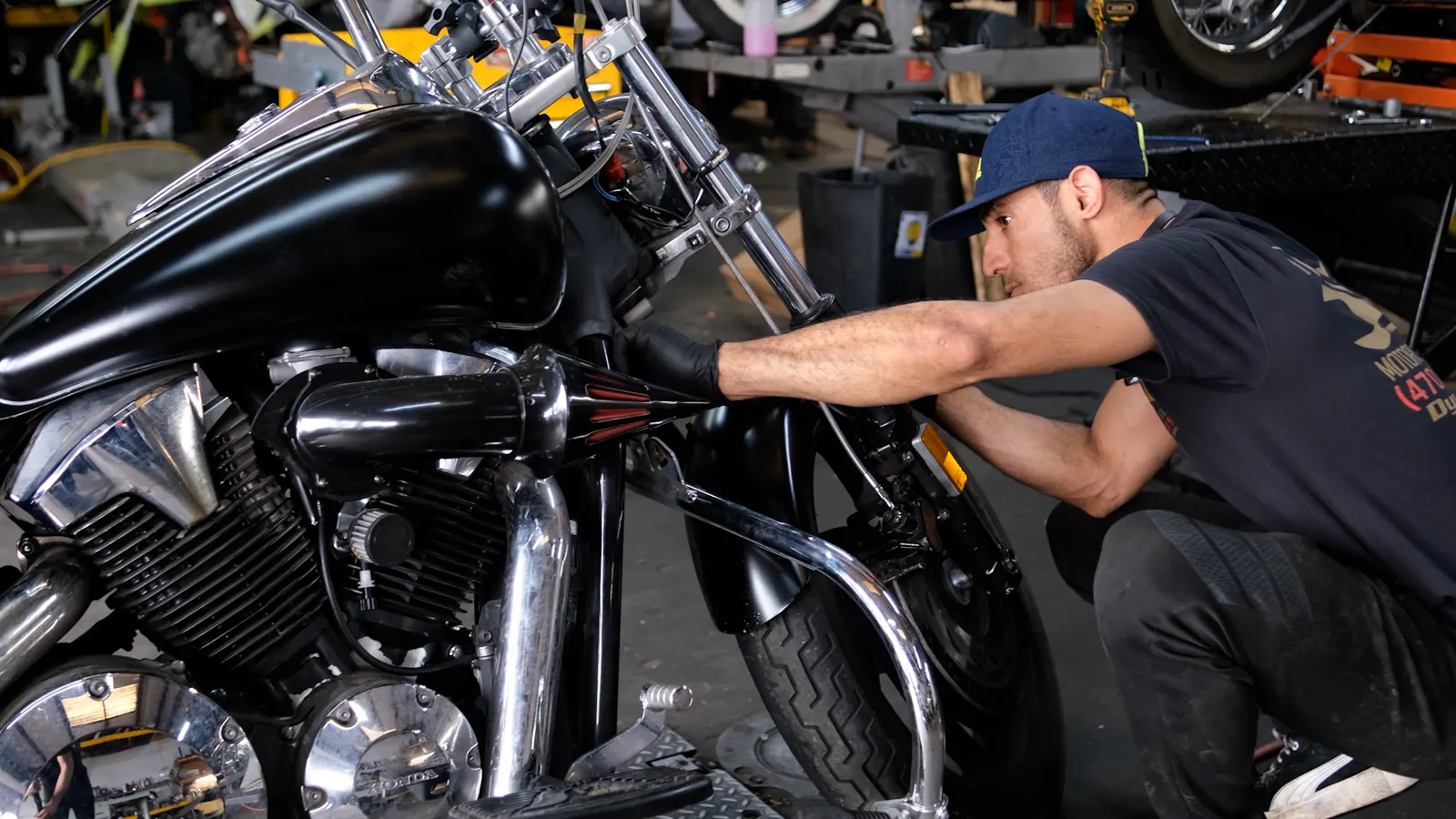
Also worth saying plainly: a hot July afternoon in the I-75 grind is the worst version of this. Georgia doesn’t allow lane splitting, so you sit still in your own heat with no airflow. If your commute looks like that, move this up your list.
Your options, honestly compared
Once we know it’s a fueling issue and not a broken part, you’ve got three real roads forward. Each one fits a different bike and a different rider.
1. Fix the mechanical cause and stop there
If the culprit is a cracked intake boot, a tired gasket, a clogged filter or a dying sensor, replacing that part puts the mixture right back where the factory intended. No tuning needed. Plenty of bikes arrive with scary symptoms and leave with a new hose clamp and a smile. We rule this out first, because tuning around a cracked hose is a lot like buying a bigger fan for a leaky roof.
2. An ECU flash
Modern bikes carry a computer that decides fuel and timing. A flash rewrites what’s already in there. It cleans up the thin factory cruise areas, can turn off the deceleration fuel cut that causes most of the popping, and often removes the speed and rev restrictions the manufacturer added for regulations. Since it lives inside the stock ECU, there’s no extra box to mount and no wiring to hide. On many bikes this is the tidiest answer.
3. A Power Commander or similar fuel controller
This is a small module that sits between the ECU and the injectors and adjusts the fuel signal on the way through. It’s the go-to when a bike’s ECU can’t be flashed, or when you want everything returnable to stock in an afternoon. Paired with dyno time, it builds a map around your exact exhaust and filter.
All three live under one roof here, which is genuinely rare around this area. Multi-line sales floors along Cobb Parkway NW, including Mountain Motorsports at 3102, are built to move new machines, and specialty dealers like Wooly’s Cycles of Atlanta on Cobb Pkwy S in Marietta focus on their own brands. Our dyno is in the building, so nothing ships out and nobody guesses. Here’s what our team handles.
A tune isn't chasing a big number. It's teaching your engine to breathe right at the throttle openings you actually use.
How we decide which one your bike needs
We don’t start with the dyno. And we start with a conversation and a flashlight. What changed on the bike, and when? Did it show up right after an exhaust swap, or creep in over a season? Cold, warm, or both?
- We look for air leaks first, since they’re free to find and cheap to fix.
- So we check fuel delivery: filter, pump pressure, injector spray pattern.
- We pull codes and read live sensor data to catch a sensor telling fibs.
- We inspect plugs, because their color is a decent quick read on the mixture.
- Only then does the bike go on the drum, so the numbers we gather are clean.
That order matters. A dyno pull on a bike with a vacuum leak just gives you a very precise map of a problem you should have fixed with a screwdriver. Riders over in Newnan ask us the same questions, and the process is identical no matter which direction you drive in from.
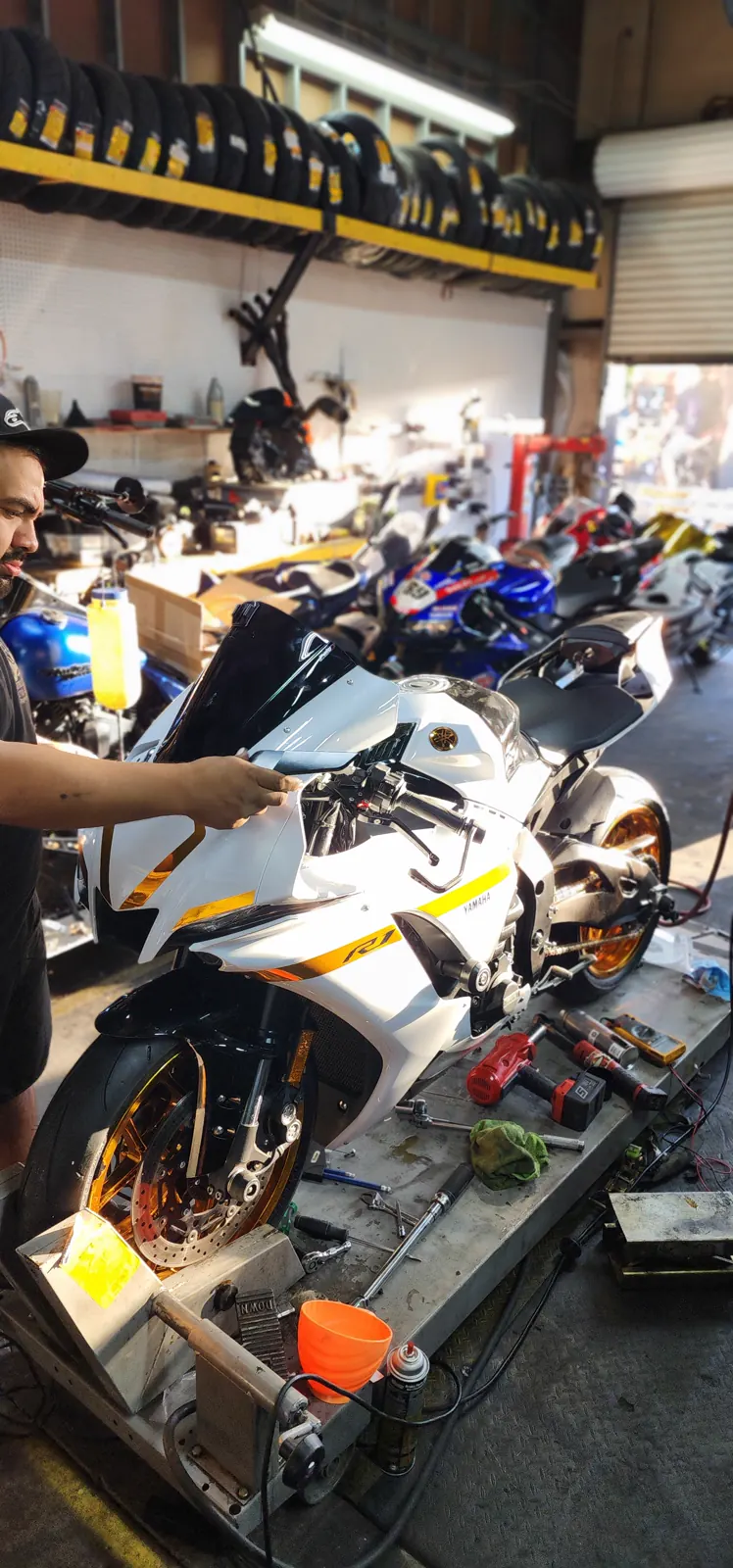
Let us tell you about a rider near Pinetree Country Club. He’s the classic profile for that neighborhood — big garage, big touring bike, rides plenty in spring and fall. He’d added a full exhaust the season before and loved the sound. What he didn’t love was the heat off the rear cylinder at every stoplight, or the hunting and surging at a steady cruise. He’d been told to live with it, since that’s what pipes do.
That advice was half right. Pipes do change things, but living with it was never the only option. His bike wasn’t sick — it was underfed. We confirmed there were no leaks, strapped it down, and built a map around the exhaust he already had. Rear cylinder heat dropped to normal and the surge disappeared. He didn’t need parts. He needed his engine told the truth about how much air it was getting.
What it feels like after
Riders expect a tune to feel like a rocket. The real headline is that everything gets easy. Still, the throttle stops feeling like a light switch and starts feeling like a dimmer. The bike pulls smoothly from a stop instead of catching its breath first, and steady cruise finally stays steady.
- Cooler running, which you feel most in traffic and in July.
- No more decel popping, or dramatically less of it.
- Smooth, predictable power right where you ride — small throttle openings, real-world rpm.
- Better throttle response at the exact moment you’re merging.
- Often better fuel mileage, since the engine stops working against itself.
Riders who walk the greenway out of Ridenour toward the Kennesaw Mountain trails and then ride that same corridor notice it in low-speed handling first, because a properly mapped bike is calmer at walking pace. Same story in the subdivisions off Due West Road, where the connector roads mean constant second-gear rolling on and off the throttle. That’s exactly the zone a tune cleans up.
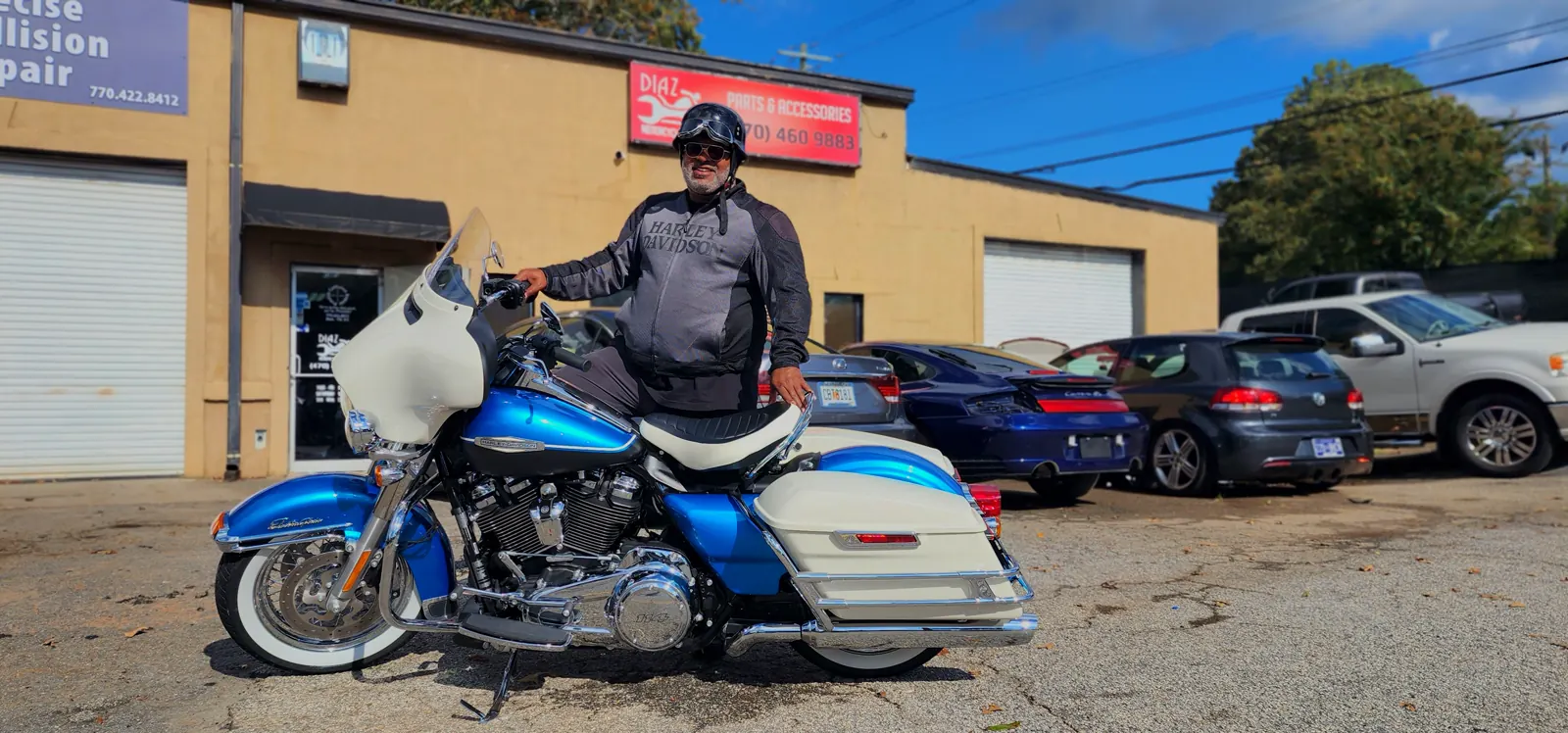
Fueling problems also make riders chase ghosts. A surge at cruise gets blamed on tires or pavement, and roads like Stilesboro, Big Shanty and Old 41 do carry uneven seams and sunken utility cuts. If you’re unsure which is which, Michelin’s motorcycle tire resources are a good plain-English primer, and Georgia DOT posts active work zones so you know where the steel plates are.
The outcome we're aiming at
Our goal isn’t a printout to brag about. It’s a bike you stop thinking about. When the fueling is right, you quit monitoring the temp gauge, quit flinching at the pop, and quit planning rides around traffic. You just ride. That’s the actual product.
Getting here from Kennesaw is an easy hop — roughly 11 to 14 miles, about 22 to 30 minutes, whether you take I-575 to I-75 south and cut over to Roswell Road or run Barrett Parkway east to Sandy Plains. If you want more background first, we wrote the full rundown on it.
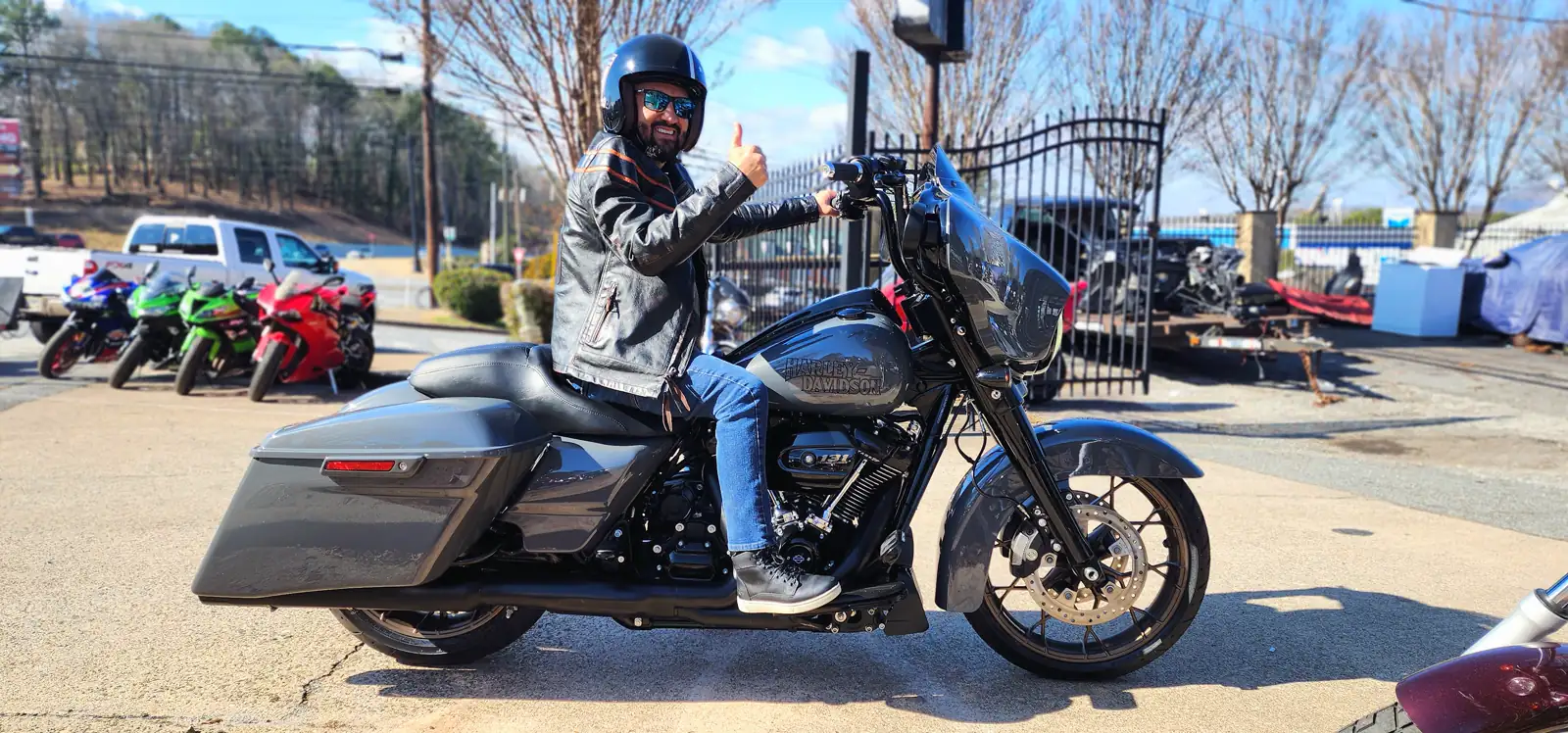
So if your bike is popping, stumbling or cooking your leg, take a breath. You caught it. That’s most of the battle, and the rest is a morning’s work for people who do this every day.
Questions Kennesaw riders ask us
Is it safe to ride my motorcycle while it's running lean?
For short, easy rides, usually yes. Keep the revs moderate, skip long wide-open pulls, and stay out of long stop-and-go stretches where there’s no airflow. Park it and call us if you see the temp gauge climbing, hear pinging under load, lose power suddenly, or smell fuel.
What causes a bike to run lean in the first place?
The most common cause by far is an exhaust or intake change with no tune to match, since more air with the same fuel makes a thin mixture. After that we find air leaks, clogged filters or weak fuel pumps, failing sensors, and old jetting on carbureted bikes. Many bikes also leave the factory a touch lean at cruise for emissions reasons.
Can I fix this myself at home?
Some of it, absolutely. Checking clamps, hoses and intake boots for leaks, swapping a fuel filter, and reading your spark plugs are all fair game with basic tools. Actual mapping is where it stops being a driveway job, because you need a dyno and a wideband reading to know what the engine is really doing rather than guessing.
Will it get worse if I ignore it?
It tends to, yes, but slowly and predictably rather than all at once. Sustained extra heat is hard on valves, pistons and exhaust components over time. The bright side is that riders who deal with it early almost always just need a tune or a small part, not engine work.
How urgent is this really?
Think weeks, not minutes, unless you’re seeing overheating or pinging. Get it looked at within the next few rides and you’re in great shape. If the bike is also stalling in traffic or losing power, treat it as this-week urgent and trailer it in if that feels safer.
Do I need a full dyno tune, or is a flash enough?
It depends on your bike and what’s been changed. A stock or lightly modified machine often does great with a flash, while a bike with a full exhaust, a high-flow filter, or a mix of parts benefits from custom mapping on the dyno. We’ll tell you honestly which camp yours falls into before we start.
We take care of riders from all over northwest Georgia, not just our own zip code. Folks ride in from Kennesaw, Acworth, Woodstock and Canton down I-575, and from Marietta and East Cobb in a matter of minutes. We also see plenty of bikes from Powder Springs, Hiram and Dallas on the west side, along with Smyrna and Mableton closer in, and riders coming south from Cartersville and Emerson for tuning work they can’t get closer to home.
LET'S GET IT BREATHING RIGHT
If your bike is popping on decel, stumbling off idle or running hotter than it should, send us a text and describe it in your own words — you don’t need the right terms. We’ll tell you what it sounds like, what we’d check first, and whether it needs the dyno at all. Kennesaw riders are a short hop away, and most bikes go home the same day feeling like the machine they were supposed to be.
470-460-9883Diaz Motorcycles and Service, LLC · 847 Barnes Mill Road, Marietta, GA 30062