Best Dyno Tuning Kennesaw — Picking a Shop
Real criteria for judging a tuning shop, from a crew that runs its own dyno every week.
Your garage has a personality problem. Of course, there’s a bagger on one side that likes long, slow miles. Then again, there’s a sportbike on the other side that wants to scream. Even so, maybe there’s a dual-sport in the middle with dried red clay still packed in the knobs. One shop handles the cruiser. Some guy touched the sportbike once, and you’re still not sure how you feel about it. Meanwhile, you keep a mental map of who does what, and that map is getting old. So when you go looking for the best dyno tuning Kennesaw riders can actually get to, you’re not really shopping for a machine. In fact, that said, you’re shopping for one set of hands you can hand all three keys to.
What you're really asking
For example, the search bar gets a short question. After that, your head is asking a longer one. You want to know if a shop can read your bike honestly, tell you the truth about it, and hand it back better than it came in. What’s more, that’s a trust question, not a tool question. Plenty of places own equipment. So and Better yet, Fewer places own the habit of using it well, every week, on bikes that aren’t all the same brand.
So let’s start with what a dyno actually is, in plain words. Still, a dyno is a big roller in the floor. Plus, your rear wheel sits on it, the bike gets strapped down tight, and it runs against a load, like a treadmill that pushes back. Of course, sensors watch how hard the engine works and how fast the roller spins. Then again, a sniffer in the exhaust reads what’s coming out the back. Even so, the screen turns all of that into a picture of your engine at every point in the rev range, not just the one spot you happen to feel on the street.
That picture is the whole point. Meanwhile, Riding around and guessing is a slow way to learn anything. In fact, that said, a dyno run tells the story in a few minutes, with numbers instead of hunches. If you want the wider background on the equipment side, Dynojet’s dyno center lays out the basics well.
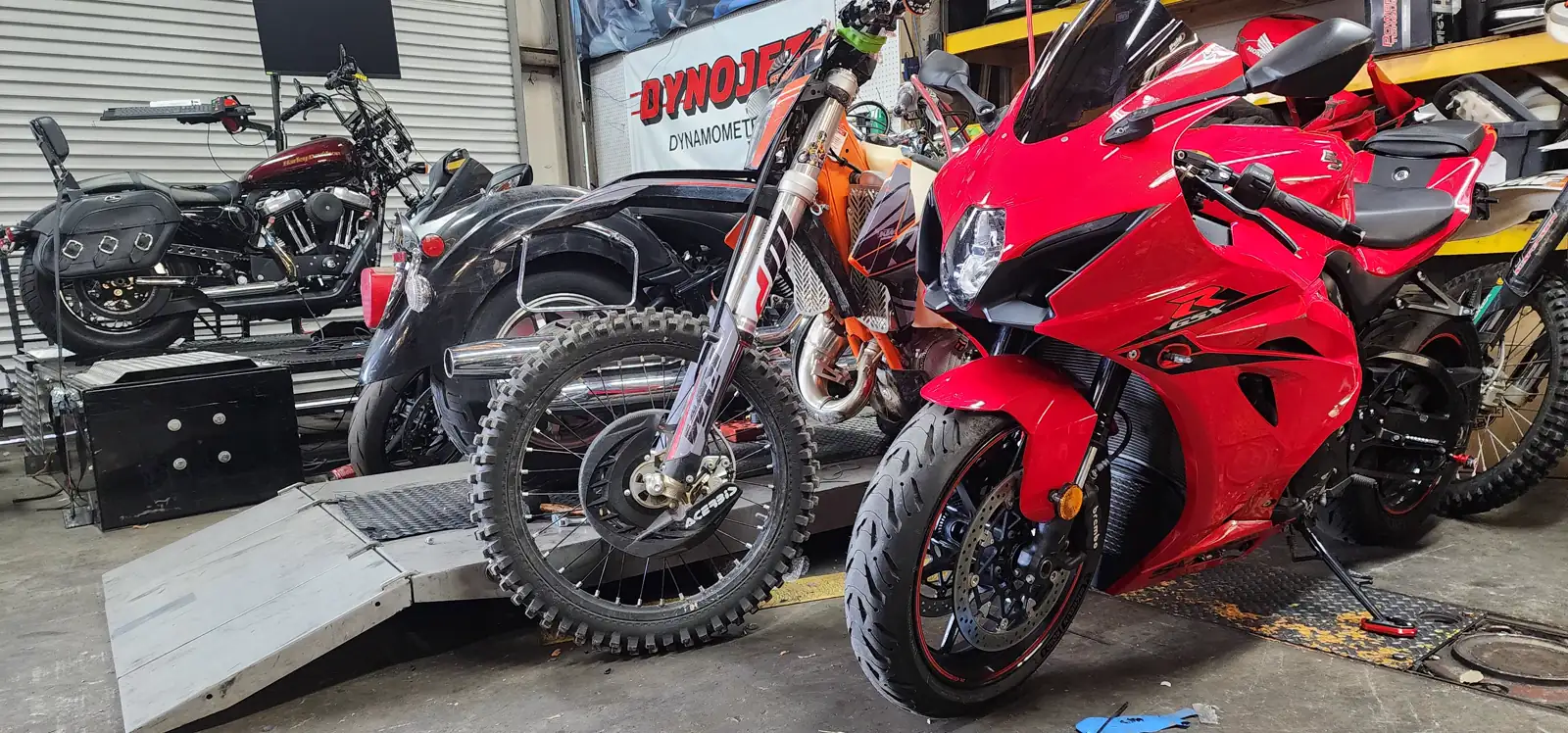
Now the other half of the vocabulary. “Lean” means the engine is getting a lot of air for the fuel it’s being given. “Rich” is the opposite. Neither one is a moral failing. Both just mean the recipe is off. A lean bike runs hot, pops on decel, and feels snatchy when you crack the throttle in traffic. A rich bike feels heavy and dull and fouls plugs faster than it should.
Why would a healthy bike be off in the first place? Because the factory wrote one recipe for the whole country. That recipe has to pass emissions rules, survive fuel of unknown quality, and work at sea level and in the mountains. It’s a compromise, and compromises are safe rather than sharp. Then you add a slip-on, or a fresh filter, or you move to Georgia in July, and the drift gets wider.
The honest answer about shops around here
Kennesaw has fewer independent motorcycle options than its rider population deserves. There’s a multi-line dealer, a couple of shops in Acworth that lean toward ATVs and small engines, and a mobile mechanic or two. Acworth Cycle & ATV and Small Engines sits at 4648 S Main St in Acworth, roughly twelve minutes up the road, and they handle a real spread of machines. None of that is a knock on anybody. It’s just the shape of the local map, and it explains why most serious jobs already leave the city limits.
Dealers earn their keep, too. If your bike is under warranty, a franchise dealer is often exactly where it belongs, because they can do the covered work and file the paperwork you’d otherwise be fighting. They stock parts for the brands they sell. They see brand-new models before anybody else does. That’s genuinely valuable, and we send people that direction when it’s the right call.
But a big sales floor is built around moving units. The service bay behind it is scheduled around that rhythm. Custom mapping doesn’t fit that rhythm well, because it isn’t a task with a fixed clock on it. Some bikes are dialed in quickly. Some need a second and third look at the low-rpm cruise area because that’s where you actually live on Barrett Parkway. A shop structured for volume isn’t wrong for having a queue. It’s just built for a different job.
THE SHORT VERSION
Dealers are great at warranty, parts and new-model knowledge. Independents with an in-house dyno are built for custom mapping and mixed-brand garages. Pick based on the job in front of you, not on loyalty.
Here’s the part almost nobody mentions. The timing on this matters more than the fix does. A tune done before you finish your build is a tune you’ll pay for twice, because the map is written for the parts that were on the bike that day. Riders bring us a bike with a new exhaust, get it mapped, then order the air filter and cams they were already planning on. Now the numbers on the screen describe a machine that no longer exists.
Timing works the other way, too. If your bike is already running lean and hot, waiting until August to deal with it is a rough plan. Heat piles onto heat. March and April are our busiest reactivation months, so riders who think about tuning in February get their pick of the calendar. There’s no prize for being last in line, though we do admire the commitment.
What actually changes the answer
You don’t need to be technical to judge a shop well. You need a short list of questions and the patience to listen to how they’re answered. A good answer is specific and calm. A weak answer is vague, or it’s a number thrown at you before anyone has looked at your bike. Here’s what we’d ask if we were standing on the other side of the counter.
- Do you have a dyno on site, or do you send bikes out? Both can work, but you deserve to know which one you’re buying.
- Do you make a baseline run before you change anything? Without a before, there’s no honest after.
- Do you read air-fuel ratio during the run, or just watch the power curve? The mixture data is where the real work happens.
- Will you tune the part-throttle cruise areas, not just wide-open runs? That’s where you spend most of your riding life.
- What do you do if the bike shows a mechanical problem mid-session? The right answer is stop, tell you, and fix the cause first.
- Do you send me the sheets afterward? Your bike’s data belongs to you.
Notice that none of those questions ask for a big number. Peak numbers make good stories and poor decisions. A bike can gain at the top and lose everywhere you actually ride. Smoothness through the middle is what makes a bike feel fast on a real road.
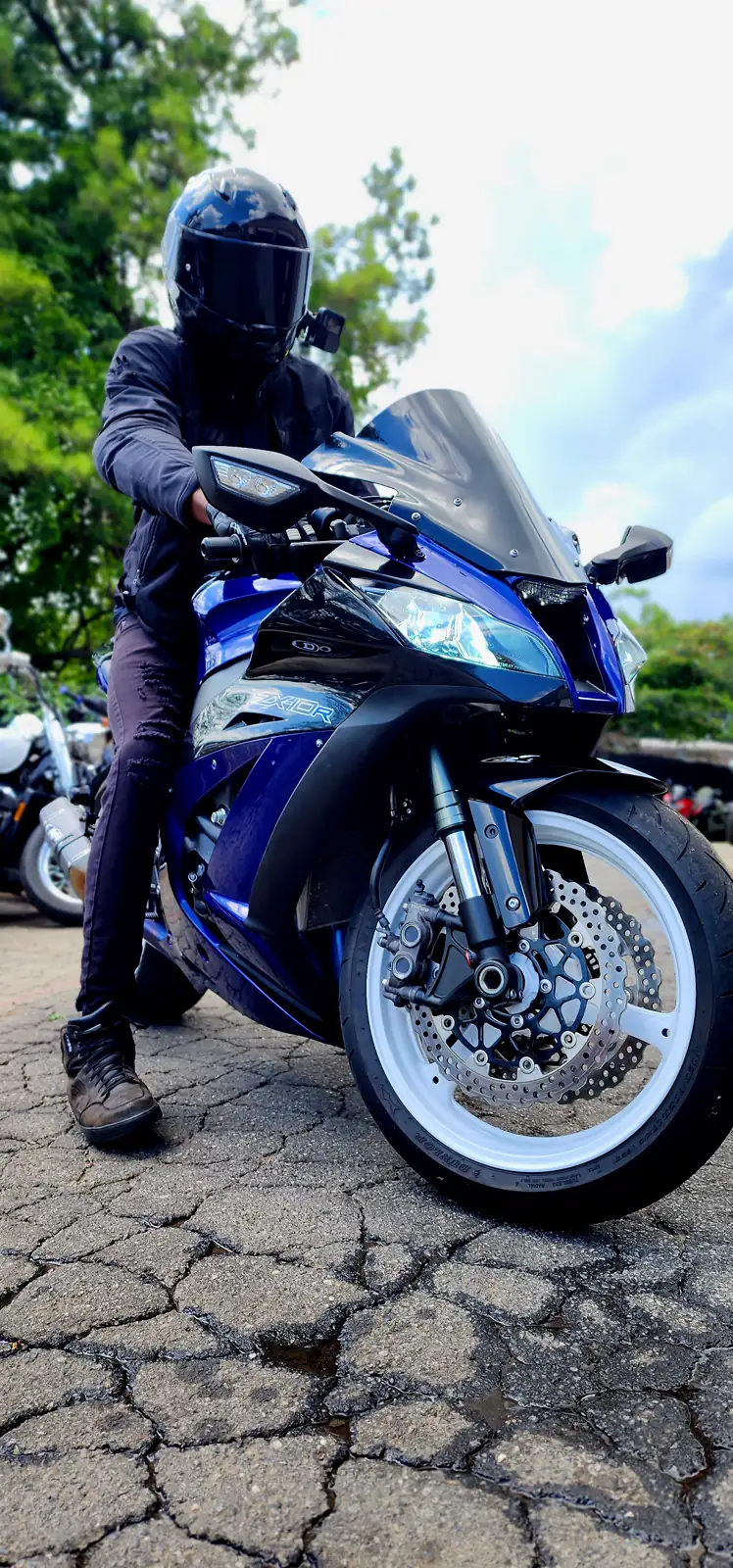
A shop that says “your bike doesn’t need a tune right now” just told you something valuable for free. We say it fairly often. If the bike is bone stock and healthy and the goal is a slightly smoother throttle, a tune may not be the first move. If you’re weighing that exact question, we walked through how to decide between them in more detail.
How our crew works a session
We run three flavors of the same idea. A Power Commander or similar piggyback module sits between the stock computer and the injectors and adjusts fueling. An ECU flash rewrites the factory computer itself, which reaches further into things like rev limits and throttle response. And on carbureted bikes, the dyno guides real jetting and needle work. Which one your bike gets depends on the bike, not on what we feel like selling that morning. You can see how our crew approaches it laid out on the service page.
- Health check first. Plugs, filter, valve clearance history, leaks, chain and tire condition. A dyno is a truth machine, and it will find a problem you were hoping to ignore.
- Baseline run. We record the bike exactly as it arrived, mixture data included.
- Read the picture. Lean spots, rich spots, flat spots, heat behavior.
- Build the map in passes, checking cruise and part-throttle zones along with the big pulls.
- Verify. Repeat runs until the curve is smooth and repeatable, not just good once.
- Hand you the sheets and walk you through what changed and why.
That order matters. Tuning around a mechanical problem just hides it under a better recipe, and it comes back. High-revving platforms are their own conversation, since a small mapping error shows up much louder near redline — we wrote up how we handle that job for the sportbike crowd.
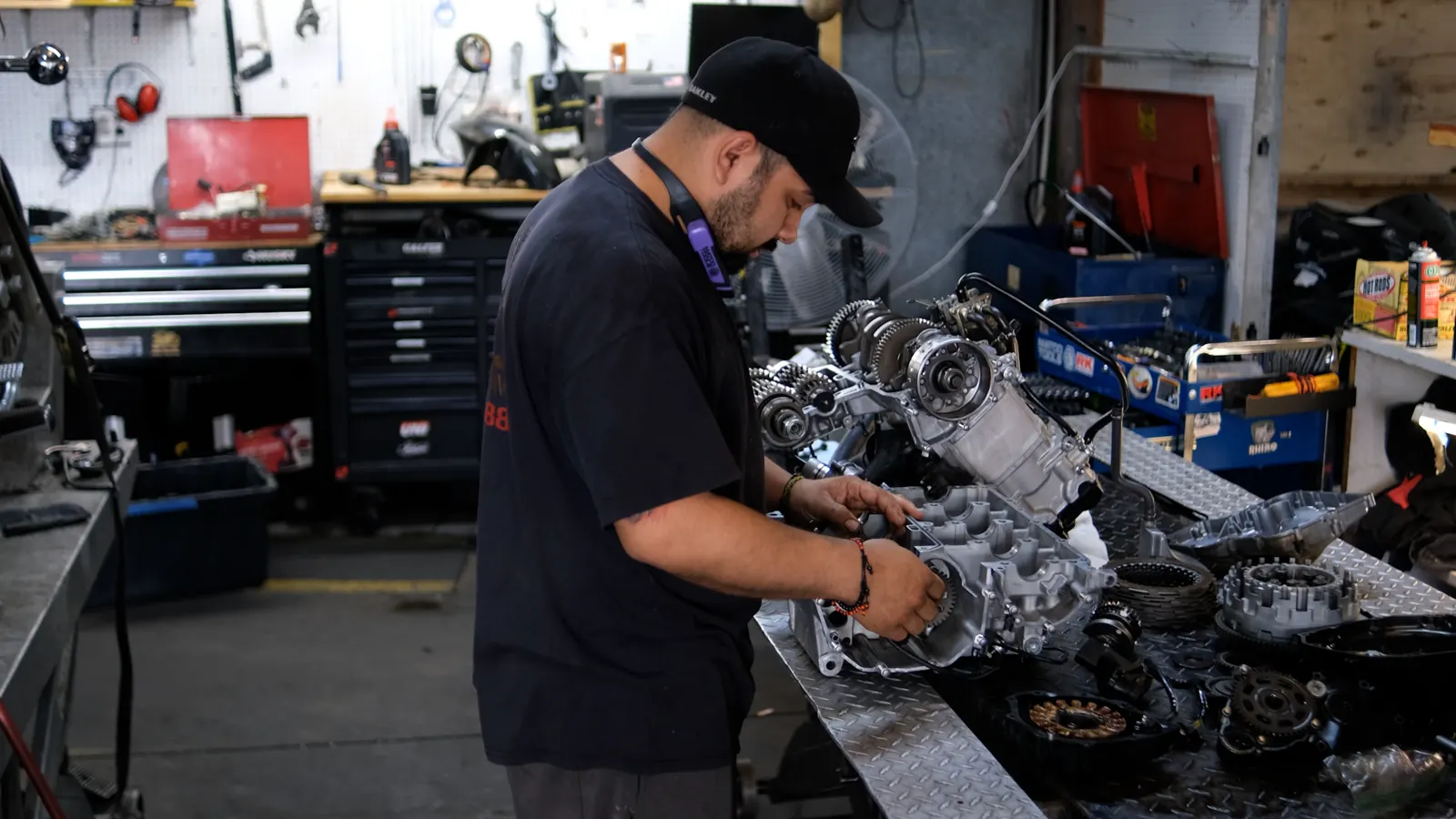
A bike came in from Pinetree Country Club with exactly this. The owner lives in that older stretch of large-lot homes wrapped around the golf course near KSU, and the bike had been sitting through a stretch of ugly weather. He’d added an exhaust the year before and had it fueled somewhere along the way. His complaint was simple: it surged at steady cruise and got hot in traffic, and he’d started to dread the ride to work.
The baseline run showed a lean patch right in the cruise band, which lined up perfectly with what he was feeling. But the run also showed something inconsistent, and a look underneath found an intake leak letting extra air sneak in. That’s why it read lean. Fixing the leak came first. Then the map went on top of a bike that was finally telling the truth. He got the surge gone and the heat down, and he told us later the commute got boring again. Boring is the goal.
The Kennesaw part of the picture
Where you ride shapes what a good tune should feel like. Kennesaw riders spend real time on Barrett Parkway, a signal-dense retail corridor with constant turning traffic, and it’s among the higher-risk surface streets for riders around here. The IIHS motorcycle research backs up what riders already sense about that kind of road. On a corridor like that, you’re rolling on and off the throttle constantly at low speed. A snatchy low-rpm map isn’t just annoying there. It costs you smoothness right when you want it most.
Then there’s the other half of local riding. Old US-41 heading north toward Acworth and Cartersville is the calm alternative to Cobb Parkway, and it’s where a lot of Saturday mornings start. Steady cruise, gentle rolls, longer stretches without a light. A bike tuned for big pulls only can feel oddly buzzy out there.
Kennesaw’s riding culture is shaped by a few things at once. KSU keeps a steady supply of sportbikes and scooters in the Chastain Road corridor. The I-575 gateway puts local riders closer to north Georgia’s good roads than anybody in south Cobb. And the family subdivisions off Due West Road — locals name that whole cluster by the road rather than by individual neighborhoods — are full of garages with cruisers and baggers in them.
Downtown Historic Kennesaw is its own little world, with older single-family homes around Main Street and a large mixed-use project approved for the core back in late 2024. The Southern Museum of Civil War and Locomotive History sits right in the middle of it, holding The General, the locomotive from the 1862 Great Locomotive Chase. Just be honest about those railroad tracks downtown. Wet, and crossed at an angle, they deserve your full attention.
Kennesaw Mountain National Battlefield Park anchors the south side, close to three thousand acres of trails climbing an 1,800-foot summit. Treat it as a place to hike and meet people, not as a shortcut. Plenty of riders park nearby, walk it in the morning, then go find pavement.
Getting to us is easy enough. From most of Kennesaw it’s roughly eleven to fourteen miles and about twenty-two to thirty minutes, either I-575 to I-75 south and over to Roswell Road, or Barrett Parkway east to Sandy Plains and down to Roswell Road. If you’re closer to the east side of the county, the East Cobb side of things covers that run instead.
What you should walk away with
A good tune doesn’t announce itself with drama. The bike just stops fighting you. Plus, the throttle picks up where your wrist expects it to. The engine stays cooler at a light, and decel gets quieter.
The best tune is the one you stop noticing after a week, because the bike finally just does what you ask.
So pick your shop the way you’d pick anybody you trust with something you love. Ask the questions. Listen for specifics. Watch whether they check the mechanical side before they touch a map. And if a shop hands you your data sheets without being asked, that’s usually a shop with nothing to hide.
You’ve got a mixed garage and a limited number of weekends. One crew that can read all three of your bikes on the same roller is worth more than a folder full of phone numbers. That’s the whole idea behind chasing the best dyno tuning Kennesaw has within a short ride — fewer handoffs, more riding.
Questions Kennesaw riders ask us
Should I go to a dealer or an independent shop?
If your bike is under warranty and the work is covered, start with the franchise dealer. That’s what they’re built for. For custom mapping, ECU flashing and Power Commander work across mixed brands, an independent shop with its own dyno is usually the faster and more flexible path. Neither choice is a mistake, they’re just different jobs.
What should I ask a tuning shop before I book?
Ask whether the dyno is on site, whether they do a baseline run first, and whether they read air-fuel ratio during the pulls. Ask if they tune part-throttle cruise, not just wide-open runs. Then ask what happens if the bike shows a mechanical problem mid-session. Calm, specific answers tell you a lot.
Do you work on all brands?
We work across Japanese, European and American machines, from sportbikes and naked bikes to cruisers, baggers, ADV bikes, dual-sports and scooters. Mixed garages are normal here. If a bike falls outside what we can do well, we’ll say so up front instead of guessing on your dime.
How far do you serve?
Riders come to us from all over northwest metro Atlanta. From Kennesaw it’s a short run down I-575 and I-75, or east on Barrett Parkway toward Sandy Plains and Roswell Road. Most Kennesaw riders are looking at somewhere around twenty-two to thirty minutes depending on traffic.
Can you pick up my bike?
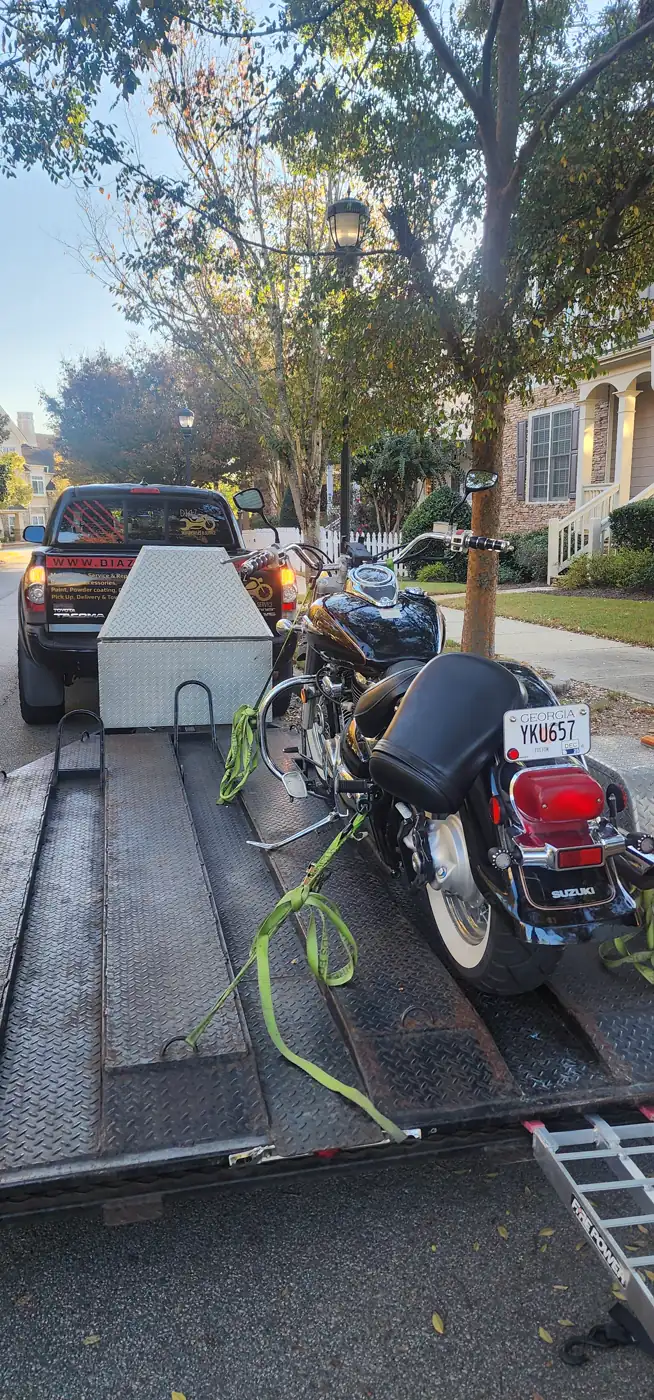
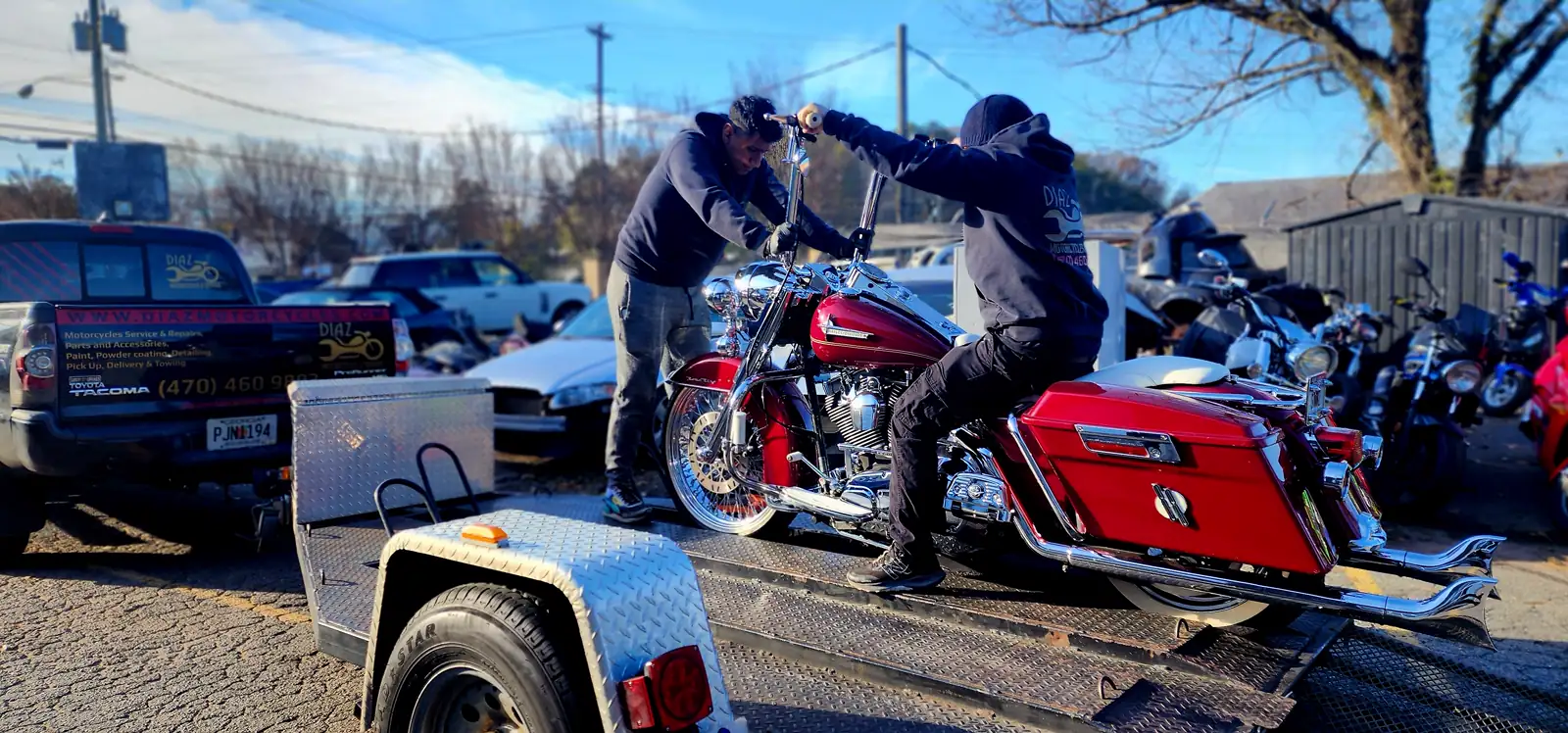
Give us a call and let’s talk it through. Pickup depends on where you are, what shape the bike is in and how the schedule looks that week. Plenty of riders trailer in, and plenty ride in. If the bike isn’t safe to ride right now, tell us that first.
How long does a dyno session take?
Plan on most of a day for the bike, not a quick wait in the lobby. The health check, baseline run, mapping passes and verification runs all take real time, and rushing any of them defeats the purpose. We’ll give you a realistic window when we see the bike and know what’s already been done to it.
We take care of riders all over the northwest metro. Kennesaw and Marietta are our closest neighbors, and we see plenty of bikes come down from Acworth, Woodstock and Canton, along with riders heading in from Cartersville and Emerson on the north end. Powder Springs, Hiram and Dallas riders make the run east regularly, and East Cobb, Smyrna and Mableton riders are practically around the corner. If you’re anywhere in that circle and you’re weighing a tune, the ride to us is shorter than the ride you’re already doing on Saturdays.
BRING US THE WHOLE GARAGE
If you’re in Kennesaw and juggling shops for a cruiser, a sportbike and whatever else is under a cover out back, text or call us and let’s talk about what your bikes actually need. We’ll tell you straight whether a tune is the right next move or whether something else should come first. Bring one bike or bring the list.
470-460-9883Diaz Motorcycles and Service, LLC · 847 Barnes Mill Road, Marietta, GA 30062