Motorcycle Dyno Tuning Acworth Riders Can Trust — Straight Answers
What a dyno really measures, why bikes run lean or rich, and how we figure out what yours needs before we ever quote it.
In fact, every September the shop phone changes its tune. The heat finally breaks, mornings turn cool, and half the lake crowd remembers they wanted to run Suches and Wolf Pen Gap before the leaves come down. That is when folks start asking about motorcycle dyno tuning Acworth riders can actually get finished before the trip. Then November arrives, the whole garage gets put to bed for winter, and the calls turn into winterization. Both waves keep us busy. For example, both are a smart time to fix how a bike runs, because you finally have a reason to care about it.
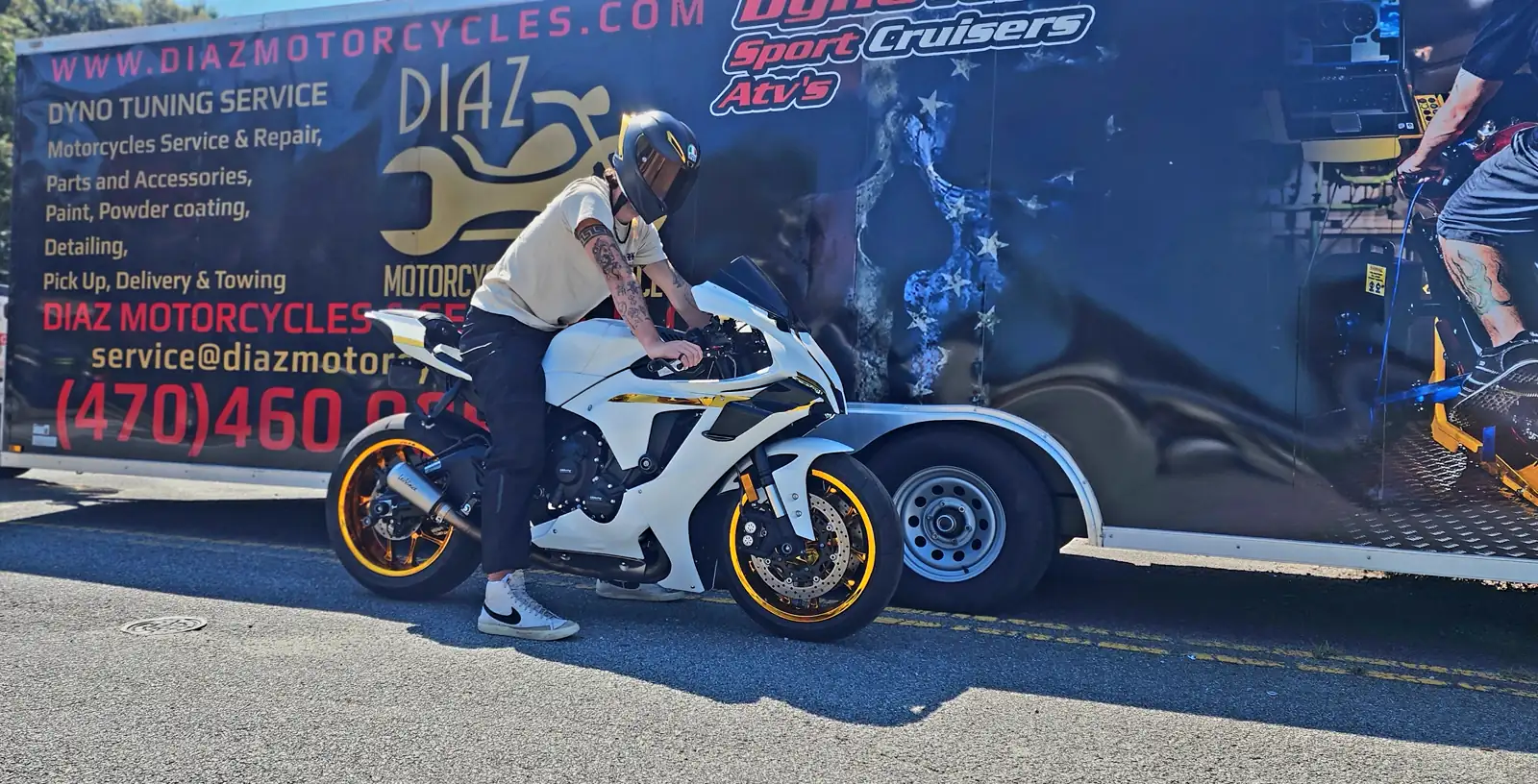
After that, here is the short version of who we are. What’s more, Diaz Motorcycles sits in Marietta, and the dyno lives in our building, not at a partner shop down the road. Our techs run it. We also do ECU flashing and Power Commander work in house. That sounds like a small detail until you need it, and then it is the whole ballgame.
What you're really asking when you call about a tune
Almost nobody calls and says, “I would like a custom fuel map.” People say the bike feels flat. Or it pops and crackles when they roll off. Meanwhile, Or it got hot sitting in traffic on I-75 and started acting strange. Or they bolted on a slip-on exhaust, loved the sound, and now it stumbles right off idle.
Underneath every one of those calls is the same question: is my bike running the way it should, and if it isn’t, can somebody fix it? That is a fair question with a real answer. A tune is not magic and it is not a secret handshake. It is measure, adjust, then measure again. If a shop can’t tell you what they measured, they didn’t really tune anything, they just guessed with a laptop.
The honest answer: what a dyno actually measures
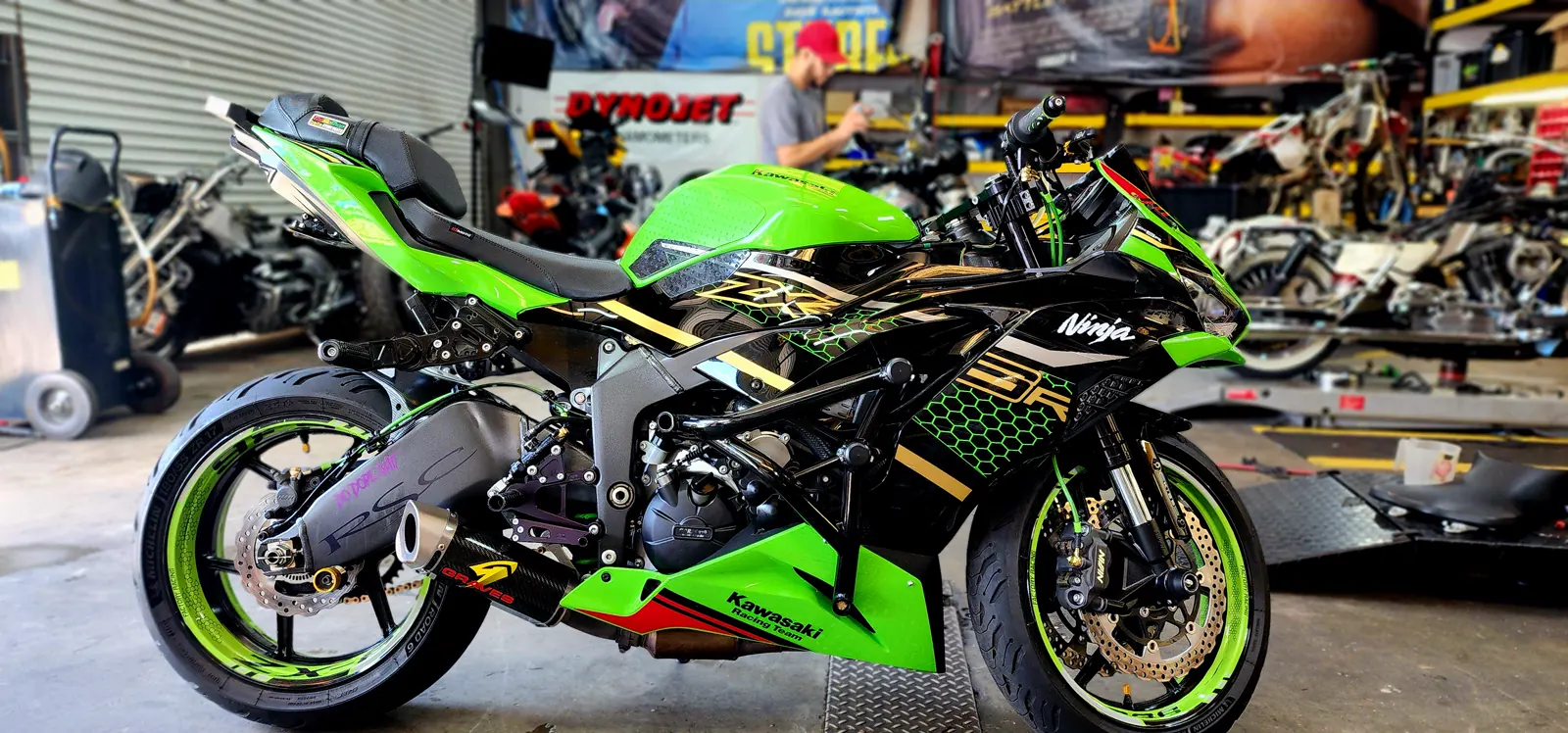
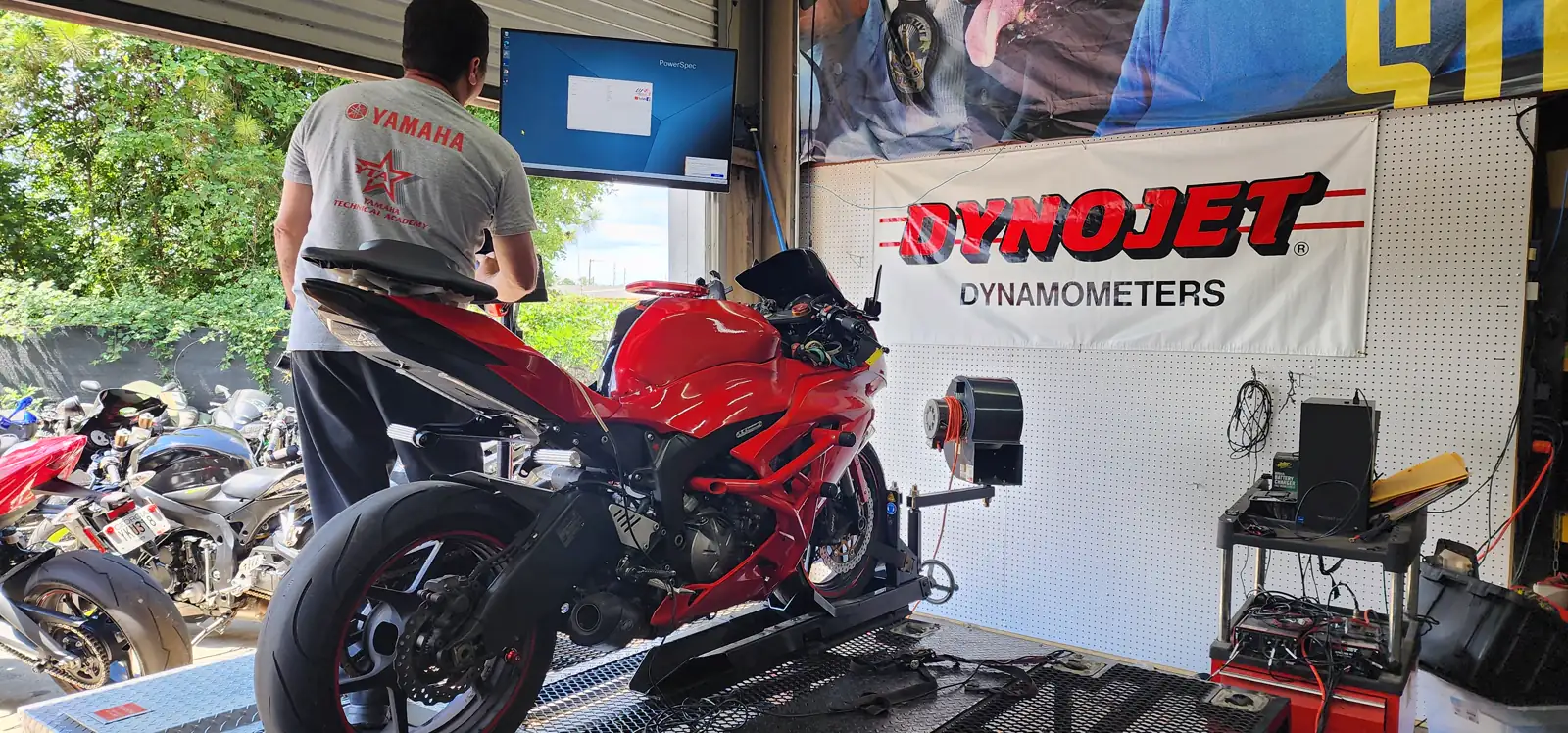
A dyno is a heavy steel drum set into the floor. We strap the bike down tight, put the rear tire on the drum, and run it up through the gears while it stays put. The drum is heavy on purpose. How fast your rear wheel can get that drum spinning tells us exactly how hard your engine is pushing, all the way from low rpm to redline.
At the same time, a probe goes in the exhaust and reads what is coming out the back. That reading tells us the air-to-fuel mix at every single point in the run. So we get two pictures at once: how much your bike is pulling, and what it was breathing while it pulled. One without the other is half a story.
When the run finishes, you get a graph. Think of it as a picture of your engine’s whole day. A smooth line means the fueling is happy. A dip or a flat spot means something went sideways right there, and now we know where to look instead of chasing it around a parking lot. That is the real value. The dyno turns a vague complaint into a specific place on a chart.
A dyno doesn't make power. It shows us the truth, and then we go fix whatever looks ugly.
Lean, rich, and what those words mean in your right hand
Your engine wants air and fuel mixed in a certain ratio. Lean means there is not enough fuel for the air coming in. Rich means there is too much. Neither one is a moral failing, they are just settings, and both are fixable.
A lean bike runs hotter than it should. It surges at steady throttle, snaps at you when you crack it open, and pops on the way down a hill. A rich bike feels soggy and lazy, smells strong at a stoplight, fouls plugs, and hands you worse fuel mileage than the guy on the bigger bike. Once you know the feel, you can practically diagnose your buddy’s bike from behind him.
- Snatchy or jerky throttle at small openings, especially in first and second gear
- Popping and crackling on deceleration coming down a grade
- Running hotter than normal in stop-and-go traffic
- A flat spot in the midrange where the bike used to pull clean
- Fuel mileage that quietly got worse after an exhaust or filter change
- Hard starting or a rough idle when the bike is cold
So why do bikes leave the factory imperfect? They don’t, exactly. They leave set up to pass noise and emissions rules with one map that has to work in Georgia humidity and Colorado altitude and everywhere between. That map is a compromise on purpose. Then you add an exhaust or a free-flowing filter, the airflow changes, and the map has no idea. The brain keeps feeding the same fuel to a completely different engine.
Two bikes, one symptom, two different fixes
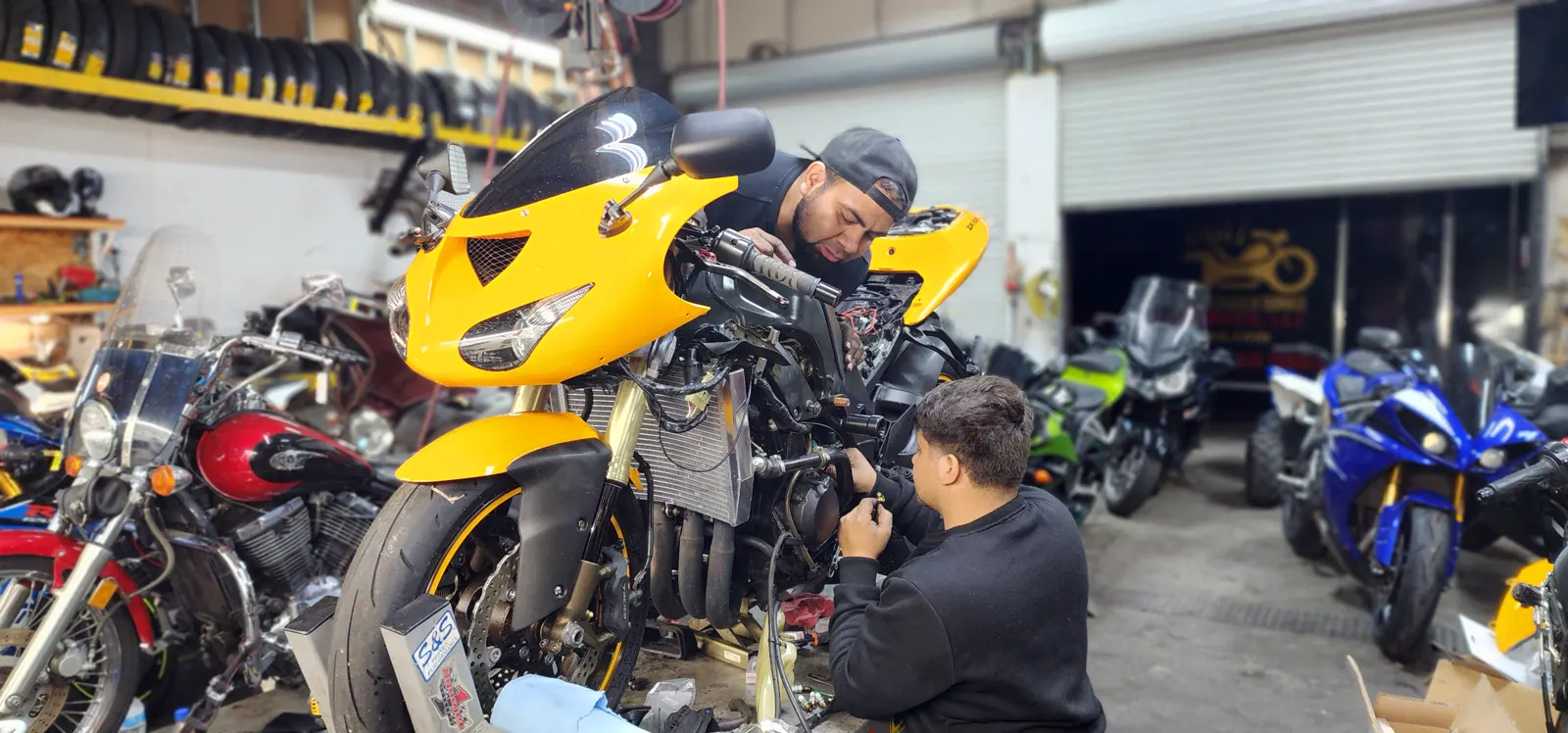
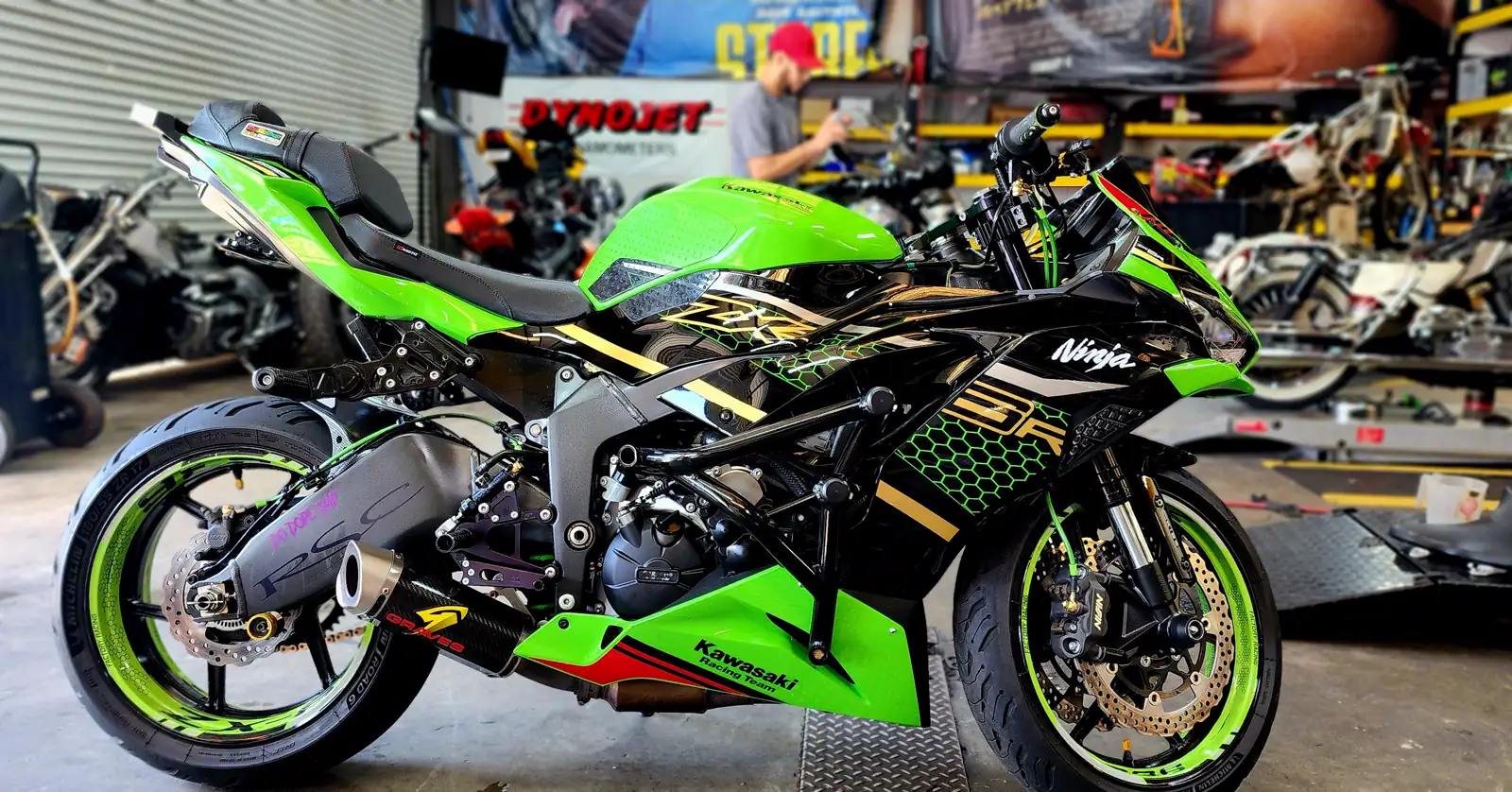
Two bikes with the same symptom can need completely different work. We see it constantly. Say two ZX-6Rs roll in the same week, and both riders describe the exact same stumble at light throttle.
The first one had a slip-on and a filter installed last spring and never got remapped. It is running lean where it matters most, and a flash sorts it out. The second one had a stock pipe, a filter packed with red Georgia dust, and a chain stretched past its adjustment marks. No fuel map on earth fixes a dirty filter and a tired chain. Tuning that bike before fixing the basics would have been like buying new tires for a car with a bent wheel.
That is why we refuse to quote a tune over the phone from a symptom alone. Anybody who does is either guessing or selling. Neither one helps you.
How we diagnose before we quote
- We talk first. What changed, when it started, what you ride, and where you ride it.
- We go over the basics: filter, plugs, chain, sprockets, tires, leaks, and any codes stored in the ECU.
- That said, we make a baseline run on the dyno and log the air-fuel reading through the whole pull.
- We read the graph together and decide what the bike actually needs, which is sometimes nothing electronic at all.
- We call or text you with the plan before a single thing gets done.
Nothing gets added to your bill without you hearing about it first. If the diagnosis shows a mechanical problem, we tell you that plainly, even when it means less tuning work for us. And if you want to understand what changes the total before you commit to anything, we wrote that out separately so you can read it at your kitchen table.
Flash, Power Commander, or neither
There are three honest paths, and the bike picks one, not us. An ECU flash rewrites the instructions already living in your bike’s brain. It is the cleanest option on most modern bikes because there is no extra box and no extra wiring. A Power Commander is a piggyback module that sits between the brain and the injectors and adds or subtracts fuel where we tell it to. It is the right call when a bike’s ECU won’t take a flash, or when you want to swap things around later.
Then there is the third path. Older carbureted bikes don’t have a map to change at all, so the fix is jetting and clean fuel circuits, done by hand. Air-cooled V-twins have their own quirks and their own factory procedures, and we keep current with the official Harley-Davidson service information rather than winging it. You can see what our team handles if you want the full list before you load up.
One more thing, and it's the part riders thank us for later
You leave with the paperwork. The before graph, the after graph, the air-fuel logs, and notes on what we changed and why. That record belongs to you, not to us.
Riders thank us for that months later, usually for one of two reasons. Sometimes they sell the bike, and a folder of dyno sheets makes a buyer stop haggling and start nodding. Other times something new pops up a year on, and whoever works on it can see exactly where the bike stood the day it left our floor. Free peace of mind, and it weighs about as much as a napkin.
BEFORE YOU LOAD UP
Text us a photo of your bike, your exhaust, and your filter setup. Tell us what it feels like and when. That two-minute text saves us both a phone call and gets you a real answer faster.
Why Acworth bikes end up on our dyno
Acworth is the most powersports-heavy market we serve, and it is not close. Households out that way don’t own a motorcycle, they own a fleet: a boat for the lake, a couple of side-by-sides, a dirt bike for the kid, and a cruiser or a dual-sport for whoever is buying gas. Garages are big out there, which is exactly why bikes sit. A bike that sat two winters comes back with varnished fuel, a tired battery, and flat spots on the tires, and it will run rough long before a fuel map is the villain.
We hear from riders all over the mailing area, which stretches across three counties. Folks in Governors Towne Club, that gated golf community spread across the Cobb and Paulding line, tend to have the low-mile weekend bikes that never fully wake up. Out at Bentwater off Cedarcrest Road, with its thirteen entrances and better part of seventeen hundred homes, we see more dual-sports and ADV bikes than anywhere else. Over in Brookstone on the Cobb side, where the Acworth and Kennesaw identity gets blurry, it skews toward baggers and touring bikes that put down long, steady highway miles.
Those miles matter to a tune. Nobody commutes into Atlanta on two wheels from up there, because Georgia doesn’t allow lane splitting and the I-75 crawl is a grind. Instead, these bikes rack up sustained highway and back-road miles. That means steady-throttle cruising is where a lean spot will annoy you most, and it is exactly the part of the map a good tune smooths out first.
The riding roads shape it too. GA-92 running west toward Dallas and Hiram is a favorite, and it is also where riders notice a soft midrange when they roll on to pass. Down by Lake Allatoona, the roads near Proctor Landing Park pick up boat-ramp sand and morning fog, which is a traction conversation, not a tuning one. But it does mean a snatchy throttle is more than an annoyance out there. Smooth fueling makes a slick surface a lot less exciting.
Getting to us is easy. From downtown Acworth, near the old railway tracks and the Depot Park History Center, it runs about twenty miles and roughly thirty-five minutes down I-75 to Roswell Road. Coming from the Paulding side around Bentwater, budget closer to forty-five. Folks up there drive that far for groceries and a haircut, so it barely registers. And if you would rather not load a bike at all, ask about pickup.
Acworth is served but not covered. Two solid generalist shops handle routine work well, and specialty places like Ken’s Motorcycle Tires up in Woodstock do their one thing right. What nobody nearby does is real custom mapping on an in-house dyno. So motorcycle dyno tuning Acworth riders want has to leave town regardless, and once you are driving anyway, you may as well drive to the machine itself. Riders one county over deal with the same thing, which is why what Canton riders run into reads almost identical.
What you actually get out of it
Here is the outcome, in plain words. The throttle stops surprising you. The bike pulls clean where it used to sag. It runs cooler in traffic, idles like it means it, and stops popping every time you close the throttle on a mountain road. We show you the graph either way, because the honest number is the only one worth having.
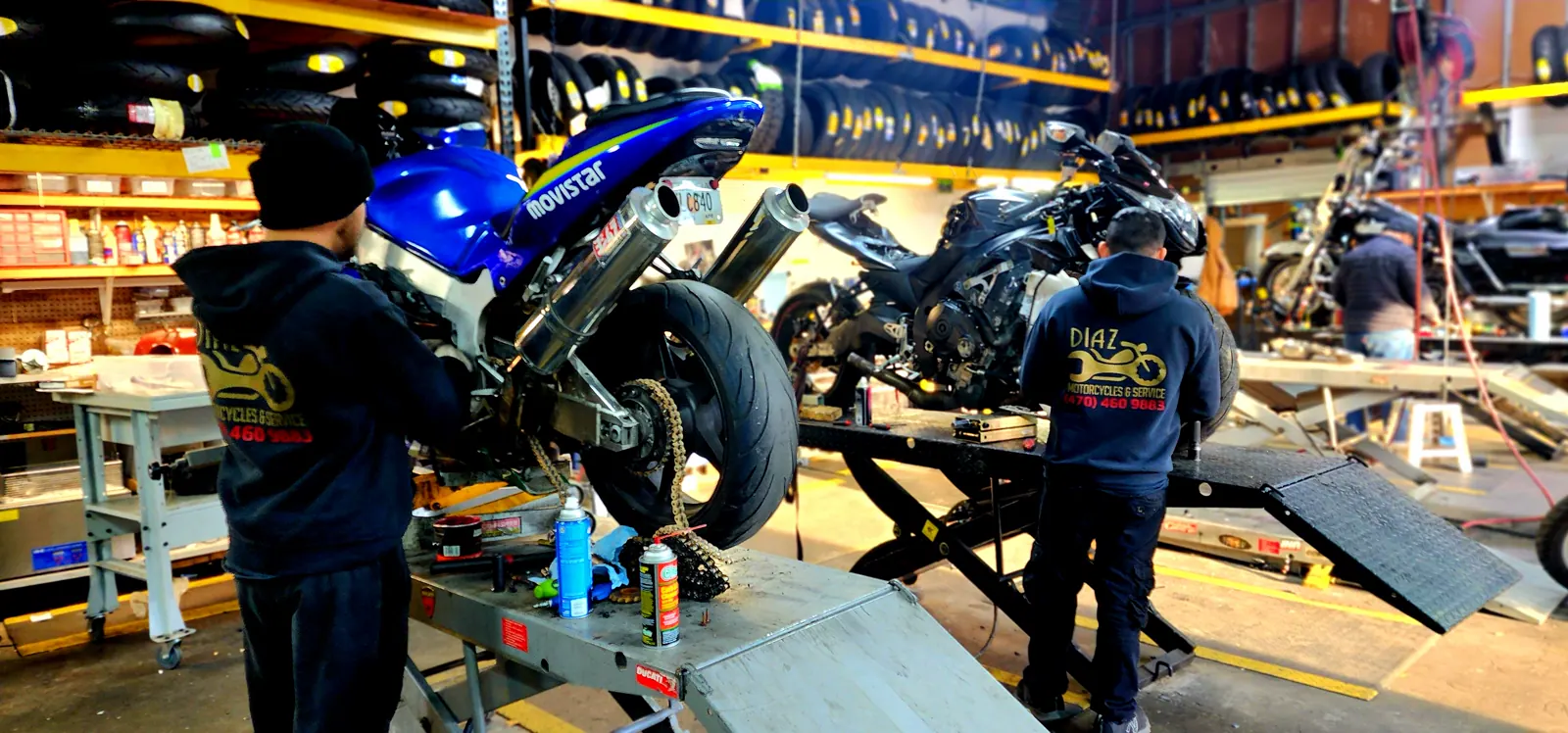
The best part is the confidence. You stop wondering whether your bike is holding you back. You know what it does, you know why, and you have the paperwork to prove it. Keep your registration current through the Georgia Department of Revenue, keep your chain and tires honest, and a well-tuned bike will make you look like a better rider than you are. If you want the deeper version, here is what the work covers from top to bottom.
Ride it home, take the long way on 92, and see if you don’t grin at the first on-ramp.
Questions Acworth riders ask us
Do I need an appointment?
Yes, for dyno work we schedule you in. The dyno is one machine and a proper session takes real time, so we don’t want you sitting around. Text us a few days you’re free and we’ll grab the first slot that works. Fall books up fast, so reach out early if you have a trip planned.
Can you pick up my bike?
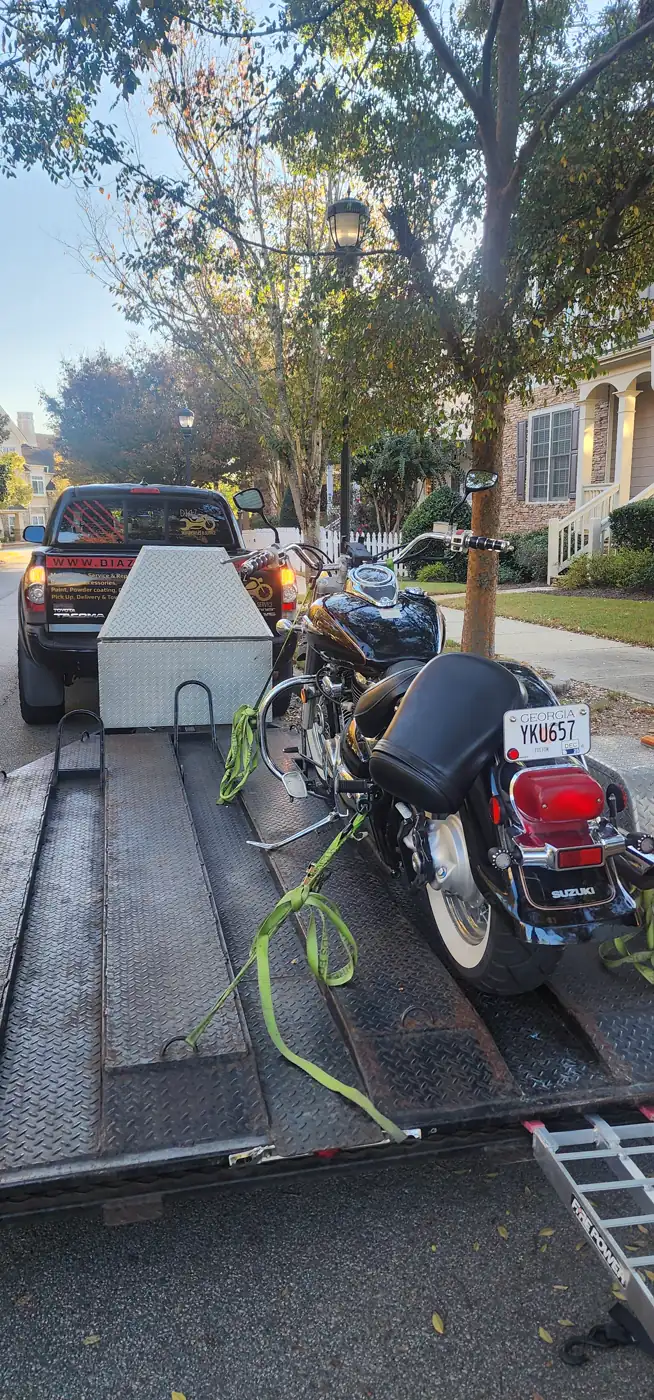
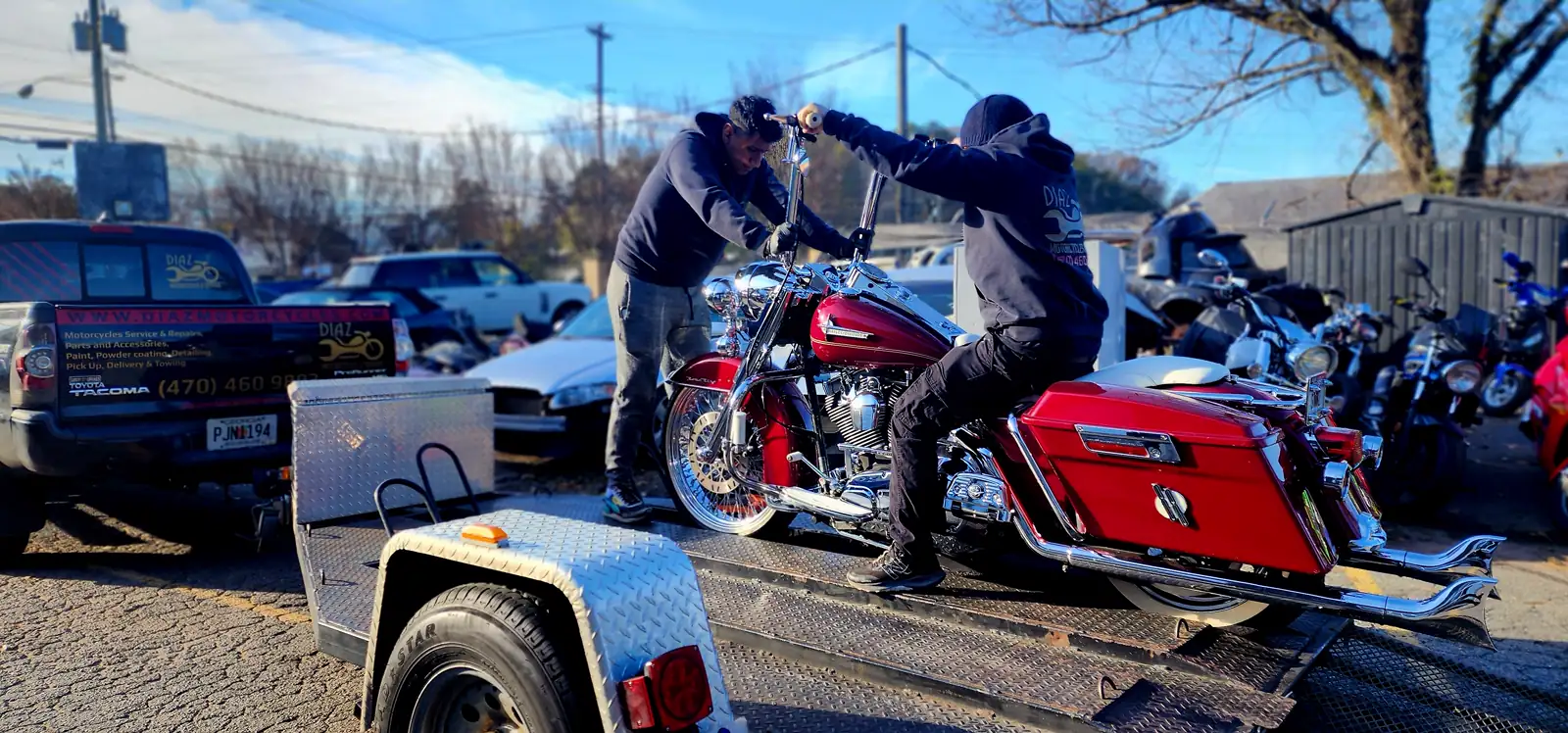
We sure can. Plenty of Acworth riders take us up on it, especially folks whose bike has been parked a couple of seasons and won’t fire. Just tell us the address and whether it runs. We’ll handle the loading.
How do I get a quote?
Text us what’s going on, what you ride, and any parts you’ve added. We’ll tell you what we suspect and what it will take to know for sure. After the inspection and baseline dyno run, you get a firm plan before anything gets done. No surprises show up later.
Do you work on older bikes?
Absolutely, and we like them. Carbureted bikes don’t have a fuel map to change, so the work is jetting and cleaning the fuel circuits by hand. Barn finds usually need fresh fuel, a battery and a good look-over before any tuning talk makes sense. Bring it anyway and we’ll tell you straight where it stands.
What if it needs more than expected?
We stop and call you. That’s the whole rule. You hear the finding, what it means, and what your choices are, then you decide. We’d rather have an honest conversation than hand you a bill you didn’t see coming.
Will a tune hurt my engine?
Done right, it does the opposite. A lean engine runs hot, and heat is what wears parts out. Correcting the mix usually means cooler, steadier running. We tune to what the bike can safely handle, not to win a bragging contest.
We take care of riders all around the lake and well past it. Acworth is our home base for this one, and we regularly see bikes from Kennesaw and Marietta, from Woodstock and Canton on the Cherokee side, and from Dallas and Powder Springs out west along the Cedarcrest corridor. North of the reservoir we help folks in Cartersville, Emerson, White, Adairsville, Euharlee and Taylorsville. If you’re somewhere in that stretch and not sure whether the drive makes sense, just text us and ask. We’ll tell you honestly, and if pickup is easier, we’ll come get it.
TEXT US AND WE'LL TAKE A LOOK
If your bike doesn’t feel right, or you just want to know what it’s really making before your next Acworth-to-the-mountains run, send us a text. Tell us what you ride and what it’s doing. We’ll answer like a friend who fixes bikes for a living, book you on the dyno, and if hauling it is a hassle, we’ll come pick it up.
470-460-9883Diaz Motorcycles and Service, LLC · 847 Barnes Mill Road, Marietta, GA 30062