Best Dyno Tuning Acworth — What to Look For
How to judge a tuning shop before you hand over the keys, in plain language.
What’s more, it started as nothing. So a small flat spot at one throttle opening, in one gear, every time you rolled on coming out of a bend on Old US-41 heading north toward Emerson. You blamed the gas. Then you blamed the heat. A few weeks later you were riding around it without even thinking, short-shifting past it like a pothole you’d memorized. That little hesitation is usually what sends a rider searching for the best dyno tuning Acworth has inside a reasonable drive. Not because anything broke. Because the bike stopped feeling like itself.
The short answer, first
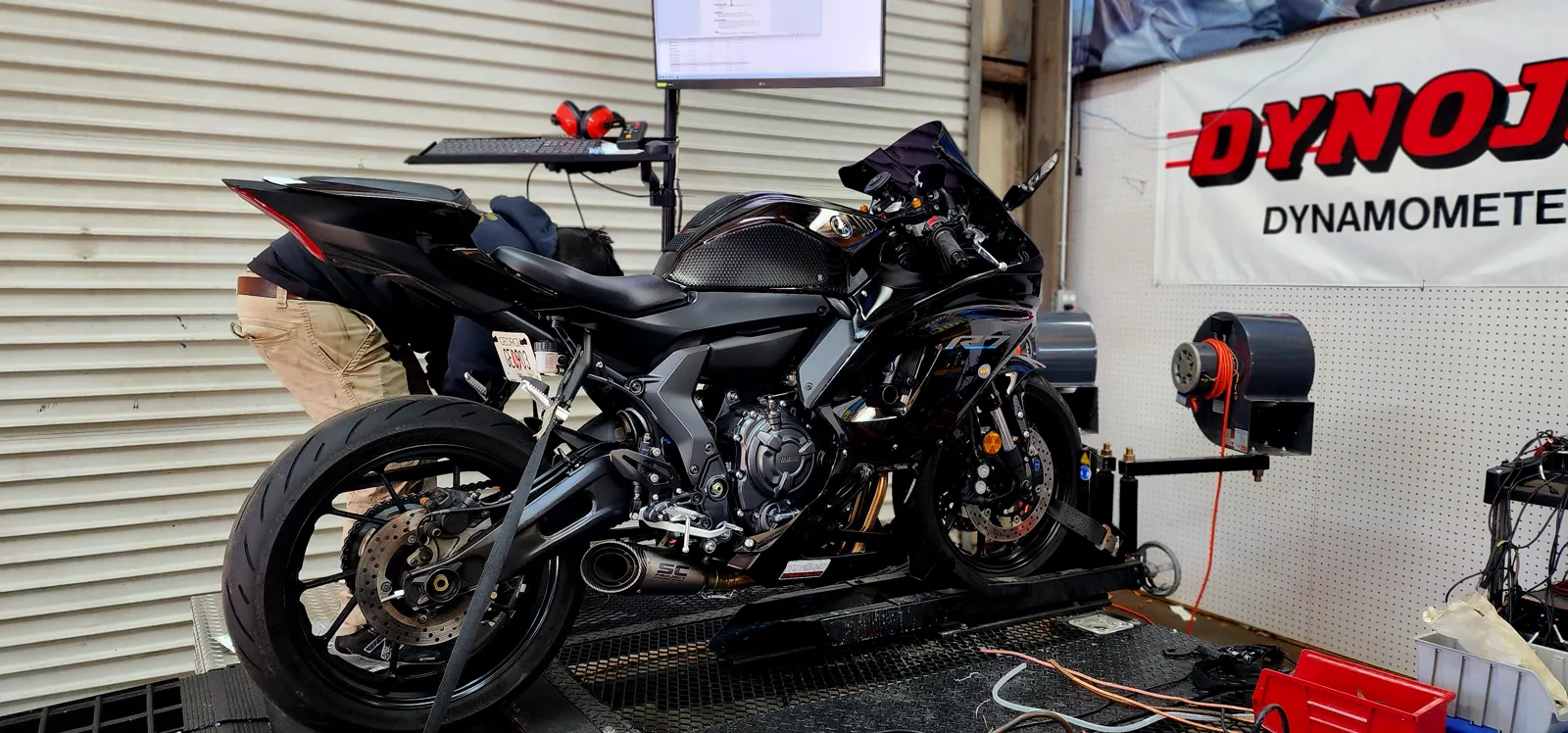
You want a shop that owns its dyno, does the mapping itself, and can explain what it changed in words you understand. That’s the whole test. A dyno is a big roller the rear wheel sits on. The bike runs against it while sensors read how hard it pushes and how fast it spins, and a sniffer in the exhaust reads what’s coming out the back. From that, the shop sees a curve of power across the rev range and a fuel reading at every point on it. So a real tune isn’t a guess. It’s a measurement, then a change, then another measurement.
Plenty of good shops can bolt on parts. Fewer can tell you what the bike did afterward. That gap is the one worth shopping for, and it’s why we’re going to spend the next few minutes on questions instead of sales pitches.
What actually drives this work
Modern bikes leave the factory tuned for everybody. Emissions rules, noise rules, one map that has to work in Phoenix heat and Michigan cold, on whatever fuel a rider finds. The result is usually a little lean in the low and middle range, which means slightly more air than fuel. Lean runs hot. After that, Lean surges at steady throttle. Lean gives you that snatchy on-off feel at small openings, and it’s the reason so many stock bikes feel abrupt in traffic. Rich is the opposite: extra fuel, soft response, a smell you notice at stoplights, and fouled plugs down the road. If you want the longer version, here’s what usually causes it.
Then you change something. A slip-on, an air filter, a new sprocket, a full exhaust, or just 40,000 miles of honest wear. The engine now breathes differently than the factory map assumes. Nothing is broken. The instructions are simply out of date. A tune rewrites those instructions to match the engine you actually own today.
What that feels like from the saddle is the part riders care about, and it’s rarely fireworks. It’s a throttle that goes where your wrist goes. Or it’s pulling away from the light at Main Street without the driveline snatch. It’s a bike that doesn’t get hot-tempered idling behind the boat trailers on a Saturday. Smooth is the real prize. Peak numbers are the souvenir.
A good tune doesn't make the bike louder. It makes it obedient.
What we check before anything gets flashed
Here’s the part that separates shops, and it happens before the dyno ever spins. A tune written on top of a mechanical problem just bakes the problem in. So the health check comes first, every time.
- Air leaks at the intake boots and any cracked vacuum lines, since a leak reads as lean no matter what we command
- Spark plugs, coils and plug wires, because a weak spark looks exactly like a fuel problem on the data
- Valve clearance on anything with miles, since a tight valve changes how the engine breathes
- Air filter condition, which matters more here than most places thanks to dusty back roads and construction mud
- Exhaust leaks, because a leak upstream of the sniffer feeds us false readings all day
- Chain, sprockets and tire condition, since a worn drive line makes the roller data noisy and unsafe
- Cooling system and oil level, because heat is what a dyno pull creates most of
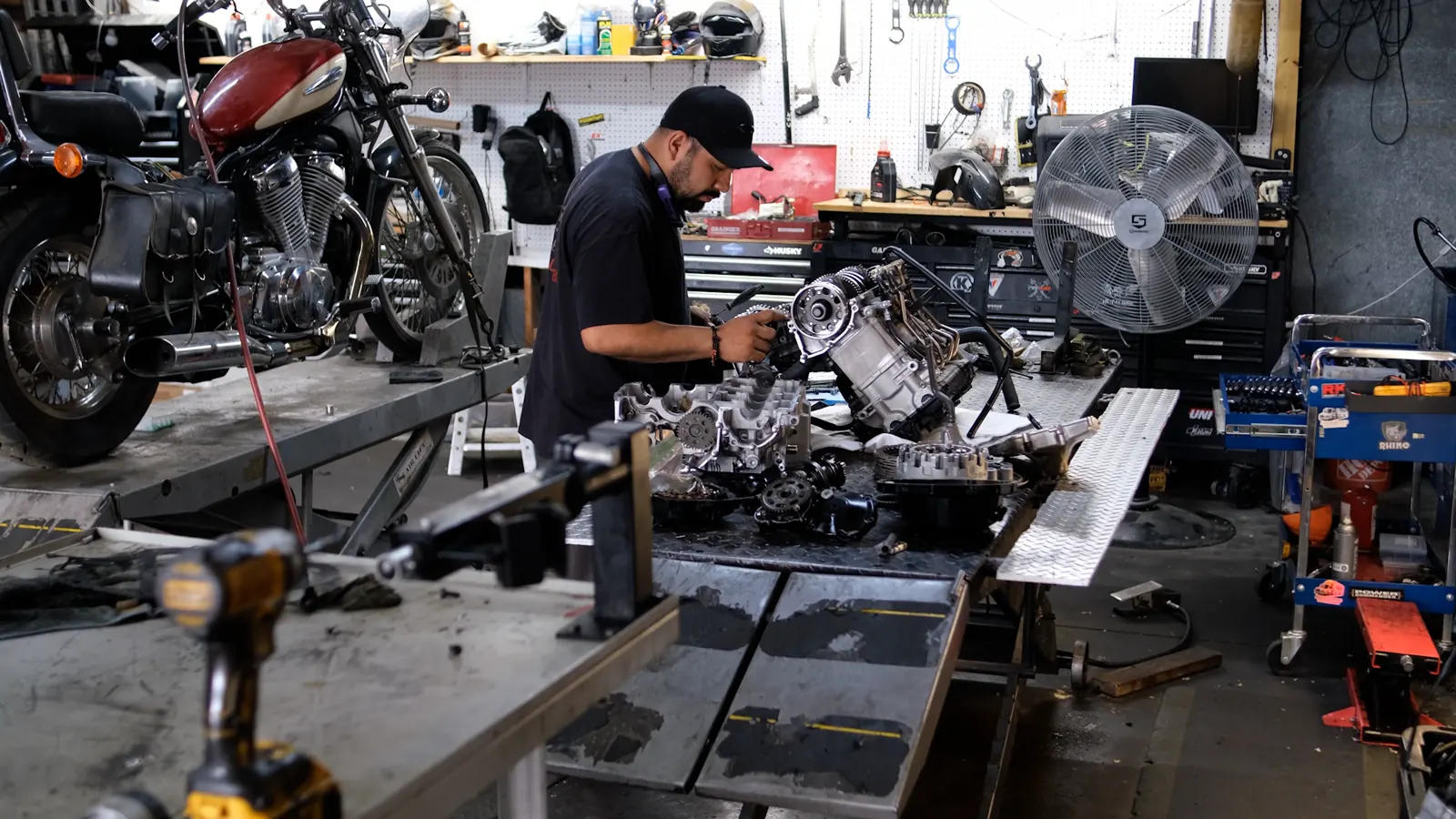
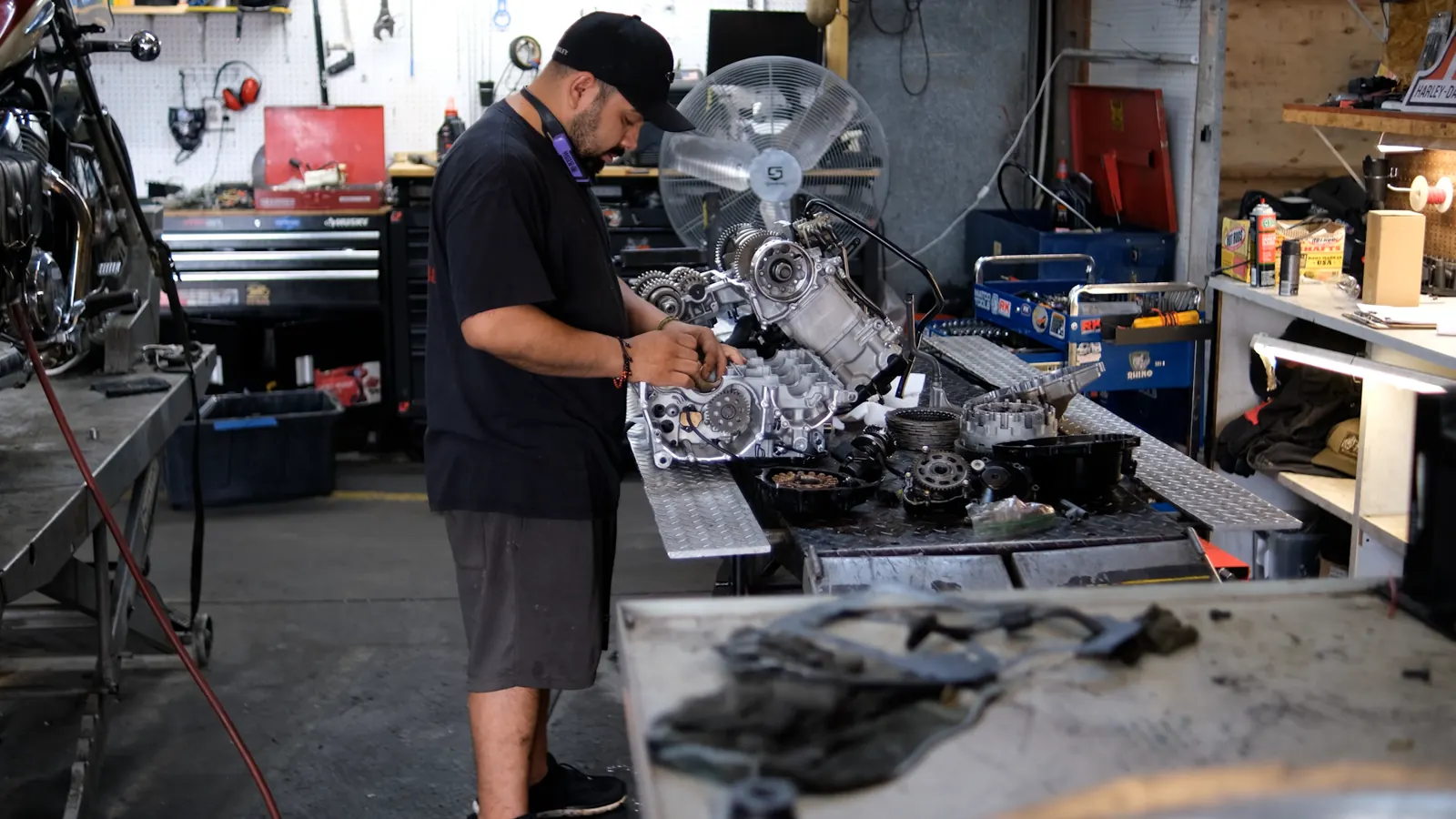
Only then do we strap it down. A baseline run tells us where the bike stands right now. From there it’s the ECU flash or the Power Commander, depending on the machine, and then run after run while we adjust fuel and timing across the whole map, not just the top of it. Most of your riding happens at small throttle openings, so that’s where most of the work goes. You can see what you get when you bring it in, and there’s more detail on what the work covers if you like reading ahead.
NOW, THE PART NOBODY MENTIONS UNTIL YOU'RE ALREADY PAYING FOR IT
Now, the part nobody mentions until you’re already paying for it. A tune is only as good as the data behind it, and a shop that sends your ECU file off to be written by somebody who never heard your engine run is selling you a map, not a tune. Ask where the file gets written. It’s a fair question and a good shop will answer it in one sentence.
Tools matter too, though not the way most ads suggest. An ECU flash rewrites the bike’s own brain, which is the cleaner route on most newer machines. A Power Commander sits between the brain and the injectors and edits the message on its way through, which is often the right call on older or heavily modified bikes. Neither one is better on paper. The right choice depends on your engine, your parts and what you want the bike to do on a Sunday. Any shop worth your time will tell you which one your bike needs before you ask, and will explain why in about two sentences.
Mistakes riders make when they're shopping
Chasing a number instead of a feeling
Peak power is one point on a curve you almost never visit. The part of the graph you live in sits far lower, and a tune that smooths that region will change your riding life more than anything at redline. Ask to see the whole curve, not the highest point on it.
Buying the map before the bike is healthy
We’ve met friends who bought a canned file online, installed it on a bike with a tired air filter and a lazy coil, and decided tuning was a scam. Better yet, it wasn’t. The bike was just answering a different question. Fix the hardware, then tune it, and the same file behaves like a different motorcycle.
Assuming louder equals faster
An open exhaust with no tune usually makes a bike leaner, hotter and grumpier at low speed. It’ll sound magnificent while doing it. Your neighbors in Brookstone will have opinions, and honestly, so will your right wrist by the second hour.
Skipping the conversation
You should leave knowing three things: what the bike measured before, what changed, and what to watch for. If a shop can’t hand you that in plain language, keep looking. Riders in other markets run into the same wall, and here’s what Atlanta riders run into when they shop the same way.
Local context, because Acworth is its own animal
The Lake City is the most powersports-heavy market around, and it isn’t close. Garages here don’t hold a motorcycle, they hold a fleet: a boat, a side-by-side or two, a dirt bike for the kid, and a cruiser or dual-sport for the grown-up. That’s why both independent shops in town are cycle and ATV shops, and they earn it. Allatoona Cycle and ATV over on Glade Road handles repair and service on bikes, ATVs and UTVs about ten minutes from downtown, and they do that work well. What no shop in town does is custom mapping in house.
So specialty work already leaves the city. That’s not a knock on anybody, it’s just how coverage works. Once you’re driving 30 minutes anyway, you may as well pick the shop with the roller and the sniffer. From downtown Acworth we’re about 20 miles out, roughly 32 to 40 minutes down I-75 to Roswell Road. From the Paulding side around Bentwater and Cedarcrest Road, figure 24 to 26 miles and closer to 40 to 50 minutes. If that drive is the sticking point, say so. We’ll come get the bike.
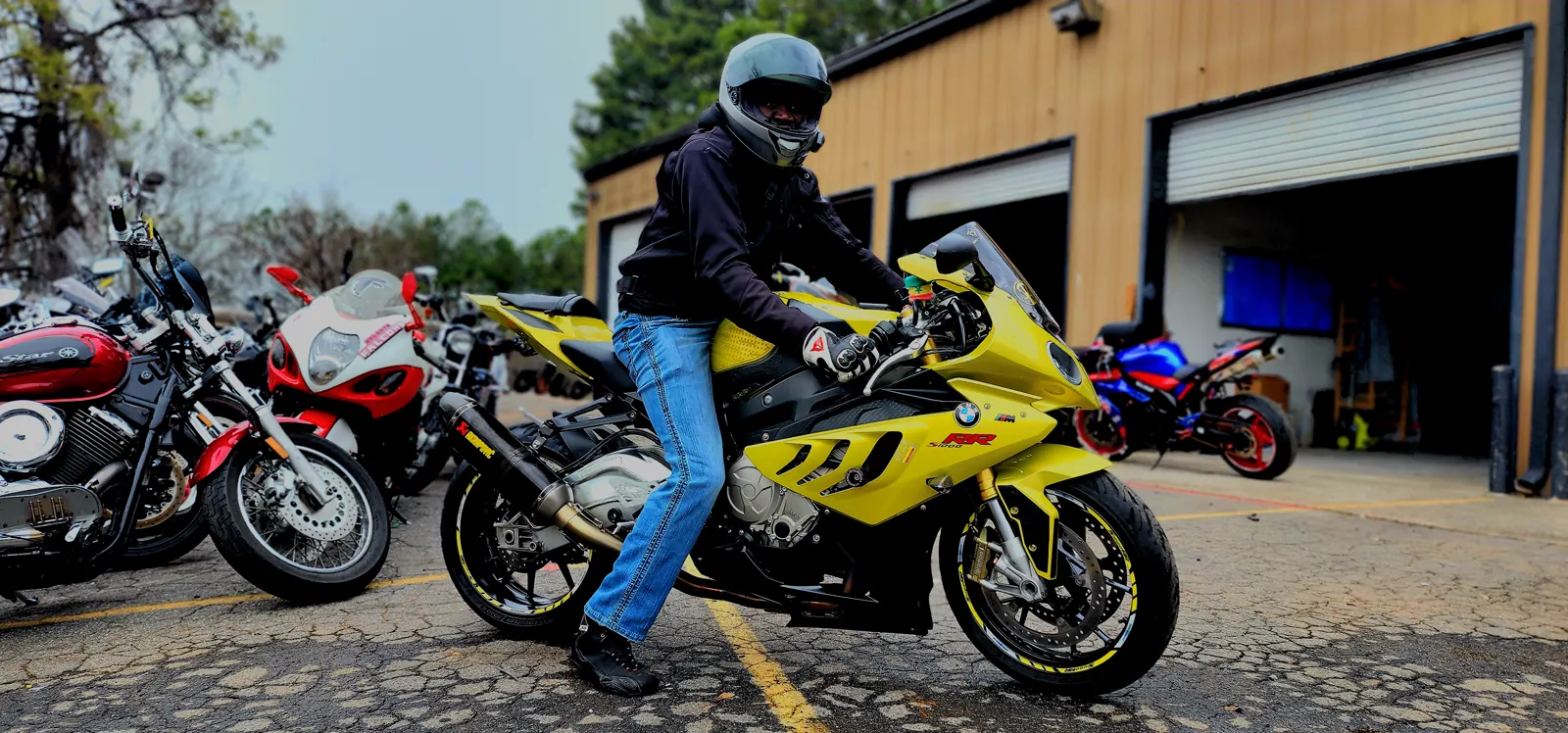
Riding around here shapes what a good tune needs to do. Georgia doesn’t allow lane splitting and the I-75 run into the city is a long grind, so almost nobody commutes on two wheels from Acworth. These bikes eat sustained highway and back-road miles instead of stop-and-go. Sable Trace riders off Highway 92 in the Cherokee corner spend their Saturdays out on rural two-lane pavement with shoulder drop-offs, gravel at driveway aprons and tar snakes that turn greasy in July heat. Road care is split across three county DOTs plus the city and Georgia DOT, which is why the Paulding and Cherokee edges feel rougher under you.
Downtown adds its own flavor. Main Street and South Main Street carry railroad tracks straight through the historic district, and those angled crossings go slick the second it rains. Rolling past the Victorian and mid-century homes of Historic Downtown Acworth, or easing by Cowan Historic Mill on the way to a Saturday event, you want a bike that answers the throttle gently and predictably. Snatchy fueling at walking pace isn’t just annoying near wet tracks. It’s the difference between a smooth crossing and a nervous one.
And then there's the part that's just about riding again
And then there’s the part that’s just about riding again. Because most riders don’t come in chasing power at all. They come in because the bike got tiring. The heat at stoplights, the surge at steady throttle, the hesitation you learned to ride around. Tuning that out doesn’t turn your motorcycle into a race bike. And it gives you back the version of it you remember from the first month you owned it.
Spring is when this hits everyone at once. March and April in Acworth mean every machine in the garage wakes up together, and half of them wake up cranky after a winter of sitting. Sitting is the real enemy here, since this is the best storage market around and bikes stay indoors. Varnished fuel, sulfated batteries and gummed passages all show up on the dyno as a lopsided fuel reading, so a February look means you’re sorted before the first good weekend. Batch the work while you’re at it. Your future self, staring at a perfect Saturday, will thank you.
One more thing worth saying out loud. Tuning is not a loophole around basic maintenance, and it isn’t a substitute for gear and good habits. Groups like the American Motorcyclist Association have been beating that drum for decades and they’re right. A well tuned bike is simply easier to ride well, which is a safety story as much as a performance one.
What good looks like when you walk out
You should leave with a before and after picture of the whole rev range, a plain explanation of what got richer or leaner and why, and a straight answer about anything we found that a tune can’t fix. You should notice the difference in the first mile, not just at redline. And you should feel a little smarter about your own motorcycle than you did that morning.
That’s the real bar for the best dyno tuning Acworth riders can reach, and it has nothing to do with who has the biggest sign. Own the dyno. Write the map here. Explain it in English. Everything else is decoration.
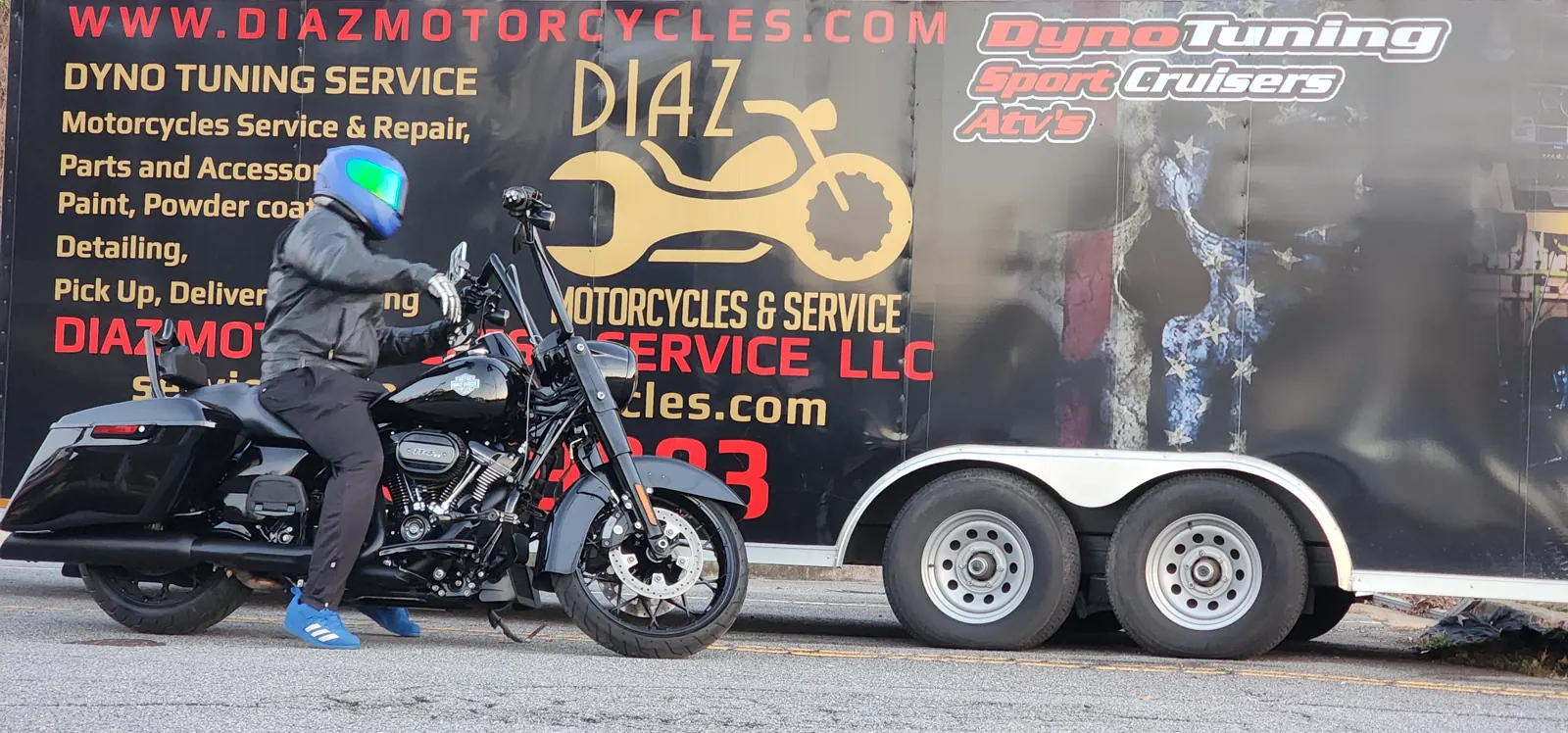
One last practical note for the fleet owners. An Acworth address might sit in Cobb, Paulding or Cherokee, and we don’t care which one your mailbox lives in. Harley, KTM, Honda, BMW, Aprilia, a 1978 project that’s been under a sheet since your kids were small, bring it. All makes, one bench, one dyno, one conversation.
Questions Acworth riders ask us
What makes your dyno tuning different?
The dyno is ours and it lives in our building, so the mapping gets written here while the engine is running in front of us. That means we can test a change, feel it, and adjust it the same afternoon. It also means the person explaining the results is the person who made them. Nothing gets emailed off to a stranger.
How do I pick a good tuning shop?
Ask three questions: do you own the dyno, do you write the map in house, and can I see the before and after? A shop that answers all three plainly is worth your drive. If any answer gets vague, that’s your signal to keep shopping. Good shops love talking about this stuff.
Should I go to a dealer or an independent shop?
Dealers are excellent at their own brand, with factory tools and factory training behind them, and we send people to them when a warranty claim is involved. Independents like us cover every brand in your garage under one roof. If you own one bike of one make, either can serve you well. If your garage holds four different badges, one shop is simpler.
What should I ask before I book?
Ask what gets checked before the bike goes on the roller, because a tune on top of an air leak or a tired coil is wasted effort. Ask how many runs are typical and what happens if something turns up mid-job. Then ask what you’ll walk out with. A clear answer to that last one tells you almost everything.
Do you work on all brands?
Yes. Harley, Honda, Yamaha, Kawasaki, Suzuki, BMW, KTM, Ducati, Aprilia, Triumph and plenty of older machines with no badge left on the tank. That’s the whole reason we lead with all makes, since an Acworth garage rarely holds just one brand.
My bike isn't modified. Is tuning still worth it?
Often, yes. Factory maps are built to satisfy rules and cover every climate, so many stock bikes run a touch lean in the range you ride most. Smoothing that out fixes surging, abrupt throttle response and stoplight heat. You don’t need a single bolt-on part for that to be true.
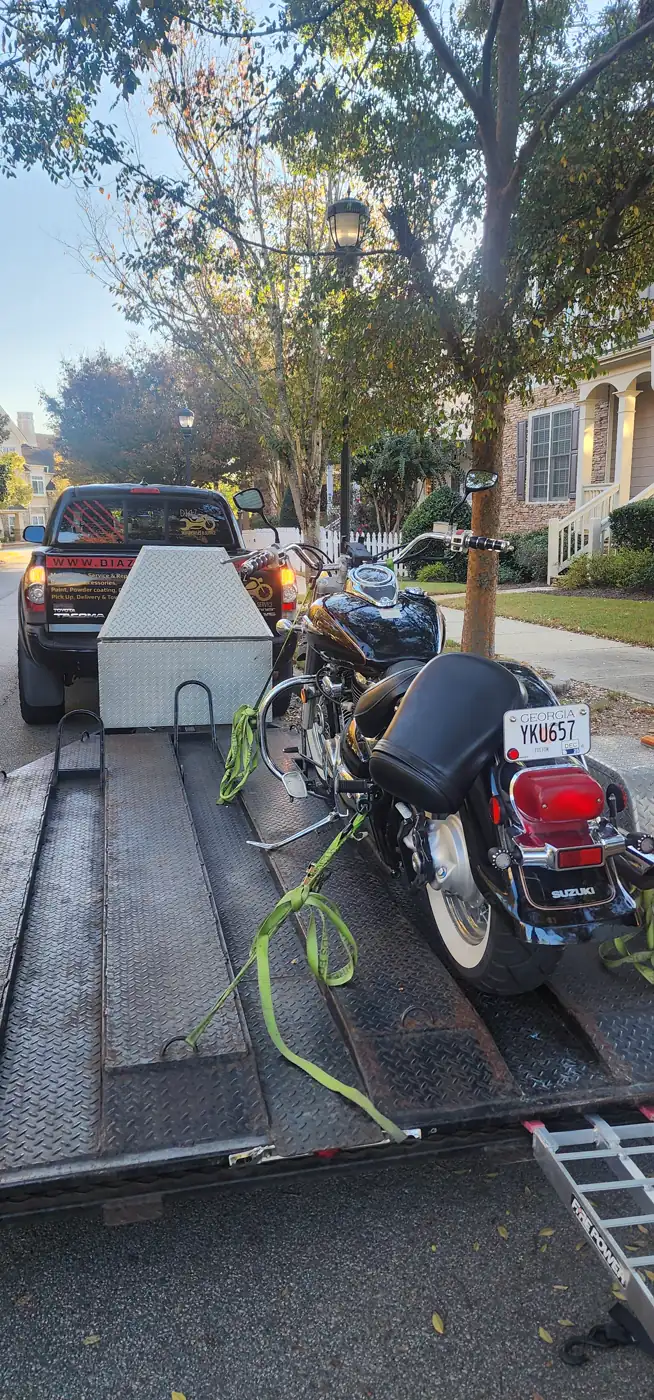
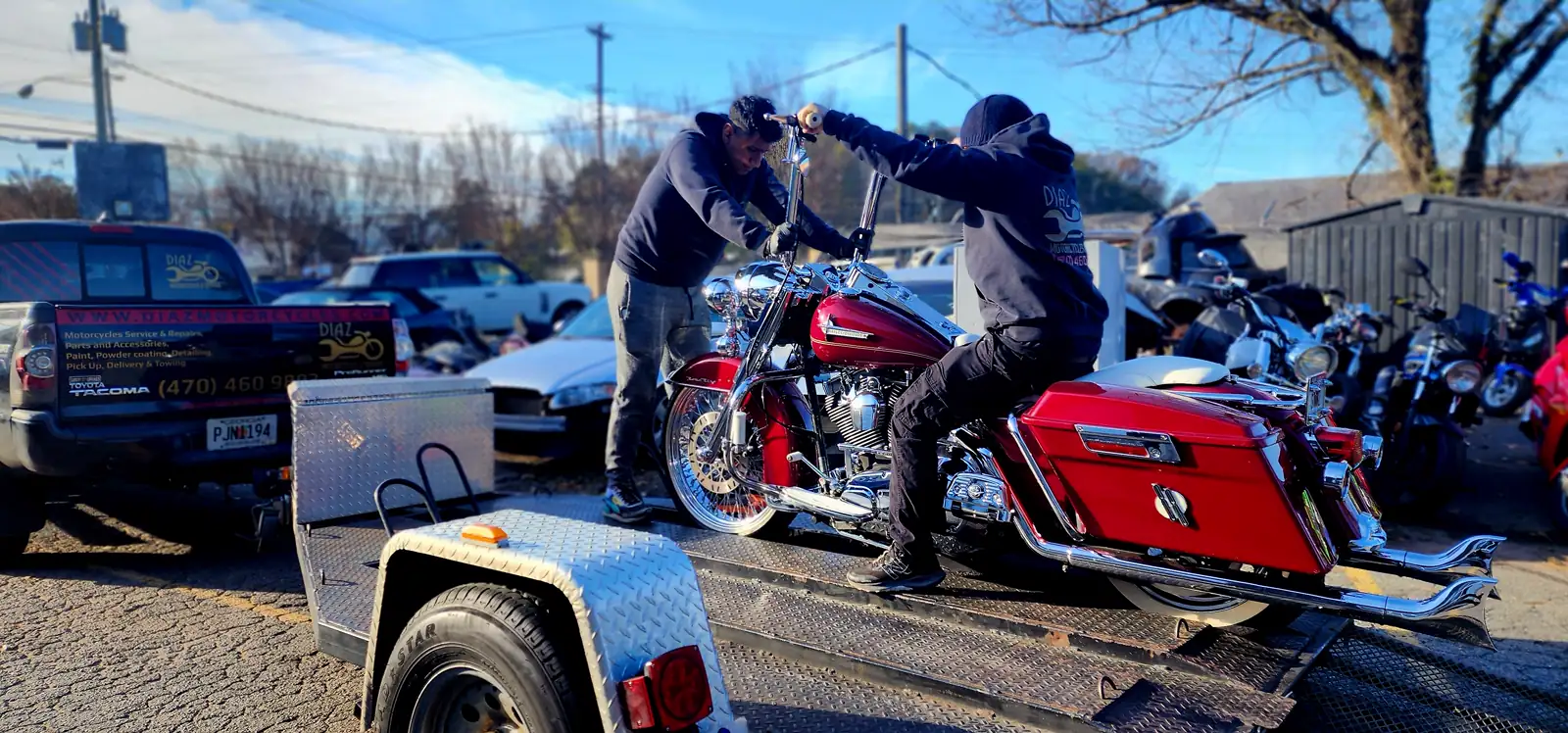
We take care of riders all over the northwest side, starting with Acworth and the lake communities around it and reaching into Kennesaw, Marietta and Woodstock. North of the lake we see plenty of bikes from Emerson, Cartersville, Adairsville and White, and folks from Euharlee and Taylorsville make the run too. West of town we work with riders in Dallas and Powder Springs, and Canton sends us its share of ADV and dual-sport machines. If you’re a little outside that ring, call anyway. We haul bikes for a living and the trailer goes farther than you’d guess.
LET'S GET YOUR BIKE FEELING RIGHT
If your bike has a flat spot, a surge, or just a personality change since the last set of parts went on, text us and describe it in your own words. We’ll tell you straight whether a tune is the answer or whether something else needs attention first. Acworth is about half an hour down I-75, and if that drive doesn’t fit your week, we’ll come get the bike and bring it home tuned.
470-460-9883Diaz Motorcycles and Service, LLC · 847 Barnes Mill Road, Marietta, GA 30062