Motorcycle Dyno Tuning Mableton — What to Expect
How our in-house dyno finds what your bike is really doing, and what changes once we fix it.
You know the sound before you know the word for it. Plus, Third gear, past four grand, and the bike hesitates a half beat before it pulls. Of course, or you catch that sharp raw-fuel smell sitting at a red light, and the header pipe runs hotter than it did last year. Then again, your hands feel it too, a little buzz through the bars that wasn’t there in the spring. Even so, that flat spot in the middle of the rev range is what sends most riders looking for motorcycle dyno tuning Mableton can reach without burning a whole Saturday. Meanwhile, here’s the good part: it’s fixable, and it’s rarely the scary kind of problem.
The short answer: what a dyno actually does
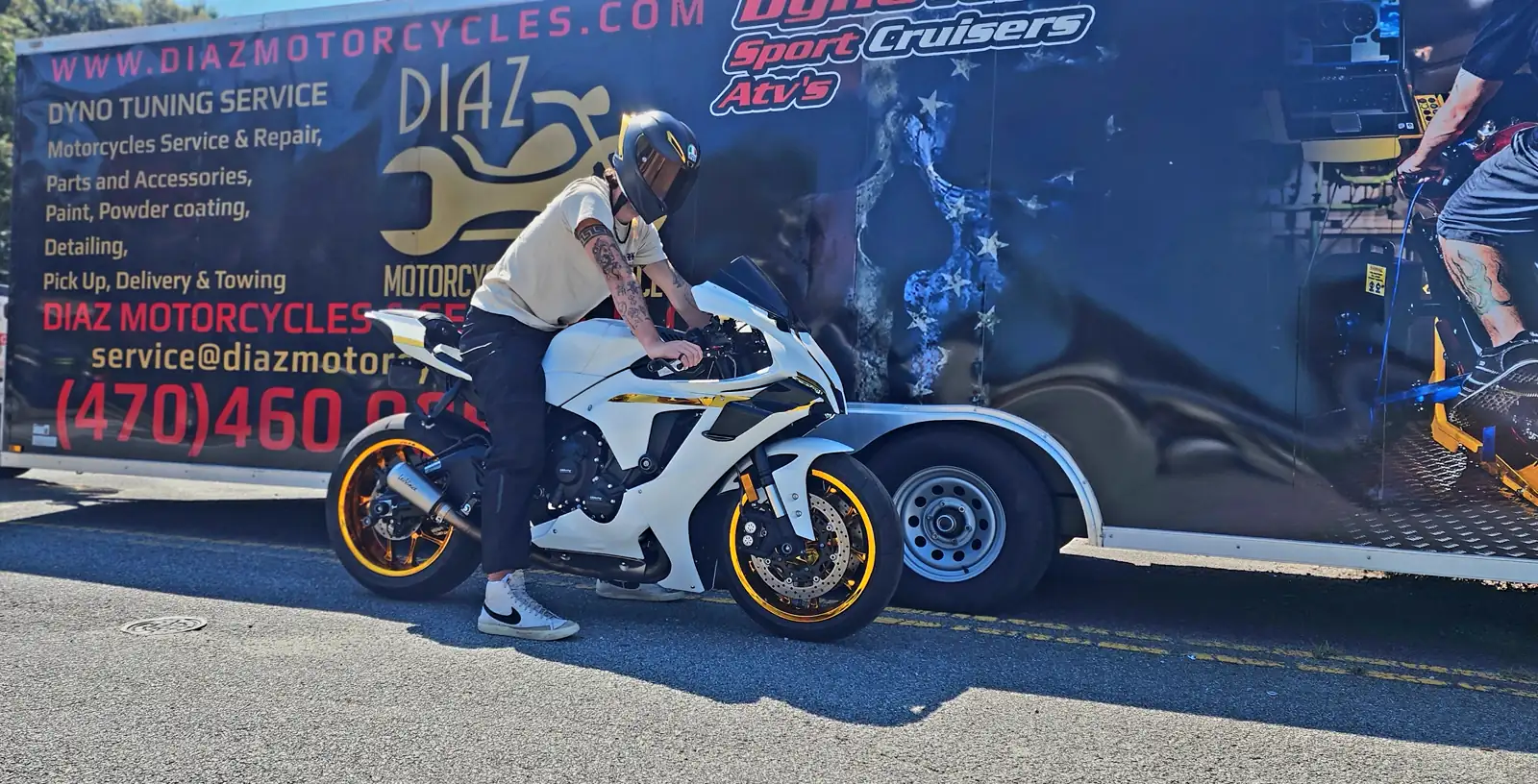
In fact, that said, a dyno is a heavy steel drum set into the shop floor. For example, we strap your bike down, roll the rear tire onto that drum, and let the engine push against it while we watch. After that, the drum measures how hard your engine can really work. At the same time, a probe in the exhaust reads how much oxygen is left over after the burn. Put those two readings side by side and you get the truth about your motor, not what a factory chart says it ought to do on a cool morning in a test lab halfway around the world.
Then comes the part that changes how the bike feels. We rewrite the fuel and spark instructions your engine follows, either by flashing the ECU or by dialing in a Power Commander, and we run it again. Change, measure, change, measure, until the curve is smooth from idle to redline. Tuning is for you if anything about how air moves in or out has changed: a new exhaust, a high-flow filter, a cam, big-bore work, a fresh top end. It’s also for you if the bike has never felt right since the day you bought it.
Lean and rich sound like mechanic words, but they’re simple. Lean means too much air for the fuel going in. A lean bike runs hot, pops on decel, surges at steady throttle, and feels flat where it should feel eager. Rich is the other direction, too much fuel, so plugs foul, the exhaust smells strong, mileage drops, and the bike feels soft and lazy. Most bikes leave the factory a touch lean on purpose to clear emissions rules. Bolt on a freer-flowing pipe and you push it further that way. A tune puts the mix back where your engine wants it. If you’re curious how tuning sits next to everything else under our roof, here’s the full list of what we do.
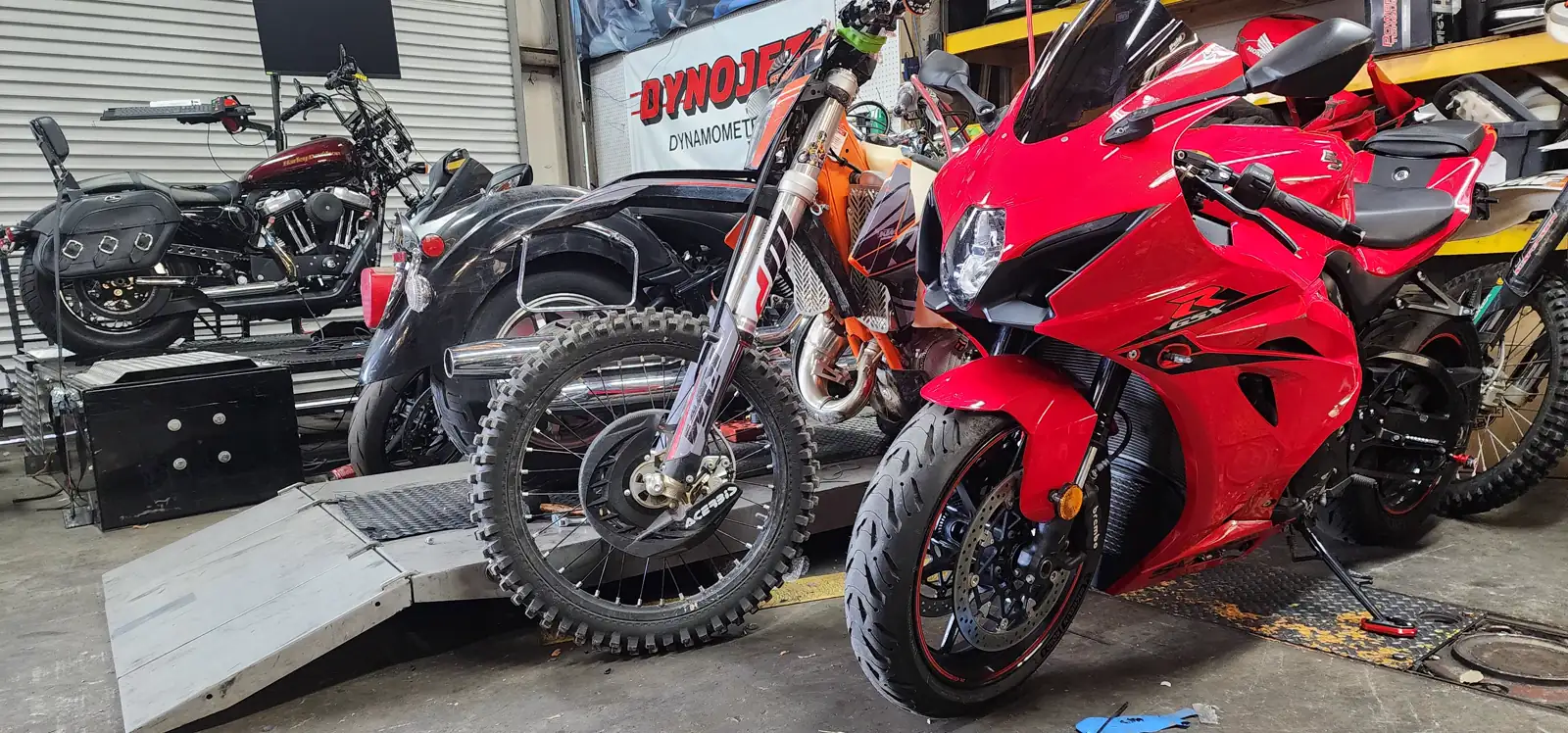
STRAPPED DOWN, NOT THRASHED
A dyno pull is short and controlled. Your bike is tied down, watched by a tech the whole time, and fans blow air across the motor exactly like a moving ride would. Nobody is out flogging your machine on a back road to see what happens.
What drives the work around here
Mableton riders put real miles on their bikes. Warm weather runs about nine months a year, downtown Atlanta sits roughly fifteen miles away, and Georgia bans lane splitting and filtering. So on I-285 or I-20 your bike waits in the same jam a minivan does, with no airflow and a hot motor underneath you. Heat is hard on any engine. It’s harder on one that’s running lean. That’s why the everyday commuter along Mableton Parkway (GA 139), the main north-south spine through the community, tends to feel a bad map sooner than a weekend-only rider does.
South Cobb has the widest mix of bikes we see anywhere in our radius. Up in the Vinings Estates corridor there are well-optioned baggers and European machines that get ridden hard on Saturday and parked in a clean garage by dinner. Around The Retreat at Old Vinings Lake it’s a similar story with a little more variety. Over in Queen Mill and the older streets nearby, we see higher-mileage cruisers and sportbikes that earn their keep. All of them respond to the same thing: a map built for that specific engine, on that specific day, with the parts actually bolted to it.
Two bikes off the same assembly line can want two different maps. That's not a flaw. That's just engines being engines.
Air matters more than most riders expect. A humid August afternoon near the Chattahoochee is thicker and lazier than a dry February morning, and your engine notices. Modern bikes with good sensors adjust a little on their own. Older ones and heavily modified ones can’t. That’s part of why motorcycle dyno tuning Mableton bikes get here is done with logged numbers, not somebody’s file pulled off a forum.
The timing on this matters more than the fix does. Tune after the parts are on, not in the middle of the project. If you’re planning a pipe this month and a filter next month, wait and do both, then tune once. Otherwise you pay for a map that goes stale the second the next box shows up. Heat is patient, though, and it collects a bill eventually, so don’t ride a lean bike all summer either. Get the parts settled, then let us set the fueling.
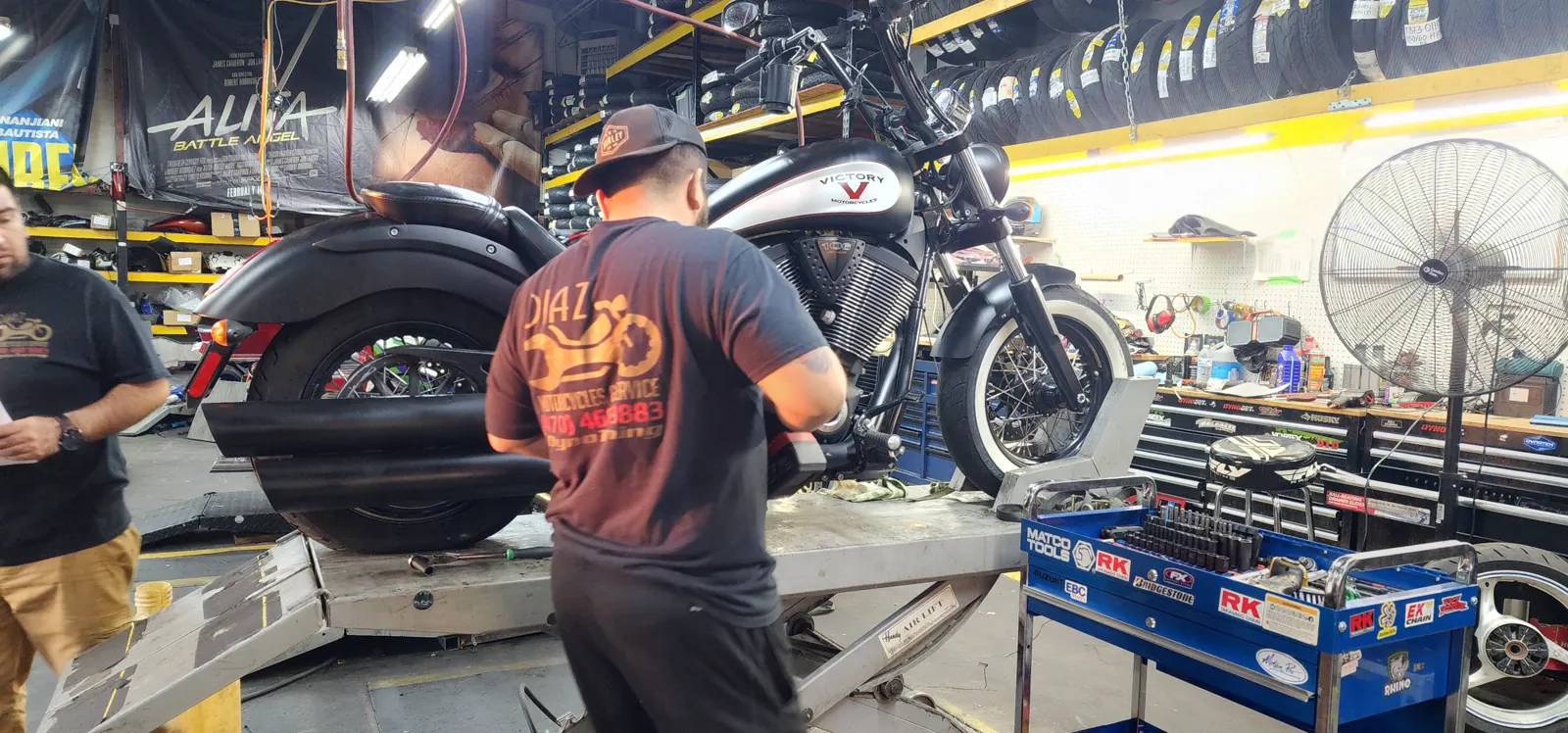
What we check before we quote anything
A dyno is a measuring tool, not a magic wand. It’ll show a bad running condition beautifully, but it won’t fix a mechanical problem, and we won’t pretend otherwise. So before anybody quotes you a tune, we go looking for reasons the bike might be running poorly that have nothing to do with the map. That check is short, and it saves people from paying for the wrong thing.
- We ride it or run it and listen. A stumble, a surge and a misfire all feel different, and the ear catches things a screen misses.
- We pull codes and look at live data. Sometimes a tired sensor has been quietly lying to your ECU for a year.
- We check compression and look for leaks. A motor that can’t hold pressure can’t be tuned into feeling healthy.
- We hunt for intake and exhaust leaks. A cracked boot or a blown gasket makes a bike read lean no matter what fuel you add.
- We read the spark plugs. They’re a free confession from inside the cylinder.
- We confirm fuel delivery and filters, then make a baseline pull so we have a starting point in writing.
After that we tell you what we found, in plain words, and what a tune will and won’t change. If a bike needs a valve adjustment first, we say so. If it’s already healthy and just needs fueling, we say that too and get to work. Honest diagnosis before a quote is a big part of what separates a good shop from a place that just sells you a session and hands the bike back.
Mistakes worth skipping
- Loading a canned map from the internet and calling it tuned. It’s a starting point at best, and it was never written for your bike.
- Chasing a number instead of a feel. Peak figures look great on a screen. You ride the middle of the rev range every single day.
- Tuning around a mechanical fault. Extra fuel can mask a problem for a while, then it can’t.
- Adding one part at a time and re-tuning after each one. Group your changes and tune once.
- Ignoring the small stuff. A clogged filter, a weak battery or an old plug will scramble a tuning session fast.
- Assuming small bikes don’t count. Thumpers, scooters and 300s all benefit from correct fueling.
If you like reading up before you hand over the keys, the write-ups at RevZilla’s Common Tread explain a lot of this in rider language. We’re happy to be the second opinion after you’ve done your homework. Honestly, informed customers make our job easier.
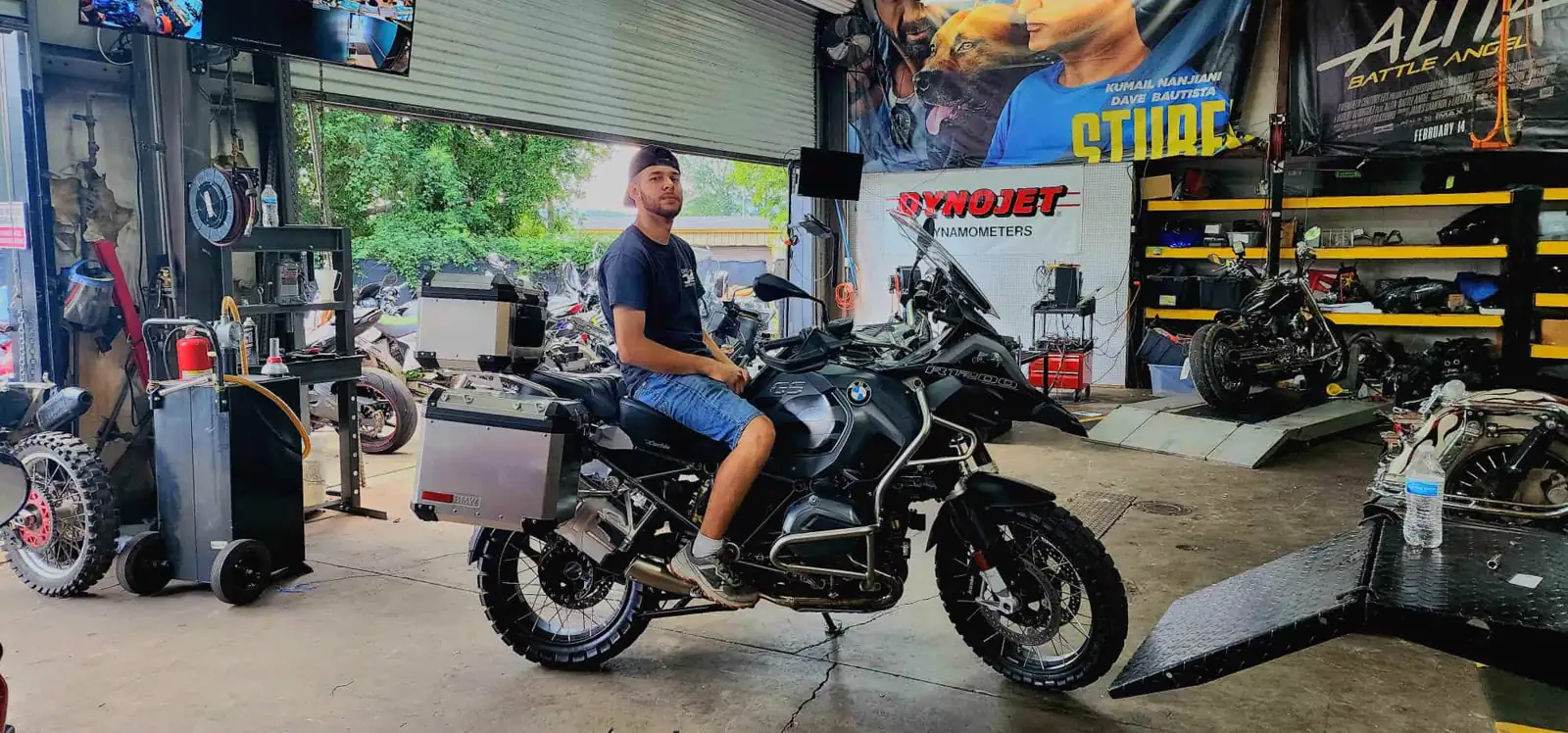
A real example from the neighborhood
A bike came in from Vinings Estates with exactly this. A big touring twin, slip-ons added the year before, a free-flowing filter after that, and no tune at any point. The owner described it perfectly without using a single technical term: hot in traffic, popping on the way down through the gears, and a dead spot right where he wanted roll-on power. He’d been living with it because the bike still ran, and running felt like good enough.
Our check found no mechanical trouble, just a badly stale fuel map fighting a lot more airflow than it was written for. So we baselined it, flashed it, and worked the mid-range until the curve stopped sagging. He picked it up, rode it home down South Cobb Drive, and told us the bike felt like it did the week he bought it, only smoother in stop-and-go. That’s the whole goal. Not a trophy number, just a bike that does what your right hand asks.
We see the same pattern on sportbikes, which behave a little differently because they rev higher and live in a narrower band. If that’s your machine, here’s how we handle that job. And riders farther south ask us the same questions, so we wrote up the Newnan side of things too.
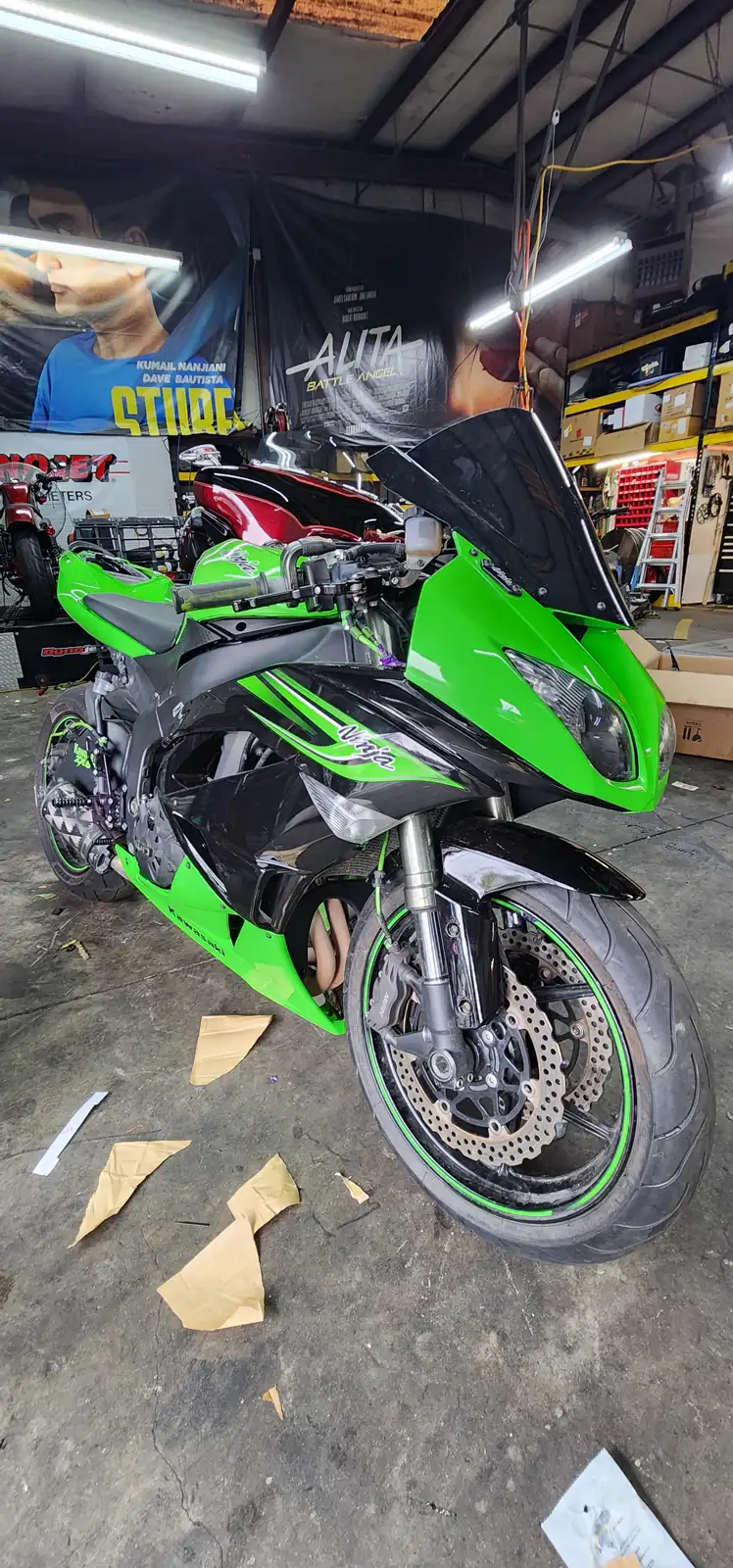
Getting the bike to us from Mableton
You’re about thirteen to sixteen miles out, which is roughly twenty-five to thirty-five minutes on a normal day. Take South Cobb Drive (GA 280) north through Smyrna into Marietta, go east on Roswell Road, then over to Barnes Mill Road. It’s a direction most South Cobb riders already know, so it doesn’t feel like a trip. Compare that to a volume dealership like RideNow Powersports Canton at 645 Riverstone Pkwy, which sits close to forty miles north of you and is brand-focused by design.
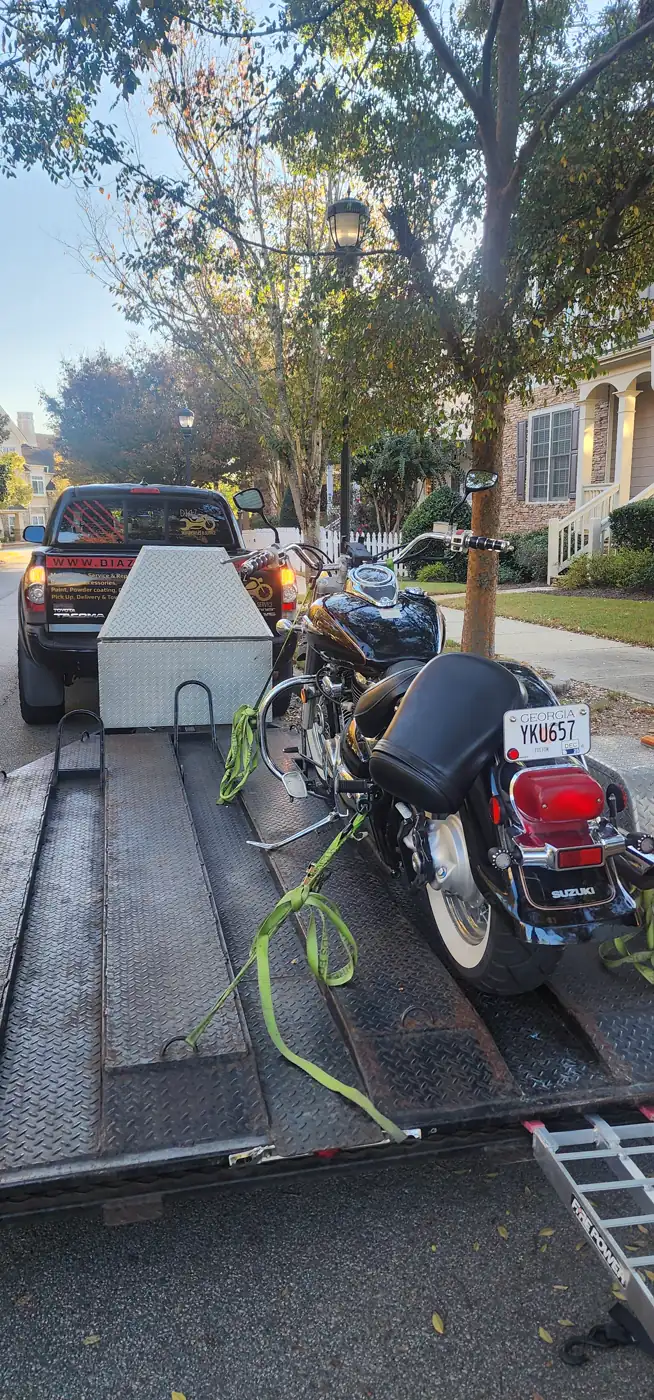
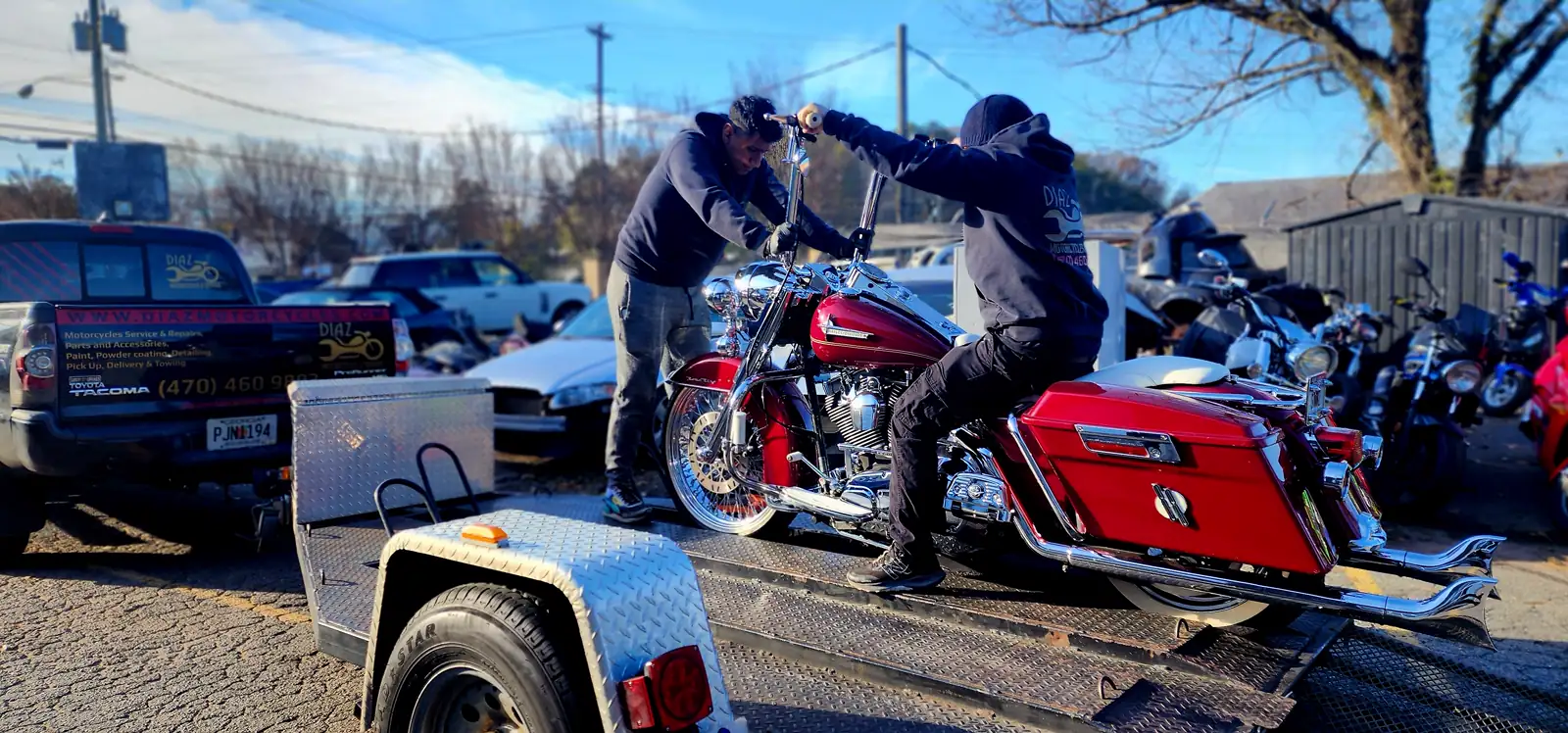
Don’t want to make the ride at all? We pick up and deliver. Plenty of friends we’ve helped have handed us a key on a weekday morning and gotten a text when the bike was back in the garage. That’s especially handy if your bike lives outside under a cover rather than in a garage, or if your work schedule doesn’t leave a clean window. One less thing to plan around.
Timing-wise, we like project bikes in the cooler stretch from late November through February, when there’s room for teardowns. Tuning, though, fits any season and books quickly.
What a good tune feels like on the road
The first thing riders notice isn’t power. It’s manners. Throttle pickup gets crisp instead of vague. The bike stops surging at a steady cruise. Decel popping quiets down. Engine heat in traffic drops to something you stop thinking about. Idle settles. On a bike that had been snatchy at low speed, first gear suddenly feels like a friend again, which matters a lot in a parking lot after a show at Mable House Barnes Amphitheatre when everybody leaves at once.
Then the fun part. Roll on at 3,000 rpm and the bike just goes, without that little hiccup where you used to brace for it. Around town it makes a quick loop past Riverline Park feel effortless. On a long day it makes a real difference, like when you point north for the Georgia Triangle and run SR 60 to Suches and Wolf Pen Gap Road out to SR 180, roughly two to two and a half hours out and a full day of tight corners. A well-fueled bike is less tiring on a road like that, because you’re steering instead of managing the engine.
Riding keeps growing, and groups like the Motorcycle Industry Council track a lot of new riders coming in every year. Many of them buy used bikes that were modified by somebody else and never corrected. If that’s you, don’t sweat it. A session of motorcycle dyno tuning Mableton riders can book in a week is often the fastest way to make a used bike finally feel like yours.
The easy next step
You don’t need to diagnose anything before you reach out. Text us what the bike is, what’s been added to it, and what it’s doing that bugs you. A short video with the engine running tells us more than a paragraph ever could. We’ll tell you straight whether it sounds like a tuning job, a mechanical job, or something small you can sort out in your own driveway on a Sunday.
From there we set a day, get the bike here or come get it, run the checks, and show you what we found. No guessing, no mystery. Just a plan you can say yes or no to.
Questions Mableton riders ask us
How long does dyno tuning take?
Most tunes are a same-day job once the bike is on the dyno. Plan on a few hours of shop time for the checks, the baseline pull, and the mapping passes. If our inspection turns up something mechanical that needs fixing first, we’ll call you before we go any further. Bigger builds with fresh engine work can take longer because we break them in properly.
Do you work on my brand?
Almost certainly yes. We’re multi-brand, so Harley, Indian, Victory, Honda, Yamaha, Kawasaki, Suzuki, BMW, Ducati, Triumph and KTM all roll through our doors. Cruisers, baggers, sportbikes, adventure bikes, dirt bikes and small-displacement machines are all fair game. If your bike is unusual, send us a photo and we’ll tell you honestly whether it’s a good fit.
Do I need an appointment?
An appointment is better, since the dyno is one machine and it gets booked. Text or call ahead and we’ll hold a slot that works with your schedule. Walk-ins are welcome for questions and quick looks, and we’ll never turn you away for advice. Spring and early summer fill up fastest, so reach out sooner if you’re planning around a trip.
Can you pick up my bike in Mableton?
Yes. We pick up and deliver throughout South Cobb, so you don’t have to ride up South Cobb Drive or borrow a trailer. That’s useful if the bike isn’t running well enough to trust on the highway, or if your workday doesn’t leave a gap. Tell us where it’s parked and when you’re around, and we’ll handle the rest.
How do I get a quote?
Text us the year, make and model, plus a list of anything that’s been added or changed. Photos of the exhaust and intake help a lot. We’ll give you a clear idea of what’s involved, then confirm it after we inspect the bike, because we’d rather quote what we can see than guess over the phone. You’ll always approve the work before we start.
Will a tune hurt my engine or my warranty?
A correct tune is generally easier on an engine than a lean factory map with aftermarket parts bolted on, because it lowers combustion temperatures where they were running high. Reliability usually improves. Warranty terms depend on your manufacturer and dealer, so it’s worth a quick check if your bike is still covered. Ask us and we’ll talk it through with you.
We take care of riders all over South Cobb and the west side of the metro. Mableton is a short run up South Cobb Drive, and we see plenty of bikes from Smyrna, Vinings and Cumberland on the same road. Austell, Clarkdale and Powder Springs riders come to us for tuning and paint work, while Douglasville, Lithia Springs and Hiram riders make the trip for services their local options don’t offer. Closer in, Marietta, Fair Oaks and Atlanta riders are regulars here. If you’re somewhere in between, just ask, because pickup and delivery covers most of that map anyway.
TEXT US ABOUT YOUR BIKE
If your bike has a flat spot, runs hot in traffic or has never felt right since you modified it, we can help. Text us from Mableton with the year, make and model plus a short video of it running, and we’ll tell you straight whether tuning is the answer. We’ll set a time, pick the bike up if you’d rather not ride it in, and show you exactly what we found before any work starts.
470-460-9883Diaz Motorcycles and Service, LLC · 847 Barnes Mill Road, Marietta, GA 30062