Best Dyno Tuning Mableton Riders Can Get — How to Pick the Shop
What we actually see roll through the door, and how to judge a tuning shop before you hand over the keys.
Even so, most weeks, the bike strapped down on our dyno isn’t a race weapon. Meanwhile, it’s a Street Glide that sleeps in a garage a few streets off Nickajack Road. In fact, that said, it’s a ZX-6R that gets ridden to work. For example, it’s a BMW that stopped feeling right after somebody bolted on a slip-on. That’s what we see most. After that, and it’s why riders hunting for the best dyno tuning Mableton has within reach usually aren’t chasing a giant number at all. What’s more, they just want the bike to stop being weird.
Weird has a lot of shapes. A stumble when you crack the throttle at low speed. So and Better yet, Heat off the motor at a red light on Mableton Parkway that feels like standing next to a grill. Popping on decel. None of that is exciting, and all of it is fixable. So let’s talk about what a tune really is, and how you tell a shop that will do it right from a shop that will hook up a laptop and guess.
The myth: a dyno is a bragging machine
Still, here’s the story most riders have in their head. Plus, a dyno is a big roller in a loud room. Of course, you pay to run your bike on it, a number pops up on a screen, and you go tell your friends the number. If the number is bigger than it was before, the tune worked. If it isn’t, you got robbed.
That’s not wrong, exactly. Then again, it’s just about ten percent of the story, and it’s the least useful ten percent. A dyno is not a scoreboard. A dyno is a measuring tool, the same way a scale is a measuring tool. Even so, the roller lets the bike run under real load while it stands still, so we can watch what the engine does at every single throttle position and every single rpm without you having to ride it flat out on a public road. That last part matters more than any number.
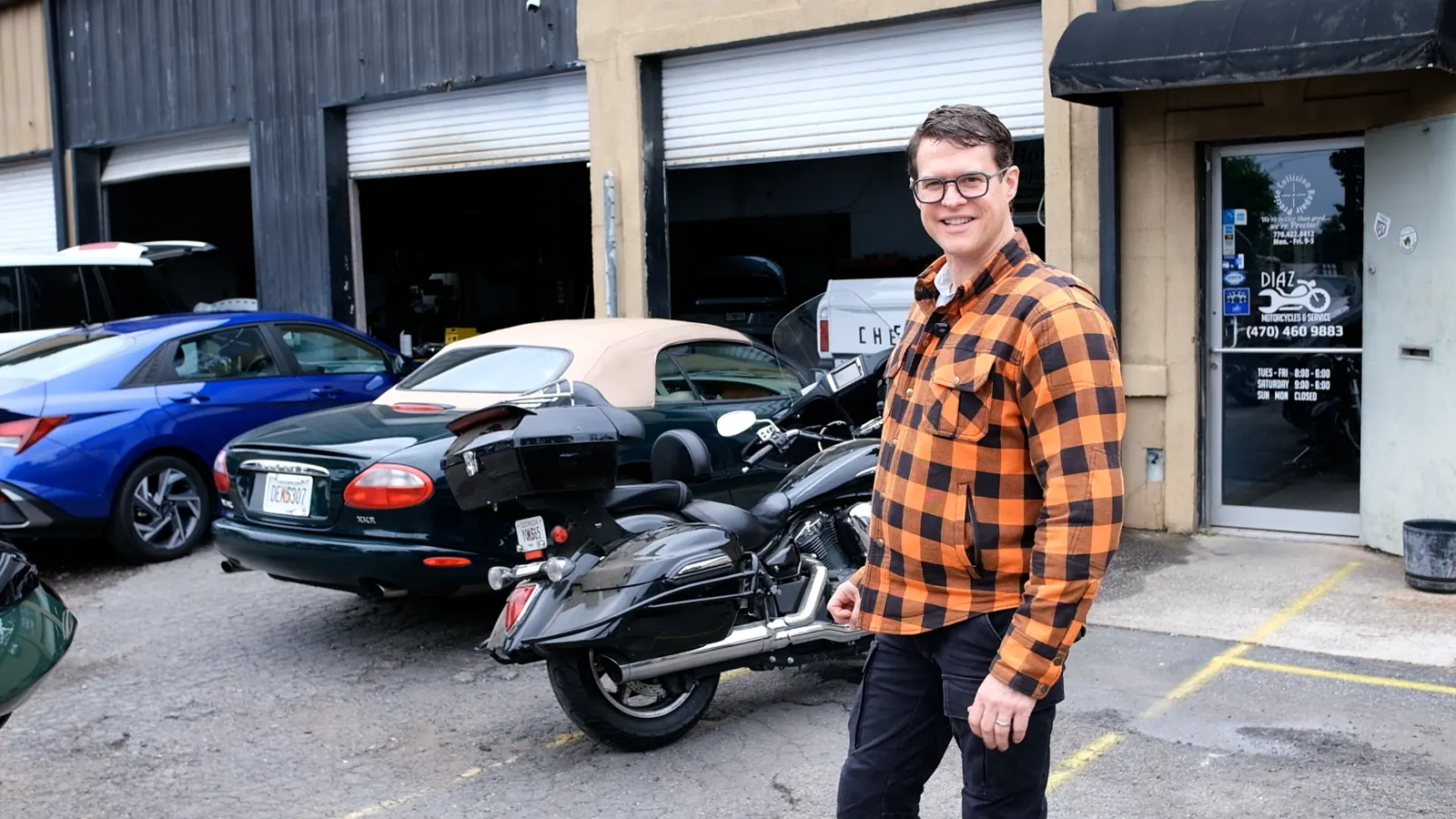
Meanwhile, the second myth is that a tune is only for bikes with big engine work. Cams, big bore, all that. Plenty of tunes do follow that kind of build. But the most common reason a bike lands on our rollers is much smaller: somebody changed the exhaust, or the air filter, or both, and the bike has been running a little off ever since.
The third myth is that a stock bike is already perfect, so nothing needs touching. Stock bikes leave the factory tuned for an average of everywhere: average fuel, average weather, average emissions rules. Georgia in July is not average anything. For the longer version of that argument, we wrote a whole post about how to decide between them.
That's the common version. The real story is a little different.
What a dyno actually measures is force at the rear wheel over time, and it turns that into two lines on a graph: torque and horsepower. Torque is twist. It’s the shove you feel when you roll on in third gear. Horsepower is just torque and engine speed multiplied together, which is a fancy way of saying it describes how hard the bike pulls the faster it spins. Two lines. That’s it. Everything else is what those lines tell us about how the engine is breathing.
Alongside the rollers we watch the air-fuel ratio, which is the part riders can feel even if they’ve never heard the term. An engine wants a certain amount of air for every drop of fuel. Too much air and not enough fuel is called lean. Lean runs hot, pops on decel, hesitates off idle, and over time it is hard on valves and pistons. Too much fuel is called rich. Rich runs soft and lazy, fouls plugs, smells like a lawn mower, and washes oil off the cylinder walls. Neither one is a disaster tomorrow. Both are annoying today.
Why does a bike drift lean or rich in the first place? Usually because something changed. Put a freer-flowing exhaust on and more air moves through, but the factory computer still delivers the same fuel it always did, so the mix goes lean. Swap the filter and the same thing happens on the intake side. Ride mostly short trips in ninety-degree heat with the fan cycling and the engine spends its whole life in a condition the factory map barely considered. The computer does its best with the sensors it has. Honestly, it just doesn’t have permission to make a big enough correction.
A tune gives it permission. Whether we’re flashing the ECU directly or working through a Power Commander, what we’re really doing is rewriting the fuel and timing instructions for hundreds of little zones across the rpm and throttle range. Change those numbers and the bike feels different in ways that have nothing to do with peak power: smoother off idle, cooler in traffic, cleaner throttle response at the exact small openings you use most, no lurch when you go on and off the gas in a parking lot. Friends we’ve helped almost always mention the low-speed manners first and the top end second.
A dyno isn't a scoreboard. It's a stethoscope that happens to print a graph.
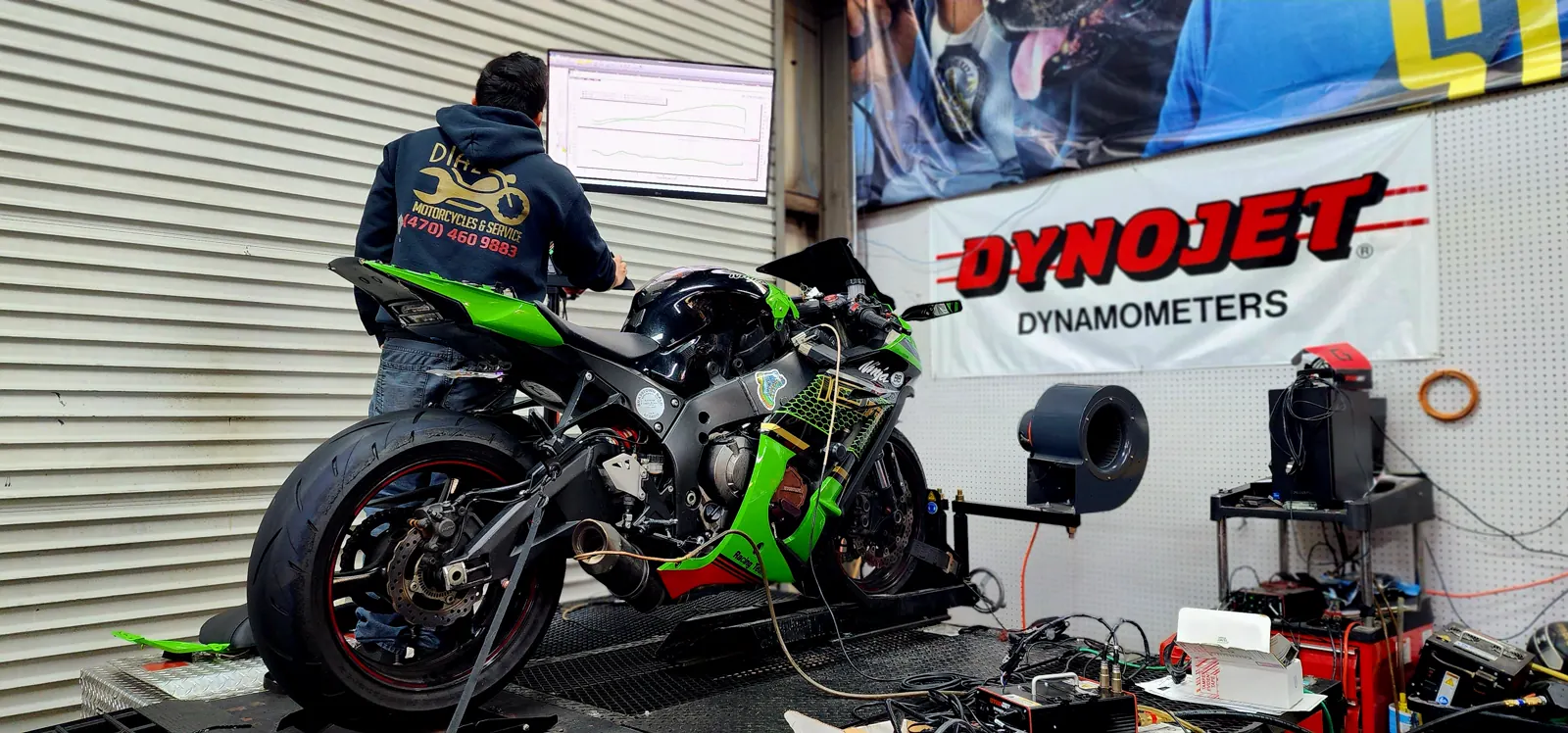
What a real tuning session actually looks like
Custom mapping is not a file you download. It’s a conversation between the bike and a person, repeated until the bike stops arguing. Here’s the honest order of operations at our place, and it’s a fair checklist to hold any shop to.
- We ask how you ride. Commuting on the interstate, weekend loops, two-up with luggage, mostly around town — the answer changes what we aim for.
- We go over the bike first. A tune can’t fix a tired chain, a clogged filter, a dying battery, a leaking intake or plugs that are past their day. We check those before we spend your time on the rollers.
- We make a baseline pull. That’s the before picture, with air-fuel readings included.
- We adjust, then run again. Then adjust and run again. A proper session is many runs, not one.
- We check the low and mid range on purpose, at partial throttle, because that’s where you actually live.
- We give you the sheet and walk you through it, so the graph means something to you instead of just looking impressive.
That last step gets skipped a lot, which is a shame, because reading your own sheet is easier than it looks. We broke it down line by line in a post about how we handle that job. Ten minutes with it and you’ll never nod politely at a dyno graph again.
WHAT A TUNE WON'T DO
A tune won’t hide a mechanical problem. If a bike has a vacuum leak, a bad coil or a worn clutch, mapping around it just buries the symptom. Good news: those things are all repairable, and finding them early is cheaper than finding them late.
How to tell a good tuning shop from a fast one
You don’t need to be technical to judge this well. You just need to know which questions separate a shop that measures from a shop that guesses. Ask these, then listen for whether the answers are specific.
- Is the dyno in-house? Plenty of good shops send tuning out. That’s fine, but it adds days and a middleman. In-house means the person adjusting the map is standing next to the bike.
- How many pulls come with the job? If the answer is one, it isn’t a custom tune. It’s a measurement.
- Do I get the sheet? A shop proud of its work hands you the before and after and explains both.
- Will you inspect the bike first? The right answer is yes, always, before any mapping.
- Can you do both ECU flashing and Power Commander work? Different bikes want different approaches. A shop locked into one method will steer you toward it whether it fits or not.
- Do you tune more than one brand? Multi-line experience means the tuner has seen how a Harley twin, an inline four and a European twin each misbehave.
We want to be fair here, because the dealer-versus-independent thing gets uglier online than it deserves to. Big multi-line dealers do real work. Mountain Motorsports up at 10885 Alpharetta Hwy in Roswell is a solid example of the type, about twenty-eight to thirty-two miles northeast of Mableton, and riders buy good bikes there and get taken care of. A dealer’s strength is factory training, parts on the shelf and warranty coverage on the brands they carry.
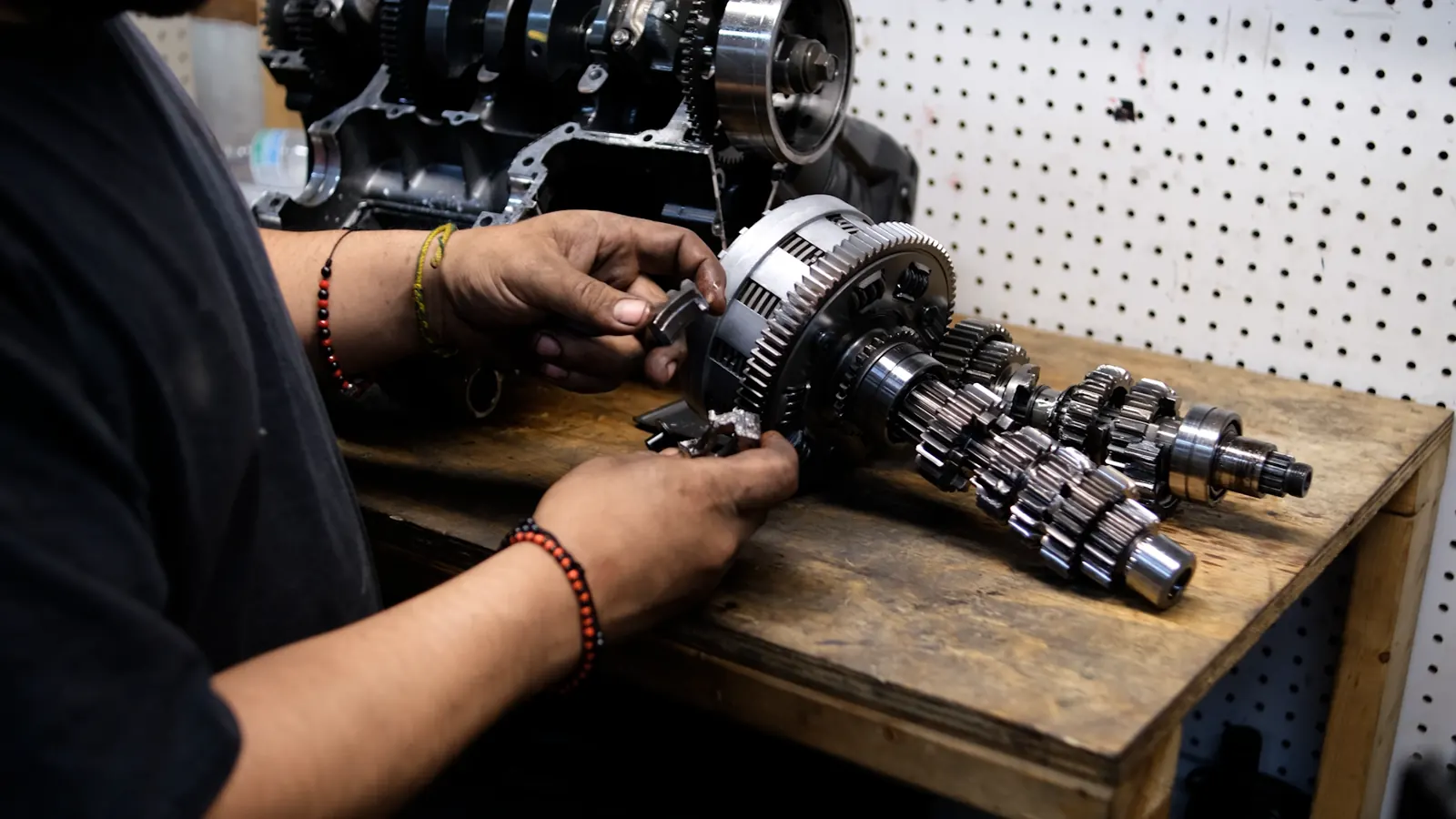
The trade-off is scope. Dealers are usually brand-locked, and deep custom mapping across many brands isn’t what most of them are built for. That’s the gap we fill. Ours is a multi-brand shop with the dyno, the paint booth and the wrenches all under one roof, which means the tuner can walk twenty feet and ask the tech who just had the engine apart what he saw. Here’s what we take care of here if you want the full list.
One rider off Nickajack Road put it better than we could.
He said he didn’t want a faster bike. He wanted a bike that didn’t surprise him. That is the cleanest description of a good tune we’ve heard, and it fits Mableton better than most places, because this town rides in two very different ways at once.
On one side you’ve got the garage-kept weekend bikes in Vinings Estates, homes built through the late nineties and early two-thousands with the tennis courts and clubhouse, where the bike is often a well-optioned bagger or a European twin. Add Vinings Brooke and Paces Lake and you have a whole corridor of riders whose bikes come out clean on Saturday morning and go back under cover Sunday night. Their complaint is rarely power. It’s manners: a hitch at small throttle, heat at a stoplight, a bike that never quite feels like it did the day they got it.
On the other side you’ve got the everyday riders along Mableton Parkway and Floyd Road, higher-mileage cruisers and sportbikes that go to work in warm weather nine months of the year. Georgia doesn’t allow lane splitting or filtering, so a bike sits in the same traffic a car does, which means a lot of heat-soaked idling. Those bikes wear faster and they feel every bit of a lean map. A tune that trims heat and smooths the low range is worth more to them than any peak figure.
Both halves of this city share the same roads, and those roads have opinions. Truck traffic out of the Riverside Parkway corridor shoves the asphalt around at intersections, and streets near Nickajack Creek collect washed gravel after a hard summer rain. All of that shows up as chop and short throttle inputs, which is exactly the part of the map a lazy tune ignores.
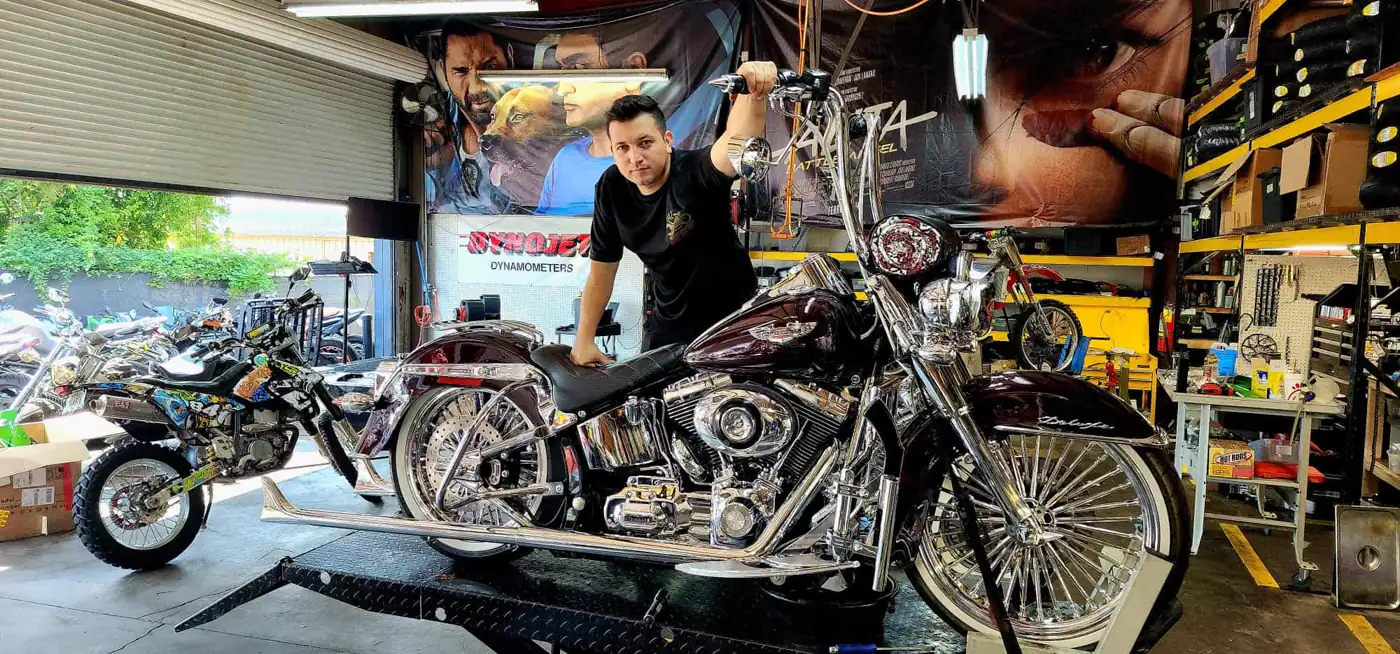
When the tune is done, the fun part is going and using it. The classic short local run is southwest on US 78, Veterans Memorial Highway, toward Douglasville and Villa Rica, with Sweetwater Creek State Park as the turnaround. It’s a good test loop because it mixes town speed, steady cruising and a few roll-ons. If you’d rather do a slow shakedown first, a lap around Thompson Park and back on Nickajack Road tells you plenty about low-speed manners before you commit to a longer ride.
Getting to us is easy from anywhere in South Cobb. It’s roughly thirteen to sixteen miles, call it twenty-five to thirty-five minutes, up South Cobb Drive, GA 280, through Smyrna into Marietta, then east on Roswell Road to Barnes Mill Road. Riders on the north side of the county sometimes ask whether the story changes up there, and honestly it doesn’t much — here’s the Kennesaw side of things if you’re curious.
What you should walk away with
You’re in a stronger spot than you think. You don’t have to know what a fuel table is to pick well. You just have to ask whether the shop measures before it changes anything, whether the dyno is in the building, whether you get your sheet, and whether the person doing the work has seen your kind of bike before. Any shop worth your time will answer all four without flinching.
And if you’re brand new to all this and want a foundation under your riding as well as your bike, the MSF Basic RiderCourse is still the best weekend a rider can spend. A smooth bike and a smooth rider are a great combination.
That’s the whole idea behind the best dyno tuning Mableton riders can get to: not a bigger number to brag about, but a bike that does exactly what your right hand asks, every time, in July traffic and on a cool Sunday morning alike. Bring us the weird. We like the weird.
Questions Mableton riders ask us
Can you pick up my bike?
Yes. We arrange pickup for riders across South Cobb, including Mableton, and it’s the usual answer when a bike isn’t running well enough to trust on I-285. Text us your address and what the bike is doing. We’ll set a window and keep you posted once it’s here.
How do I know the diagnosis is right?
Because we show you. We inspect before we tune, we make a baseline run, and you get the before and after sheets with the air-fuel readings on them. If we say the bike is lean in the midrange, you’ll see the line that says so.
What makes your shop different?
The dyno, the ECU flashing and Power Commander work, the mechanical bench and the paint booth all live in one building, and we work on many brands rather than one. That means the person tuning your bike can talk to the person who had the engine apart. Nothing gets lost between shops.
How do I pick a good tuning shop?
Ask whether the dyno is in-house, how many pulls come with the job, whether you get the printout, and whether they inspect the bike before mapping it. Specific answers mean a shop that measures. Vague answers mean a shop that guesses.
Dealer or independent — which is better?
Both can be great, and it depends on the job. A dealer is strong on warranty work and factory parts for the brands they carry. An independent multi-brand shop is usually the better fit for custom mapping, older bikes and anything that crosses brands.
How long does a dyno tune take?
Most tunes are a same-day job once the bike is on the rollers, though we’d rather have it for a full day so there’s room to inspect first and run as many pulls as the map needs. If we find something mechanical that should be fixed first, we’ll call you before we do anything.
We take care of riders all over the west and northwest side of metro Atlanta. That means Mableton and the rest of South Cobb, plus Smyrna, Vinings and Cumberland just up the road, Austell, Clarkdale and Powder Springs to the west, Lithia Springs, Douglasville and Hiram out past the Veterans Memorial Highway corridor, and Fair Oaks and Marietta closer to the shop. Plenty of Atlanta riders make the trip too, and a fair number of them tell us the ride out is half the reason they come.
LET'S MAKE YOUR BIKE FEEL RIGHT
If your bike has been running hot, popping on decel or hesitating off idle since that exhaust went on, we can put it on the rollers and show you exactly what’s happening. Text us from Mableton and tell us what the bike is doing in your own words — no technical vocabulary required. We’ll tell you honestly whether a tune is the answer or whether something simpler is.
470-460-9883Diaz Motorcycles and Service, LLC · 847 Barnes Mill Road, Marietta, GA 30062