Motorcycle Dyno Tuning Canton — Straight Answers
What a dyno really measures, how we diagnose before we quote, and how to tell a real tuning shop from a fast one.
A dyno gets talked about like a scoreboard. Riders picture a big number on a screen, a printout to brag about, and a bike that turns into a rocket overnight. That’s the myth, and it’s pointed the wrong way around. The number is just the receipt at the end. What you’re actually buying with motorcycle dyno tuning Canton riders keep asking us about is a fuel map that matches your bike, your air, your fuel, and the way you really ride.
Here’s the flip. The riders who get the most out of a tune are almost never chasing peak power. They’re chasing the middle. They want the bike to pull clean at a steady throttle, stop surging in traffic, and quit running hot at a light on Riverstone Parkway in July. That’s what a good tune fixes, and it’s the part nobody puts on a sticker.
The myth, and what's really going on
The old belief goes like this: a dyno is a power meter, so you only need one if you’ve built a race bike. Plenty of good riders believe it. But a dyno isn’t a meter so much as a treadmill with a brain. Your bike sits on a big steel drum, strapped down tight, and you run it through the gears while it stays right where it is. The drum has a known weight. The computer watches how quickly your rear tire spins that drum up, and from that it works out torque, then horsepower.
That’s the easy half. The valuable half is everything measured alongside it. A sniffer in the exhaust reads how much oxygen is left in your exhaust gas, which tells us exactly how much fuel your engine is burning at every single throttle position and every engine speed. That’s a map of your bike’s whole personality, not one number. So a stock commuter bike that never sees a track can still be badly out of tune, and the dyno is the only honest way to see it.
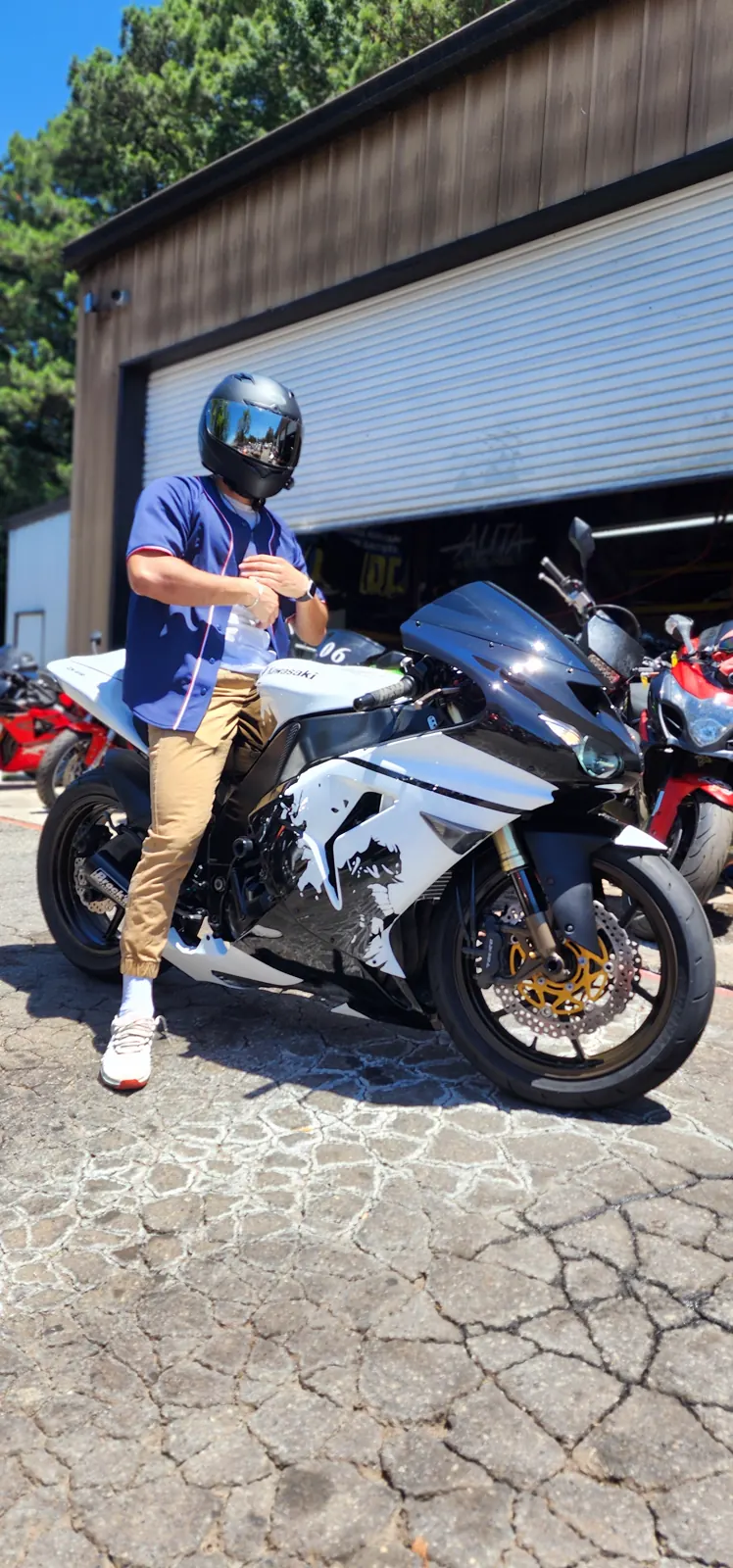
Lean, rich, and what your bike is trying to tell you
An engine wants a certain ratio of air to fuel. Too little fuel for the air coming in, and it’s lean. Too much fuel, and it’s rich. Neither one is a moral failing. It’s just arithmetic that drifted.
Lean feels like a bike that’s nervous. It surges at a steady cruise, pops and crackles on deceleration, gets hot in slow traffic, and hesitates when you crack the throttle open. Rich feels heavy and lazy. It smells strong, fouls plugs, sooties your pipe, and eats fuel like it’s angry about something. Both of them dull the part of riding you paid for, which is the bike answering the moment you ask.
Why does it drift at all? Because the factory map is a compromise. It’s written for a bike sold in dozens of climates with wildly different fuel and emissions rules, and it’s tuned lean in the cruising range on purpose to pass those rules. Then you add a slip-on, or a fresh air filter, or you live where summer air is thick and wet. The engine’s breathing changed. The map didn’t. A tune is us rewriting that map so the fuel matches the air your engine is really getting, here, in Georgia.
What we actually change
Depending on the bike, we do it one of two ways. On most modern fuel-injected bikes we flash the ECU, which means rewriting the factory computer’s own tables directly. On others we add a piggyback unit like a Power Commander that sits between the sensors and the ECU and adjusts the fuel signal. Both get you to the same place. One’s just a cleaner door into the same room, and which door we use depends on your bike, not on what’s easiest for us.
- Fuel at every throttle position and engine speed, so the bike stops surging and stops running hot at idle
- Ignition timing, so power arrives smoothly instead of all at once
- Rev limiter and speed limiter settings where it’s legal and appropriate for how you use the bike
- Throttle response, which is the difference between a snappy bike and a jumpy one
- Fan and idle settings on bikes that cook their rider in stop-and-go traffic
None of that is exotic. It’s careful work with a good measurement, which is why one shop’s tune and another’s can feel like different machines. If you want the plain-language version of the whole service, here’s what happens in our bays.
Now, the part nobody mentions until you’re already paying for it. A dyno session isn’t only a tuning tool. It’s a diagnostic tool, and it finds things. A weak coil shows up as a stumble in one cylinder that you’d never feel on the road. After that, a tired fuel pump shows up as fuel starving at the top of a pull. A clutch that’s on its way out shows up as the drum reading power that doesn’t match engine speed. We’d rather find that on the drum than have you find it on GA-20 heading west toward Lake Allatoona.
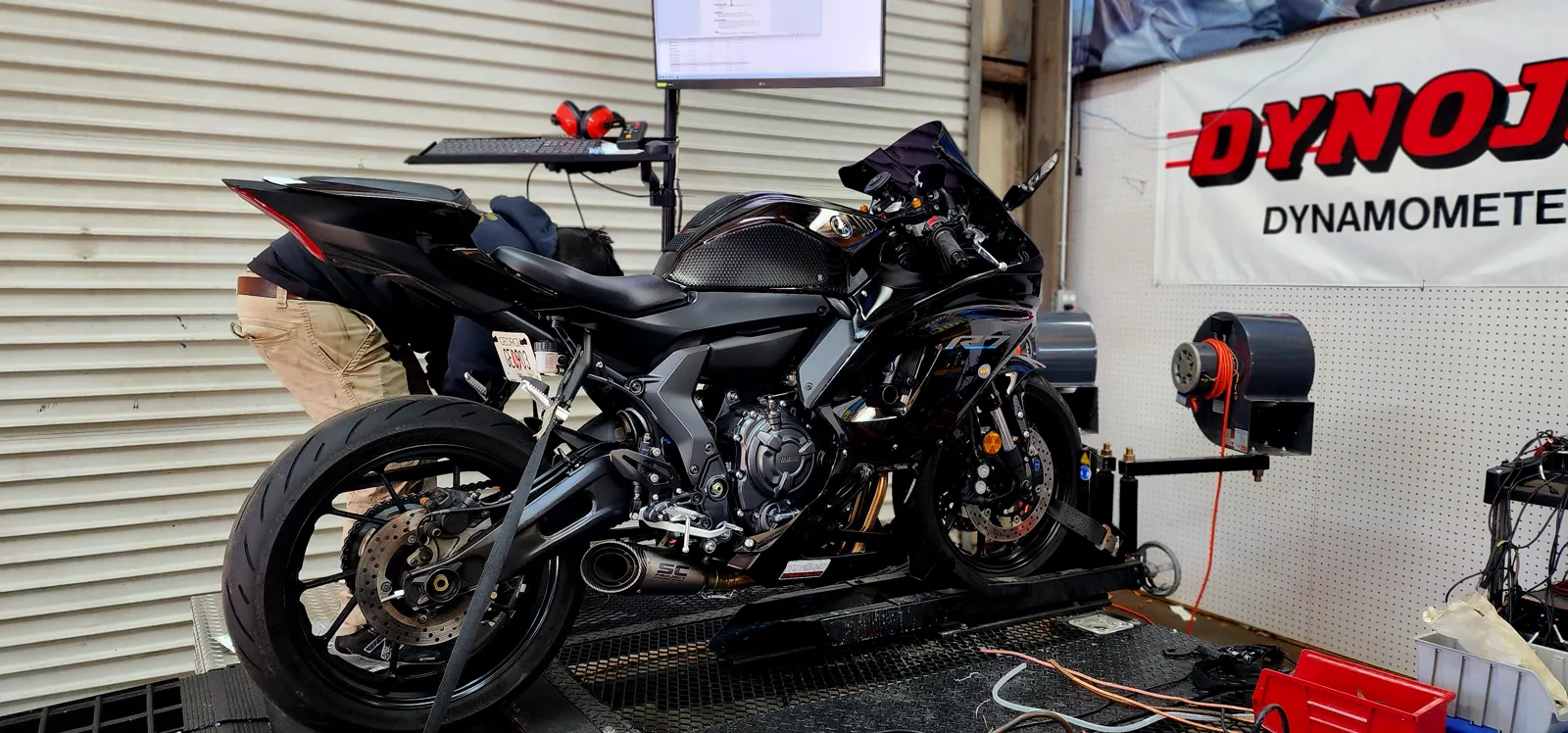
How we diagnose before we quote
This is the part we care most about getting right, because a quote handed out before anybody looked at the bike isn’t a quote. It’s a guess wearing a nice shirt.
- You text us what you’ve got: year, make, model, and what’s been done to it. Exhaust, air filter, cams, anything.
- You tell us what it’s doing wrong, in your own words. “It stutters around forty in fifth” is more useful than any technical term.
- We do a baseline pull on the dyno and read the air-fuel across the whole range. That’s the before picture, and it’s yours to keep.
- We tell you what we found, what we’d change, and what we’d leave alone. Sometimes the honest answer is that your bike doesn’t need a tune yet.
- Then, and only then, we talk about the work and the timeline. If something new turns up mid-job, we stop and call you before we spend a minute on it.
That last one matters more than anything else on this page. Nobody likes a surprise on a bill. If you want a fuller breakdown of what changes the total, we wrote that out separately so this page could stay about the work itself.
OUR RULE
No work happens that you didn’t approve. If we find something mid-job, the wrench goes down and the phone comes out. Every time.
How to tell a real tuning shop from a fast one
This is worth knowing whoever you end up using. There’s a real difference between a shop that tunes and a shop that owns a dyno, and you can spot it with a few questions before you ever hand over your keys.
- Do they do a baseline pull first? A shop that loads a downloaded map and hands it back never measured your bike at all.
- Will they show you the before and after graph and walk you through it? A good tuner likes explaining. It’s their favorite part.
- Do they ask what you want the bike to do? Track-day answers and two-up-to-the-mountains answers get different maps.
- Do they tune the whole range or just the top? Peak power is easy. The cruising range is where the craft is.
- Will they tell you no? The shops worth trusting turn work down when a bike doesn’t need it.
Around here, that gap is real. Cherokee County has a lot of riders and not many independents doing true in-house performance work, so plenty of folks end up driving somewhere for it either way. Some head west toward Bartow Powersports over in Cartersville, about thirty-five minutes out. Others come to us. Either way, ask the questions above first.
One more thing worth saying out loud: a tune is not a repair. If your bike has a vacuum leak, a clogged injector, a fouled plug or a slipping clutch, a map can hide the symptom for a while, and then the real problem comes back louder. So we check the basics before we ever start writing fuel numbers. It’s less glamorous than a graph, but it’s the reason a tune sticks instead of fading in a month.
A dyno you can't see the graph from is just an expensive floor.
Canton riders, specifically
Canton is the last real town before the road turns into mountains, and that shapes everything about the bikes we see from up there. The riders in BridgeMill and out at Woodmont Golf & Country Club mostly keep clean, garage-kept cruisers and baggers that see a few thousand good miles a year. Over in Orange Shoals we see more mixed-use bikes, more projects, more sportbikes with a slip-on already on them. Different bikes, same complaint: it doesn’t feel right in the middle.
Those bikes also sit. With a county full of two- and three-car garages, storage is easy, and that’s mostly a blessing. But a bike that naps from November through February wakes up with varnished injectors and a lazy fuel system, and a tune done on a dirty fuel path is a tune done twice. So we check that first. Every March we meet friends whose “tuning problem” was really a fuel problem, and the fix was cheerfully simpler than they feared.
And there’s the ride you’re actually tuning for. A bike that surges at a steady cruise is annoying on the way to the shops along Riverstone Parkway. It’s genuinely tiring three hours later on GA-52 over Fort Mountain, where you’re rolling on and off the throttle through corners all day. That’s the part a good map gives back. Smooth throttle on a long mountain day is not a luxury. It’s the difference between arriving loose and arriving worn out, and your wrists will notice before your ego does. So when we ask how you ride, that’s the answer we’re listening for.
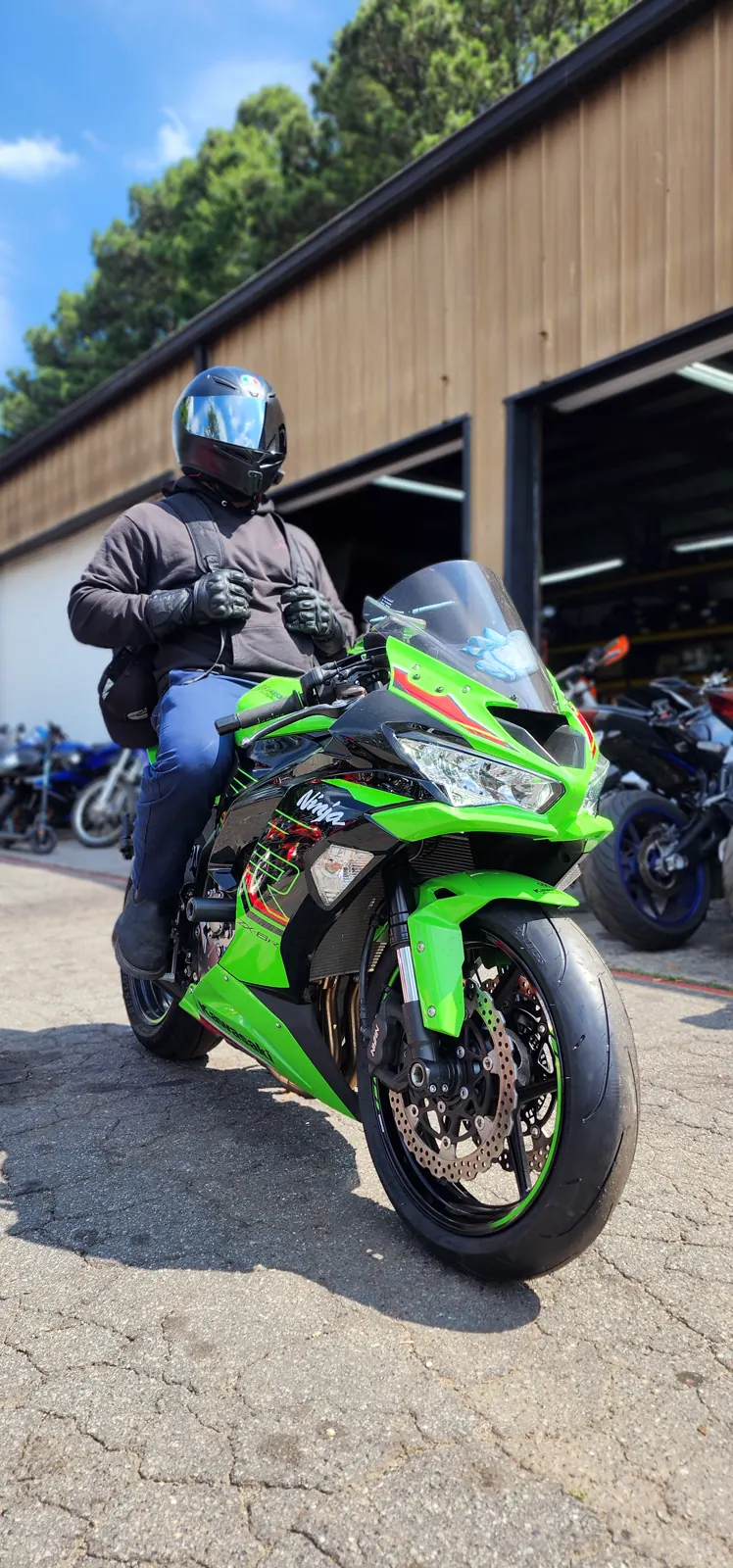
And then there’s the part that’s just about riding again. Because the drive down to us is real: roughly twenty-five miles, usually half an hour or a bit more, I-575 south to Barrett Parkway or GA-92 and then east through East Cobb. We know Canton folks already drive for everything, but we’d rather you make that trip once than twice. So we plan it around you. Drop it on your way down 575 in the morning, spend the day wandering downtown or through History Cherokee across from the parking deck if you’re staying local, and pick it up when it’s genuinely done.
What you get back
Most riders who ask about motorcycle dyno tuning Canton shops can handle are not chasing a trophy. They want the bike they thought they bought. So here’s the honest picture of the finish line.
A properly tuned bike feels boring in the best way. It idles even. What’s more, it takes throttle without lurching. It stops running hot behind traffic. It gets better fuel mileage, usually, because it stopped throwing fuel it wasn’t using. And when you do open it up, it pulls in one smooth line instead of arriving in steps.
You’ll also get your graphs, before and after, plus a straight explanation of what we changed and why. If you’re newer to all this, the state’s Georgia Class M licensing page is a decent place to start, and there’s more on what the work covers if you want the deeper version. Riders a little further south deal with slightly different stuff, and we wrote up what Roswell riders run into as well.
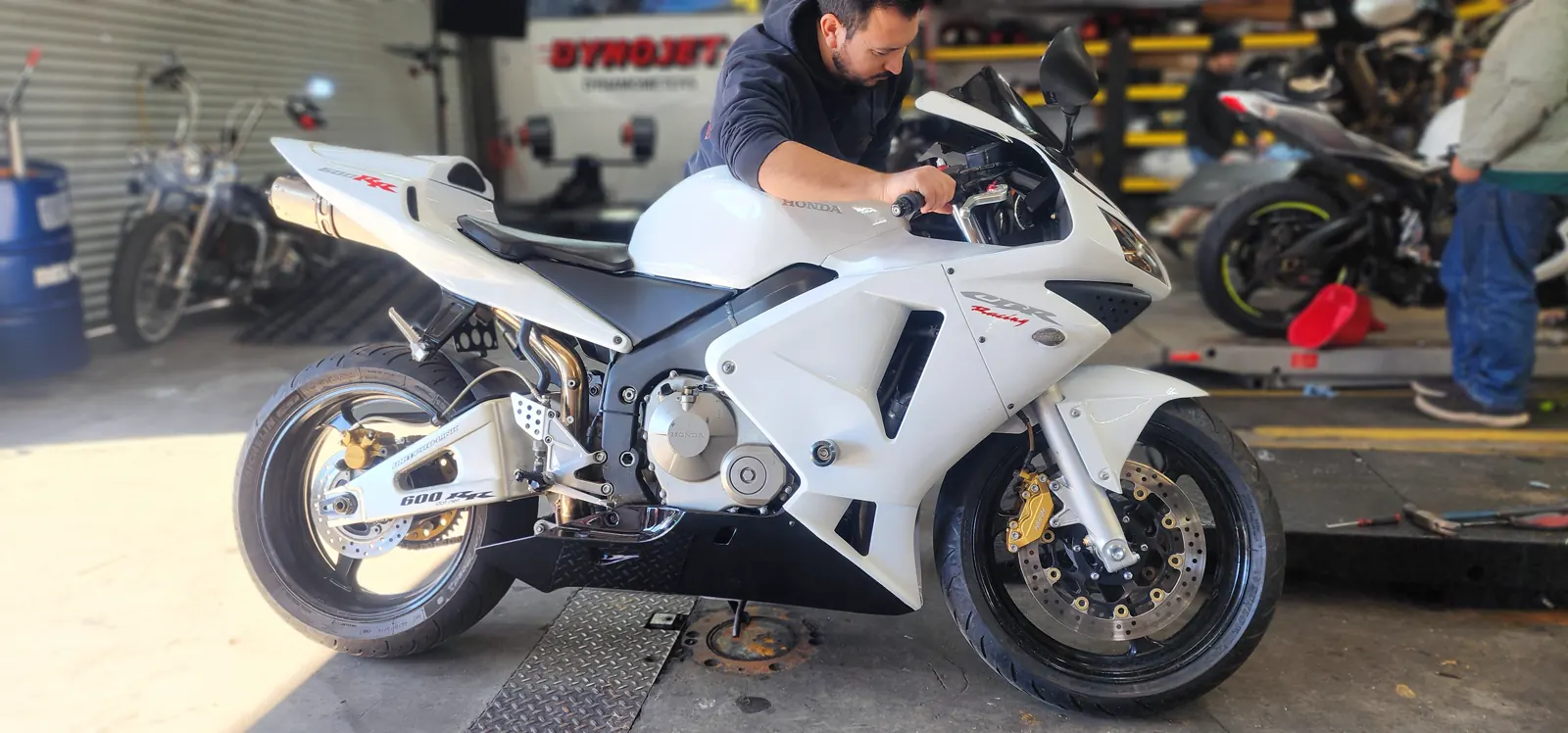
The simplest next step is a text. Tell us the bike, tell us what it’s doing, and we’ll tell you honestly whether a dyno session is the right answer. Sometimes it isn’t, and we’ll say so.
Questions Canton riders ask us
What if my bike needs more than we expected?
We stop and call you before doing anything you didn’t approve. The dyno finds things sometimes, like a tired coil or a weak fuel pump, and we’d rather tell you about it than quietly work around it. You decide whether we handle it now or later. Nothing gets added to your bill without a yes from you first.
What's included in a dyno tuning session?
A baseline pull to see where your bike actually is, a full air-fuel reading across the whole range, then the mapping work itself by ECU flash or a Power Commander depending on your bike. After that we do verification pulls to confirm the change. You get the before and after graphs and a plain explanation of what we adjusted.
How long does it take?
Most street bikes are a same-day or next-day job, and we’ll give you a real timeline once we’ve seen it, not a hopeful one. Heavily modified bikes and anything that needs fuel-system cleanup first take longer. We text you when it’s done rather than making you call and check. That’s the whole promise.
Do you tune my brand?
We work across brands, including Japanese sportbikes, cruisers and baggers, ADV and dual-sport bikes, and older project bikes. If yours is unusual, text us the year and model and we’ll tell you straight whether we’re the right shop. We’d rather point you somewhere good than take on something we can’t do well.
Do I need an appointment?
Yes, please book ahead, since the dyno gets scheduled in blocks and we don’t want you driving down from Canton for nothing. A text the week before is usually plenty. If you’re coming from up 575, we’ll try to line your slot up with a morning drop-off. That way one trip covers it.
Is a tune worth it on a mostly stock bike?
Often, yes, because factory maps run lean in the cruising range to meet emissions rules everywhere the bike is sold. That’s the surging and heat many riders assume is normal. But we’ll tell you if your bike genuinely doesn’t need it. An honest no costs us a job and keeps a friend.
We take care of riders all over the northwest metro and up toward the mountains. That includes Canton and the rest of Cherokee County, plus Woodstock, Holly Springs, Ball Ground, Waleska, Free Home and Nelson just up the road. Heading west and south we see plenty of folks from Acworth, Cartersville and Kennesaw, and we’re right at home with riders from Marietta since that’s where our bays are. We also get regulars coming over from Alpharetta and down from Jasper when the mountain season kicks in.
TEXT US THE BIKE
If your bike surges, runs hot or just feels flat in the middle, send us a text with the year, model and what it’s doing. We’ll tell you whether a dyno session is the right fix before you drive down from Canton. One text, a straight answer, and a real timeline when the work starts.
470-460-9883Diaz Motorcycles and Service, LLC · 847 Barnes Mill Road, Marietta, GA 30062