Dyno Tune vs Stock Alpharetta — The Real Answer
How a dyno reads your bike, why stock runs lean or rich, and which choice is genuinely right for you.
In short the first time you roll a new bike out of the garage, it starts talking to you. Not in words. In little habits. A tiny hiccup when you crack the throttle at a light. That’s why a flat spot right in the middle of the rev range. At the same time a puff of extra heat off the engine on a slow crawl down your street. You notice, and then you start to wonder if something is broken. As a result most of the time nothing is wrong at all. On the other hand that wondering is exactly where the dyno tune vs stock Alpharetta question really begins.
A New Bike Has a Personality — and You're Just Meeting It
So Alpharetta is a destination-riding town far more than a commuting one. Still, Bikes here get bought for weekend fun, then tucked into three-car garages when the fun is over. A single home over in Windward — the 3,400-acre neighborhood built around Lake Windward — might hold a big tourer, a sharp sportbike, and something vintage all at the same time. So it’s normal to be brand-new to whatever you just wheeled home, even if you’ve ridden for twenty years. This machine simply isn’t the last one.
Plus, Say you spent a decade on cruisers, and now there’s a liter-class sportbike sitting in the bay. The clutch bites differently. The throttle feels touchy. Meanwhile, Down low the engine acts a little grumpy, like it would rather be somewhere north of 6,000 rpm. Of course, you take it out for an easy warmup along the quiet streets near the Big Creek Greenway, and it stumbles just off idle. Nothing is broken. In fact, you’re simply meeting its personality — and a stock personality is built for the factory, not for you.
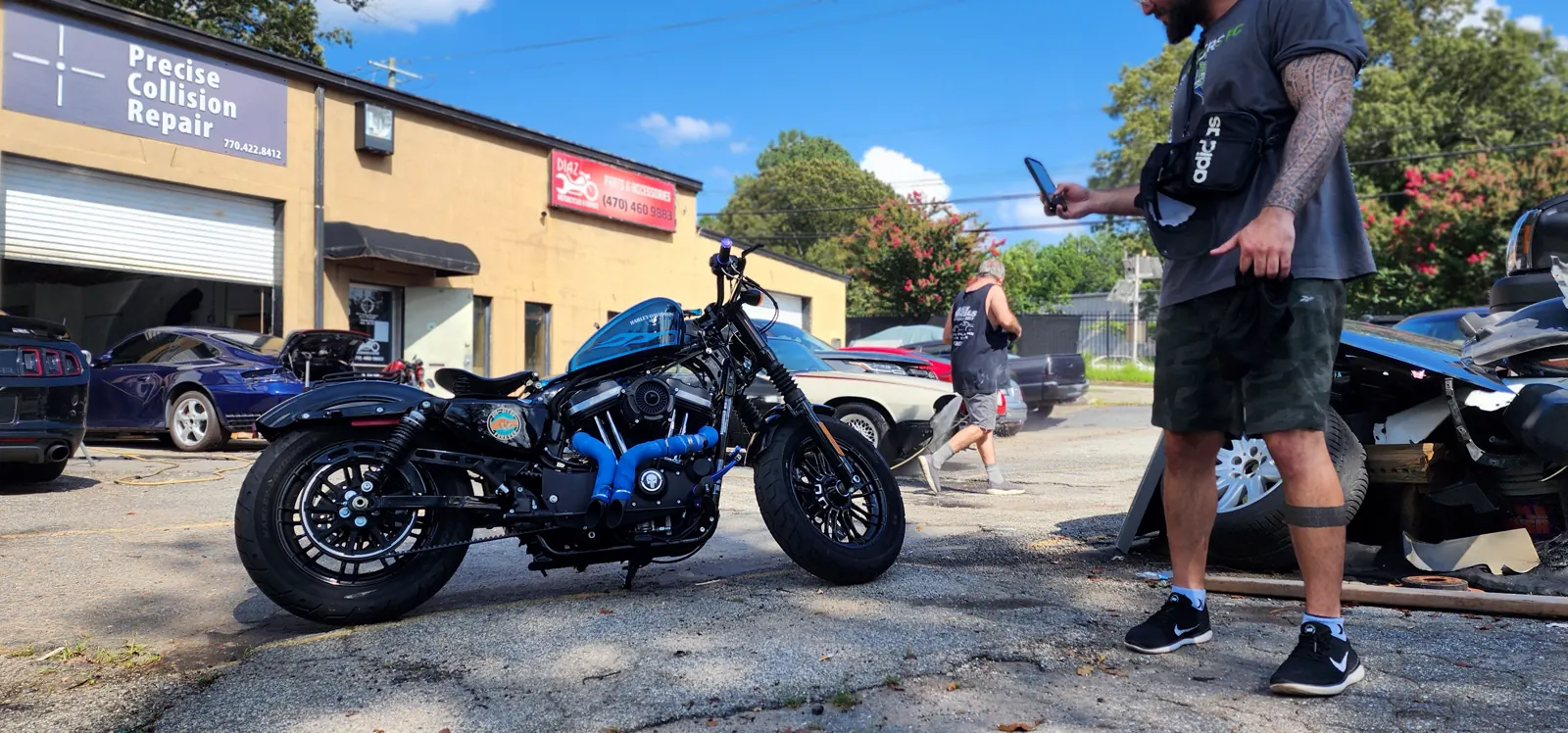
Here’s the friendly truth. For example, every bike that leaves a factory wears the same map as thousands of others. That map has to please emissions rules, cold mornings, high altitude, and cheap gas all at once. It’s a compromise, and compromises leave rough edges. Those rough edges are what you feel at the first stoplight. They are not a sign your bike is a lemon. They are just the factory playing it safe for everybody instead of tuning for one rider — you.
Why a Stock Bike Runs Lean or Rich
Let’s keep this simple. A running engine mixes air and fuel, then lights it. When there’s too much air for the fuel, we call that lean. A lean bike runs hot, hesitates, and can surge or snap at small throttle. When there’s too much fuel for the air, we call that rich. A rich bike bogs down, smells like a gas station, and feels heavy and slow. The factory usually leaves a bike a touch lean in a few spots because lean is cleaner for emissions. That’s the little hiccup you keep noticing.
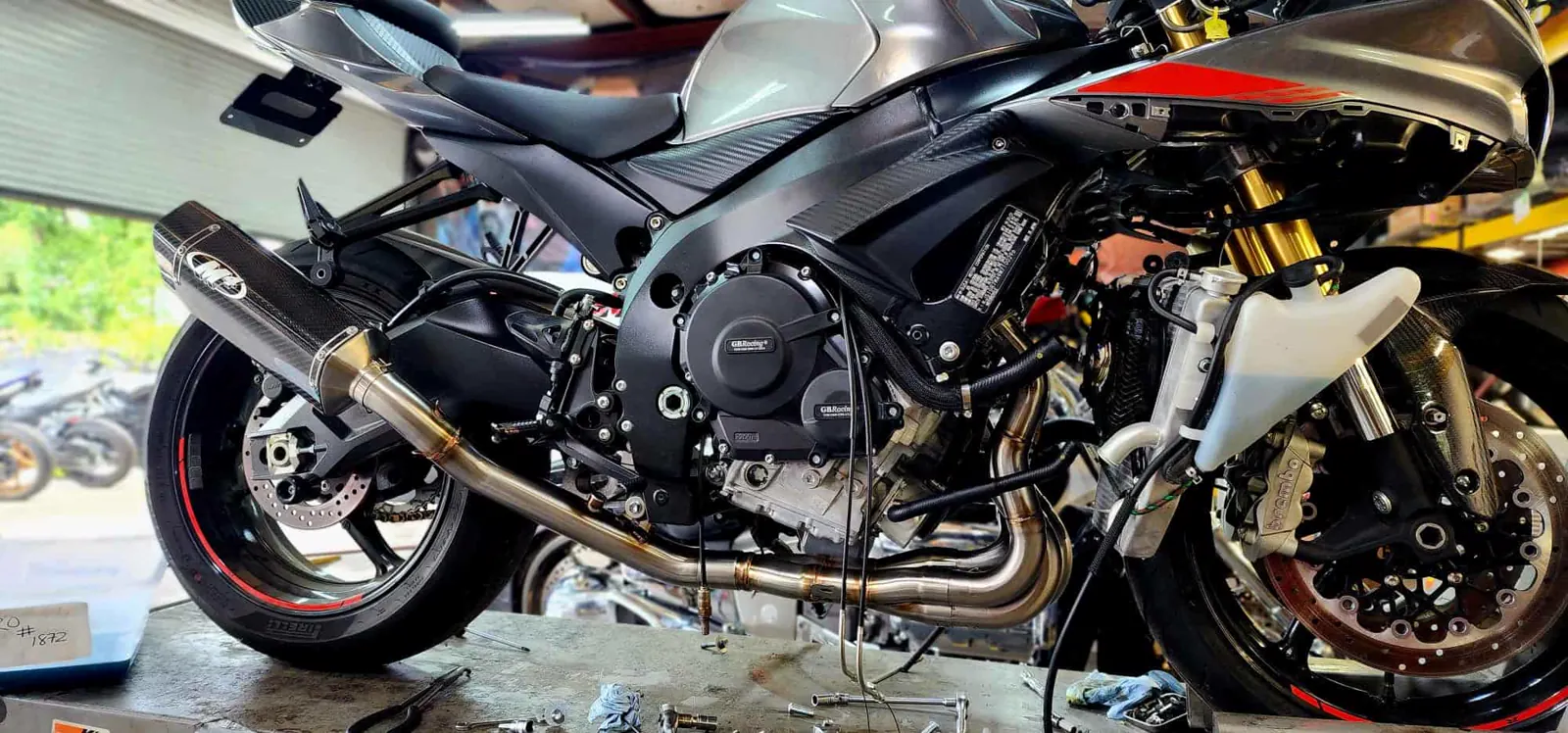
Now add the fun stuff riders love. A slip-on exhaust. A high-flow filter. Even fresh pipes with the same old map. Each one changes how much air moves through the engine, but the factory map has no idea you did that. So the mix drifts even further off, and the rough edges get sharper. This is why a bike can feel worse after a mod, not better, until someone sorts the map out.
So how do we know for sure whether you’re lean or rich? We measure it. A dyno is a big roller drum the rear wheel spins against while the bike runs under real load, held in place with straps. As it pulls, sensors read what the engine is actually doing, and a wideband probe sits in the exhaust and reads the air-fuel mix across the whole rev range. Instead of guessing, we watch a graph draw the truth on the monitor. Lean spots and rich spots show up right there, plain as day.
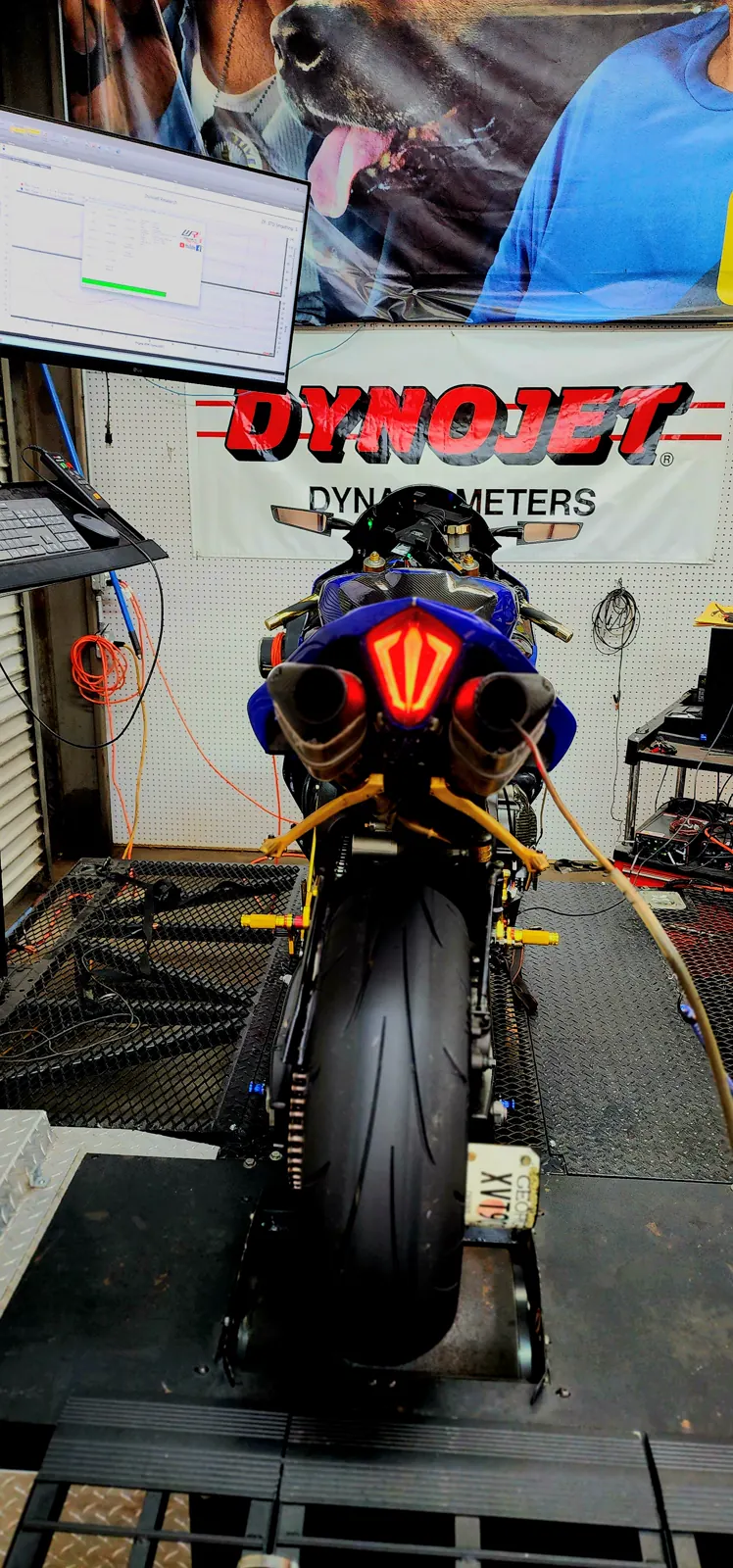
This is also the part North Fulton riders have a hard time finding close to home. Plenty of good shops handle repair and tires — a locally owned independent like G&G Cycles of Roswell will take care of most makes just fine. But real custom mapping on an in-house dyno, with ECU flashing and Power Commander work under one roof, is pretty much a dealership-or-nothing deal up your way. That gap is exactly why folks make the drive to us.
Dyno Tune vs Stock: Laying Both Out Fair
Two honest options sit in front of you. Option one is stock: leave the map alone and ride the bike the way it came. Option two is a custom dyno tune: we put the bike on the drum, read those lean and rich spots, and write a new map through an ECU flash or a Power Commander so the mix is right for your bike and your mods. Both are real choices, and both are right for somebody. So the dyno tune vs stock Alpharetta choice isn’t one-size-fits-all.
Stock is genuinely the smart pick for a lot of riders. If your bike is bone stock with no exhaust or intake changes, if you ride gentle laps and Sunday coffee runs, and if those small hiccups don’t bug you, there’s no rule saying you must tune. A healthy stock bike is safe, reliable, and perfectly happy. Spending on a tune you won’t feel isn’t a favor we’d do you.
Here’s where it gets interesting — and where most advice online falls apart. Half the internet swears every bike needs a tune the second you own it. The other half swears stock is always fine and tuning is a waste. Both camps are wrong, because both skip the one thing that actually decides it: your specific bike, your mods, and how your wrist rides. A forum post can’t feel your flat spot. It’s guessing about a machine it has never seen.
| What matters | Leave it stock | Custom dyno tune |
|---|---|---|
| Slip-on or intake added | Map now off, edges sharper | Map matched to the new airflow |
| Flat spots and stumbles | Live with them | Smoothed out where the graph showed them |
| Riding style | Easy, casual laps | Wants clean, honest power on demand |
| How you find out | Guessing by feel | Measured on the drum, no guessing |
Notice the table never talks about chasing big numbers. That’s on purpose. A tune done right is about making your bike feel correct everywhere you actually ride, not about a bragging figure. We’re not going to promise you some magic gain. We’re going to fix the parts that feel wrong and let the graph tell the honest story.
How We Actually Decide at the Shop
When a friend rolls in unsure which way to go, we don’t sell. We diagnose. Since no freeway connects your side of town to ours, most riders take Old Milton or Rucker down to GA 9 south through Roswell, then GA 120 west into East Cobb — a solid trip, so we make it worth the ride by being straight with you. Here’s the simple order we follow.
- We talk first. How do you ride, what bugs you, and what have you already changed on the bike?
- We put it on the dyno for a baseline pull, with nothing touched yet.
- Either way we read the air-fuel mix across the whole range and mark every lean or rich spot on the graph.
- We look at your exhaust, filter, and any other mods to see what’s pulling the map off.
- We give you the honest call — sometimes that call is to leave it stock for now.
That last step is the one that surprises people. If your bike is fully stock and you’re just commuting a few spring mornings, we might tell you to keep it as-is and put the money toward tires or fresh fluids instead. North Fulton riders read reviews and compare hard before they call, and they can smell an upsell a mile off. We’d rather quote you a fair number, explain what it covers, and hold it. If you’re curious how the work adds up before you ever roll in, we lay how the work adds up out plainly.
There’s a road-surface reason we don’t rush this, too. The older Roswell corridor along GA 9 — Alpharetta Highway, Main Street, all the same route — is full of tar-snake seams and utility-cut patches that go slick in the first rain. A bike with a jerky, snatchy throttle is harder to ride smoothly right there. Part of a good tune is making that off-idle response gentle and predictable, so a greasy painted line or a manhole cover doesn’t catch you off guard. Smooth power is a safety win, not just a fun one. Brushing up through the Georgia Motorcycle Safety Program pairs nicely with a bike that behaves.
What It Feels Like Once It's Sorted
Here’s what changes once it’s actually sorted. The throttle stops being a light switch and becomes a dimmer. That flat spot in the middle of the rev range just isn’t there anymore. The bike pulls clean and even from down low, the slow-crawl heat backs off, and the whole machine finally feels like it’s on your side. Riders describe it as the bike getting out of its own way.
Take a properly tuned bike up to the North Georgia Triangle — the Dahlonega-Suches-Blairsville loop that Rider Magazine put on the map — and the difference sings. Tight switchbacks reward a throttle you can trust to the millimeter. Roll on gently and the power comes on smooth; roll on hard and it answers right now, no stumble, no surge. That’s the whole point. The bike does what your hand asks, not what a factory compromise decided months before you owned it.
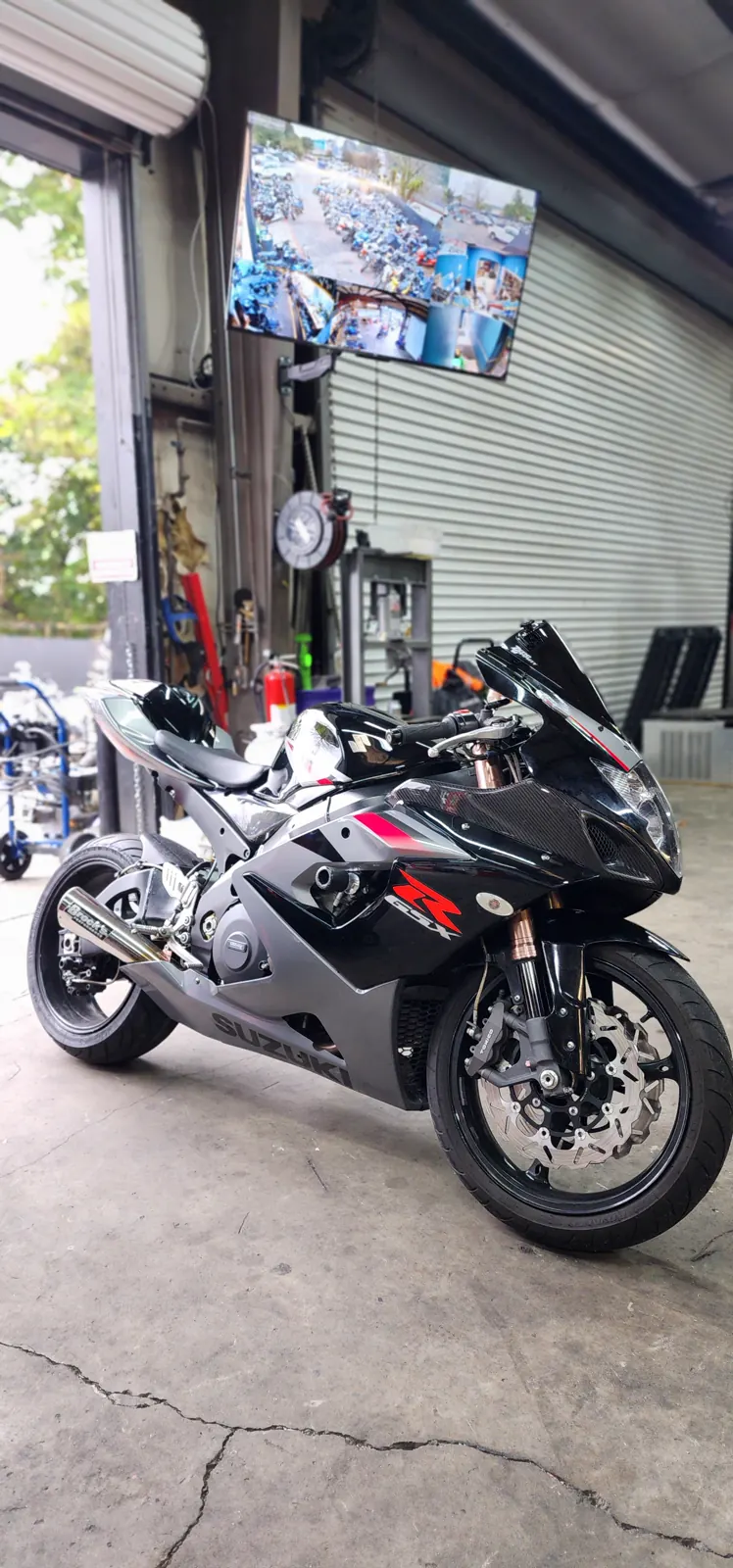
You don’t have to be chasing a track record to want this, either. A rider in gated Crooked Creek, established back in 1993 across its 500-plus acres, might just want the commuter bike to stop lurching in stop-and-go near the redeveloping North Point corridor off GA 400 Exit 9. A weekend rider out in historic Crabapple — founded in 1830 where GA 140 meets GA 372, the corner locals call the Silos — might want a vintage twin to idle clean and pull without coughing. Same fix, very different riders. That’s the beauty of tuning to the bike in front of us instead of a spec sheet. Curious what that service actually involves? We spell out what we take care of here.
The Real Answer
Time for the recommendation you came for, no fence-sitting. If you’ve added an exhaust or intake, or your bike fights you with flat spots and snatchy response, a tune wins — and the dyno is what makes it real instead of a hunch. That’s the honest dyno tune vs stock Alpharetta answer for most riders who’ve touched their bikes at all. The graph shows the problem, the new map fixes it, and you feel it the first ride out.
Tune the bike in front of us, not a spec sheet — that's the whole job.
Now the situation where the other choice wins, because it’s a real one. If your bike is completely stock, you ride easy, and nothing about it actually bothers you, keep it stock and keep your money. A healthy factory bike owes you nothing. There’s zero shame in loving your ride exactly as it came. When mods and itch and honest annoyance stack up, that’s your signal the tune is worth it — not a day sooner. For a look at how this plays out in Kennesaw, the same logic holds one county over.
One more piece riders forget: fresh, healthy tires matter as much as any map, and Dunlop’s technical resources are a good read on that. A crisp tune deserves rubber that can put the power down. If you want the deeper why behind all of this, we wrote up what that service actually involves in plain language, too. Either way, you leave knowing the choice was made for your bike — and that’s the feeling we’re really after.
THE SHORT VERSION
Modded or annoyed? Tune it, and let the dyno prove why. Bone stock and happy? Keep it stock and keep your money. We’ll tell you which one you are before you spend a thing.
Questions Alpharetta riders ask us
Does my type of bike change the answer?
It sure can. A modern fuel-injected sportbike with a slip-on has the most to gain from a custom map, because the factory left it lean and your exhaust pulled it further off. A bone-stock cruiser you baby around town may not need a thing. We read your specific bike on the dyno before we ever suggest one way or the other.
Is the upgrade actually worth it?
If your bike fights you with flat spots, stumbles, or extra heat, yes — a tune usually pays you back in how the bike feels every single ride. If it already runs smooth and you’re happy, then no, and we’ll say so. Worth it means you can feel the difference, not that a chart looks nicer.
Which one should I pick?
Pick a tune if you’ve added an exhaust or intake, or if the bike’s rough edges bug you. Pick stock if the bike is unmodified, you ride casual, and nothing bothers you. When you’re honestly between the two, come in for a baseline pull and let the graph decide instead of a guess.
What's the real difference between a tune and stock?
Stock is a one-size map built for emissions rules and every rider at once, so it leaves rough spots. A dyno tune is a map written for your exact bike and mods, measured on the drum. The difference you feel is smoother throttle, no flat spot, and cleaner pull where the graph showed a problem.
Which choice lasts longer?
Both last, and a good tune doesn’t wear out — the map stays put unless you change parts again. If anything, a proper tune can be gentler on the engine than a lean stock spot running hot in traffic. The main reason to revisit a tune is a new exhaust, intake, or a big elevation change in how you ride.
Do I really have to drive down from Alpharetta for this?
For real in-house dyno tuning, ECU flashing, and Power Commander work, most North Fulton riders do make the trip, since that setup is rare up your way. It’s roughly a 30 to 40 minute run off-peak. We keep it worth the ride by being straight with you and only recommending a tune when you’ll feel it.
We take care of riders all over North Fulton and the north metro, and plenty of them make the run down to the shop from Roswell, Milton, Johns Creek, and Crabapple. Folks roll in from Sandy Springs, Dunwoody, and Duluth just as often, along with Cumming, Suwanee, and Woodstock on the outer edges. Closer to home base, East Cobb and Marietta neighbors round out the regulars. Wherever you’re coming from, the dyno reads your bike the same honest way.
NOT SURE WHICH ONE YOU ARE?
Text us before you spend a dime, Alpharetta. Tell us your bike, your mods, and what’s bugging you, and we’ll give you the straight answer — sometimes that answer is to leave it stock. When a tune is the right call, we’ll put it on the dyno, show you the graph, and hand it back feeling like your bike again.
470-460-9883Diaz Motorcycles and Service, LLC · 847 Barnes Mill Road, Marietta, GA 30062