Dyno Shop Sandy Springs — How to Choose
A plain-English guide to picking a tuning shop you can trust, from a crew that maps bikes in-house.
Want the short answer first? So a good tuning shop measures exactly what your engine is doing, then adjusts the fuel and timing to match. So when you’re hunting for a dyno shop Sandy Springs riders can actually trust, look for one that does the mapping in-house, shows you the real readout, and rides the same roads you ride. That’s the whole game.
Still, Everything else in this post just backs that up. Plus, We’ll walk through what a dyno really measures, why a bike runs lean or rich, and how a tune changes the way your bike feels in your hands. Then we’ll give you a simple checklist for judging any shop. No jargon, no arm-twisting. Meanwhile, Just the stuff we’d tell a friend over the counter.
It usually starts with a feeling, not a number
Here’s how it tends to go. Of course, you bolt on a new exhaust, or maybe an air filter, because the bike sounded flat and you wanted more of it. It sounds great now. But something feels off. There’s a little stumble when you crack the throttle. In fact, the bike gets hot in traffic and the fan never seems to rest. For example, Around town it surges, like it can’t decide how much fuel it wants.
You didn’t break anything. Even so, you just changed how the engine breathes, and the factory fuel settings no longer fit. That’s normal. What’s more, the factory tune was built for a stock bike with emissions rules in mind, not for your setup. After that, a dyno tune is how you teach the bike about its new parts. And once you understand what’s happening under there, the fix is honestly kind of satisfying.
What a dyno actually measures
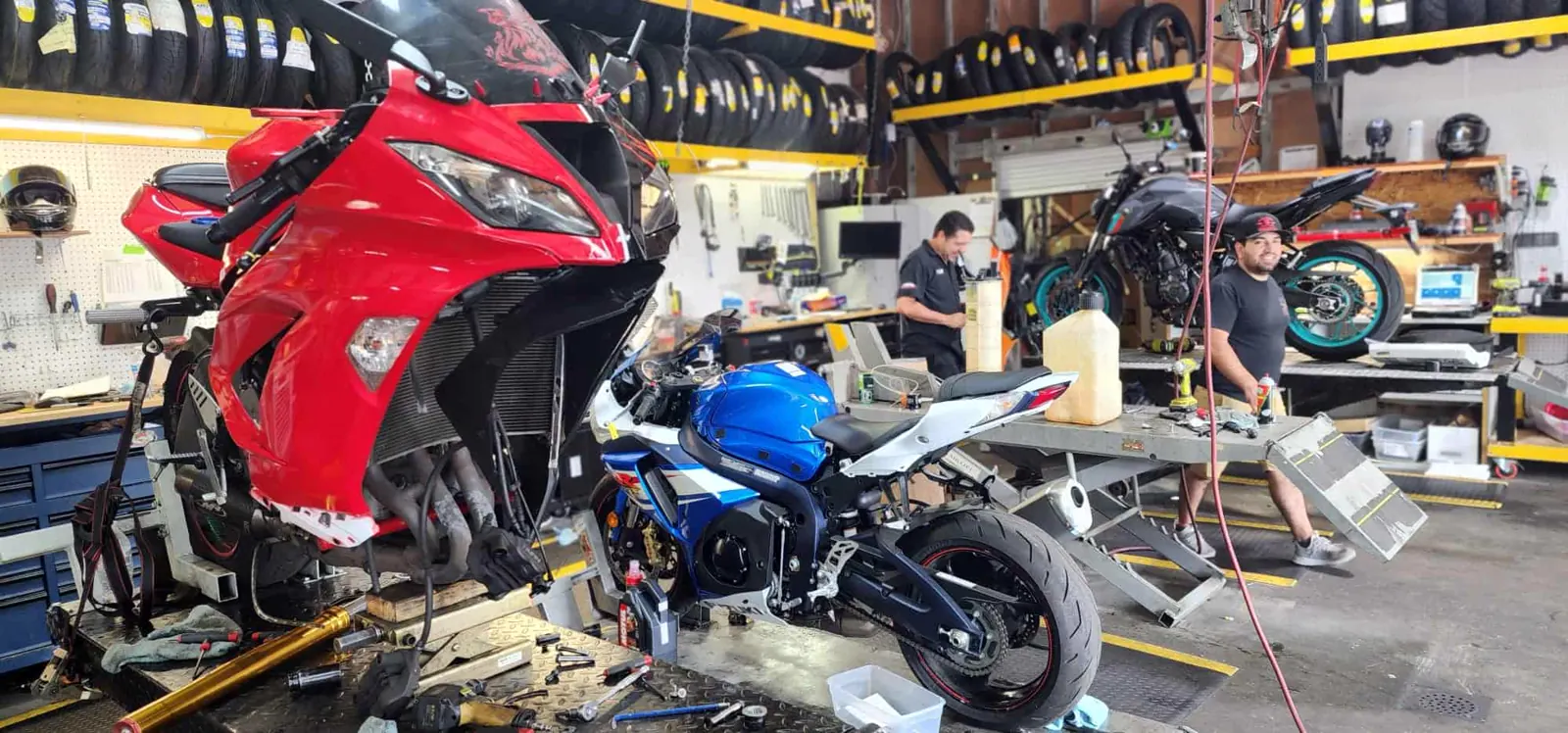
Also a dyno is a big drum your rear wheel spins against. Instead we strap the bike down tight, put a fan in front of it so it breathes real moving air, and run it through the rev range while the machine reads what’s coming out. Besides it’s a rolling road that never moves you an inch. Think of it as a treadmill for your bike, if the treadmill also kept score.
Two things get measured. First, power and torque across the whole rev range, so we can see where the engine pulls strong and where it goes soft. Second, and this is the important one for tuning, the air-fuel ratio. A sensor reads the exhaust and tells us how much fuel the engine burned for the air it took in. That reading is the heart of the job. If you want the deep technical version, Dynojet’s dyno center lays out how the hardware works, and it’s the same gear we run in our bay.
So the dyno isn’t there to brag about a big number. It’s a measuring tool. It tells us the truth about your specific bike on this specific day, and the truth is what lets us tune it right. Numbers are nice. An honest map is better.
Lean, rich, and why your bike feels weird
You’ve probably heard someone say a bike runs “lean” or “rich.” It sounds like mechanic code, but it’s simple. Lean means too much air for the fuel. Rich means too much fuel for the air. Neither one is a disaster on its own, but both change how the bike behaves, and both can nag at you all day.
A lean bike often runs hot, pops on deceleration, and feels snatchy when you roll on the throttle. It can also stumble at low speed, which you’ll feel every time you crawl through backed-up traffic on Hammond Drive, where older pavement and dense apartment blocks keep you stopping and going. A rich bike tends to feel lazy and soft, fouls plugs sooner, and can smell heavy at idle. When we tune, we’re chasing the middle. We adjust the fuel and the timing so each part of the rev range gets what it needs, then we confirm it on the dyno instead of guessing.
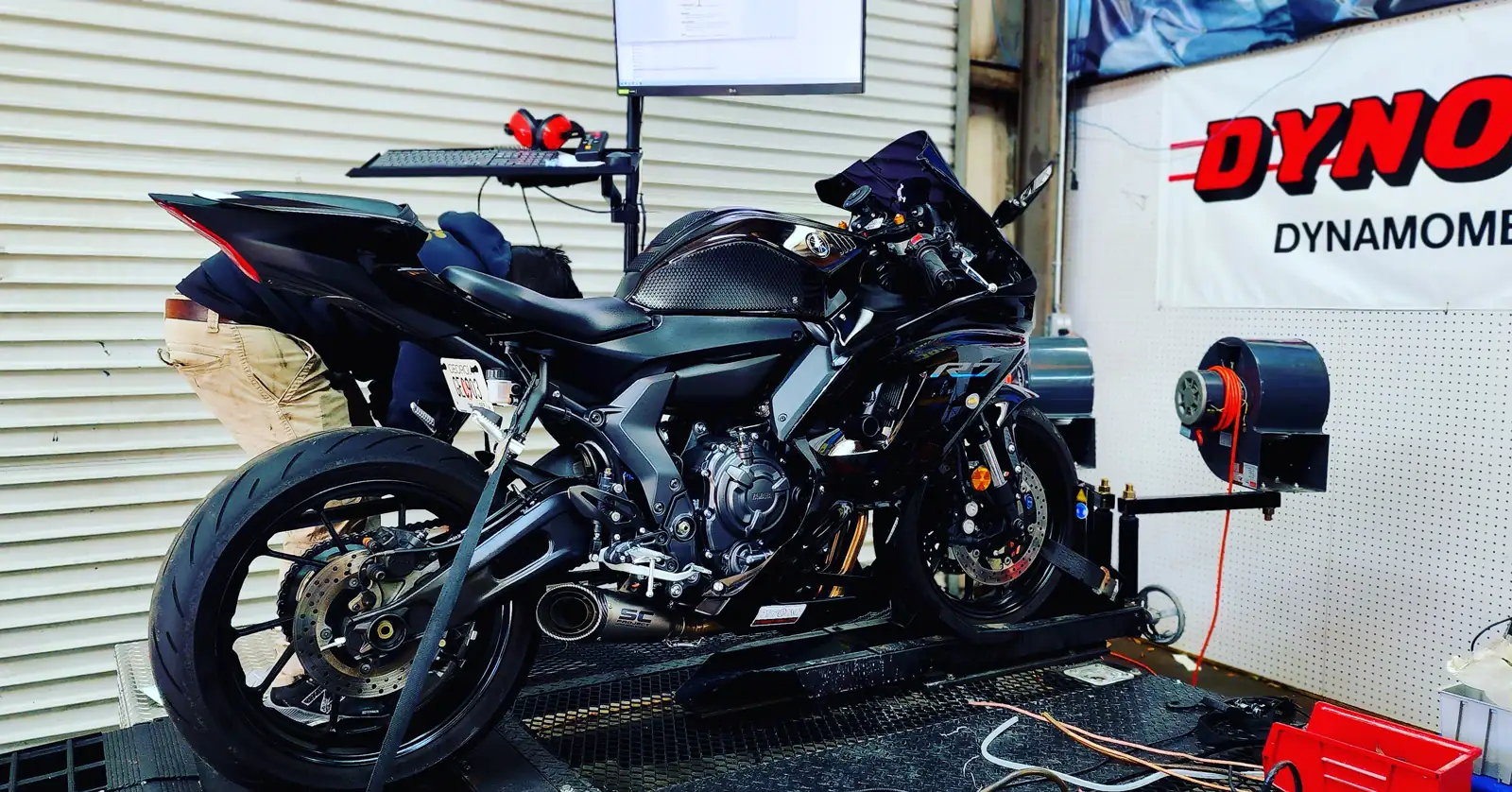
This is also the part that separates a real tune from a canned download. A file someone emails you was built for an average bike, not yours. Your air filter, your exhaust, your altitude, even the summer heat that runs a 95 to 100-degree index here for months, all of it shifts the math. A tune done on your bike, in front of you, accounts for all of it. If you want a fuller breakdown of what that service actually involves, we spelled it out in a separate post.
But here’s what most riders get wrong about this. They think tuning is only about chasing peak horsepower. It isn’t. Most of the win is in the low and middle part of the rev range, the part you actually use riding to work through the Perimeter or heading north on the weekend. A good tune smooths out that snatchy throttle, calms the heat, and makes the bike feel like it’s finally on your side. Big peak numbers are the last five percent. The daily feel is the other ninety-five, and that’s where a smart shop spends its time.
Dealer or independent? A fair look
Sandy Springs is a strange spot for riders. It’s a real city on its own, incorporated back in 2005, with good money, good bikes, and almost no local motorcycle infrastructure. There’s no dealership or dedicated repair shop inside the city limits. So you’re already driving somewhere no matter what. That’s not a knock on the city. It just means the choice of where to go actually matters here.
Multi-line dealers do plenty right. A big new-and-used floor like WOW Motorcycles in Marietta, about twelve to fifteen miles west, has been at it for around thirty years selling Honda, Suzuki, Kawasaki, Yamaha and Harley. That’s real staying power, and there’s nothing wrong with buying from a shop like that. The thing to know is that a lot of multi-line stores don’t do true custom mapping in-house. They may send tuning out, or run a generic file, because their bread and butter is sales and quick service, not sitting on the dyno with your bike for an afternoon.
An independent that specializes in tuning works differently. The dyno lives in the building. The person reading the screen is the same person turning the wrench. Nothing gets shipped off. You can stand there and watch the air-fuel line settle into place. If you want to compare, riders over in Canton face the same question, and the answer usually comes down to who actually runs the machine themselves.
How we decide, and how you should too
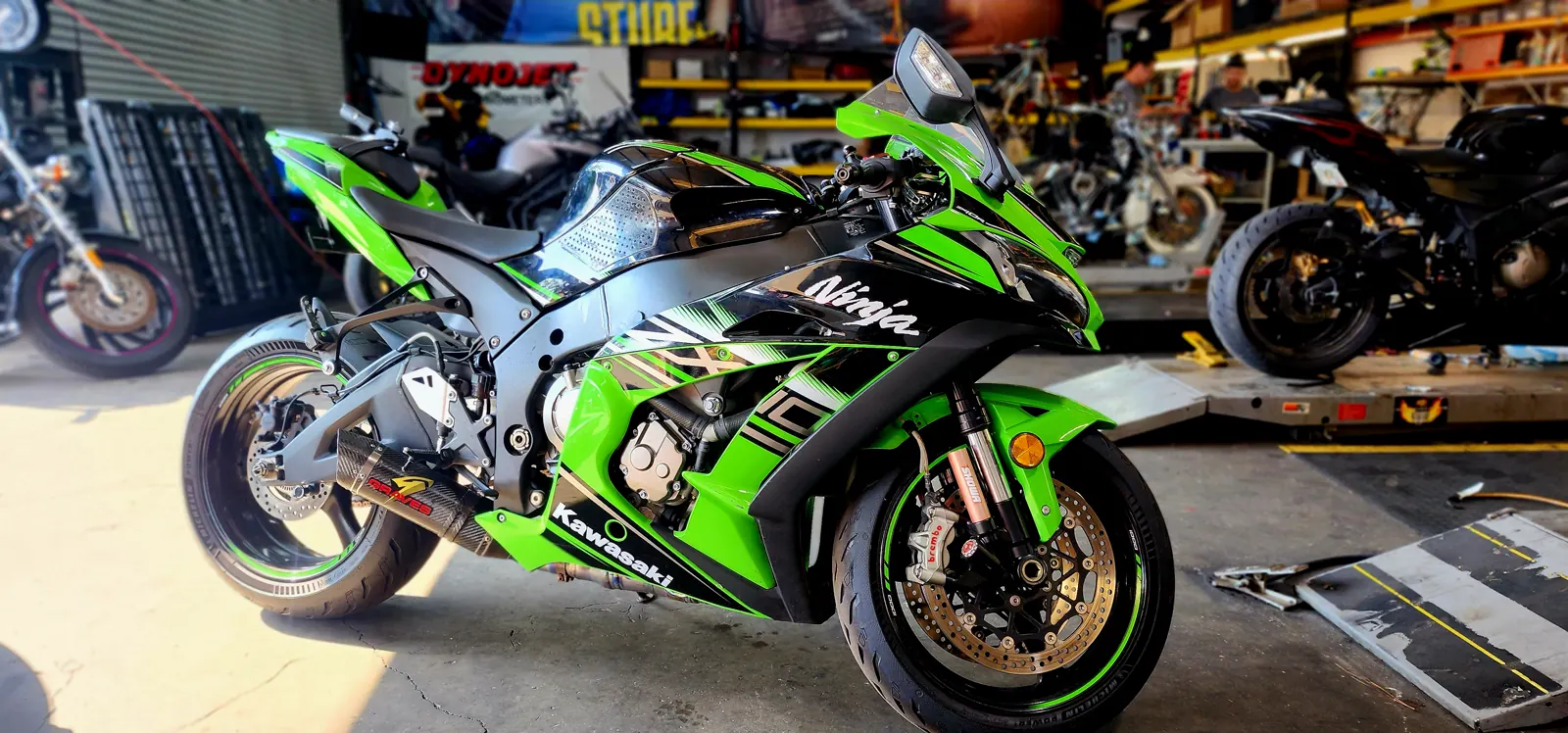
You don’t need to be a mechanic to judge a shop. You just need the right questions. When you’re weighing a dyno shop Sandy Springs riders can rely on, here’s the short list we’d hand a friend who’s shopping around, and honestly, it’s the same list we hold ourselves to.
- Do you own the dyno, or do you send tuning out? In-house is what you want.
- Can I see the before-and-after readout? A real shop shows you the numbers, not just a thumbs-up.
- Do you tune the whole rev range, or just chase peak power? The daily feel matters more.
- Do you flash the ECU or run a Power Commander, and which fits my bike? Both are valid; the answer should be about your setup, not theirs.
- Do you ride? A shop that rides the same roads you do knows what “good” feels like in the real world.
That last one is bigger than it sounds. We ride these roads. We know what a bike should feel like coming out of a tight corner, because we spend weekends on real curves like Wolf Pen Gap Road up on GA-180, which locals will tell you is about the curviest stretch in the state, all blind corners and steep grades. A bike tuned by someone who rides that kind of road comes out feeling right, not just reading right on a screen.
Time-poor riders here tend to be careful shoppers, and that’s smart. You read the Google reviews closely. You trust detail over adjectives. So do we, which is why we’d rather show you the readout than talk you in circles. If you want to see how our crew approaches it, the service page walks through the whole process step by step. And a lot of riders want to know what shapes the price before they commit, so we put the full rundown on it in its own post.
QUICK GUT CHECK
If a shop can’t show you the air-fuel readout before and after, that’s your answer. A real tune leaves a paper trail. Ask to see it.
One more honest note. Predictable throttle response isn’t just about fun. A bike that responds the way you expect is a bike you control with confidence, and if you ever dig into the IIHS motorcycle research, you’ll see how much rider confidence rides on machines that behave predictably. A clean tune is part of that, not a luxury on top of it.
What it feels like after a good tune
Let us tell you about a rider near Riverside. He’d added a full exhaust to a mid-size sportbike, loved the sound, and hated the surge that came with it. The bike ran hot in the family-heavy streets near the river and the charter schools, and it stumbled every time he pulled away from a light. He’d started to wonder if he’d ruined a good bike. He hadn’t. He’d just changed how it breathed and never told the computer.
We put it on the dyno, read the air-fuel line across the range, and found it running lean right where he lived, in that low and mid part of the throttle. We built the map for his exact setup, confirmed it on the drum, then handed him the before-and-after so he could see it for himself. He rode it home the same afternoon. A week later he texted to say the surge was gone, the heat was calmer in traffic, and the bike finally pulled clean off idle. That’s the feeling. Relief, mostly. The nagging thing is just gone.
That story isn’t rare. Whether you’re in Aberdeen Forest under those big mature trees, over in North Harbor near the water, or anywhere along the twenty-two miles of shoreline the Chattahoochee River National Recreation Area threads through the city, the pattern is the same. Good bike, no local shop, a small problem that grows in your head until it feels big. The fix is usually smaller than the worry.
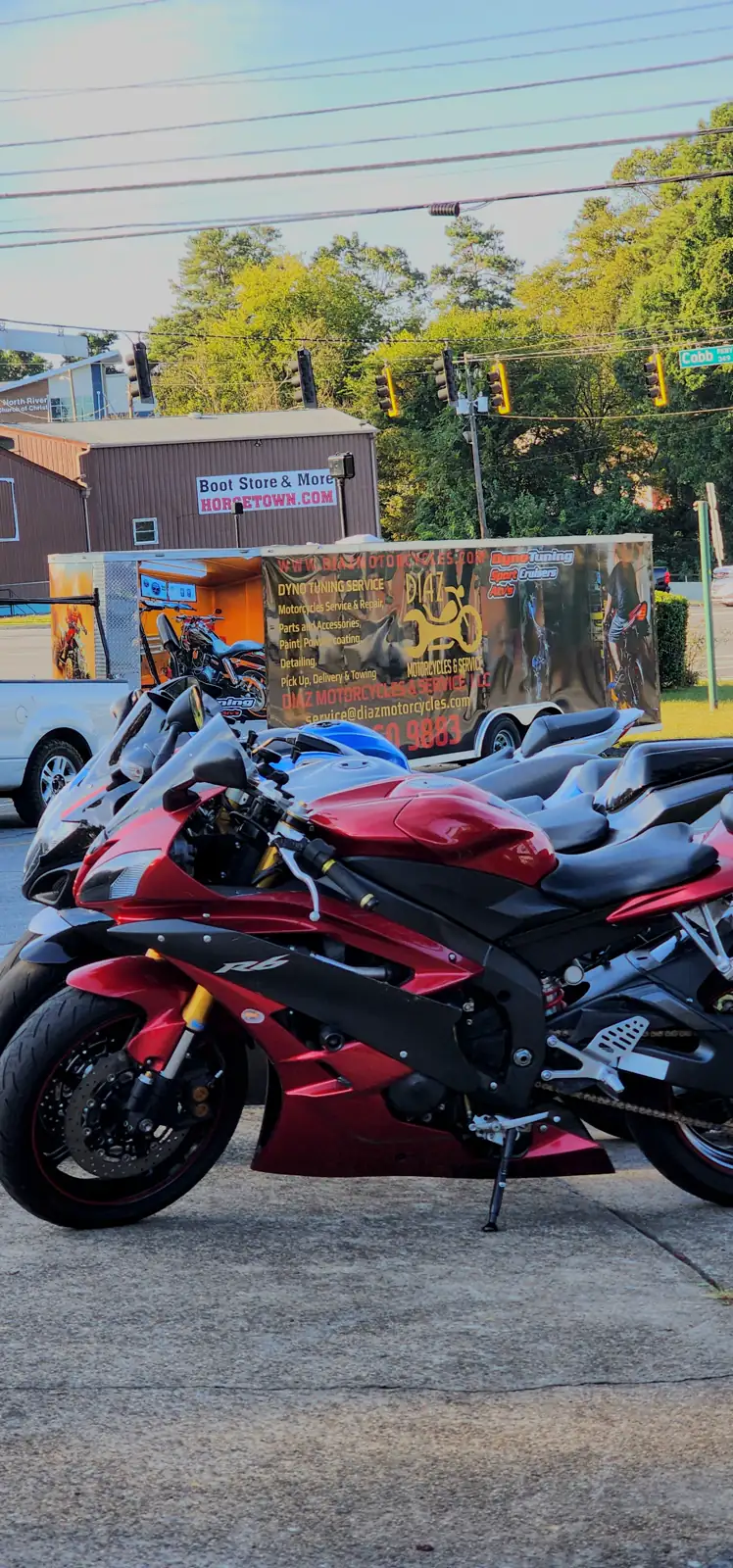
And getting to us is easy. From most of Sandy Springs we’re roughly eight to eleven miles out, usually eighteen to twenty-eight minutes via Johnson Ferry Road heading west across the Chattahoochee into East Cobb. No interstate loop required. From the Riverside and Powers Ferry side it’s often under fifteen minutes. If you’re up by the Mercedes-Benz USA headquarters at Abernathy and Barfield, that landmark glass building, you’re looking at a straight shot our way.
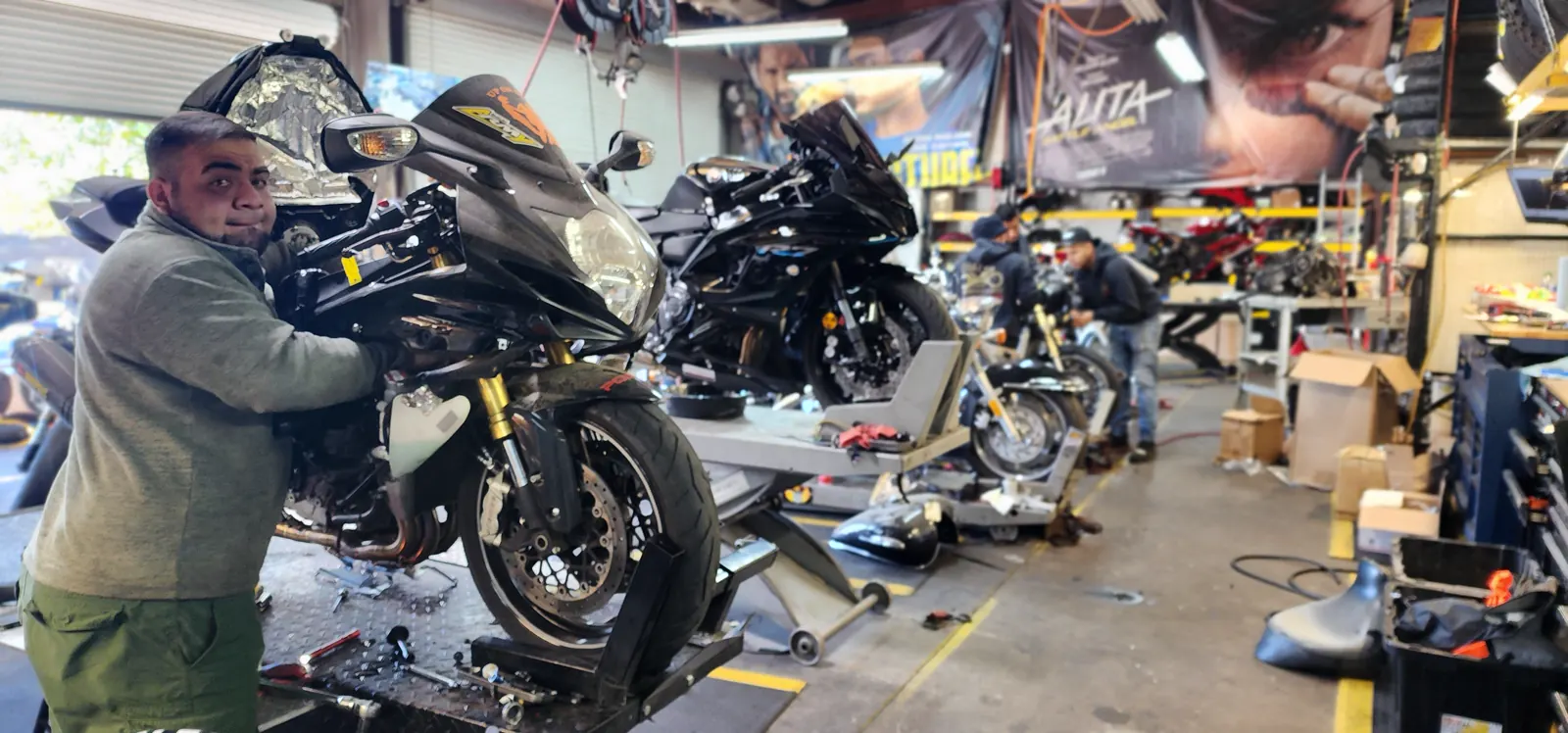
The outcome you're really after
Picking a shop isn’t about finding the loudest advertiser or the cheapest quote. It’s about finding the crew that will measure the truth about your bike and tune it to feel right in your hands. That’s it. When you frame it that way, the choice gets simple, and the pressure comes off. A lot of riders don’t need convincing. They just need to know the fix exists and someone close by does it well.
A dyno doesn't lie, and neither should the shop reading it to you.
So drop the worry that you broke something. You probably just changed something and never finished the job. A proper tune finishes it. Bring us the bike, watch the readout, and ride home with the version of it you were hoping for when you bolted those parts on. That’s a good day at the shop, and it’s the whole reason we keep the dyno warm.
Questions Sandy Springs riders ask us
How do I pick a good dyno shop?
Look for a shop that owns its dyno and does the mapping in-house instead of sending it out. Ask to see the before-and-after air-fuel readout, since a real tune always leaves a record. And favor a shop that tunes the whole rev range, not just peak power, because the daily feel is where you spend your time.
Should I go to a dealer or an independent?
Both can serve you well, and good multi-line dealers do a lot right. The difference is that many dealers don’t run true custom mapping in-house, while a tuning-focused independent keeps the dyno and the technician under one roof. If you want your specific bike tuned in front of you, an independent that specializes in it is usually the better fit.
What should I ask a shop before I book?
Ask if the dyno is on-site, whether they flash the ECU or run a Power Commander for your bike, and if they’ll show you the readout afterward. A straight, detailed answer is a great sign. Vague adjectives without numbers are a reason to keep looking.
Do you work on all brands?
Yes. We tune Japanese sportbikes, European liter bikes like Ducati and BMW, big touring rigs and cruisers, and adventure bikes. Whatever you ride, the tuning process is the same idea: measure what the engine is doing, then match the fuel and timing to it.
How far do you serve, and can you come get my bike?
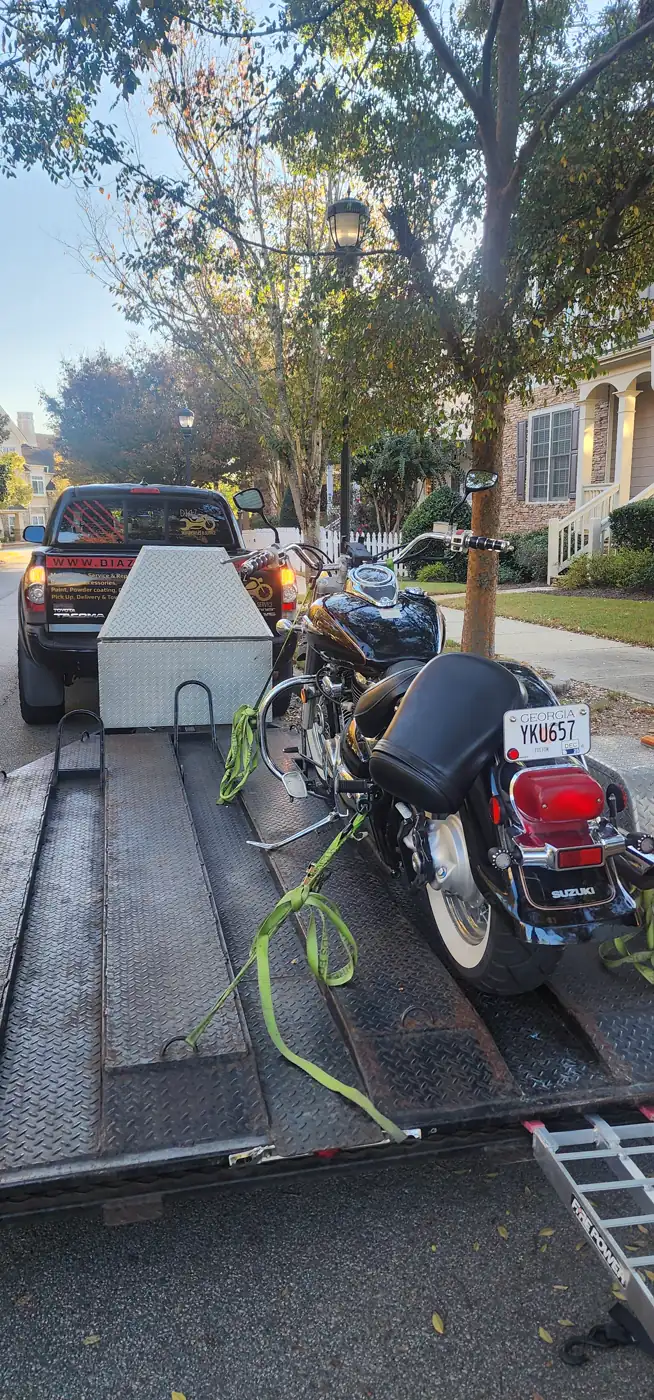
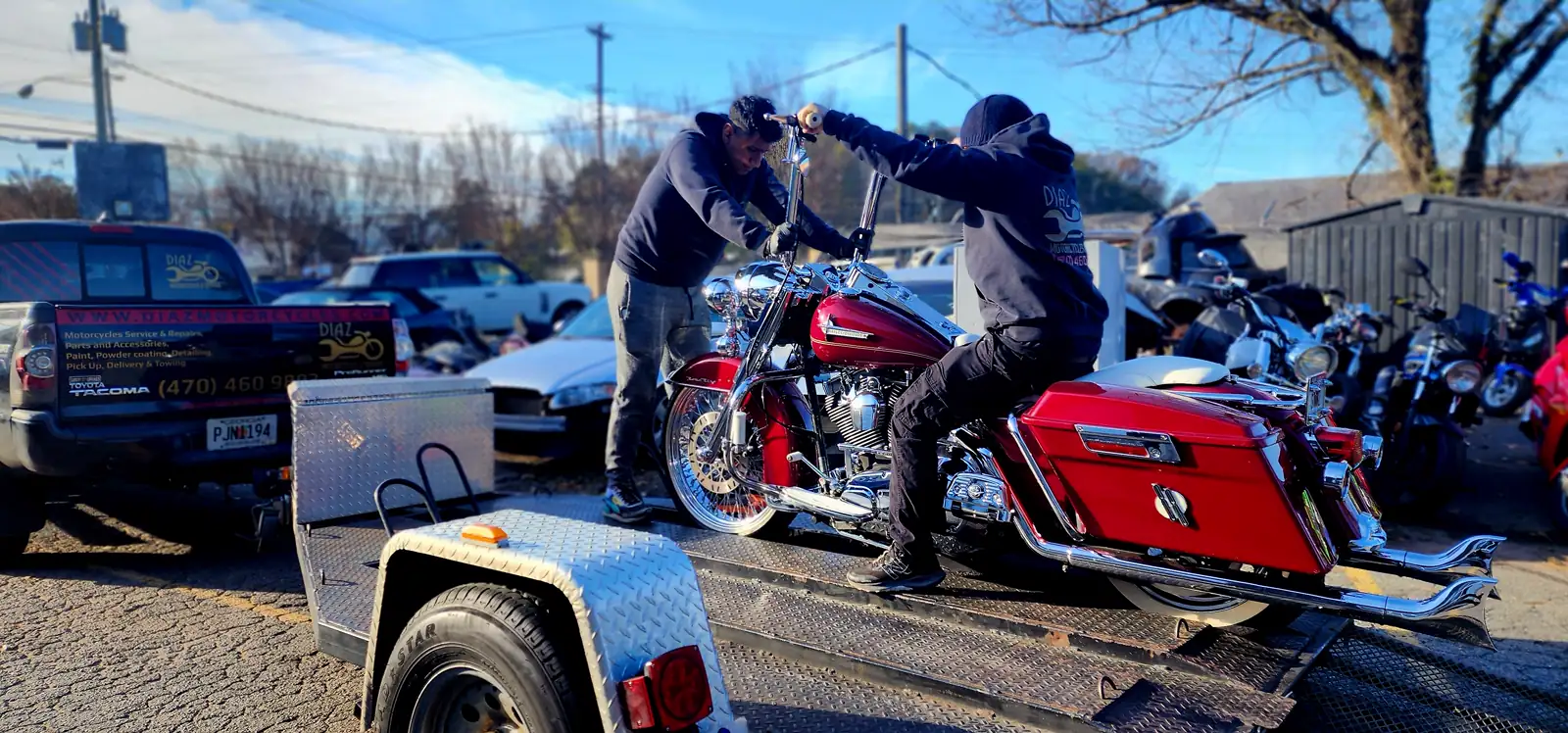
We’re roughly eight to eleven miles from most of Sandy Springs, about eighteen to twenty-eight minutes via Johnson Ferry Road into East Cobb, with no interstate loop needed. If you rent or have no garage outlet, our enclosed trailer runs pickup and delivery, so you don’t have to figure out how to get the bike to us.
Will a tune fix a bike that runs hot or surges?
Very often, yes. Heat, surging, and a snatchy throttle after adding an exhaust or filter usually mean the bike is running lean or rich for its new setup. A dyno tune reads the air-fuel ratio and corrects it across the range, which is exactly the kind of nagging problem that tends to disappear afterward.
We’re an easy ride from all over the north metro, so riders come to us from Sandy Springs, Roswell, Dunwoody, and Alpharetta on the top end, along with Buckhead, Brookhaven, Chamblee, and Doraville closer in. We also see plenty of friends from Atlanta and Vinings, and from our own side of the river in East Cobb, Marietta, and Smyrna. If you’re garage-kept or storing under a carport, the enclosed trailer covers all of it.
READY TO STOP GUESSING?
If you’re in Sandy Springs and your bike surges, runs hot, or just feels off since you added parts, let’s put it on the dyno and read the truth. You’ll see the before-and-after yourself and ride home with the bike you were hoping for. Text us your bike and your setup, and we’ll tell you exactly what a tune would do for it.
470-460-9883Diaz Motorcycles and Service, LLC · 847 Barnes Mill Road, Marietta, GA 30062